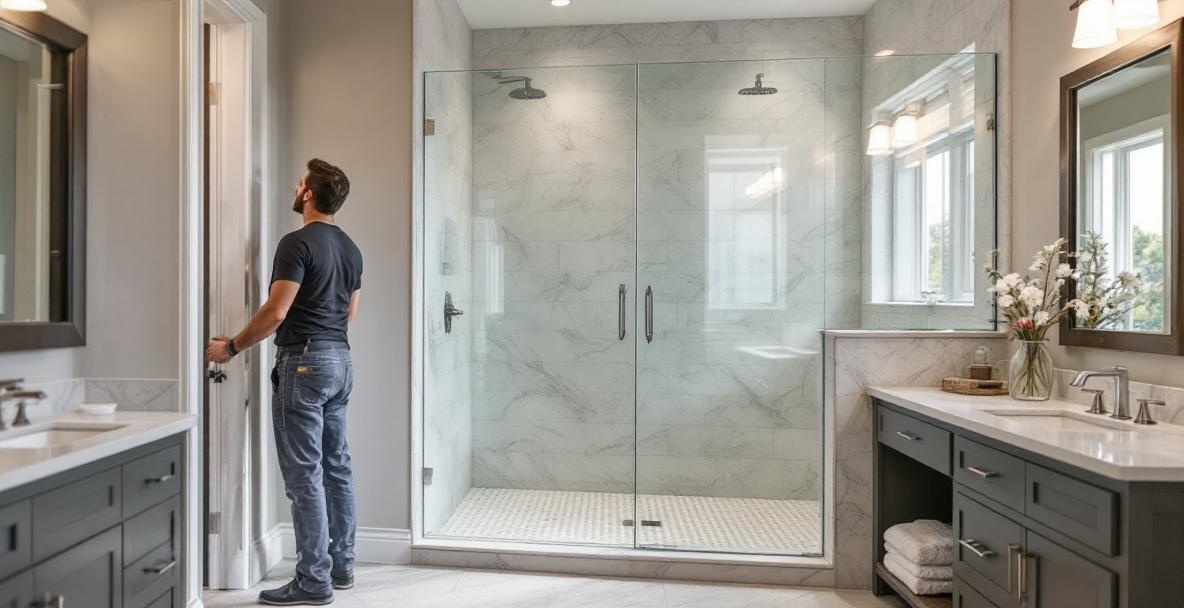
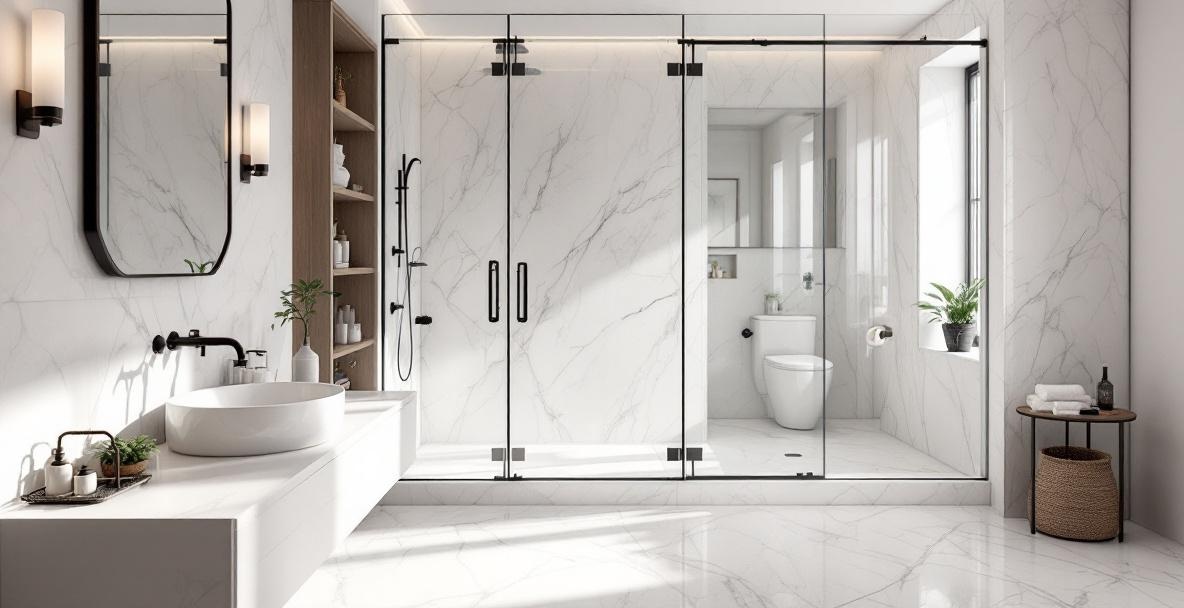
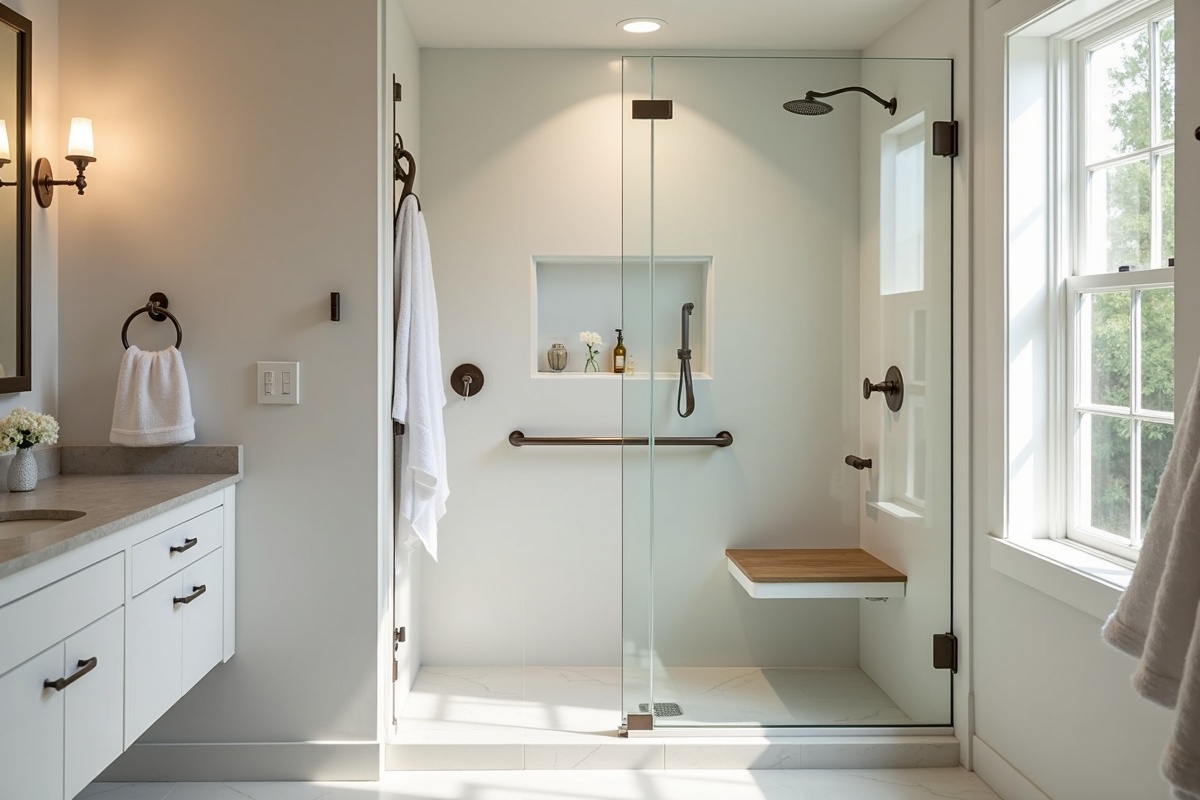
Aging-in-place bathroom glass solutions prioritize two things simultaneously: reducing fall and injury risk while maintaining the visual quality of a modern bathroom. The most effective approach combines curbless shower entry (eliminating the single most common trip hazard), frameless or semi-frameless glass enclosures (providing clear sightlines for caregivers and the occupant alike), and strategically placed grab bars integrated into the glass wall system rather than bolted awkwardly to tile.
The decision to modify a bathroom for long-term livability used to mean accepting institutional-looking handrails and clunky grab bars. That is no longer the case. According to the NKBA 2026 Design Trends Report, 32% of design professionals say aging-in-place design is now mainstream, with an additional 48% identifying it as an emerging priority — meaning 80% of the design industry views it as central to bathroom planning (NKBA 2026). In Flower Mound, Southlake, Corinth, and across the DFW Metroplex, homeowners are planning bathrooms that serve them comfortably at 45, at 65, and at 85 — without sacrificing the aesthetic quality they expect. This guide explains how glass plays a central role in that strategy.
Why Is Aging-in-Place Bathroom Design Growing So Fast?
Three converging forces are driving the category. First, the largest demographic cohort in American history — Baby Boomers — is entering the age range where bathroom safety becomes a practical priority. Homeowners 65 and older now account for 27% of all home remodeling spending, according to the Harvard Joint Center for Housing Studies (Harvard JCHS 2025). Second, the cost of alternatives is prohibitive: assisted living facilities now exceed $54,000 per year on average, making home accessibility upgrades a compelling financial investment compared to eventual relocation (ConsumerAffairs 2025). Third, consumer expectations for accessibility design have risen — people expect modifications that look intentional and beautiful, not clinical.
80%
of design professionals say aging-in-place is mainstream (32%) or emerging (48%) in bathroom design (NKBA 2026)
The bathroom is statistically the most dangerous room in the home. The CDC reports that approximately 235,000 Americans visit emergency rooms each year due to bathroom injuries, with the majority involving falls during entry and exit from the shower or bathtub (CDC Injury Data). The shower entry point — specifically the curb or threshold — is the primary risk zone. Glass-based solutions directly address this.
Families evaluating these upgrades often raise the glass itself as a concern, particularly for a household member at higher fall risk. That question has a documented answer — see whether frameless shower doors are safe — and it matters here because the failure mode is the relevant part: tempered glass crumbles into blunt fragments rather than shards, which is precisely why code requires it in exactly this location.
What Glass Solutions Support Safe Aging in Place?
The most effective aging-in-place glass solutions are those that remove physical barriers and provide structural support without creating visual barriers that reduce sightlines or make the space feel institutional.
Core glass solutions for aging-in-place bathrooms:
- Curbless frameless enclosures — eliminate the step-over threshold that is the primary fall risk at shower entry
- Wide-opening pivot or swing-clear hinges — allow 36 in. or wider clear opening for easy access with or without mobility aids
- Fixed glass wall panels with integrated grab bar brackets — provide the structural support of grab bars without compromising the aesthetic quality of the enclosure
- Continuous glass bench supports — fixed glass panels can serve as structural anchors for built-in shower benches
- Low-threshold sliding doors — where a fully curbless design is not possible due to floor slope constraints, a very low (1/4 in. or less) threshold sliding door significantly reduces trip risk compared to a standard 4 in. curb
How Do Curbless Enclosures Improve Accessibility?
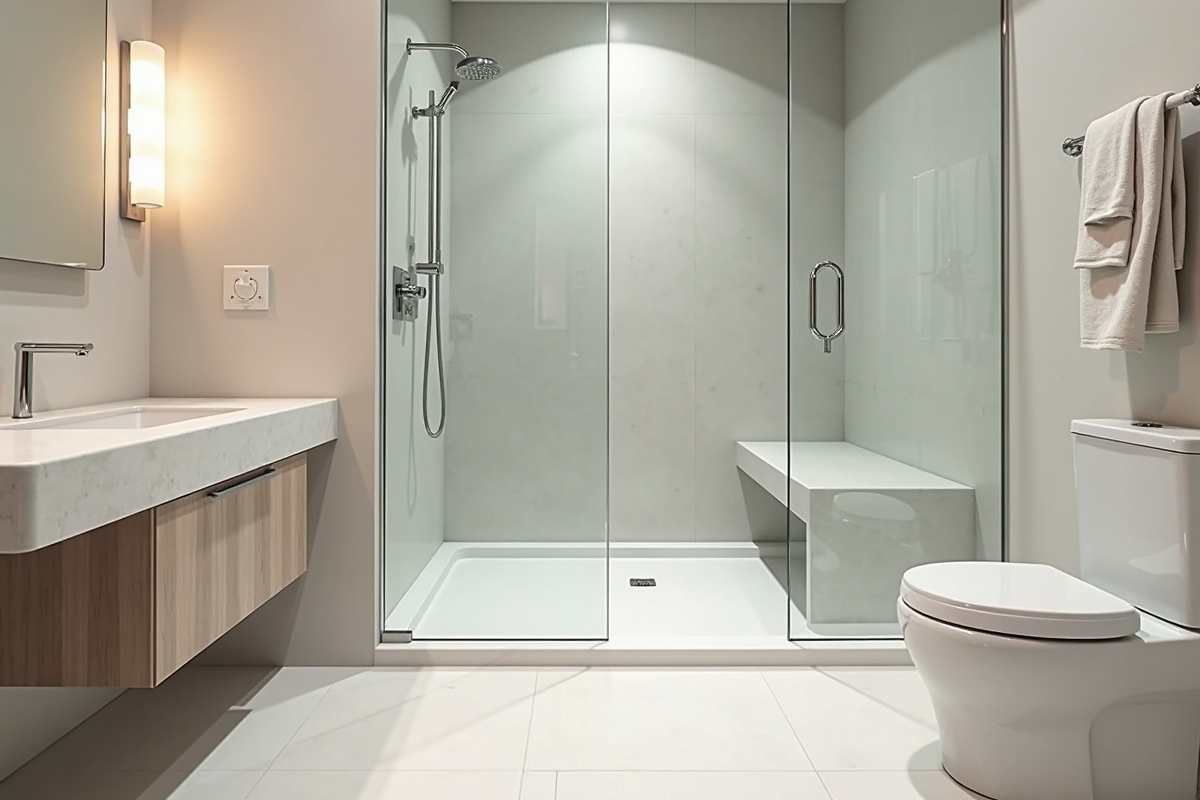
A curbless shower — also called a zero-threshold or barrier-free shower — has no raised lip between the bathroom floor and the shower floor. The entire floor plane is continuous, with the shower floor sloped slightly (typically 1/4 in. per foot) toward the drain.
For aging-in-place purposes, curbless design eliminates the most common shower entry hazard. The step-over motion required to clear a standard 4 in. shower curb demands balance, hip flexibility, and visual attention — all factors that diminish with age. A curbless entry requires only a forward step, no lift.
From a glass design perspective, curbless showers work with frameless enclosures in two ways:
Walk-in configuration (no door): One or two fixed glass panels create a partial enclosure with a walk-in entry gap. No door to open, no threshold to clear. This is the most accessible option and often the most visually dramatic — a wall of glass open at one end. Panel widths, glass thickness, and Dallas pricing for this configuration are covered in our guide to walk-in shower glass panels.
Curbless pivot or swing door: A full enclosure with a pivot door that opens outward (critical — an inward-opening door is a hazard if the occupant falls against it). The door swings clear of the floor plane without a threshold seal at the bottom; specialized sweep seals contain water while allowing easy entry.
What Safety Features Work With Glass Shower Doors?
Glass and grab bars are not mutually exclusive. Modern glass enclosure systems include several safety-compatible features:
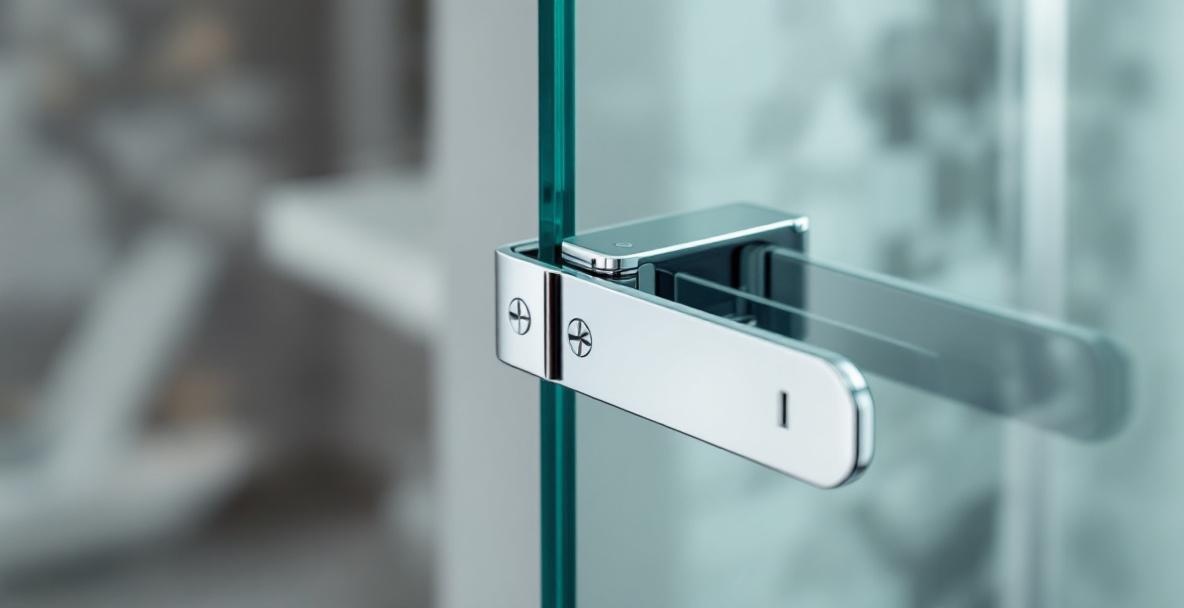
Grab bar integration into glass walls: Frameless glass panels can be drilled and fitted with through-glass grab bar mounting hardware. A structural grab bar — rated to support 250+ lbs — can be mounted through a fixed glass panel with the appropriate through-glass fitting, maintaining the visual clean-line aesthetic of a frameless enclosure while providing certified support. This requires 3/8 in. or 1/2 in. tempered glass and proper engineering of the mounting point.
Wall-to-glass grab bars: A grab bar mounted to a structural wall stud on one end and to the frameless glass panel (via through-glass hardware) on the other end can span the full shower entry zone — providing continuous support from the bathroom floor into the shower without interrupting the glass design.
Bench integration: A fixed glass return panel positioned at 90 degrees inside the shower creates a structural anchor for a shower bench. The bench can be tiled to match the floor, creating a built-in seating option that is both functional for aging-in-place use and aesthetically intentional.
Swing-clear hinges: Standard pivot hinges typically allow a door to open 90 degrees. Swing-clear hinges allow 180 degrees of opening, swinging the door completely out of the entry path. For wheelchair transfers or assisted bathing, this additional clearance is critical.
How Do You Balance Safety and Style in a Glass Enclosure?
The most common concern among DFW homeowners planning aging-in-place modifications is the appearance of the result. Safety features have historically carried an institutional aesthetic that conflicts with the design quality homeowners expect.
Glass-based solutions largely resolve this tension because:
- Grab bars in premium finishes — brushed nickel, matte black, and brushed brass grab bars are available in the same finishes as frameless shower hardware, creating visual continuity rather than contrast
- Through-glass mounting conceals hardware — through-glass grab bar fittings are smaller in profile than surface-mounted tile-screwed bars, keeping the enclosure perimeter clean
- Curbless design is a design upgrade, not a compromise — zero-threshold showers read as spa-quality and high-end, not as medical equipment
- Frameless glass amplifies the sense of space — an accessible bathroom that feels open and light does not feel clinical; it feels like a luxury hotel
- 1
Start With Curbless Entry
Convert the shower threshold to a zero-entry curbless configuration. This is the highest-impact accessibility change and the one that most seamlessly integrates with modern frameless glass design. - 2
Size the Opening for Accessibility
Ensure the shower opening (including the swing arc of any door) provides at least 36 in. of clear width. For wheelchair transfer use, target 60 in. x 30 in. minimum interior shower dimensions. - 3
Select an Outward-Opening Door or Walk-In Configuration
An outward-opening pivot or swing door prevents a fallen occupant from blocking the door. Walk-in configurations (no door) eliminate this risk entirely. - 4
Integrate Grab Bars Through Glass
Work with your glass installer to identify grab bar locations before installation. Through-glass mounting requires pre-drilled holes in tempered glass — this cannot be done after tempering. Plan grab bar positions at the design stage. - 5
Specify 1/2 In. Glass for Structural Panels
For panels that will anchor grab bars, specify 1/2 in. tempered glass rather than 3/8 in. The thicker panel provides greater structural integrity at mounting points and is required by most through-glass hardware manufacturers. - 6
Add a Built-In Bench
Incorporate a bench into the shower design from the start. A frameless glass return panel can anchor the bench structurally. Benches used for seated showering should be 17–19 in. high (ADA transfer bench standard).
What Does Aging-in-Place Glass Cost in DFW?
The aging-in-place category adds cost primarily at the floor conversion level (curbless tile work) and in the structural glass panel specification (1/2 in. glass vs. 3/8 in., larger panel sizes). The glass and hardware costs are otherwise comparable to standard frameless installation.
| Component | Standard | Aging-in-Place | |
| Glass thickness | 3/8 in. | 3/8-1/2 in. | |
| Door type | Pivot or slider | Outward-swing pivot or walk-in | |
| Threshold | Standard curb | Zero-threshold curbless | |
| Grab bar integration | Not included | Through-glass, pre-drilled | |
| Bench support panel | Optional | Recommended | |
| Typical DFW cost | $1,100 - $2,500 | $2,000 - $5,000+ |
The aging-in-place glass enclosure cost range ($2,000–$5,000) does not include the curbless floor conversion, which is a tile and waterproofing project separate from the glass installation. Floor conversion typically adds $1,500–$3,500 depending on the size of the shower footprint and existing waterproofing conditions.
The aging-in-place bathroom products market is projected to reach $8.26 billion by 2032, reflecting the scale of demand for solutions that combine safety with livability (Grand View Research). DFW homeowners planning for the next 20 years have a strong financial argument for making these investments now — before a fall event forces an emergency retrofit or relocation.
When Should You Start Planning for Aging-in-Place Glass?
The best time to plan aging-in-place bathroom modifications is before you need them — ideally during a remodel you are already doing. Adding curbless entry and through-glass grab bar prep during a bathroom renovation adds modest marginal cost compared to retrofitting a standard enclosure later. Through-glass grab bar holes, in particular, must be planned before glass tempering — they cannot be added after the fact.
For homeowners in their 50s or early 60s remodeling in Corinth, Lewisville, or Highland Village: plan for aging-in-place features now. The upfront cost is lower, the design integration is seamless, and the bathroom serves you better starting immediately — not just when mobility becomes a concern.
Are frameless shower doors safe for seniors?
Yes — frameless glass shower doors with appropriate safety features are among the safest enclosure types for older adults. The key safety factors are outward-opening door direction (prevents blockage if someone falls), curbless or zero-threshold entry, and properly integrated grab bars. Frameless glass also provides clear sightlines into the shower from outside, which is important for caregiver-assisted bathing situations.
What is the safest glass type for an aging-in-place shower?
Tempered safety glass is the required and appropriate choice for all shower enclosures regardless of age considerations. Tempered glass breaks into small blunt fragments rather than large sharp shards, dramatically reducing laceration risk if the panel is ever broken. For aging-in-place applications, 1/2 in. tempered glass on structural panels provides additional rigidity and is the required specification for through-glass grab bar mounting.
Can grab bars be added to a glass shower wall?
Yes, with proper engineering. Through-glass grab bar hardware is designed for exactly this application. The glass panel must be pre-drilled before tempering (holes cannot be cut in tempered glass), and the hardware must be rated to support a minimum 250 lbs of lateral load. This requires planning at the design stage — it cannot be retrofitted to an existing tempered glass panel.
What is a curbless shower and why does it matter for aging in place?
A curbless shower has no raised threshold between the bathroom floor and the shower floor. The floor planes are continuous, with the shower floor sloped gently toward the drain. This eliminates the step-over motion required to clear a standard 4-inch shower curb — the motion most commonly associated with bathroom falls. It also allows wheelchair access and walker or cane use without obstruction.
Do aging-in-place upgrades increase home value?
Yes, particularly in markets with significant populations of buyers in the 55+ age range — which describes much of the DFW Metroplex. Universal design features including curbless showers, wide doorways, and accessible bathrooms consistently improve marketability to a broader buyer pool. Zillow research shows that accessible bathroom features are among the amenities that correlate with faster sale times and higher offer rates in the 55+ buyer segment (Zillow Research).
Also see our guide to custom shower enclosures in DFW and our breakdown of frameless shower door costs in Texas.
Infinity Glass & Glazing serves Corinth, Lewisville, Flower Mound, Highland Village, Denton, and the DFW Metroplex with custom aging-in-place glass enclosures. We design and install curbless frameless showers with integrated grab bar prep, accessible door configurations, and safety glass to ADA-compatible specifications. Contact us for a free estimate.