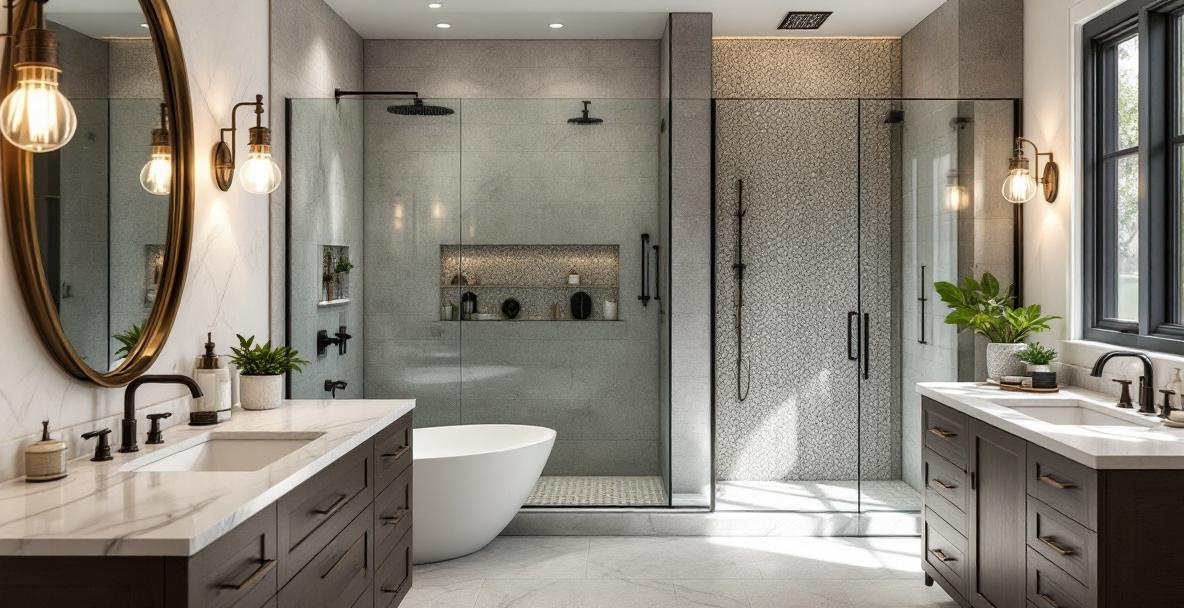
Back-painted glass is tempered glass with a layer of ceramic or polyurethane paint applied to the back surface, creating a colorful, seamless, grout-free alternative to tile for bathroom walls and shower surrounds. Installed with industrial adhesive directly to prepped drywall or cement board, back-painted glass eliminates the grout lines that harbor mold, cleans with a single wipe, and delivers a modern jewel-tone or neutral finish impossible to achieve with traditional tile.
Back-painted glass has quietly become one of the most requested finish materials in DFW master bathroom remodels. Where tile dominated the 2010s, homeowners in Southlake, Flower Mound, and Highland Park are now specifying large-format back-painted glass panels for shower walls, vanity backsplashes, and accent walls. The appeal is practical as much as aesthetic: a single sheet of glass eliminates 40 to 60 linear feet of grout in a typical shower, cutting cleaning time and mold risk dramatically.
It belongs to a broader category of glass treated on the back surface rather than the front. The closest relative is antique mirror, which uses the same principle in reverse — the backing is chemically aged rather than pigmented, producing a reflective, mottled surface instead of an opaque colored one. Both are specified by the finished appearance, and neither can be altered once applied.
This guide covers what back-painted glass is, how it's installed, what it costs, and where it outperforms tile for North Texas bathrooms.
What Is Back-Painted Glass and How Is It Made?
Back-painted glass is low-iron or standard tempered glass coated on one surface with opaque ceramic frit or polyurethane-based architectural paint, then heat-cured at roughly 1,200 degrees F for ceramic or UV-cured for polyurethane. The paint is permanently bonded to the back of the glass so the color shows through the clear face, creating a glossy, colorful panel that is impervious to water, stains, and UV fading.
The fabrication process starts with a sheet of float glass cut to the exact size needed for the bathroom. For showers, low-iron glass is specified to prevent the green tint inherent in standard glass from dulling the paint color (Cardinal Glass 2025). The back surface is cleaned to laboratory standards, then the paint is applied by spray, roller, or screen printing depending on the finish.
Two paint systems dominate the market:
- Ceramic frit: Painted glass is run through a tempering furnace where the paint fuses into the glass surface at 1,200 degrees F. This produces the most durable finish, rated for exterior and wet applications.
- Polyurethane architectural paint: Applied cold, cured under UV lamps, and backed with a protective film. Less expensive than ceramic but still fully waterproof for interior bathroom use.
Both systems are safe for shower walls. Ceramic is specified for steam showers and exterior-facing applications; polyurethane is standard for typical interior bathrooms.
How Is Back-Painted Glass Installed in Bathrooms?
Back-painted glass is installed with a structural silicone adhesive applied to the back of the panel and pressed against a clean, flat, primed substrate — typically cement board in wet areas and drywall in dry areas. Panels are set with small shims to maintain a hairline expansion gap, then perimeter joints are sealed with color-matched silicone. Full cure time is 24 to 48 hours before the room can be used.
The installation process for a typical DFW master bath looks like this:
- 1
Substrate preparation
The installer confirms that walls are plumb, flat, and rigid. In showers, cement board is required behind the glass. In dry zones, well-prepped drywall is acceptable. Any bow greater than 1/8 in. across 8 ft. is corrected with float coat. - 2
Template and dry fit
A template is cut to match the exact panel, accounting for any plumbing penetrations. The panel is dry-fit to verify alignment, reveals, and fixture cutouts before adhesive is applied. - 3
Adhesive application
Neutral-cure structural silicone is applied to the back of the panel in vertical beads spaced roughly 4 in. apart. Acidic silicones are never used — they attack the ceramic coating. - 4
Panel setting
The panel is lifted into place, shimmed at the base, and pressed firmly to achieve an even adhesive layer. Suction cups hold the glass flat to the wall while adhesive cures. - 5
Joint sealing
After 24 to 48 hours of cure time, perimeter joints are sealed with color-matched mildew-resistant silicone to prevent water ingress behind the panel.
A competent two-person installation crew can set a typical shower wall in four to six hours. Full cure before shower use is 48 to 72 hours.
Back-painted glass cannot be cut, drilled, or modified on site. Every penetration for shower valves, body sprays, niches, and grab bars must be specified at the fabrication stage. Field mistakes mean re-fabricating the panel.
How Does Back-Painted Glass Compare to Tile in a Shower?
Back-painted glass outperforms tile on cleaning speed, grout elimination, and visual continuity, while tile outperforms glass on repairability, texture options, and initial cost in small format applications. For large shower walls over 30 sq ft, back-painted glass is usually the more maintenance-friendly choice; for small accent areas or heavily patterned looks, tile remains competitive.
| Factor | Back-Painted Glass | Traditional Tile | |
| Grout lines | Zero | 40 to 60 linear ft. in typical shower | |
| Cleaning time | 2 to 3 minutes weekly | 15 to 25 minutes weekly | |
| Mold risk | Very low | Moderate to high (grout lines) | |
| Installed cost per sq ft | $50 to $120 | $20 to $60 | |
| Material options | Solid colors, metallics, custom print | Porcelain, ceramic, stone, glass tile | |
| Repair if damaged | Full panel replacement | Individual tile replacement | |
| Substrate requirement | Dead-flat cement board | Standard cement board | |
| Install time (typical shower) | 1 day | 3 to 5 days |
99%
of mold growth in bathrooms originates in or around grout lines and silicone caulk — eliminating grout with back-painted glass removes the substrate mold needs to colonize ([CDC 2025](https://www.cdc.gov/mold/))
Grout is the single biggest maintenance liability in any tile shower. It's porous, it traps soap residue and minerals, and in a DFW shower fed by hard municipal water (city averages run 180 to 320 ppm hardness), grout discolors within 12 to 18 months of daily use (TWDB 2024). Back-painted glass eliminates the substrate entirely — there is nothing porous for mold or minerals to lock onto.
What Colors and Finishes Are Available for Back-Painted Glass?
Back-painted glass is available in virtually any solid color from curated architectural palettes, metallic finishes (silver, bronze, copper leaf), and custom color matches to brand or paint-chip samples using Pantone or Benjamin Moore references. Most fabricators stock 40 to 80 standard colors and will custom-match any RAL or Pantone code for a 10 to 20 percent upcharge.
The most-requested bathroom finishes in DFW from 2024 and 2025 NKBA member surveys:
- Warm whites and off-whites — alabaster, linen, warm gray — most specified for primary bathrooms
- Soft neutrals — sand, taupe, mushroom — blends with warm metal hardware trend
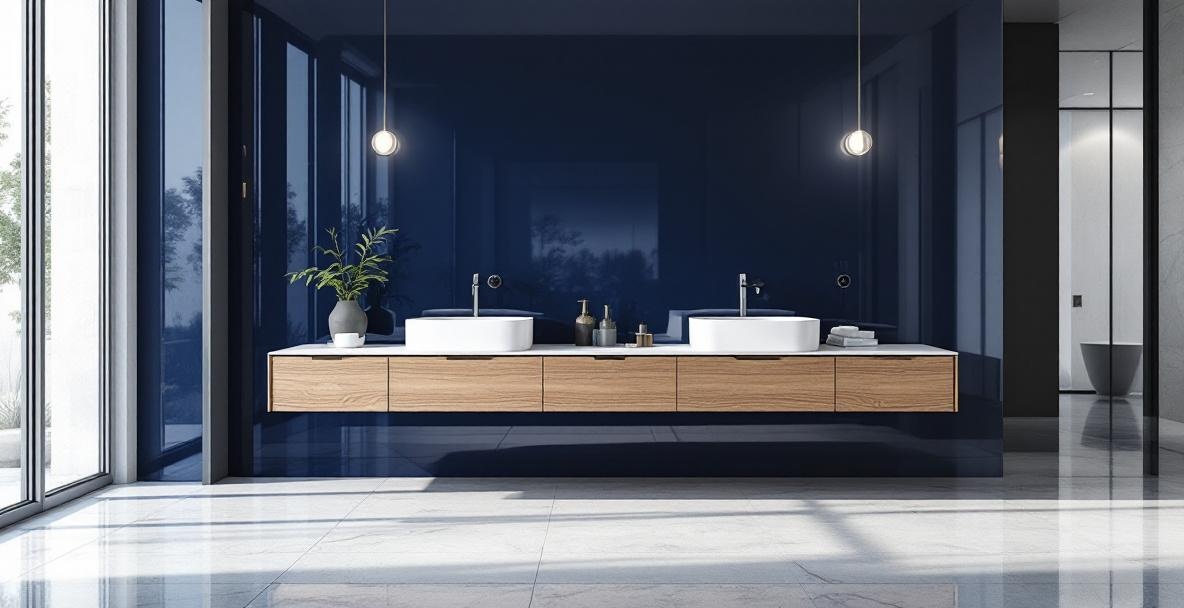
- Deep jewel tones — emerald, sapphire, onyx, midnight navy — popular for powder rooms and accent walls
- Metallic finishes — champagne, bronze, rose gold — used behind vanities and niches
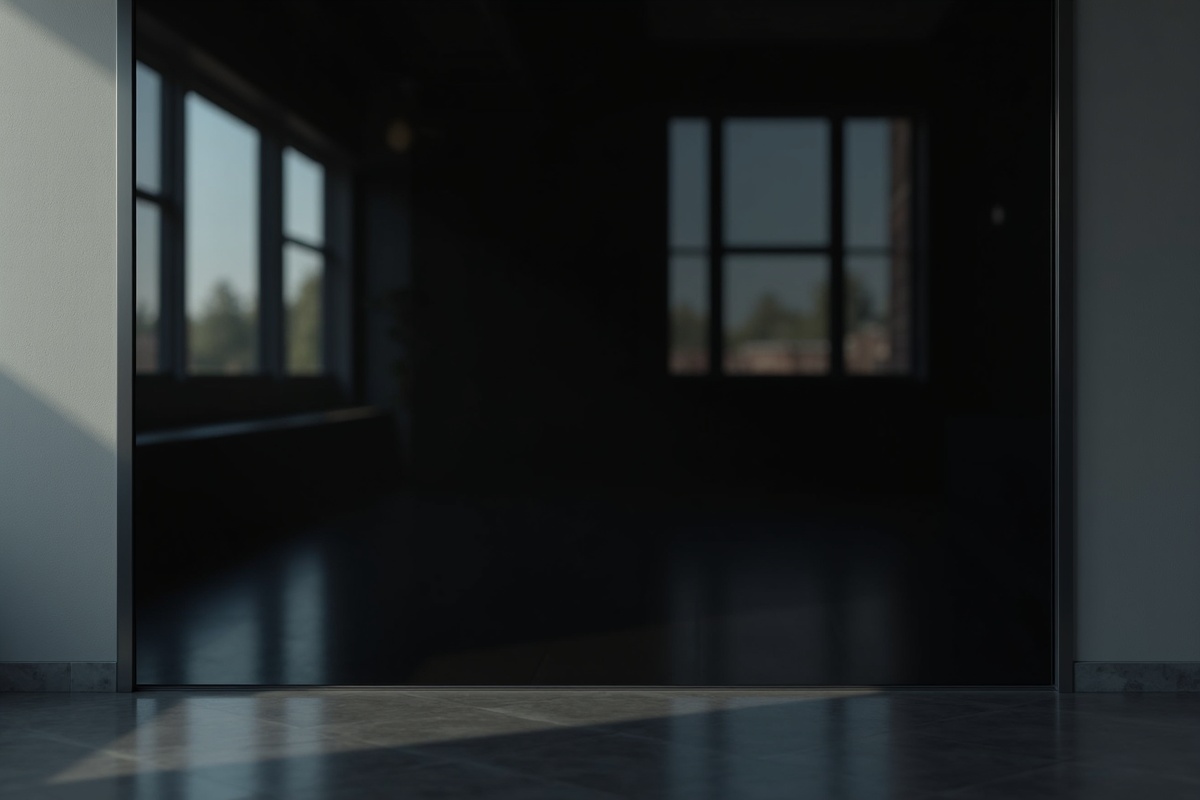
- Matte finishes — matte black, matte white, matte charcoal — a recent trend replacing glossy glass for softer reflections
- Custom printed graphics — abstract patterns, landscapes, brand imagery — for high-end custom projects
Standard ceramic frit colors from major glass coating suppliers offer 50+ shades, and any polyurethane shop can match a paint chip from Benjamin Moore, Sherwin-Williams, or Farrow & Ball. In DFW, the top three requested colors for shower walls in 2025 were alabaster, greige, and matte charcoal — mirroring the warm-palette trend documented by NKBA.
How Much Does Back-Painted Glass Bathroom Installation Cost?
Back-painted glass costs $50 to $120 per sq ft installed in DFW for standard colors, 3/8 in. low-iron tempered construction, and straightforward rectangular panels with one or two fixture cutouts. A typical 60 sq ft shower wall installation runs $3,000 to $7,200 including glass, paint, adhesive, and labor. Custom colors, curved panels, or printed graphics add 15 to 40 percent.
Cost breakdown for a typical DFW 60 sq ft back-painted shower wall:
- Glass fabrication — $2,100 to $4,800 (low-iron tempered, 3/8 in., standard color)
- Templating and site measure — $150 to $300
- Adhesive and sealants — $100 to $200
- Installation labor — $800 to $1,500 (two-person crew, one-day install)
- Substrate prep — variable, typically $200 to $600 if cement board or leveling is needed
Total project cost range for the 60 sq ft shower: $3,350 to $7,400. Installed per-square-foot pricing aligns with architectural glass industry ranges (Angi 2025).
Compared to a high-end tile installation at $20 to $60 per sq ft installed (HomeGuide 2025), back-painted glass is 40 to 100 percent more expensive upfront. The cost is recovered over time in reduced cleaning, extended maintenance intervals, and eliminated grout regrouting cycles every 5 to 7 years.
Is Back-Painted Glass Easy to Clean?
Yes — back-painted glass is the easiest bathroom wall material to maintain. A single wipe with a squeegee after each shower and a weekly pass with glass cleaner or 50-50 white vinegar solution keeps the surface streak-free, and there are no grout lines to scrub, bleach, or regrout. The ceramic or polyurethane coating is sealed behind the glass face, so cleaning products never touch the paint itself.
Recommended cleaning routine:
- Daily: Squeegee the panel dry after showers to prevent hard-water spots from setting. A wall-mounted squeegee in the shower takes 30 seconds.
- Weekly: Wipe with a microfiber cloth and white vinegar or ammonia-free glass cleaner. Skip anything with abrasives or acidic bathroom cleaners.
- Monthly: Inspect perimeter silicone joints for any signs of mildew. Refresh with fresh caulk every 3 to 5 years.
- Never use: Abrasive pads, steel wool, ammonia on colored panels, or anything acidic on metallic finishes.
Because there is no grout, the single largest source of bathroom cleaning labor is eliminated. Most homeowners who switch from tile to back-painted glass report cutting shower cleaning time by 70 percent.
Back-Painted Glass Design Ideas for DFW Master Bathrooms
The three highest-impact applications of back-painted glass in DFW bathrooms are full shower-wall surrounds, backlit vanity walls, and alcove accent panels behind freestanding tubs. These applications maximize the visual impact of the seamless colored surface while staying within practical installation parameters.
Full shower-wall surround: The single largest visual statement. One panel on each of the three wet walls, coordinated in color, with a frameless glass door for continuity. Best in warm neutrals or matte finishes to prevent visual overwhelm.
Backlit vanity wall: A back-painted panel behind the vanity with an LED strip concealed behind the top edge. The glass picks up and softens the light, creating a glow that illuminates the face without direct fixture glare.
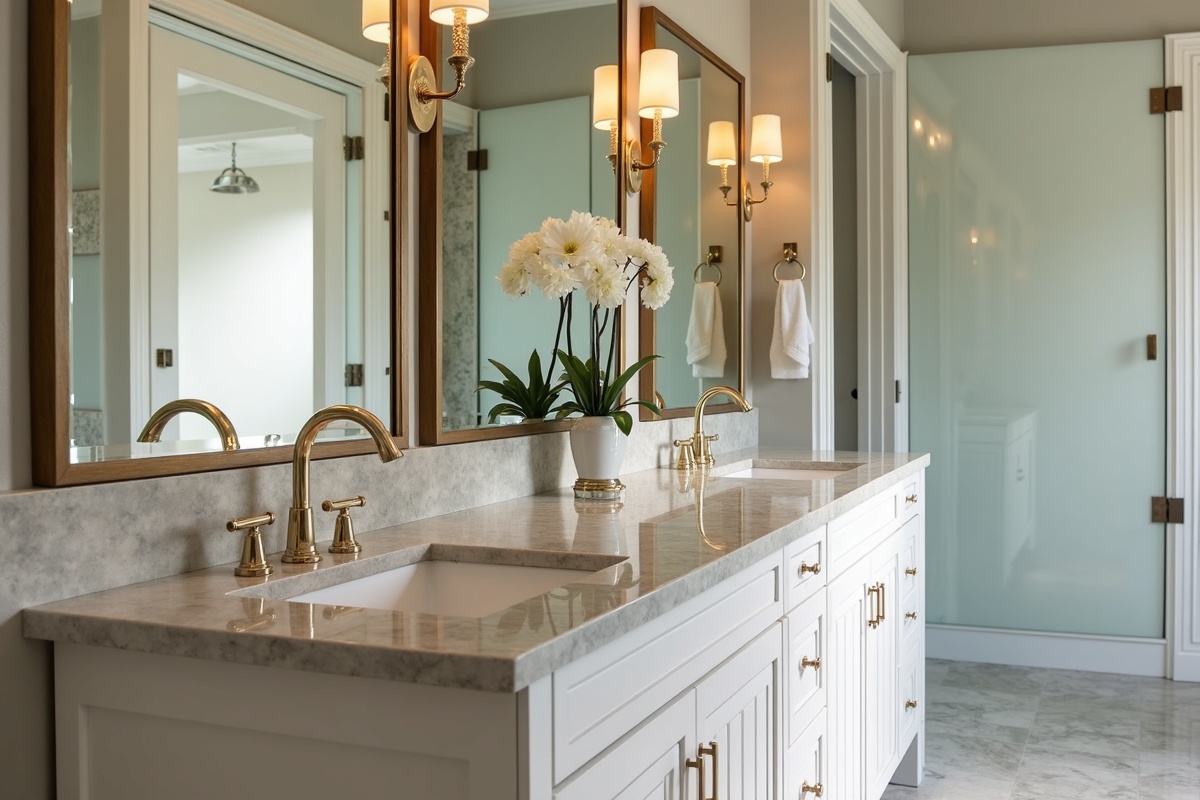
Accent alcove behind freestanding tub: A single deep-tone back-painted panel behind a sculptural tub becomes the focal point of the bathroom. In Frisco and Southlake new construction, this treatment has replaced the feature-tile wall as the standard primary bath design move.
Full-height niche liner: Line shower niches with back-painted glass. The niche becomes a finished, grout-free detail rather than the maintenance weak point of a tiled shower.
Powder room statement wall: In a small powder room, one back-painted wall in a saturated jewel tone transforms an 18 sq ft space into the most memorable room in the house.
FAQs: Back-Painted Glass for Bathrooms
Is back-painted glass waterproof for use in a shower?
Yes, fully. Back-painted glass is manufactured for wet environments. The paint is applied to the back surface of tempered glass, sealed behind the glass face, and protected from all water contact. Shower steam, direct spray, and standing water at the base of the wall do not affect the finish. The only moisture-sensitive component is the perimeter silicone seal, which should be inspected annually and refreshed every 3 to 5 years as part of normal bathroom maintenance.
Can back-painted glass be installed directly over existing tile?
In most cases, no. The substrate must be dead-flat, rigid, and free of any grout line reveals that would show as shadows through the glass. Existing tile can occasionally be floated over with cement board if the tile is well-adhered and structurally sound, but most installers recommend removing tile back to the substrate, confirming it is flat, and setting the panel against a fresh cement board surface.
How long does back-painted glass last in a high-humidity bathroom?
A properly fabricated and installed back-painted glass panel has an expected service life of 25+ years indoors. Ceramic frit paints outlast the substrate they are applied to. The main long-term maintenance item is perimeter silicone, which requires refresh every 3 to 5 years regardless of the wall material behind it.
Can you get custom colors for back-painted glass panels?
Yes. Any qualified glass shop will custom-match a Benjamin Moore, Sherwin-Williams, Farrow & Ball, RAL, or Pantone color reference. Custom color match typically adds 10 to 20 percent to material cost and 1 to 2 weeks to lead time. Bring a physical paint chip or swatch to the fabricator rather than relying on screen-displayed color.
Does back-painted glass require special cleaning products?
No. Standard glass cleaner, white vinegar diluted 50-50 with water, or ammonia-free bathroom cleaner all work. The only products to avoid are abrasive pads, steel wool, and acidic bathroom cleaners on metallic or specialty finishes. The glass face is inert — nothing reaches the paint itself — so cleaning is simpler than for painted drywall or tile.
Also see our mirror installation cost guide for DFW and our 2026 bathroom design trends article for more on how back-painted glass fits current DFW remodel projects.
Infinity Glass & Glazing specifies and installs back-painted glass panels for bathrooms, showers, vanity walls, and accent installations throughout the Dallas-Fort Worth metro. Based in Corinth, Texas, we serve Frisco, Southlake, Flower Mound, Highland Park, Plano, and every major DFW suburb with custom-color, low-iron back-painted glass at any size. Contact us for a free estimate on your back-painted glass project.
Related reading: