Choosing the right shower door comes down to five decisions: door type (frameless, semi-frameless, or framed), opening style (swing, sliding, or pivot), glass thickness and treatment, hardware finish, and budget. Get those five right and the result is a shower enclosure that fits your bathroom, suits your maintenance preferences, and adds lasting value to your home.
Most homeowners make shower door decisions backwards — they fall in love with a style online, then try to make it fit their bathroom. The smarter approach starts with your bathroom's physical constraints and works outward from there.
This guide walks through every factor in the correct order, with real 2026 pricing for DFW.
What Factors Should I Consider First?
Before you look at a single product or style, measure and assess your bathroom:
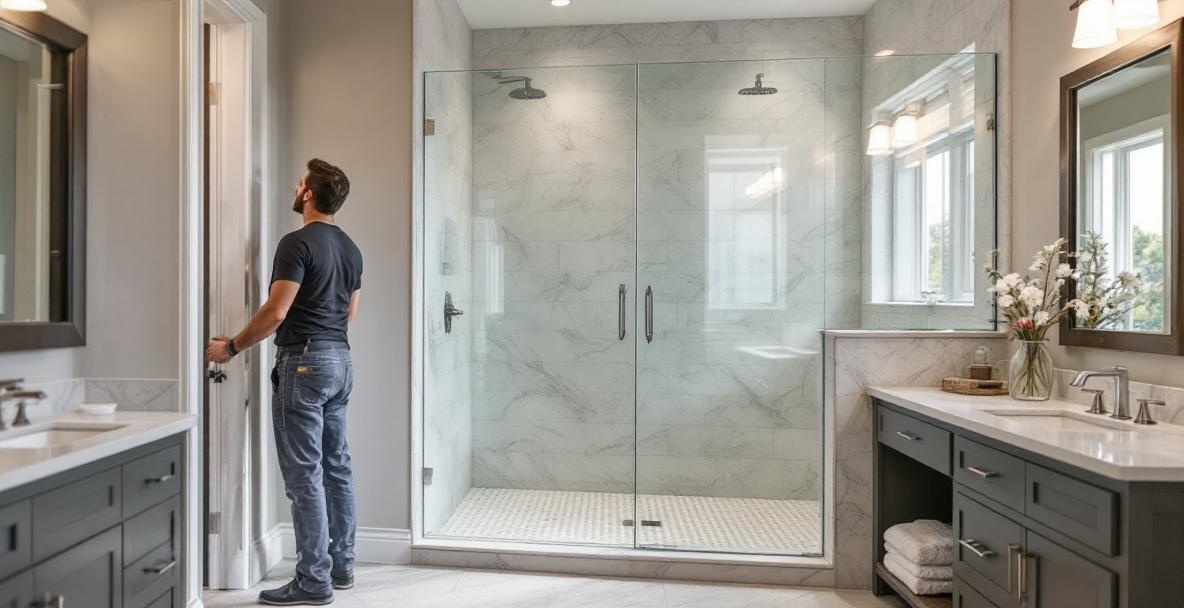
Bathroom size and layout: The most common mistake is choosing a door that requires more swing clearance than the bathroom allows. A hinged frameless door needs 30–36 inches of clear floor space in front of the shower for the door arc. If your toilet or vanity is within that zone, you need a sliding or pivot door instead.
Shower opening dimensions: Measure the width and height of your shower opening at multiple points — top, middle, and bottom. Older homes frequently have walls that are out of plumb, meaning the opening is wider at the top than the bottom or vice versa. Standard prefabricated doors fit within narrow tolerances. Custom-cut glass accommodates non-standard measurements precisely.
Wall condition: Frameless glass requires solid, plumb walls for proper installation and sealing. Walls more than 1/4 inch out of plumb cause visible gaps between glass and wall — a waterproofing failure waiting to happen. Have your walls assessed before committing to a frameless door.
Existing tile: The tile pattern and whether it extends to the ceiling affects header options and where support hardware can be mounted.
What Are the Main Shower Door Types?
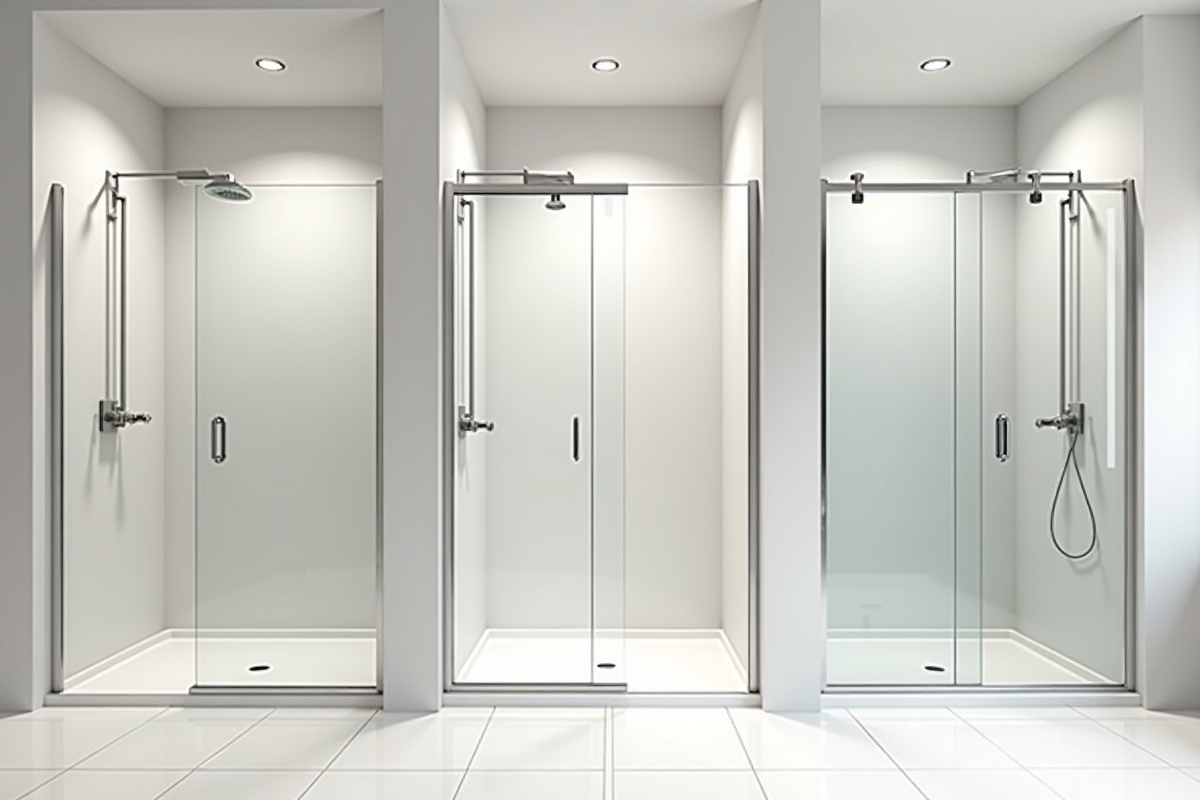
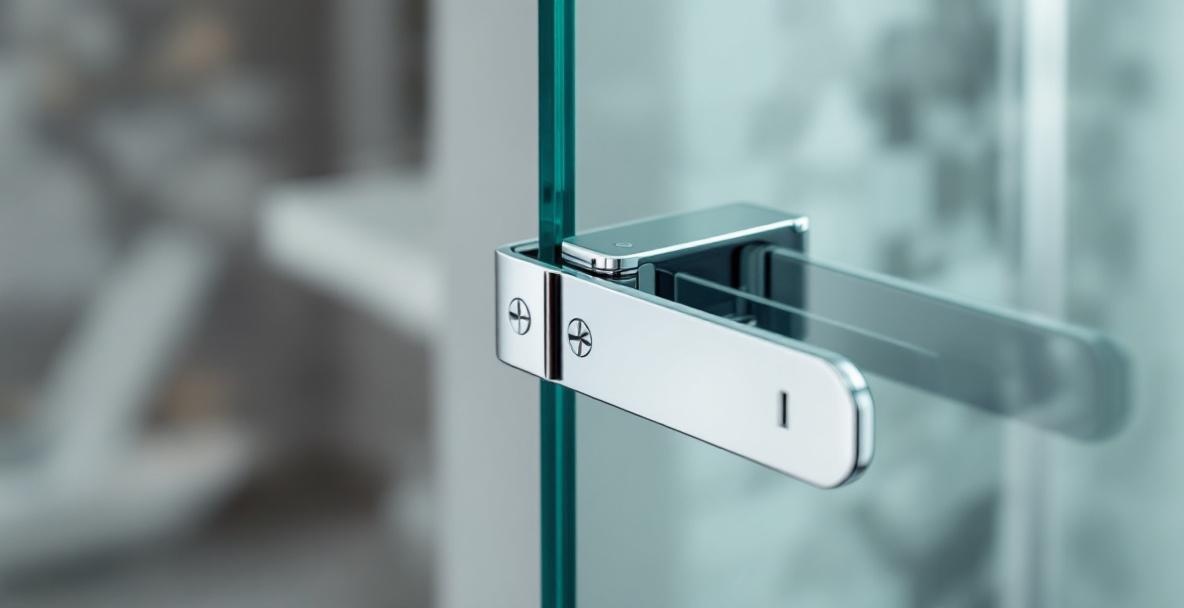
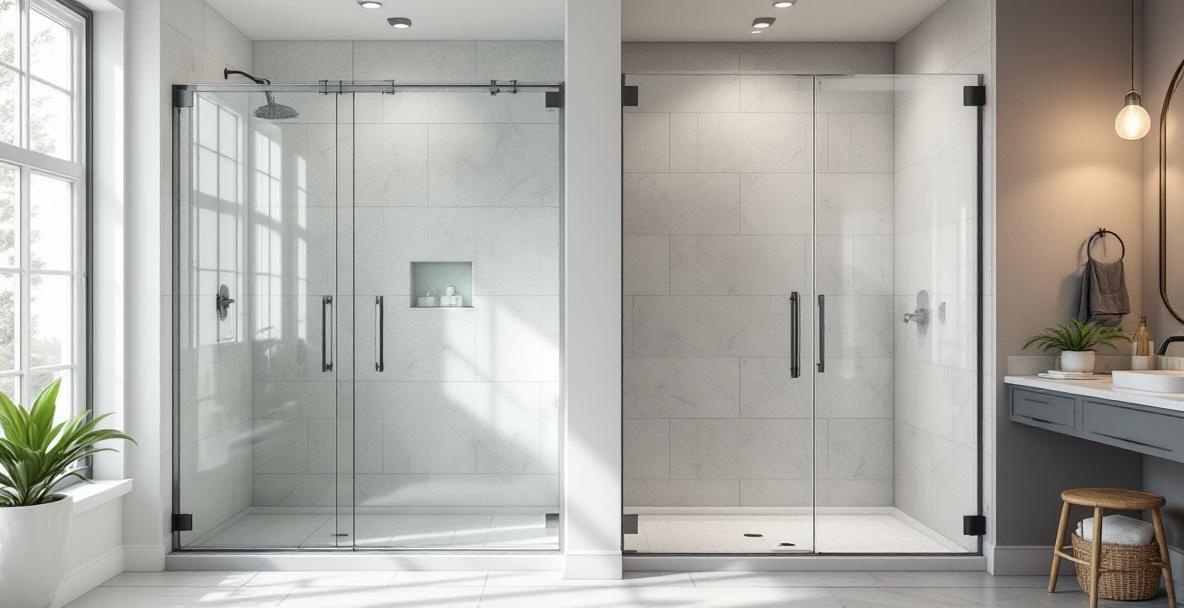
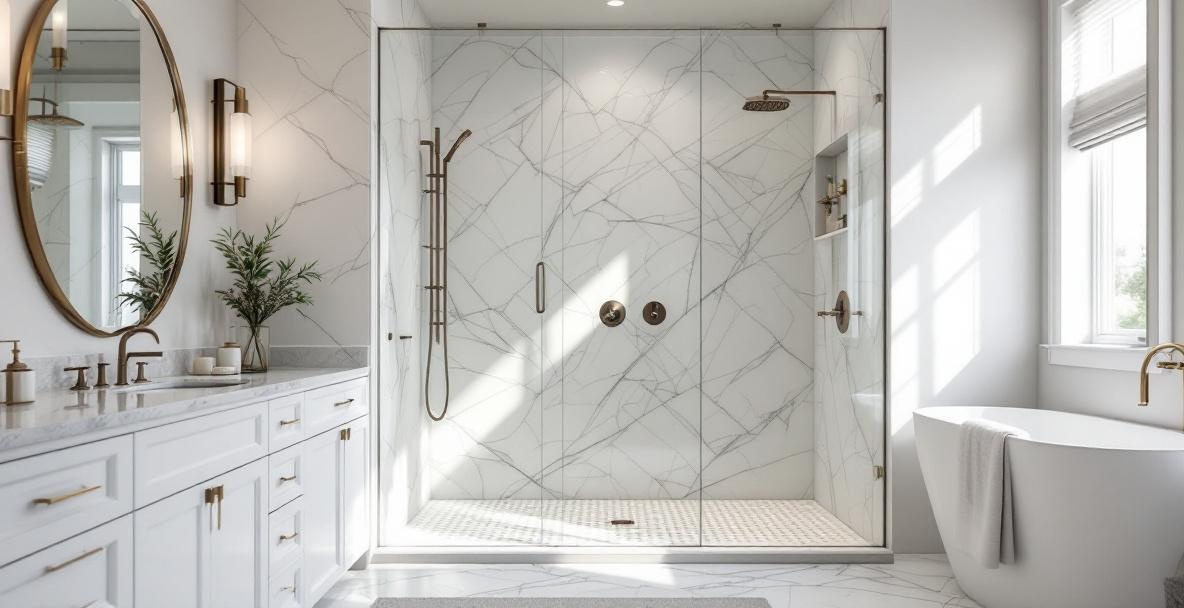
Frameless shower doors use thick tempered glass (3/8 or 1/2 inch) with minimal metal hardware — hinges, a handle, and sometimes a header bar. No continuous metal frame surrounds the glass. This is the premium option: cleaner look, easier to clean, longest lifespan, and highest impact on home value. Cost in DFW: $600–$3,300 installed depending on configuration.
Semi-frameless shower doors have a metal frame around the perimeter but frameless glass panels in between, or a framed door that swings within a frameless track system. Less expensive than fully frameless, still cleaner-looking than traditional framed. Cost in DFW: $400–$1,200 installed.
Framed shower doors encase the glass entirely in metal channels — aluminum, usually. The most affordable option, widely available at big-box stores, and easiest for DIY installation. However, the metal channels trap moisture and soap scum, requiring more maintenance. Cost in DFW: $200–$700 installed.
How Do I Measure for a Shower Door?
Accurate measurement is non-negotiable. An error of even 1/4 inch can mean a door that doesn't seal properly.
- 1
Measure the opening width
Measure at three heights: 6 inches from the bottom, in the middle, and 6 inches from the top. Use the smallest measurement as your reference width for ordering. If measurements vary by more than 1/4 inch, the walls are out of plumb and you should consider custom-cut glass.
- 2
Measure the opening height
Measure from the top of the shower threshold or curb to the ceiling (or to where you want the glass to end). Standard doors accommodate 67–72 inch heights. Taller ceilings may require custom heights.
- 3
Check for plumb
Hold a level against each wall where glass will meet. More than 1/4 inch deviation requires shimming or custom-cut glass to maintain a watertight seal.
- 4
Measure swing clearance
If considering a hinged or pivot door, measure the clear floor space in front of the shower. The door arc equals the door width — a 28-inch door needs 28 inches of unobstructed swing space.
- 5
Document everything
Write down all measurements and take photos of the shower opening from multiple angles. A reputable glass company will send a technician for precise field measurement before fabrication — never skip this step for custom work.
For custom frameless enclosures, never order from measurements you've taken yourself. Always have the glass company send a professional to measure. Tempered glass cannot be cut, drilled, or modified after it is tempered — a mistake costs the full price of a new panel.
What Glass Options Are Available?
Thickness: IRC building code R308 requires tempered or laminated safety glass for shower enclosures — standard annealed glass is not code-compliant (ICC 2024). Frameless doors typically use 3/8 inch (10mm) or 1/2 inch (12mm) tempered glass. Thicker glass is heavier, feels more substantial, and is structurally superior for large panels. Semi-frameless and framed doors often use 1/4 inch (6mm) tempered glass. If the absence of a frame is what gives you pause, the safety standards behind frameless enclosures are worth reading before you rule the style out — the glass itself is the structural element, and it is held to the same impact testing either way.
Clarity:
- Standard clear glass has a slight green tint visible from the edge, caused by iron content in the glass formula.
- Low-iron glass (marketed as Starphire, Optiwhite, or similar) is virtually colorless — no green tint. Preferred for modern bathrooms where color neutrality matters. Adds roughly 15–20% to glass cost.
Texture and privacy:
- Frosted glass — etched or sandblasted for privacy while still admitting light. Popular for en-suite bathrooms where privacy matters but natural light is valued.
- Rain glass — textured pattern resembling water droplets. Moderate privacy with visual interest.
- Reeded/fluted glass — vertical channel texture. Strong design trend in 2026, adds significant visual character (Houzz 2026).
- Clear glass — maximum light, open feel, shows every water spot.
Coatings: Factory-applied hydrophobic coatings (like Diamon-Fusion's DF Shield) cause water to bead off rather than spread and evaporate. Available on new glass at time of manufacture — the most effective and durable option. Ask about this when ordering.
How Do Frame Style and Hardware Affect Cost?
$600–$3,300
typical installed cost range for frameless shower enclosures in DFW ([Angi 2026](https://www.angi.com/articles/how-much-does-it-cost-install-glass-shower-door.htm))
Hardware is where cost variation gets significant within each tier. A basic frameless door uses simple butt hinges and a round handle — functional but plain. Premium hardware options include:
- European-style hinges (concealed or wall-mounted) — cleaner look, higher cost
- Pivot hinges — allows very wide doors without multiple hinges
- Knurled or decorative handles — adds tactile and visual interest
- Towel bar handles — adds functionality to the exterior face of the door
Hardware finishes to consider:
- Brushed nickel — most versatile, matches most bathroom fixtures, moderate price
- Chrome — classic, brightest reflectivity, must coordinate with other chrome in the bathroom
- Matte black — strong design statement, shows water spots more easily
- Brushed gold / champagne bronze — luxury aesthetic, coordinates with warm-toned bathrooms
- Oil-rubbed bronze — traditional/transitional look
Coordinate your shower door hardware finish with your faucet, showerhead, and towel bar. Mixing finishes deliberately (e.g., matte black hardware with brushed nickel faucets) can work in a well-designed space, but accidental mismatches look unfinished. When in doubt, match the dominant fixture finish.
What Should My Budget Be in 2026?
| Type | DFW Installed Range | Best For | |
| Framed (prefab) | $200–$700 | Budget, rental properties, tight spaces | |
| Semi-frameless | $400–$1,200 | Mid-budget, sliding applications, tubs | |
| Frameless (standard) | $600–$1,900 | Primary bathrooms, home value | |
| Frameless (custom) | $1,400–$3,300 | Non-standard openings, luxury features |
Custom pricing applies when your opening is non-standard, requires mitered glass-to-glass corners (instead of metal channels), involves specialty glass (low-iron, frosted, reeded), or uses premium hardware collections.
What's included in a professional quote:
- Tempered glass panels (fabricated to your exact dimensions)
- All hardware (hinges, handle, header if applicable)
- Silicone seals and bottom sweep
- Professional installation and leveling
- Cleanup
What's typically NOT included:
- Repairs to out-of-plumb walls
- Tile work around the installation
- Shower pan or threshold work
- Warranty on tile/substrate damage from water if walls were not properly prepared
How Do I Choose the Right Installer?
The installer matters as much as the product. Custom frameless glass is only as good as the measurements and the installation.
What to look for in a DFW glass company:
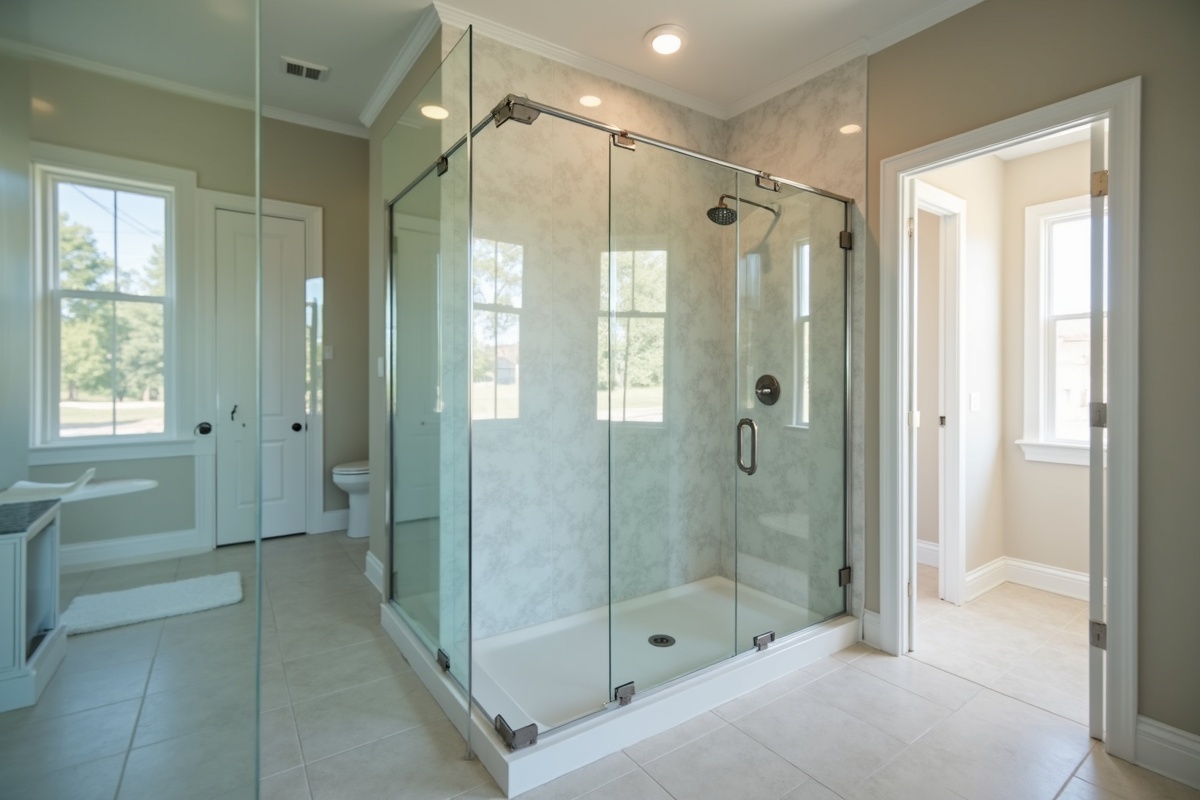
- Mitered corners: Ask whether the company offers mitered glass-to-glass corners or only butt joints. A mitered corner is a 45-degree cut that closes flush with no visible gap; most DFW shops only offer butt joints, which need a bulky silicone bead to seal.
- Professional field measurement: They should send a technician to measure before fabricating — never rely on homeowner measurements for custom work.
- Written warranty: A minimum 1-year warranty on hardware and labor is standard. Lifetime warranties on the glass itself (against breakage from defect) are available from quality manufacturers.
- Verifiable reviews: Check Google, Yelp, and Houzz for verified reviews specific to shower door installations — not just general glass work.
- Licensed and insured: General liability insurance protects you if installation causes damage to your home.
For the full vetting checklist — real DFW labor rates, credential checks, and the questions that separate careful installers from fast ones — see our guide to finding the right shower enclosure installer.
What is the most popular shower door style in DFW?
Frameless hinged doors are the most requested style in North Texas, accounting for roughly 45–50% of new installations. The clean aesthetic, ease of cleaning, and impact on home value make them the preferred choice for primary and en-suite bathrooms. Semi-frameless sliding doors are second most popular, especially for bathtub applications.
What size shower door do I need?
Measure the opening width at three heights and use the smallest dimension. Standard prefab doors fit openings from 22–36 inches wide. If your opening falls outside that range — or if measurements vary by more than 1/4 inch — you need a custom-fabricated door. Most shower openings in DFW homes range from 24–36 inches.
Is tempered or laminated glass better for shower doors?
Both are code-compliant (IRC R308). Tempered glass is far more common for residential showers — it shatters into small, relatively safe fragments if broken. Laminated glass holds together when broken (like car windshields) and is used in high-risk applications or when fragments falling into the shower are a concern. Tempered is the standard choice for most residential installations.
Should I choose framed or frameless for my bathroom?
Frameless is the better long-term choice for primary bathrooms — easier to clean, longer lifespan, and better for home value. Framed doors make sense for rentals, secondary bathrooms, or tight budgets. If you're staying in your home for 5+ years and it's your primary bathroom, frameless typically delivers better ROI.
How long does shower door installation take?
A professional frameless shower door installation typically takes 2–4 hours for the installation itself, after a 1–2 week lead time for glass fabrication. The total timeline from first measurement to completed installation is usually 10–14 days. Prefabricated framed doors can often be installed same-week. For the full week-by-week breakdown — including the 24-hour silicone cure before you can actually use the shower — see how long shower door installation takes.
Also see our frameless shower doors in DFW, our shower door replacement service if you're swapping out an existing door, and our frameless shower door cost guide.
Infinity Glass & Glazing provides free in-home consultations and precise field measurements for custom shower door projects throughout DFW — including Denton, Corinth, Lewisville, Flower Mound, Frisco, Southlake, Keller, McKinney, and surrounding communities. Schedule your free estimate today and get the right door the first time.
Related reading: