The difference between mitered and butt joint glass corners comes down to one thing: whether you can see the seam. A mitered joint cuts each panel at 45 degrees so they meet flush, creating an invisible corner. A butt joint presses two flat edges together with silicone filling the gap. Frameless shower doors range from $600 to $1,900 installed, with full enclosures reaching $3,985 to $10,980 (HomeGuide, 2026) -- and the corner joint type is a major quality differentiator within that range.
If you're investing in a frameless shower enclosure, the corner joints will be the most visible detail in the entire installation. Yet most homeowners don't know there's a choice to make. They get whatever their installer defaults to -- which, in almost every case, is a butt joint.
This comparison breaks down the real differences between mitered and butt joint corners so you can make an informed decision before signing a contract. We'll cover appearance, strength, cost, and why one option is far rarer than the other.
[INTERNAL-LINK: mitered corner deep dive --> /blog/mitered-glass-corners-shower]
TL;DR: Mitered corners cut glass at 45 degrees for a seamless, invisible joint. Butt joints press flat edges together with visible silicone. Mitered costs 10-15% more but creates a stronger, cleaner connection. Most Texas companies default to butt joints because mitering requires CNC equipment and skilled fabricators. Full frameless enclosures run $3,985-$10,980 installed (HomeGuide, 2026).
What Is the Difference Between Mitered and Butt Joint Corners?
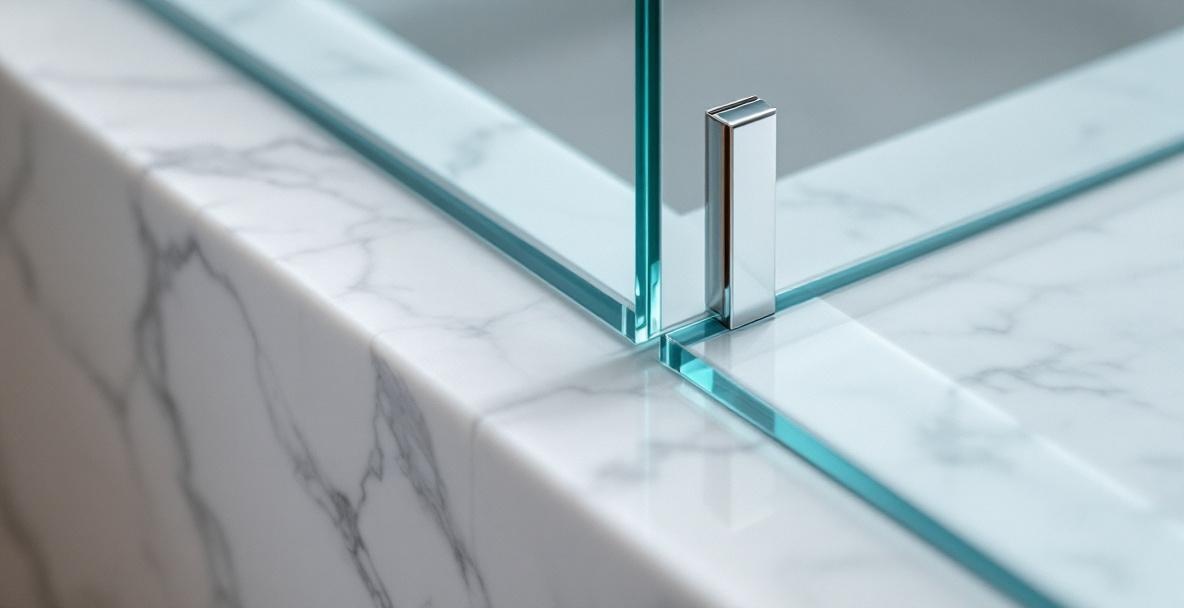
A mitered corner bevels each glass panel's edge at 45 degrees so they nest together at a precise 90-degree angle. A butt joint places one panel's flat edge against the face of the adjacent panel, relying on silicone to fill the resulting gap. According to HomeGuide (2026), frameless enclosures range from $3,985 to $10,980 installed -- and the joint type significantly affects both appearance and longevity within that range.
The simplest way to understand the difference? Hold your hands flat and press the fingertips of your left hand against the side of your right hand. That's a butt joint -- functional but obviously two separate pieces meeting.
Now imagine both hands' fingertips are cut at matching angles and they slide together like puzzle pieces. That's a miter. The seam virtually disappears.
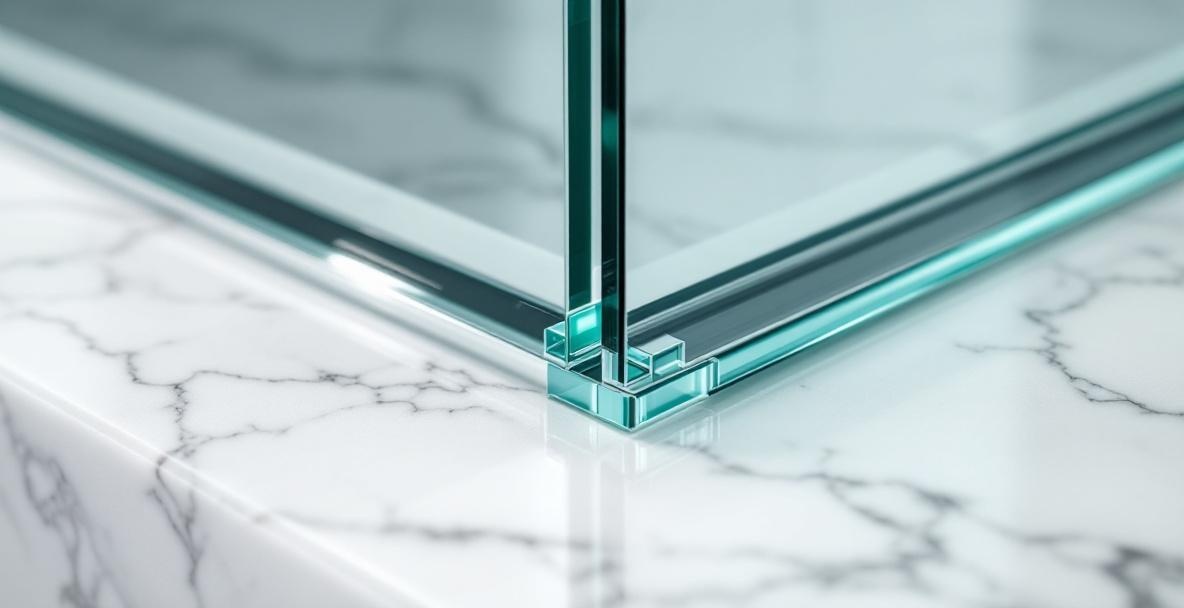
In practical terms, a butt joint leaves a visible line of silicone -- usually 1/16 to 1/8 inch wide -- along the entire height of the corner. A mitered joint replaces that silicone line with a hairline seam where glass meets glass directly.
$3,985-$10,980
installed cost range for frameless shower enclosures where corner joint type affects quality (HomeGuide, 2026)
Both methods create a functional, watertight corner when installed correctly. The difference is whether your enclosure looks like two panels joined together or one continuous glass surface wrapping around a corner.
How Do Mitered Corners Achieve a Seamless Appearance?
Mitered corners achieve their seamless look by removing material at a precise 45-degree angle from each panel's edge, so the two beveled surfaces meet flush with no gap between them. According to IDEAL Shower Doors, a properly executed mitered corner creates a rigid joint that increases overall enclosure strength while eliminating the visible silicone line that defines butt joints.
The physics of a miter joint are elegant. When you cut two pieces of glass at exactly 45 degrees and bring them together, the angles cancel out and form a perfect 90-degree corner. The contact happens along the full angled surface area -- not just at a thin edge line.
What makes this look seamless is the absence of filler material. With a butt joint, silicone acts as both adhesive and gap-filler. Even the best silicone application creates a visible line that discolors over time. With a miter, silicone is applied behind the joint for bonding, but the visible surface is glass touching glass.
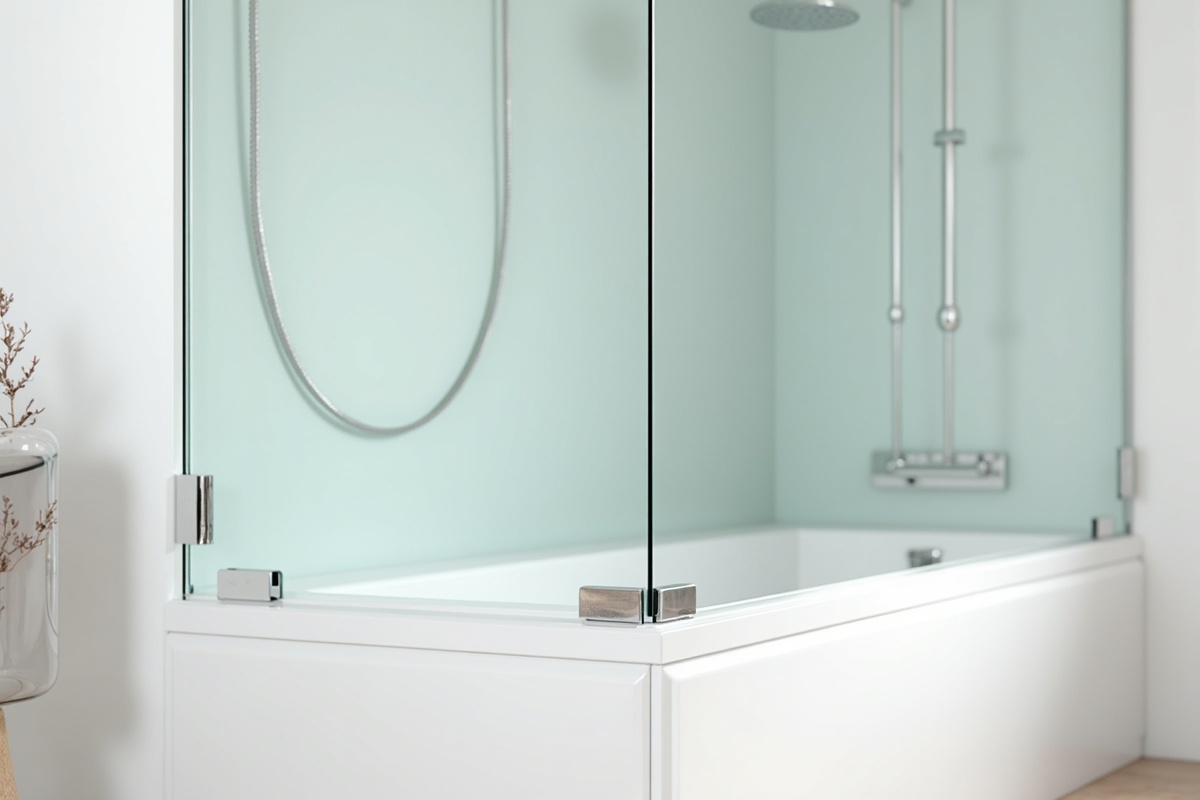
From a design perspective, mitered corners let the glass become the feature rather than the hardware or sealant. In high-end bathrooms where clean lines matter, this detail separates a good enclosure from a great one.
[UNIQUE INSIGHT] We've noticed that homeowners who see a mitered corner in person for the first time almost universally describe it the same way: "I didn't know that was possible with glass." It's not that butt joints look bad -- it's that mitered corners look like they shouldn't be possible. That surprise factor is what makes them a genuine differentiator.
Which Joint Type Is Stronger?
Mitered joints are structurally stronger than butt joints at the corner connection point. The angled mating surfaces create approximately 40% more contact area than flat-edge butt joints on the same glass thickness. Tempered glass used in frameless showers is already 4-5 times stronger than annealed glass, and a mitered joint maximizes that strength by distributing stress across a larger bonded surface (IDEAL Shower Doors).
Here's the engineering behind the strength difference.
In a butt joint, the bond between two panels happens along a contact line roughly equal to the glass thickness -- so 3/8 inch or 1/2 inch wide. That's a very narrow bonding surface for panels that might be 72 to 84 inches tall.
In a mitered joint, the 45-degree cut exposes a bonding surface that's roughly 1.4 times the glass thickness (the hypotenuse of a right triangle). On 1/2-inch glass, that means the mitered bonding surface is approximately 0.7 inches wide versus 0.5 inches for a butt joint. Over an 80-inch panel height, that's significantly more total bonded area.
More bonded area means better load distribution, less stress concentration at any single point, and greater resistance to racking forces. The result is an enclosure that flexes less during daily use and maintains its alignment longer.
How Does Cost Compare Between Mitered and Butt Joints?
Mitered corners typically add $200 to $600 to a frameless shower enclosure's total cost, representing a 10-15% premium over the same design with butt joints. For context, 1/2-inch glass already costs 20-30% more than 3/8-inch (Schicker, 2025), so mitering on thicker glass compounds the premium but also delivers the most dramatic quality improvement.
Here's a head-to-head cost comparison for a typical DFW corner enclosure:
| Corner appearance |
| Added cost |
| Contact area at joint |
| Silicone dependency |
| Fabrication time |
| Maintenance |
| Equipment required |
| Available from most shops |
The cost premium for mitered corners is almost entirely labor and risk, not materials. The glass itself is the same price regardless of edge treatment. But mitering takes more machine time, carries higher breakage risk during fabrication, and requires more experienced operators.
Is a 10-15% premium worth it? Consider the math. On a $5,000 enclosure, mitered corners add $500-$750. Over the 20-30 year lifespan of a frameless enclosure, that works out to roughly $25-$37 per year for a permanent aesthetic and structural upgrade.
Why Do Most Texas Companies Default to Butt Joints?
Most Texas shower glass companies default to butt joints because they lack the CNC edging equipment, trained fabricators, and quality control processes needed for consistent mitered work. Despite the frameless glass market reaching $3.5 billion in 2024 (Stats Market Research, 2024), mitered corners remain a niche capability that requires significant capital investment most small shops can't justify.
There's no conspiracy here -- it's economics and capability.
A butt joint requires basic edge polishing equipment that every glass shop already owns. Flat-polishing a glass edge is a fundamental skill. The equipment is affordable, the training is straightforward, and the risk of breakage is low.
Mitered edging is a completely different operation. It requires CNC machines calibrated to hold a precise 45-degree angle across panels that may be six or seven feet long. Calibration drift of even a fraction of a degree produces a visible gap at the joint. The machines cost tens of thousands of dollars, and maintaining calibration takes ongoing attention.
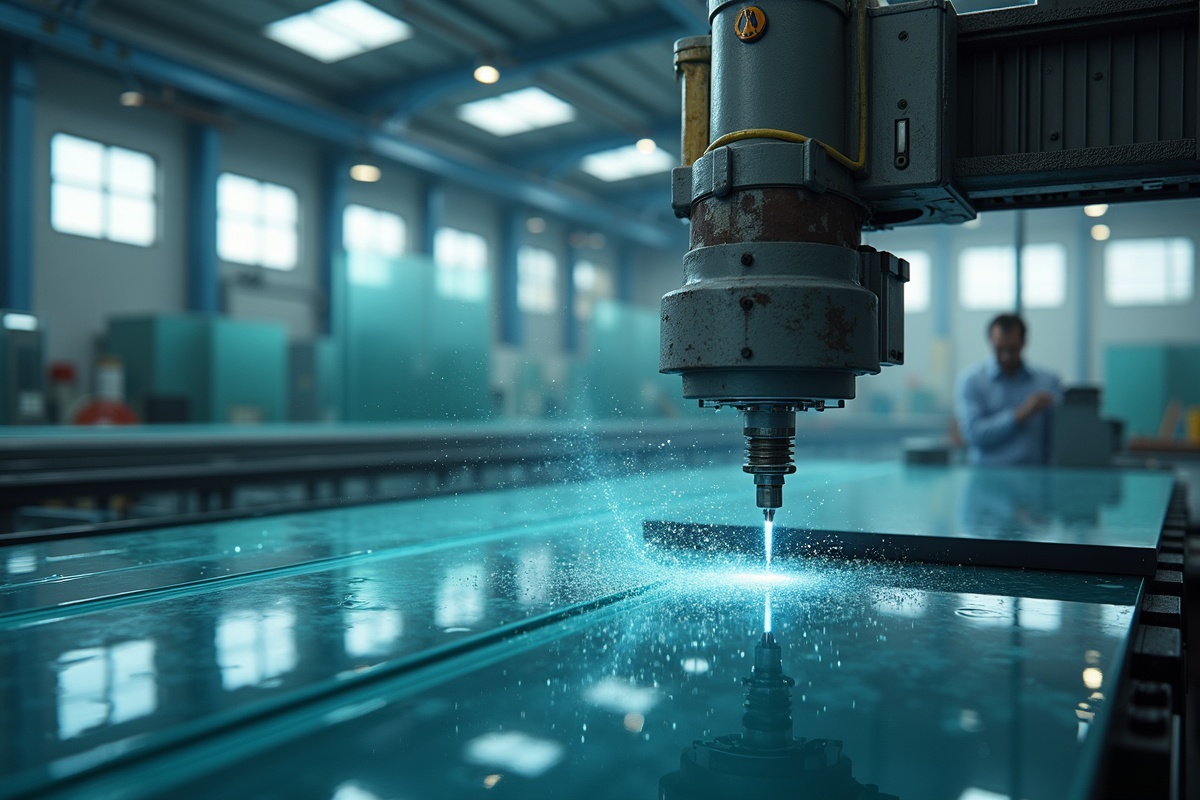
Then there's the breakage factor. The thin feathered edge of a 45-degree miter on tempered glass is fragile during handling. An experienced fabricator knows how to handle and transport mitered panels without chipping. An inexperienced one will break panels at a rate that makes mitering unprofitable.
[PERSONAL EXPERIENCE] We've been mitering in-house for over 30 years. Our breakage rate is well below industry averages because our fabricators have thousands of hours of experience with this specific process. A shop that tries to add mitering without that depth of experience will struggle with consistency and waste.
When Should You Choose Mitered Over Butt Joint?
Choose mitered corners when you're building a primary bathroom you'll use daily, investing in a corner or L-shaped enclosure where the joint is highly visible, or using 1/2-inch glass where the structural benefit is most significant. Mid-range bathroom remodels return 65-80% ROI at resale (Cost vs. Value, 2025), and premium details like mitered corners help protect that investment.
Here's a practical decision framework:
Choose mitered when:
- Your enclosure has 90-degree glass-to-glass corners (most corner and L-shaped designs)
- You're using 1/2-inch glass where the structural advantage is most meaningful
- The bathroom is a primary or master bath you'll see every day
- You care about long-term maintenance and want to minimize silicone exposure
- You want a detail that genuinely differentiates your bathroom from stock installations
Choose butt joints when:
- Your enclosure is a single door or inline panel with no glass-to-glass corners
- Budget is the primary constraint and the 10-15% premium matters
- The enclosure is for a guest bath, rental unit, or short-term living situation
- Your installer doesn't offer mitered -- and you don't want to switch companies
How to Find a DFW Installer Who Does Both
Finding an installer in Dallas-Fort Worth who can competently execute both mitered and butt joint corners gives you genuine choice rather than being limited by your contractor's capabilities. With frameless enclosures running up to $10,980 installed (HomeGuide, 2026), you deserve an installer whose capabilities match the price point.
Not every company that claims to offer mitered corners actually fabricates them in-house. Some outsource the mitering to a third-party shop, which adds cost, lead time, and removes quality control from the installer's hands. Others will accept the job and then quietly deliver butt joints, hoping you won't know the difference.
Here's how to verify capability:
- 1
Ask to Visit Their Fabrication Shop
A company that miters in-house will have CNC edging equipment visible on their shop floor. If they say they outsource, ask who does the work and what the quality control process looks like. - 2
Request Close-Up Photos of Completed Mitered Corners
Any company with mitering experience will have a portfolio of corner detail shots. The joint should be a hairline seam with no visible silicone on the exterior face. - 3
Ask How Long They Have Been Mitering
This is a skill-dependent process. A company with decades of experience will produce fundamentally different results than one that added mitering recently. Experience directly correlates with consistency. - 4
Get Both Options Quoted Side by Side
A legitimate installer will quote both mitered and butt joint versions of your enclosure so you can see the exact cost difference and make an informed choice.
[INTERNAL-LINK: full installer evaluation guide --> /blog/premium-frameless-shower-enclosure]
Make an Informed Choice for Your DFW Shower
The corner joint is the detail that separates a good frameless shower from a great one. Now you know the difference -- and you know what to ask for.
Infinity Glass & Glazing fabricates mitered corners in-house at our Corinth, TX facility. We've been doing it for over 30 years. If you want to see a mitered corner up close before making a decision, visit our shop or schedule a free consultation.
Is a mitered glass corner stronger than a butt joint?
Yes. A mitered joint creates approximately 40% more bonding surface area than a butt joint on the same glass thickness. This means better load distribution, less flex during use, and longer-lasting structural integrity. The difference is most significant on larger enclosures using 1/2-inch glass.
How much more does a mitered corner cost compared to a butt joint?
Mitered corners typically add $200 to $600 to a frameless enclosure's total price, representing a 10-15% premium. The added cost covers additional fabrication time, CNC machine operation, and the higher breakage risk during the mitering process. The glass material itself costs the same.
Can you retrofit mitered corners on an existing frameless shower?
No. Mitering must be done during initial fabrication, before the glass is tempered. Once glass is tempered, it cannot be cut or modified without shattering. If you want mitered corners, the glass panels must be fabricated specifically for your enclosure from scratch.
Do mitered joints require more maintenance than butt joints?
Actually, less. Butt joints rely on a visible silicone bead that can yellow, peel, or collect mildew over time and may need re-application every few years. Mitered joints use silicone behind the glass-to-glass contact where it's protected from UV and water exposure. There's less visible sealant to maintain.
What glass thickness works best for mitered corners?
Both 3/8-inch and 1/2-inch tempered glass can be mitered, but 1/2-inch glass produces the best results. The thicker glass creates a wider bonding surface at the 45-degree cut and is more structurally forgiving during handling. According to Schicker, 1/2-inch glass costs 20-30% more than 3/8-inch but is the preferred choice for premium mitered enclosures.
Related reading: mitered glass corners and our frameless shower doors in DFW.