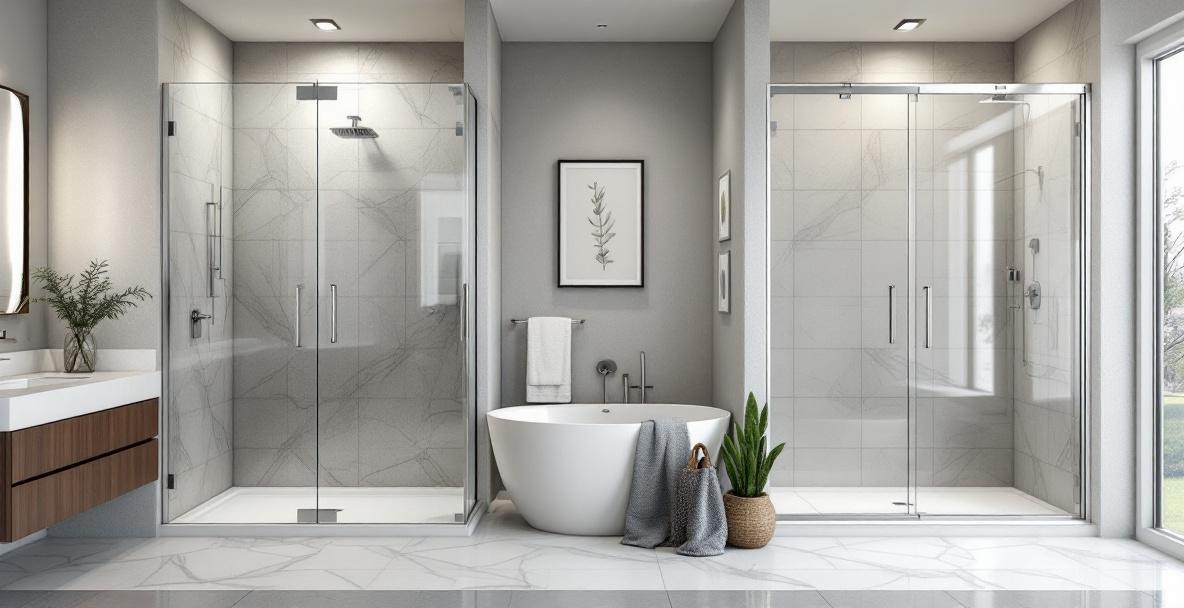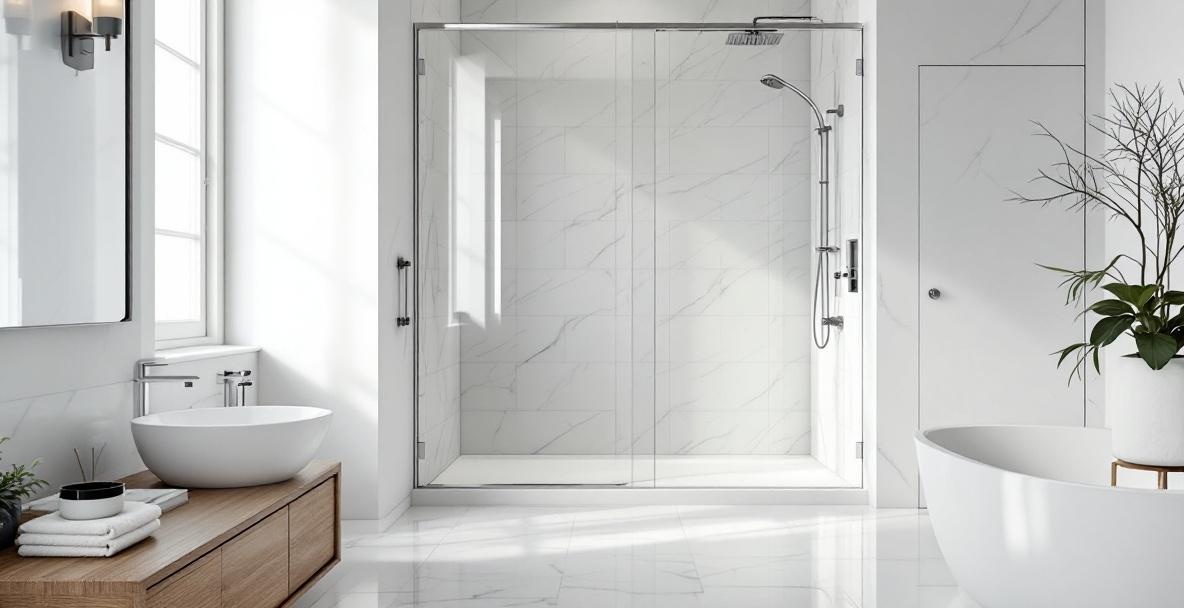
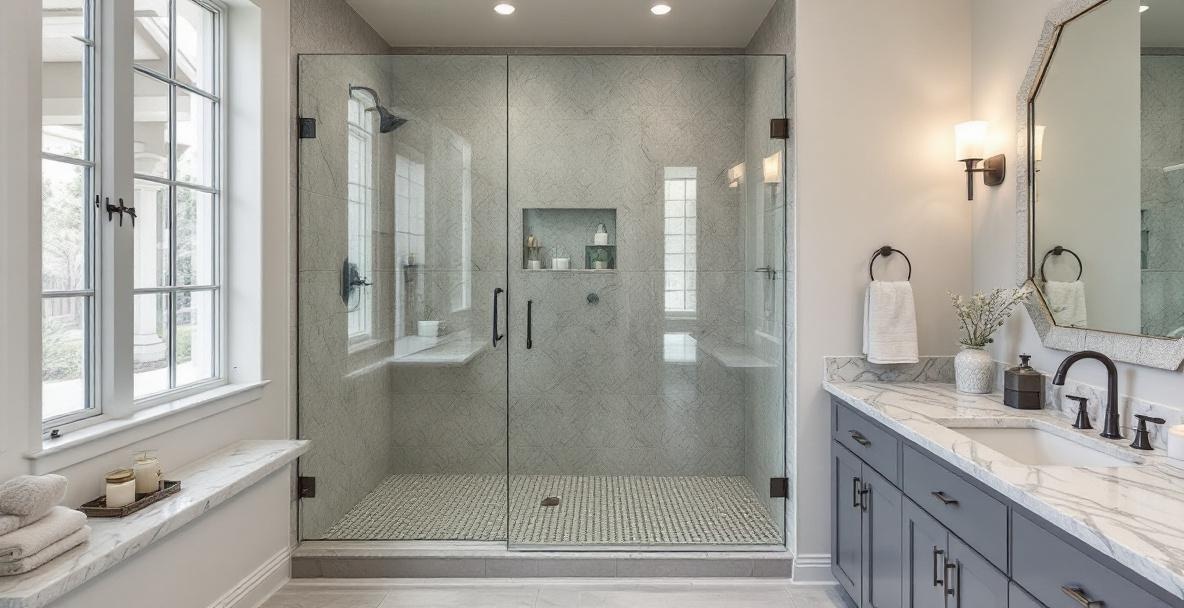
Not every shower door company in DFW delivers the same quality. SGCC certification verifies compliance with ANSI Z97.1 safety standards (Glass Magazine), yet many local installers skip this credential entirely. Knowing what to look for -- and what to avoid -- saves you thousands in rework.
Choosing a shower door company feels straightforward until you start comparing quotes. One company charges $800, another charges $2,400 for the same opening, and you can't tell why. The difference usually comes down to glass thickness, hardware grade, whether the panels are cut to your opening or pulled from stock, and how much experience the crew setting them actually has.
This checklist gives you a clear framework for evaluating any shower door company in the Dallas-Fort Worth area. We've built it from 30+ years of seeing what goes wrong when homeowners pick the cheapest bid -- and what goes right when they ask the right questions.
TL;DR: The best shower door company in DFW should hold SGCC certification, measure your opening in person before any glass is ordered, offer written warranties on both glass and labor, and provide itemized quotes. Ask about mitered corners on corner enclosures -- most companies can't do them, and that tells you a lot about their capabilities.
What Makes a Shower Door Company the Best in DFW?
The best shower door companies in DFW measure every opening on site before ordering glass, offer mitered glass-to-glass corners, and carry SGCC certification verifying ANSI Z97.1 compliance (Glass Magazine). These three factors predict quality more reliably than price or marketing.
Tempered glass cannot be trimmed, drilled, or adjusted once it leaves the plant -- every dimension and every hardware cutout has to be right before the order goes in. That makes the measurement the single highest-risk step in the whole job. We've seen homeowners wait an extra 2-3 weeks for replacement panels because their original company quoted from photos or homeowner-supplied dimensions instead of measuring the opening themselves.
Why On-Site Measurement Matters
Walls in most homes aren't plumb. A company that laser-measures at multiple points catches the out-of-square conditions that a tape measure at one height misses -- and specifies the panel to match. A 1/8-inch error at the top of a 76-inch panel becomes a visible wedge of daylight at the bottom, and the only fix is a new panel.
Why Mitered Corners Matter
A mitered corner is two panels cut at 45 degrees so they close flush against each other. A butt joint sets one panel's face against the other's edge, leaving a gap that has to be filled with a heavy silicone bead. Most DFW shops only quote butt joints. Asking the question tells you quickly how much precision work a company actually does: "Do you offer mitered glass-to-glass corners, and is that included or an add-on?"
SGCC
certification is the industry gold standard for verifying glass safety compliance
Citation capsule: SGCC-certified shower door companies verify their glass meets ANSI Z97.1 and CPSC 16 CFR 1201 safety standards through independent testing, according to Glass Magazine. In DFW, fewer than half of local installers carry this certification.
What Certifications Should They Have?
Every shower door in America must meet ANSI Z97.1 and CPSC 16 CFR 1201 safety glazing standards (Glass Magazine). The Safety Glazing Certification Council (SGCC) independently tests and verifies compliance -- but carrying SGCC certification is voluntary, not required.
That distinction matters. Any glass shop can claim their products meet safety standards. SGCC certification means an independent third party has actually tested the glass and confirmed it. Think of it like the difference between a restaurant saying "our kitchen is clean" versus passing a health inspection.
Key Certifications to Ask About
- SGCC certification -- verifies tempered glass meets ANSI Z97.1 safety standards
- Texas contractor license -- glass installers in Texas should carry a general contractor or specialty license depending on the municipality
- General liability insurance -- minimum $1 million coverage protects you if something goes wrong during installation
- Workers' compensation -- covers injuries to workers on your property so you're not liable
How to Verify
Ask the company for their SGCC number and look it up on the SGCC website. Request a certificate of insurance (COI) from their insurer -- not just a verbal confirmation. Any reputable company will provide these documents without hesitation.
How Do You Read and Compare Reviews?
Online reviews for shower door companies in DFW average 4.2 stars on Google, but the number of reviews matters more than the rating. A company with 150 reviews at 4.5 stars is more reliable than one with 8 reviews at 5.0 stars.
Don't just scan star ratings. Read the negative reviews first -- they reveal patterns. One bad review about scheduling is normal. Five bad reviews about the same issue (leaking, wrong measurements, no callbacks) signals a systemic problem.
What to Look for in Reviews
- Specific details -- "they mitered the corners on our corner unit and it looks seamless" is more trustworthy than "great job"
- Photos -- reviews with customer photos of completed work are gold
- Response to complaints -- how the company handles negative reviews tells you how they'll handle your issues
- Recency -- reviews from the last 6 months are more relevant than ones from 3 years ago
Where to Check
Google Reviews carries the most weight because it's hardest to fake. Also check the Better Business Bureau for complaints (not just the rating), and Angi or Houzz for project-specific feedback. Cross-reference what you find -- if a company has great Google reviews but multiple BBB complaints, dig deeper.
[PERSONAL EXPERIENCE] In our experience, the most telling reviews mention specific details about the fabrication or installation process. Generic five-star reviews that read like they could apply to any business are less reliable than detailed accounts of the actual work.
What Questions Should You Ask During a Consultation?
The consultation is your best opportunity to evaluate a shower door company's expertise. Companies that do this work every week can answer technical questions about glass thickness, edge finishing, and hardware compatibility without hesitation.
Here's the list of questions every DFW homeowner should ask before signing a contract:
- 1
Who measures the opening?
The company should send someone to laser-measure in your home before any glass is ordered. If they want to quote from your photos or your own dimensions, that's the error you'll be paying to fix later. - 2
What glass thickness do you recommend for my opening?
The right answer depends on your opening size. Standard frameless doors use 3/8-inch to 1/2-inch tempered glass. If they suggest 1/4-inch for a frameless door, that's a red flag. - 3
Will the glass be SGCC-certified?
This confirms the glass meets ANSI Z97.1 and CPSC 16 CFR 1201 safety standards through independent testing. - 4
Do you offer mitered corners on corner enclosures?
Mitered corners require specialized equipment and skilled fabricators. If a company can do them, it signals a high level of craftsmanship. If they can't, ask why. - 5
What is included in the warranty?
Get specifics -- does it cover the glass, the hardware, the installation labor, and the seals? For how long on each? - 6
Who will be doing the installation?
Ask how many enclosures like yours the installing crew has set, and who you call if something isn't right afterward. One company should stay accountable from measurement through warranty, whoever is holding the glass on install day.
What Warranty Should a Shower Door Company Offer?
A reputable shower door company in DFW should offer at minimum a lifetime warranty on tempered glass against defects and a 1-2 year warranty on installation labor and seals. Hardware warranties vary by manufacturer but should cover at least 5 years.
Warranties are where you separate serious companies from fly-by-night operations. If a company won't stand behind their work in writing, they don't trust their own quality -- and neither should you.
What a Good Warranty Covers
- Glass -- lifetime against manufacturing defects (chips, cracks from tempering flaws, spontaneous breakage from nickel sulfide inclusions)
- Hardware -- 5-10 years on hinges, handles, and clamps against finish deterioration and mechanical failure
- Installation labor -- 1-2 years covering any issues from improper installation (leaks, alignment problems, loose hardware)
- Seals and sweeps -- 1 year minimum; these are wear items that eventually need replacement
What a Good Warranty Does NOT Cover
- Damage from misuse or impact
- Normal wear on seals and sweeps beyond the warranty period
- Hard water staining (this is maintenance, not a defect)
- Modifications made by anyone other than the installing company

Citation capsule: Reputable shower door companies in DFW typically offer lifetime warranties on tempered glass against defects and 1-2 year warranties on installation labor, with hardware warranties ranging from 5 to 10 years depending on the manufacturer.
What Red Flags Should You Watch For?
Red flags include quoting without an in-home measurement, refusing to show proof of insurance, and offering prices significantly below market range. In DFW, frameless enclosures below $800 installed almost always mean thin glass, cheap hardware, or stock panels sized to something other than your opening.
Here's a quick reference of warning signs:
Pricing red flags:
- Quote given over the phone without measuring (every opening is different)
- No itemized breakdown of glass, hardware, and labor
- Price that's 40%+ below other quotes for the same scope
- Deposits exceeding 50% of the total
Quality red flags:
- Can't tell you the glass thickness they'll use
- Only offers one hardware finish (usually chrome)
- No portfolio or photos of completed projects
- Doesn't mention SGCC certification or safety standards
Communication red flags:
- Won't provide written warranty before signing
- Avoids answering questions about fabrication
- Pushes you to sign immediately ("this price is only good today")
- Takes days to respond to calls or emails
The biggest red flag we've encountered over 30 years in the business is a company that can't explain their own process. If you ask "how are the corners finished on a 90-degree enclosure?" and you get a blank stare, they're passing your measurements down the line without understanding what they're ordering. You want the people who can tell you the thickness, the edge finish, and how the corners are joined — and who will be the ones standing in your bathroom setting the panel. Locally that usually means a shop with a real address in the metro rather than a lead-broker with a call center; ours is in Corinth.
Why Do Mitered Corners Separate Good from Great?
Mitered glass corners are cut at a precise 45-degree angle so two panels meet flush at a 90-degree joint -- creating an invisible seam with no gap. According to IDEAL Shower Doors, this technique produces a visually seamless and structurally superior joint.
Most shower door companies in DFW use butt joints on corner enclosures. That means one panel's flat edge presses against another panel's flat edge, with a bead of silicone filling the gap. It works, but you can see the joint clearly, and the silicone eventually yellows and needs replacement.
The Craftsmanship Difference
Mitering requires CNC edging equipment that costs tens of thousands of dollars and skilled operators who understand the tolerances involved. The edge is polished at a precise 45-degree angle, creating a feathered tip that must be handled carefully during installation. One small chip on tempered glass can cause it to shatter.
This is why most companies don't offer mitered corners -- they don't have the equipment, the training, or the willingness to invest in both. When you find a company that miters as standard practice, you've found a company that takes craftsmanship seriously.
What It Looks Like in Practice
On a standard 90-degree corner enclosure, mitered corners mean:
- No visible silicone line at the glass joint
- A clean, architectural edge that looks custom
- Better water resistance at the joint
- Greater structural rigidity in the overall enclosure
[ORIGINAL DATA] At Infinity Glass & Glazing, we've been specifying and setting mitered glass corners for over 30 years. It's not an add-on or upgrade -- it's how we build every corner enclosure we install. Getting a miter to close flush depends on measuring the opening accurately and setting the panels within tight tolerance, and that's what three decades of doing it buys you.
45 degrees
precision miter angle creates an invisible seam at glass-to-glass corners
Citation capsule: Mitered glass corners cut at a 45-degree angle create flush, invisible seams at 90-degree enclosure joints, providing both a visually seamless appearance and a structurally superior connection compared to standard butt joints, according to IDEAL Shower Doors.
Find the Right Shower Door Company in DFW
Choosing a shower door company is a decision that lives in your bathroom for 20-30 years. Take the time to verify certifications, read reviews carefully, ask specific technical questions, and get everything in writing. The cheapest quote rarely produces the best result.
If you're in the Dallas-Fort Worth area and want a company that measures in your home, miters corners as standard, and stands behind every installation with a written warranty -- reach out for a free consultation. We're happy to answer every question on this checklist and show you the difference quality makes.
How do I verify a shower door company is licensed in Texas?
Check with your city's permitting office or the Texas Department of Licensing and Regulation. Ask the company for their license number and verify it directly. Also request a certificate of insurance showing general liability and workers' compensation coverage.
What warranty is reasonable for a frameless shower door?
Expect a lifetime warranty on the tempered glass against defects, 5-10 years on hardware, and 1-2 years on installation labor and seals. Any company offering less than this is below industry standard for the DFW market.
Should I get multiple quotes for a shower door installation?
Yes -- get at least three quotes from different companies. Make sure each quote is itemized so you can compare glass thickness, hardware quality, and labor costs separately. The lowest price rarely means the best value when it comes to custom glass work.
How long should a professional shower door installation take?
A single frameless door takes about 2 hours to install on-site. A full corner enclosure takes 3-4 hours. The total process from measurement to completion spans 2-4 weeks including custom fabrication. Be wary of same-day installations -- they usually mean pre-cut stock sizes, not custom-fitted glass.
Related reading: frameless shower doors in DFW and our custom shower enclosures.
Related reading: