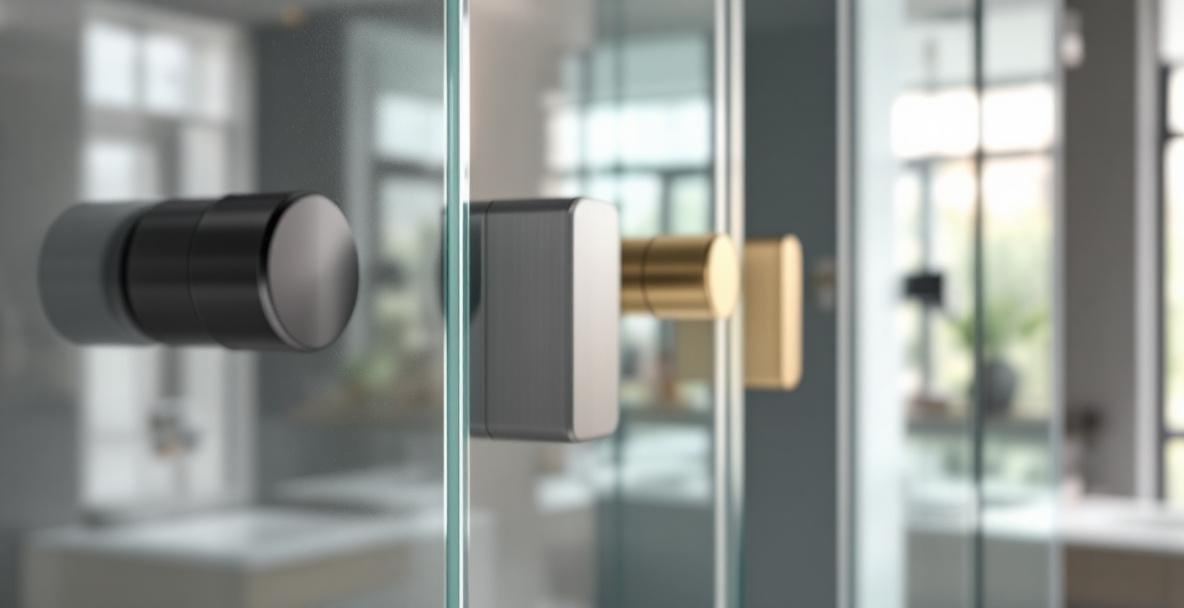
Brushed nickel hides water spots and fingerprints better; chrome is easier to clean when you do clean it. Brushed finishes are preferred by 51% of design professionals vs. 39% for polished finishes in 2026 (NKBA 2026). For most DFW homeowners, brushed nickel is the better everyday choice — but chrome remains the right pick for specific bathroom styles and for those who prefer a bright, reflective finish with a quick wipe routine.
Chrome and brushed nickel are the two most neutral shower hardware finishes — neither as bold as matte black nor as warm as brushed gold. They're often treated as interchangeable, but they're actually quite different in how they perform day-to-day, how they age, and which bathroom aesthetics they serve best.
If neutral is not what you're after, the comparison changes shape entirely: matte black reads as a deliberate design statement rather than a background choice, and it drives the rest of the room's fixture selections in a way chrome and nickel do not. That trade-off is worked through in our guide to the black frame shower enclosure trend.
This comparison gives you a clear framework for choosing between them based on your actual priorities — not just aesthetics.
What Is the Visible Difference Between Chrome and Brushed Nickel?
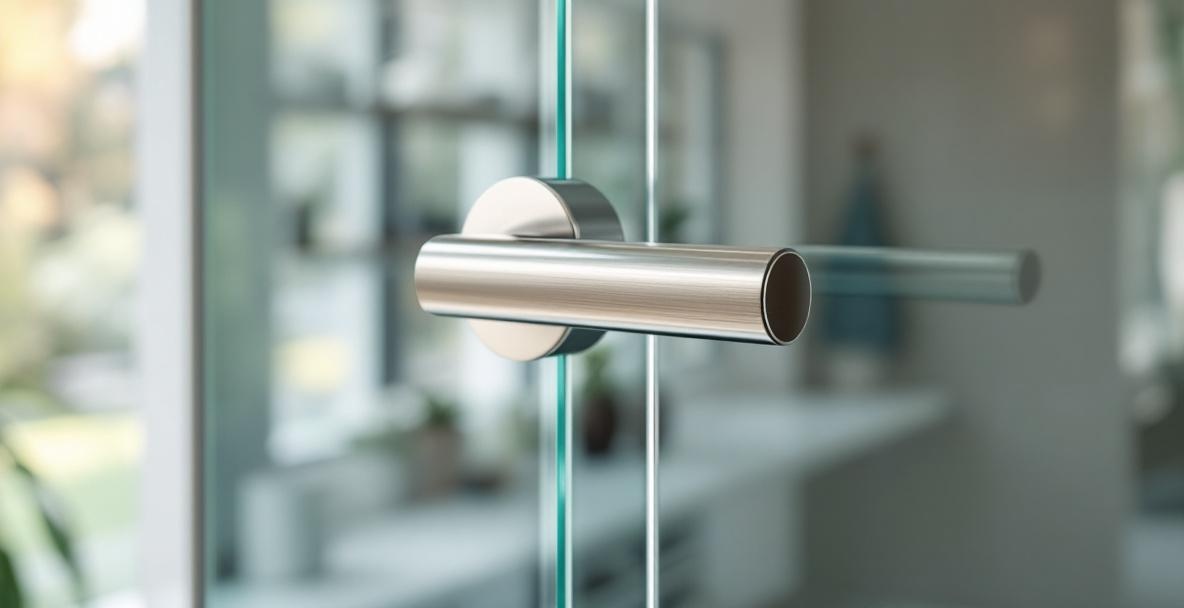
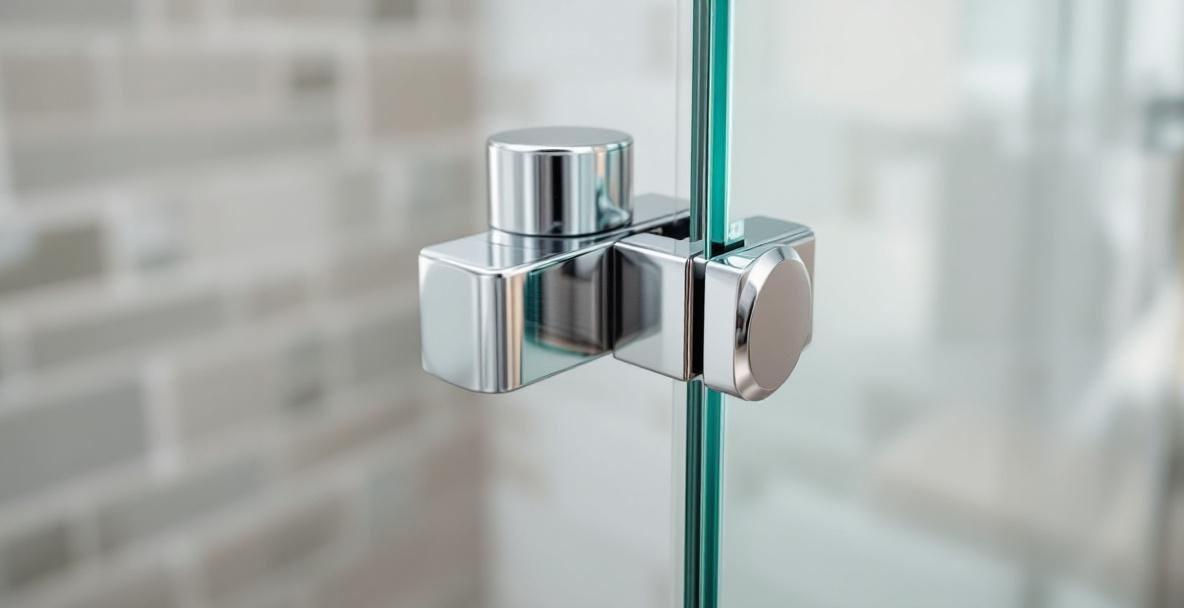
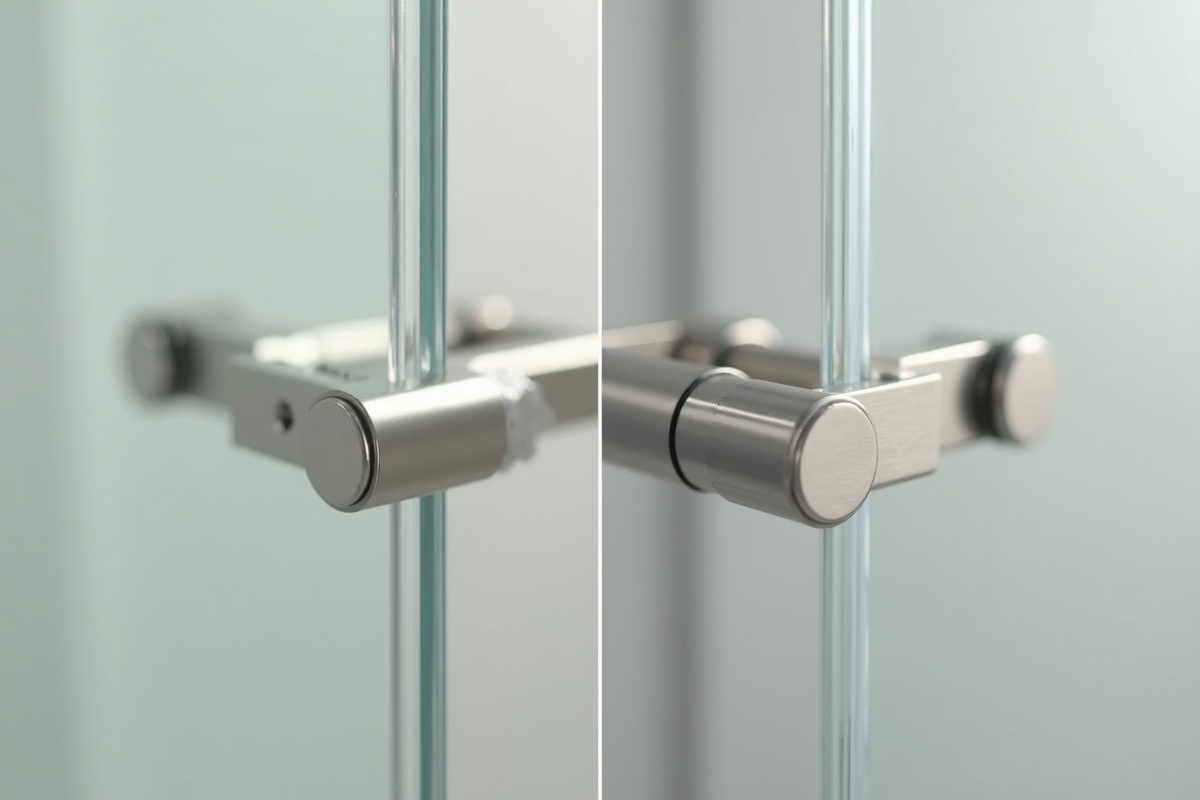
Chrome is bright, mirror-like, and cool-toned; brushed nickel is matte, directional-textured, and slightly warm-toned. The key visual difference: chrome reflects light sharply, making it appear bright and crisp. Brushed nickel diffuses light across its textured surface, appearing softer and slightly warmer.
Up close:
- Chrome: Highly reflective. You can see your reflection in quality chrome hardware. The surface is smooth and optical.
- Brushed nickel: Matte with a directional grain (the "brushed" texture from polishing in one direction). Slightly warm gray tone. No visible reflection.
In the context of a bathroom:
- Chrome hardware reads as "classic," "clinical," or "crisp." Pairs best with white tile, bright fixtures, and contemporary or transitional design.
- Brushed nickel reads as "soft," "warm," or "neutral." Pairs well with almost everything — it's the most versatile hardware finish on the market.
How Does Each Finish Perform in Daily Use?
Brushed nickel requires less frequent cleaning to look good — water spots and fingerprints are hidden by the textured surface. Chrome requires more frequent attention because every spot and print shows clearly against the reflective surface, but individual cleaning sessions are faster.
| Performance Factor | Chrome | Brushed Nickel | |
| Water spot visibility | High (very visible) | Low (mostly hidden) | |
| Fingerprint visibility | High (very visible) | Low (texture hides them) | |
| Cleaning frequency | Weekly or more | Bi-weekly is fine | |
| Per-cleaning effort | Quick — wipe clean easily | Slightly more effort to restore shine | |
| Hard water performance | Poor — deposits very visible | Better — deposits less visible | |
| Aging appearance | Stays bright until damaged | Consistent matte texture |
In DFW where many municipalities supply moderately hard water, chrome hardware in an active-use shower will develop visible calcium deposits within days without daily wiping. Brushed nickel in the same water develops deposits at the same rate but hides them behind its textured surface until they become significant. The glass panels fight the same hard-water battle — the frameless shower door maintenance guide covers how a hydrophobic coating slows mineral buildup on the glass the way finish choice manages it on the hardware.
51%
of design professionals prefer brushed finishes over polished chrome for bathroom hardware (NKBA, 2026)
Which Is More Durable — Chrome or Brushed Nickel?
Brushed nickel PVD-coated on solid brass is more durable than electroplated chrome on zinc alloy — but the base metal matters more than the finish name. Quality brushed nickel (PVD on solid brass) outlasts quality chrome (electroplate on brass) in long-term humidity. Budget versions of either finish on zinc alloy fail similarly within a few years.
Durability factors by quality tier:
Premium quality (solid brass + PVD coating):
- PVD brushed nickel: Extremely durable. The PVD coating has a hardness rating of 8-9 on the Mohs scale. Resists scratching, corrosion, and chemical exposure for 20-30+ years.
- PVD chrome: Also very durable. Quality PVD chrome is significantly more durable than electroplated chrome, with similar longevity to PVD nickel.
Standard quality (solid brass + electroplate):
- Electroplated chrome: Chrome plating on solid brass is reasonably durable — it will last 10-15 years with proper care. This is the most common "quality" chrome in residential applications.
- Electroplated nickel: Similar to chrome plating; durable for 10+ years with normal maintenance.
Budget quality (zinc alloy + surface plate/paint):
- Both finishes fail within 2-5 years in bathroom conditions. The base metal corrodes through the surface coating, creating pitting and flaking. Avoid both finishes in this material tier for shower hardware.
Which Finish Is Better for Coordinating With Other Bathroom Fixtures?
Brushed nickel coordinates with the widest range of other fixtures — it works with chrome, brushed gold, white, wood tones, and most tile selections. Chrome coordinates well but is more limited — mixing chrome shower hardware with warm fixtures (brushed gold faucets, wood cabinetry) creates undertone conflicts that brushed nickel avoids.
Coordination by bathroom style:
Traditional and transitional bathrooms: Both chrome and brushed nickel work. Chrome is more traditional; brushed nickel is more transitional. If your vanity fixtures are already chrome, matching the shower hardware is the easiest path.
Contemporary bathrooms: Brushed nickel's matte texture fits better in clean, low-sheen contemporary designs. Polished chrome can feel out of place against matte surfaces and matte paint.
Warm-toned bathrooms (wood vanities, warm tile): Brushed nickel with its warm gray undertone coordinates better than cool-toned chrome. Neither is ideal in a very warm bathroom — brushed gold or champagne bronze would be the best choice there.
All-white bathrooms: Both finishes work. Chrome creates higher contrast against white; brushed nickel creates a softer relationship. Both are widely used and acceptable.
Should You Match Shower Hardware to Your Faucet?
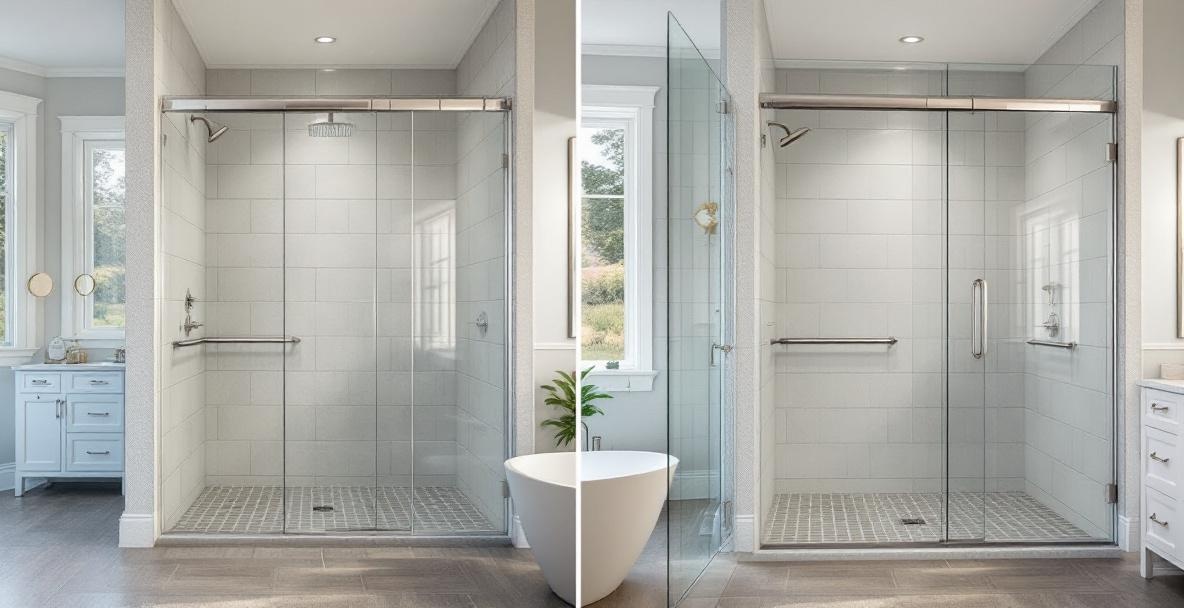
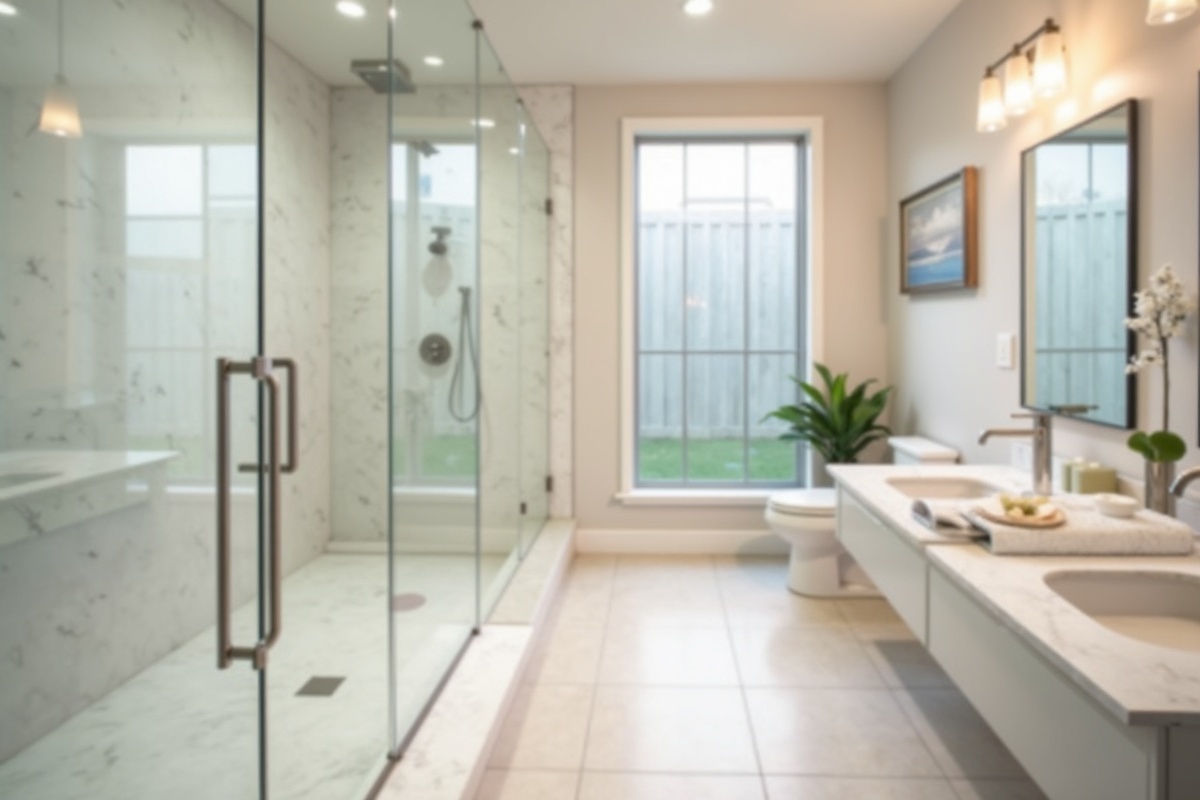
Matching your shower door hardware to your shower faucet creates the most cohesive appearance — the two pieces live in the same tile plane and are seen together. Allowing vanity fixtures to vary slightly (e.g., chrome faucets with brushed nickel shower hardware) is acceptable in transitional and contemporary designs.
Matching guidelines:
Match shower door hardware to shower faucet: This is the strongest visual coordination. The hardware and faucet are both on the shower walls — they're seen together and should read as a set.
Allow variation from vanity fixtures: The vanity is in a different zone of the bathroom. A slight finish variation (brushed nickel shower hardware, chrome vanity faucet) is common and generally acceptable in transitional and modern designs.
Don't mix more than two finishes: Adding a third finish (e.g., chrome, brushed nickel, and matte black) typically reads as incoherent rather than intentional. Pick a dominant finish and allow one accent variation at most.
Infinity Glass & Glazing stocks both chrome and brushed nickel shower hardware from CRL and FHC — solid brass with PVD or quality electroplate finishes. Let our team help you choose the right finish for your bathroom — hardware is specified alongside the glass on every frameless shower door installation we do. We serve Corinth, Dallas, Fort Worth, Denton, Frisco, McKinney, Lewisville, and the full DFW area. Get a free quote or call (940) 279-1197.
Is brushed nickel more expensive than chrome for shower hardware?
Brushed nickel hardware typically costs 10-20% more than chrome from the same manufacturer and quality tier, according to Bob Vila's hardware pricing guides (HomeGuide 2025). The premium reflects slightly higher manufacturing cost for the brushed finish process. At the quality tier that matters for shower applications (solid brass with PVD coating), both finishes are similarly priced from professional glass hardware suppliers.
Does chrome or brushed nickel look better in a small bathroom?
Both work well in small bathrooms, but for different reasons. Chrome's bright reflectivity can help a small bathroom feel larger and brighter — the reflective surface bounces light. Brushed nickel is more forgiving of cleaning neglect (critical in a bathroom that might not get daily attention) and creates a softer overall feel. The right choice depends on your priorities: maximum light reflection (chrome) or minimum maintenance visibility (brushed nickel).
Can you mix chrome and brushed nickel in the same bathroom?
Yes — mixing chrome and brushed nickel is one of the most accepted finish combinations in bathroom design. Both have the same cool gray undertone, so they coordinate naturally. The NKBA and many design guides specifically list chrome + brushed nickel as a classic mixed-finish pairing (NKBA 2026). Keep the shower hardware consistent (don't mix within the shower enclosure itself), and allow one finish to dominate by 70-80%.
Which finish is better for resale — chrome or brushed nickel?
For resale appeal, brushed nickel is generally the safer choice because it coordinates with a wider range of buyer preferences and tile styles. (Hardware finish is a smaller lever than the enclosure itself — see do glass shower doors add home value.) Chrome is a close second — it's timeless and acceptable in any buyer demographic. Both finishes are more neutral than matte black (which some buyers associate with a "dated" trend) and will serve resale well in the DFW market.
Related reading: hardware finishes guide and our brushed gold shower handles.
Related reading: