A frameless shower door requires four categories of hardware: hinges (to support and swing the door), a handle or pull (for daily use), clamps or brackets (to secure any fixed panels), and seals (to keep water in). Every piece must be specified for the correct glass thickness, rated for the glass weight, and selected in a matching finish. Total hardware cost for a single-door enclosure runs $150-$600 depending on finish and quality level (HomeGuide 2025).
When homeowners see a frameless shower, they often focus entirely on the glass. But the hardware is doing all the structural work — holding a door that can weigh 60-120 pounds, operating thousands of times per year, and maintaining its alignment and seal performance for 20+ years. Getting the hardware right is as important as getting the glass right.
This guide covers every hardware component for a frameless shower door, what each one does, what the options are, and how to specify them correctly for your project.
What Hardware Is Needed for a Frameless Shower Door?
The minimum hardware set for a frameless shower door consists of: hinges, a door pull handle, a bottom door sweep, and silicone perimeter seals. Corner enclosures and configurations with fixed panels also require wall clamps, floor clamps, or ceiling clamps to secure the non-swinging glass.
Hardware checklist for a frameless door in a standard alcove or corner shower:
Required for any frameless door:
- Hinges (2-3): Wall-mount or pivot; sized for the glass thickness and weight
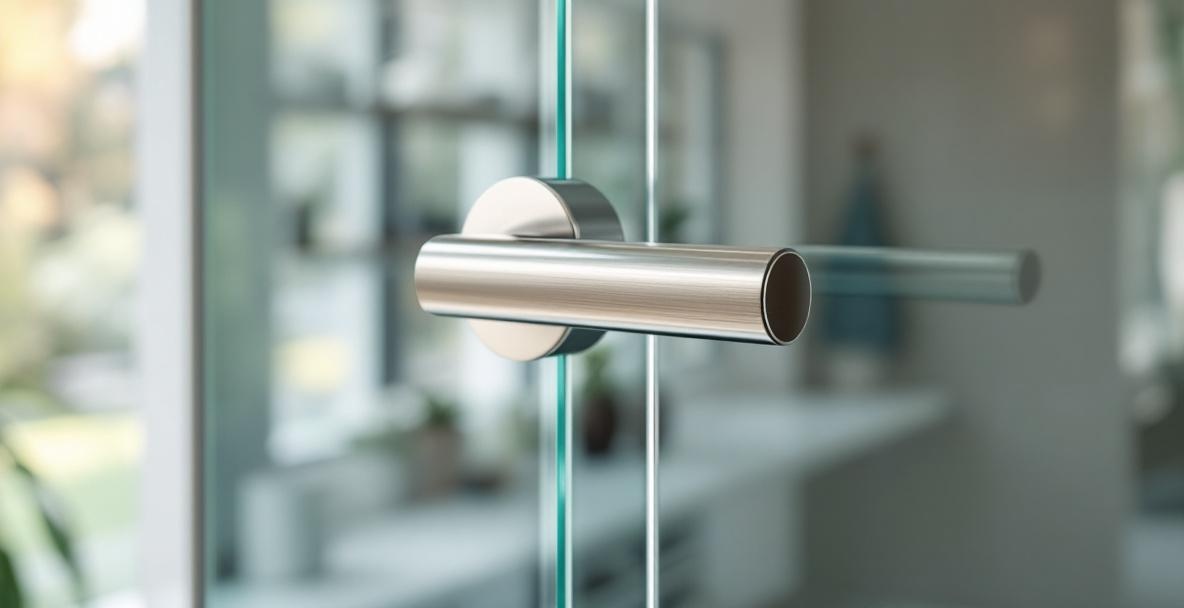
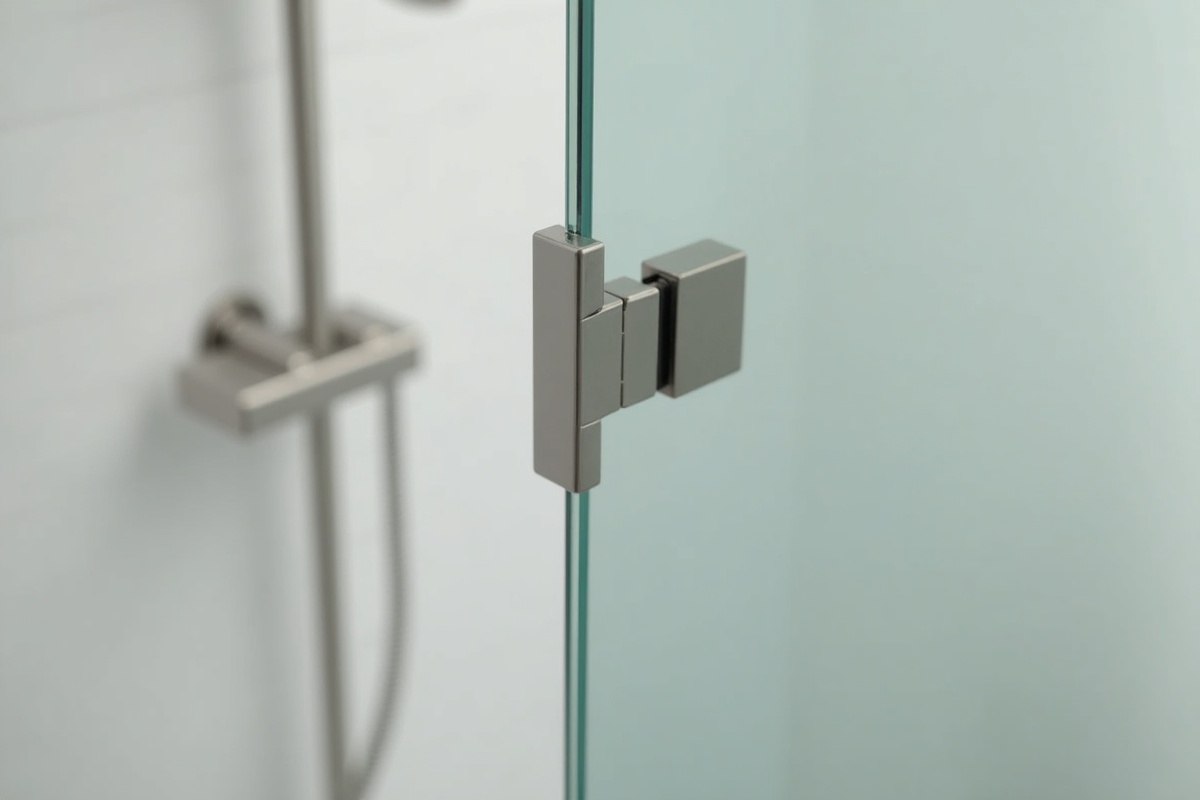
- Door handle: C-pull, D-pull, towel bar, or bar pull; mounted through drilled holes — see shower door handle styles for how each one feels in daily use
- Bottom door sweep: Rubber or vinyl wiper seal; prevents water from exiting at the bottom
- Side jamb seal: U-channel or fin seal; creates a water barrier between glass edge and tile wall
- Header seal (if applicable): Top wiper seal; used in some overhead configurations
Additional hardware for fixed panels:
- Wall clamps: U-clamps mounting the fixed panel edge to the wall; typically 2-3 per panel
- Floor clamps or standoffs: Securing the fixed panel at the base; or bottom track/channel
- Ceiling clamps (for tall panels): If fixed panel height approaches ceiling
Optional hardware:
- Robe hook through glass: Functional and decorative; drilled before tempering
- Towel bar on fixed panel: A second towel location on the non-swinging glass
- Handle on both sides of door: Double-sided pull for bi-directional use
$150-$600
typical hardware cost for a single-door frameless shower enclosure, depending on finish and quality tier
How Do You Choose Hinges for a Frameless Door?
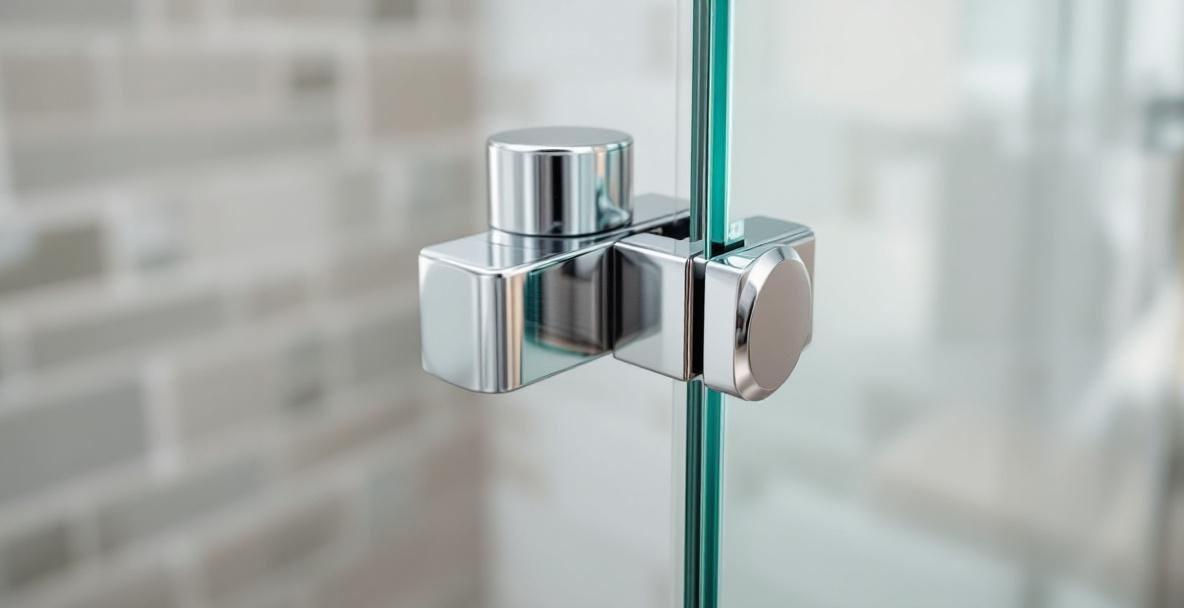
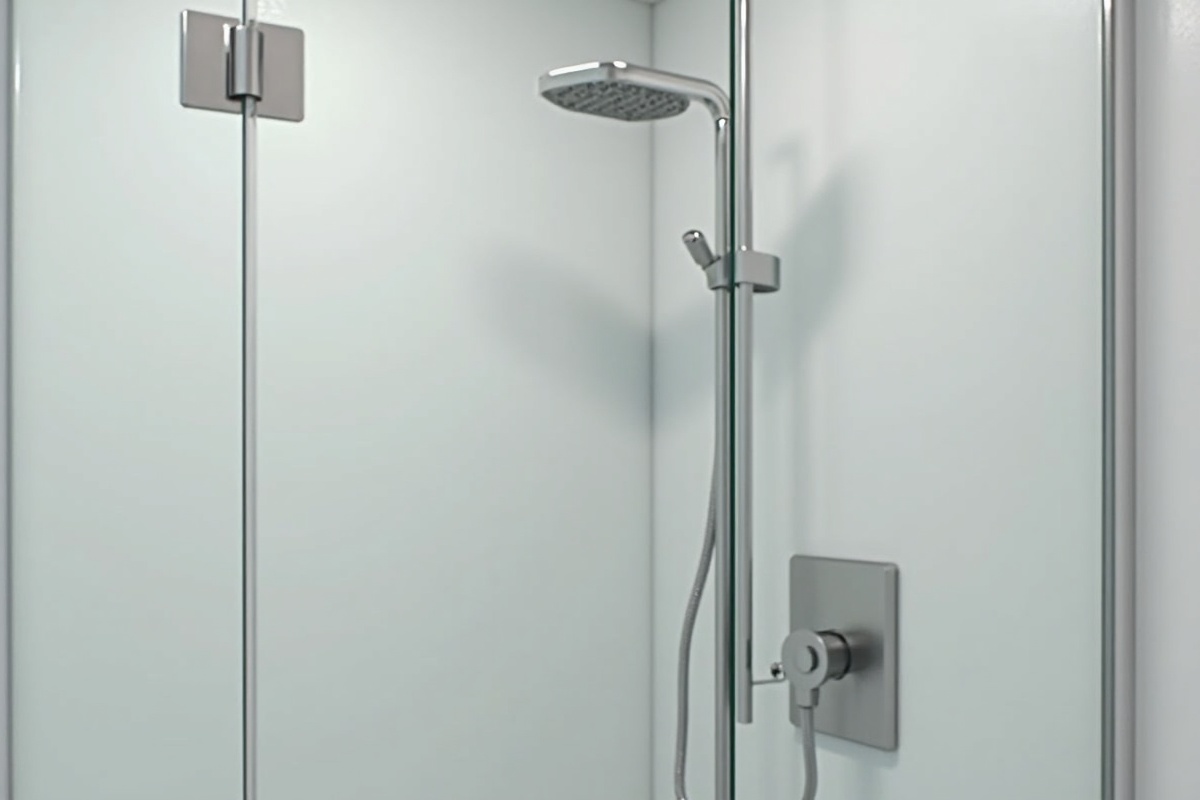
Hinge selection is driven by three variables: configuration (wall-mount vs. pivot), glass thickness (3/8-inch vs. 1/2-inch), and load rating (must exceed actual glass weight). Wall-mount hinges are standard for most residential showers. Pivot hinges are used for wide doors, bi-directional swing, or when no edge hardware is desired.
Hinge specification steps:
-
Determine configuration: Is there a wall on the hinge side? → Wall-mount hinges. Is the hinge side a fixed glass panel? → Glass-to-glass hinges. Does the door need to swing both directions? → Pivot hinges.
-
Match glass thickness: Most hinges are rated for either 3/8-inch or 1/2-inch glass. Some adjustable models accommodate both with shims. Verify before ordering.
-
Calculate glass weight: A rough calculation: multiply panel square footage by the glass weight per square foot (approximately 3 lbs/sq ft for 3/8-inch, 4 lbs/sq ft for 1/2-inch) (PPG 2025). Total that weight and confirm each hinge's rated load capacity exceeds the door weight divided by hinge count.
-
Select finish: All hardware on the same enclosure should be from the same manufacturer's collection in the same finish. Mixing finishes or brands creates visible inconsistencies.
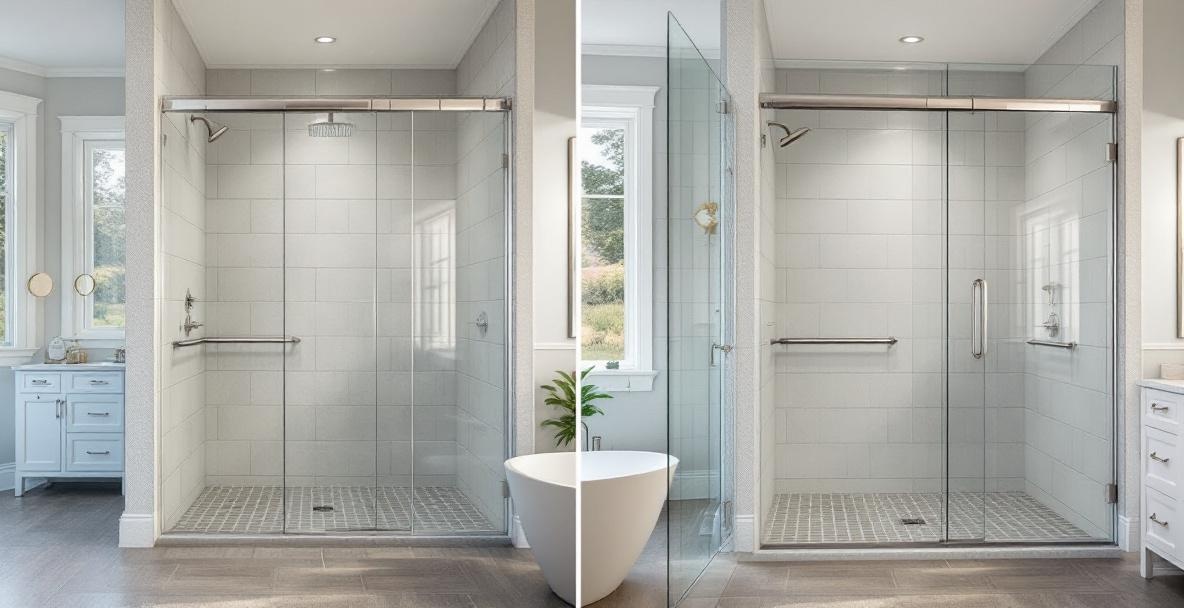
On a finished door, these hinge choices are exactly what make a frameless hinged shower door hang level and close flush — our installation page covers how wall-mount and pivot systems get specced to the weight of the glass.
- Determine hinge count: Two hinges for standard doors (under 30-36 inches wide, under 80 inches tall). Three hinges for wider or taller doors, or for 1/2-inch glass above 30 inches wide.
What Clamps and Brackets Are Used for Fixed Panels?
Fixed glass panels in frameless enclosures are secured with U-clamps at the wall edge, floor-mounted standoffs or channels at the base, and sometimes ceiling anchors for full-height panels. These hardware pieces don't move — they permanently hold the glass in position while the door swings alongside it.
Fixed panel hardware options:
Wall clamps (U-clamps): A U-shaped clamp that wraps the panel edge and mounts to the wall. The panel slides into the clamp opening and is locked with set screws. Available in square and round profiles, in all standard finishes. Typically installed 2-3 per panel along the wall edge.
Floor-mounted standoffs: Solid metal posts that anchor to the floor (usually tile over concrete) and clamp the glass panel from the side. Provide a clean, floating appearance with minimal hardware mass at the floor. Common in contemporary and spa-style installations.
Bottom U-channel: A recessed metal channel let into the floor that captures the glass panel base. Less common in residential because it requires cutting into the floor; used in commercial and high-end residential applications.
Ceiling anchors: L-shaped or point clamps mounting at the top of a full-height panel to the ceiling. Required for any panel exceeding 80 inches in height that needs stability at both ends.
What Door Seals Are Required?
Door seals are the components that actually keep water in the shower — the glass and hardware form the structure, but the seals do the waterproofing. A complete frameless door seal system includes: a bottom sweep, one or two side seals, and silicone caulk at all glass-to-wall perimeter contacts.
Seal types and functions:
Bottom door sweep: A flexible vinyl or rubber wiper mounted in a metal header at the door base. When the door closes, the sweep compresses against the threshold (curb) or floor surface, preventing water from flowing underneath. Available in clear, frosted, and white.
Side jamb seals: A flexible fin or U-channel seal running the full height of the door along the non-hinged edge. When the door closes, the seal compresses against the adjacent tile wall or glass panel, preventing water from escaping at the door's closing edge.
Silicone perimeter caulk: Applied at all glass-to-tile interfaces — where fixed panels meet the wall, where panels meet the floor, and at the top of any fixed panels. This is a permanent waterproof seal, not a compression seal, and needs to be replaced periodically (every 5-10 years as needed).
Can You Change the Hardware on a Frameless Shower Door?
Hardware can be changed on a frameless shower door, but it's limited by the existing glass drilled hole positions. Handles can be replaced if the new handle uses the same hole spacing. Hinges can be replaced with same-specification hinges using the same wall anchors. Significant changes in hardware position or hinge type require new glass fabrication.
What can be changed without new glass:
- Door handle: Replace with any handle matching the existing two-hole spacing (most handles use 4-6-8 inch center-to-center spacing) and the glass thickness
- Hinges: Replace with same-position hinges rated for the same glass weight; same-type hinges (wall-mount to wall-mount) swap without removing the glass
- Finish conversion: Some hardware manufacturers offer re-finishing services; otherwise, the entire hardware set must be replaced
- Seals: Bottom sweeps and side seals are replaceable items designed for periodic replacement
- Rollers and track hardware (sliding doors): Rollers wear out long before the glass does and are replaceable without touching the panel — our roller and track repair guide covers matching a replacement to your track profile
What requires new glass:
- Moving hardware hole positions significantly
- Changing from wall-mount to pivot hinges (pivot requires different hole positions)
- Adding a robe hook or towel bar through the glass (cannot drill tempered glass)
- Significant configuration changes (adding a fixed panel, changing door swing direction)
Infinity Glass & Glazing supplies complete hardware specifications for every frameless shower project — specifying the right hinges, clamps, seals, and handles for your exact configuration and glass thickness. All hardware is solid brass from CRL and FHC. Serving Corinth, Dallas, Fort Worth, Denton, Frisco, McKinney, Lewisville, and surrounding DFW areas. Get a free estimate or call (940) 279-1197.
Planning a bathroom remodel? We put together a free DFW Frameless Shower Door Guide — 2026 pricing benchmarks, glass types, hardware finishes, and the 5 questions to ask before you buy. Get it free →
What hardware is needed for a frameless shower door?
The minimum hardware set for a frameless shower door includes: 2-3 hinges (wall-mount or pivot, matched to glass thickness), a door pull handle, a bottom door sweep, and silicone perimeter seals. Corner enclosures with fixed panels also require wall clamps and floor anchors to secure the non-swinging glass panels.
Can you change the hardware on a frameless shower door?
Yes, with limits. Handles can be replaced if the new handle uses the same hole spacing as the original. Hinges can be replaced with matching-position, same-type hinges. However, moving hardware to new positions, adding robe hooks, or changing hinge types typically requires new glass fabrication since tempered glass cannot be drilled after tempering.
What is the best finish for frameless shower door hardware?
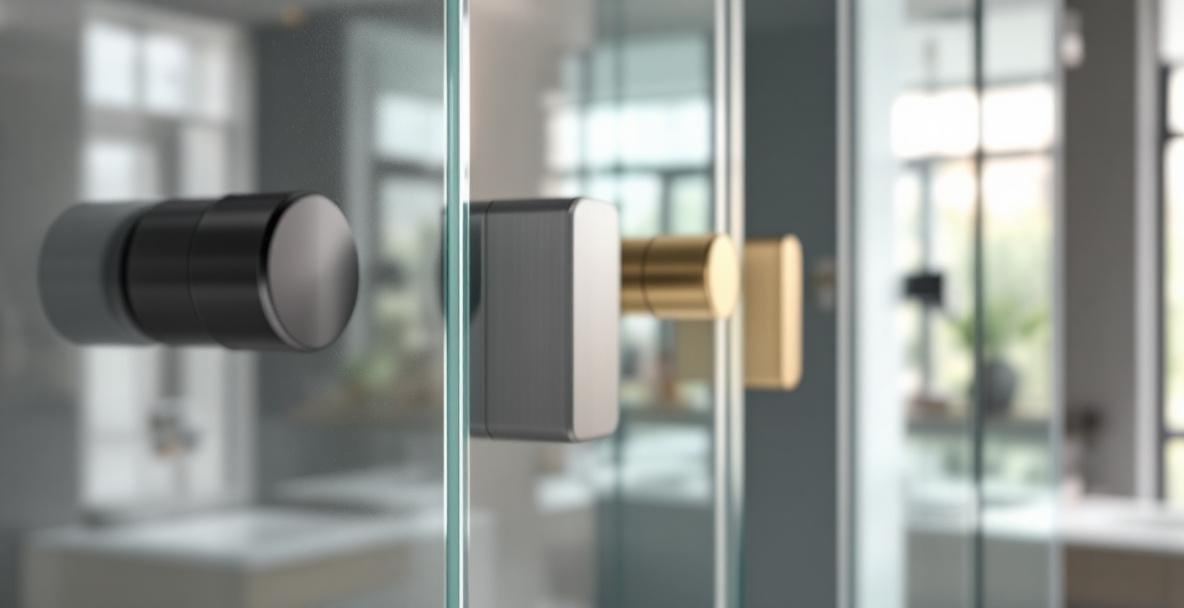
Brushed nickel and matte black are the most popular finishes in 2026 for their low-maintenance properties — both hide water spots and fingerprints better than chrome. For durability, PVD-coated solid brass is the quality standard regardless of finish. Brushed nickel is the most versatile for coordinating with different tile and fixture styles; matte black creates the strongest visual statement.
How much does a complete frameless shower hardware set cost?
A complete hardware set for a single-door frameless enclosure (hinges, handle, seals) runs $150-$600 depending on finish and quality tier (Angi 2025). Budget zinc alloy hardware starts around $50-$100 but won't last in bathroom humidity. Quality solid brass PVD hardware from CRL or FHC runs $200-$500 for a complete set. Corner enclosures with fixed panels add $100-$200 in clamps and additional hardware.
Related reading: hardware finishes guide and our frameless shower doors in DFW.
Related reading: