Commercial Glazing Installation
Commercial Glass & Glazing — DFW's Trusted Commercial Glass Contractor
Storefronts, office partitions, curtain walls, commercial doors, and full building glazing packages. We've worked with national brands and local businesses across the DFW metroplex.
Commercial glass work is a different discipline than residential. The scale is larger, the structural requirements are more complex, the code compliance requirements are more demanding, and the scheduling constraints — coordinating with general contractors, property managers, and business operations — require a level of project management that most residential-focused glass companies aren't equipped to provide.
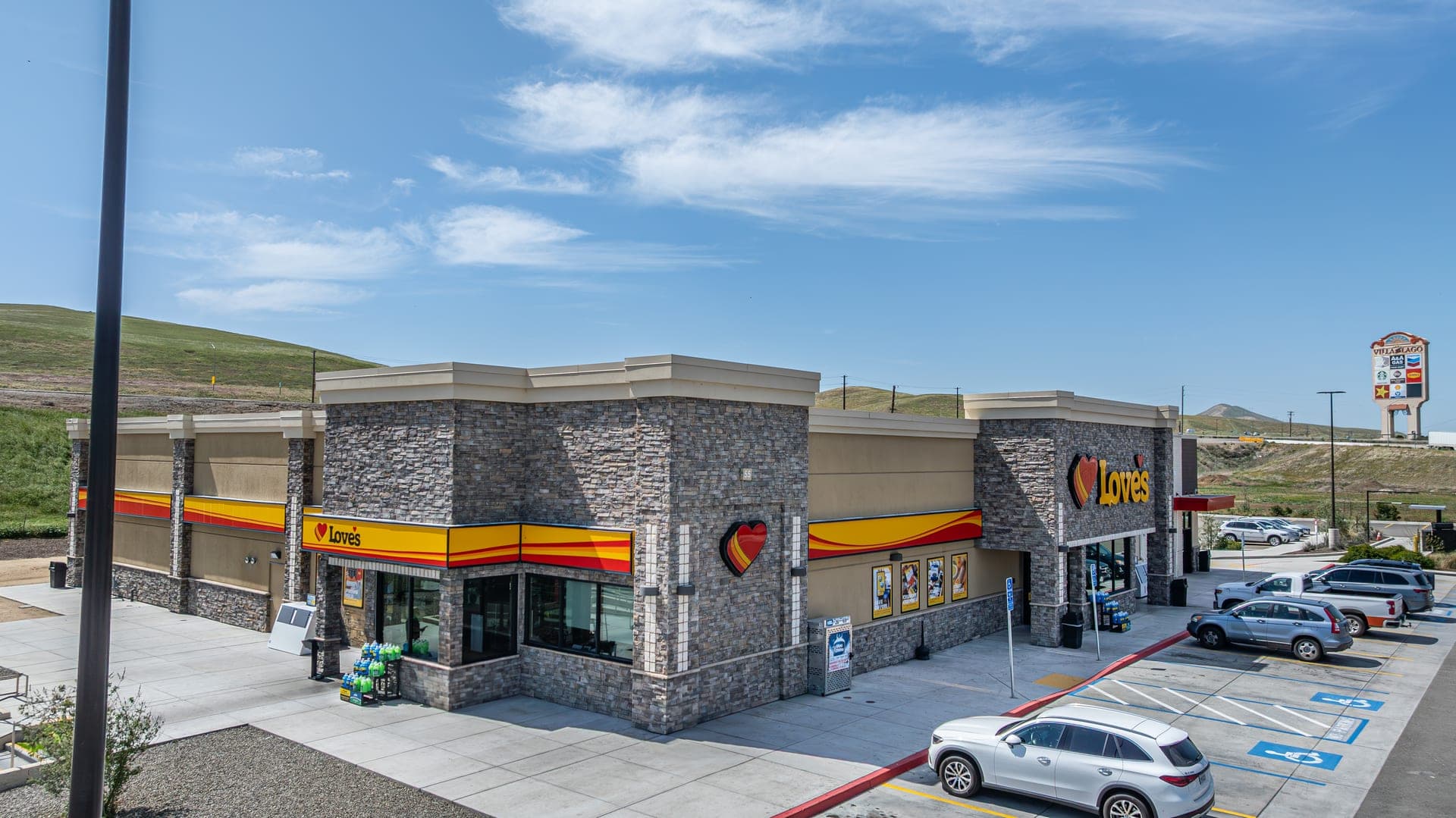
Infinity Glass & Glazing has been doing commercial glass work in DFW since the 1990s. Our portfolio includes storefronts and curtain walls for national brands (Starbucks, Love's Travel Stops, Arby's), office partitions and commercial doors for corporate clients, restaurant glazing packages, and full-building glass installations on multi-story commercial properties.
We bring the same measurement discipline to commercial projects that we apply to our residential work. Every panel and storefront lite is ordered to field-verified dimensions rather than to the drawing set alone — which means fewer remakes, fewer schedule slips, and glass that fits the opening the first time.
Why Choose Us
What Sets Our Commercial Glass & Glazing Apart
Storefronts & Curtain Walls
Major brand and custom storefront systems. Stick-built and unitized curtain wall installation for multi-story commercial buildings.
Commercial Entrances & Doors
Heavy-duty frameless glass doors with panic hardware, ADA closers, and commercial-grade hinges. Single and double entry configurations.
Office Partitions & Interiors
Full-height glass partition systems, conference room walls, and interior glazing packages for corporate office environments.
Specialty Commercial Glass
Fire-rated glass, security glass, smart glass, and large-format mirror installations for commercial applications.
GC Coordination & Submittals
Shop drawings, material submittals, OSHA-certified crews, and project closeout documentation. We work within GC-managed schedules.
DFW Commercial Portfolio
National brand storefronts, corporate offices, restaurants, fitness facilities, and multi-story buildings across Dallas, Fort Worth, and the DFW metroplex.
Commercial Storefront Glass & Entrances
The storefront is the first impression of any commercial space. Modern storefront systems use aluminum framing with large glass lites (panels) to maximize visibility from the street and natural light inside — but the framing, glass specification, and installation details matter enormously for energy performance, long-term durability, and code compliance.
We install commercial storefront systems from major manufacturers including Kawneer and US Aluminum, as well as custom-ordered systems for non-standard applications. Glass specifications range from standard annealed to fully tempered, with insulated units (IG units) for energy code compliance in new construction.
Commercial entry doors — including heavy-duty frameless glass doors with panic hardware, ADA-compliant thresholds, and commercial-grade closers — are supplied and installed as part of storefront packages or standalone projects.
Curtain Wall & Structural Glazing
Curtain wall systems are the floor-to-ceiling, building-skin glass systems used on multi-story commercial buildings. Unlike storefronts (which span a single floor), curtain walls span multiple floors and are anchored to the building structure, carrying their own dead load and transferring wind and seismic loads to the building frame.
We install stick-built curtain wall systems — assembled piece-by-piece on-site — and unitized systems — pre-glazed units manufactured off-site and hoisted into position. The right approach depends on the project scale, schedule, and access conditions.
Structural silicone glazing (SSG) and point-fixed structural glazing (PFSG) are specialty systems we install for projects where the aesthetic goal is a truly seamless glass skin with minimal visible framing. These applications require careful engineering coordination and certified installation crews — which we provide.
Commercial Mirrors & Specialty Glass
Commercial mirrors for gyms, fitness centers, yoga studios, hotels, retail fitting rooms, and restaurant back-bars are a significant part of our commercial work. These applications require the same custom fabrication as our residential mirrors but on a larger scale — entire walls of glass, often requiring specialized mounting to distribute the weight across the wall structure.
We also install specialty commercial glass products including fire-rated glass (for rated openings where glazed panels must maintain fire separation), safety and security glass (laminated glass and polycarbonate composites for impact and intrusion resistance), and smart glass (electrically switchable glass that changes from clear to frosted on demand).
If your commercial project requires a glass product or system we haven't listed here, reach out. We've been in this industry long enough that if something exists in glass, we've probably worked with it.
Our Commercial Process & Project Management
Commercial projects require coordination that residential work doesn't. We're set up for it.
Our process starts with a pre-construction meeting where we review shop drawings with the GC, confirm structural conditions, establish the installation schedule relative to other trades, and identify any long-lead items that need to be ordered early.
We submit shop drawings and material cut sheets for owner and architect review, obtain required sign-offs before anything is ordered, and provide submittals and closeout documentation at project completion.
Our installation crews are trained for commercial sites — OSHA 10-hour certified, familiar with site safety plans, and experienced working around occupied business operations when phased installation is required. We've completed projects ranging from a single storefront to full-building glazing packages spanning multiple months.
Our Process
From First Call to Finished Install
Pre-Construction Review
We review drawings, confirm structural conditions, identify long-lead items, and align our schedule with the GC's overall project timeline.
Shop Drawings & Submittals
Shop drawings submitted for owner and architect review. Material cut sheets and spec compliance documentation included. Ordering begins after approval.
Material Procurement
Glass ordered to the approved shop drawings. Framing and specialty components sourced from our commercial suppliers. Schedule managed against GC milestones.
Installation & Closeout
OSHA-certified crew installs the system per approved drawings. We provide as-built documentation and warranty packages at project closeout.
From the Shop
A Recent Commercial Glass & Glazing Project
“Donavon Wheeler runs all commercial glazing work hands-on — storefronts, curtain walls, hotel buildouts, commercial bar-backs. Every commercial site gets a walk with the GC before measure.”
In February 2026 we installed a storefront glazing system plus interior office partition glass for a retail buildout in Arlington off I-30 — 10-foot storefront panels in 1/2-inch tempered glass, plus 8-foot interior office partitions. Measure on-site at framing inspection; glass arrived in 12 business days; install spread over two days coordinating with the GC's other finish trades.
Commercial glazing meets ANSI Z97.1 safety glazing standards and is sourced through Cardinal Glass Industries' DFW warehouse — fabricated tempered glass tagged per the AAMA spec.
FAQ
Common Questions
What types of commercial glass projects do you handle?
We handle storefronts, curtain walls, commercial office partitions, glass doors, restaurant glazing, large-format mirror installations, gym mirrors, and specialty commercial glass (fire-rated, security, smart glass). If you're in DFW and need commercial glass work, reach out and we'll let you know if it's in our scope.
Do you work with general contractors?
Yes. We frequently subcontract to GCs on commercial build-outs and new construction. We provide shop drawings, material submittals, and installation certificates as required. Our crews are OSHA 10 certified and familiar with site safety plans.
What's your typical lead time for commercial projects?
Lead time depends on project size and complexity. For standard storefront packages, glass and framing lead time is typically 3–5 weeks from approved shop drawings. Curtain wall projects on large buildings may require 8–12 weeks. We build schedule management into our pre-construction process to align with your GC timeline.
Do you service commercial properties after installation?
Yes. We provide warranty service on all installations and can be contracted for ongoing maintenance and repair of commercial glazing systems. We also handle emergency glass replacement for commercial properties — broken storefront glass, damaged entry doors, and similar urgent situations.
Learn More
Related Guides from Our Blog
Ready for a Free Estimate in DFW?
Call us directly or request a quote online. Same-day estimates available for DFW and surrounding areas.