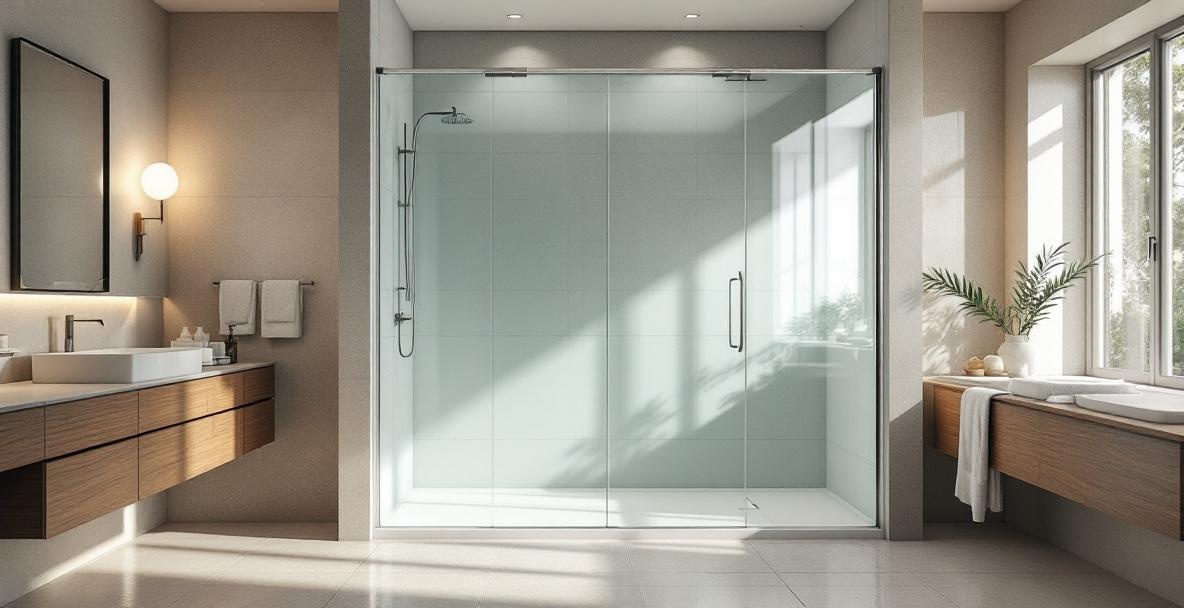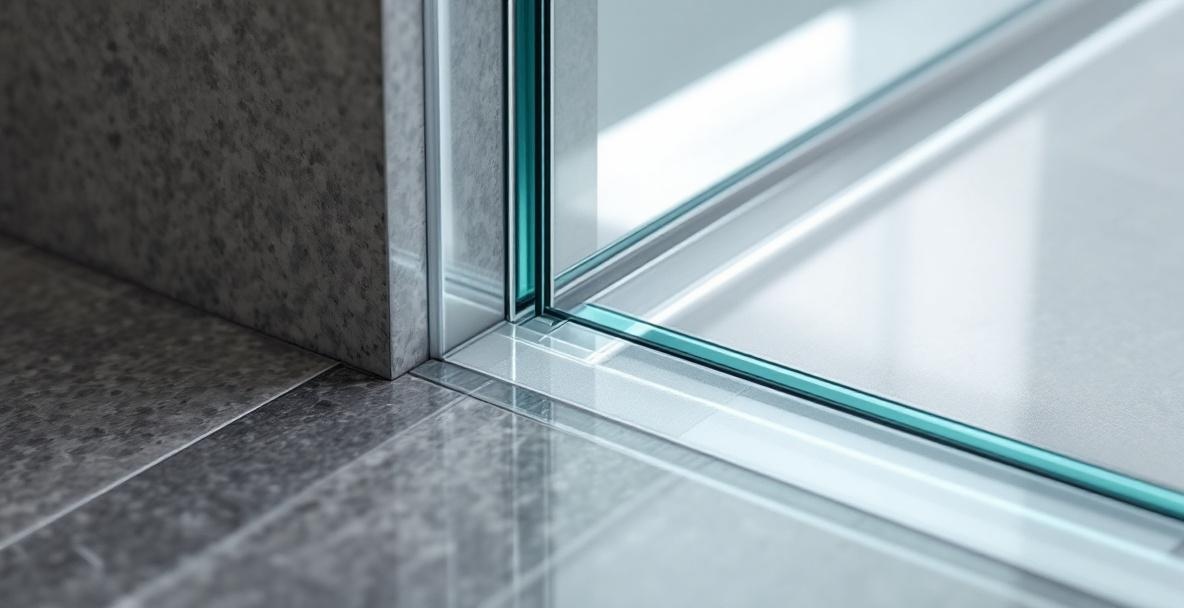
Properly installed frameless shower doors do not leak — but they are not completely watertight by design. A small amount of water near the door gap is normal. Significant water on the bathroom floor is not normal and indicates a problem with seals, sweeps, water direction, or installation. The difference between a leaking frameless door and a functioning one comes down to installation quality and ongoing seal maintenance.
The most common concern homeowners raise about frameless shower doors before buying is whether they'll leak onto the bathroom floor. It's a fair question — frameless doors have visible gaps at the edges by design, unlike framed systems that channel water with aluminum. But "gap" doesn't mean "leak." This guide explains exactly how frameless doors manage water, the 5 most common causes of actual leaks, and what to do when water is escaping where it shouldn't.
Do Frameless Shower Doors Actually Leak?
No — when properly installed, frameless shower doors do not produce the floor-wetting leaks that concern homeowners. Frameless systems manage water through a combination of bottom door sweeps, edge seals, water-direction design, and the shower curb. A small drip from the door corner during a shower is normal and expected. A puddle on the floor outside the shower every time you use it is not normal and indicates a correctable problem.
The key distinction: frameless shower doors are water-resistant by design, not watertight. Framed systems are also water-resistant, not watertight — the difference is that framed systems use aluminum channels and extensive caulking to direct water away from gaps, while frameless systems use sweeps, seals, and layout to accomplish the same goal with less hardware.
In DFW's hard water environment, the seals and sweeps on frameless doors require more frequent inspection and replacement than they would in a soft-water area — mineral deposits can harden on rubber seals and reduce their effectiveness over time (TWDB 2024). This is maintenance, not a design flaw.
What's normal:
- A small drip from the bottom corner of a hinged door when it opens — the sweep holds water until the door moves
- Slight moisture on the glass-to-wall seal area after a long shower
- Occasional minor water at the sill between the door and the curb
What's not normal:
- A consistent puddle forming outside the shower during use
- Water running continuously along the floor outside the enclosure
- Water appearing at the wall junction more than an inch outside the shower
The 5 Most Common Causes of Frameless Door Leaks
The five causes that account for the vast majority of frameless shower door leaks are: worn or damaged door sweeps, failed silicone seals at wall junctions, incorrect shower head angle, insufficient shower curb height, and installation errors that left gaps. Four of the five are correctable without replacing the glass.
1. Worn or damaged door sweeps
The bottom sweep is the rubber or vinyl strip that runs along the bottom edge of the door panel. It contacts the shower pan or tub deck when the door is closed and prevents water from running under the door. Over time (typically 3–5 years in DFW's hard water environment), sweeps harden, crack, or compress permanently — and when they no longer make solid contact, water runs under the door onto the floor.
Fix: Bottom sweeps are a standard replacement part. New sweeps cost $20–$60 and can be replaced without any special tools in most frameless systems.
2. Failed silicone at wall junctions
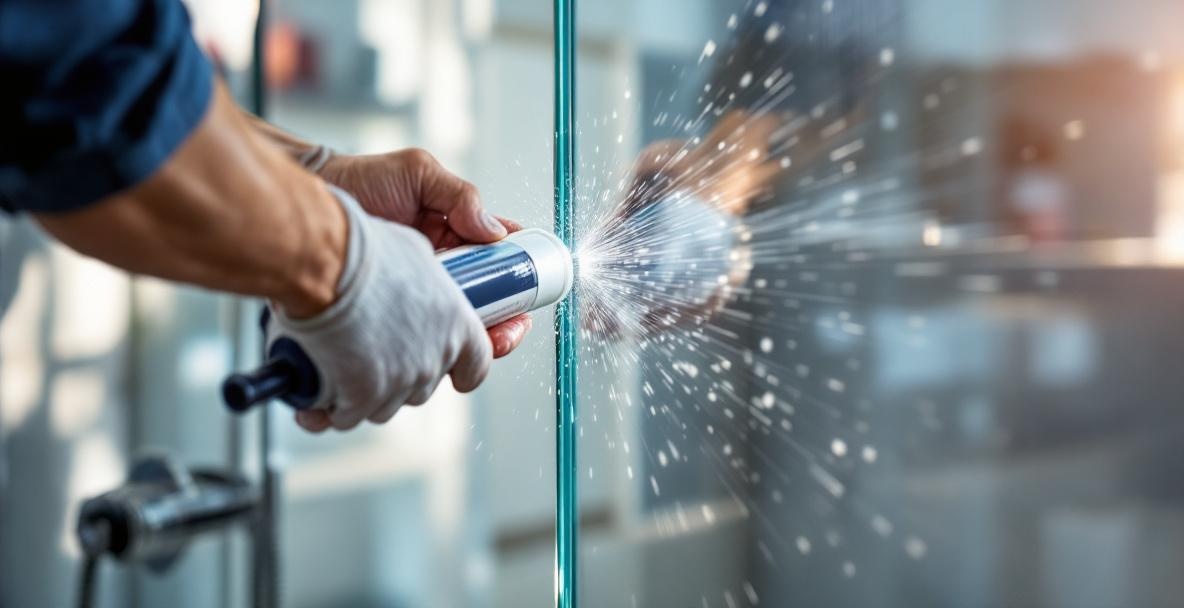
Silicone caulk seals the gap between the glass panel edges and the shower walls, and between fixed panel feet hardware and the shower floor. Silicone doesn't last forever — it shrinks, yellows, cracks, and eventually pulls away from the glass or tile surface. When this happens, water finds a path along the glass edge and runs down the wall onto the floor outside.
Fix: Remove the old silicone completely (razor blade + silicone remover), clean the surface, and apply fresh 100% silicone caulk. Allow 24 hours to cure fully before use. This is a DIY-manageable repair.
3. Shower head angle
This is the most overlooked cause of frameless door leaks — and it costs nothing to fix. If the shower head sprays directly at the door or toward the door gap, even a perfectly installed frameless enclosure will push water through the gap. The shower head should be angled toward the back wall or the shower floor, not toward the door.
Fix: Adjust the shower head angle. If the head is fixed and can't be adjusted, install an adjustable shower arm that allows redirection.
4. Insufficient shower curb height or slope
The shower curb — the raised threshold at the shower entry — is the primary physical barrier that keeps water inside the shower when the door is open or the sweep lifts off the curb. Shower curbs should be at least 2 inches above the shower floor and should slope slightly (approximately 5 degrees) toward the shower interior so water drains back in rather than pooling at the door. Per FabGlass and Mirror (2025), shower curbs should have a 5-degree inward slope for effective water containment.
Fix: Curb height and slope problems typically require a tile contractor to rebuild the curb. This is a more involved fix but addresses the root cause rather than masking it.
5. Installation gaps or errors
If the glass was fabricated to the wrong dimensions, or if the installer left gaps at critical sealing points, water will find those paths immediately and consistently. Installation errors also include: hinges installed at the wrong angle (causing the door to hang open slightly), bottom sweeps that don't contact the curb evenly, and silicone applied to a dirty or wet surface that failed to bond properly.
Fix: If leaks started immediately after installation and haven't responded to seal replacement, the original installation has an error. Contact the installer — a reputable company will diagnose and correct installation errors at no additional charge.
How Professional Installation Prevents Leaks
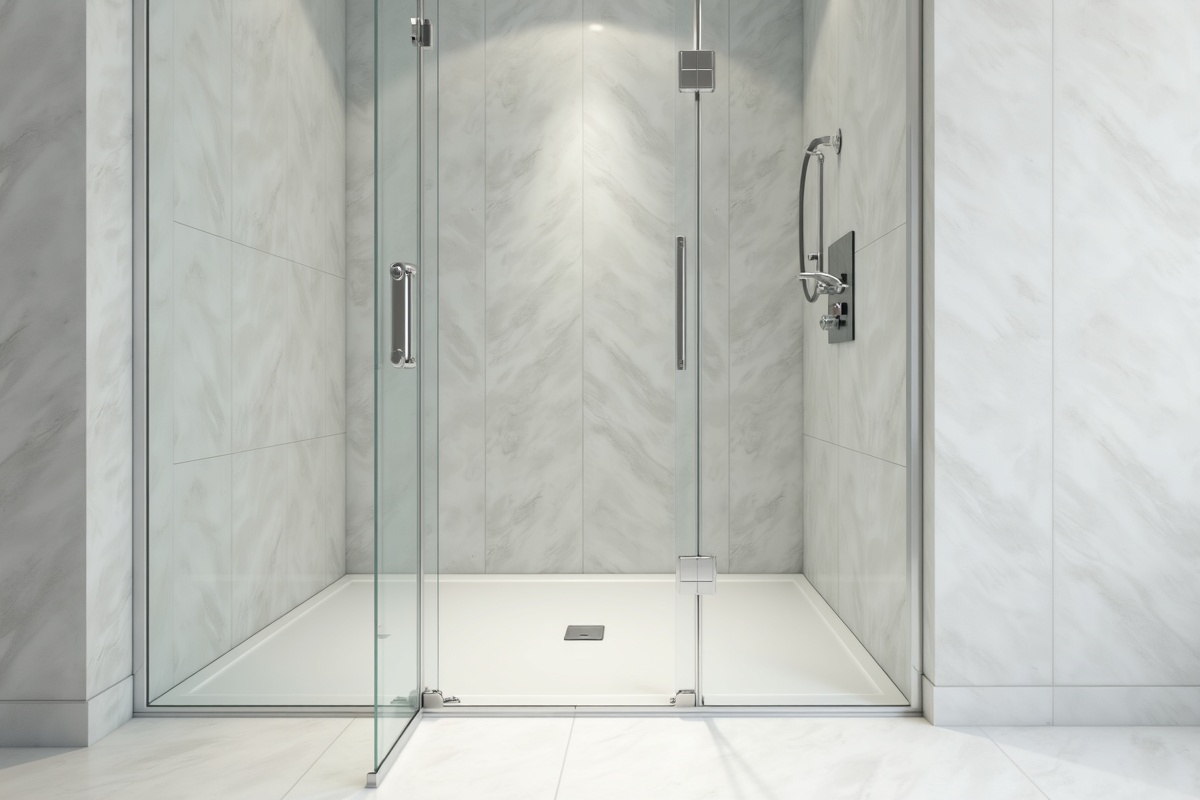
Professional frameless shower installation prevents leaks through three things that DIY installation consistently misses: precision measurement that ensures panels fit without gaps, proper silicone technique on clean surfaces, and correctly adjusted hardware that keeps the door plumb and properly contacting the sweep and curb.
Here's what a professional installation gets right that prevents leaks from day one:
- 1
Precise Panel Sizing
Glass fabricated to within 1/16-inch of the correct dimension fills the opening without gaps at the edges. Panels that are slightly undersized leave gaps that seals can't fully bridge — leading to early seal failure and water intrusion. - 2
Clean Surface Silicone Application
Silicone bonds to glass and tile only on a completely clean, dry surface. Professionals clean and dry all surfaces before applying silicone, apply in a single continuous bead, and tool it into full contact with both surfaces. Silicone applied to a damp or contaminated surface bonds poorly and fails within months. - 3
Hardware Alignment and Adjustment
Frameless hinges have adjustment screws that control how the door hangs — plumb (vertical), level (horizontal gap at top), and depth (how far the door swings when released). Properly adjusted hardware ensures the bottom sweep contacts the curb evenly across its full width. Off-plumb hardware means the door contacts only part of the sweep, leaving an open channel for water. - 4
Bottom Sweep Fitting and Trimming
Bottom sweeps are cut to exact door width and set to the correct compression against the shower curb or pan. Too light and water runs underneath; too heavy and the door drags on the curb and the sweep compresses permanently faster. Professional installers test the sweep contact before completing the installation. - 5
Post-Installation Water Test
Before leaving the job, a professional installer does a brief water test — running the shower and checking all potential leak points while the water is running. Any issue found during the test is addressed before the installer leaves.
The Role of the Shower Curb in Water Containment
The shower curb is the first line of defense against water leaving the enclosure — more important than the door seals themselves. A properly designed curb stops water from escaping whether the door is open or closed. Inadequate curb design puts all the water containment burden on the door seals, which wear out and need replacement every few years.
The curb specifications that matter:
- Minimum height: 2 inches above the shower floor is the standard minimum. At 2 inches, the curb stops splashing water from reaching the door gap even when the door is open.
- Maximum height: 6 inches for ADA-accessible applications; standard residential curbs are typically 4–6 inches for better water containment.
- Slope: The curb's top surface should slope 5 degrees toward the shower interior. This ensures water that reaches the curb surface drains back into the shower rather than pooling at the door seam.
- Material: Tile-covered concrete curbs are the most durable and water-resistant. Prefabricated curb systems are available but must be properly waterproofed to prevent moisture intrusion into the subfloor.
Zero-curb (curbless) showers: Increasingly popular in DFW new construction and renovations, curbless designs eliminate the threshold for a fully accessible, level-floor shower. These designs require a larger sloped drain area and a frameless glass panel positioned to direct water toward the drain. Without a curb, the door sweep and layout do more water containment work — design and installation quality matter even more.
How to Fix a Leaking Frameless Shower Door
If your frameless shower door is leaking, diagnose before you repair. Most leaks follow a predictable pattern that reveals the cause:
Water at the floor near the door bottom: Usually a failed or worn bottom sweep. Replace the sweep.
Water at the wall edge of the glass: Usually failed silicone at the wall junction. Remove and replace the silicone.
Water spreading across the entire floor: Usually a shower head angle problem. Redirect the head away from the door.
Water seeping under the door at one side but not the other: Usually a door alignment issue — the door hangs off-plumb so the sweep contacts unevenly. Adjust the hinge hardware.
Water at the floor immediately after installation: An installation error or incorrect sweep length/compression. Call the installer.
Frameless vs Framed: Which Leaks More?
Framed shower doors are not inherently better at preventing leaks than frameless. The aluminum channels in framed systems collect and trap water, but they also fail when caulking around the channel edges deteriorates. Frameless doors have fewer potential failure points (no channel caulking to fail) but require proper sweep and seal maintenance. Neither type is leak-proof; both require maintenance.
| Factor | Framed Door | Frameless Door | |
| Leak mechanism | Channel caulking failure | Sweep/seal wear | |
| Maintenance frequency | Channel cleaning + re-caulk every 2-3 yrs | Sweep replacement every 3-5 yrs | |
| Leak visibility | Often hidden in channels | Visible on floor immediately | |
| DIY repair difficulty | Medium — channel re-caulking is fussy | Easy — sweep replacement is straightforward | |
| Mold risk from standing water | High — channels hold water | Low — no channels to trap water |
The framed door's channels trap water — which means small leaks can go undetected and cause subfloor damage before they're noticed. Frameless door leaks are visible immediately on the bathroom floor, which makes diagnosis and repair faster.
What to Look for in a Leak-Proof Installation
When evaluating a frameless shower installation — whether you're getting quotes or inspecting completed work — these are the signs of a leak-resistant installation:
- Continuous silicone bead at every glass-to-wall junction — no gaps, no thin spots, tooled smooth against both surfaces
- Bottom sweep that contacts the curb or pan evenly across its full length, with slight compression but no dragging
- Door hangs plumb — when you open and release the door, it stays where you put it rather than swinging open or drifting closed
- Shower head angled away from the door — verified during the water test
- Curb height at least 2 inches and sloped toward the shower interior
- Hardware screws torqued firmly to the wall — no movement at the hinge mounting plates
Infinity Glass & Glazing installs frameless shower enclosures throughout DFW — Corinth, Lewisville, Flower Mound, Denton, Frisco, McKinney, Southlake, and surrounding areas. Every installation includes a post-install water test and a one-year installation warranty. Get a free estimate or call (940) 279-1197.
Is it normal for a little water to drip past a frameless door?
A small drip from the bottom corner of a hinged frameless door when it opens — or occasional moisture at the glass-wall junction after a long shower — is normal and expected. Frameless doors are water-resistant by design, not completely watertight. What's not normal is a consistent puddle forming outside the shower during use, or water running along the floor outside the enclosure. If you're seeing more than a minor drip, check the bottom sweep condition first.
How do you seal the bottom of a frameless shower door?
The bottom of a frameless shower door is sealed with a bottom sweep — a rubber or vinyl strip that runs the full width of the door panel and contacts the shower pan or curb when the door is closed. Sweeps are replaceable parts that typically last 3–5 years. Some installations also have a secondary silicone bead at the base of fixed panels where they meet the shower floor. Neither is permanent — both require inspection and replacement as part of regular frameless shower maintenance.
Can you install frameless doors without a shower curb?
Yes — curbless (zero-threshold) frameless shower designs are increasingly popular in DFW new construction and renovations. Curbless designs require a properly sloped drain area that directs all water toward the drain before it reaches the door, a frameless glass panel positioned to act as a water barrier, and a high-quality door sweep system. Without a curb, the design and installation must be executed carefully — there's no physical barrier to catch water that gets past the sweep. Linear drain systems and recessed floor channels are typically used in curbless frameless designs.
Do frameless doors need sweeps and seals?
Yes — sweeps and seals are essential components of a frameless shower installation, not optional extras. The bottom sweep prevents water from running under the door. The silicone seals at wall junctions prevent water from escaping along the glass edges. The door seal (the vertical rubber strip on the latch side of a hinged door) reduces water at the door gap. All three work together. A frameless installation without these components will leak immediately and consistently.
How often should you replace frameless shower door seals?
In DFW's hard water environment, bottom sweeps typically last 3–5 years before they harden and lose their sealing effectiveness. Silicone at wall junctions typically lasts 5–8 years before cracking or pulling away. Door seals (vertical rubber strips) last 3–5 years. Inspect all seals annually — squeeze the sweep between your fingers to check for brittleness, look for visible cracks or gaps in the silicone, and run your hand along the door seal to feel for deterioration. Early replacement prevents leaks and floor damage.
Also see our frameless shower door maintenance tips and our shower door seal replacement guide.