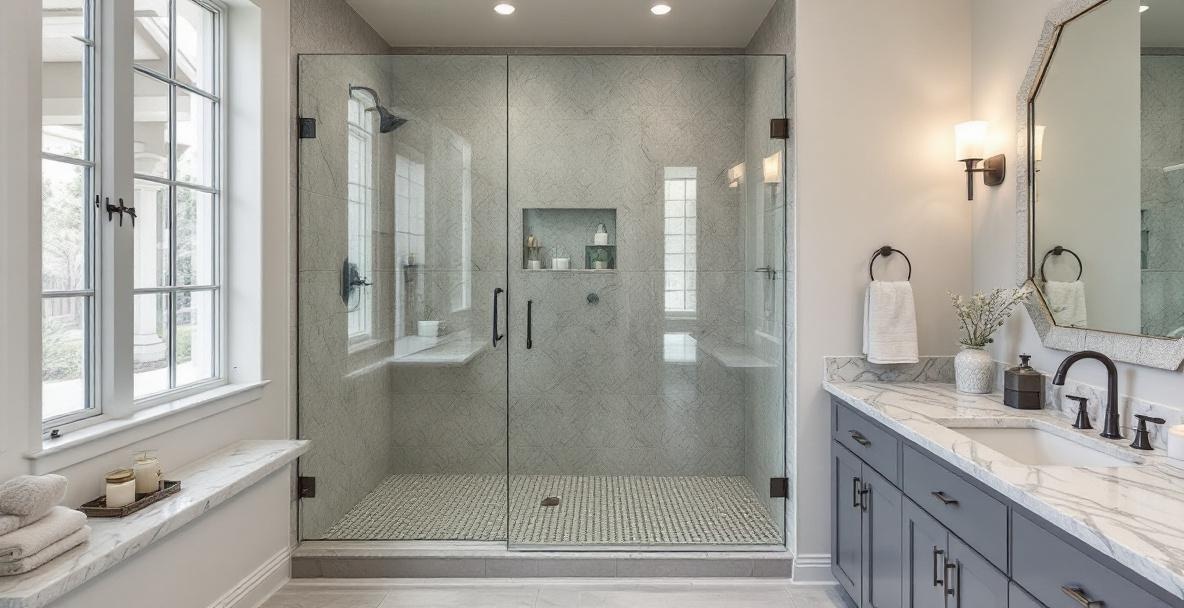
Frameless glass shower doors cost $600 to $1,900 installed in the Dallas-Fort Worth area, with 54% of homeowners completing renovations in 2024 and bathrooms ranking as the second most popular room to remodel (Houzz Renovation Trends Study, 2025). Finding the right local installer matters more than finding the cheapest price -- precision measurement and proper fabrication determine whether your door fits perfectly or leaks at the edges.
Searching for "frameless glass shower doors near me" pulls up dozens of results. But not all glass companies are created equal. Some measure your opening and order every panel to those dimensions. Others sell stock sizes and fit your bathroom to the glass. Some offer mitered glass corners. Most have never heard of them.
This guide helps you cut through the noise. We'll cover what to look for in a local company, how much frameless doors actually cost near Dallas, the different types of glass available, why installation quality matters more than the glass itself, and the questions you should ask before signing anything.
TL;DR: Frameless glass shower doors near Dallas cost $600-$1,900 installed, and 54% of homeowners renovated in 2024 with bathrooms as the 2nd most popular project (Houzz, 2025). Prioritize companies that measure with laser tools, cut every panel to your opening, and offer mitered glass corners on enclosures. The glass matters, but the installation matters more.
What Should You Look for in a Local Frameless Shower Door Company?
According to Houzz, 54% of homeowners undertook at least one renovation in 2024, with bathrooms as the second most popular room (Houzz 2025 Renovation Trends). That means demand for quality glass installers is high -- and so is the number of inexperienced operators entering the market. Knowing what separates a skilled glass shop from a middleman is essential.
"Near me" is also worth reading literally. A shop an hour out will quote the job, but the measurement visit, the install, and any warranty callback all cost them a round trip — and that shows up as scheduling friction rather than a line on the estimate. Proximity to your actual address matters more than metro-wide coverage claims, which is the case for working with a glass company based in Corinth if you are anywhere in the Denton County corridor.
Custom-Cut Glass vs. Stock Panels
The first question to ask any glass company: is my glass cut to my opening, or am I getting a stock size? A company that laser-measures the opening and orders every panel to those dimensions can hold tight tolerances and offer mitered corners. A company selling pre-cut stock panels is fitting your bathroom to the glass instead of the other way around -- which is where oversized silicone beads and visible gaps come from.
Measurement Standards
A reputable installer measures on-site with laser tools, checking plumb and level at multiple points. If someone offers to quote from photos or homeowner-provided measurements, that's a red flag. Walls in most homes aren't perfectly straight, and a 1/8-inch error at the top becomes a visible gap at the glass edge.
Corner Quality
For any enclosure with a 90-degree glass-to-glass corner, ask whether the corners are mitered or butt-jointed. Mitered corners are cut at 45 degrees so the panels meet flush -- no silicone-filled gap. Most companies default to butt joints because they lack the CNC equipment for mitering.
Portfolio and References
Ask to see completed projects. Better yet, ask if you can see an installation in person. Photos on a website don't tell you how the edges feel, how the door swings, or how the corners look up close.
How Much Do Frameless Glass Shower Doors Cost Near Dallas?
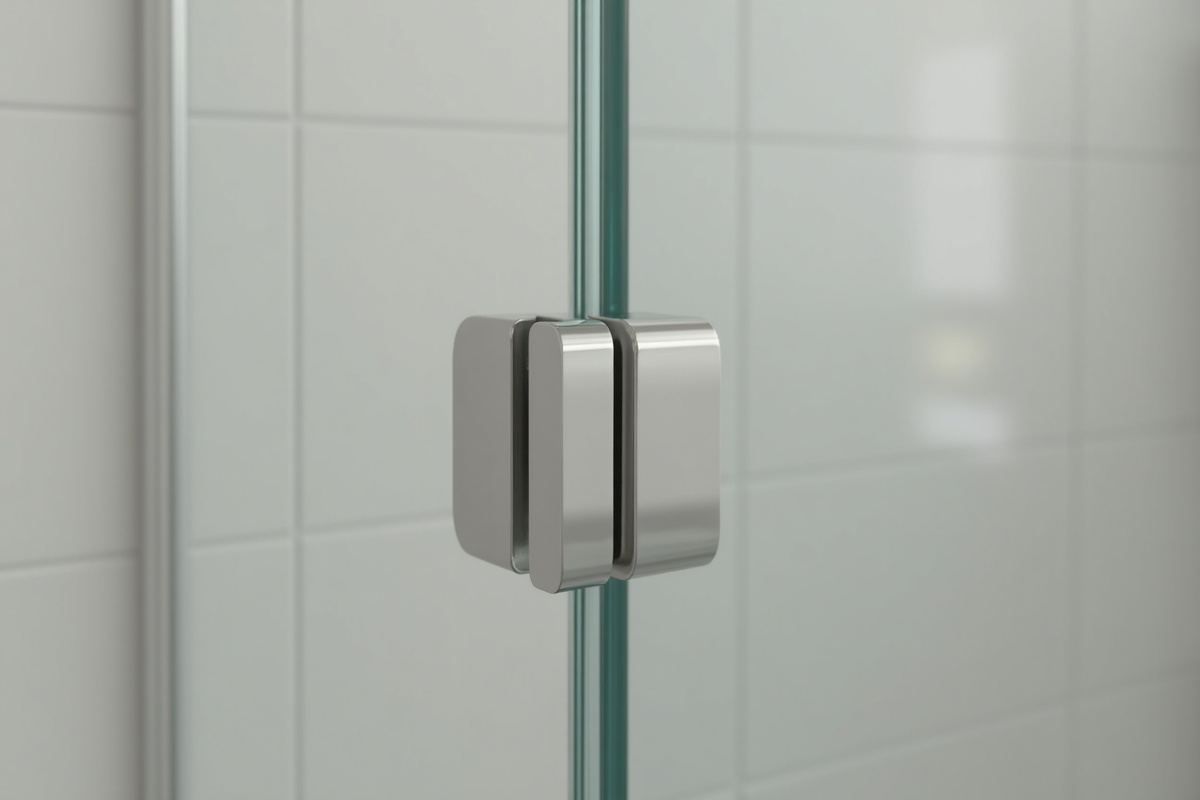
Local glaziers typically charge $100 to $150 for the first hour and $35 to $75 per hour after (Angi, 2026). A frameless shower door installation in the DFW area costs $600 to $1,900 depending on door size, glass thickness, and hardware finish. Full custom enclosures with multiple panels range from $1,400 to $3,300+.
$600-$1,900
typical cost for a frameless shower door installed in the Dallas-Fort Worth area
Here's what affects the final price:
Glass thickness. Three-eighths-inch is the standard for frameless doors. Half-inch adds 20-30% to the glass cost but provides greater rigidity for wider doors and taller panels.
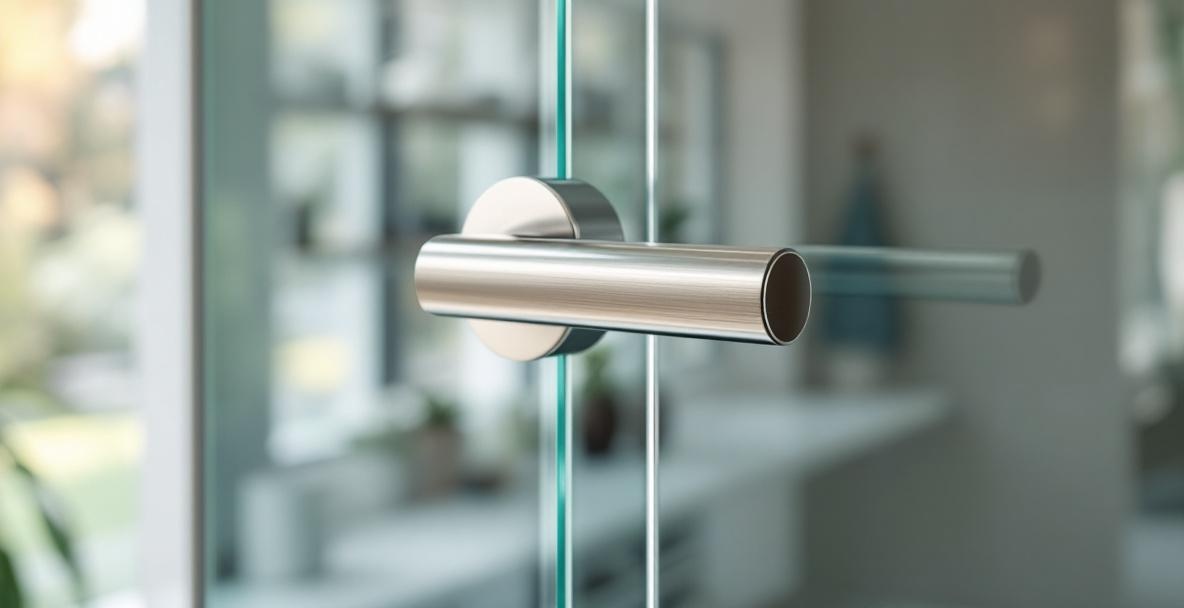
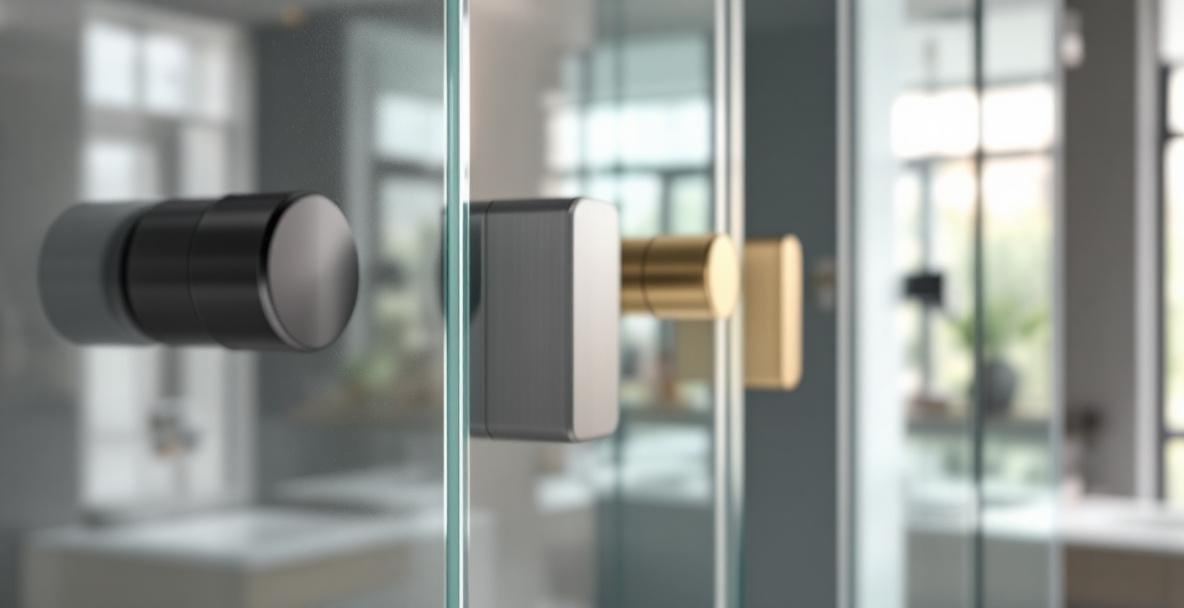
Hardware finish. Chrome is the least expensive. Brushed nickel falls in the middle. Matte black and brushed gold are premium finishes that cost more due to the coating process.
Enclosure complexity. A single hinged door is straightforward. Add a fixed panel, a return panel, or a 90-degree corner and the price climbs because each additional piece needs its own measurement, fabrication, and fitting.
Corner treatment. Mitered corners cost more than butt joints because of the specialized equipment and skill required. But the visual and structural difference is significant.
Geographic pricing. DFW remodeling costs generally run 10-15% above the Texas state average due to higher demand and a competitive contractor market.
What Are the Different Types of Frameless Shower Door Glass?
All frameless shower doors must use tempered safety glass per IRC Section R308, which is 4-5 times stronger than annealed glass. Within that requirement, homeowners can choose from clear, low-iron, frosted, rain-patterned, and tinted glass -- each with a different visual effect and price point.
Clear Tempered Glass
The most common and affordable option. Standard clear glass has a slight green tint visible at the edges -- caused by iron content in the raw material. For most bathrooms, it's barely noticeable and looks great.
Low-Iron (Ultra-Clear) Glass
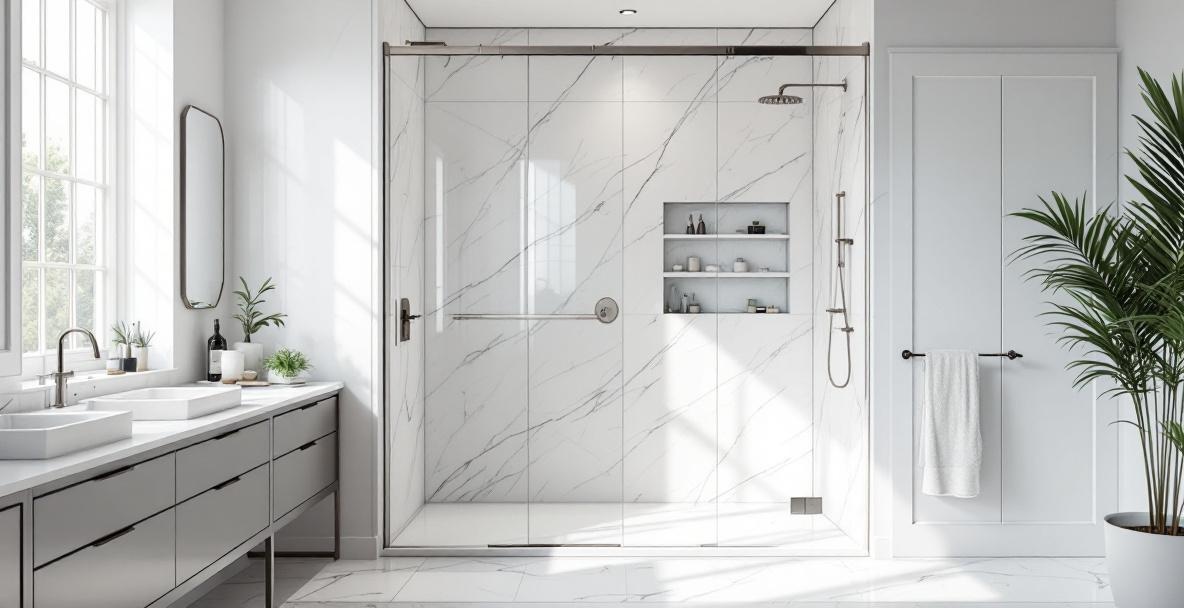
Low-iron glass removes the green tint, producing a crystal-clear appearance. The difference is most visible at the glass edges and in thicker panels. If you're pairing glass with white marble or bright tile, low-iron prevents the greenish cast from competing with your color palette. Expect a 15-20% price premium over standard clear.
Frosted Glass
Acid-etched or sandblasted for privacy. Frosted glass allows light through while obscuring visibility. Popular in shared bathrooms or when the shower faces a window or mirror. Available in full-frost or gradient patterns.
Rain Glass
Textured to mimic the look of water droplets on a window. Provides partial privacy while maintaining a contemporary aesthetic. Rain glass hides water spots and fingerprints better than clear glass -- a practical benefit in hard-water areas like DFW.
Tinted Glass
Gray, bronze, or blue-tinted glass for a specific design effect. Less common in residential showers but available for homeowners who want a bolder look. Tinted glass is still tempered and meets all safety requirements.
We've noticed a significant shift in DFW over the past two years: homeowners increasingly request low-iron glass specifically because they've seen the green-tint issue on social media renovation accounts. Five years ago, fewer than 10% of our clients asked about it. Now it's closer to 30%. The market is becoming more educated about glass quality, which is a good thing.
Why Does Precision Installation Matter More Than the Glass Itself?
Even the best glass fails if the installation is poor. Improper alignment causes doors to swing open on their own, gaps at panel junctions let water escape, and uneven weight distribution puts stress on hinges that shortens their lifespan. The glass is the material -- the installation is the craft.
Think about it this way. You can buy the same brand of tempered glass from two different companies. Same thickness, same hardware, same finish. But if one company measures with a tape measure and the other uses laser tools with plumb checks at multiple heights, you'll get two very different results.
Common installation problems from inexperienced installers:
- Doors that swing open by themselves. This happens when the hinge side isn't perfectly plumb. Gravity pulls the door toward the low side.
- Water leaking at panel junctions. Butt joints without proper sealing, or panels cut slightly too short, create escape paths for water.
- Uneven gaps at the top or bottom. The shower curb or header may not be level, and a good installer shims and adjusts rather than forcing the glass to fit. If you already have gaps and want to know which are normal and which need correcting, our guide to frameless shower door gap sealing walks through the tolerances.
- Stripped mounting hardware. Drilling into tile and wall studs requires the right anchors for the substrate. Using the wrong anchors means hardware loosens over time.
[PERSONAL EXPERIENCE] We've been called to fix installations from other companies more times than we can count. The most common issue is doors that don't hang straight because the original installer didn't check plumb at multiple points. Replacing a door is expensive -- getting it right the first time is always cheaper.
What Questions Should You Ask Before Hiring a Shower Door Installer?
Not all glass companies answer these questions the same way -- and the differences reveal a lot about the quality you'll receive. Before signing a contract or putting down a deposit, ask every potential installer these questions.
About the glass:
- Is every panel cut to my measurements, or are you working from stock sizes?
- What glass thickness do you use for frameless doors?
- Do you offer mitered glass corners on enclosures?
- Is your glass SGCC-certified (Safety Glazing Certification Council)?
About measurement and installation:
- Do you measure on-site with laser tools?
- How many enclosures like mine has the installing crew set?
- How many installations has your team completed?
- What happens if the glass doesn't fit correctly?
About warranty and support:
- What's covered under warranty -- just the glass, or hardware and labor too?
- How long is the warranty period?
- What maintenance do you recommend?
About pricing:
- Can you provide an itemized quote separating glass, hardware, and labor?
- Are there additional charges for delivery, removal of old doors, or disposal?
- What's your deposit and payment schedule?
What Is the Difference Between Mitered and Butt-Joint Glass Corners?
A mitered corner has each glass panel cut at a 45-degree angle so the two pieces meet flush -- like a picture frame. A butt joint presses two flat glass edges together with silicone filling the visible gap. Most DFW glass companies default to butt joints because they lack the CNC equipment for precision mitering.
Here's a direct comparison:
| Feature | Mitered Corner | Butt Joint | |
| Appearance | Seamless -- no visible gap | Visible silicone-filled gap | |
| Water Seal | Tight mechanical fit | Dependent on silicone | |
| Structural Strength | Stronger -- 45-degree mating surfaces | Weaker -- relies on adhesive | |
| Equipment Required | CNC edging machine | Standard cutting tools | |
| Cost | Higher | Lower | |
| Availability | Fewer shops offer it | Industry standard |
Why don't more companies offer mitered corners? The technique demands precision CNC equipment, experienced fabricators, and careful handling. The feathered edge at the miter tip is extremely fragile -- a small chip on tempered glass causes the entire panel to shatter. Most glass shops in Texas skip it rather than risk the material waste and added labor time.
But the result speaks for itself. A mitered corner is the difference between a shower enclosure that looks custom-built and one that looks assembled from parts. If you're investing in frameless glass, it's worth asking whether your installer can deliver this level of detail.
Find the Right Frameless Shower Door Company Near You
Choosing a frameless shower door company isn't just about price. It's about finding a team that measures precisely, specs the glass to your opening, installs with care, and stands behind their work. The questions in this guide will help you separate skilled glass craftsmen from resellers moving stock panels.
If you're in the Dallas-Fort Worth area, visit our services page or call (940) 279-1197 to learn more about our approach to frameless shower doors.
How do I find a reputable frameless shower door installer near me?
Look for companies that measure on-site with laser tools and order every panel to those dimensions, offer mitered glass corners on enclosures, and carry SGCC-certified safety glass. Ask for an itemized quote and check their portfolio of completed work. Avoid companies that quote from photos without visiting your home.
What warranty should I expect on frameless glass shower doors?
A quality installer should offer at least a 1-year warranty covering glass, hardware, and installation labor. Some companies offer 5-year or lifetime warranties on the glass itself. Make sure the warranty covers hardware failure, seal degradation, and any installation-related defects -- not just glass breakage.
Can frameless shower doors be installed on any shower opening?
Frameless doors can be installed on virtually any shower opening because they're custom-fabricated to your exact dimensions. Standard alcoves, corner showers, neo-angle configurations, and even irregular openings can all accommodate frameless glass. The key is accurate measurement -- which is why in-home laser measurement is essential.
How thick should frameless shower door glass be?
The minimum for frameless applications is 3/8-inch (10mm) tempered glass. For doors wider than 30 inches or panels taller than 80 inches, 1/2-inch (12mm) glass provides greater rigidity and a more substantial feel. Never accept 1/4-inch glass for a frameless door -- it requires a metal frame for structural support and doesn't meet frameless hardware requirements.
What is the turnaround time for frameless shower door installation?
The full process from measurement to completed installation takes 2-4 weeks in most cases. Custom fabrication accounts for the majority of that timeline -- typically 1-2 weeks. The on-site installation itself takes 2-4 hours. Complex multi-panel enclosures or specialty glass types may extend the timeline by an additional week.
Related reading: