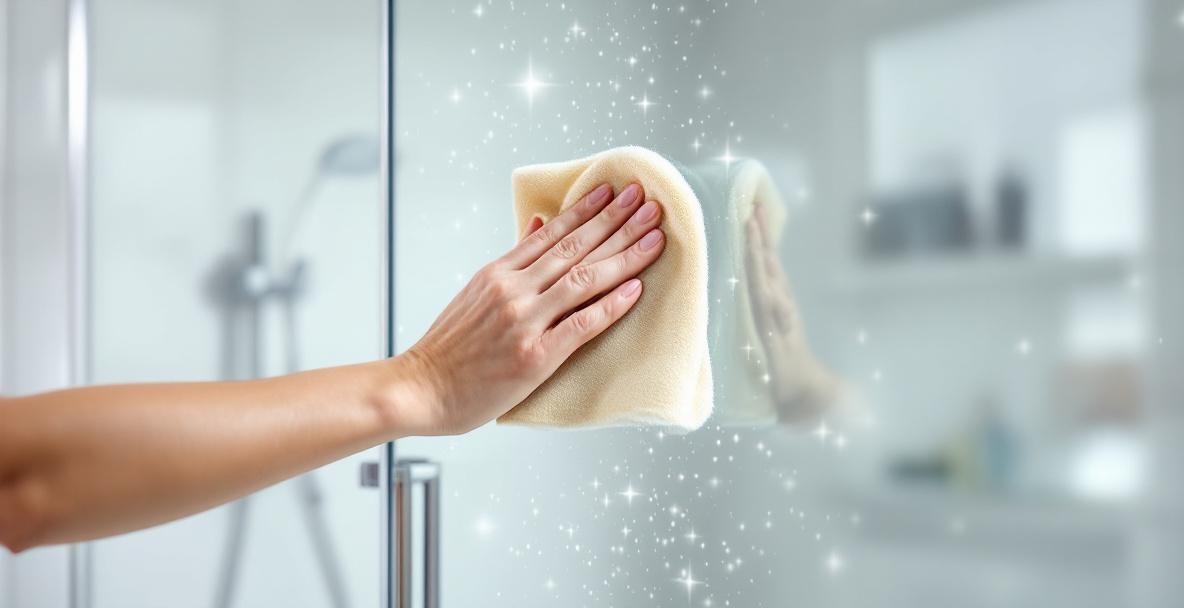
Squeegeeing glass shower doors for 60 seconds after every shower removes 90% of the water that would otherwise deposit hard water minerals on your glass. Done consistently, this single habit reduces the need for deep cleaning to once or twice a year — even in DFW, where water hardness of 7–17 grains per gallon is among the highest in Texas.
Frameless shower glass is an investment. In DFW homes, that investment is under constant attack from some of the hardest water in Texas. Every drop of water that dries on your glass leaves behind calcium carbonate and magnesium — minerals that bond chemically to the surface, cloud the glass, and eventually etch it permanently if left unaddressed.
The squeegee is the simplest, cheapest, and most effective tool for stopping that process. But technique and tool selection matter more than most homeowners realize.
Why Squeegeeing Is the Most Effective Cleaning Habit
The squeegee wins over towel-drying, spray-and-wipe, and daily chemical cleaners because it physically removes standing water from the glass surface before minerals can bond. No chemical in the world works as fast or as reliably as removing the water entirely.
Hard water staining is not a cleaning problem — it's a drying problem. The minerals don't damage glass while the water is liquid. They deposit when the water evaporates and leaves calcium and magnesium carbonate behind. Stop the evaporation by removing the water, and you stop the mineral deposit.
Every method other than squeegeeing leaves some water behind:
- Towel drying leaves moisture in fibers and smears mineral residue across the glass
- Air drying is the worst option — complete evaporation in still air deposits the maximum mineral load
- Spray-and-wipe after each shower is effective but adds chemical residue and takes longer
- Fan drying helps but doesn't prevent mineral bonding from the initial water film
The squeegee removes 95%+ of surface water in a single pass with a correctly-fitted blade, taking the mineral content with it. Professional glass cleaning guides from organizations like Diamon-Fusion confirm that daily squeegeeing can reduce deep cleaning frequency to 1–2 times per year even in hard water environments (Diamon-Fusion).
60 sec
is all it takes after each shower to prevent hard water deposits and extend time between deep cleans to 1–2 times per year ([Diamon-Fusion](https://www.diamonfusion.com/))
The Correct Technique Step by Step
The most effective squeegee technique for shower glass is the S-pattern or overlapping vertical strokes at a 45-degree blade angle, starting from the top corner and working to the bottom, with blade-wiping between passes. Horizontal passes leave water on the glass; vertical passes with overlap remove it completely.
Technique determines how much water you actually remove. Poor technique leaves half the water behind even with a quality squeegee.
- 1
Start at the top corner
Position the squeegee blade at the top corner of the largest glass panel. Angle the blade slightly — about 45 degrees from vertical — so water channels to the side rather than dripping straight down onto areas you've already cleared.
- 2
Pull in a smooth vertical stroke
Draw the squeegee straight down in a continuous stroke to the bottom of the panel. Keep firm, even pressure — light pressure leaves a film, heavy pressure causes squeaking and blade wear. The blade should maintain full contact with the glass throughout the stroke.
- 3
Wipe the blade between passes
Before your next stroke, wipe the blade on a hanging microfiber towel or sponge. This removes the collected water and minerals from the blade — redistributing them onto the glass defeats the purpose.
- 4
Overlap each stroke by 1–2 inches
Move 2–3 inches toward the center and repeat. Overlapping strokes ensure no vertical strip is missed. Work your way across the full panel.
- 5
Do the door panel last
Clean fixed panels first, then the door panel. The door gets the most water exposure and usually needs the most attention. Wipe the bottom edge, handle, and any silicone joints with a dry cloth after squeegeeing.
If you end up with streaks, you're either not wiping the blade between passes or your blade has a nick in it. Run your finger lightly across the blade edge — any nick, chip, or debris will leave a consistent streak in the same position every pass.
Which Squeegee Type Works Best on Glass?
For frameless shower glass, a silicone-blade squeegee in the 10–14 inch range is the best choice. Silicone blades last significantly longer than rubber, resist mold growth, maintain their edge in a constantly wet environment, and don't leave the rubber smell that cheap blades transfer to glass surfaces.
Not all squeegees are equal. The blade material, handle length, and blade width all affect how effective and comfortable the tool is to use daily.
| Silicone blade, 10-12 in. |
| Silicone blade, 14-16 in. |
| Rubber blade, 10-12 in. |
| Microfiber-edge hybrid |
| Handle-mounted shower squeegee |
Blade width guidance: Match squeegee width to your panel width. A 10-inch blade on a 30-inch panel requires more strokes and more time; a 14-inch blade covers wider panels faster. For a standard 36-inch wide frameless door, a 14-inch squeegee is ideal.
Handle type: A straight handle works for panels below shoulder height. An angled or telescoping handle reaches the top of tall enclosures (72"+) without straining. The squeegee should be easy to use one-handed.

How to Maintain Your Squeegee
A neglected squeegee undermines the habit. A damaged or dirty blade doesn't clear water effectively and may redistribute minerals rather than removing them.
Weekly maintenance:
- Rinse the blade thoroughly after every use
- Wipe the blade dry with a cloth — a wet squeegee sitting in the shower grows mold on rubber blades
- Check the blade edge for nicks or debris
Monthly maintenance:
- Remove the blade from the handle and rinse the channel it sits in — mineral deposits accumulate in the blade slot
- Inspect the blade for deformation (cupping, curling, or uneven edge)
- Wipe down the handle and hang mechanism
When to replace the blade:
- Any nick or chip in the blade edge (leaves streak every pass)
- Blade is no longer flat — curling or cupping means it can't make full contact
- Blade has hardened (rubber) or begun to deteriorate (silicone)
- Mold growth that doesn't wash out (rubber blades primarily)
Replacement blades for most squeegee handles cost $5–$12 and slide into the existing frame. Replacing the blade rather than the whole squeegee reduces waste and cost.
Does Squeegeeing Replace Regular Cleaning?
Squeegeeing is a prevention habit, not a cleaning method. It dramatically reduces the frequency and effort of deep cleaning — but it does not eliminate the need for periodic glass cleaning with an appropriate glass or mineral deposit cleaner. Think of squeegeeing as brushing your teeth and deep cleaning as the dental checkup.
Even with perfect daily squeegeeing, soap residue, body oils, and the small amount of water remaining after squeegeeing still create gradual buildup. In DFW's hard water environment, a monthly light cleaning with a 50/50 white vinegar and water solution or a dedicated shower glass cleaner is still recommended.
The difference is what that monthly cleaning looks like. Without squeegeeing, monthly cleaning involves significant scrubbing to remove thick mineral scale. With consistent squeegeeing, monthly cleaning is a quick spray-and-wipe that takes 5 minutes and requires no chemical muscle.
Recommended cleaning frequency with consistent squeegeeing:
- Light cleaning (vinegar solution, glass cleaner): Monthly
- Deep clean (calcium/lime remover): Every 3–6 months in DFW
- Professional glass restoration (if needed): Every 5–10 years
If you apply a professional hydrophobic coating like Diamon-Fusion or EnduroShield to your frameless shower glass, squeegeeing becomes even easier — water beads aggressively and sheets off rather than spreading across the surface. The combination of coating plus daily squeegee is the gold standard for DFW shower glass maintenance.
Why the Habit Matters Even More in DFW
DFW water hardness is documented at 7–17 grains per gallon depending on municipality — classified as "hard" to "very hard" by the Water Quality Association. At this level, the mineral load deposited in each shower session is significantly higher than the national average of 60–120 ppm.
In practical terms: a DFW homeowner who skips squeegeeing for two weeks sees the same mineral accumulation that a Dallas suburb resident would see in a month — and what a soft-water city resident might see in two months.
The math makes the habit non-negotiable in DFW:
- Average shower uses 17–25 gallons of water (EPA)
- At DFW hardness of 300+ mg/L, that's 5–7+ grams of minerals per shower
- A 5-minute squeegee removes 95%+ of that mineral load before it can deposit
- Without squeegeeing, those minerals accumulate into visible scaling within 1–3 weeks
Municipalities with the hardest water in DFW: Denton (draws from multiple lake sources), portions of Lewisville, and parts of Frisco and McKinney served by secondary distributors often report the highest hardness levels. If you're in Corinth, Highland Village, or North Denton County, your water hardness is toward the higher end of the DFW range.

What to Do After Squeegeeing for Best Results
The squeegee does the heavy lifting. A few additional steps maximize its effectiveness:
Wipe the door seal and bottom threshold. The squeegee can't reach the rubber bottom sweep or the silicone bead at panel joints. A quick wipe with a dry cloth removes standing water from these areas and prevents mildew.
Run the exhaust fan for 20 minutes. Bathroom exhaust fans are rated to replace the air in the room several times per hour. Twenty minutes of post-shower fan operation removes steam humidity that would otherwise slow evaporation and leave moisture on surfaces the squeegee didn't reach.
Prop the door slightly open. Closed frameless doors trap humid air inside the enclosure. Leaving the door slightly ajar lets the bathroom fan ventilate the interior.
Don't spray products on the glass every day. Daily application of chemical spray cleaners is not necessary when you squeegee consistently, and some formulas leave their own residue when applied too frequently. Save spray cleaners for weekly or monthly cleaning sessions.
Is a silicone or rubber blade better for shower glass?
Silicone blades are superior for shower glass use. Silicone maintains its edge longer, resists mold growth (a significant advantage in the constantly wet shower environment), and doesn't develop the hardening and cracking that rubber blades show in 6–12 months of daily use. Silicone blades cost slightly more but last 2–4 years — making them more economical over time.
How often should you replace a squeegee blade?
Replace the blade when you see any nick or chip in the edge (it will leave a streak line in the same position every pass), when the blade has begun to cup or curl and no longer lies flat against the glass, or when rubber blades show hardening or cracking. For most households, silicone blades last 2–4 years; rubber blades typically need replacement every 6–12 months with daily use.
Can you safely squeegee coated shower glass?
Yes — and in fact, squeegeeing coated glass is easier and more effective. Hydrophobic coatings (Diamon-Fusion, EnduroShield, Rain-X) cause water to bead rather than spread, making the squeegee blade much more effective at clearing the surface. Use a clean silicone blade with no debris on the edge. Avoid metal-edged window squeegees designed for exterior glass — these can scratch coatings.
What is the best squeegee size for frameless shower doors?
For a standard 36-inch wide frameless swing door, a 14-inch blade covers the panel width efficiently in 3–4 strokes. For smaller 24–30 inch panels, a 10–12 inch blade works well. For large walk-in or multi-panel enclosures, a 16-inch blade reduces the number of passes needed. The goal is to match the blade to the panel so you can complete each panel in the fewest efficient strokes.
Does squeegeeing actually prevent hard water stains?
Yes — this is well-documented in professional glass care literature. The mechanism is straightforward: hard water stains form when water evaporates and leaves mineral residue behind. Squeegeeing removes the water before it can evaporate, removing the minerals with it. Consistent daily squeegeeing after every shower prevents 90%+ of hard water stain formation. It doesn't eliminate the need for periodic cleaning entirely, but it reduces deep cleaning from a weekly battle to a monthly light wipe.
Also see our glass shower door cleaning tips and our frameless shower door maintenance tips guide.
Infinity Glass & Glazing installs frameless shower enclosures throughout the DFW metro — including options with factory-applied hydrophobic coatings that make squeegeeing even easier. Contact us for a free estimate on your new frameless shower door or enclosure.
Related reading: