
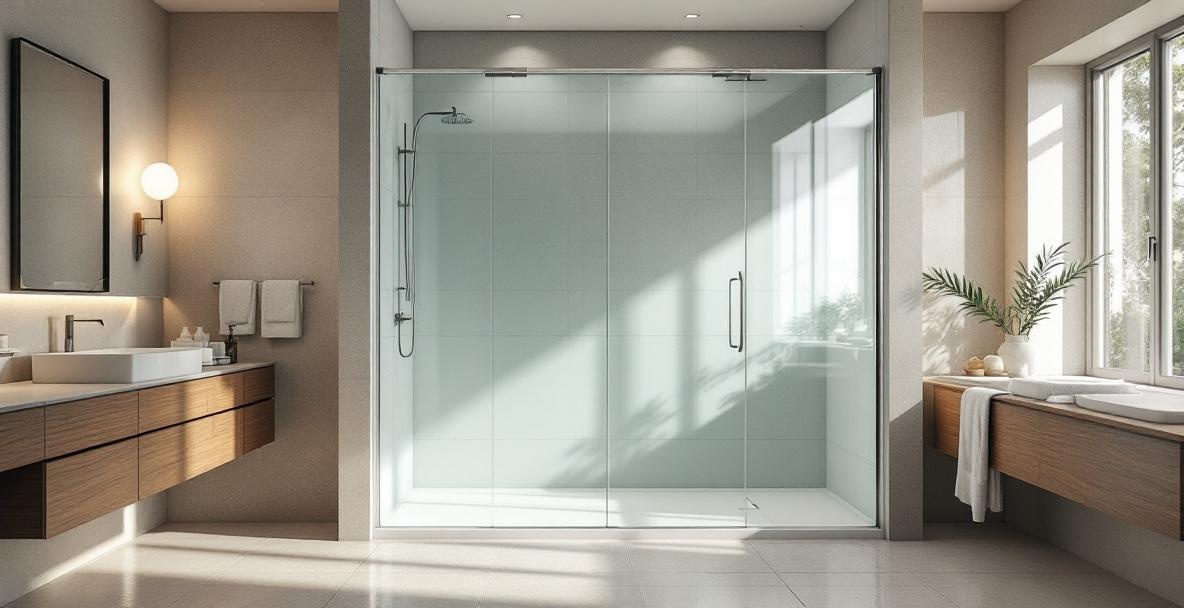
Frameless shower doors last 20–30 years with proper maintenance — but problems begin within 3–5 years without it. The difference comes down to three habits: a daily squeegee, quarterly hardware inspection, and annual seal checks. In DFW's hard water environment, these routines are non-negotiable for protecting your investment.
A frameless shower door is one of the most visible and most-used fixtures in your home. In DFW, where water hardness routinely runs 7–17 grains per gallon (Water Fixers of DFW), every shower session deposits calcium and magnesium on your glass and hardware. Without a consistent maintenance routine, that mineral load accumulates into etching, corrosion, and seal failure — problems that cost hundreds to repair and can force premature replacement.
The good news: preventing these problems is straightforward. This guide walks through every aspect of frameless shower door care, from daily habits to annual inspections.
Why Proper Maintenance Doubles Frameless Door Lifespan
Frameless shower doors maintained consistently — daily squeegee, clean hardware, intact seals — routinely last 20–30 years. The same enclosure neglected for just 3–5 years may require hardware replacement, seal rebuilding, or glass restoration before that window closes.
The extended lifespan of a properly maintained frameless door versus a neglected one isn't just about cleaning. It's about stopping a chain reaction:
- Hard water minerals deposit on glass and hardware surfaces
- Minerals bond chemically to glass (etching) and oxidize metal (corrosion)
- Seal and gasket integrity degrades from cleaning chemical buildup and mineral infiltration
- Hardware loosens as mineral deposits interfere with moving parts
- Glass stress increases as hardware alignment shifts, raising the risk of spontaneous breakage
Each stage accelerates the next. Stopping the chain at step one — daily squeegee — prevents everything downstream.
20–30
years of reliable service life for frameless shower doors with proper maintenance, compared to 15–20 years for framed doors ([ANZZI](https://www.anzzi.com/))
The Best Daily Routine in 60 Seconds
The most effective maintenance habit for frameless shower glass is a 30–60 second squeegee immediately after every shower. This single action removes 90% of the standing water that would otherwise deposit minerals on your glass — reducing deep cleaning frequency from weekly to monthly or less.
Don't overthink the daily routine. Sixty seconds of consistent effort prevents hours of corrective work later.
- 1
Squeegee the glass panels
Start at the top corner and pull the squeegee downward in overlapping vertical strokes. Wipe the blade on a towel between passes. Cover every glass panel — fixed and door. This takes 20–30 seconds for a standard enclosure.
- 2
Wipe the bottom sweep and threshold
The bottom sweep (the rubber seal at the door's base) collects standing water. A quick pass with a dry microfiber cloth prevents mildew from establishing in the silicone and gasket material.
- 3
Rinse hardware briefly
Give the hinges, handle, and clips a quick rinse with the showerhead before you step out. This washes away soap and shampoo residue before it can dry on hardware surfaces.
- 4
Leave the door ajar
Prop the door slightly open after showering. Ventilation accelerates drying and prevents the humid environment that feeds mildew on seals and grout.
Keep your squeegee mounted inside the shower on a suction hook where it's visible and reachable. Out-of-sight means out-of-routine. A quality silicone-blade squeegee costs $10–$15 and lasts 2–3 years.
How to Clean Hardware and Hinges Without Damage
Different hardware finishes require different cleaning approaches. Using the wrong cleaner on brushed nickel, matte black, or oil-rubbed bronze can permanently damage the finish — stripping protective coatings that prevent corrosion and oxidation.
Shower door hardware takes constant exposure to water, soap, and in DFW, mineral-laden hard water. Routine cleaning protects the finish and extends hardware life by years.
| Chrome |
| Brushed Nickel |
| Matte Black |
| Oil-Rubbed Bronze |
| Brushed Gold |
For hinges specifically, use a soft cotton cloth dampened with warm water and a drop of dish soap. Work into the crevices where the hinge barrel meets the mounting plate — mineral deposits concentrate here. Rinse thoroughly and dry completely with a clean cloth.
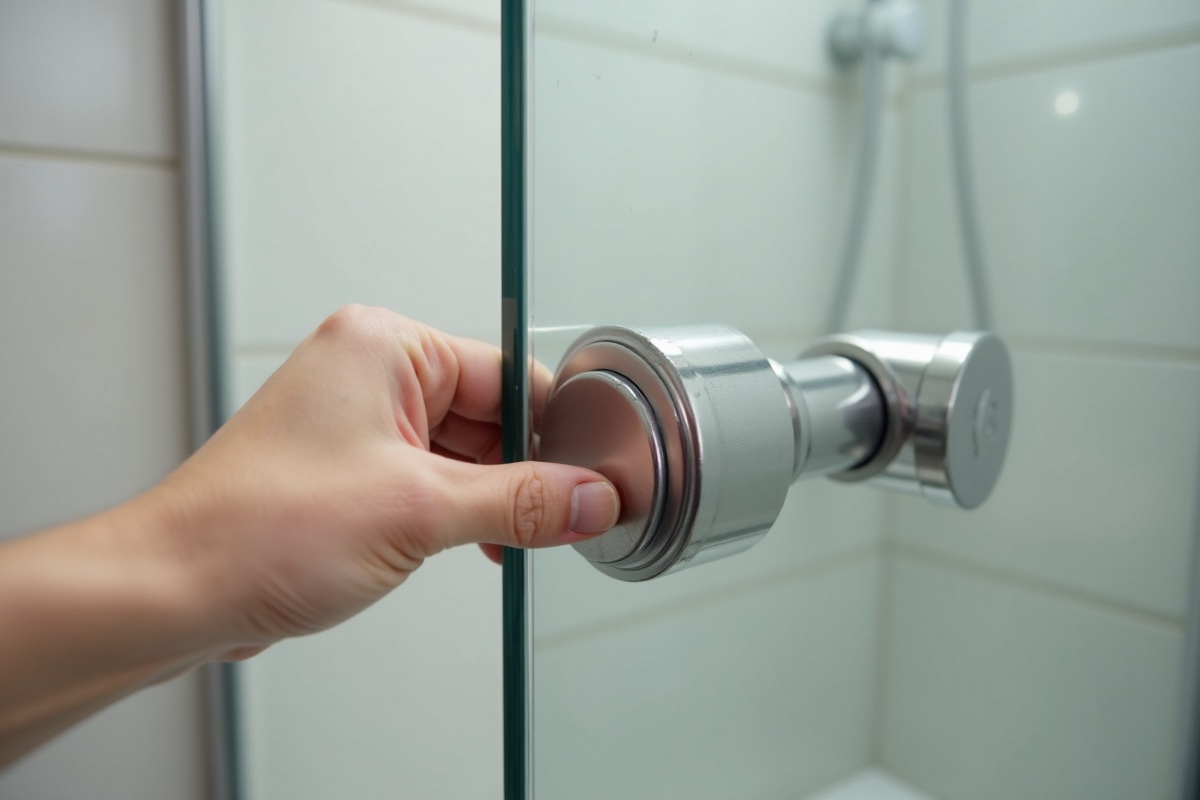
Never spray glass cleaner directly onto hardware finishes. Overspray from ammonia-based glass cleaners is a leading cause of premature finish degradation on brushed nickel and matte black hardware. Spray your cloth, then wipe — not the other way around.
Inspecting and Maintaining Seals
Shower door seals — including the bottom sweep, side seals, and silicone bead at glass-to-wall and glass-to-glass joints — are the components most homeowners overlook until a leak appears. Inspecting seals quarterly and replacing them at the first sign of cracking prevents water damage to walls, subfloors, and adjacent rooms.
Seals serve two purposes: keeping water inside the enclosure and buffering glass panels from hard contact with metal hardware and walls. When seals fail, both functions are compromised — and a persistent drip is a seal problem far more often than a glass or hardware problem. Our guide to fixing a leaking shower door walks through telling those apart.
What to check during a seal inspection:
- Bottom sweep: Look for cracks, compression deformation, or tears. A healthy sweep has even, continuous contact with the threshold. You should not see gaps when the door is closed.
- Side seals and vinyl channels: Check where glass meets the wall or adjacent fixed panel. Vinyl channel seals shrink and harden over time — look for separation or brittleness.
- Silicone bead: Inspect the continuous silicone bead at glass-to-wall, glass-to-glass, and glass-to-floor joints. Healthy silicone is flexible and fully adhered with no gaps. Cracked, discolored, or moldy silicone needs removal and replacement.
Replacing a bottom sweep is a DIY task — most standard sweeps are available at hardware stores for $15–$40 and snap or slide into position, though matching the right profile to your door matters more than the price; our shower door seal replacement guide covers how to identify yours. Silicone resealing is also DIY-capable: remove old silicone with a razor and plastic scraper, clean thoroughly, apply painter's tape for clean lines, and apply fresh 100% silicone (not latex caulk) in a smooth bead.
Mistakes That Shorten Frameless Door Life
Several common habits accelerate wear on frameless shower doors:
Using abrasive scrubbers on glass. Steel wool, green scrubbing pads, and powdered cleansers create micro-scratches that trap minerals and permanently cloud glass. Always use microfiber cloths or non-scratch sponges.
Leaving cleaning products on hardware. Spray cleaners and vinegar left in contact with metal hardware for more than 2–3 minutes begin attacking protective finishes. Apply, wipe, rinse — don't let products sit.
Ignoring loose hardware. A slightly loose hinge or handle clip doesn't fix itself. Loose hardware causes the door to hang unevenly, increasing stress on the glass and mounting points. Check hardware tightness monthly — most adjustments require a basic hex key.
Using bleach near frameless enclosures. Bleach is highly effective for mold but extremely damaging to metal hardware finishes and silicone seals. Use hydrogen peroxide-based mold treatments instead.
Slamming the door. Frameless glass relies on hardware precision for alignment. Repeated impact from closing too hard shifts hinge alignment over time. Teach household members to close the door with controlled motion.
How DFW Hard Water Changes Your Maintenance Routine
DFW water hardness ranges from 7 to 17 grains per gallon depending on your municipality — roughly 2–4x the hardness level classified as "moderately hard" by the Water Quality Association. This level of mineral content means standard maintenance timelines from national guides don't apply. DFW homeowners need a more frequent schedule.
Dallas Water Utilities, Denton County water districts, and Lewisville Lake Municipal Utility District all draw from sources with elevated calcium and magnesium content. The result: mineral deposits form noticeably faster in DFW than in softer-water cities, and cleaning neglect has consequences within weeks rather than months.
DFW-specific adjustments:
- Squeegee after every shower without exception — not "most showers"
- Apply a hydrophobic glass coating (Diamon-Fusion, EnduroShield, or Rain-X Glass Treatment) to dramatically reduce mineral bonding; professional coatings extend cleaning intervals to 1–2 times per year (Diamon-Fusion)
- Use a water softener if you haven't — whole-house softening is the single most impactful change you can make for glass and hardware longevity
- Deep clean with a calcium/lime remover (CLR, Lime-A-Way) every 4–6 weeks rather than the monthly-or-less interval that softer-water markets use
- Inspect seals every 2–3 months rather than semi-annually — hard water mineral infiltration at seal joints accelerates degradation
1–2x
per year cleaning frequency for DFW homeowners who apply professional hydrophobic glass coatings — versus weekly cleaning for untreated glass in hard water ([Diamon-Fusion](https://www.diamonfusion.com/))
Monthly and Quarterly Maintenance Checklist
Use this schedule to stay ahead of every maintenance task.
Weekly:
- Squeegee after every shower (daily is better)
- Wipe hardware with damp cloth and dry completely
- Check bottom sweep for standing water — wipe dry
Monthly:
- Deep clean glass with calcium/lime remover or white vinegar solution
- Clean hinge barrels and hardware joints with soft cloth
- Check door alignment — does it hang level and close fully without effort?
- Inspect bottom sweep for wear
Quarterly:
- Full seal inspection (sweep, side seals, silicone bead)
- Check hardware fastener tightness with hex key
- Lubricate pivot points with silicone-based lubricant (not WD-40)
- Clean the threshold track if your door has one
Annually:
- Professional glass inspection if you notice cloudiness, chipping, or difficult-to-remove mineral staining
- Replace bottom sweep if compressed, cracked, or not fully sealing
- Evaluate whether a hydrophobic coating reapplication is needed
How long do frameless shower doors last with proper maintenance?
Frameless shower doors maintained consistently — daily squeegee, quarterly hardware inspection, annual seal check — last 20–30 years. Many installations from the 1990s are still in excellent condition with the original glass panels. Hardware typically needs replacement at 10–15 years even with good maintenance. In DFW's hard water environment, a water softener and hydrophobic glass coating significantly extend this timeline. Coatings can be added after installation, not just applied at fabrication.
Should you lubricate shower door hinges?
Yes — quarterly lubrication of pivot points and hinge barrels with a silicone-based lubricant extends hinge life and keeps the door operating smoothly. Use only silicone-based lubricant (like 3-In-One Professional Silicone Lubricant). Never use WD-40, petroleum-based oils, or grease — these attract mineral deposits and degrade rubber seals over time.
What products damage frameless shower door hardware?
The most damaging products are bleach (strips and corrodes hardware finishes), ammonia-based glass cleaners (degrades brushed nickel and matte black finishes), acidic cleaners like vinegar and lemon juice on gold and oil-rubbed bronze finishes, abrasive powders or pads, and any aerosol spray left in contact with hardware for extended periods. Always check the manufacturer's finish care recommendations before using any cleaning product.
How do you prevent mold on shower door seals?
Mold on shower door seals is prevented by eliminating standing moisture. After every shower, wipe the bottom sweep with a dry cloth and prop the door slightly open to ventilate. If mold appears on silicone, clean it with a hydrogen peroxide solution (3% concentration) — not bleach, which damages the silicone. Replace silicone that is deeply discolored or cracked; mold that penetrates the bead structure cannot be cleaned out.
Can you over-clean frameless glass shower doors?
Not the glass itself — but you can damage hardware and seals by cleaning too aggressively or using harsh products too frequently. Acidic cleaners like vinegar should not be used more than weekly on chrome or brushed nickel, and not at all on oil-rubbed bronze or gold finishes. Silicone seals degrade faster when exposed repeatedly to harsh chemicals. Glass itself is durable and can be cleaned frequently without risk — the danger is always to the surrounding components.
Also see our glass shower door cleaning tips guide and our frameless shower doors Dallas TX overview.
Infinity Glass & Glazing installs and services frameless shower enclosures throughout the DFW metro from our Corinth, TX location. Whether you need a new frameless enclosure with factory-applied hydrophobic coating or a professional assessment of your existing glass and hardware, contact us for a free estimate on your shower door project.
Related reading:
- removing streaks from shower glass
- glass shower door squeegee best practices