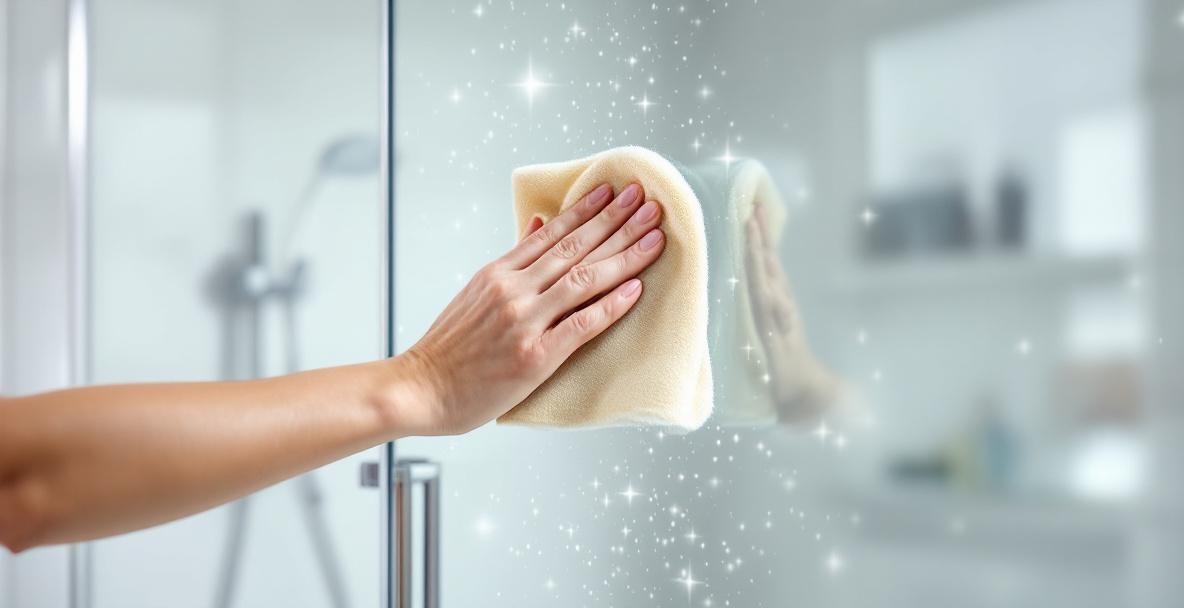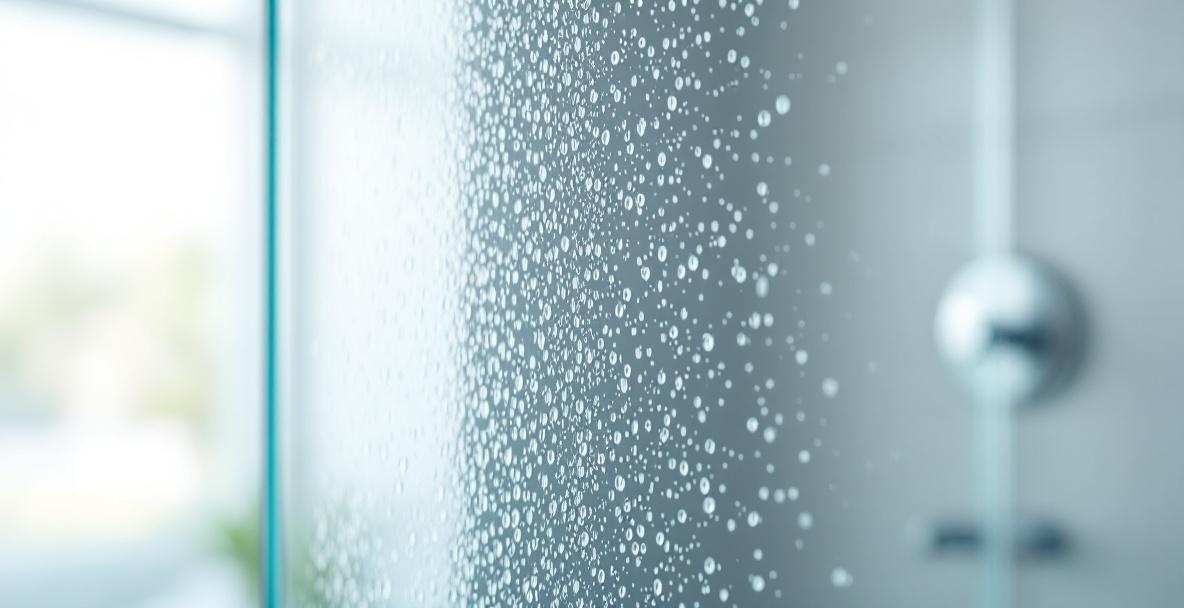
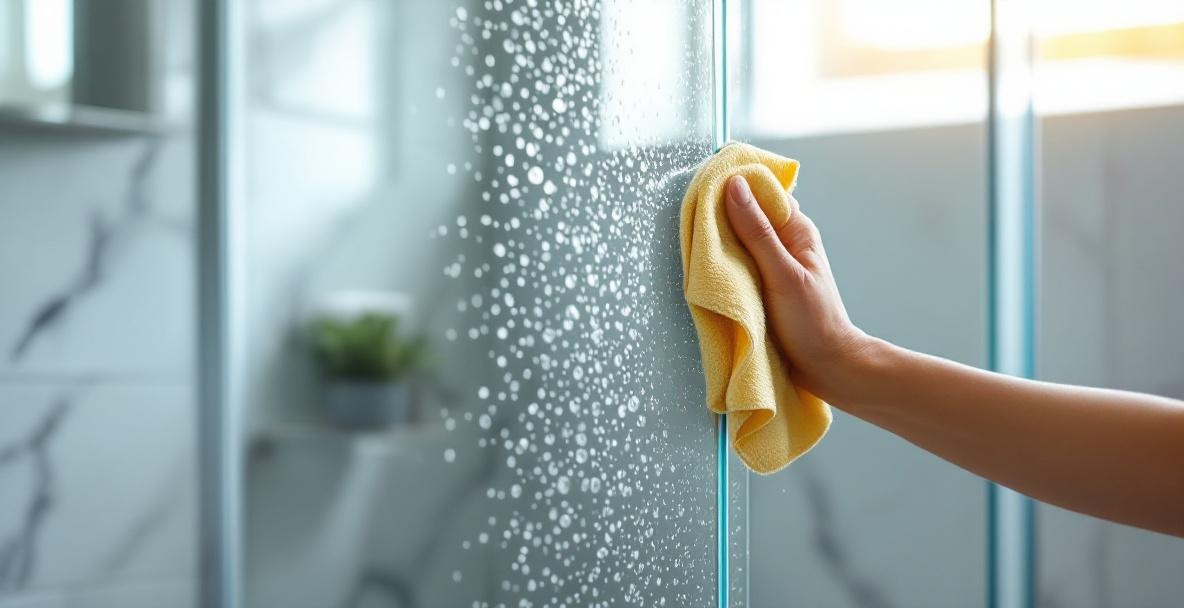
Cleaning frameless glass shower doors without damage comes down to three rules: use soft microfiber or a rubber squeegee only, rinse all cleaning solutions completely before they dry, and never use abrasive scrubbers or anything with ammonia on treated glass. A 60-second daily squeegee prevents 90% of hard water buildup before it has a chance to bond to the surface.
Frameless shower doors look stunning — until the glass goes cloudy. In the Dallas–Fort Worth area, that happens faster than most homeowners expect. DFW municipal water supplies measure 7–17 grains per gallon (GPG) of hardness, ranging from hard to very hard depending on your city. Every shower leaves behind a thin film of calcium and magnesium that, if left alone, turns into the stubborn white haze that no standard bathroom cleaner can touch.
The good news: cleaning frameless glass is simpler than cleaning framed doors. There are no metal channels, no rubber gaskets hiding mold, and no tight corners that a sponge can't reach. The large, uninterrupted glass panels clean quickly when you use the right approach — and stay cleaner longer when you build the right habits.
Why Do Frameless Shower Doors Get Dirty Faster Than You Think?
Hard water is the primary culprit, and in DFW it's especially aggressive. According to the USGS, approximately 85% of U.S. homes have hard water — and DFW sits at the harder end of that spectrum, with cities like Frisco, McKinney, and Corinth measuring 10–17 GPG (Water Fixers of DFW).
85%
of U.S. homes have hard water — and DFW measures 7–17 GPG, among the highest in Texas ([USGS](https://www.usgs.gov/special-topics/water-science-school/science/hardness-water))
When hard water evaporates on glass, it doesn't disappear — the minerals stay behind. Calcium carbonate and magnesium deposits bond lightly at first, then progressively harder the longer they're left. After 2–4 weeks without cleaning, deposits begin chemically etching the glass surface. After several months, that etching becomes permanent and no household cleaner can restore the original clarity.
Soap scum compounds the problem. The fatty acids in bar soap combine with calcium in hard water to form a sticky film that traps mineral deposits beneath it, making both harder to remove. Body wash and shampoo residue add another layer on top.
Frameless enclosures have one vulnerability framed doors don't: the large glass panels make any haze immediately visible. A framed door with rails and channels hides some buildup visually — frameless glass shows everything.
What Is the Best Daily Cleaning Routine?
The single most effective thing you can do for frameless shower glass is squeegee every panel after every shower. This 60-second habit removes standing water before minerals can bond to the surface and prevents the majority of hard water buildup from forming.
- 1
Squeegee top to bottom (30 seconds)
Start at the top corner and pull the squeegee blade down in overlapping vertical strokes. Wipe the blade with a dry cloth between passes to avoid redistributing water. A quality rubber-blade squeegee ($10–$15) works dramatically better than cheaper versions — the blade makes complete contact with the glass rather than skipping.
- 2
Wipe the bottom sweep and threshold (15 seconds)
Water pools at the bottom of frameless enclosures where the door sweep meets the floor. A quick wipe with a dry microfiber cloth removes standing water that would otherwise feed mildew growth on the silicone bead and bottom seal.
- 3
Leave the door open (passive)
After showering, prop the frameless door slightly open to allow air circulation. Trapped humidity inside a closed shower enclosure extends drying time and accelerates mildew growth on silicone joints and the bottom sweep.
- 4
Run the exhaust fan for 20 minutes
The bathroom exhaust fan removes the moisture-heavy air that would otherwise condense on glass surfaces as the room cools. Twenty minutes of fan operation after showering reduces residual mineral deposit formation significantly.
Hang the squeegee inside the shower on a hook attached to the wall or glass. Having it immediately accessible is what makes the daily habit stick — if you have to open a cabinet to find it, you won't use it consistently.
What Cleaning Solutions Actually Work on Frameless Glass?
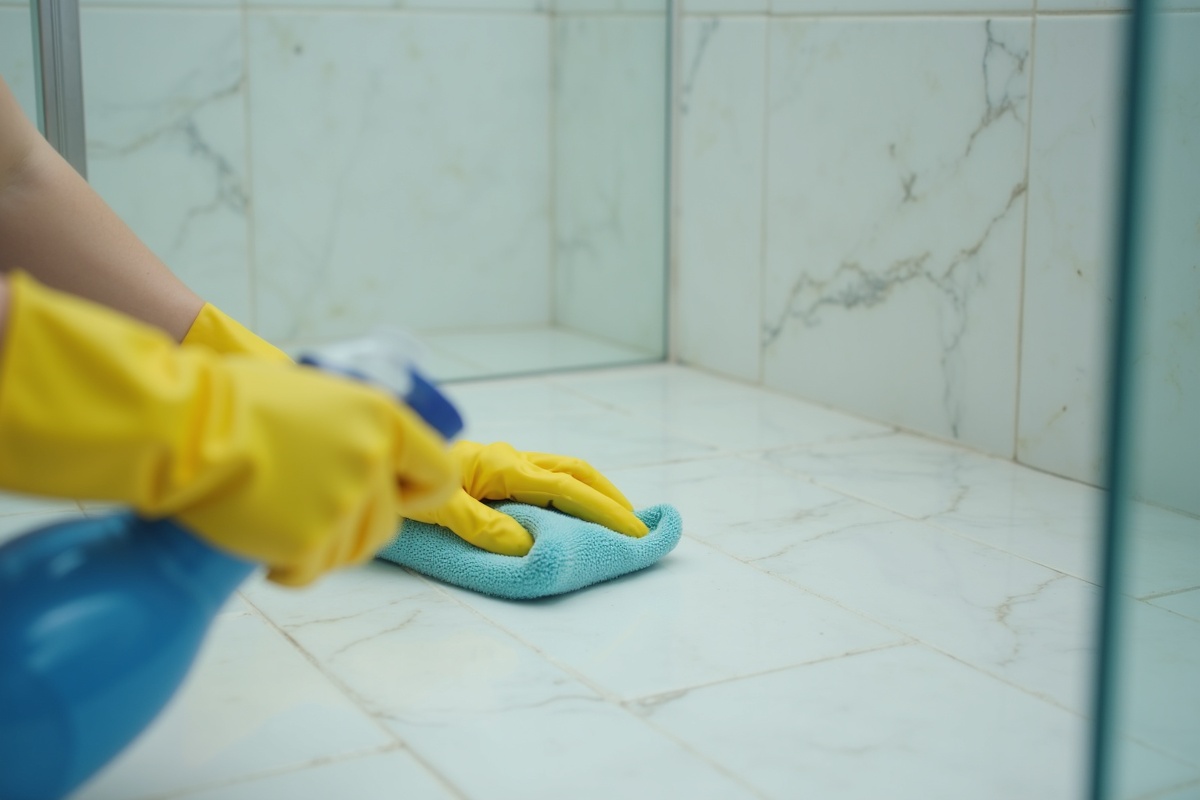
Several household solutions cut soap scum and light mineral deposits effectively. The key is matching the solution to the type of buildup and rinsing thoroughly so the cleaner doesn't leave its own residue.
| White vinegar + water (1:1) |
| Dish soap + warm water |
| Baking soda paste |
| Bar Keepers Friend (oxalic acid) |
| CLR or Lime-A-Way |
| Ammonia-free glass cleaner |
The weekly vinegar clean, step by step:
- 1
Spray the glass generously
Mix equal parts white vinegar and warm water in a spray bottle. Coat the full glass surface, paying extra attention to areas with visible mineral haze. Let it sit for 3–5 minutes — the acetic acid needs contact time to dissolve calcium carbonate bonds.
- 2
Scrub with a non-scratch pad
Use a soft microfiber cloth or a non-scratch scrubbing pad in slow circular motions on spotted areas. Never use steel wool, wire scrubbers, or the rough side of a standard kitchen sponge on frameless glass — they create micro-scratches that trap minerals and permanently degrade the surface.
- 3
Rinse completely with warm water
All vinegar residue must be rinsed off before it dries. Leftover acetic acid can dull metal hardware finishes — particularly brushed nickel, matte black, and oil-rubbed bronze — with repeated exposure.
- 4
Squeegee, then buff dry
Remove rinse water with your squeegee, then buff remaining moisture with a clean dry microfiber cloth for a streak-free finish. Avoid using paper towels — they can leave fibers on the glass surface.
Never use white vinegar anywhere near natural stone — travertine floors, marble walls, or limestone tile. Acetic acid permanently etches stone surfaces. Confine vinegar applications strictly to the glass panels and rinse before any runoff reaches stone surfaces.
How Do You Remove Stubborn Hard Water Stains?
Stubborn hard water stains on frameless shower glass require a two-stage approach: first, an acidic cleaner (vinegar, CLR, or oxalic acid) to dissolve mineral bonds, then a mild abrasive (baking soda paste or a non-scratch pad) to lift the loosened deposits. Never skip the acid stage — abrasion alone just scratches the glass without removing the underlying mineral.
If you're starting with glass that hasn't been cleaned in months, the buildup is layered: soap scum on top, mineral deposits below, and potentially early etching at the base where deposits have been sitting longest.
For moderate buildup (1–3 months):
Apply a paste of baking soda and white vinegar directly to the affected areas. The fizzing reaction helps loosen deposits. Leave for 10 minutes, then scrub gently with a damp non-scratch pad in circular motions. Rinse thoroughly. For tougher spots, apply Bar Keepers Friend (wet the glass first, apply powder, scrub gently for no more than 2 minutes, rinse immediately).
For heavy buildup (3+ months):
Use a commercial calcium remover like CLR or Lime-A-Way following label directions exactly. Most specify no more than 2 minutes of contact time on glass. Apply, wait, scrub lightly, rinse immediately, and repeat if necessary rather than extending contact time.
If cleaning products aren't restoring clarity and the glass looks permanently cloudy or has a textured feel even when dry, that's glass etching — physical damage to the surface structure. Professional glass polishing ($150–$350) can restore moderate etching. Severe etching requires glass replacement.
What Products Should You Never Use on Frameless Glass?
The wrong products cause irreversible damage — scratching the glass surface, corroding hardware finishes, or degrading protective coatings.
Products to avoid entirely:
- Steel wool and wire scrubbers — create permanent scratches in any glass surface
- Abrasive powder cleansers (Comet, Ajax) — too aggressive for smooth glass panels
- Bleach on metal hardware — causes pitting and discoloration on brushed nickel, chrome, and matte black
- Ammonia-based glass cleaners (standard Windex) on factory-coated glass — ammonia degrades hydrophobic coatings
- Razor blades — standard blades leave micro-scratches; only use blades specifically sold for glass cleaning, and only with soapy water lubrication
- Magic Erasers on coated glass — the melamine foam is mildly abrasive and degrades hydrophobic surface treatments
Tools to use instead:
- Rubber-blade squeegee
- Soft microfiber cloths (multiple — use clean ones for final buffing)
- Non-scratch scrubbing pads (blue or white — not green or darker)
- Spray bottles for controlled application
Why Does DFW Hard Water Make Cleaning Harder?
DFW is one of the most challenging hard water environments in Texas. Water hardness is measured in grains per gallon (GPG) or milligrams per liter (mg/L). The Water Quality Association classifies water above 7 GPG as "hard" and above 10.5 GPG as "very hard."
$800/yr
estimated extra cost per U.S. household from hard water — including additional cleaning products, soap use, and appliance wear ([Water Quality Association](https://www.wqa.org/))
Cities across DFW measure 7–17 GPG depending on source water and blending ratios (Water Fixers of DFW). Corinth, Lewisville, Flower Mound, Highland Village, and Frisco all fall in this range. At 14+ GPG, visible mineral deposits can form on shower glass within 48 hours of cleaning if no protective measures are in place.
The calcium carbonate (CaCO₃) that precipitates from DFW water doesn't just sit on top of the glass — over time it forms a chemical bond with the silica in tempered glass. That's what turns surface deposits into permanent etching. Frequent cleaning with the right solutions prevents the bond from forming. Letting deposits sit for weeks at DFW water hardness levels accelerates etching significantly faster than it would in softer-water cities.
One practical adaptation for DFW homeowners: for the final squeegee or rinse step, using a spray bottle of distilled or filtered water removes the hard-water rinse residue that would otherwise leave a fresh layer of deposits immediately after cleaning.
How Often Should You Deep-Clean Frameless Shower Doors?
Deep-cleaning frequency depends entirely on how consistently you squeegee daily. With daily squeegee use, a thorough weekly vinegar clean and monthly deep clean with a calcium remover is sufficient for DFW water. Without daily squeegeeing, buildup happens faster and deep-cleaning frequency needs to increase to weekly.
Recommended schedule for DFW:
| Task | Frequency | |---|---| | Squeegee after every shower | Daily | | Vinegar-and-water spray clean | Weekly | | Inspect and wipe door sweep and silicone | Weekly | | Baking soda or oxalic acid deep clean | Monthly | | Inspect hardware for corrosion or looseness | Monthly | | Professional glass polish or coating reapplication | Every 1–3 years |
If you notice haze returning within 2–3 days of a full clean, that's a sign that DFW water hardness has exceeded what daily squeegeeing can manage alone. At that point, consider asking your glass installer about factory-applied hydrophobic coatings (like Diamon-Fusion or EnduroShield) that create a molecular barrier making water bead off instead of spreading and evaporating on the surface.
Can you use Windex on frameless shower glass?
Standard Windex contains ammonia, which is fine on uncoated tempered glass but degrades factory-applied hydrophobic coatings (like Diamon-Fusion or EnduroShield) over time. If your frameless shower has a standard glass coating, use an ammonia-free glass cleaner instead. If you're unsure whether your glass has a coating, check with your installer or use the ammonia-free version to be safe.
Does vinegar damage shower door hardware?
Diluted white vinegar (50/50 with water) is generally safe on chrome and standard brushed nickel hardware when rinsed thoroughly after use. However, it can dull oil-rubbed bronze and brass finishes over time if left in contact repeatedly. Always rinse hardware completely after any vinegar application. Undiluted vinegar should never be used near shower hardware.
How do you prevent water spots from forming?
The daily squeegee habit removes standing water before it can evaporate and leave mineral deposits. Running the bathroom exhaust fan for 20 minutes post-shower accelerates drying. A professional hydrophobic coating causes water to bead and roll off rather than spread, dramatically reducing the mineral surface area per shower. In DFW, a combination of daily squeegeeing plus a professional coating provides the most effective prevention.
What is the difference between soap scum and hard water stains?
Soap scum is the fatty, sticky film formed when bar soap reacts with calcium in hard water. It appears as a whitish or yellowish film and responds well to dish soap or alkaline cleaners. Hard water stains are pure mineral deposits (primarily calcium carbonate) left when water evaporates — they appear as white or gray chalky spots and require acidic cleaners (vinegar, oxalic acid) to dissolve. Most shower glass has both, requiring a two-stage cleaning approach.
Should you clean hinges and hardware separately from the glass?
Yes. Frameless shower door hinges and handles should be cleaned with a soft cloth dampened with a mild soap-and-water solution — not the same acidic cleaners you use on the glass. Acidic cleaners (vinegar, CLR) can pit certain hardware finishes. After cleaning hardware, dry it immediately to prevent water spots on the metal. Check hinges monthly for any corrosion, loosening, or alignment issues that might indicate the hinge screws need tightening.
Also see our glass shower door cleaning tips and our water spot removal guide for shower glass.
Infinity Glass & Glazing installs custom frameless shower enclosures across the DFW metro — and we're happy to advise on the right glass treatment and maintenance plan for your water conditions. Contact us for a free estimate on your frameless shower door installation or replacement.
Related reading: