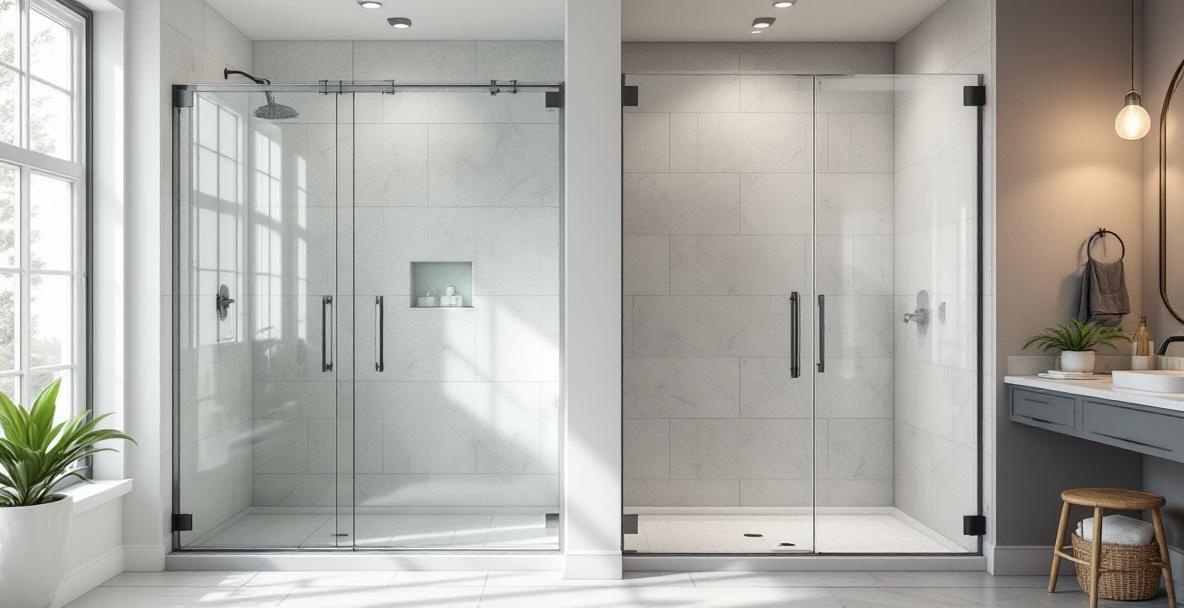
Custom tile walk-ins cost $3,000–$10,000+ while frameless glass enclosures run $1,000–$3,300 installed (Degnan Design / Angi). A walk-in shower remodel delivers approximately 70% ROI (Fixr 2025). In DFW's master bathroom market, the best projects combine both — glass enclosure and quality tile — rather than treating them as an either/or decision.
When homeowners say "tile walk-in vs. glass enclosure," they're often describing different things: the tile walk-in is typically a fully open wet area with no door, relying on a water-directing design instead. The glass enclosure is a separate glass structure that contains water and frames the shower visually. Understanding what each actually means — and the real tradeoffs in cost, maintenance, waterproofing, and design — is what this guide covers.
Key Differences at a Glance
A tile walk-in shower uses the shower's geometry (a recessed wet area, a partial wall, or a strategically angled entry) to keep water from reaching the rest of the bathroom — no glass door required. A glass shower enclosure uses glass panels and a door (or fixed panels alone) to physically contain water within the shower footprint.
Both approaches work. Neither is inherently better in every situation. The right choice depends on your bathroom dimensions, design goals, maintenance preferences, and budget.
| Installed cost |
| Water containment |
| Maintenance |
| Space requirement |
| Resale appeal, DFW |
| Humidity/mold risk |
| Natural light |
~70%
walk-in shower remodel ROI — the starting point before quality of materials and execution are factored in (Fixr 2025)
Cost Comparison: Glass vs Full Tile
Frameless glass enclosures run $1,000–$3,300 installed for standard DFW configurations. Full custom tile walk-in showers — the kind with a dedicated wet area, designer tile, linear drain, and no door — cost $3,000–$10,000+ depending on tile selection, shower size, and labor (Degnan Design, Angi 2026).
Breaking down the glass enclosure cost:
- Basic framed or semi-frameless enclosure: $1,000–$1,800 installed
- Quality frameless single door + fixed panel: $1,800–$2,500
- Premium frameless full enclosure: $2,500–$3,300+
- In-house fabrication (like Infinity's Corinth shop): typically compresses cost vs. shop-order-and-resell models
Breaking down the tile walk-in cost: The tile walk-in cost is primarily driven by the tile itself, the drain system, and the waterproofing membrane:
- Tile: $3–$30+ per square foot installed (subway to large-format porcelain)
- Linear drain: $300–$900 installed (required for a true walk-in with no threshold)
- Waterproofing membrane (Schluter Kerdi, RedGard): $300–$600 for shower area
- Labor: $50–$150/hour for a quality tile setter in DFW
A 36" × 60" walk-in shower with mid-range tile, a linear drain, and proper waterproofing commonly runs $4,500–$7,000 total in the DFW market. A comparable glass enclosure on the same shower footprint adds $1,500–$2,500 on top of the tile cost — but contains water more reliably and doesn't require the minimum footprint that a no-door design demands.
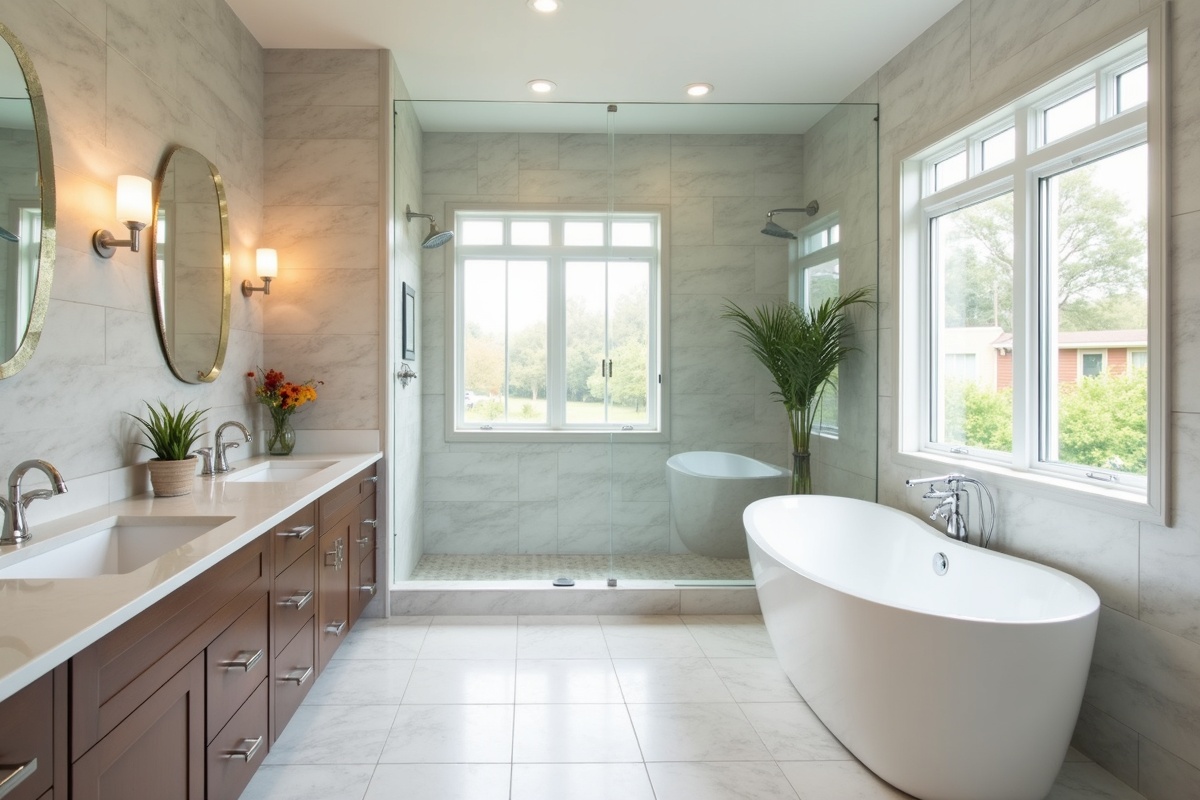
The real comparison: Most high-end DFW primary bathrooms don't choose between tile and glass — they specify both. The tile defines the shower design; the glass enclosure (frameless, of course) provides water containment, visual openness, and practical function. The "glass vs. tile" framing is more relevant for secondary bathrooms or renovations with constrained budgets where one must be prioritized.
Maintenance Over Time
Tile grout requires resealing every 1–2 years to prevent moisture infiltration and mold growth (Valley Glass). Glass enclosures require cleaning (squeegee after each use) and silicone seal replacement every 3–5 years. DFW's hard water adds mineral deposit accumulation to both surfaces — but glass responds better to preventive maintenance than grout does.
Glass enclosure maintenance:
- Daily: Squeegee glass panels after each shower (20 seconds) to prevent hard water spots and soap film
- Monthly: Wipe down hardware with a microfiber cloth; inspect seals for cracking or separation
- Every 3–5 years: Replace silicone seals and door sweeps ($50–$150 for materials, 1–2 hours of labor)
- Annual deep clean: White vinegar solution or commercial glass cleaner for mineral deposits
- Total burden: Low — the daily squeegee prevents most cleaning labor downstream
Tile and grout maintenance:
- Annually: Reseal grout with penetrating sealer (1–2 hours; sealer costs $15–$40)
- Every 1–2 years in DFW's hard water: Reseal more aggressively due to mineral deposit interaction with porous grout
- Every 5–10 years: Regrout sections that show cracking, discoloration, or separation
- Ongoing: Clean tile surfaces with appropriate cleaner; avoid acidic cleaners on natural stone
- Total burden: Moderate — grout maintenance is more time-intensive than glass care when done correctly
The mold problem with grout: Grout is porous, which means moisture penetrates and, in DFW's warm climate, creates ideal conditions for mold growth behind the tile if waterproofing isn't perfect or if the grout sealing lapses. A glass enclosure doesn't have grout at all — the water-contact surfaces are either glass (non-porous) or silicone (non-porous when properly applied). This is a meaningful advantage in a humid climate.
In DFW, hard water (ranging from moderately hard to very hard depending on municipality) deposits calcium and magnesium on both glass and grout. Both surfaces need proactive treatment — but the difference is that mineral deposits on glass are surface-level and cleanable with acidic solutions, while mineral deposits in grout penetrate the porous surface and are much harder to remove without also removing the sealer.
Which Looks Better?
Design preference is subjective, but some patterns hold consistently in DFW's bathroom renovation market:
Glass enclosures win on:
- Visual openness — frameless glass doesn't visually cut the bathroom in half
- Light transmission — a glass-enclosed shower in a well-lit bathroom appears larger
- Photography performance — frameless glass photographs exceptionally well for listing photos
- The "luxury bath" aesthetic that DFW buyers in the $400K–$700K range expect
Tile walk-ins win on:
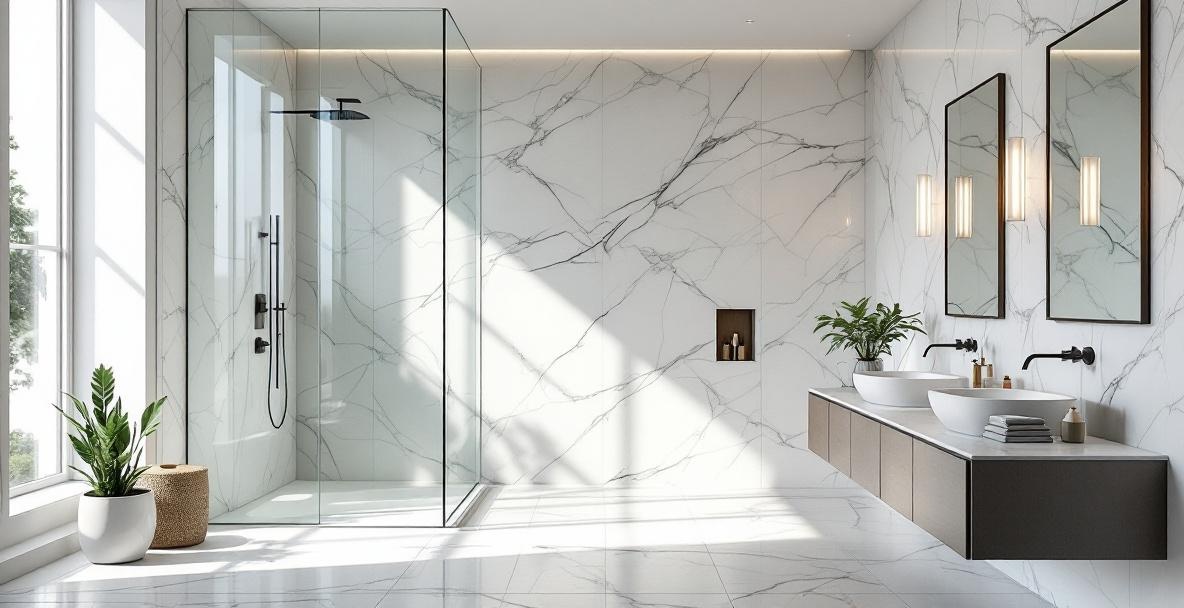
- Architectural drama — a fully tiled wet room with a linear drain and floor-to-ceiling tile is genuinely striking
- Design flexibility — no glass to work around means the tile pattern can express itself fully
- The wet room / European spa aesthetic that appeals strongly to a specific buyer profile
- Integration with steam shower features (glass enclosures can also be steam-rated, but sealed enclosures are required)
The honest assessment: In DFW's primary bathroom market, frameless glass is the expected and appreciated finish. A tile walk-in without glass reads as a deliberate high-end design choice when executed at full quality — but when it's a partial tile walk-in with a budget tile and no drain design, it reads as incomplete. The glass enclosure is the more reliably successful choice across a wider range of budgets and execution levels.
Best Option for Small Bathrooms
Glass shower enclosures are better for small bathrooms because they don't require the minimum footprint that doorless walk-in designs need to prevent water from reaching the rest of the bathroom. A 32"–36" shower can be fully enclosed with glass; a true walk-in (doorless) design typically needs at least 60" of shower width to work without a door.
The minimum footprint problem with tile walk-ins: A shower without a door relies on geometry to keep water in the wet area: the entry is positioned away from the showerhead, the floor slopes to a drain positioned away from the opening, and there's typically enough distance (at least 36"–48") between the showerhead and the opening that water spray doesn't reach the bathroom floor. In a small shower (32"–48" wide), there isn't enough distance for a doorless design to work without getting the bathroom floor wet.
What glass enclosures do for small bathrooms: A frameless glass enclosure on a small shower creates the visual illusion of more space because the glass is transparent — the eye travels through it. A shower with walls on three sides and solid tile on the fourth (the entry wall) feels much smaller than the same shower enclosed in clear glass. This matters significantly in guest baths and older DFW homes with compact primary bathrooms.
Waterproofing — Where Each Fails
Both approaches have specific failure modes worth understanding before you choose:
Glass enclosures fail when:
- Seals and sweeps wear without replacement — the seals that contact the floor and walls prevent water from exiting below and behind the glass; when they degrade (every 3–5 years), water gets out
- Glass is improperly installed with gaps at the wall junctions — factory-cut glass that doesn't account for out-of-plumb walls creates gaps that silicone alone may not fully address
- Hinges or hardware connections loosen over time — vibration from door use can eventually work hardware loose if it was undertightened at installation
Tile walk-ins fail when:
- Waterproofing membrane is insufficient or improperly applied — the tile itself doesn't waterproof; the membrane behind it does
- Grout isn't sealed or sealing lapses — porous grout allows moisture migration into the wall assembly
- Linear drain isn't properly sloped during installation — standing water in the shower area accelerates grout deterioration
The professional installation difference: Both systems fail at the installation level rather than the product level in most cases. A properly installed glass enclosure with correct seals and hardware doesn't leak. A properly waterproofed tile shower with properly applied membrane doesn't fail. Cutting corners on installation — whether rushing the silicone work on a glass enclosure or skipping the membrane on a tile shower — creates expensive problems that require demolition to fix.
The Best of Both: Combining Glass and Tile
The most successful DFW primary bathrooms don't choose between glass and tile — they use both deliberately:
The standard high-end configuration:
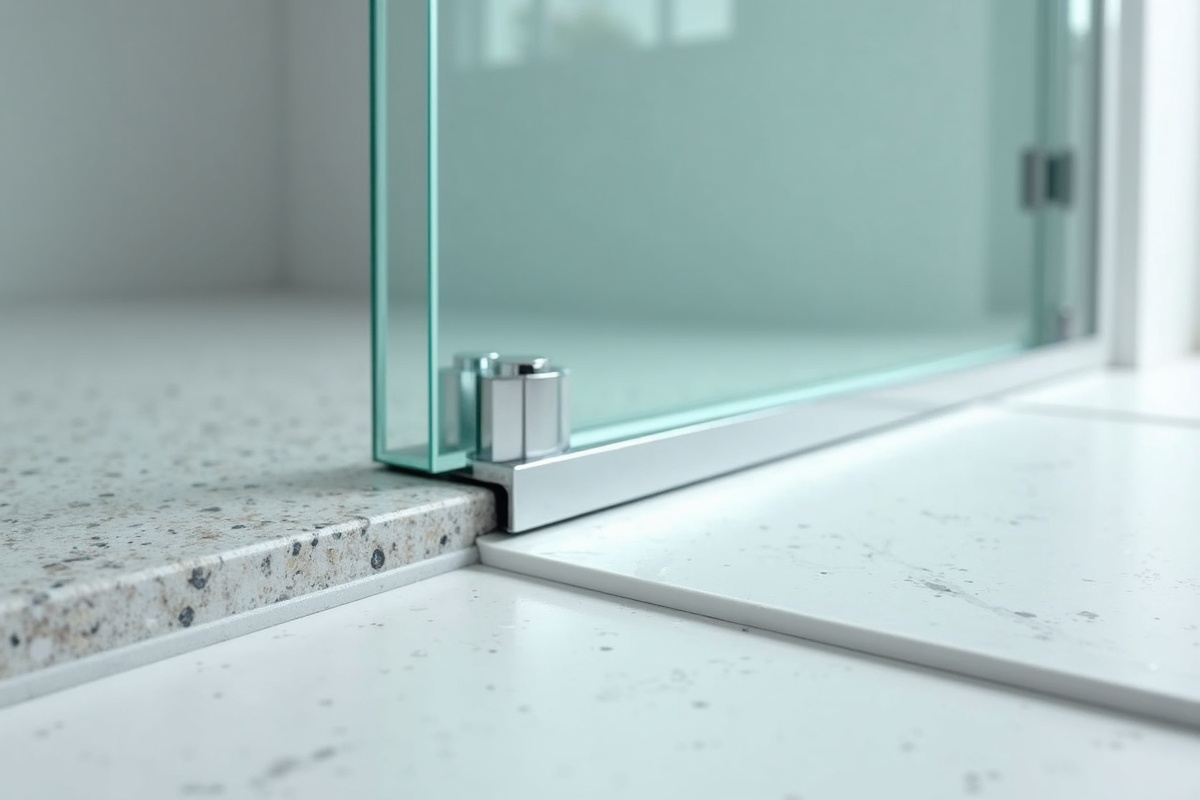
- Full tile on three walls (floor to ceiling, large format porcelain or natural stone)
- Frameless glass enclosure on the fourth side and ceiling opening
- Fixed glass panel on one side, hinged door on the other
- Linear or point drain with matching metal finish to the door hardware
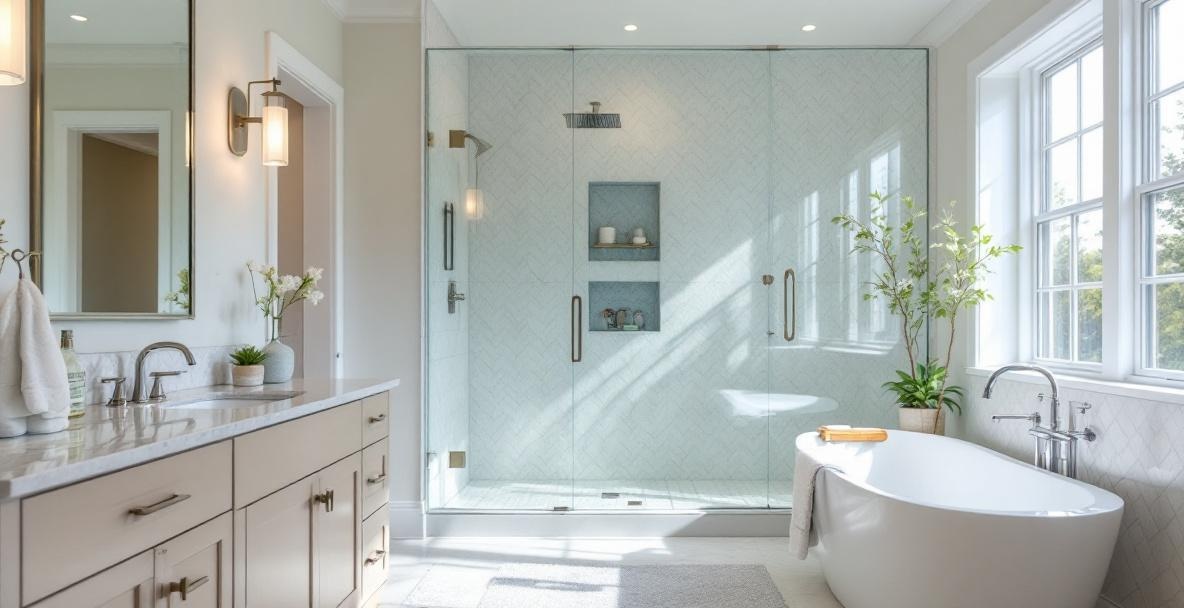
This combination delivers the visual impact of designer tile, the water containment of a glass enclosure, and the light transmission that makes a bathroom feel larger than its square footage. It's what DFW buyers in Southlake, Frisco, Flower Mound, and McKinney are seeing in new construction and expecting at resale.
The walk-in + glass panel hybrid: Some DFW bathrooms use a partial glass panel — not a full enclosure, just a fixed panel on one side of the shower entry — to deflect water while maintaining an open feel. This works well when the shower is large enough (60"+) that a partial panel catches the spray without fully enclosing the space. The aesthetic is more open than a full enclosure while providing more water containment than a completely doorless design.
Is a glass enclosure cheaper than a full tile walk-in?
Yes, typically — frameless glass enclosures run $1,000–$3,300 installed, while a full custom tile walk-in shower costs $3,000–$10,000+ depending on tile selection, drain design, and waterproofing approach (Degnan Design, Angi 2026). However, most high-end DFW bathrooms combine both — the tile cost and the glass cost are additive, not exclusive. The "either/or" decision is more relevant for secondary bathrooms or budget-constrained renovations.
Does glass prevent mold better than tile grout?
Yes — glass is non-porous, so mold cannot grow on the glass surface itself. The silicone seals at junctions can develop surface mold if not cleaned, but silicone can be removed and replaced entirely. Grout is porous and, without consistent sealing, allows moisture infiltration that creates conditions for mold growth behind the tile — a problem that requires demolition to fully address. DFW's warm climate and hard water make grout maintenance more demanding than in temperate climates.
How long does tile grout last?
Tile grout itself can last 15–20+ years in a well-maintained shower. However, the grout sealing — which prevents moisture infiltration and mold — needs reapplication every 1–2 years (Valley Glass). DFW's hard water accelerates mineral deposit accumulation in grout, which can degrade the sealer faster and require more frequent maintenance. Improperly maintained grout can show cracking, discoloration, and separation in as few as 3–5 years, requiring regrouting or full tile replacement.
Can you add a glass door to an existing tile shower?
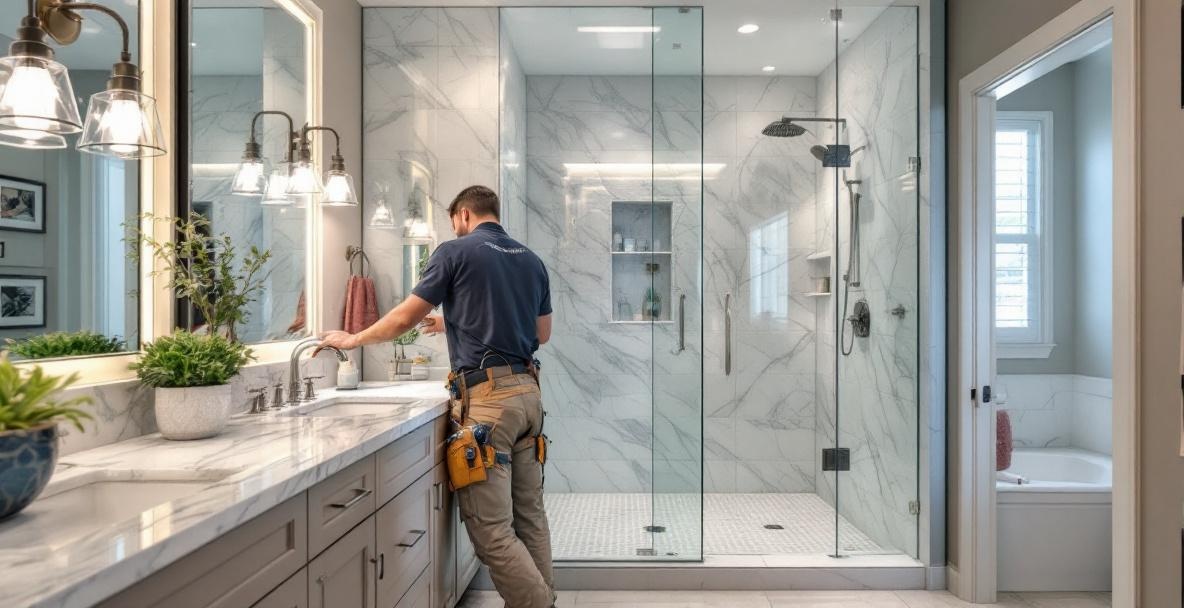
Yes — adding a frameless glass enclosure to an existing tile shower is one of the most common projects for DFW glass shops. The shower tile doesn't need to change; the glass is measured and fabricated to fit the existing opening. The key factors are whether the opening is large enough for the desired door configuration, whether the walls are plumb enough for a standard installation, and whether the tile and curb are in good condition. Infinity Glass & Glazing does this routinely throughout DFW — it's typically a 4–6 week process from measurement to installation.
Which is better for DFW resale value?
Both add resale value, and the best-performing projects combine both. A frameless glass enclosure on a quality tile shower is the primary bathroom standard that DFW buyers in the $400K+ market expect. A bare tile walk-in without glass reads as incomplete unless the shower is large enough (60"+) and well-designed enough to function convincingly without a door. Walk-in shower remodels deliver approximately 70% ROI (Fixr 2025); adding a frameless glass enclosure typically pushes that return higher in DFW's competitive master bathroom market.
Also see our bathroom renovation glass options guide and our shower enclosure ROI for DFW home value.
Infinity Glass & Glazing fabricates and installs custom frameless glass shower enclosures throughout DFW — Corinth, Lewisville, Denton, Flower Mound, Frisco, Southlake, McKinney, Keller, Highland Village, and surrounding areas. Contact us for a free estimate on your shower or bathroom renovation project.
Related reading: