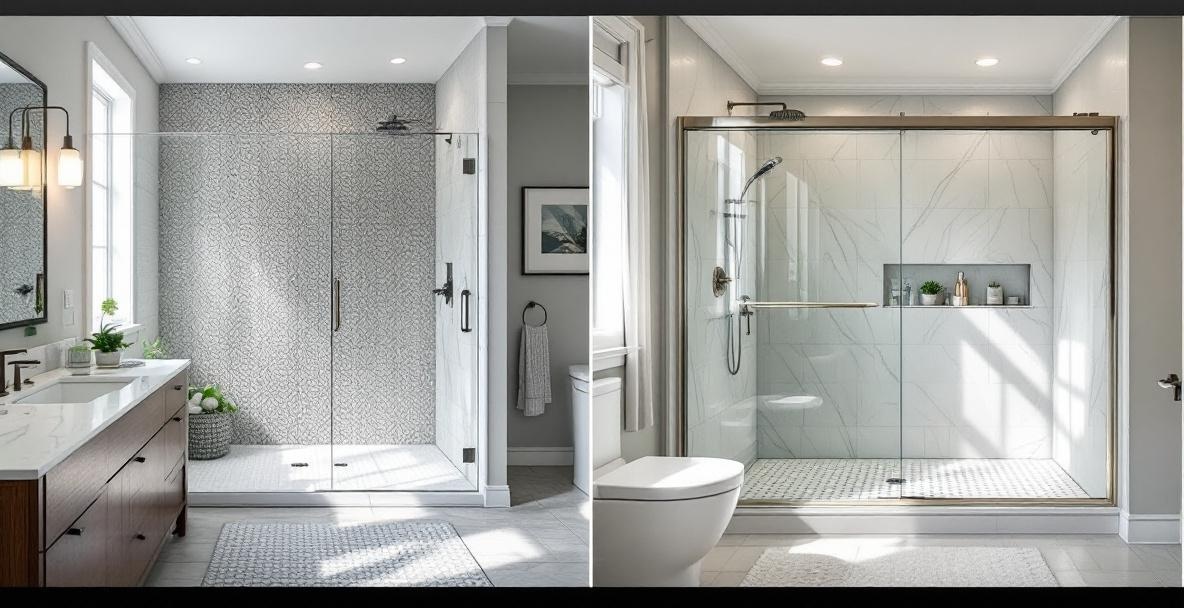
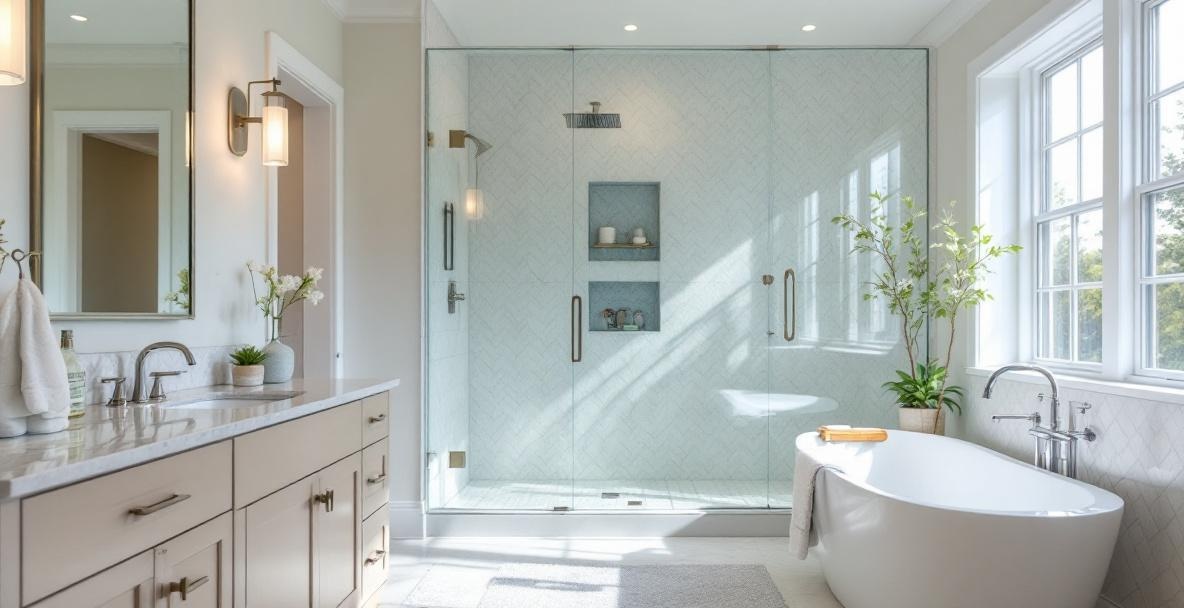
Glass shower enclosures recoup 60–80% of installation cost at resale, and mid-range bathroom remodels return roughly 80% on average (Fixr/Zonda, 2025). In DFW markets where median home prices are $400K–$700K, a frameless shower upgrade in the primary bathroom is one of the highest-returning renovation investments per dollar spent.
Not every home improvement dollar returns equally. A new shower enclosure consistently outperforms kitchen cabinet hardware swaps, backyard landscaping, and sunroom additions in terms of ROI — because buyers scrutinize primary bathrooms intensely. This guide breaks down what glass shower upgrades actually return in the DFW market and when the investment makes the most financial sense.
What Is the ROI of a Shower Enclosure Upgrade?
Mid-range bathroom remodels return approximately 80% of cost at resale, while upscale remodels return 36–45% according to Fixr/Zonda's 2025 Cost vs. Value Report. A glass shower enclosure upgrade within a mid-range remodel context typically recovers 60–80% of its specific cost, depending on the type of enclosure and the home's market position.
80%
average return on investment for mid-range bathroom remodels at resale (Fixr/Zonda Cost vs. Value Report, 2025)
Why does the mid-range category outperform upscale? Because mid-range improvements bring bathrooms up to buyer expectations — they eliminate objections. Upscale improvements exceed expectations in ways buyers don't always pay extra for. A $2,000 frameless shower replacement on a bathroom that had a dated framed door eliminates a buyer's "I'll need to redo this" calculation. A $6,000 stone-inlay custom shower surround in an already-updated bathroom may generate admiration without proportional additional value.
For most DFW homeowners, the highest-returning shower investment is the mid-range move: frameless glass enclosure with quality hardware in a primary bathroom, done properly and cleanly.
Why Glass Increases Home Value
Glass shower enclosures increase home value through three mechanisms: buyer perception shift (from seeing a project to seeing a move-in ready home), reduced buyer negotiations (fewer objections), and appraisal impact when comparable homes have similar upgrades.
The mechanism that surprises most homeowners: the biggest financial impact of a glass shower upgrade isn't the direct appraisal value increase — it's the reduction in buyer discounts during negotiation.
When a buyer walks through a home with a framed, dated, or stained shower door, their mental calculation includes: "I'll need to redo that — subtract $2,000 to $4,000 from what I'm willing to offer." They may or may not verbalize this, but it affects their offer. When the shower is already clean, modern, and frameless, that calculation doesn't happen.
Walk-in showers have replaced whirlpool tubs as the top buyer preference in the DFW market according to HomeLight's 2025 Top Agent Insights Report. Buyers aren't asking "is there a Jacuzzi?" — they're asking "is there a walk-in shower?" A frameless glass enclosure signals that the answer is unambiguously yes.
The joy component matters too. The 2025 NAR/NARI Remodeling Impact Report found that homeowners who completed bathroom remodels gave them a Joy Score of 8.2 out of 10, with 73% saying the project made them want to spend more time at home. A renovation that makes you happier in your house every day — and recovers the majority of its cost when you sell — is one of the best financial and lifestyle investments available.
Which Type Adds the Most Value?
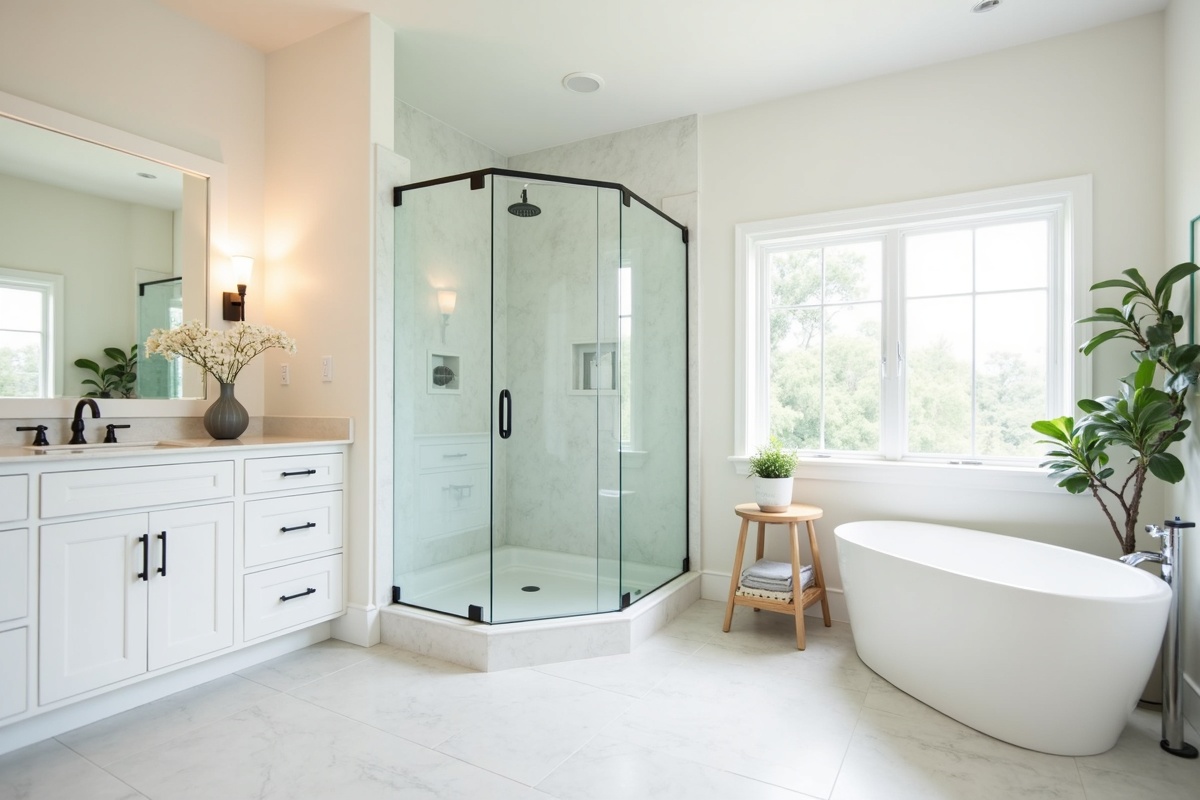
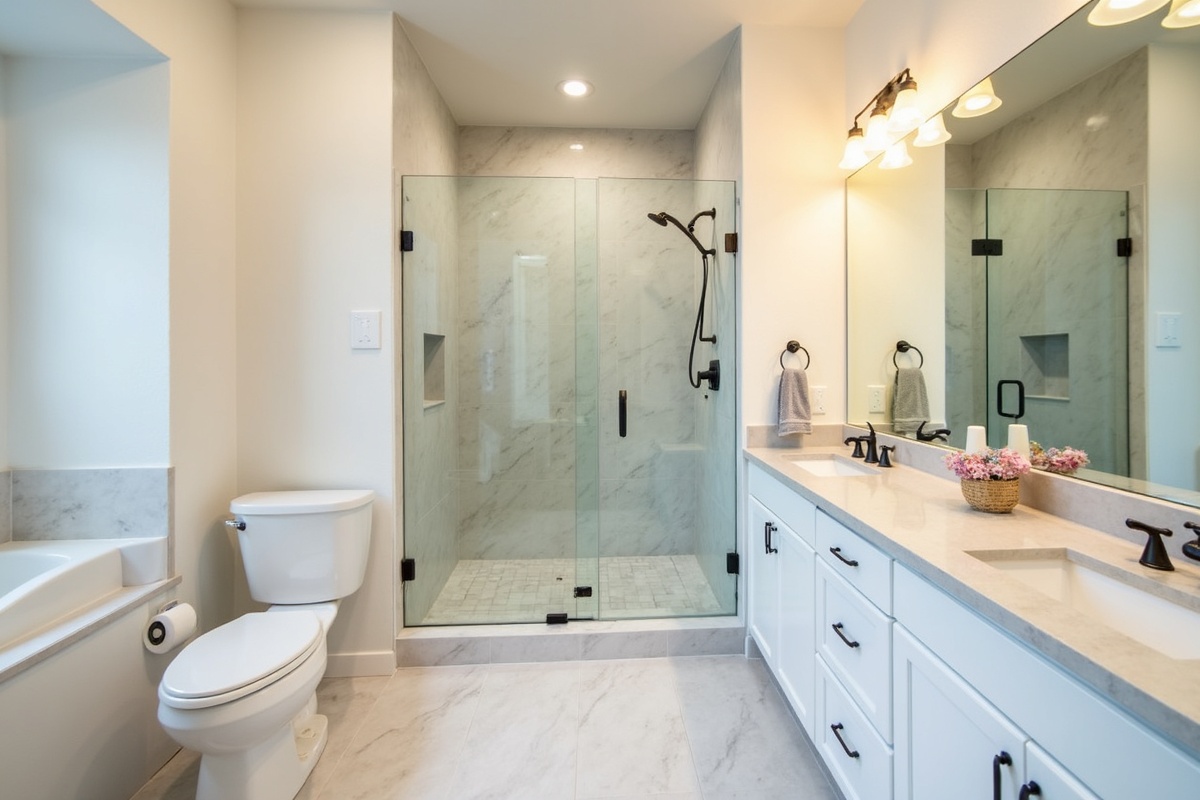
Frameless shower enclosures add the most value at resale — more than semi-frameless or framed options. The value contribution correlates with the upgrade's visual impact and buyer perception of quality. A custom frameless enclosure signals premium quality; a stock framed door signals a baseline that may need replacement.
| Framed door (basic) |
| Semi-frameless |
| Frameless single door |
| Frameless full enclosure |
| Custom frameless + tile surround |
Two factors determine where in the ROI range you land:
Home price tier matters. In a $600K Southlake home, a $2,500 frameless enclosure is expected — and its absence is noticed. In a $250K starter home, a $2,500 frameless enclosure may over-improve for the buyer pool. Match the upgrade level to the home's market position.
Condition of surrounding elements matters. A new frameless door in a bathroom with 1990s tile, an old vanity, and outdated lighting is a partial improvement that buyers see through. The glass looks good but the overall bathroom still needs work in the buyer's mind. A frameless enclosure performs best when the rest of the bathroom — tile, vanity, lighting, fixtures — is also updated.
How DFW Real Estate Values Bathroom Upgrades
DFW buyer agents consistently cite primary bathroom condition as a top-5 factor in offer price decisions, alongside kitchen quality, exterior condition, HVAC age, and roof condition. In Corinth, Flower Mound, Southlake, Keller, Frisco, and McKinney — communities where $400K–$800K homes are common — primary bath quality is directly scrutinized by buyers.
DFW real estate agents report that updated master bathrooms reduce time-on-market and buyer negotiation attempts. HomeLight's 2025 survey found that walk-in showers are among the top buyer-preferred features in the Dallas market. In the DFW context:
- Frisco, McKinney, Allen: Buyers at the $450K–$700K price point expect frameless master showers as standard. A framed door will be noted and negotiated against.
- Southlake, Westlake, Colleyville: Luxury market buyers expect premium glass and custom configurations. A basic frameless door meets expectations; a custom enclosure with premium hardware exceeds them.
- Corinth, Flower Mound, Keller, Lewisville: Mid-range buyers ($350K–$550K) respond positively to frameless glass in primary baths and see it as a signal of overall renovation quality.
- Denton, Garland, Mesquite: Entry-level buyers ($250K–$375K) value functional upgrades, but frameless isn't a universal expectation — semi-frameless or quality framed may be appropriate here.
Cost-Per-Year Value Calculation
When you run the cost-per-year math, frameless shower doors are often cheaper than framed options over a 20-year horizon — despite the higher upfront price. A $2,000 frameless enclosure that lasts 25 years costs $80/year. A $700 framed door replaced at 15 years (another $700 = $1,400 total) costs $70/year — for a worse-looking, harder-to-maintain product.
- 1
Calculate lifetime cost of framed
$700 installation ÷ 15-year lifespan = $46.67/year. Replace once at year 15 for another $700. Total 30-year cost: $1,400 = $46.67/year average. - 2
Calculate lifetime cost of frameless
$2,000 installation ÷ 25-year lifespan = $80/year. No replacement needed in 25 years. 30-year cost: $2,000 + potential refresh hardware = ~$2,200 = $73/year. - 3
Factor in maintenance costs
Framed doors require periodic track cleaning, hardware replacement, and potential re-caulking — add $50–$150/year in time and materials. Frameless is significantly lower maintenance. - 4
Factor in resale recovery
Frameless recovers 60–80% at resale. On a $2,000 enclosure, that's $1,200–$1,600 back. Net 25-year cost: $400–$800. Per year: $16–$32.
The math consistently favors frameless when you account for lifespan, maintenance, and resale recovery. The upfront check is larger, but the long-term economics are comparable — and you get a dramatically better product every day in the interim.
Compared to Other Bathroom Investments
Shower enclosure upgrades deliver stronger ROI than most other bathroom renovation categories when applied to a primary bathroom that previously had dated or framed glass. Vanity updates return similarly; tile upgrades return well; lighting upgrades are high-impact for low cost; full gut renovations return less per dollar than targeted upgrades.
Bathroom investment ROI comparison:
- Frameless shower enclosure: 60–80% ROI
- New vanity and countertop: 60–75% ROI
- Tile shower surround (new): 55–70% ROI
- Lighting upgrade: 65–75% ROI (low cost, high buyer impact)
- Full bathroom gut renovation (upscale): 36–45% ROI (Fixr/Zonda, 2025)
- Whirlpool tub addition: Negative to 20% ROI (buyers have moved away from tubs)
The pattern: targeted upgrades that bring a specific element up to buyer expectations outperform full renovations, which exceed expectations in ways buyers don't pay proportionally for. A $2,000 frameless shower in an otherwise clean and updated bathroom may outperform a $15,000 full bathroom gut in terms of dollars returned per dollar invested.
When the Upgrade Does NOT Make Financial Sense
A shower enclosure upgrade doesn't make financial sense when the home is being sold in a price tier where buyers expect to renovate everything, when the rest of the bathroom is significantly dated, or when the upgrade exceeds the renovation ceiling for the market area.
Skip the glass upgrade if:
The home is in an as-is price tier. In a home being sold for $180K–$240K in Garland or southeast Denton County, buyers in that range expect to do their own updating. Your $2,000 frameless installation will not be valued in their offer.
The rest of the bathroom is badly dated. A new frameless door in a bathroom with 1990s pink tile, a cracked vanity, and contractor-grade brass fixtures is money not well spent. The glass looks incongruously good against everything else — and buyers see a bathroom that still needs a full renovation.
The renovation ceiling is already hit. If comparables in your neighborhood are selling at $350K renovated, spending $8,000 on a premium bathroom package to get your home to $355K isn't a winning return. Know your area's ceiling before investing.
Also see our guide to whether a frameless door is worth it and our frameless shower door cost guide for Texas.
Infinity Glass & Glazing installs custom frameless shower enclosures throughout DFW, helping homeowners in Corinth, Flower Mound, Southlake, Frisco, McKinney, and surrounding areas maximize both their daily enjoyment and their resale value. Contact us for a free estimate on your shower enclosure upgrade.
Does a glass shower enclosure increase your appraisal value?
A frameless glass shower enclosure can positively influence appraisal value — particularly when comparable homes in the area have similar upgrades, which is common in DFW's $350K–$700K market. The more direct financial impact is often through buyer negotiation: a dated framed shower becomes a negotiating point that reduces offers, while a frameless enclosure eliminates that objection. Both mechanisms contribute to realized sale price.
Is a frameless shower or new vanity a better investment?
Both return 60–80% at resale. In a bathroom where both are dated, the shower enclosure often has higher visual impact in listing photos and buyer walkthroughs — especially since buyers examine showers specifically. In a bathroom where the shower is already updated but the vanity is dated, the vanity is the higher-priority investment. Prioritize whichever element is more visually prominent in the bathroom's current state.
What does a mid-range shower upgrade cost in DFW?
A mid-range shower upgrade in DFW — frameless enclosure with 3/8-inch glass, quality hardware in brushed nickel or chrome, and basic glass treatment — runs $1,400 to $2,500 installed. This is the sweet spot for ROI: not a budget framed replacement, not a full custom wet room, but a clean, professional frameless enclosure that meets buyer expectations in the DFW $350K–$600K market.
Do real estate agents recommend glass upgrades before selling?
Yes — DFW agents consistently recommend primary bathroom updates, with shower enclosure condition cited specifically. HomeLight surveys show agents rate bathroom updates as among the top ROI improvements before listing. The recommendation is typically for mid-range upgrades (frameless door, updated vanity) rather than full gut renovations, which return less per dollar.
How long until you see a return on investment?
You see the financial return at the point of sale — 60–80% of installation cost recovered in the sale price or via reduced buyer discounts. The daily-use return starts immediately: a frameless shower is easier to clean and more pleasant to use every day you own the home. For homeowners planning to sell within 5 years, the investment math is straightforward. For owners staying 10+ years, the lifestyle return justifies the investment regardless of eventual sale.
Related reading: