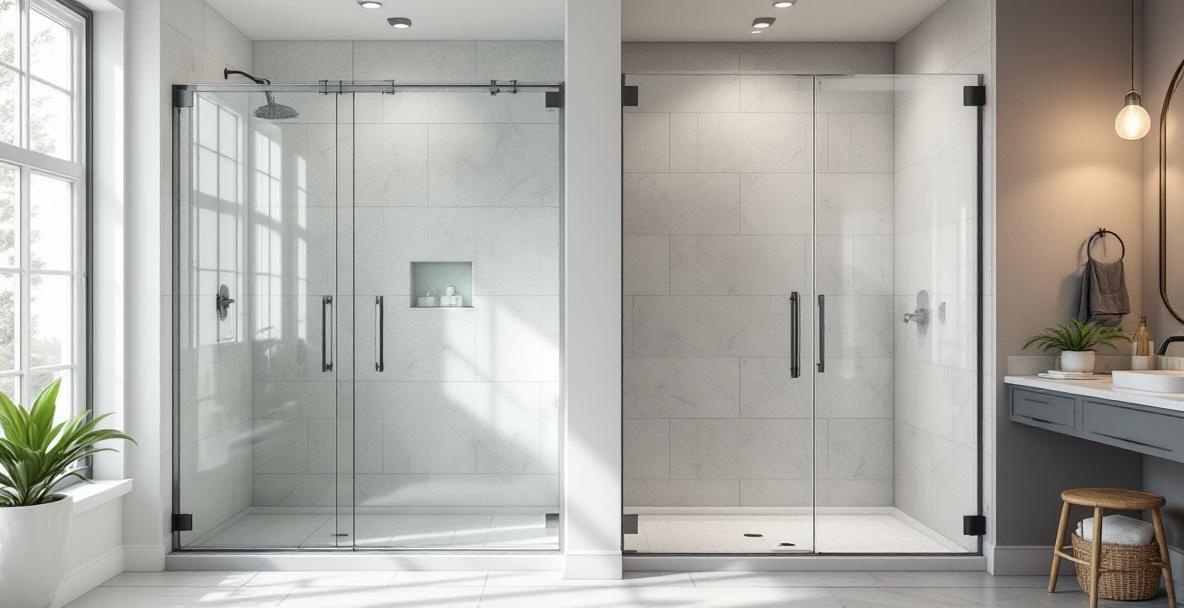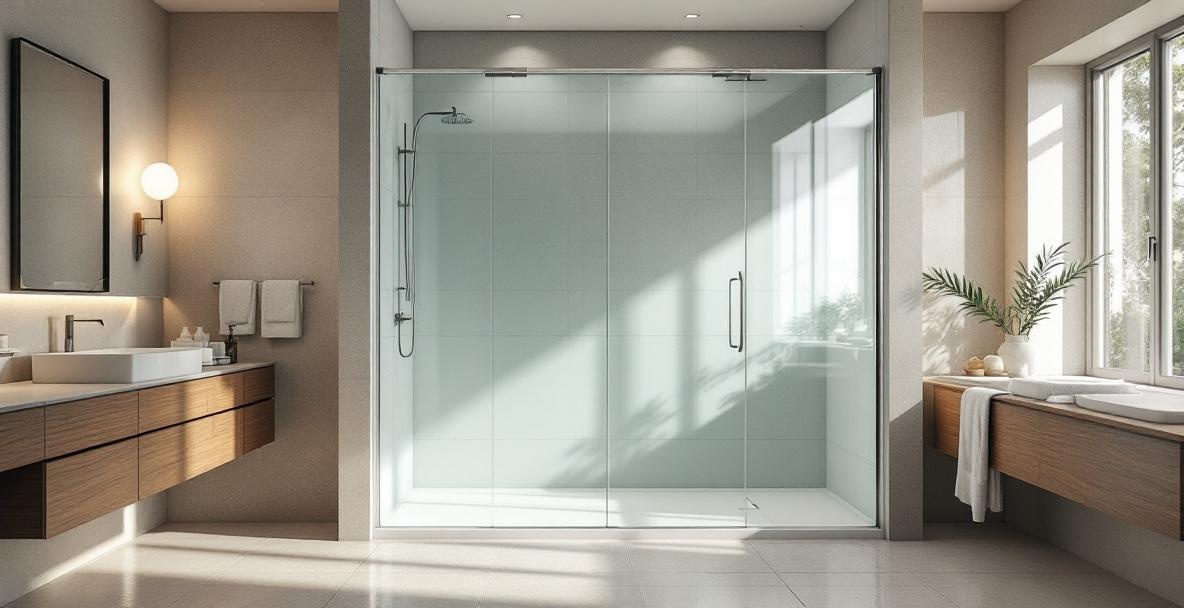
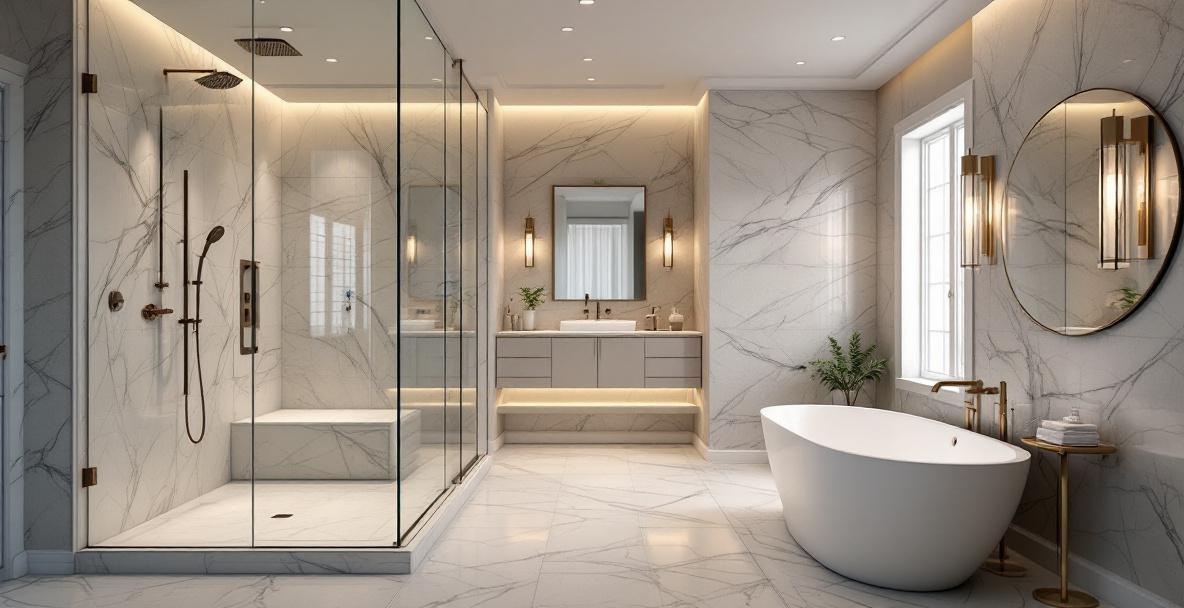
Frameless shower doors last 20–30 years with proper maintenance — and many installations from the early 1990s are still in excellent condition with their original glass panels. The glass itself rarely fails; hardware (hinges, handles, clips) typically needs replacement at 10–15 years, and seals need attention every 3–5 years. In DFW's hard water environment, proactive maintenance is what separates a 30-year door from one that looks worn in 10.
Frameless shower doors represent a significant investment — typically $1,500–$5,500 installed in DFW. Understanding what drives longevity helps homeowners protect that investment, set realistic expectations, and know when a concern requires attention versus when it's simply time for routine maintenance.
This guide covers the full lifespan picture: what determines how long your door lasts, how DFW conditions affect durability, warning signs to watch for, and how frameless compares to framed in longevity.
Average Lifespan of a Frameless Shower Door
The average frameless shower door lasts 20–30 years for the glass panels and structural components, with hardware requiring replacement at 10–15 years and seals needing inspection and replacement every 3–5 years. This is roughly double the lifespan of framed shower systems, which typically require replacement after 15–20 years due to frame corrosion.
The lifespan difference between frameless and framed systems comes down to one factor: the absence of a metal frame. Framed shower doors have aluminum channel running around every glass panel's perimeter. In DFW's hard water environment, that channel corrodes, traps mineral deposits, and eventually degrades to the point where the enclosure looks deteriorated and functions poorly — regardless of the glass condition. The glass itself might be perfectly fine, but the frame makes the enclosure look and feel past its useful life.
Frameless enclosures eliminate the frame entirely. The glass panels, supported by hinges and clips, have no perimeter metal to corrode. The glass — 3/8" or 1/2" tempered — is extraordinarily durable. Properly maintained frameless glass doesn't degrade in appearance with age the way framed systems do.
20–30
years — typical lifespan of frameless shower door glass panels with proper maintenance, vs. 15–20 years for framed systems ([ANZZI](https://www.anzzi.com/))
What ages in a frameless shower door (and when):
| Component | Expected Lifespan | What Causes Failure | |---|---|---| | Tempered glass panels | 20–30+ years | Physical impact, thermal stress, hardware misalignment | | Hinges and pivot hardware | 10–15 years | Corrosion, mineral deposit interference, bearing wear | | Handles and towel bars | 10–20 years (finish-dependent) | Finish degradation, loosening at mounting points | | Glass clips and channel | 15–20 years | Corrosion of finish, rubber insert degradation | | Bottom sweep / door seal | 3–5 years | Compression deformation, UV degradation, mildew damage | | Silicone sealant bead | 3–7 years | Mold infiltration, shrinkage, adhesion failure |
What Factors Determine How Long It Lasts?
The four primary factors that determine frameless shower door lifespan are: maintenance consistency, water hardness, hardware quality at installation, and installation precision. Two doors installed on the same day in the same city can have dramatically different lifespans based on these variables.
Maintenance consistency is the most controllable factor. Daily squeegeeing prevents the mineral accumulation that etches glass and corrodes hardware. Annual seal inspections catch failures before they become water damage problems. Hardware lubrication prevents premature wear. See our frameless shower door maintenance tips guide for a full maintenance schedule.
Water hardness is the most significant environmental factor in DFW. Hard water (7–17 GPG in DFW per Water Fixers of DFW) deposits calcium and magnesium on every surface with each shower session. Without consistent maintenance, these deposits etch glass, infiltrate hinge mechanisms, degrade finishes, and accelerate seal failure.
Hardware quality at installation determines the starting point for hardware longevity. Solid brass or 316 stainless steel hardware lasts significantly longer than zinc alloy (zamak) hardware. Zinc alloy may begin showing corrosion within 5–8 years in DFW's hard water; solid brass resists mineral-induced corrosion for 20+ years.
Installation precision affects how long hardware maintains correct alignment. Imprecise installation — hinges slightly out of plumb, glass panels not hanging level — creates chronic mechanical stress that accelerates wear on mounting points, hardware pivot points, and glass edges.
Does Glass Quality and Thickness Affect Lifespan?
Glass thickness (3/8" vs. 1/2") has minimal effect on lifespan in normal residential use — both are structurally robust for their intended applications. Glass quality (standard float glass vs. low-iron glass vs. specialty tempered) has no meaningful effect on longevity either. The glass composition doesn't change how it ages; it changes how it looks. The hardware and seals age; the glass itself is remarkably durable.
3/8-inch (10mm) tempered glass is the standard specification for frameless shower doors. It's thick enough to be structurally rigid without a perimeter frame, handles normal household use without concern, and lasts as long as any other glass specification in a shower application.
1/2-inch (12mm) tempered glass is used for larger panels, heavy-duty applications, or specifications where maximum rigidity is desired. It's heavier (adding strain to hinges over long periods) but doesn't outlast 3/8" glass in normal use.
Low-iron glass (like Starphire or Diamante) has a clearer, less green tint than standard float glass. It offers no durability advantage — its benefit is purely aesthetic.
The spontaneous thermal breakage rate for tempered glass in residential applications is approximately 0.3% (China Morn Glass). This extremely rare event — often called "spontaneous explosion" — occurs when nickel sulfide inclusions in the glass expand with temperature cycling. It has nothing to do with maintenance or age and cannot be predicted. Tempered glass is required by code specifically because when it does break, it shatters into small, relatively harmless pebbles rather than dangerous shards.
How DFW Hard Water Affects Glass Longevity
Hard water is the primary environmental threat to frameless shower door longevity in North Texas. Understanding how it damages different components helps prioritize maintenance efforts.
On glass panels: Hard water deposits calcium carbonate on the glass surface with each shower session. Light deposits clean easily. Over months without maintenance, deposits accumulate into a layer that bonds chemically to the glass surface. This is reversible with proper cleaning at the light-to-moderate stage. Severe neglect (years without treatment) allows the mineral layer to begin etching the glass microscopically — creating permanent cloudiness that can only be partially restored with professional polishing.
On hardware: Calcium and magnesium infiltrate hinge barrel mechanisms, increasing friction and accelerating wear. Mineral deposits at hardware-to-glass contact points create abrasive surfaces that stress the glass edge. On hardware finishes, hard water mineral scale acts as a trap for soap residue and cleaning products that collectively attack protective coatings.
On seals: Hard water minerals infiltrate the porous structure of rubber and silicone seals, making them brittle faster and reducing their effective lifespan. Seals in DFW hard water areas typically need replacement every 3–4 years rather than the 5–7 year interval common in softer-water markets.
The whole-house water softener advantage: DFW homeowners with whole-house water softeners see dramatically extended lifespan across all bathroom fixtures, including shower door components. Softened water (0–3 GPG) reduces mineral deposition by 70–90% compared to untreated DFW water, extending hardware and seal life significantly.
Warning Signs Your Door Needs Replacing
Most frameless shower problems are repairable without replacing the entire enclosure. The question is whether you're dealing with a component issue (repair) or a system-wide failure (replace).
Repair is appropriate when:
- Hinges need replacement but glass is intact
- Bottom sweep or seals need replacement
- Hardware finish has degraded but structural components are sound
- A single panel has a crack (if other panels and hardware are fine)
- Silicone sealant needs reapplication
Replacement is warranted when:
- Multiple glass panels have chips, cracks, or severe etching that professional polishing can't restore
- Hardware has corroded through the finish to base metal and replacement hardware isn't available for the existing panel hole pattern
- The enclosure configuration is fundamentally wrong for the space (wrong swing direction, inadequate water containment)
- The enclosure was improperly installed and has never functioned correctly
If you notice any crack — even a hairline — in frameless shower glass, stop using the enclosure and contact a glass professional immediately. Tempered glass under stress (from a crack) can shatter spontaneously. A crack that looks minor may be a stress fracture propagating through the glass thickness.
Frameless vs. Framed: Which Lasts Longer?
Frameless shower doors consistently outlast framed systems because the primary failure mode of framed doors — metal frame corrosion — doesn't exist in frameless enclosures. In DFW's hard water environment, this advantage is amplified: framed door aluminum channels corrode and scale significantly faster than in softer-water cities.
| Factor | Frameless | Framed | |
| Glass lifespan | 20–30+ years | 20–30+ years (glass is same) | |
| Hardware lifespan | 10–15 years | 5–10 years (lower-grade hardware) | |
| Frame/track lifespan | No frame — N/A | 10–15 years before corrosion shows | |
| Seal lifespan | 3–5 years | 3–5 years | |
| System lifespan (DFW) | 20–30 years with maintenance | 10–15 years before frame failure | |
| Replacement cost | $1,500–$5,500+ | $400–$1,200 | |
| Long-term value | High — hardware replacement extends life | Low — frame failure forces full replacement |
The long-term value calculation often favors frameless despite higher initial cost: a frameless system that lasts 25+ years with a single hardware replacement at year 12 may represent lower total cost than two framed systems over the same period.
How to Maximize Your Shower Door's Lifespan
The steps that extend frameless shower door lifespan are straightforward — the challenge is consistency:
- 1
Squeegee daily
Sixty seconds of squeegeeing after every shower removes 90%+ of the mineral and soap load before it can deposit on glass and hardware. This single habit extends the functional life of every component in the enclosure.
- 2
Clean hardware weekly with finish-safe products
Use only cleaners compatible with your specific hardware finish. Chrome and brushed nickel tolerate mild soap and water. Matte black and oil-rubbed bronze require water or very mild soap only — never acids. Remove and dry all cleaner residue.
- 3
Inspect and replace seals proactively
Check the bottom sweep and silicone bead every 3–4 months. Replace the bottom sweep when it no longer maintains even contact with the threshold. Reseal silicone joints when cracking or gap appears — before water can migrate behind walls.
- 4
Lubricate hinges quarterly
Apply a silicone-based lubricant to hinge pivot points every 3 months. Keep moving parts operating smoothly and prevent the metal-on-metal contact that accelerates wear. Never use WD-40 or petroleum-based lubricants.
- 5
Consider a hydrophobic glass coating
Professional-grade coatings (Diamon-Fusion, EnduroShield) dramatically reduce the mineral deposition rate on the glass surface, making maintenance easier and protecting the glass from long-term etching. Factory-applied coatings on new glass are the most durable option; retrofit coatings on existing glass last 1–3 years before reapplication.
Do frameless shower doors break easily?
No — frameless shower doors use 3/8" or 1/2" tempered safety glass, which is significantly stronger than standard glass. Tempered glass is engineered to withstand normal shower use, including thermal shock from hot water. It can break from sharp impacts (a dropped shampoo bottle hitting an edge, a direct strike) but is not fragile in normal use. When it does break, tempered glass shatters into small pebbles rather than dangerous shards. The spontaneous thermal breakage rate is approximately 0.3% — very rare.
How often do frameless shower door hinges need replacing?
Quality hinges (solid brass or 316 stainless steel) typically need replacement at 10–15 years of normal residential use. In DFW's hard water environment, inspect hinges annually for corrosion, pitting, or roughness in the pivot action. Zinc alloy hinges may show significant corrosion within 5–8 years. Lubrication (silicone-based) every 3 months extends hinge life substantially.
Is it cheaper to repair or replace an aging frameless door?
In most cases, repair is cheaper. Hardware replacement (hinges, handle, clips) for a standard frameless swing door costs $400–$900 installed — compared to $1,500–$5,500+ for a new enclosure. If the glass panels are intact and undamaged, hardware replacement extends the enclosure's life by another 10–15 years. Full replacement makes sense when multiple glass panels are damaged, the configuration needs to change, or hardware for the existing panel hole pattern is no longer available.
Which glass thickness lasts the longest?
Both 3/8" and 1/2" tempered glass last equally long in residential shower applications — decades with proper maintenance. Glass thickness affects rigidity and feel, not longevity. The hardware, seals, and maintenance routine determine how long the system functions well — not the glass thickness. If anything, 1/2" glass is heavier, which can add slightly more stress on hinges over decades.
Can a protective coating extend the life of shower glass?
Yes. Professional hydrophobic coatings (Diamon-Fusion, EnduroShield) reduce mineral deposition on the glass surface by causing water to bead and sheet off rather than spread and evaporate. Less mineral deposition means less etching risk, cleaner glass with less effort, and reduced wear on nearby hardware from cleaning chemical exposure. Factory-applied coatings are most durable; retrofit coatings applied to existing glass need reapplication every 1–3 years. Both meaningfully extend the visual life and structural protection of the glass.
Also see our frameless vs. framed shower doors comparison and our frameless shower door maintenance tips guide.
Infinity Glass & Glazing installs frameless shower enclosures built to last throughout the DFW metro from our Corinth, TX location. We use quality hardware and offer factory-applied hydrophobic coatings to maximize your door's lifespan. Contact us for a free estimate on your new frameless shower enclosure.
Related reading: