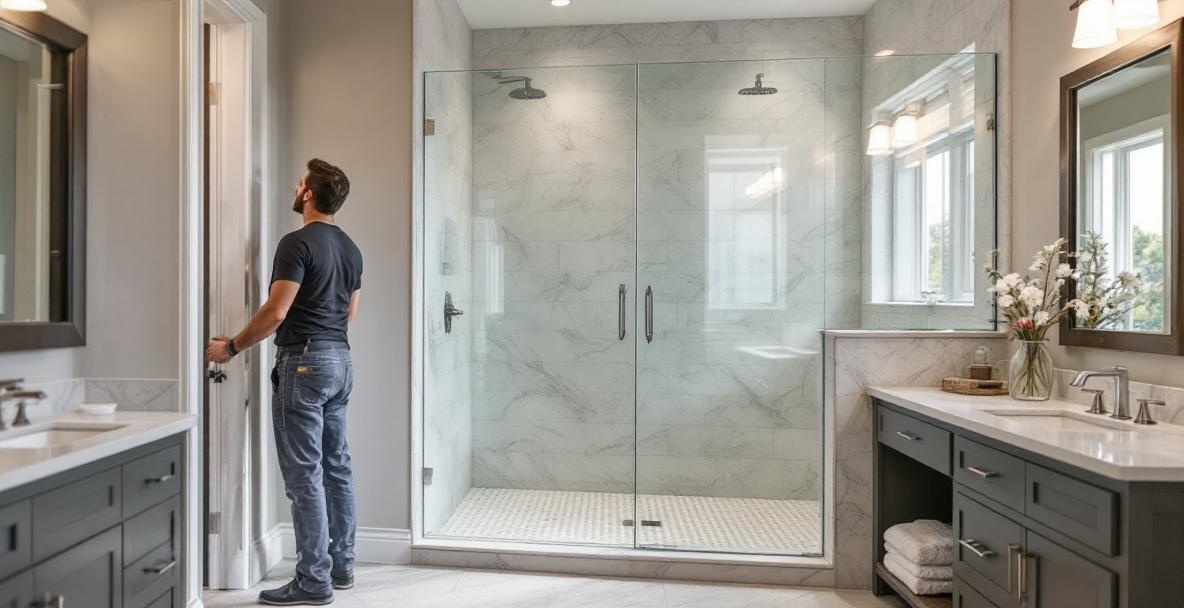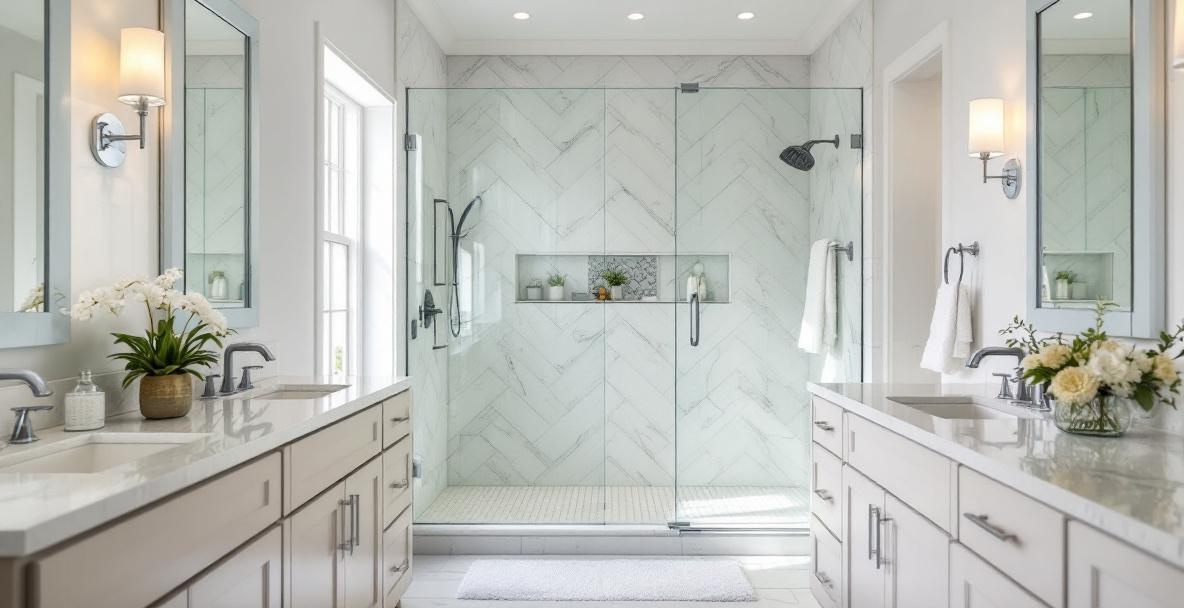
Semi-frameless shower doors cost $500–$1,550 installed while frameless configurations run $1,200–$4,200+ (Horow 2025). Semi-frameless is roughly one-third the cost of fully frameless (Coastal Closets). But the cost difference is only part of the comparison — durability, maintenance, lifespan, and resale value all favor frameless over the long term.
The choice between frameless and semi-frameless isn't just a budget decision — it's a decision about what you're optimizing for. If the primary factor is upfront cost, semi-frameless wins. If you're thinking in terms of 10-year cost-per-year, maintenance burden, and home value impact, frameless is often the better investment.
Here's the complete comparison, including what you actually get at each price point in DFW. If the budget points you toward the middle option, our semi-frameless shower doors page covers the configurations we build.
What Is the Real Cost Difference?
The headline numbers from national data:
| | Semi-Frameless | Frameless | |---|---|---| | Installed range | $500–$1,550 | $1,200–$4,200+ | | DFW range | $450–$1,300 | $1,000–$3,800+ | | Glass thickness | 1/4–3/8 inch | 3/8–1/2 inch | | Frame elements | Top rail or perimeter | None (hardware only) |
The bottom line: Semi-frameless costs roughly one-third less than a comparable frameless configuration (Coastal Closets). For a primary bath with a full enclosure, that might mean $800–$1,200 in real savings.
The question is what you're getting and giving up for that savings.
$500–$1,550
typical semi-frameless shower door range installed — about one-third less than comparable frameless (Horow 2025 / Coastal Closets)
What Is the Visual Difference?
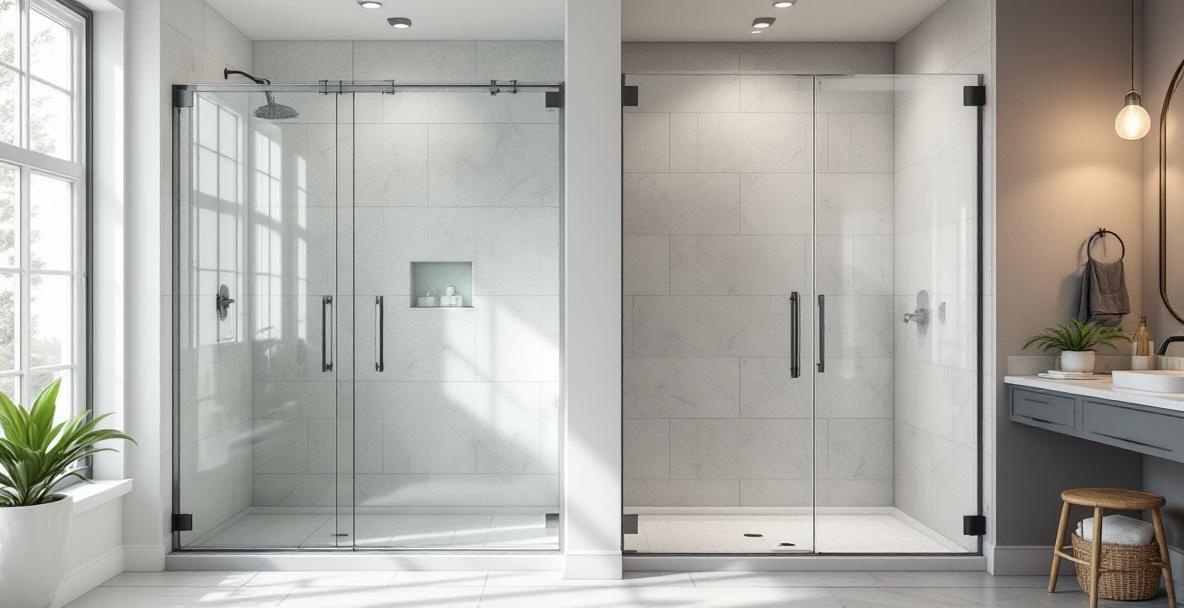
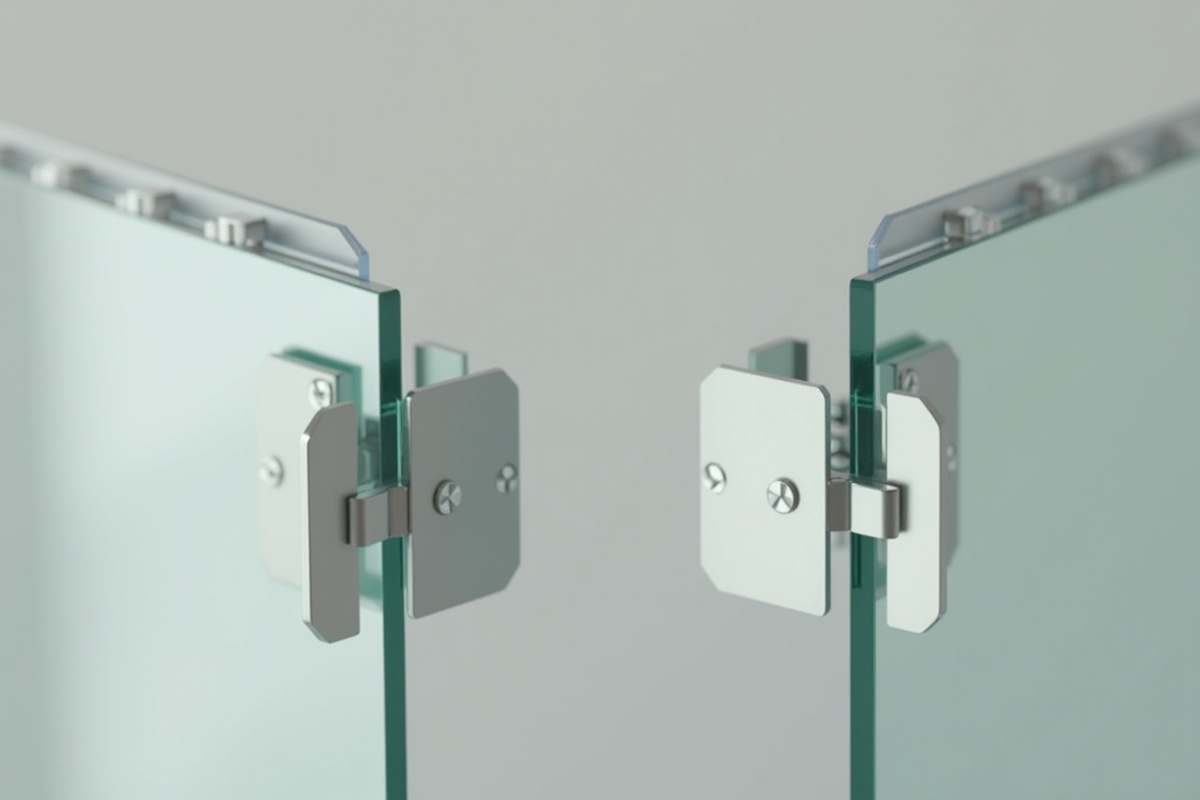
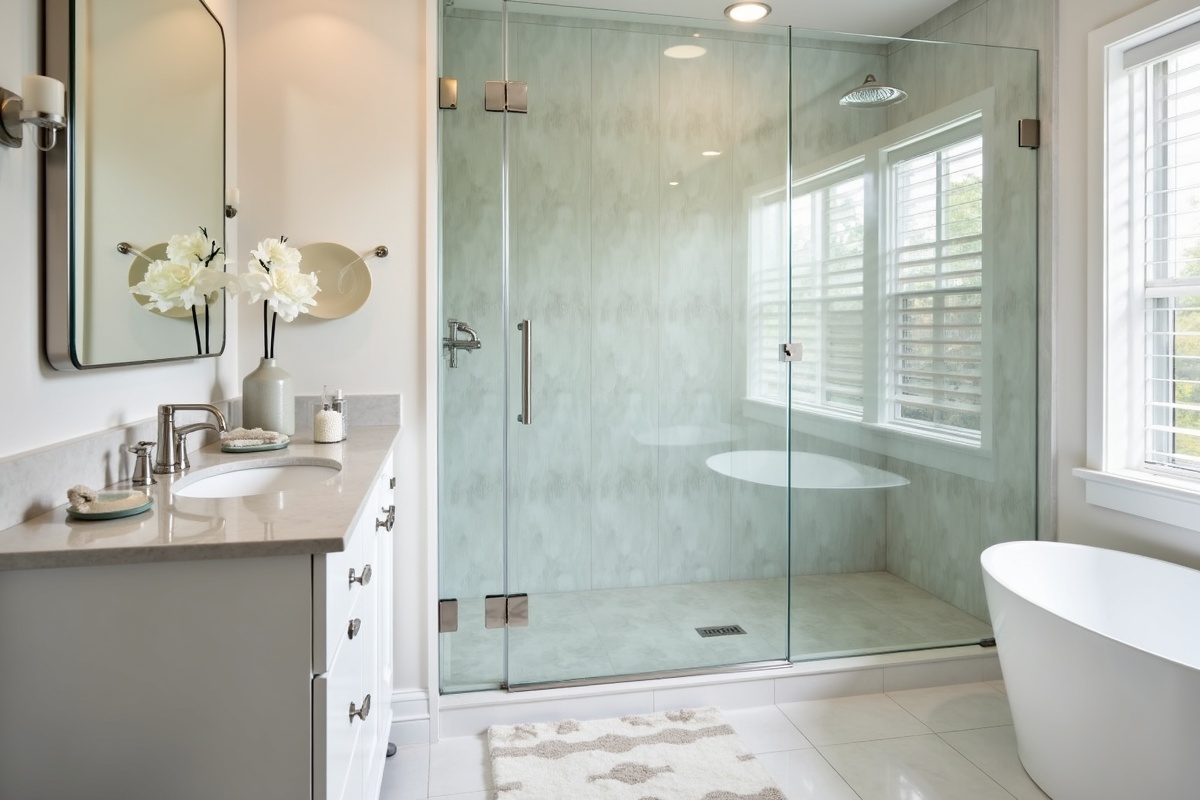
Frameless: No metal frame surrounding the glass. Hardware consists of hinges, a handle, and sometimes a header bar or support rail at the top. The glass is thick enough (3/8 or 1/2 inch) to be structurally self-supporting. The result is a "floating glass" appearance — minimal hardware, maximum glass.
Semi-frameless: Has a metal element — usually a top rail, bottom threshold, or partial perimeter frame — that supports thinner glass (typically 1/4 to 3/8 inch). The frame provides structural support that frameless hardware provides instead. The visual result depends on how much frame is visible: some semi-frameless doors have a thin top rail that's barely noticeable; others have a more substantial frame that's clearly present.
The practical test: if you look at the shower and your eye goes to the metal before the glass, it's semi-frameless. If the glass is what you see, it's frameless.
Can you tell the difference from a photo? Often, yes — especially when comparing directly. From across the room in real life, a quality semi-frameless installation looks substantially better than a framed shower, even if it doesn't match the clean glass-only look of fully frameless.
Which Costs More to Maintain Over Time?
This is where the long-term math changes the initial comparison.
Frameless maintenance:
- No metal tracks or channels
- Squeegee after each shower prevents mineral buildup
- Inspect and replace silicone seals every 3–5 years ($50–$150)
- Hardware inspection and potential adjustment at 10+ years
- Annual cleaning cost: minimal (squeegee + weekly wipe)
Semi-frameless maintenance:
- Metal frame elements (top rail, partial perimeter, sliding tracks if applicable) trap soap scum, mineral deposits, and mildew
- Sliding tracks require dedicated cleaning with a brush — the most time-intensive maintenance in any shower enclosure
- Frame caulk and seals at metal-to-tile junctions need periodic replacement
- Metal finishes on frame elements may show corrosion or wear over time
- Annual cleaning cost: moderate (track scrubbing adds significant time)
Research from Schicker Luxury Shower Doors identifies bottom sliding tracks as the primary maintenance pain point in shower doors — the specific element most semi-frameless configurations include that frameless doors avoid.
Which Lasts Longer?
Frameless: 20–30 years typical lifespan (IDEAL Shower Doors). The tempered glass itself doesn't degrade under normal conditions. Hardware may need adjustment or replacement at 10–15 years. The investment is genuinely long-term.
Semi-frameless: 15–20 years typical lifespan. The frame elements and associated seals degrade before the glass does. Metal frames can show corrosion, especially in DFW's hard water environment (where mineral deposits accelerate metal degradation). Sliding track hardware has more moving parts and more wear points.
Cost-per-year comparison for a DFW primary bathroom:
Semi-frameless at $900 installed over 17 years: $53/year Frameless at $1,800 installed over 25 years: $72/year
The per-year difference ($19/year) is modest — less than $2/month. Add the higher maintenance time burden of semi-frameless and the gap narrows further on a cost-of-ownership basis.
Which Adds More Home Value in DFW?
Both frameless and semi-frameless are meaningful upgrades over standard framed shower doors. The question is degree:
Frameless is the preferred upgrade for buyers in DFW's primary bathroom market. Real estate agents consistently cite frameless shower enclosures as a top-tier bathroom upgrade for resale value. The ROI estimate for frameless is 60–80% at resale — meaning an $1,800 installation returns $1,080–$1,440 in added home value (Glass and Auto data).
Semi-frameless also adds value over framed alternatives, but the perception difference from frameless is meaningful in higher price point markets (Frisco, Southlake, Highland Village, Plano, Keller). In these markets, semi-frameless may underwhelm buyers who expect fully frameless in a primary bath.
In moderate price point markets and for secondary bathrooms, semi-frameless delivers substantial value at appropriate cost.
If you're planning to sell within 3 years and your bathroom is in a competitive price point (above $400K in DFW), frameless is the better investment for resale. If the timeline is longer or the bathroom is secondary, semi-frameless at lower upfront cost may deliver better overall economics.
When Semi-Frameless Is the Smarter Choice
Semi-frameless isn't a compromise — it's the right choice in specific situations:
Secondary bathrooms and guest baths: The primary bathroom gets the frameless upgrade; secondary bathrooms can use semi-frameless without compromising the home's overall quality perception.
Bathtub-shower combinations: The 60-inch tub opening is the classic application for a semi-frameless bypass (sliding) system. A frameless hinged door doesn't work well on a tub; a semi-frameless slider is the natural fit. There are exceptions worth knowing — we cover them in can you install a frameless shower door on a bathtub.
Moderate budget primaries: If your renovation budget is constrained and the choice is between a quality semi-frameless installation and a lower-quality frameless one, quality semi-frameless is often the better call. A $700 semi-frameless door installed professionally outperforms a $600 frameless door installed by someone who doesn't specialize in glass.
Rental properties: Semi-frameless is durable enough for tenant use and costs less to replace when it inevitably gets damaged over a tenancy.
How to Decide: A Decision Framework for DFW Homeowners
| Primary bath, staying 5+ years |
| Primary bath, selling in 1–3 years |
| Secondary or guest bath |
| 60-inch bathtub combination |
| Tight renovation budget |
| Rental property |
Is the price difference between frameless and semi-frameless worth it?
For primary bathrooms where you're staying for 5+ years or optimizing for resale value, yes — the higher upfront cost of frameless typically delivers better long-term economics when you account for lifespan, maintenance burden, and home value impact. For secondary bathrooms and tub combinations, the semi-frameless savings are meaningful without significant downside.
Can you tell the difference between frameless and semi-frameless?
Yes, usually — especially when looking closely at the glass perimeter. Frameless has only point hardware (hinges, handle). Semi-frameless has a visible metal element — typically a top rail or frame strip. From across a large bathroom, a quality semi-frameless can read as nearly frameless; from up close, the frame element is visible.
Does semi-frameless require more maintenance than frameless?
Yes. Semi-frameless configurations typically include metal frame elements — rails, tracks, channels — that trap soap scum, mineral deposits, and mildew. These require more frequent and more intensive cleaning than frameless hardware. Sliding tracks in particular require dedicated brush cleaning that frameless hinges do not.
Is semi-frameless better for resale in DFW?
Both semi-frameless and frameless are upgrades over standard framed doors and both add resale value. In DFW's luxury markets (Frisco, Southlake, Plano, Keller, McKinney), buyers in upper price points expect fully frameless in primary bathrooms. Semi-frameless may underwhelm in those markets. In moderate price points, semi-frameless is a solid resale upgrade.
Can I upgrade from semi-frameless to frameless later?
Yes — a semi-frameless door can be replaced with a frameless installation when you're ready for the upgrade. The glass and hardware are replaced; the shower itself (tile, pan, plumbing) doesn't change. If you're planning to upgrade eventually, going frameless from the start is more economical than two installations over time.
Also see our frameless shower door cost guide and our frameless shower doors in DFW.
Infinity Glass & Glazing installs both frameless and semi-frameless shower doors throughout DFW — with precise in-home measurement and professional installation. Serving Corinth, Denton, Lewisville, Flower Mound, Frisco, Southlake, Keller, McKinney, and the full metro area. Contact us for a free estimate and we'll help you make the right call for your specific bathroom.
Related reading:
- mirror installation cost in DFW
- frameless vs. framed shower doors