Low-iron glass shower doors eliminate the blue-green tint found in standard glass, transmitting up to 91% of visible light for a crystal-clear, distortion-free look that makes tile colors, hardware finishes, and stone surfaces appear exactly as intended — a difference that is immediately visible and impossible to unsee once you know what to look for.
If you have ever stood in a showroom comparing two frameless shower enclosures side by side, you may have noticed that one looks sharper, brighter, and more transparent than the other. That difference almost certainly comes down to the glass itself. Standard float glass has a faint but noticeable blue-green cast, especially visible when you look at the edge of the panel. Low-iron glass eliminates that tint entirely. For DFW homeowners investing in a frameless shower upgrade, understanding this distinction can make the difference between a finished bathroom that looks good and one that looks exceptional.
What Is Low-Iron Glass and How Is It Made?
Low-iron glass is standard float glass manufactured with a significantly reduced iron oxide content. During the float glass production process, molten glass is poured over a bed of molten tin, creating a perfectly flat surface. Iron naturally occurs as an impurity in the silica sand used to make glass, and that iron is what gives standard glass its characteristic green tint.
Standard float glass contains approximately 0.1% iron oxide by weight, which is enough to create a visible color cast across the full pane. Low-iron glass is manufactured with iron content reduced to around 0.01% — a tenfold reduction — through more refined raw material sourcing and careful production controls (GlassBuild America 2025). The result is a glass that appears water-white and nearly colorless even when you view it at an angle or look through the edge.
Common brand names for low-iron glass include Starphire by Vitro (formerly PPG), Optiwhite by Pilkington, and Diamant by Saint-Gobain. These are all fundamentally the same product — low-iron float glass — produced by different manufacturers.
How Does Low-Iron Glass Compare to Standard Clear Glass?
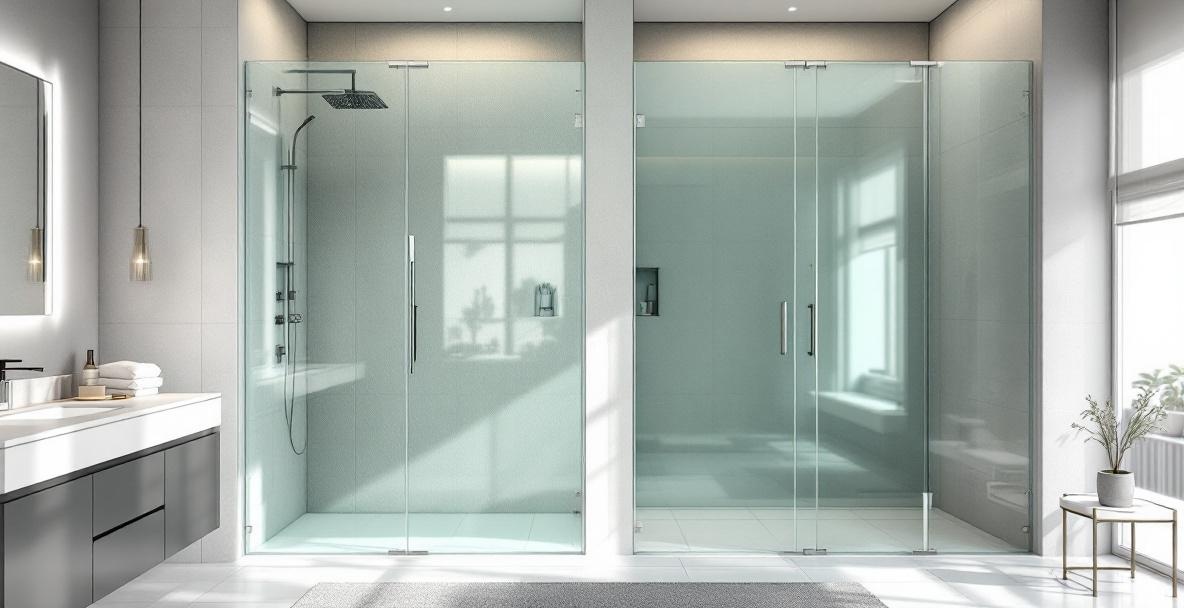
Low-iron glass transmits approximately 91% of visible light, compared to around 83% for standard clear tempered glass (Cardinal Glass 2025). That 8-percentage-point difference is meaningful in a shower enclosure, where the glass occupies a large surface area and where the goal is often to showcase the tile, stone, or decorative elements inside.
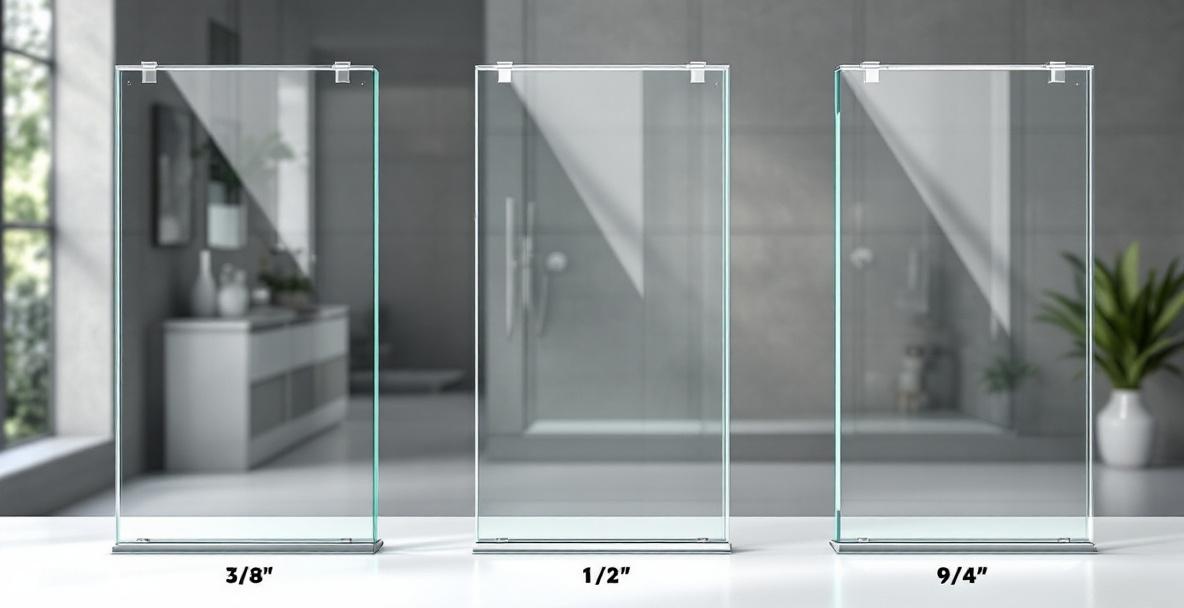
The most important comparison is the edge color. When you look at the edge of a standard 3/8 in. tempered glass panel, the edge appears distinctly green — a deep, saturated color that reveals the iron content. Low-iron glass edges appear almost completely clear with only the faintest hint of blue-gray. For frameless shower doors where the glass edges are visible on all sides, this edge clarity significantly elevates the finished appearance.
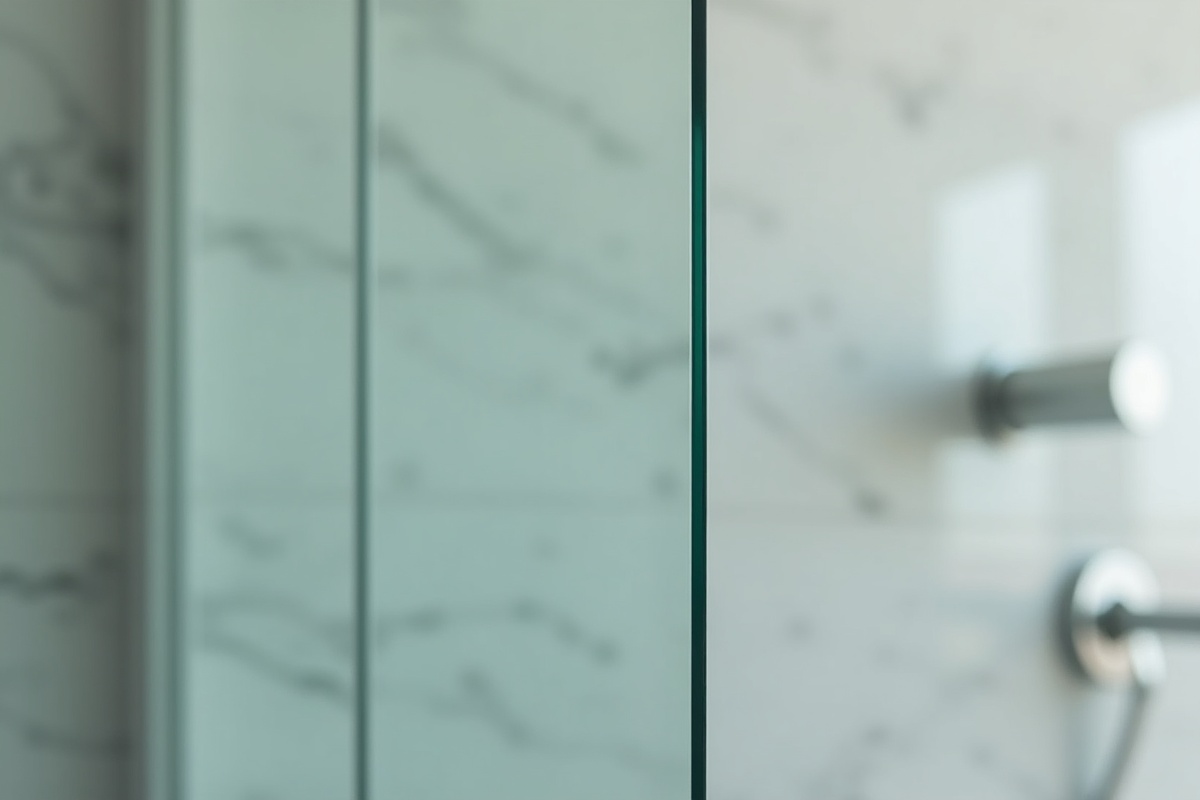
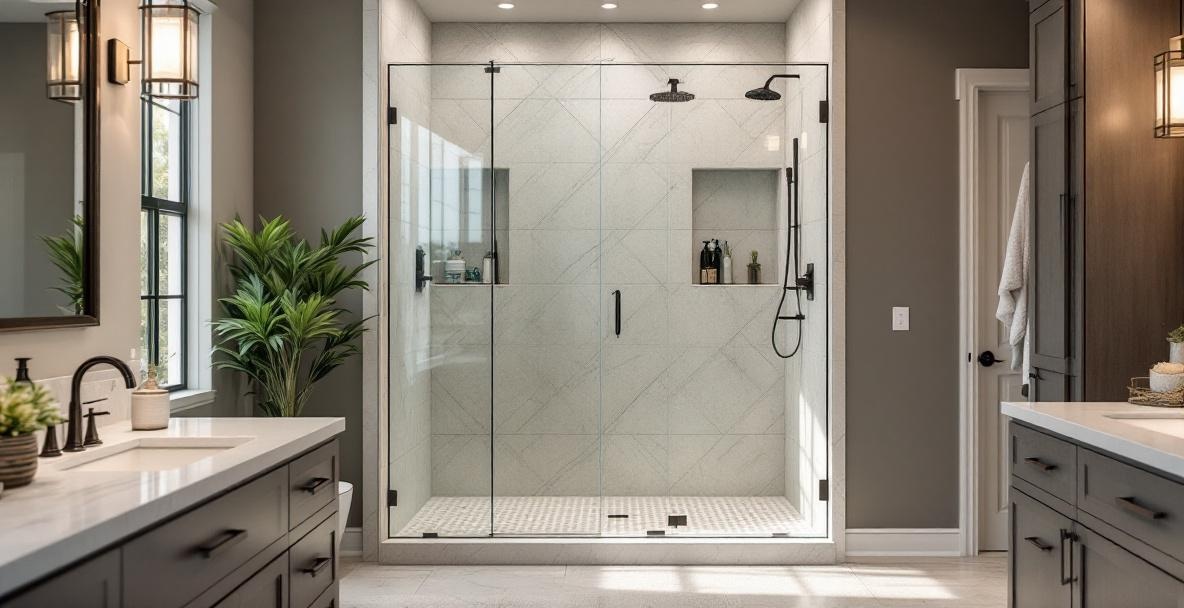
In practical terms, low-iron glass makes white subway tile look brighter and whiter, makes marble and natural stone appear truer to their actual color, and makes polished chrome and brushed nickel hardware look crisper. If your shower design relies on precise color matching or showcasing premium materials, low-iron glass is the version that does those materials justice.
Why Does Standard Glass Have a Green Tint?
The green tint in standard float glass comes from ferrous iron (Fe2+) and ferric iron (Fe3+) ions that are present in the silica sand used as the primary raw material. Silica sand is not pure silicon dioxide — it contains trace impurities including iron, aluminum, and calcium compounds.
Ferrous iron absorbs light in the red and near-infrared spectrum, shifting the transmitted color toward blue-green. When glass is thin (like a window pane), this effect is subtle. When glass is 3/8 in. or 1/2 in. thick — as frameless shower doors typically are — the cumulative effect becomes visible and measurable. The green cast is most obvious when looking at the glass edge-on, but it is also present across the face of the panel when the glass is angled in light.
Low-iron glass production specifically sources higher-purity silica with less iron contamination, then precisely controls the melting process to minimize oxidation. The result is glass that looks fundamentally different even though it is made from the same basic materials.
How Much More Does Low-Iron Glass Cost for Shower Doors?
Premium glass upgrades — including low-iron glass — add approximately $200 to $600 to a typical shower door project, depending on the overall enclosure size and the baseline price of the standard glass option (HomeGuide 2025). For a standard 36 in. x 72 in. frameless shower door, the material upcharge for low-iron glass is typically $150 to $350 above the standard clear glass price.
91%
of visible light transmitted by low-iron glass, vs. 83% for standard clear glass (Cardinal Glass 2025)
On a full frameless enclosure with a door panel plus one or two fixed panels, the premium climbs accordingly — typically $300 to $700 additional for the enclosure as a whole. When you are already spending $1,500 to $4,000 on a frameless frameless shower enclosure, the low-iron upgrade represents a 10 to 20% increase in the glass cost, but a smaller percentage of the total project cost when labor and hardware are included.
For most DFW homeowners completing a master bath remodel, the incremental cost of low-iron glass is straightforward to justify: you are making a permanent investment in the room, and the glass will be visible every day for the next 15 to 20 years. Spending an extra $300 to $500 to ensure the glass looks as good as the tile and fixtures around it is a reasonable decision.
What Shower Styles Benefit Most from Low-Iron Glass?
Low-iron glass makes the most visible difference in specific shower configurations and design styles:
White and light-colored tile: The green undertone in standard glass is most noticeable against light backgrounds. White subway tile, large-format white porcelain, and light marble or quartzite all look crisper and more accurate through low-iron glass.
Frameless enclosures: The edge of the glass is exposed in a frameless design, making the edge color a visible design element. Semi-frameless and fully framed doors conceal the glass edges behind metal channels, reducing the visual impact of the iron content.
Large panel sizes: The tint accumulates with glass thickness and area. Large fixed panels — common in walk-in shower designs — display more cumulative color than a narrow door panel. If your enclosure includes fixed walls or a ceiling panel, low-iron glass makes a proportionally larger difference.
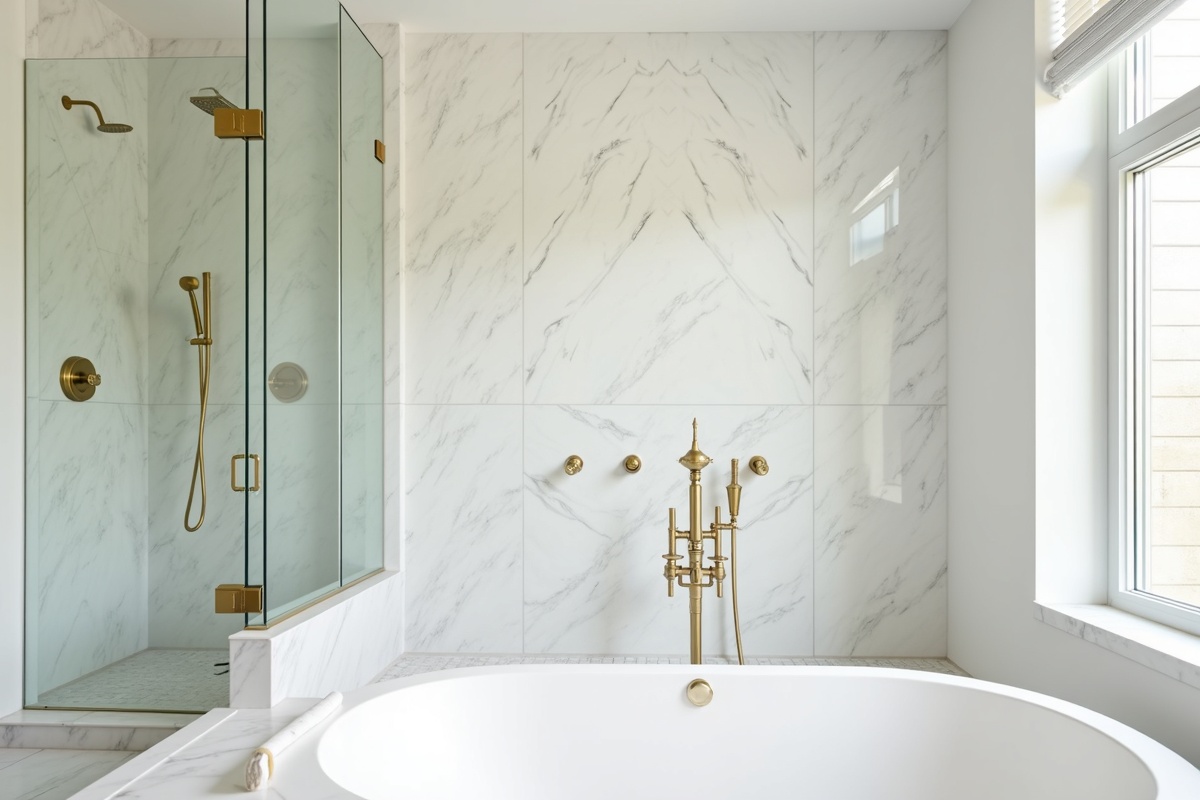
High-end fixtures and finishes: If you are pairing the shower with Calacatta marble, book-matched stone, or premium imported tile, standard glass working against those materials is a waste of the investment. Low-iron glass lets the finishes speak for themselves.
If your shower design features any white, cream, or light neutral tile, ask your glass installer to show you a sample comparison of standard and low-iron glass held in front of that tile before you decide. The difference is immediately clear and makes the decision straightforward.
Is Low-Iron Glass Worth It for Your DFW Shower Project?
For most frameless shower door installations in the DFW area, low-iron glass is worth the upgrade — particularly in master bath remodels where the design intent is to showcase premium materials and create a clean, spa-like aesthetic.
The cases where low-iron glass is most clearly worth it:
- You are tiling in white, cream, or any light neutral color
- The enclosure includes multiple panels where cumulative tint adds up
- You have invested in high-end hardware (brushed gold, matte black, polished chrome)
- The shower is in a master bath where design quality matters to resale value
The cases where standard glass is a perfectly reasonable choice:
- Secondary bathrooms where budget is a primary concern
- Dark tile surrounds where the tint contrast is less noticeable
- Framed or semi-frameless doors where glass edges are concealed
Low-iron glass carries the same structural properties as standard tempered glass when properly tempered. It is not inherently weaker or stronger — it is the same glass composition with different raw material purity.
Low-Iron Glass vs Standard Glass: Side-by-Side Comparison
| Light transmission |
| Edge color |
| Iron content |
| Cost premium |
| Best for |
| Structural strength |
| Cleaning requirements |
What is the green tint in standard shower glass?
The green tint comes from iron oxide impurities in the silica sand used to manufacture float glass. Standard glass contains about 0.1% iron oxide, which absorbs light in the red spectrum and shifts the transmitted color toward blue-green. The effect is most visible at the glass edge and on large panel surfaces against light-colored tile or backgrounds.
Does low-iron glass require special cleaning?
No. Low-iron glass cleans exactly the same way as standard tempered glass. Use a squeegee after each shower to remove water droplets, and wipe down with a mild glass cleaner as needed. The same protective coatings (such as EnduroShield or ClearShield) can be applied to low-iron glass and work with the same effectiveness.
Is low-iron glass stronger than standard tempered glass?
No. The strength of shower door glass comes from the tempering process, not the base glass composition. Both low-iron and standard glass are heat-tempered to the same safety standard (ANSI Z97.1). The iron content affects color and light transmission only, not structural integrity or impact resistance.
Can low-iron glass be combined with any hardware finish?
Yes. Low-iron glass is compatible with all standard frameless shower hardware finishes including brushed nickel, polished chrome, matte black, brushed gold, and oil-rubbed bronze. The clearer glass actually enhances the appearance of premium hardware finishes by allowing their true color and texture to read without the green undertone of standard glass working against them.
How do I know if my existing shower has low-iron glass?
Look at the edge of the glass panel — if the edge appears blue-green, it is standard glass. If the edge looks nearly colorless or has only a faint gray-blue tint, it is low-iron. You can also hold a white piece of paper against the glass surface and look at how the paper color reads through the glass from the other side. Standard glass adds a visible green shift; low-iron glass does not.
Also see our guide to frameless shower door costs in Texas and our overview of how thick frameless shower glass should be.
Infinity Glass & Glazing installs low-iron glass shower doors and full frameless enclosures throughout the DFW metro, including Corinth, Flower Mound, Lewisville, Frisco, and surrounding communities. If you are comparing glass options for a bathroom remodel, we are happy to show you side-by-side samples of standard and low-iron glass so you can see the difference before you decide. Contact us for a free estimate.
Related reading: