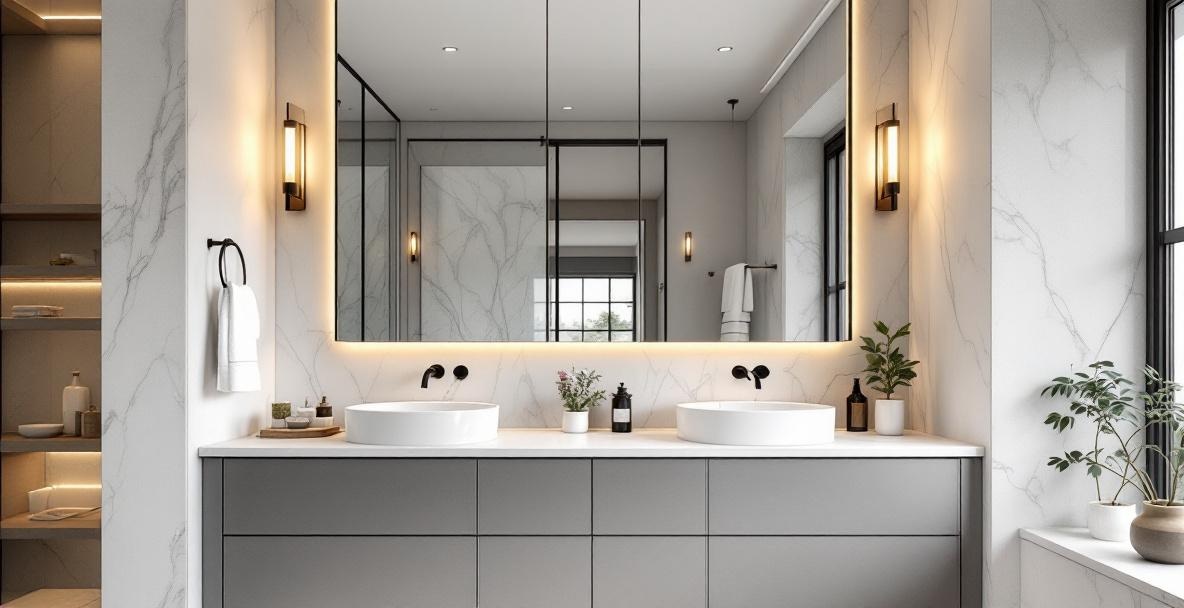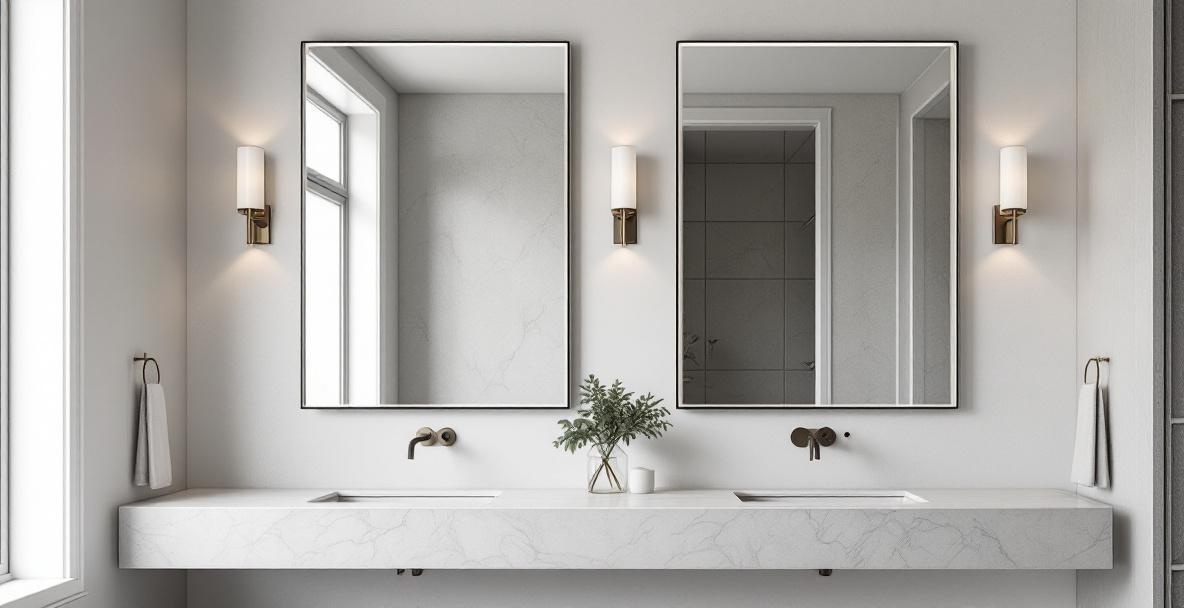
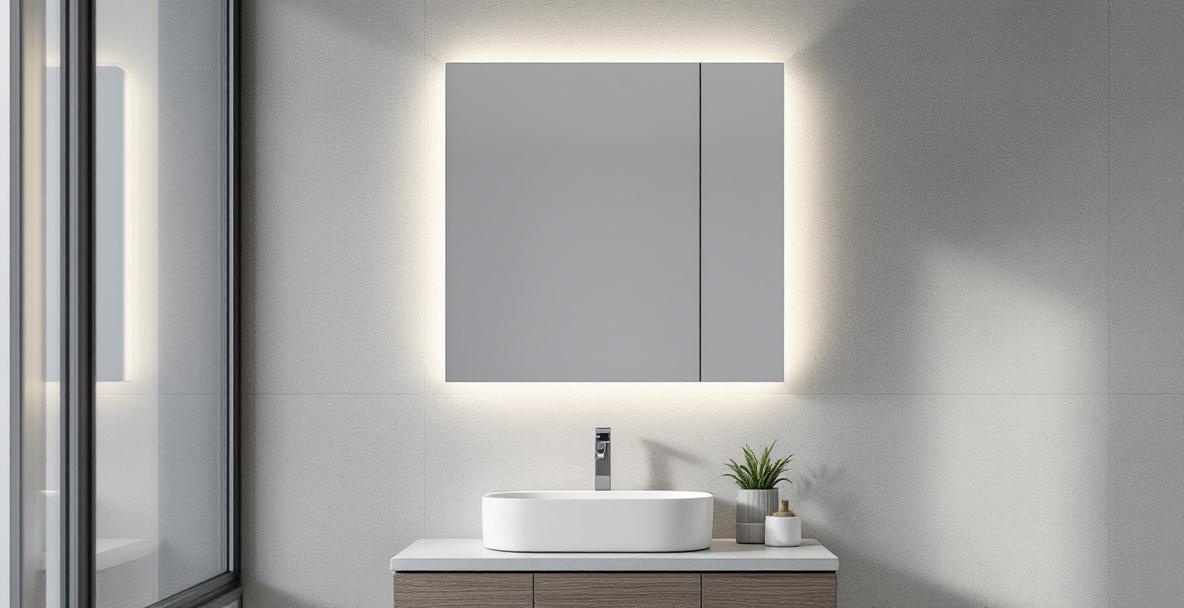
A medicine cabinet is a wall-mounted bathroom storage cabinet with a mirrored door, installed either recessed (set into the wall cavity between studs) or surface-mount (attached to the wall face). In Dallas, Infinity Glass & Glazing installs both styles, with standard sizes from 16 x 20 inches up to 48 x 36 inches, plus custom dimensions, optional integrated LED lighting, defoggers, soft-close hinges, and outlet integration. Labor typically runs $150-$600 in the DFW market.
Medicine cabinets are the quiet workhorse of a well-designed bathroom. They add significant storage above the vanity, serve as the primary mirror, and — when done right — look fully integrated into the wall rather than bolted on. In Dallas luxury remodels, recessed medicine cabinets with LED lighting and integrated outlets have become standard in master bathrooms and secondary baths alike.
This guide covers the two main installation types, what each requires behind the walls, what size works for your vanity, how much the project costs in the DFW market, and which features are worth paying for.
What Types of Medicine Cabinets Are Available for Dallas Bathrooms?
Medicine cabinets come in two primary installation types — recessed and surface-mount — plus a smaller category of semi-recessed (partially inset, partially protruding). Beyond the mounting method, cabinets vary in door count, mirror treatment, lighting, and smart features.
Recessed medicine cabinets are installed into a cavity cut into the wall, sitting flush with the drywall surface. They require 3.5-6 inches of wall depth and cannot be installed on exterior walls with insulation or on walls containing plumbing or structural framing (NKBA 2024). The finished look is clean and built-in — the mirror face appears to float on the wall with no frame protruding.
Surface-mount medicine cabinets are attached to the wall face, sticking out 4-6 inches. They install quickly because no wall cutting is required, making them the default for retrofit situations where the homeowner cannot or does not want to open the wall.
Semi-recessed cabinets are partially inset (1-2 inches) and partially protruding (2-3 inches). Used when partial depth is available behind the wall — such as when pipes or HVAC run through part of the stud cavity.
4.8% CAGR
growth rate of the global medicine cabinet market through 2030
The medicine cabinet market is expanding at a 4.8% CAGR globally (Grand View Research 2025), driven by smaller bathroom footprints demanding more vertical storage and the rise of integrated smart features like LED lighting and built-in outlets.
Recessed vs Surface-Mount Medicine Cabinets: Which Is Right for You?
The choice between recessed and surface-mount comes down to wall construction, bathroom space, and aesthetic preference. Neither is categorically better — each fits different situations.
| Protrudes From Wall |
| Wall Depth Needed |
| Install Difficulty |
| Install Labor (Dallas) |
| Look |
| Best For |
For a new-build or gut remodel in Dallas, recessed is almost always the better choice — the wall is already open, the cost to cut in the cavity is minimal, and the finished look is worth the effort. For retrofit installs where you're not opening walls, surface-mount is faster, cheaper, and avoids any risk of hitting plumbing or electrical.
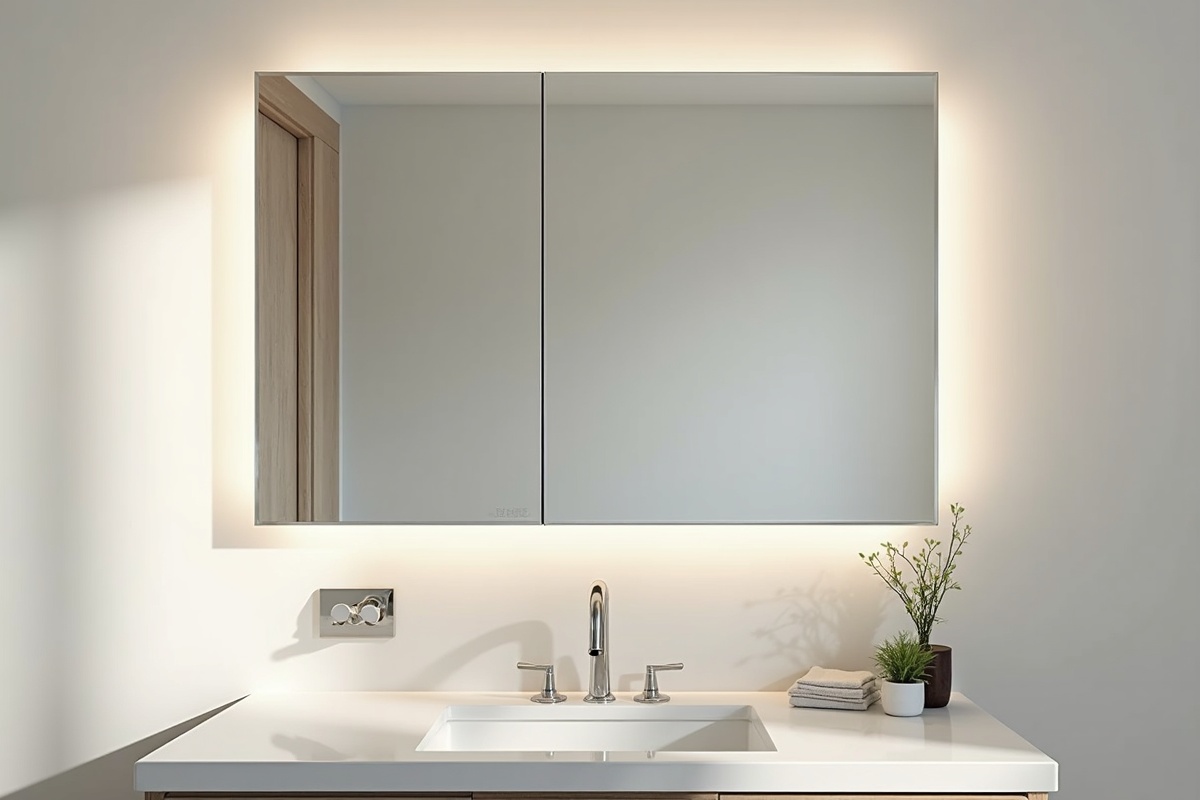
How Are Medicine Cabinets Installed in Existing Dallas Bathrooms?
Medicine cabinet installation in a finished Dallas bathroom depends entirely on whether you're doing a recessed or surface-mount install. The process and timeline differ significantly.
Recessed installation requires cutting a rectangular opening in the drywall between two studs, adding horizontal blocking above and below, and ensuring no plumbing, electrical, or HVAC runs through the cavity. The cabinet slides into the opening and is screwed into the studs on either side. Trim is not needed if the cabinet has a built-in flange that covers the drywall edge.
Surface-mount installation is simpler: locate studs, mount the cabinet to studs (or use heavy-duty toggle anchors if stud alignment doesn't match the cabinet width), and attach. No wall cutting, no plumbing or electrical concerns. Most surface-mount cabinets install in under 60 minutes.
- 1
Wall Inspection and Obstruction Check
We scan the wall area with a stud finder and pipe detector. For recessed installs we confirm the cavity is clear of plumbing, electrical, and structural blocking before cutting. - 2
Mark and Cut (Recessed Only)
The cabinet outline is marked on the wall, leveled, and verified. The drywall is cut cleanly with a drywall saw — careful of any wires or pipes behind. - 3
Add Blocking and Electrical (If Applicable)
Horizontal 2x4 blocking is added above and below the cavity for screws. If the cabinet includes lighting or outlets, an electrician runs power to the cavity. - 4
Mount the Cabinet
For recessed, the cabinet is lifted into the opening and screwed into studs on the left and right. For surface-mount, the cabinet is leveled on the wall and screwed into studs (or anchored if studs don't align). - 5
Wire Lighting and Test Doors
If the cabinet has integrated LED lighting or an outlet, the electrical is connected and tested. Hinges are adjusted so doors close flush and align evenly.
Retrofit recessed installs typically take 3-5 hours; new-construction recessed (pre-drywall) takes about half that time. Surface-mount is usually under 90 minutes.
Can Medicine Cabinets Be Installed in Tile Walls?
Yes — but only with care. Tile walls add two challenges: cutting tile cleanly, and avoiding cracks around the cabinet opening. For recessed installs into tiled walls, professional installers use a diamond-blade wet saw or angle grinder to score the tile before cutting the drywall behind it. Grout lines are set up to hide any small chips.
Surface-mount cabinets on tile walls are simpler — no cutting is needed. The cabinet is attached with toggle bolts through the tile and into studs, using a diamond-bit masonry drill to penetrate the tile without cracking. Silicone is applied around the mounting screws to prevent moisture intrusion.
How Much Does Medicine Cabinet Installation Cost in Dallas TX?
Medicine cabinet installation in Dallas typically costs $300-$1,500 total for the cabinet plus professional install. Installation labor alone runs $150-$600 in the DFW market (HomeGuide 2025), with costs varying based on mounting type, wall construction, whether electrical work is needed, and cabinet size.
| Cabinet Cost |
| Dallas Install Labor |
| Electrical (if needed) |
| Total Dallas Project |
Cost variables in Dallas specifically:
- Wall opening for recessed cabinets on tile walls adds $75-$200
- New electrical run for LED cabinets without nearby power adds $150-$400
- Multiple cabinets in a double-vanity install reduce per-unit cost 15-20%
- Custom oversized recessed cabinets (wider than standard 16-inch stud spacing) require wall modification and add $300-$600
What Size Medicine Cabinet Is Right for Your Bathroom Vanity?
Medicine cabinet sizing should relate to the vanity width — not the whole wall. Standard rules for DFW bathrooms:
Single 24-30 inch vanity: 16-22 inch cabinet width works best. Full-width cabinets can overwhelm smaller vanities.
Single 36-42 inch vanity: 20-24 inch cabinet centers nicely over the sink without dominating the wall.
Single 48-inch vanity: 24-30 inch cabinet, or a specialty 30-36 inch model.
Double 60-72 inch vanity: Two separate cabinets centered over each sink (20-24 inches each), or one wide 48-60 inch double-door cabinet.
Height is usually 26-36 inches with a top of the cabinet at 78-80 inches from the finished floor. Mount lower for shorter users, higher for taller users — but always keep the bottom of the cabinet at least 4-6 inches above the backsplash.
Medicine Cabinet Features Worth Paying For in a DFW Bathroom Remodel
Medicine cabinets range from $150 basic surface-mount units to $2,500 premium smart cabinets. The features actually worth paying for, based on what Dallas homeowners use daily:
Worth the upgrade:
- Integrated LED lighting — both ambient halo and interior cabinet lighting. Eliminates the need for a separate vanity light bar.
- Integrated outlet(s) inside cabinet — hide electric toothbrush, shaver, and hair tool chargers behind the mirror door.
- Soft-close hinges — prevents slamming and extends hinge life. Worth the small upcharge.
- Adjustable glass shelves — flex with changing storage needs over time.
- Anti-fog heater — keeps the mirror clear after showers. Reasonable upcharge, big daily benefit.
Sometimes worth it:
- Double-sided mirror doors — interior mirror face is useful for close-up grooming.
- Dimmable lighting — nice-to-have, often not used.
Skip unless you really want it:
- Bluetooth speakers or touchscreens — feels dated fast, rarely used.
- Magnetic strips inside — can be replaced with a $5 aftermarket strip.
Frequently Asked Questions
How difficult is it to install a recessed medicine cabinet in a tile wall?
Cutting into finished tile is doable but risky. The tile must be scored with a diamond blade, then the drywall behind is cut cleanly. There's a real chance of cracking adjacent tiles or disturbing grout lines. In most cases we recommend either choosing a surface-mount cabinet or planning the recessed cabinet before tile goes up in new construction or gut remodels.
Can medicine cabinets be installed on an exterior wall?
Technically yes, but it's rarely a good idea in Texas. Exterior walls typically contain insulation (sometimes fiberglass, sometimes spray foam) plus a vapor barrier. Cutting a cavity for a recessed cabinet compromises insulation and can create thermal bridging. We almost always recommend surface-mount cabinets on exterior walls, or relocating the cabinet to an interior wall.
What are the standard sizes for medicine cabinets?
Standard widths are 16, 20, 24, 30, 36, 40, and 48 inches. Standard heights are 26, 30, and 36 inches. Depths are typically 4-6 inches for recessed and 5-6 inches for surface-mount. Custom sizes outside these ranges are available but typically add 2-3 weeks to the order timeline.
Do medicine cabinets require electrical wiring for lighting?
Only if the cabinet includes integrated lighting or an internal outlet. Non-lighted medicine cabinets need no electrical work. Lighted models require a hardwired connection to a bathroom circuit, typically tying into the existing vanity light circuit with a wall dimmer or switch. A licensed electrician should handle the rough-in.
Can you replace a surface-mount cabinet with a recessed model?
Yes, but the wall behind the old cabinet usually needs patching and a new cavity cut. The old cabinet is removed, the drywall is repaired where the mounting screws came out, and a fresh rectangular opening is cut for the recessed cabinet. If the new cabinet is significantly larger or in a different location, expect drywall patching costs on top of install labor.
Also see our custom framed bathroom mirror guide and our double vanity mirror installation article for more bathroom mirror planning options.
Planning a medicine cabinet install in your Dallas bathroom? Infinity Glass & Glazing handles both recessed and surface-mount medicine cabinet installations across DFW — with licensed electrical work for lighted models, custom sizing, and coordinated remodel timing. Contact us for a free on-site consultation.
Related reading: