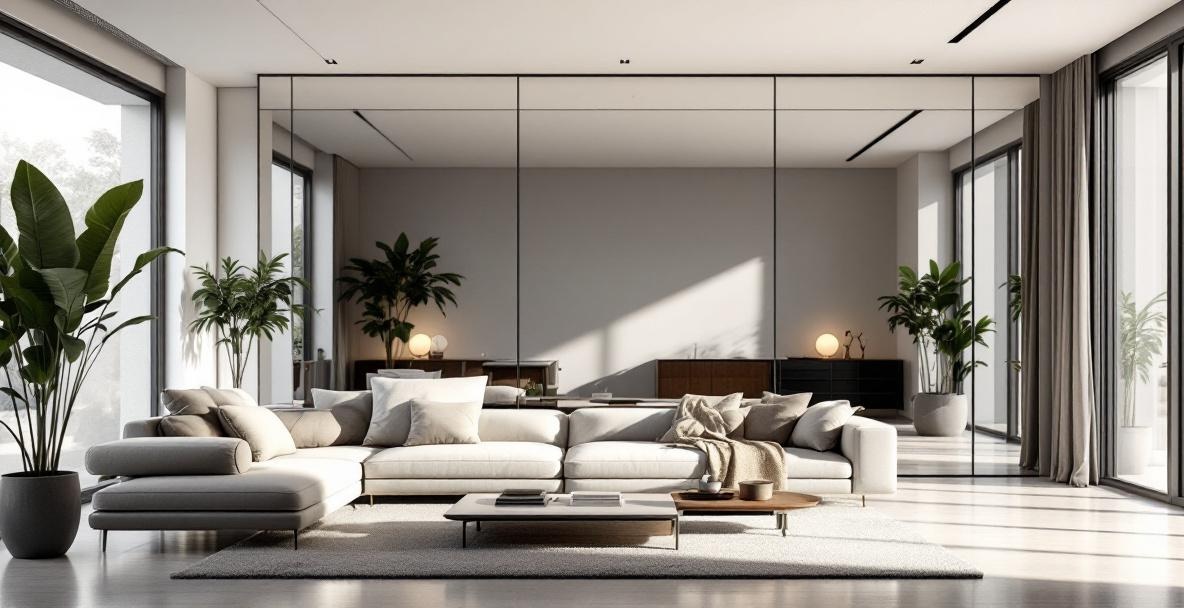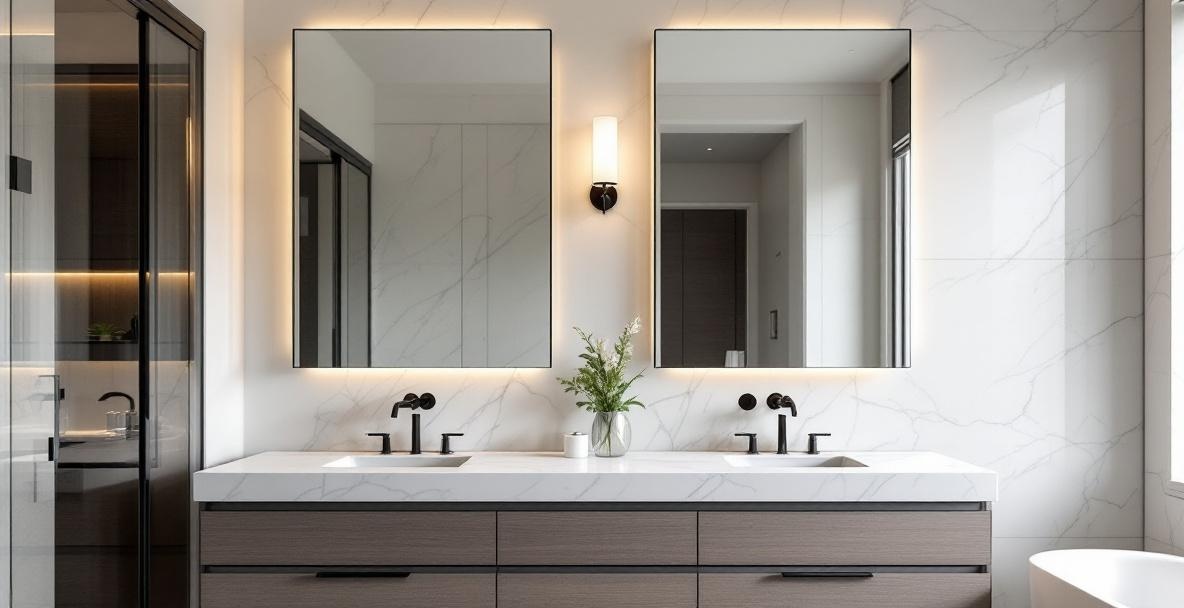

An oversized wall mirror is typically any wall-mounted mirror larger than 48 x 60 inches or any mirror weighing more than 50 lbs — the threshold where standard drywall anchors stop being safe and professional structural mounting is required. In Texas, Infinity Glass & Glazing installs oversized mirrors up to full-wall dimensions (10+ feet in a single direction) using stud anchoring, J-channels, and mirror mastic, with load ratings documented for insurance and safety compliance.
Oversized wall mirrors are one of the biggest-impact design moves available in a Texas home. A well-placed large mirror makes a room feel twice as big, doubles the effect of a window, and transforms an entryway, living room, gym, or dressing room into something that feels intentional and custom.
But oversized mirrors also carry real safety requirements. A 72 x 96 inch piece of 1/4-inch mirror weighs around 110 lbs, and anything larger than that pushes past what drywall alone can hold. This guide covers what counts as oversized, where these mirrors work best, how they're safely mounted in Texas homes, and what the installation costs.
What Counts as an Oversized Wall Mirror?
The glass industry generally considers a mirror "oversized" when it exceeds 48 x 60 inches or 50 lbs in weight — the point where residential drywall anchors are no longer rated to hold it safely and professional installation methods become required. Above 60 inches in any direction, NKBA safety guidelines recommend professional installation with structural anchoring (NKBA 2024).
At standard 1/4-inch mirror thickness, glass weighs roughly 1.6 lbs per square foot. A 72 x 96 inch mirror is 48 square feet — approximately 77 lbs of glass alone, not counting the frame. Thicker 3/8-inch mirror used in gym walls and commercial installs weighs closer to 2.4 lbs per square foot, and full-wall installations can run 8-12 lbs per square foot once backing, channels, and framing are included (ANSI 2024).
1.6 lbs
per square foot — weight of standard 1/4-inch residential wall mirror
Practical size thresholds in Texas homes:
- Standard residential: up to 48 x 60 inches, typically mounts on studs with clips
- Large residential: 48-84 inches, requires full stud anchoring or backing board
- Oversized: 84+ inches any dimension, requires structural mounting plan
- Full-wall: 100+ inches, requires J-channel + mastic + structural backing
Where Are Oversized Mirrors Most Commonly Installed?
In Texas homes and commercial spaces, oversized mirrors are installed in five main locations, each with different design and technical requirements.
Living rooms use oversized mirrors as a design anchor over fireplaces or sofas to double the apparent room size. Entryways and foyers benefit from a tall vertical oversized mirror that reflects incoming natural light deeper into the home. Home gyms universally require large wall mirrors for form-checking during workouts — typically 72-96 inches wide, mounted 6-8 inches above the floor to clear baseboards but show full-body reflection.
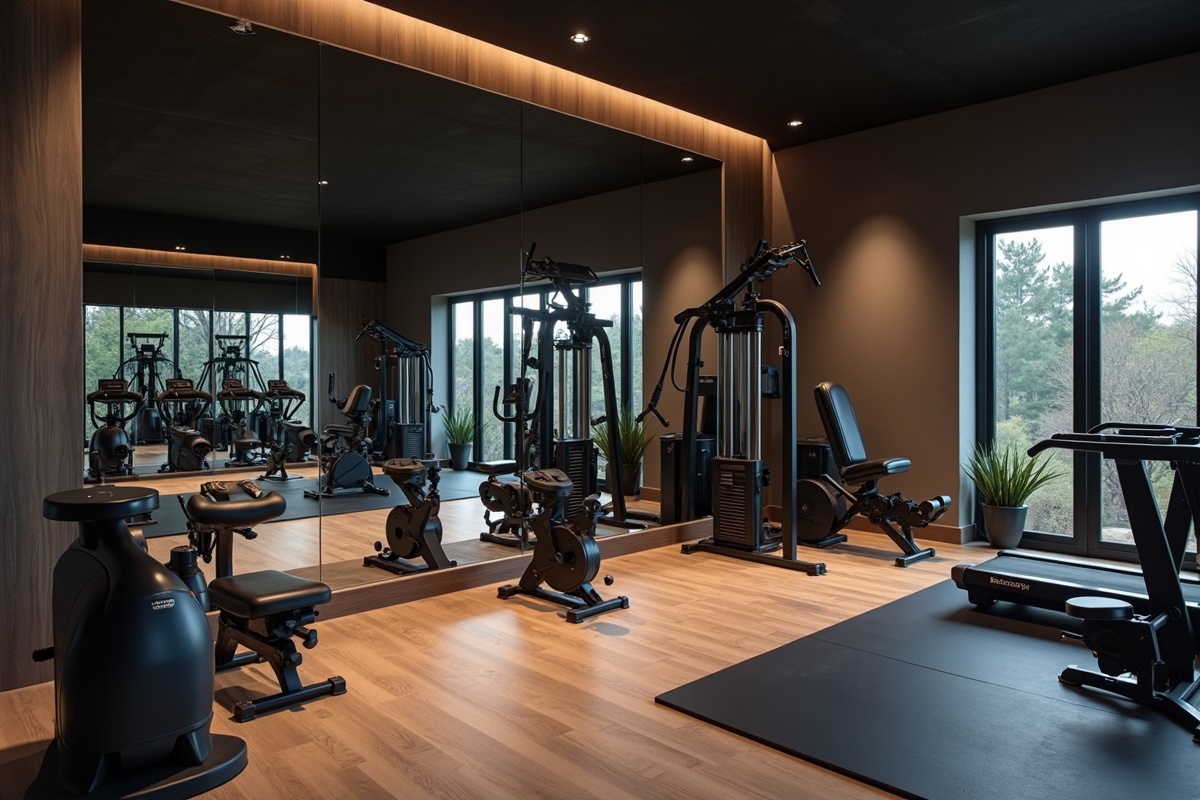
Dressing rooms and walk-in closets use floor-to-ceiling oversized mirrors for full outfit views. Commercial and retail installations — dance studios, yoga studios, salon and barber shops — often use wall-to-wall oversized glass with J-channel top and bottom for a seamless built-in look.
How Are Extra-Large Mirrors Safely Mounted to Texas Home Walls?
Oversized mirrors cannot be hung with drywall anchors or picture-hanging hardware. The three professional mounting methods used across Texas are stud anchoring with clips, J-channel installation, and mirror mastic (or a combination of all three).
Stud anchoring with clips is the standard for mirrors up to about 75 lbs. Four to eight metal clips are screwed directly into wall studs (never just drywall), with foam tape behind the mirror to prevent vibration rattle. The clips support the weight and prevent the mirror from tipping forward.
J-channel installation uses an aluminum channel screwed into studs along the floor and sometimes the ceiling. The mirror slides into the channel and is locked in place. This is the preferred method for gym walls, dance studios, and full-wall commercial installs.
Mirror mastic with stud anchoring combines clips or channels with adhesive mastic for redundant safety on very large mirrors. Mastic alone is never sufficient for oversized — it's an additional security layer on top of mechanical fastening.
- 1
Wall Inspection and Stud Mapping
We scan the wall for studs, electrical, and plumbing. For anything over 60 inches, studs must be located and confirmed on 16-inch centers. If blocking is missing, we add 2x6 or 2x8 backing. - 2
Template and Dry Fit
A paper or cardboard template of the mirror is taped to the wall to confirm position, check level, and verify clearances around trim and fixtures before any holes are drilled. - 3
Mount Channels or Blocking
J-channels are screwed into studs at the bottom (and top for very large mirrors). For clip-mounted mirrors, clip positions are laid out and anchored into studs. - 4
Apply Mastic and Set Mirror
Mirror mastic is applied in vertical beads on the back of the glass. The mirror is carefully lifted (2-4 people for oversized), set into the channel, and pressed against the wall. - 5
Final Clips and Seal
Top clips lock the mirror in place. Any visible edges are sealed with clear silicone if the install is in a wet area. Protective film is removed and the mirror face is cleaned.
What Does Oversized Wall Mirror Installation Cost in Texas?
Oversized wall mirror installation in Texas typically runs $400-$1,500+ for a professional install, depending on size, mounting method, wall complexity, and whether the mirror is custom-cut. Standard residential mirror installation costs $150-$500 in labor for basic sizes (Angi 2025), but oversized installs require more time, more labor (2-4 installers vs. 1-2 for standard), and sometimes structural reinforcement.
| Mirror Cost (1/4 in.) |
| Installation Labor |
| Structural Prep (if needed) |
| Typical Total Project |
Commercial oversized installs — dance studios, gym chains, retail — are typically quoted per linear foot of wall coverage. Texas commercial mirror installs generally run $22-$45 per square foot installed for standard gym/studio mirror.
What Edge Styles Work Best for Large Wall Mirrors?
Oversized mirrors are fabricated with one of four edge finishes, each giving a different visual weight and safety profile.
Polished flat edge is the clean modern choice — edges are ground smooth and polished. Works for nearly any style and is the most common in Texas residential installs.
Beveled edge adds a 1-inch chamfered bevel that catches light around the perimeter. Gives the mirror a traditional or transitional feel and adds perceived thickness. Works well in formal entryways and dining rooms.
Seamed edge is the unpolished safety-ground finish typically used when the mirror is framed or inserted into J-channel (edge is hidden). Lowest cost; not used when edges are exposed.
Custom edge treatments — ogee, pencil, double-bevel — are available for high-end installations where the mirror edge is a design feature itself.
Oversized Mirror Safety: Anti-Tip and Secure Mounting Systems
For oversized mirrors mounted in family homes, gyms, or commercial spaces, safety goes beyond just holding the mirror on the wall. Anti-tip mounting ensures the mirror cannot lean away from the wall even if impacted — critical in home gyms where equipment can hit the mirror, dance studios where dancers move close to walls, and households with children.
Professional oversized installs always include:
- Minimum 4 clips for mirrors 48-72 inches, 6+ clips for 72-96 inches, continuous J-channel for 96+ inches
- Top anti-tip clips or adhesive bond so the top cannot tip forward
- Mirror mastic backing that creates redundant adhesion
- Tempered or laminated mirror for oversized installs in high-impact areas (required by some commercial codes)
- Safety-backed mirror film that holds shards in place if the mirror is ever broken — mandatory in commercial gyms and studios
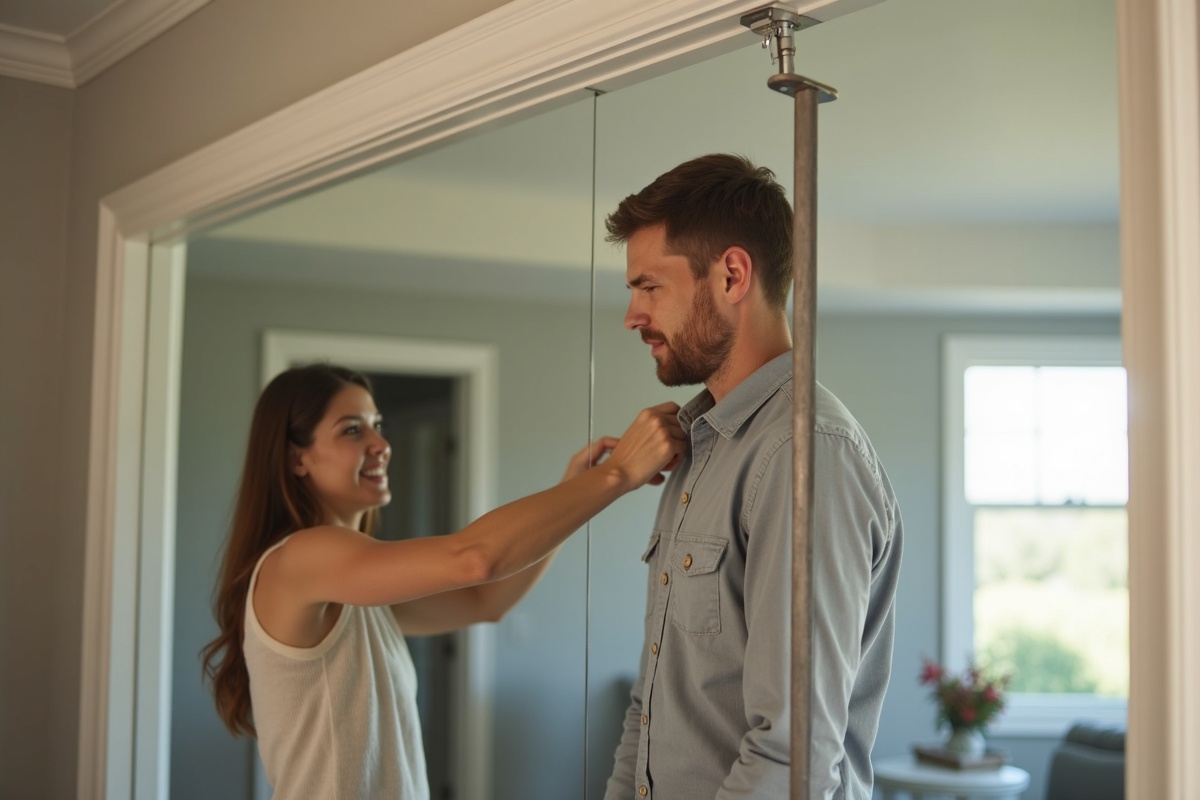
Design Ideas: Using Large Mirrors in Texas Homes and Businesses
Oversized mirrors are more than a practical feature — they're one of the highest ROI visual upgrades in a Texas home. A few patterns seen across DFW luxury builds:
- Over-mantel mirrors that extend to the ceiling make 10-12 ft great rooms feel double-height
- Full dining-room wall mirrors placed opposite a window reflect chandeliers and landscape views
- Entry foyer full-height mirrors beside the front door serve as a last-check station and bounce daylight deeper into the home
- Home gym wall-to-wall installs turn a spare bedroom into a functional training space
- Dressing-room floor-to-ceiling mirrors double the visual size of walk-in closets in Highland Park and Southlake master suites
- Home office accent walls use an oversized mirror opposite a window to brighten what's typically the darkest room in a Texas home
Frequently Asked Questions
How heavy is an oversized mirror and can my wall support it?
At 1/4-inch thickness, mirrors weigh about 1.6 lbs per square foot. A 72 x 96 inch mirror is about 77 lbs; a full-wall 10 x 8 ft installation can exceed 120 lbs. Standard wood-stud walls can support these weights if anchored into studs or added blocking — never drywall alone. We inspect every wall before quoting.
What is the maximum size mirror that can be safely wall-mounted?
Single-piece mirrors are typically fabricated up to 84 x 130 inches. Larger wall coverage is achieved by installing multiple seamlessly butted panels. Wall-mounted installations up to 10 x 20 ft are routine in commercial dance studios and gyms with proper stud backing and J-channel.
Do you need a permit to install a very large mirror in Texas?
Residential oversized mirror installs generally do not require a Texas building permit because they are not structural and not electrical. Commercial installs may require permits depending on the city — Dallas and Fort Worth inspect commercial glass installs above certain thresholds. We handle any required permitting.
Can oversized mirrors be installed on exterior-facing walls?
Yes, with attention to temperature and moisture. Exterior walls in Texas can have significant temperature differentials, which can stress adhesive backings. We use vapor-barrier backing and mastic rated for temperature swings. Direct sunlight exposure should be checked — extended direct sun can degrade the silvered backing over time.
How do oversized mirrors affect home staging and resale value?
Real estate staging data consistently shows oversized mirrors improve perceived room size — a major factor in listing appeal. For Texas homes in the $500k+ range, professionally installed oversized mirrors are considered a positive permanent fixture that transfers with the home. They should not reduce appraised value and often enhance showings.
Also see our full-wall mirror installation guide and our large frameless bathroom mirror installation article for more oversized mirror applications.
Need a large or oversized mirror installed anywhere in the DFW metro or across Texas? Infinity Glass & Glazing fabricates and installs oversized wall mirrors for residential, commercial, and fitness applications — with structural mounting, safety film, and custom edges. Contact us for an on-site measurement and installation quote.
Related reading: