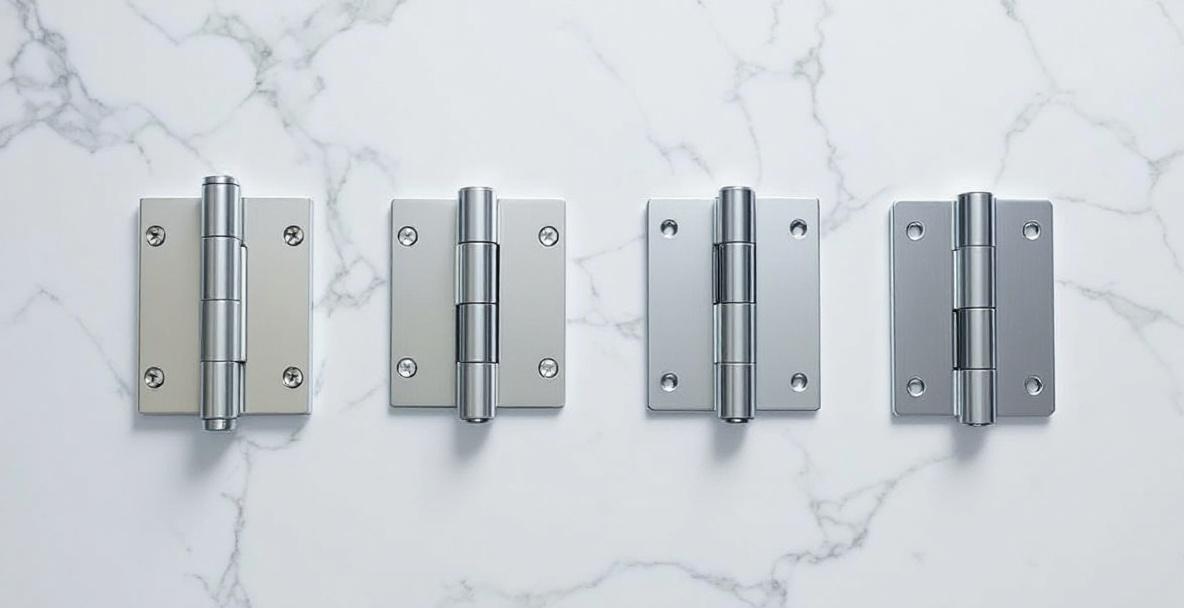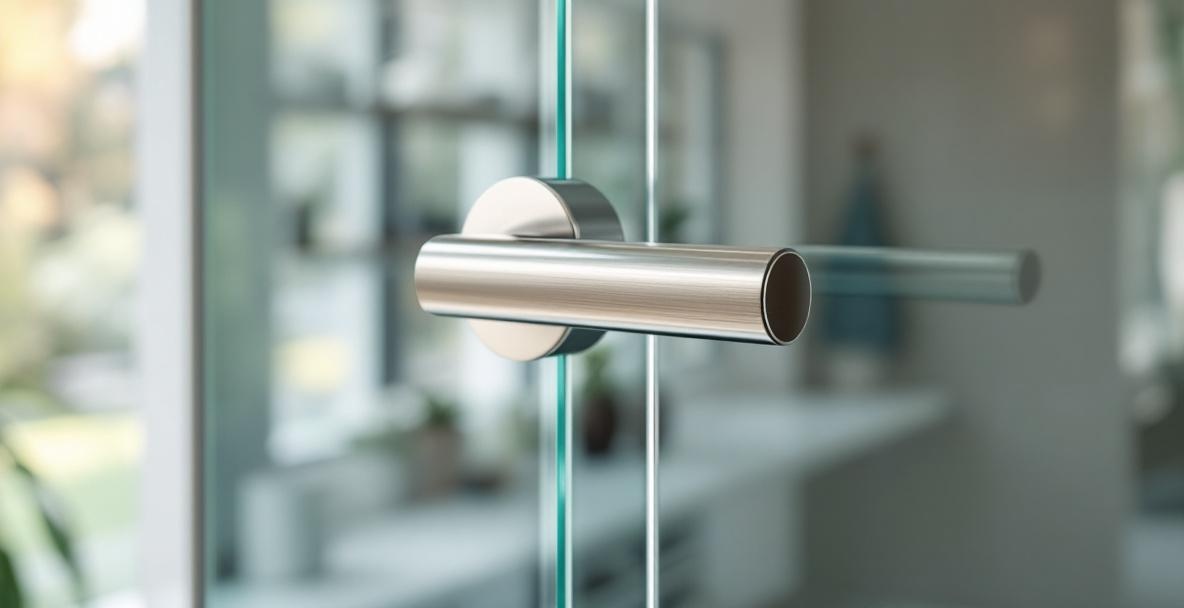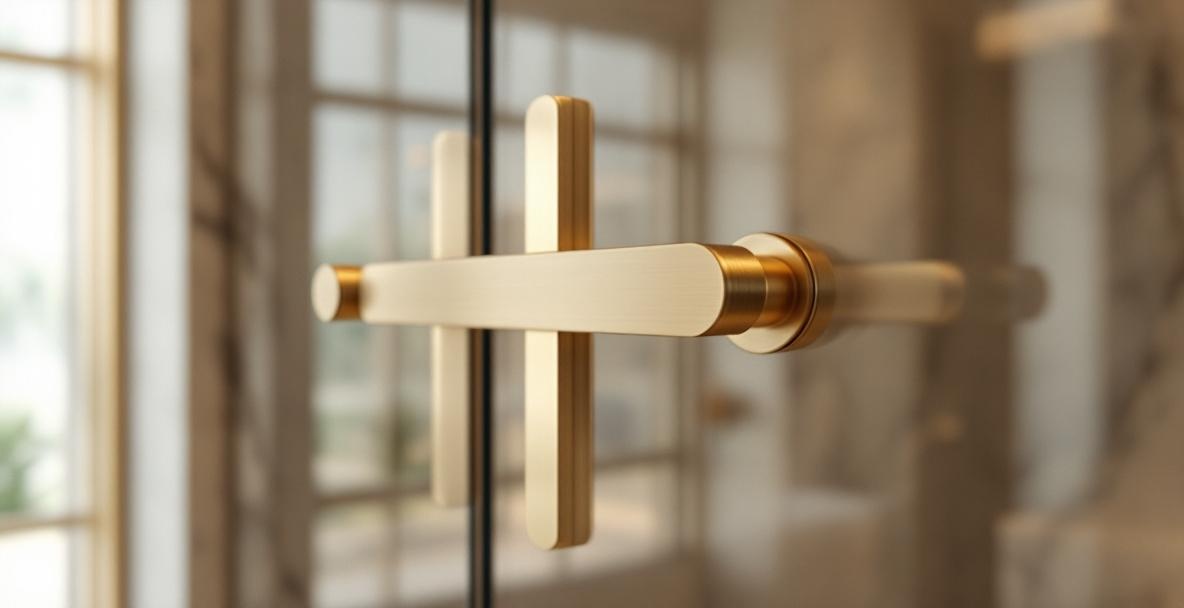
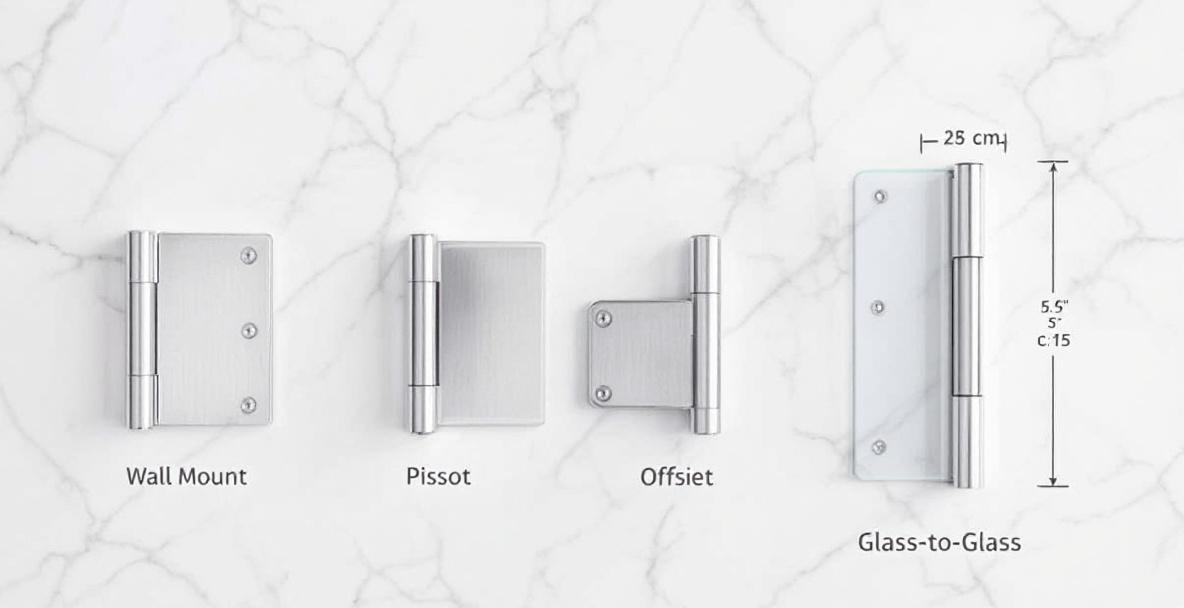
Frameless shower doors use four main hinge types: wall-mount, pivot, glass-to-glass, and offset wall-mount. Wall-mount hinges are the most common — they attach the door edge directly to a wall or tile. Pivot hinges allow 180-degree swing from a top-bottom pivot point. Glass-to-glass hinges connect a door to a fixed panel when there's no adjacent wall. Offset hinges are used when standard wall-mount creates too narrow an opening.
Hinge selection is one of the most technical parts of a frameless shower project. The right hinge depends on your shower configuration (is there a wall on each side, or is one side a fixed glass panel?), door swing direction, glass thickness, and whether you need ADA-compliant clearance. Getting this wrong doesn't just affect aesthetics — it affects the structural integrity and swing function of the door.
This guide explains each hinge type, when it's used, and how to identify the right choice for your specific shower layout.
What Are the Main Types of Frameless Shower Door Hinges?
The four primary frameless shower hinge types are: wall-mount (most common), pivot, glass-to-glass, and offset wall-mount. Each type solves a specific installation geometry. Most residential showers use wall-mount hinges; glass-to-glass hinges are used when one side of the door is a fixed glass panel rather than a wall.
Wall-mount hinge (wall-to-glass): Attaches from a wall or tile surface to the edge of the glass door. One mounting plate goes on the wall side (through tile into the wall stud or anchor), the other plate clamps the glass door edge. The most common hinge type in residential frameless shower installations.
Pivot hinge: Instead of attaching at the door edge, a pivot hinge attaches at the top and bottom of the door, with the pivot point offset inward from the door face. The door swings around this vertical axis. Pivot hinges allow the door to swing 180 degrees (in, out, or both) from the same pivot point.
Glass-to-glass hinge: Attaches one glass panel (the door) to another glass panel (a fixed side panel). Used in corner showers where the door is positioned alongside a fixed glass panel rather than a solid wall. The hinge penetrates both glass panels at corresponding hole positions.
Offset wall-mount hinge: Similar to standard wall-mount but with a spacer that moves the glass door away from the wall, widening the door opening. Used when ADA compliance requires a wider clear opening, or when the door needs to clear a towel bar or other obstruction.
180°
typical swing range of pivot shower door hinges — versus 90-120° for wall-mount hinges
When Should You Use a Wall-Mount vs. Pivot Hinge?
Wall-mount hinges are the right choice for most DFW residential shower installations — they're simpler to install, more adjustable after installation, and provide reliable performance for standard shower doors. Pivot hinges are the better choice when the door needs to swing both directions, when architectural design calls for minimal hardware at the door edge, or when a frameless door is installed in a wider opening.
| Installation position |
| Swing direction |
| Adjustment after install |
| Visual profile at edge |
| Cost |
| Best for |
The practical choice for most homeowners: if your shower door is a standard swing-out design in a corner or alcove configuration with a solid wall on at least one side, wall-mount hinges are the straightforward, reliable choice. If you want the door to swing either direction (common in open or wet room designs), or if the architectural aesthetic calls for clean edges with no hardware visible along the glass edge, pivot hinges are the better option.
How Do Glass-to-Glass Hinges Work?
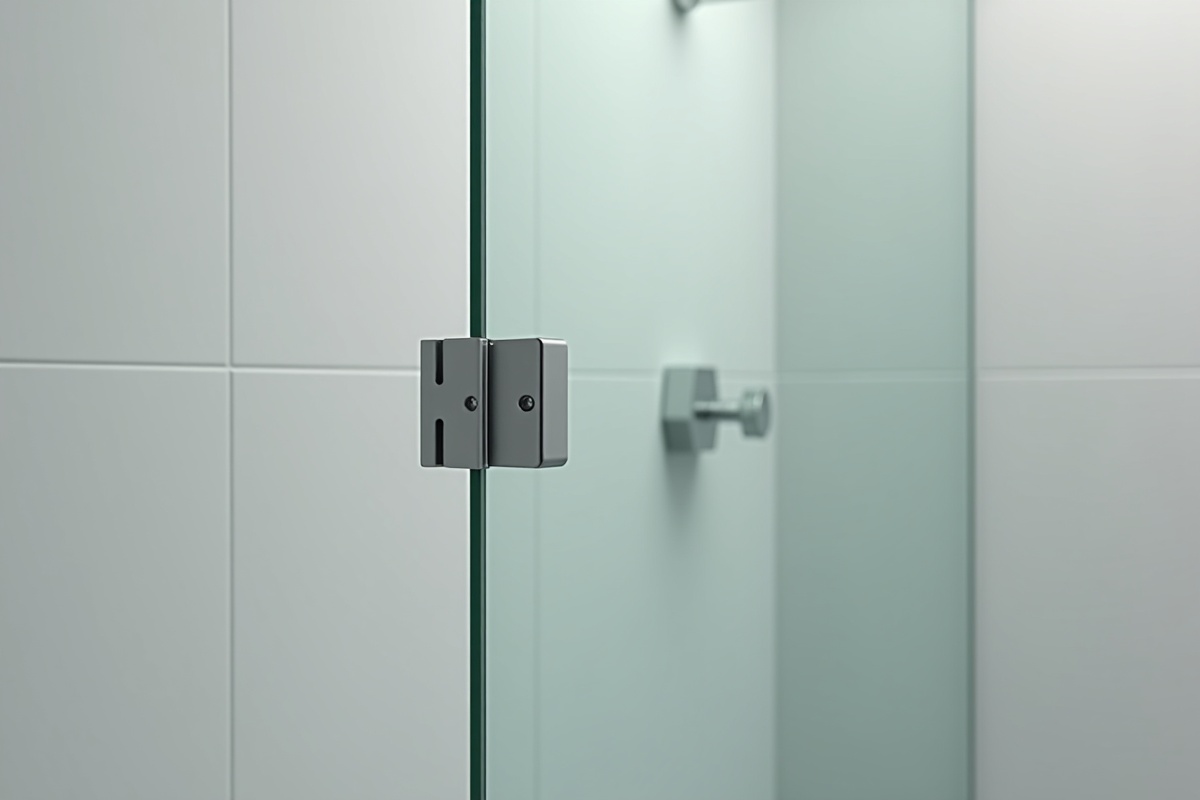
Glass-to-glass hinges connect a door panel to a fixed glass panel by penetrating both pieces of glass at precisely corresponding hole positions. The hinge typically consists of two matching clamp plates that sandwich each glass panel, connected by a hinge knuckle that allows the door to swing. This setup is common in corner showers where the door opening is flanked by a fixed glass panel on one side rather than a wall.
Glass-to-glass hinge requirements:
Matching hole positions: The holes in the door panel and the fixed panel must be in precisely corresponding positions for the hinge knuckle to sit properly. This requires very accurate measurement and drilling at the fabrication stage.
Glass thickness compatibility: Most glass-to-glass hinges are rated for specific glass thickness ranges (common: 3/8-inch, 1/2-inch, or adjustable with shims). Both panels must be within the hinge's rated range.
Panel stability: The fixed panel being used as the hinge anchor must be properly secured at its own perimeter — at the wall on one side, and at the floor or ceiling with appropriate clamps. If the fixed panel moves, the door alignment moves with it.
Swing clearance: In a corner shower, the glass-to-glass hinge positions the door 3/8 to 1/2 inch away from the fixed panel (the hinge knuckle width). This means the door opening is slightly narrower than the full width between the fixed panel and the opposite wall.
What Are Offset Hinges and When Are They Needed?
Offset wall-mount hinges add a spacer between the wall mounting plate and the hinge knuckle, pushing the glass door away from the wall surface. Standard wall-mount hinges position the door edge close to the wall. An offset hinge moves the door outward, widening the clear opening width — useful for ADA compliance requirements or when the door needs to clear a towel bar, shelf, or wall obstruction.
According to Glass Simple's installation guides, offset wall-to-glass hinges widen the doorway by approximately 2 inches compared to standard wall-mount hinges. In ADA-compliant applications (requiring a 32-36 inch clear opening), this can make the difference between a compliant and non-compliant installation without changing the glass dimensions (NAHB 2025).
Other reasons to use offset hinges:
- The shower entry is adjacent to a deep threshold or curb that would block the door path
- A permanent shower bench or shelf is close to the door swing path
- The wall near the hinge side has a protruding fixture or accessory
For most residential DFW showers without accessibility requirements, standard wall-mount hinges are appropriate. If your shower is being designed for aging-in-place or ADA compliance, consult with your installer about whether the standard hinge position delivers sufficient clear opening width.
What Glass Thickness Is Compatible With Each Hinge Type?
Most frameless shower hinges are available in two configurations: rated for 3/8-inch glass, or for 1/2-inch glass. Some hinges use adjustable jaw systems that accommodate both thicknesses. Verify glass thickness compatibility with every hinge you're considering — using a hinge on glass outside its rated range creates a dangerous point of stress.
Glass thickness compatibility summary:
Wall-mount hinges: Available in 3/8-inch and 1/2-inch configurations. Quality manufacturers like CRL and FHC offer complete matching sets for each thickness (Cardinal Glass 2025). Some adjustable models handle both.
Pivot hinges: Pivot points are typically designed for one glass thickness. The pivot mount at the header (top) and the floor mount at the bottom carry the full weight of the door — the rated capacity must exceed the actual glass weight.
Glass-to-glass hinges: Available in 3/8-inch and 1/2-inch configurations. The holes in both panels must be drilled to the correct diameter for the hinge barrel — this is critical to do correctly in fabrication.
Important: Do not mix glass thicknesses in the same enclosure unless the configuration explicitly calls for it (e.g., a fixed panel in one thickness and a door in another — which is sometimes done but requires careful hardware specification). All hardware must be matched to the actual glass thickness installed.
Infinity Glass & Glazing's team specifies and installs the correct hinge type for every shower configuration — wall-mount, pivot, glass-to-glass, and offset — using CRL and FHC hardware throughout. We serve Corinth, Dallas, Fort Worth, Denton, Frisco, McKinney, Lewisville, and the full DFW metroplex. Get a free estimate or call (940) 279-1197.
What is the most common hinge type for frameless shower doors?
Wall-mount (wall-to-glass) hinges are the most common hinge type for residential frameless shower doors. They attach to the wall surface on one side and clamp the glass door edge on the other. They're reliable, adjustable after installation, and work for the vast majority of standard shower configurations where at least one side of the door opening has a solid wall.
Can shower door hinges be adjusted after installation?
Most wall-mount hinges have some adjustability — typically 3-5mm of vertical and horizontal adjustment through slotted mounting holes or adjustment screws. This allows fine-tuning after installation to ensure the door swings freely and seals correctly. Pivot hinges have less adjustment range since the pivot point is fixed at the top and bottom. Glass-to-glass hinges are not adjustable once installed.
How many hinges does a frameless shower door need?
Standard frameless doors up to 36 inches wide and 80 inches tall typically use two hinges. Taller doors (over 80 inches) or wider doors (over 36 inches) in 1/2-inch glass benefit from three hinges for proper load distribution. The hinge manufacturer publishes load ratings that determine the minimum number of hinges for a given glass weight.
Do glass-to-glass hinges require special glass preparation?
Yes. Glass-to-glass hinges require precision-drilled holes in both the door panel and the fixed panel at corresponding positions. These holes must be drilled before tempering — after tempering, the glass cannot be drilled without shattering (CPSC 2025). The hole diameter must match the hinge barrel diameter exactly. This is one reason why glass-to-glass hinge applications need a company that specifies the hole positions precisely on the fabrication order — there is no correcting them later.
Related reading: frameless shower door hardware and our hinged frameless shower doors.
Related reading:
- sliding vs. hinged shower doors