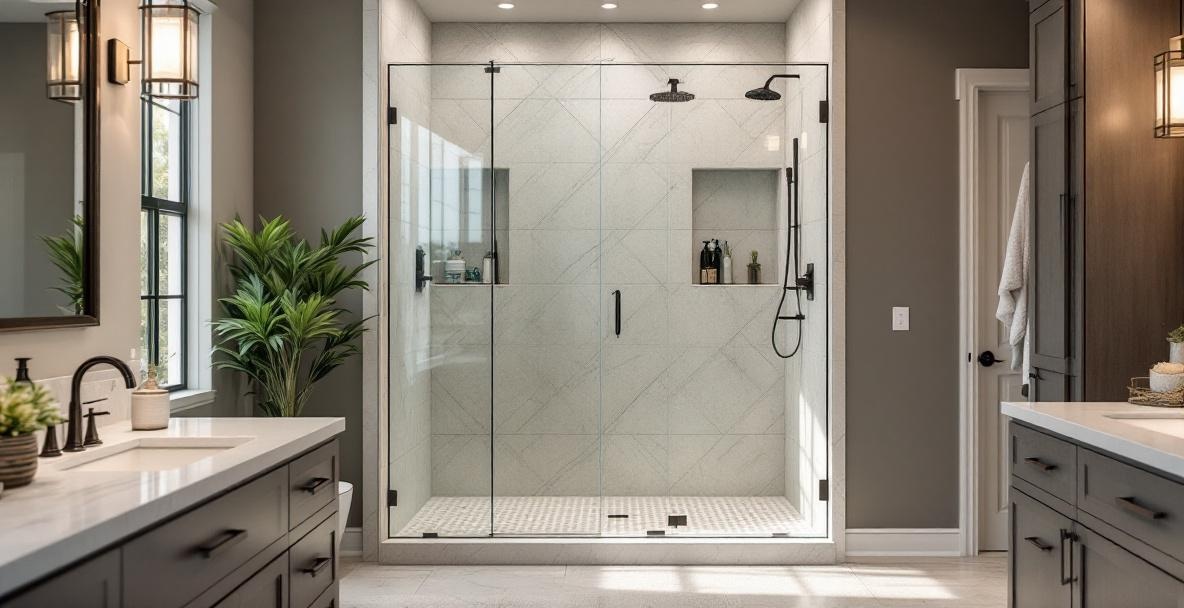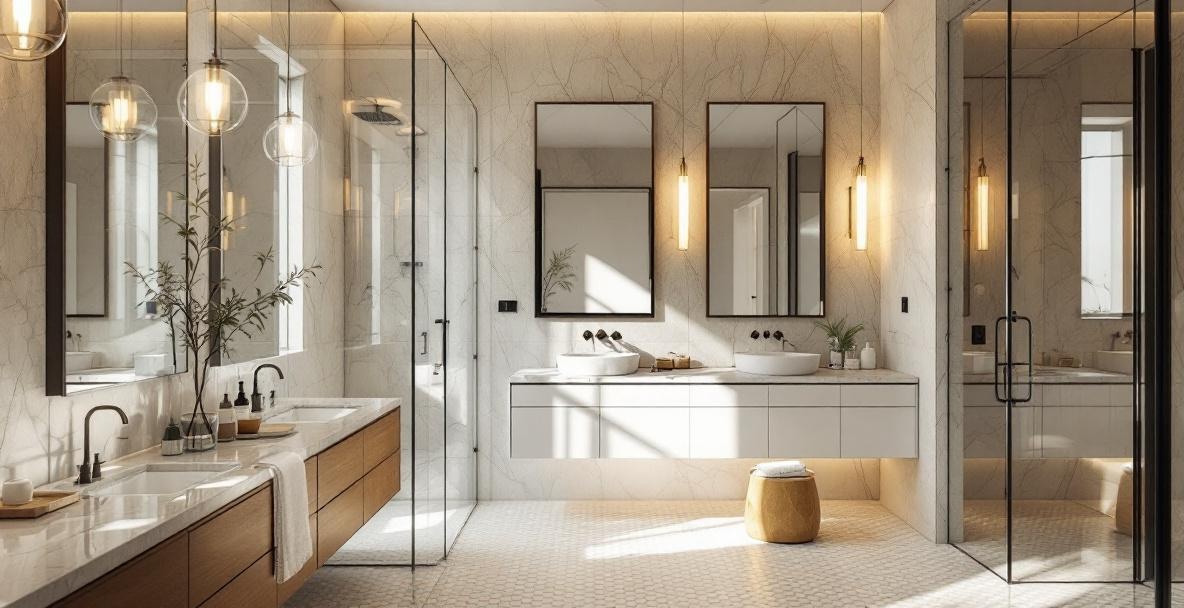
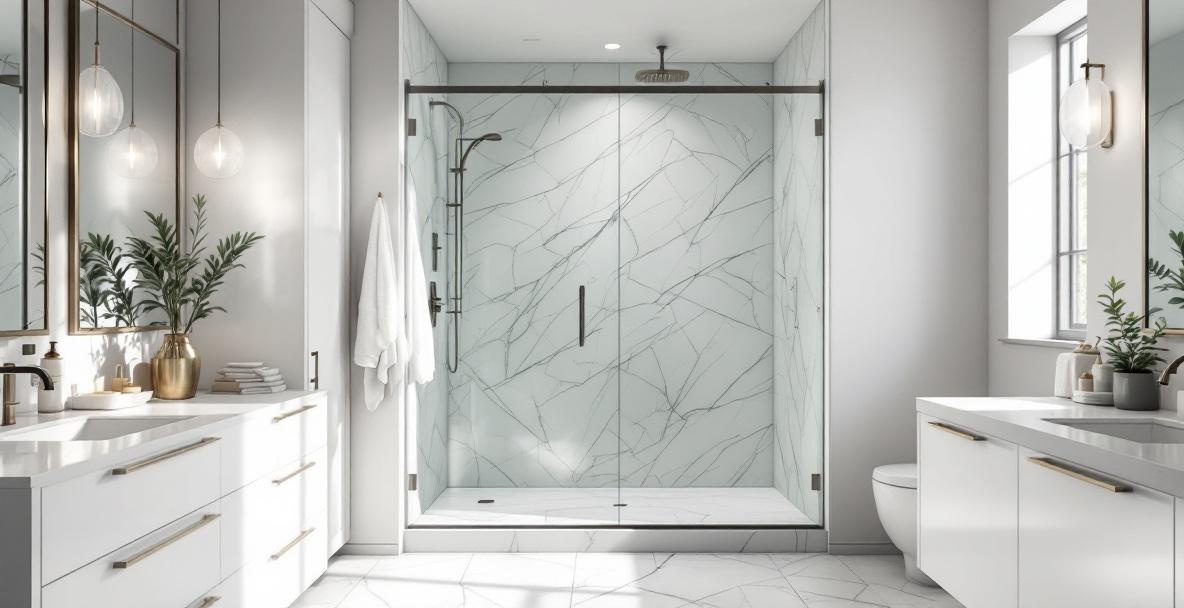
Truly seamless glass shower corners require three things: mitered glass joints, minimal low-profile hardware, and the right glass type. Most frameless showers still show visible seams at corners -- a silicone line, a metal channel, or a gap where two panels meet. According to a Fixr/EIN Presswire survey (2025), 45% of design experts predict walk-in showers will dominate bathroom renovations through 2025 and beyond, and homeowners are increasingly demanding that these showers look like seamless glass enclosures rather than assembled panel systems.
The word "frameless" gets used loosely in the shower industry. Many so-called frameless enclosures still have visible hardware at every connection point -- chunky U-channels along the base, bulky hinges on the door, and obvious silicone lines at every corner. The glass might not have a frame, but it doesn't look seamless either.
Getting a genuinely seamless look requires understanding how corners are joined, which hardware exists that minimizes visual clutter, and how glass selection affects the overall appearance. This guide covers all three, with specific attention to what's available in the North Texas market.
[INTERNAL-LINK: mitered corner fundamentals --> /blog/mitered-glass-corners-shower]
TL;DR: A seamless glass shower corner uses mitered joints (45-degree beveled edges) instead of butt joints, paired with low-profile point-fix hardware instead of bulky channels. Low-iron glass enhances the effect by eliminating the green tint visible at edges. Walk-in showers are predicted to dominate 2025 renovations by 45% of experts (Fixr/EIN, 2025), and seamless corners are the premium detail that separates custom enclosures from stock installations.
What Makes a Shower Corner Truly Seamless?
A truly seamless shower corner has no visible gap, silicone line, or metal channel at the point where two glass panels meet. According to Fixr/EIN Presswire (2025), 45% of industry experts rank walk-in showers as the dominant bathroom trend, and the seamless corner detail is what elevates a walk-in from basic to luxury.
Three elements determine whether a corner reads as seamless or assembled:
The Joint Type
This is the biggest factor. A butt joint -- where one flat glass edge meets another -- always produces a visible line. Even with perfect silicone work, you see where one panel ends and the next begins. A mitered joint, where each edge is cut at 45 degrees, eliminates that visible gap entirely.
The Hardware
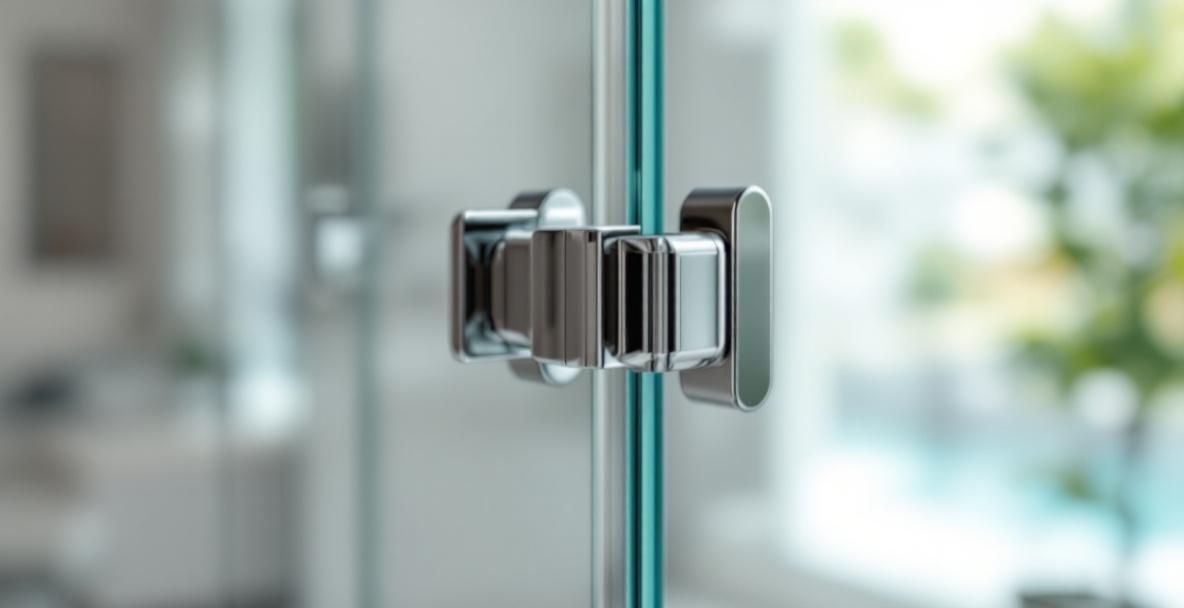
Every glass panel needs to be secured to something -- the wall, the floor, or another panel. The type of hardware used determines how much metal is visible. A large U-channel along the base is functional but visually heavy. A point-fix clamp at discrete locations is nearly invisible.
The Glass Itself
Standard tempered glass has a slight green tint, most visible at the edges. At a corner joint, two green-tinted edges meet and the tint doubles. Low-iron glass eliminates this tint, making the corner joint blend rather than stand out.
45%
of design experts predict walk-in showers will dominate bathroom renovations through 2025 and beyond
All three elements have to work together. A mitered joint with bulky hardware defeats the purpose. Low-iron glass with a butt joint still shows a seam. The seamless look is a system, not a single feature.
Why Do Standard Frameless Showers Still Show Seams?
Most frameless showers use butt joints and standard U-channel hardware because they're cheaper and faster to fabricate. Frameless glass enclosures cost $35 to $70 per square foot (Angi, 2025), and at the lower end of that range, companies cut costs by using standard edge finishes and stock hardware that create visible seams at every connection point.
Let's be honest about why seamless corners aren't the default. It comes down to three factors:
Cost and tooling. Mitered edges require CNC equipment that most glass shops don't own. Standard flat-polish equipment handles butt joints just fine at a fraction of the cost.
Speed. Butt joints are faster to fabricate and less risky. A butt joint corner can be measured, cut, and polished in routine production time. A mitered corner adds fabrication steps, precision requirements, and breakage risk.
Customer awareness. Most homeowners don't know mitered corners exist. They compare frameless quotes and assume all frameless enclosures look the same. Companies have little incentive to offer a more expensive option that customers aren't asking for.
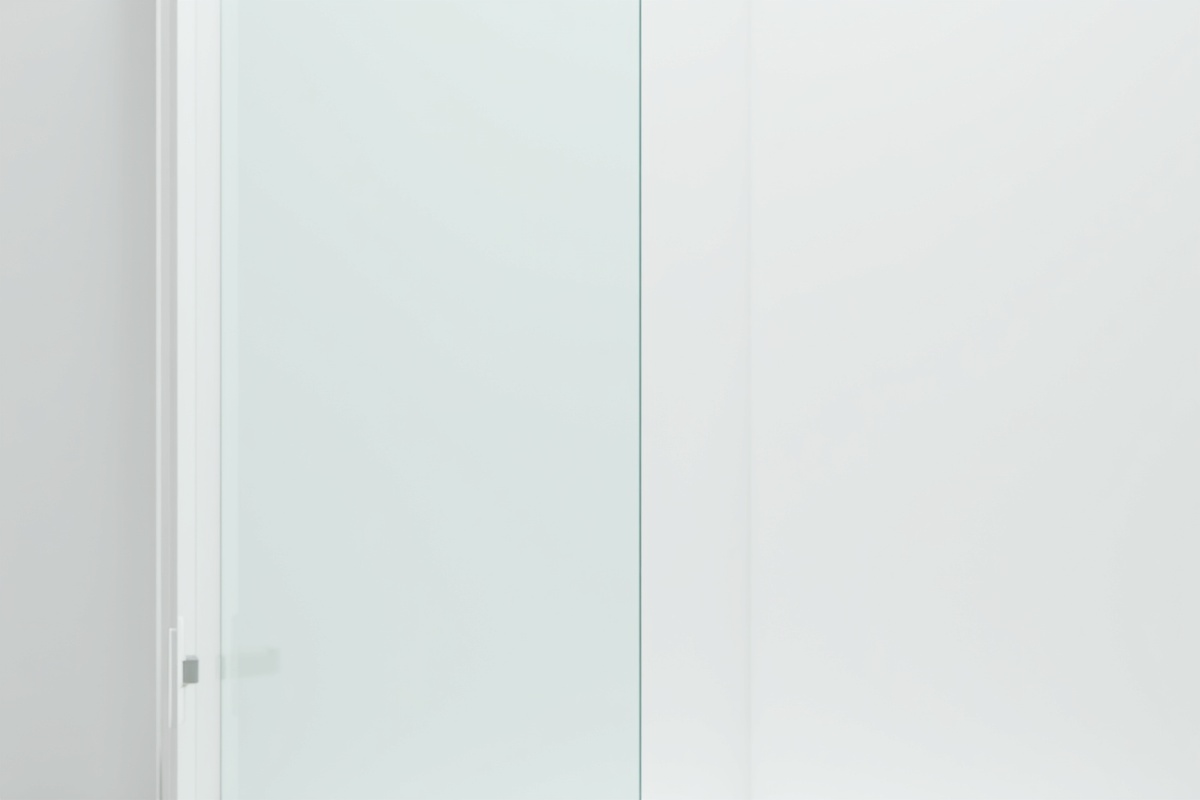
The result is that most frameless enclosures in DFW look similar: clean glass panels, yes, but with visible silicone lines at corners, chunky hardware at mounting points, and a green-tinted edge color that draws the eye to every seam.
[UNIQUE INSIGHT] We've found that the gap between "frameless" and "seamless" is where most of the design value lives. Going frameless is a good decision. Going seamless -- with mitered joints, low-profile hardware, and proper glass selection -- is the decision that actually transforms a bathroom.
How Does Mitered Glass Create an Invisible Joint?
Mitered glass creates an invisible joint by cutting each panel's edge at a precise 45-degree angle before tempering. The two beveled surfaces nest together at a 90-degree corner, producing a hairline seam with no gap for silicone to fill on the visible surface. This technique creates a rigid joint that increases overall enclosure strength (IDEAL Shower Doors), while eliminating the visual seam that defines standard corner treatments.
The mitering process happens during fabrication, before the glass is tempered. Here's the sequence:
The glass is cut to size, then the edge that will form the corner joint is ground at exactly 45 degrees using a CNC edging machine. The angle must be consistent across the full length of the panel -- which might be 72, 80, or even 96 inches. Any deviation from 45 degrees creates a visible gap when the panels are brought together.
After mitering, the glass is tempered. This is critical because tempered glass cannot be cut or modified after tempering. The miter must be perfect before the tempering process, or the panel is scrapped.
During installation, the two mitered edges are bonded with structural silicone applied behind the joint. The silicone provides adhesion but isn't visible from the exterior. What you see is glass touching glass -- a clean line that looks like the glass wraps around the corner.
[PERSONAL EXPERIENCE] We've been fabricating mitered corners for over three decades. The most common question we get from homeowners who visit our shop is: "Why didn't the last company I talked to mention this?" The answer is simple -- they probably can't do it.
What Hardware Options Minimize Visual Clutter?
Low-profile hardware like point-fix clamps, wall-mounted clips, and pivot hinges reduce visible metal by 60-70% compared to traditional U-channel systems. Glass enclosure costs range from $35 to $70 per square foot for frameless installations (Angi, 2025), and hardware selection within that range determines whether the enclosure looks minimal or industrial.
Hardware falls into two categories: structural (what holds the glass in place) and functional (what lets doors open and close). Both affect the seamless look.
Structural Hardware Options
U-channels run along the bottom edge of glass panels and sometimes up the sides where glass meets the wall. They're the most common mounting method because they're forgiving of minor measurement errors. But they're visually heavy -- a continuous strip of metal along every mounted edge.
Point-fix clamps mount at discrete locations -- typically two to four points per panel. Each clamp is small (about the size of a coin) and holds the glass securely without a continuous channel. The visual result is dramatically cleaner.
Wall-mount clips function similarly to point-fix clamps but are designed for glass-to-wall connections. They're nearly invisible once installed because most of the clip sits behind the glass.
Functional Hardware Options
Standard hinges are visible on both sides of the glass. Pivot hinges mount at the top and bottom of the door, hiding most of the hardware above and below the visible glass area. Continuous hinges run the full height of the door but are extremely slim.
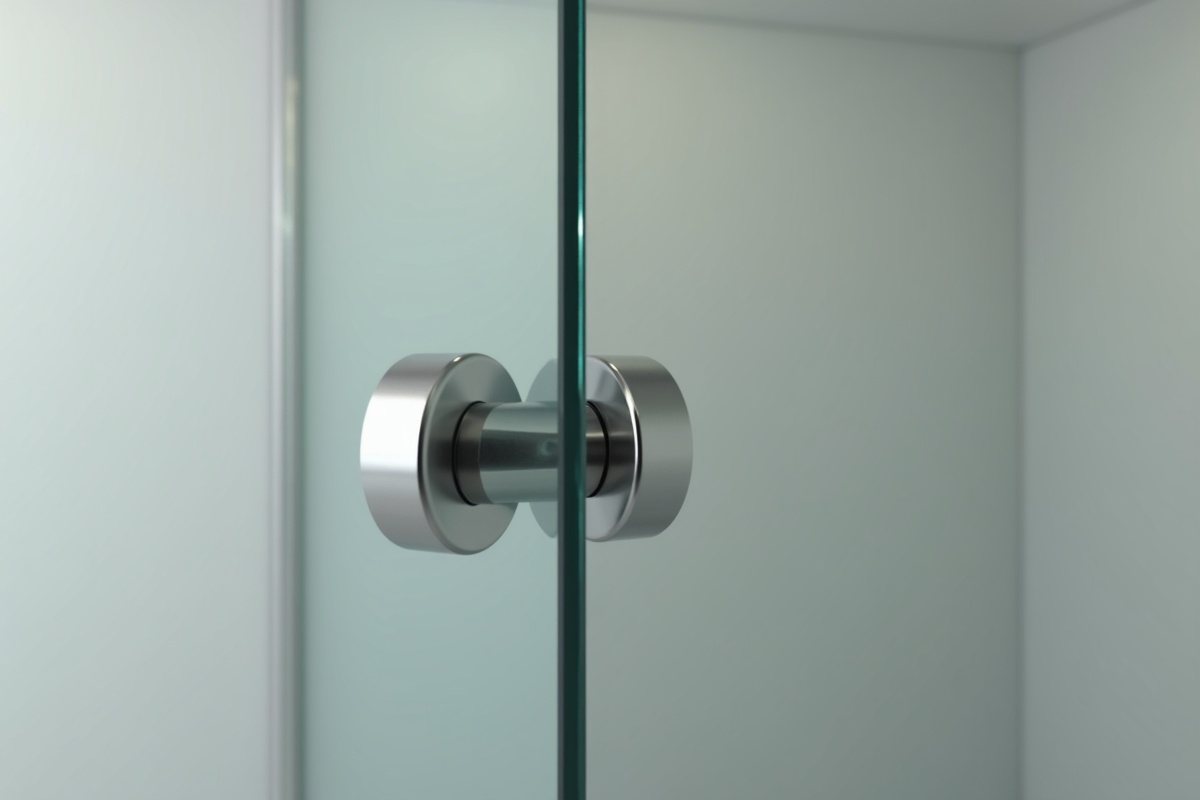
For the most seamless look, combine mitered corners with point-fix clamps and pivot hinges. The total visible hardware is reduced to a few small metal points instead of continuous channels and bulky hinge plates.
Which Glass Types Work Best for Seamless Designs?
Low-iron glass (also called ultra-clear or Starphire) is the best choice for seamless shower designs because it eliminates the green tint that standard glass shows at edges and corners. Standard tempered glass has a greenish hue caused by iron content, and this tint is most visible at thick edges and corner joints -- exactly where you want the glass to be invisible.
There are three glass options to consider for seamless corners:
Standard clear tempered glass is the default in most frameless installations. It's genuinely clear when you look through it, but edges and thick sections show a noticeable green tint. At a mitered corner, this tint is visible and draws attention to the joint.
Low-iron glass (brands like PPG Starphire or Guardian UltraClear) removes the iron oxide that causes the green tint. The result is glass that's crystal-clear at every angle, including edges and corners. It costs 15-25% more than standard clear but makes a meaningful visual difference on seamless designs.
Frosted or acid-etched glass obscures the view through the panels. It hides the corner joint effectively but also eliminates the open, airy feeling that's usually the reason for choosing frameless in the first place.
For a truly seamless corner, low-iron glass paired with mitered joints is the gold standard. The corner becomes virtually invisible -- no gap, no silicone line, no green tint drawing your eye to the seam.
$35-$70
per square foot for frameless glass enclosures, with low-iron glass adding 15-25% to the per-panel cost (Angi, 2025)
[INTERNAL-LINK: glass thickness and type details --> /blog/premium-frameless-shower-enclosure]
How Much Does a Seamless Glass Shower Cost in North Texas?
A fully seamless glass shower enclosure in North Texas -- with mitered corners, low-profile hardware, and quality glass -- runs $4,500 to $12,000+ installed depending on size, glass type, and hardware finish. According to Angi (2025), frameless glass enclosures cost $35 to $70 per square foot as a baseline, with seamless upgrades adding 15-25% to the total.
Here's how the cost builds up from a standard frameless enclosure to a fully seamless one:
Base frameless enclosure (butt joints, U-channel, standard glass): $3,500 to $7,000
Add mitered corners: +$200 to $600 (depending on number of corners)
Upgrade to low-profile hardware: +$300 to $800 (point-fix clamps and pivot hinges cost more than channels and standard hinges)
Upgrade to low-iron glass: +15-25% of glass cost
Total for fully seamless: $4,500 to $12,000+
DFW costs tend to run 10-15% above the Texas state average due to demand and the concentration of high-end remodeling in communities like Southlake, Highland Park, and University Park. But the investment is proportional -- homes in these areas benefit most from premium bathroom details at resale.
[INTERNAL-LINK: DFW luxury shower pricing --> /blog/luxury-shower-door-installation-dallas]
Ready for a Seamless Shower in North Texas?
The difference between a frameless shower and a seamless shower is three specific choices: mitered corners instead of butt joints, low-profile hardware instead of channels, and the right glass for your design goals. These aren't luxury extras -- they're craftsmanship decisions.
Infinity Glass & Glazing fabricates mitered glass corners in-house at our Corinth facility. We've been doing it for over 30 years. Schedule a free in-home consultation to see what a truly seamless enclosure looks like in your bathroom.
Can you get seamless corners with standard frameless hardware?
Partially. Mitered corners create a seamless glass-to-glass joint regardless of hardware. But if you pair mitered corners with bulky U-channels and oversized hinges, the overall enclosure still looks assembled. For the full seamless effect, combine mitered joints with low-profile point-fix clamps and pivot hinges.
Does low-iron glass make shower corners more seamless?
Yes. Standard glass has a green tint from iron oxide, most visible at edges and corners. Low-iron glass eliminates this tint, making corner joints nearly invisible. It costs 15-25% more per panel but makes a noticeable difference on enclosures where the corner is a focal point.
How do you clean seamless glass shower corners?
Clean seamless corners the same way you clean the rest of your frameless glass. Squeegee after each use to prevent mineral buildup, and wipe with a non-abrasive glass cleaner weekly. Because mitered joints have less exposed silicone than butt joints, there's actually less sealant to maintain and fewer places for mildew to collect.
What is the minimum glass thickness for a seamless corner design?
3/8-inch tempered glass is the minimum for frameless enclosures and can be mitered for seamless corners. However, 1/2-inch glass produces a more substantial look and creates a wider bonding surface at the miter, resulting in a stronger joint. For the most seamless appearance with maximum structural integrity, 1/2-inch low-iron glass is the preferred choice.
Related reading: mitered glass corners and our frameless shower doors in DFW.