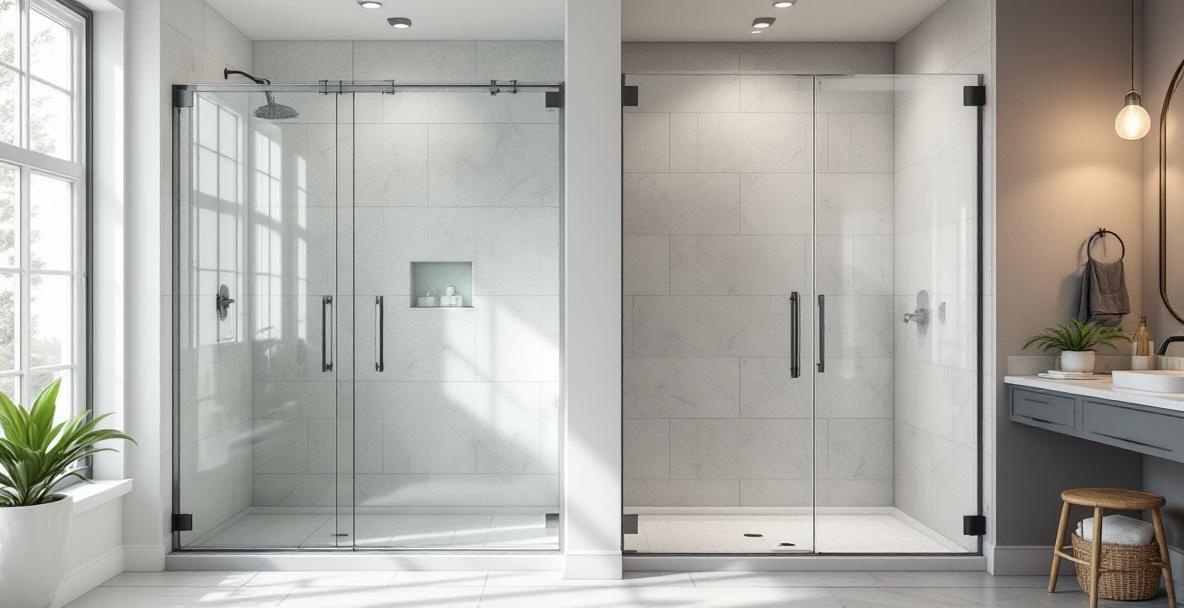
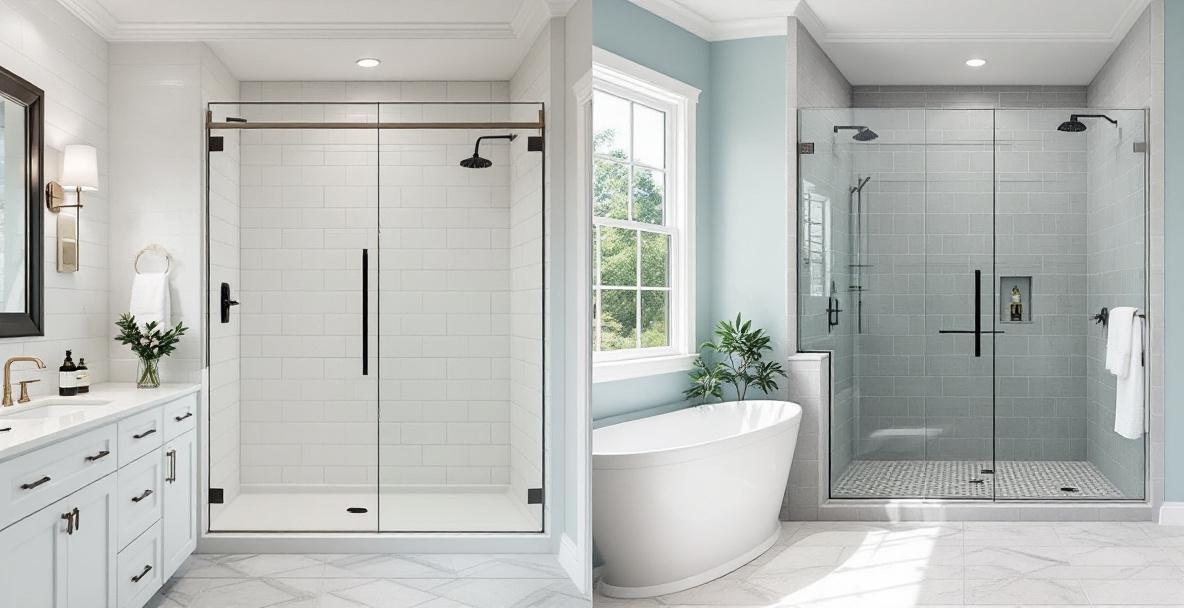
Standard shower doors cost $400–$1,100 installed while custom configurations run $1,400–$3,300+ (Angi 2026). The price gap is real — but so is the gap in fit quality, design flexibility, and long-term value. For DFW bathrooms with non-standard openings, custom isn't a luxury; it's the only option that actually fits.
The choice between a standard shower door and a custom-fabricated one comes down to more than budget. It's a question of whether your shower opening matches the dimensions of a stock product, whether you're optimizing for immediate savings or long-term value, and whether the workarounds required to make a standard door fit are worth the cost you're trying to avoid.
Here's the full comparison, including when standard doors make genuine sense and when custom is the only path to a result you'll be satisfied with.
What Is the Real Cost Difference?
Standard shower doors typically cost $400–$1,100 installed nationally (Angi 2026). Custom-fabricated doors run $1,400–$3,300+ installed for standard configurations — more for complex enclosures. Texas bathroom remodel ROI averages 79.46%, with modern fixtures returning approximately 85% (Fixr 2025). The question is which product delivers that return.
Standard shower doors — what drives the price:
- Pre-cut glass in fixed dimensions (typically 56"–60" wide, 70"–72" tall)
- Hardware in a limited range of finishes (usually chrome, brushed nickel, sometimes matte black)
- Adjustment range of ±1/2" to ±3/4" to accommodate minor wall variations
- Installation is straightforward for openings that fall within spec
Custom shower doors — what drives the price:
- Glass cut to exact measurements taken in your specific shower
- Hardware specified to match your finish selection precisely
- Any thickness, any height, any width — no standard dimension constraints
- Fabrication time of 2–6 weeks from measurement (ACE Decor Bath)
| Installed cost |
| Lead time |
| Fit for non-standard openings |
| Glass thickness options |
| Hardware finish range |
| Height above 72 in. |
| Resale value impact |
79%–85%
average Texas bathroom remodel ROI — modern fixtures including custom glass return at the top of that range (Fixr 2025)
Why Standard Doors Often Need Costly Workarounds
Standard doors are built for standard openings. When your shower doesn't match those dimensions — which is more common than the industry implies — standard doors require modifications that add cost, time, and visual compromises that undermine the savings.
This is the hidden math of "cheaper" standard doors. Consider the scenarios:
Out-of-plumb walls: Most showers in older DFW homes have walls that aren't perfectly plumb — they lean slightly in or out. Standard doors have limited adjustment range. If your wall is out of plumb by more than 1/2", a standard door either won't seal properly or requires additional modification (shimming, trim adjustments, custom seal work) that adds labor cost.
Non-standard opening width: Stock doors come in set widths — typically 56", 58", 60" for sliders or 22", 24", 26", 28", 30" for swinging panels. If your opening is 53" or 32" or any dimension that falls between stock sizes, you're either forcing a gap (which requires a filler strip that looks exactly like what it is) or cutting the door down (which voids most warranties and may compromise the glass integrity).
Unusual ceiling or header height: Standard shower doors top out at 72" or 74" tall. If your shower tile extends to 84" or your ceiling is above standard height, a stock door leaves a gap at the top that requires either a fixed glass panel (which now costs as much as custom) or trim that looks obviously add-on.
The workaround cost reality: Filler strips, shimming, trim modification, custom seals, and additional labor can add $200–$600 to a standard door installation. A job that starts at $700 for a "standard" door can easily finish at $950–$1,300 by the time the opening is actually closed — at which point a custom door at $1,400–$1,600 wasn't as expensive as it seemed.
How Long Does Custom Fabrication Take?
Custom shower door fabrication takes 2–6 weeks from the initial measurement appointment (ACE Decor Bath). The timeline includes measurement, template creation (for complex shapes), glass cutting and tempering, hardware assembly, and scheduling the installation appointment. Plan accordingly — this is not a same-week project.
The fabrication timeline broken down:
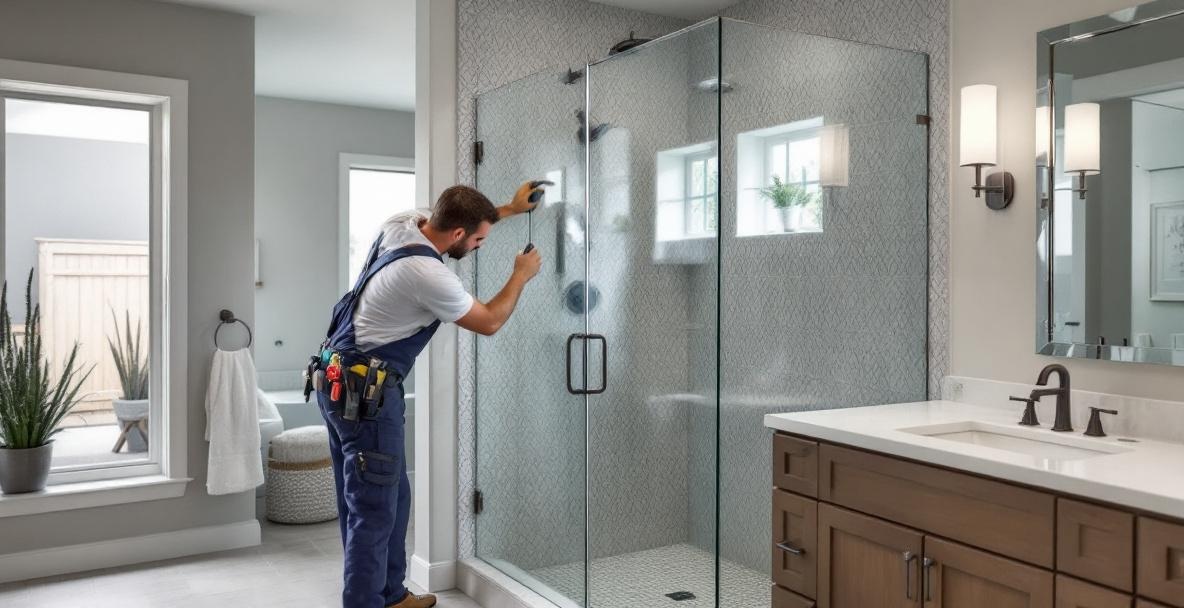
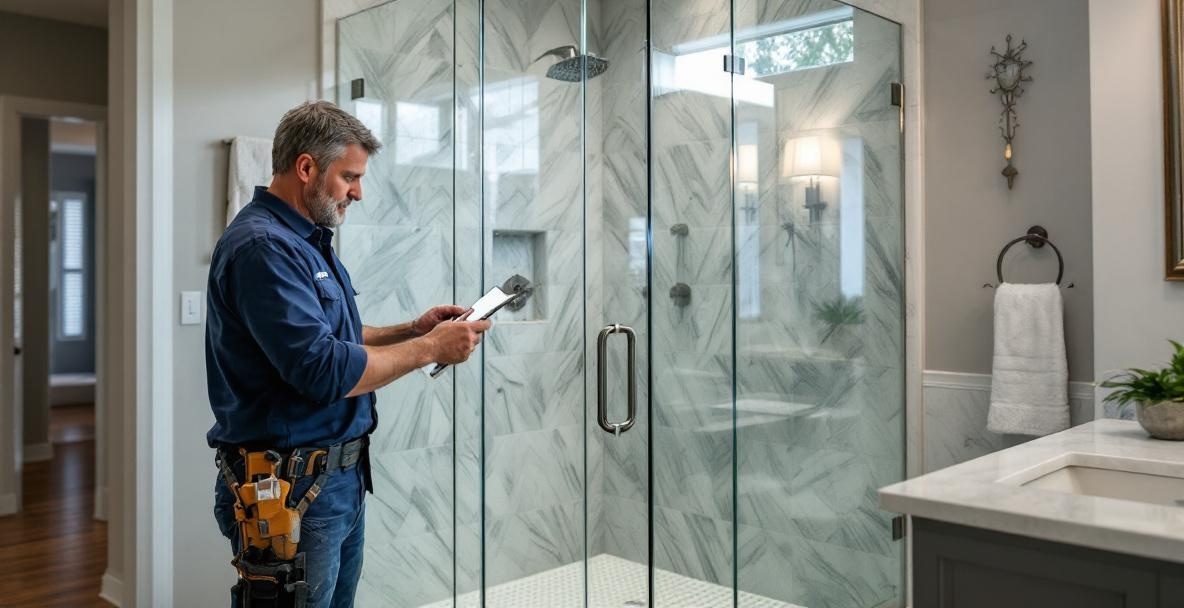
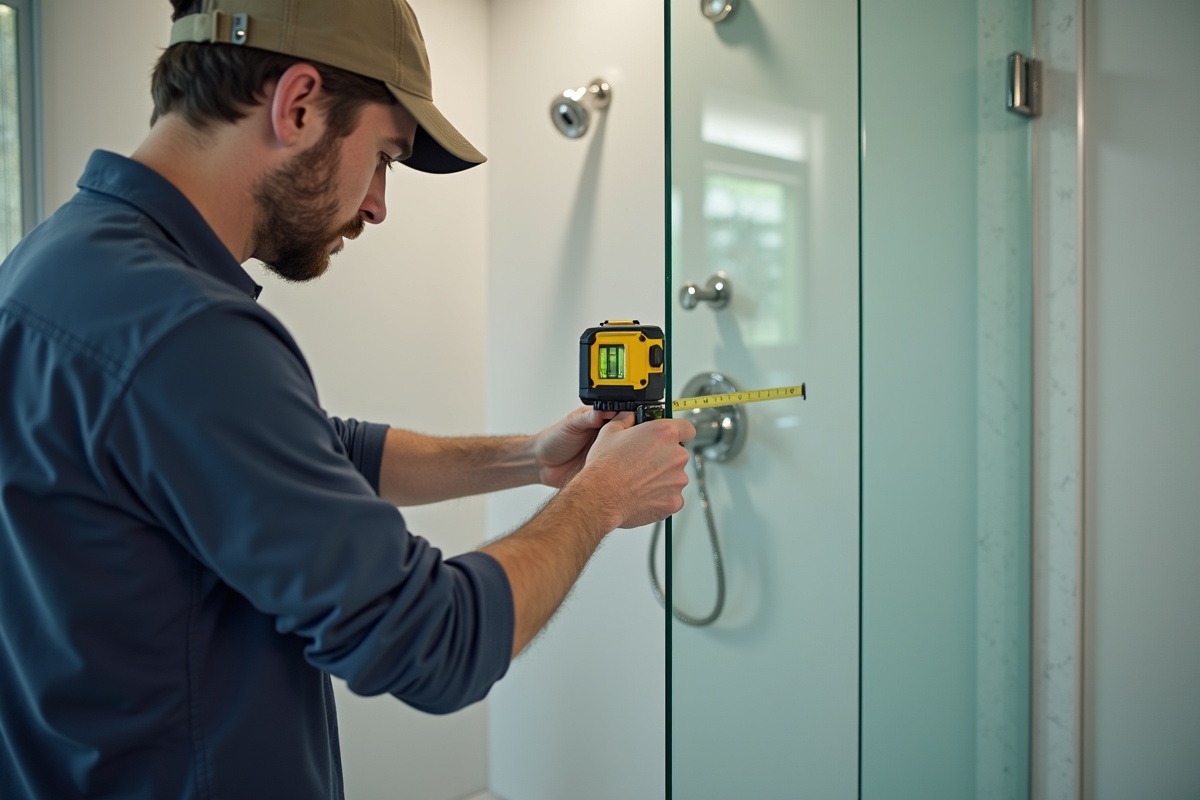
Week 1: Measurement appointment. A specialist visits your home and laser-measures the actual opening, including checking for plumb, level, and any tile irregularities that affect the glass template.
Weeks 1–4: Shop fabrication. The glass is cut from your exact template, edges polished, holes drilled for hardware, and the glass is tempered. Hardware is specified and assembled. Tighter shops with in-house fabrication (like Infinity Glass & Glazing's Corinth facility) can compress this to 1–2 weeks.
Week 4–6: Installation scheduling. Most shops schedule installation appointments 1–2 weeks out from fabrication completion.
How to plan the timeline:
- Order after tile is complete and grout is cured (typically 72 hours after grouting)
- Factor 4–6 weeks total from first call to installed door for most DFW shops
- In-house fabrication shops cut that to 2–4 weeks for standard configurations
The standard door advantage here is real: a stock door can be purchased today and installed this week if your opening fits. For remodels with hard move-in deadlines, standard doors are sometimes the only timeline-compatible option — even if they're not the ideal product.
What Can You Customize With a Made-to-Order Door?
Custom fabrication opens options that standard products simply don't offer:
Glass options:
- Thickness: 3/8" (standard frameless) or 1/2" (premium — heavier feel, more substantial appearance)
- Type: Clear, low-iron (ultra-clear, no green tint), frosted, rain/patterned, bronze tint
- Coating: Protective treatments like EnduroShield applied at the factory — more durable than aftermarket application
Hardware options:
- Any finish: chrome, brushed nickel, matte black, brushed gold, oil-rubbed bronze, satin brass
- Hinge style: standard barrel hinges, wrap-around hinges, offset hinges for out-of-plumb walls
- Handle style: towel bar, D-pull, C-pull, knob — in matching finish
- Specialty configurations: pivot hinges, barn door hardware, custom towel bar heights
Dimension options:
- Any width (no stock size constraints)
- Any height — important for tall showers with high tile
- Custom angles for neo-angle and diagonal openings
- Notched glass for obstacles (pipes, ledges, irregular tile)
Configuration options:
- Single door + fixed panel
- Double door
- Door + return panel (for corner showers)
- Full enclosure with multiple fixed panels and one or more doors
If you're choosing hardware finishes for a custom door, match the finish to your faucet and towel bar — not to whatever came with your vanity. The shower hardware is the most visible hardware in the bathroom. Consistency across the space (faucet, shower hardware, towel bar, robe hook) makes the room look designed rather than assembled.
When a Standard Door Actually Makes Sense
Standard doors aren't always the wrong choice. There are specific situations where they're the practical, sensible option:
Rental properties: Tenant use is hard on shower doors. When a rental door needs replacement, you want a product that can be sourced quickly and replaced affordably. Standard doors serve this need well — custom fabrication lead times and costs are harder to justify when the door will be replaced at tenant turnover anyway.
Exact-spec openings: If your shower is a standard 60" alcove with a 72" height, standard bypass sliding doors are built for exactly that space. A $700 stock door installed correctly in a true standard opening performs well without the workarounds described above.
Secondary bathrooms with modest budgets: When the primary bath gets the custom frameless enclosure, guest baths and secondary bathrooms can use standard doors without significantly affecting home perception. Buyers expect the primary bath to shine; secondary baths are held to a lower bar.
Short-term renovation before a flip: If the renovation horizon is 12–18 months and the goal is resale rather than long-term occupancy, a standard door in a spec opening may deliver adequate return for less capital tied up.
How Custom Doors Impact Resale Value
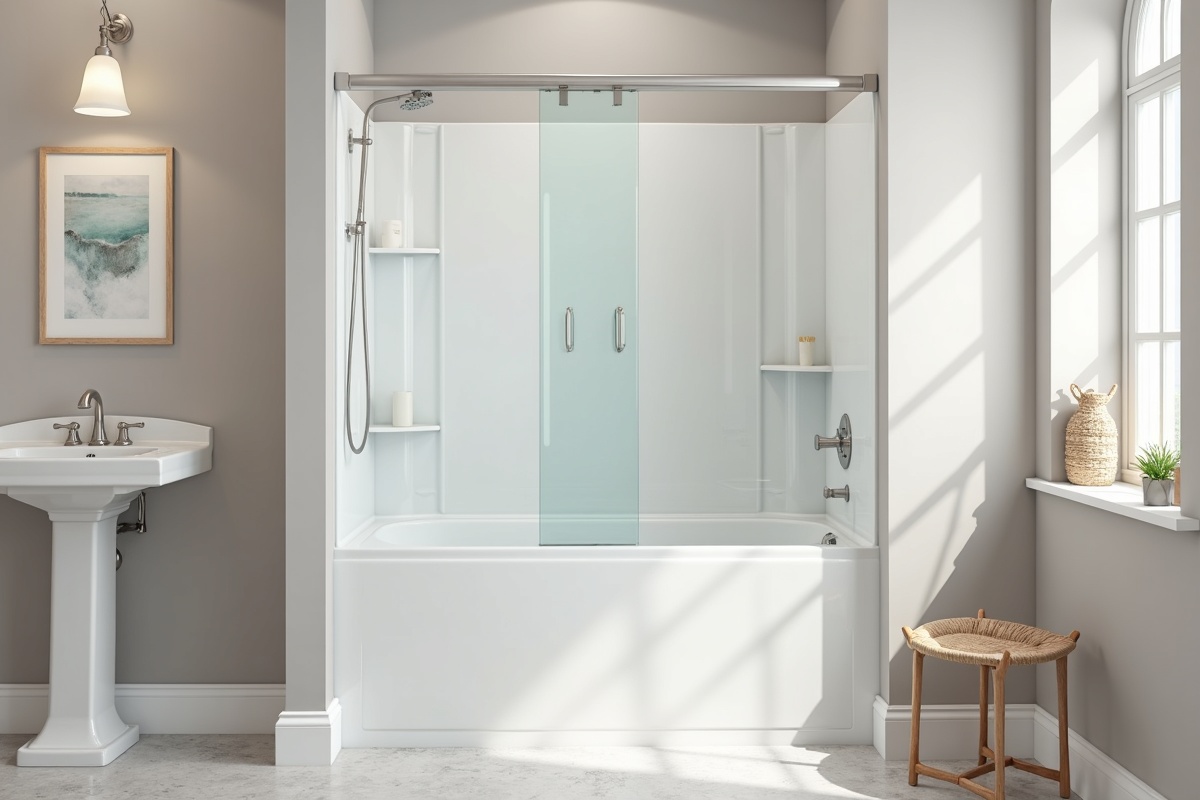
Texas bathroom remodel ROI averages 79.46% overall, with modern fixtures returning approximately 85% (Fixr 2025). Custom frameless shower enclosures are consistently cited by DFW real estate professionals as one of the highest-impact bathroom upgrades for buyer perception — particularly in primary bathrooms priced above $400K.
The resale math for DFW primary bathrooms:
A custom frameless shower enclosure costing $2,000 installed in a primary bath in Frisco, Flower Mound, or Southlake delivers an estimated $1,600–$1,900 in added resale value at an 80–95% return rate in those markets. The visual impact in listing photography (where the shower is typically the primary bathroom photo) drives buyer perception and offer prices.
Standard shower doors also add value over no upgrade at all — but they don't photograph the same way, don't create the same buyer reaction, and in higher price point markets, buyers who expect frameless glass will note the absence. In DFW's $400K–$700K price band, primary bathroom glass quality is a meaningful differentiating factor between offers.
The pricing tiers where custom vs. standard matters most:
- Below $350K homes: Standard doors are appropriate; buyers at this price point aren't expecting custom glass
- $350K–$450K homes: Standard doors work; frameless custom is a meaningful upgrade for faster sales
- Above $450K homes: Custom frameless is the expected standard in primary baths; standard doors may undermine the property's positioning
Questions to Ask Before You Order
Before committing to either standard or custom, get clear answers on these:
- 1
Measure your actual opening — all four sides
Don't assume your opening is standard. Measure the width at the top, middle, and bottom. Measure the height on both sides. If any dimension varies by more than 1/4", your opening isn't truly standard and a custom door will fit better. - 2
Check your walls for plumb
Hold a level against each wall where the door or frame will contact. More than 1/4" out of plumb on a 6-foot wall is noticeable in a standard door installation. Custom doors can be built to compensate for out-of-plumb walls. - 3
Confirm what finish matches your existing hardware
Take a photo of your faucet and towel bars before ordering anything. If your existing hardware is a specific finish (warm brushed nickel vs. cool brushed nickel, for example), match it exactly. Standard doors rarely offer the finish range that custom hardware provides. - 4
Get quotes for both options including all installation costs
Ask for a complete installed price that includes labor, any modification to the opening, seals, sweeps, and return trips if adjustment is needed. The apples-to-apples comparison often narrows the gap between standard and custom significantly. - 5
Confirm the lead time against your project timeline
If your bathroom is being used within 2 weeks of the conversation, a custom door may not be possible without temporary curtain use. Plan the measurement appointment to occur after tile is grouted and cured.
How much more does custom cost vs standard?
Custom shower doors typically cost $1,000–$2,200 more than standard doors installed — custom runs $1,400–$3,300+ versus standard's $400–$1,100 (Angi 2026). However, the gap narrows when you add the cost of workarounds required to make standard doors fit non-standard openings (filler strips, shimming, trim modifications). In some cases, a "standard" door ends up costing $950–$1,300 installed after all modifications, which is much closer to entry-level custom pricing.
How long to get a custom shower door installed?
Plan 4–6 weeks total from initial measurement to installed door for most DFW glass shops. The measurement appointment occurs first (after tile is done and grout is cured), fabrication takes 2–4 weeks, and installation is scheduled 1–2 weeks after fabrication is complete. Shops with in-house fabrication — like Infinity Glass & Glazing in Corinth — can often compress the timeline to 2–4 weeks for standard custom configurations.
Do you need custom for a non-standard opening?
Yes, in most cases. Standard doors have adjustment ranges of approximately ±1/2" to ±3/4". If your opening is more than 3/4" outside a stock dimension — either in width, height, or plumb — a standard door will require visible workarounds (filler strips, shimming) that don't look right, or it simply won't fit without compromising the seal. Non-standard openings are more common than most homeowners expect — especially in older DFW homes where tile work wasn't perfectly plumb.
What warranty differences exist between standard and custom?
Standard shower doors from manufacturers typically carry a 1-year warranty on hardware and glass. Custom doors from reputable glass shops carry a warranty on fabrication and installation — typically 1–5 years depending on the shop. The key difference is what happens when something needs adjustment: a custom shop returns to your home and adjusts the installation; a big box return involves uninstalling the door, returning it, and starting over. Get warranty specifics in writing before you order from any supplier.
Does custom add more value than standard at resale?
Yes — particularly in primary bathrooms and in DFW's higher price point markets (Frisco, Southlake, Keller, Plano, McKinney, Flower Mound, Highland Village). Custom frameless glass in a primary bath photographs significantly better than standard framed or semi-frameless doors, which affects buyer perception and listing photo performance. Texas bathroom remodel ROI averages 79.46% (Fixr 2025), with modern custom fixtures returning toward the top of that range. In secondary bathrooms and homes priced below $350K, the resale difference is less significant.
Also see our frameless shower door cost guide for DFW and our how to choose a shower door guide.
Infinity Glass & Glazing fabricates custom shower doors in-house at our Corinth facility and installs throughout DFW — Lewisville, Flower Mound, Denton, Frisco, Southlake, McKinney, Keller, and surrounding communities. Contact us for a free estimate and we'll measure your opening and quote both options so you can make the right call.
Related reading: