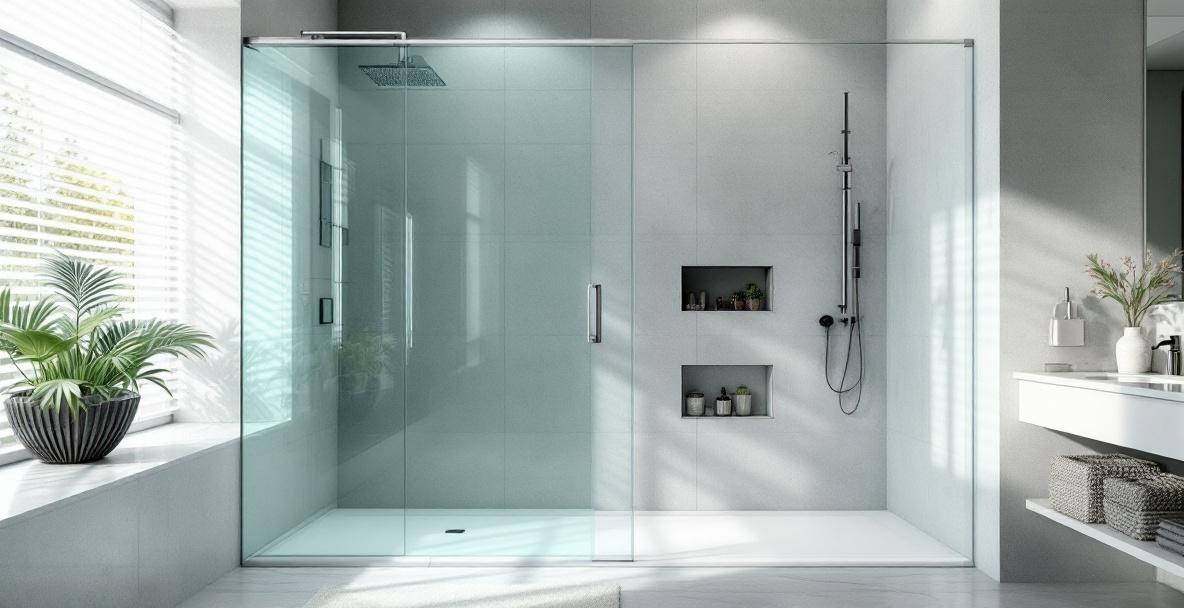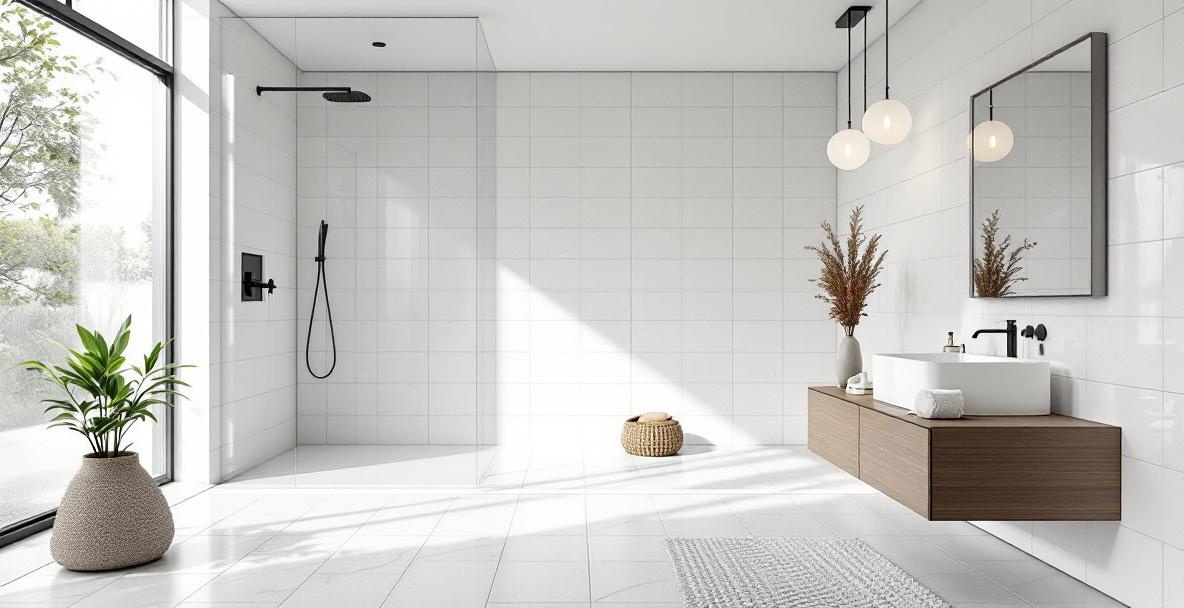
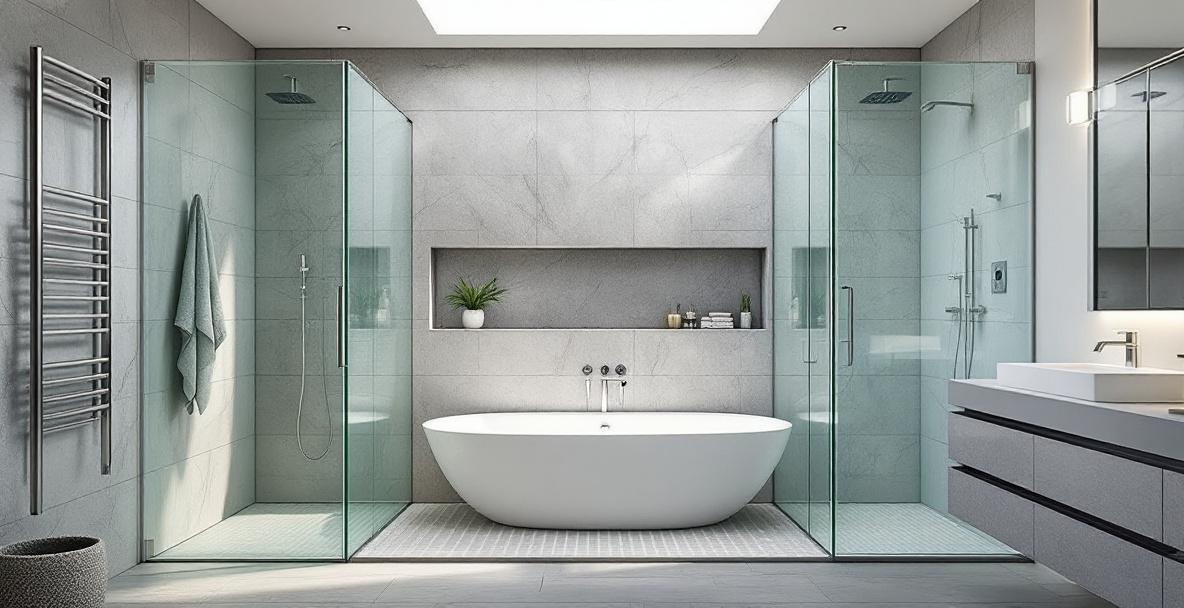
Low-iron glass is standard float glass manufactured with 90% less iron oxide, which removes the greenish-blue tint that ordinary clear glass has. It transmits 91% of visible light (vs 83% for standard), looks truly colorless, and costs 40–60% more. For a DFW shower project, low-iron glass is worth the upgrade when the glass is thick (3/8 in. or 1/2 in.), the panel is large, the tile behind it is pale, or when color accuracy matters. For thinner panels, darker tile, or tight budgets, standard clear is usually fine.
You may have noticed that the edge of a piece of ordinary clear glass looks slightly green. That green tint is iron oxide — a natural impurity in silica sand used to make float glass. For most architectural and shower applications, the green tint is so subtle you never notice it in the face of the glass. But as the panel gets thicker, larger, or sits against a light-colored surface, that tint becomes visible.
Low-iron glass — sometimes sold as "Starphire" (PPG), "Optiwhite" (Pilkington), or "Diamant" (Saint-Gobain) — solves that problem by reducing the iron content to near zero, producing a glass that is optically water-clear.
What Is Low-Iron Glass and How Is It Different from Standard Glass?
Low-iron glass is made with high-purity silica sand that contains significantly less iron oxide than standard float glass. Iron oxide content of 0.01% in ultra-clear glass vs 0.1% in standard creates a visible green cast at edges (GlassBuild 2025). That 10x difference in iron content changes the visual character of the glass dramatically:
- Standard clear glass — 0.1% iron oxide, noticeable green tint at edges and through thick panels
- Low-iron glass — 0.01% iron oxide, essentially colorless at any thickness
- Ultra-low-iron glass — 0.005% iron oxide, premium grade for jewelry cases and museums
Every aspect of fabrication, tempering, and installation is the same. Low-iron is not a different type of glass — it is the same soda-lime float glass made with purer raw materials.
91%
visible light transmission for low-iron glass vs 83% for standard float glass
Why Does Regular Clear Glass Have a Green Tint?
The green tint in standard float glass comes from iron oxide impurities in the silica sand and limestone used to make soda-lime glass. Iron absorbs specific wavelengths of red and orange light, leaving the transmitted light slightly biased toward green. You see this most clearly in two situations:
- At the edge of a glass panel — light traveling across the long axis passes through much more glass than light traveling through the face
- When glass sits against a white or pale background — the green cast becomes noticeable by comparison
- In thick glass (3/8 in. and up) — more material means more light absorption, which means more visible tint
How Much Clearer Is Low-Iron Glass vs Standard Glass?
The difference is measurable in two ways: visible light transmission and color rendering. Low-iron glass transmits 91% of visible light vs 83% for standard float glass (Cardinal Glass 2025). That 8 percentage-point gap looks small on paper but is dramatically visible in a shower enclosure.
| Visible light transmission |
| Iron oxide content |
| Edge color |
| Face color at 3/8 in. |
| Face color at 1/2 in. |
| Cost premium |
For a direct visual comparison, our ultra-clear glass vs standard clear shower post shows side-by-side photos of both types in the same lighting conditions.
What Does Low-Iron Glass Cost Compared to Standard Glass?
In DFW, low-iron glass adds $150–$400 to total shower door project cost depending on panel size (HomeGuide 2025). Here is how it typically shows up on quotes:
- Single-door frameless shower (3/8 in.) — add $150–$220 for low-iron
- Three-sided walk-in (3/8 in. + return panels) — add $275–$400
- Large fixed panel (60 in.+ × 80 in.) — add $200–$350
- Mirror upgrade to low-iron — add 50–80% to mirror cost
The premium is driven by raw material cost — high-purity silica sand is harder to source and more expensive per pound. Fabrication and installation labor stay the same regardless of which glass is used.
The price premium gets smaller, as a percentage, on larger jobs. For a small powder-room mirror, low-iron can double the price. For a $3,000 walk-in shower, low-iron adds about 10% — a much better ratio.
When Is Low-Iron Glass Worth the Extra Cost?
Low-iron glass is worth the upgrade in these situations:
- Thick glass (3/8 in. or 1/2 in.) — the tint becomes visible and subtracts from the "barely-there" look people pay for
- Light or white tile behind the glass — green cast is most obvious against pale backgrounds
- Large panels — more glass means more visible tint
- Display cases, bookshelves, and cabinet glass — color accuracy matters
- Makeup mirrors or photography mirrors — color rendering must be neutral
- Contemporary minimalist designs — any color cast undermines the aesthetic
- Matched sets — if a shower door and wall mirror are in the same line of sight, color consistency matters
It is less worth it in these cases:
- Thin glass (1/4 in. or less) — tint is barely visible
- Dark tile, stone, or mosaic backgrounds — the green cast disappears against dark colors
- Interior partitions or office glass — people do not stand close enough to notice
- Budget-sensitive projects — the $150–$400 upgrade has more impact on other details
What Types of Shower Designs Benefit Most from Low-Iron Glass?
Five shower designs where low-iron consistently delivers the biggest visual payoff:
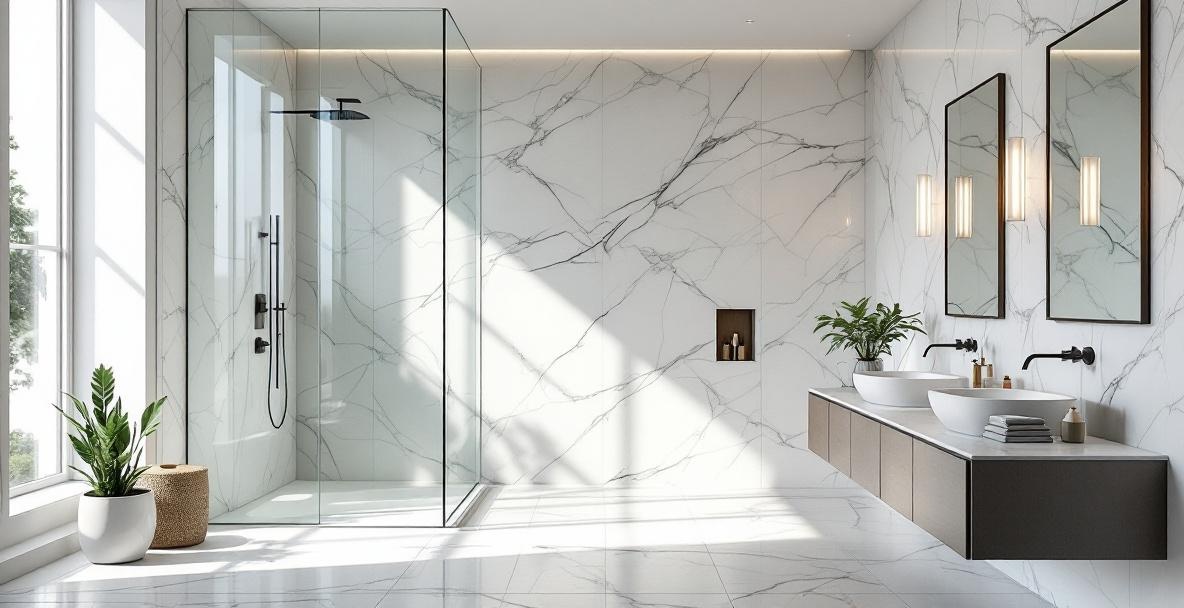
- Open walk-in showers with white marble or Carrara tile
- Curbless wet-room designs where the glass is a full 8-foot wall
- Luxury master baths where every element is specified for color accuracy
- Black-and-white contemporary bathrooms where a green tint clashes with the design palette
- Showers with feature tile (handmade, art, or mosaic) where color fidelity is the entire point
Our low-iron glass shower doors page goes deeper into specification and fabricators, and our frameless shower door cost Texas guide covers how low-iron fits into the overall budget.
Low-Iron Glass for Mirrors: Does It Make a Difference?
Yes, significantly. Mirrors are glass with a silver backing — and the tint in the glass layer is reflected back at the viewer twice: once on the way in, once on the way out. That doubles the visible green cast compared to a shower panel. For a standard bathroom vanity mirror, low-iron is often the single most valuable upgrade a homeowner can make because:
- Makeup application and skin tones read more accurately
- White wall colors appear true white in the reflection
- Dental and grooming tasks benefit from neutral color rendering
- Large mirrors (over 4 ft wide) look dramatically cleaner
If you are already investing in a custom mirror, the low-iron upgrade is usually 15–25% of total cost, and it is very hard to undo later. Our custom mirror any size Texas and bathroom vanity mirror custom size posts cover mirror specification in detail.
A further refinement called "copper-free, low-iron" uses a copper-free silver backing for the purest color rendering possible. This is what high-end cosmetics brands and dental offices specify. For residential bathrooms, standard low-iron with silver backing is almost always sufficient.
Frequently Asked Questions
Can I tell the difference between low-iron and standard glass in a showroom?
Yes, if the showroom displays both side by side. Look at the edges first — standard clear glass shows a distinct green-blue cast at the edge of every panel, while low-iron edges are completely colorless. If you cannot see samples in person, ask for a photo of both glass types against the same white background; the green tint becomes obvious by comparison.
Does low-iron glass require any special maintenance?
No, maintenance is identical to standard glass. It is the same soda-lime float glass chemistry, just with purer raw materials. Hard water will stain it at the same rate, squeegee use prevents buildup the same way, and protective coatings bond to it identically. The only thing that changes with low-iron is the color.
Is low-iron glass stronger than standard tempered glass?
No, low-iron glass has the same strength, thermal resistance, and safety characteristics as standard tempered glass. Both are tempered to the same ANSI Z97.1 Category II standard for shower use. The iron content only affects optical properties — it does not change break pattern, compression strength, or heat resistance.
What is the brand name of low-iron glass?
The best-known low-iron brands are Starphire (PPG), Optiwhite (Pilkington), Diamant (Saint-Gobain), CrystalClear (Guardian), and Opti-White (NSG). These are all ultra-clear soda-lime glass made to the same specification with minor formulation differences. Fabricators in DFW typically stock Starphire or Optiwhite because those are the most widely available through major US distributors.
Is low-iron glass worth it for a smaller shower door?
For a small 1/4 in. or 5/16 in. shower door, the green tint is barely visible and the $150-$200 upgrade delivers a smaller visual payoff. For a 3/8 in. or 1/2 in. door with large fixed panels, or any shower with white marble tile behind it, low-iron is almost always worth the upgrade. The thicker the glass and the lighter the background, the more the difference shows.
Also see our ultra-clear glass vs standard clear shower, low-iron glass shower doors, and frameless shower door cost Texas guides for more on how glass specification affects your shower design and budget.
Want to see low-iron and standard glass side by side before deciding? Contact Infinity Glass & Glazing to schedule a free in-home consultation. We bring real glass samples to every DFW appointment — Dallas, Plano, Frisco, Fort Worth, Corinth, Denton — so you can compare the difference yourself in your actual bathroom lighting.