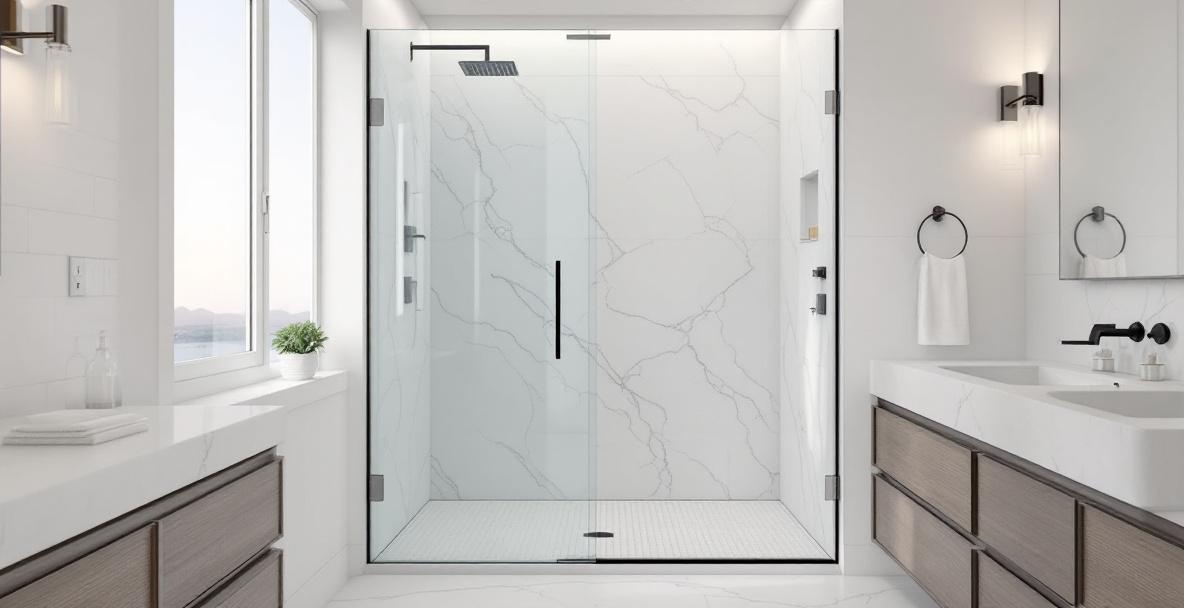
Walk-in shower glass panels in Dallas typically cost $500 to $2,500+ installed, depending on panel size, glass thickness, and whether you choose a single fixed panel or a multi-panel configuration. Walk-in showers now add more resale value than traditional tubs, according to HomeLight's Q3 2025 agent survey, and 18% of agents identify modernized bathrooms as the second most sought-after feature among buyers.
Walk-in showers have moved from luxury feature to mainstream expectation across Dallas-Fort Worth. The open, curbless design works in everything from compact guest baths to expansive primary suites -- and the glass panel is what makes it feel intentional rather than unfinished.
This guide covers every decision point: what types of panels are available, how much they cost in the Dallas market, which glass thickness works best, whether you even need a door, and how professional installation works. For the enclosure itself, see our walk-in shower doors and fixed panels service page. If you're planning a bathroom remodel in Dallas, Frisco, McKinney, or anywhere in DFW, this is your starting point.
What Are Walk-In Shower Glass Panels?
Walk-in shower glass panels are fixed sheets of tempered glass that define the shower space without fully enclosing it. Unlike traditional shower doors that swing or slide, panels create an open-entry design that makes bathrooms feel larger. The global shower enclosure market reached $8.77 billion in 2024, reflecting this shift toward open designs.
A walk-in panel is typically a single piece of tempered glass -- anywhere from 24 to 60 inches wide -- anchored to a wall and sometimes to the floor or ceiling with stabilizing hardware. There's no door to open or close. You simply walk past the edge of the glass into the shower.
The design serves several purposes at once. It contains most of the water spray while allowing steam to escape, preventing that claustrophobic feeling of a fully enclosed stall. It lets natural and artificial light pass through the bathroom uninterrupted. And it eliminates moving parts -- no hinges, tracks, or rollers that wear out over time.
18%
of real estate agents say modernized bathrooms are the 2nd most sought-after home feature (HomeLight, 2025)
Walk-in panels work especially well in Dallas homes where open floor plans and clean sightlines are already part of the design language. They complement both contemporary and transitional bathroom styles without competing with the tile work or fixtures. If resale is part of the calculus, the numbers behind that agent survey are broken down in do glass shower doors add home value.
What Types Are Available?
Walk-in shower glass panels come in four main configurations: single fixed panels, return panels (L-shaped), inline panels with a door, and floor-to-ceiling partitions. Each serves a different shower layout and splash containment need.
Single fixed panel -- The simplest option. One sheet of glass extends from a wall, creating a partial barrier. Best for large showers where splash containment isn't a major concern. This is the most popular walk-in style in DFW new construction.
Return panel (L-shaped) -- Two glass panels meet at a 90-degree corner, providing better water containment than a single panel. The corner joint can be a standard butt joint or a mitered corner for a seamless finish.
Inline panel with door -- A fixed panel plus a hinged or pivot door. This gives you walk-in aesthetics with the option to fully close the shower. Good for smaller bathrooms or showers with spray-heavy rain heads.
Floor-to-ceiling partition -- Glass runs from the shower base to the ceiling, often with a channel at the top and bottom. Creates a dramatic visual statement and provides the most splash containment of any walk-in design.
How Much Do They Cost in Dallas?
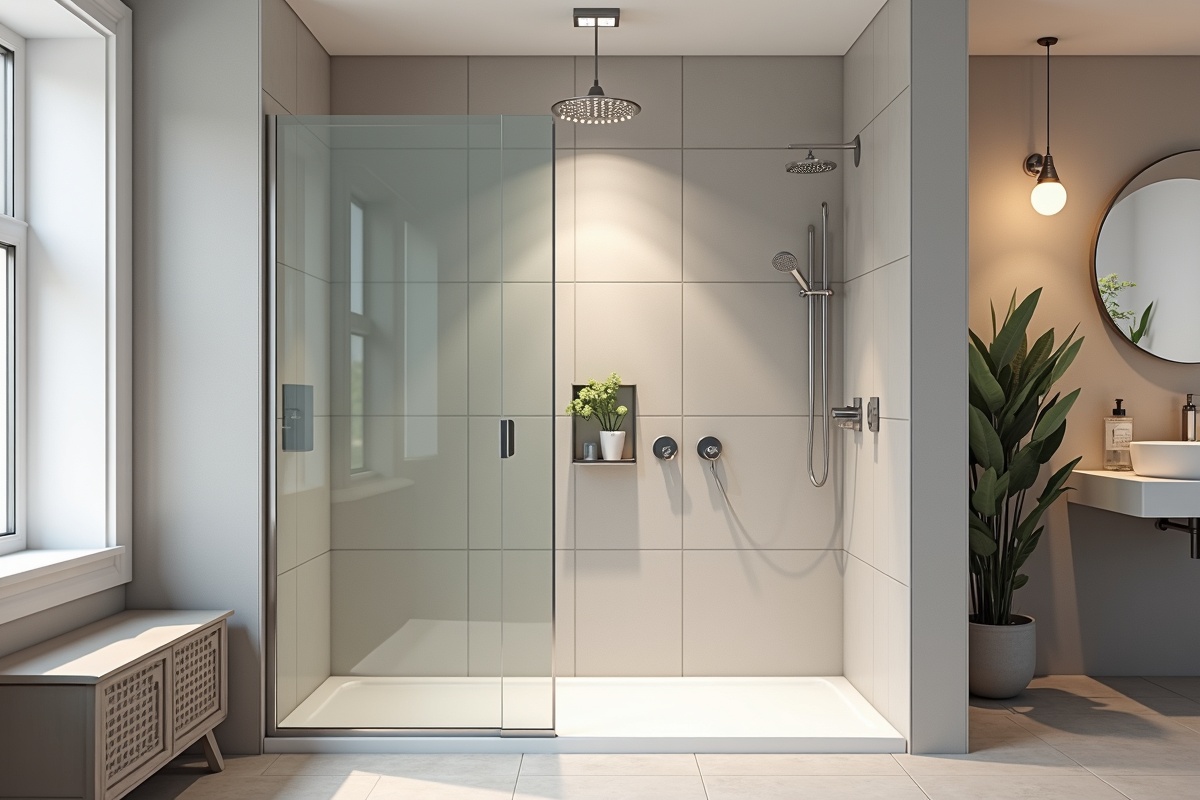
Walk-in shower glass panels in Dallas cost $500 to $2,500+ installed, depending on the configuration. A single fixed panel with hardware runs $500 to $1,200, while multi-panel setups with return panels or doors range from $1,200 to $2,500+. DFW remodeling costs run 10-15% above the Texas average.
Here's what drives the price:
| Configuration | Typical Cost (Installed) | Best For | |
| Single Fixed Panel | $500-$1,200 | Large showers, simple layouts | |
| Return Panel (L-Shape) | $900-$1,800 | Corner showers, better splash control | |
| Panel + Hinged Door | $1,200-$2,200 | Full enclosure with walk-in look | |
| Floor-to-Ceiling | $1,500-$2,500+ | Statement bathrooms, max containment |
Glass thickness plays a significant role in pricing. Moving from 3/8-inch to 1/2-inch glass adds 20-30% to the material cost -- but it also adds weight, rigidity, and a noticeably more premium feel.
Hardware finish matters too. Standard chrome clips and brackets are the most affordable. Matte black, brushed gold, and satin brass finishes cost more but are currently the most requested options in the Dallas market.
What Glass Thickness Is Best?
For walk-in shower panels, 3/8-inch (10mm) tempered glass is the minimum recommended thickness, and 1/2-inch (12mm) is preferred for panels wider than 30 inches or taller than 80 inches. Tempered glass is 4-5x stronger than standard annealed glass and shatters into safe granules if broken.
The thickness decision comes down to panel size and feel. Here's the practical breakdown:
3/8-inch glass works well when:
- The panel is 30 inches wide or less
- Height is under 80 inches
- Budget is a priority
- The panel has a support bar to the wall or ceiling
1/2-inch glass is the better choice when:
- Panels are wider than 30 inches
- Floor-to-ceiling installations
- You want minimal support hardware (the glass is rigid enough on its own)
- Corner configurations where structural rigidity matters at the joint
Both thicknesses meet IRC Section R308 safety glazing requirements for shower enclosures. The difference is practical: 1/2-inch glass flexes less, feels more substantial when you touch it, and requires fewer stabilizing bars.
What about low-iron glass? Standard clear glass has a slight green tint, especially visible at the edges. Low-iron (also called ultra-clear or Starphire) removes that tint for true transparency. It costs 15-20% more but makes a visible difference on thicker panels where the green edge is more pronounced.
Do Walk-In Showers Need a Door?
Many walk-in showers don't need a door at all -- that's the whole point of the design. Whether you can skip the door depends on your shower's dimensions and layout. A doorless walk-in generally needs a minimum of 36 inches of entry width and a shower area of at least 32 by 32 inches to contain water effectively.
The doorless walk-in works because of smart layout, not magic. Water containment depends on three factors: distance from the showerhead to the open side, the angle of the spray, and whether there's a curb or threshold.
When you can skip the door:
- The shower is large enough that the showerhead is 3+ feet from the open edge
- The spray direction points away from the opening
- You have a linear drain positioned to catch water before it reaches the glass edge
- The panel extends far enough to block indirect splash
When you still want a door:
- Compact showers under 36 inches wide at the entry
- Rain showerheads that create more ambient splash
- Households where someone prefers a fully enclosed shower for warmth
- Cold-climate months when draft from an open shower feels uncomfortable
How Are Panels Installed?
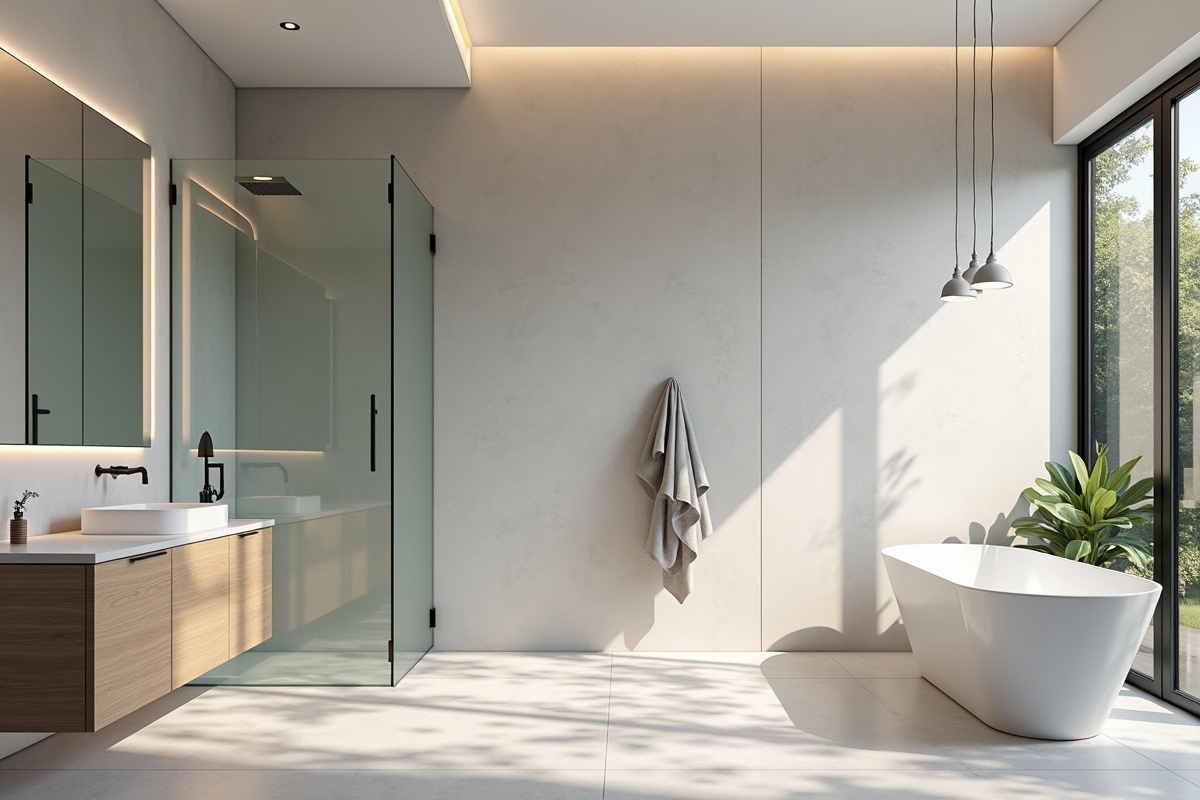
Walk-in panel installation takes 2 to 3 hours on-site for a single panel and 3 to 5 hours for multi-panel configurations. The full process from measurement to completion spans 2 to 4 weeks, including fabrication time for custom-cut tempered glass.
- 1
In-Home Measurement
A technician laser-measures the shower space at multiple points -- width, height, wall plumb, and floor level. Walk-in panels are especially sensitive to out-of-plumb walls because there's no frame to hide gaps. Measurements must be accurate to 1/16 of an inch. - 2
Design and Selection
You choose glass type (clear, low-iron, frosted), thickness, hardware finish, and configuration. The installer will recommend panel width and placement based on your showerhead position and splash patterns. - 3
Custom-Ordered to Fit
Glass is cut to exact specifications, edges are polished or mitered, holes are drilled for mounting hardware, and the panel is tempered. This step takes 1 to 2 weeks and must happen before tempering -- once tempered, the glass cannot be modified. - 4
Hardware Mounting
Wall channels, clamps, or brackets are secured to studs. For floor-to-ceiling panels, a top channel is also installed. The hardware must be perfectly level and plumb because there's no frame to hide misalignment. - 5
Panel Setting and Sealing
The glass panel is lifted into position (1/2-inch panels this size can weigh 80-120 pounds), secured in the hardware, and sealed with silicone at wall connections. A 24-hour cure time is needed before shower use.
How Do Mitered Edges Create Seamless Corners?
When two walk-in panels meet at a 90-degree corner, mitered edges create a seamless joint by cutting each panel's edge at a precise 45-degree angle. The two angled surfaces mate flush, forming a clean corner line with minimal silicone -- unlike a butt joint where one flat edge presses against another with a visible gap.
Mitered corners matter most on L-shaped walk-in configurations where the corner joint is fully exposed and visible from multiple angles. There's no frame hiding the connection point, so every detail shows.
The structural benefit is real too. Two 45-degree surfaces mating together create a larger contact area than two flat edges touching. That means better stability and a tighter natural seal.
Most glass companies in Texas don't offer mitered corners because the process requires CNC edging equipment and skilled fabricators. The thin edge at the tip of the miter is delicate on tempered glass -- a chip during handling can cause the entire panel to shatter. It's a precision operation.
At Infinity Glass & Glazing, mitered corners are standard on every corner configuration we build. Every panel is cut to the measurements we take in your home, and we've been mitering glass corners for over 30 years. Learn more about our process.
Planning a walk-in shower for your Dallas-area bathroom? Infinity Glass & Glazing serves Dallas, Fort Worth, Corinth, Denton, Frisco, McKinney, Lewisville, Flower Mound, and the entire DFW metroplex. Get a free in-home estimate or call (940) 279-1197.
Do walk-in shower panels keep water inside the shower?
Walk-in panels contain most water when the shower is designed correctly. Position the showerhead so spray aims away from the open side, use a linear drain near the glass edge, and choose a panel wide enough to block indirect splash. Panels 36 inches or wider with proper layout keep floors dry in most installations.
What is the minimum size for a walk-in shower?
The IRC requires a minimum shower size of 30 by 30 inches, but most walk-in designs need at least 36 by 48 inches to work well without a door. Larger is better -- a 48 by 60 inch walk-in gives enough room for comfortable movement and effective water containment.
Can walk-in shower panels be installed without a curb?
Yes. Curbless (zero-threshold) walk-in showers are increasingly popular and are required for ADA-compliant designs. They use a sloped shower pan and linear drain to manage water instead of a raised curb. The glass panel sits on the flat floor surface with a bottom seal.
Are walk-in showers ADA compliant?
Walk-in showers can be made ADA compliant with the right design. Requirements include a curbless entry at least 36 inches wide, grab bars, a hand-held showerhead, a fold-down bench, and non-slip flooring. Glass panels work well in ADA designs because they don't require door operation.
Related reading: