Brushed nickel is the most versatile and durable bathroom hardware finish for most homeowners — it hides water spots and fingerprints, coordinates with virtually any tile or vanity, and maintains its appearance over a 20–30-year product lifespan. Matte black makes the strongest visual statement but requires more maintenance in hard water areas. Brushed gold is growing fastest in the premium DFW market. Chrome remains the easiest to clean chemically.
Bathroom hardware finish is a decision that looks simple but has real consequences: maintenance time, durability in DFW's moderately hard water, coordination across fixtures, and how well the choice ages as design trends shift. Getting it right upfront means the shower door, faucet, towel bar, and vanity hardware all work together — and continue to look right five years from now.
This guide compares the four dominant bathroom hardware finishes for 2026 on the factors that actually matter: water spot visibility, durability, design compatibility, and resale impact.
The Most Popular Bathroom Hardware Finishes Today
Matte black, brushed nickel, chrome, and brushed gold are the four dominant bathroom hardware finishes in 2026. Matte black has generated the most trend attention over the past several years, while brushed nickel remains the most widely installed finish due to its long-term versatility. Brushed gold and champagne bronze are growing fastest in the premium and master bath segments across DFW.
55
Google Trends index for black bathroom fixtures as of early 2026, down from a peak of 97 in January 2025 — trend saturation is visible in DFW design circles ([Google Trends via Accio](https://www.accio.com/))
Understanding where each finish stands in the design cycle helps make a durable decision. A finish that's at peak trend popularity today may read as dated in 5 years — a consideration for homeowners planning to sell, and less of one for homeowners planning to stay long-term.
Current market position:
- Matte black: Peak trend has passed; still a strong choice for contemporary designs but showing saturation signals
- Brushed nickel: Consistently popular across decades — the reliable, versatile choice
- Chrome: Never fully goes out of style; preferred in traditional and transitional bathrooms
- Brushed gold/champagne bronze: Growing rapidly; currently performing well in master bath premium applications
Matte Black: Bold but High-Maintenance?
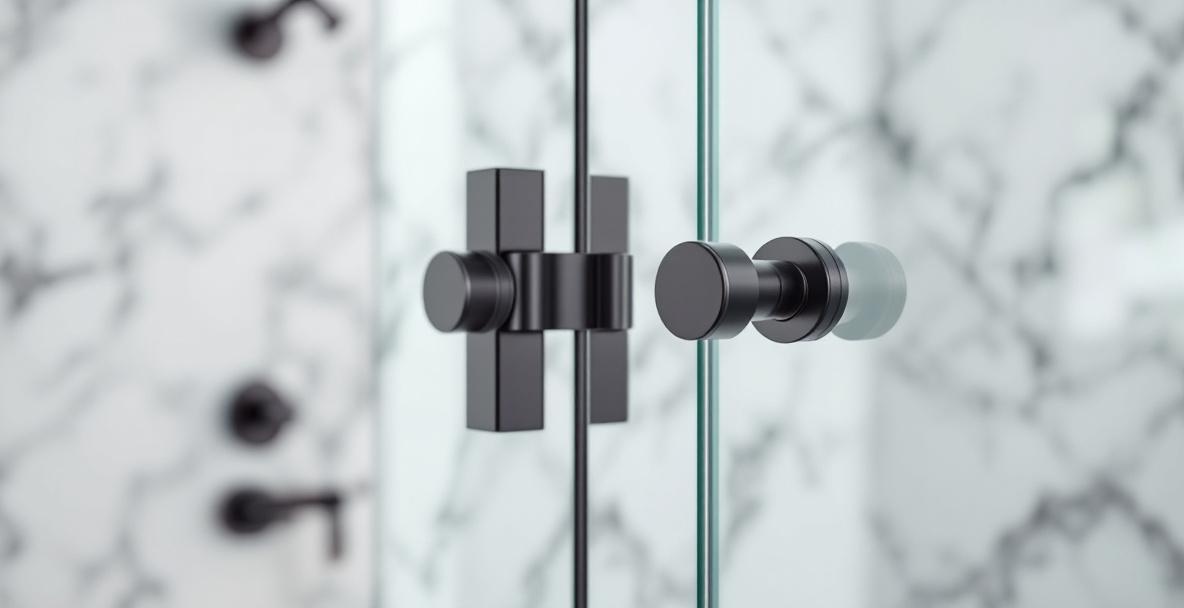
Matte black creates the strongest visual impact of any common bathroom hardware finish — high contrast against white or light tile, a contemporary edge that reads as intentional design. The tradeoff is maintenance in hard water areas like DFW: calcium deposits show as white buildup against the dark surface, requiring more frequent cleaning than brushed metallic finishes.
Where matte black works best:
- Contemporary and minimalist bathrooms with white subway tile, large-format porcelain, or concrete-look tile
- Bathrooms with consistently low mineral water exposure (filtered water, softened water supply)
- Owner-occupied primary bathrooms where the owner is committed to regular cleaning
- Design-forward installations where the bold finish is a deliberate feature
Where matte black is a harder choice:
- Guest bathrooms or secondary baths with irregular cleaning schedules
- Homes on the DFW municipal water supply with moderate mineral content (Dallas, Fort Worth, Frisco, McKinney)
- Pre-sale staging, where a finish with wider buyer appeal is more strategic
Durability notes: Quality matte black hardware uses PVD (Physical Vapor Deposition) coating over solid brass — a durable finish that resists corrosion and maintains the matte appearance over time. Avoid matte black hardware with electroplated finishes on zinc alloy; these begin to pit and discolor within 2–5 years in humid bathroom conditions.
29%
of design professionals see matte black declining through 2026 — still a viable choice for contemporary spaces but trend cycle awareness matters for resale-focused buyers ([Kylie M Interiors](https://kylieminteriors.ca/))
Brushed Nickel: The Versatile All-Rounder
Brushed nickel is the most durable and versatile bathroom hardware finish for everyday residential use. The directional surface texture scatters light and hides fingerprints and water spots effectively, requiring less daily maintenance than chrome or polished finishes. PVD brushed nickel on solid brass lasts 20–30+ years in normal bathroom conditions.
Brushed nickel's greatest advantage is neutrality. Unlike matte black (which requires a contemporary design context to read correctly) or brushed gold (which pairs with warm palettes), brushed nickel coordinates naturally with cool and warm tones, works with subway tile and large-format porcelain equally, and doesn't require fixture coordination that can be difficult to achieve across brands.
Brushed nickel advantages:
- Hides fingerprints and hard water deposits with the directional surface texture
- Coordinates with the widest range of tile, vanity, and cabinetry choices
- PVD on solid brass is the most durable common hardware finish specification
- Timeless across design cycles — not subject to trend saturation
Brushed nickel considerations:
- Less visual impact than matte black or brushed gold in premium master baths
- Sometimes reads as "expected" rather than designed in high-end renovations
- Undertone varies slightly across brands (warm vs. cool) — match carefully when mixing fixtures
For DFW homeowners planning to sell within 5–10 years: brushed nickel is the safest choice. It's the finish that appeals to the broadest buyer profile and is unlikely to trigger a buyer objection the way a heavily trended finish might.
Chrome: Why It Never Really Goes Out of Style
Chrome's permanence in bathroom hardware comes from its practicality: it's the easiest finish to clean chemically, requires only acidic cleaners to dissolve calcium deposits, and coordinates universally with cool-toned tile and fixture palettes. The tradeoff is maintenance frequency — water spots and fingerprints are highly visible against the polished reflective surface.
Chrome is the only common bathroom hardware finish that can be cleaned to a complete shine with minimal effort using widely available products (white vinegar, CLR, dedicated chrome cleaner). This matters in DFW's moderately hard water environment: calcium dissolves readily from chrome when treated promptly, whereas brushed and matte finishes require more careful cleaning to avoid surface damage.
Where chrome is the right choice:
- Traditional and transitional bathrooms where cooler tones dominate
- Bathrooms used by cleaning-focused homeowners who prefer a polished look and are willing to maintain it
- Commercial and hospitality applications where cleaning protocols are consistent
- Classic white subway tile bathrooms where chrome's reflectivity amplifies the clean aesthetic
Chrome in DFW's hard water: The moderate mineral content in Dallas and Fort Worth municipal water makes chrome maintenance more demanding than brushed alternatives. In areas with harder water (Denton County, parts of Collin County), brushed finishes are the more practical everyday choice.
| Chrome |
| Brushed Nickel |
| Matte Black |
| Brushed Gold |
| Oil-Rubbed Bronze |
Brushed Gold and Champagne Bronze: Worth the Premium?
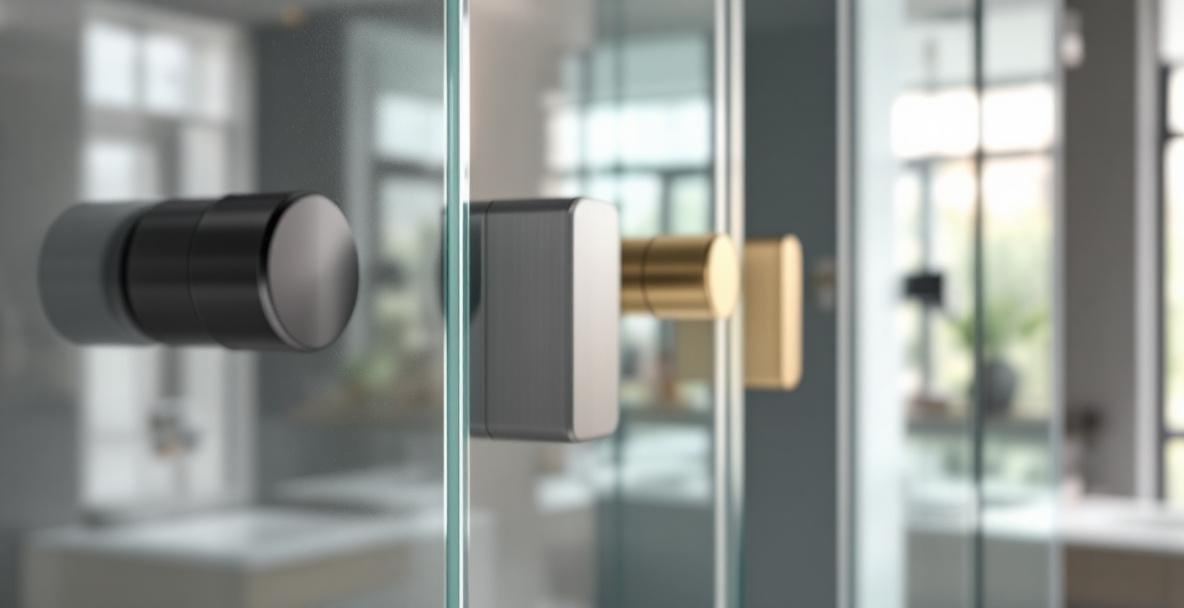
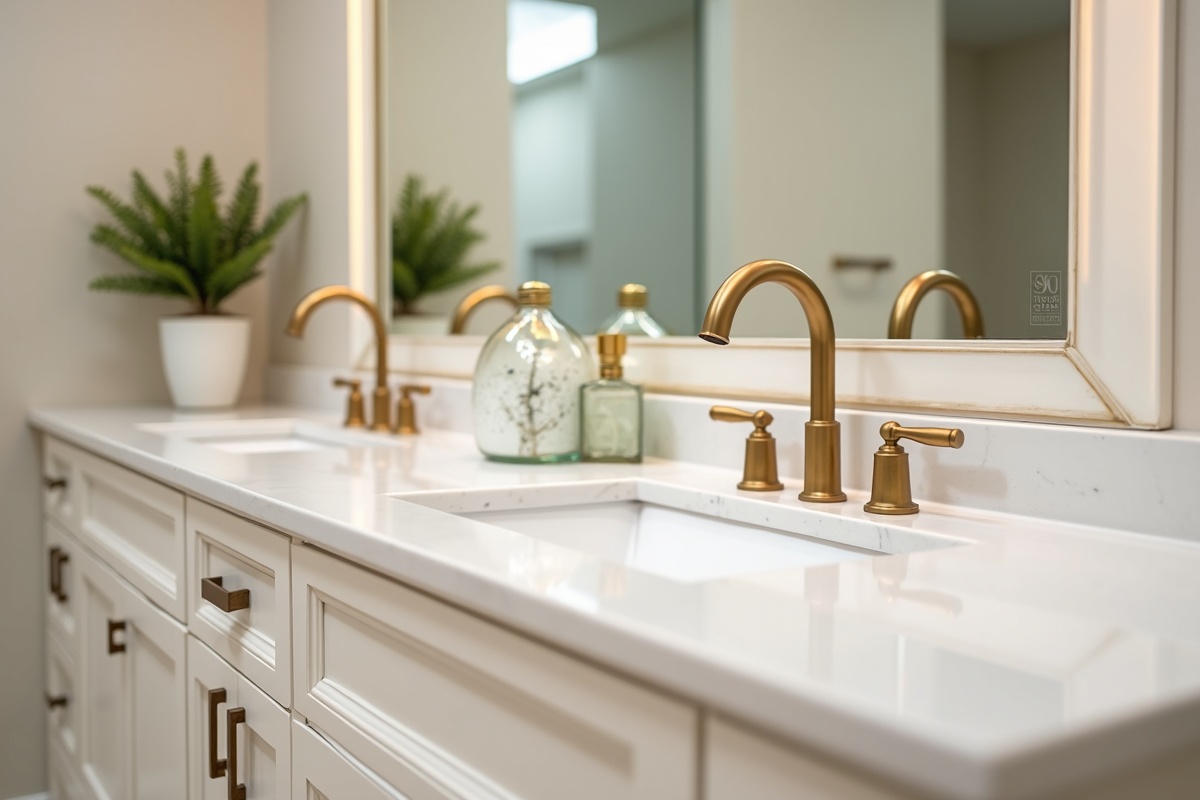
Brushed gold and champagne bronze are the fastest-growing bathroom hardware finishes in the DFW premium market — earning preference in master bath renovations where warm metallic tones coordinate with wood vanities, warm stone tile, and modern organic design palettes. Like brushed nickel, the directional surface texture hides water spots and fingerprints effectively.
The brushed gold category encompasses several related finishes — true brushed gold, champagne bronze, satin brass, and warm nickel — that share warm yellow undertones and brushed texture. They read differently under different lighting conditions, which makes cross-brand matching important.
Where brushed gold makes the strongest case:
- Master bathrooms with warm-toned vanities, wood elements, or warm stone tile
- Organic modern or transitional designs where metallic warmth is part of the palette
- Primary bathrooms where the owner intends to stay long-term (less concern about trend cycle)
Brushed gold considerations:
- More difficult to coordinate across fixture brands than brushed nickel (undertones vary more)
- Commands a slight price premium over brushed nickel in most hardware lines
- Best understood as a commitment — mixing brushed gold with cool-toned fixtures rarely works
fastest-growing
— brushed brass, gold, and gunmetal are the fastest-growing hardware finishes entering 2026 in DFW design projects ([Fixr 2026](https://www.fixr.com/))
How to Match Shower Door Hardware to Bathroom Fixtures
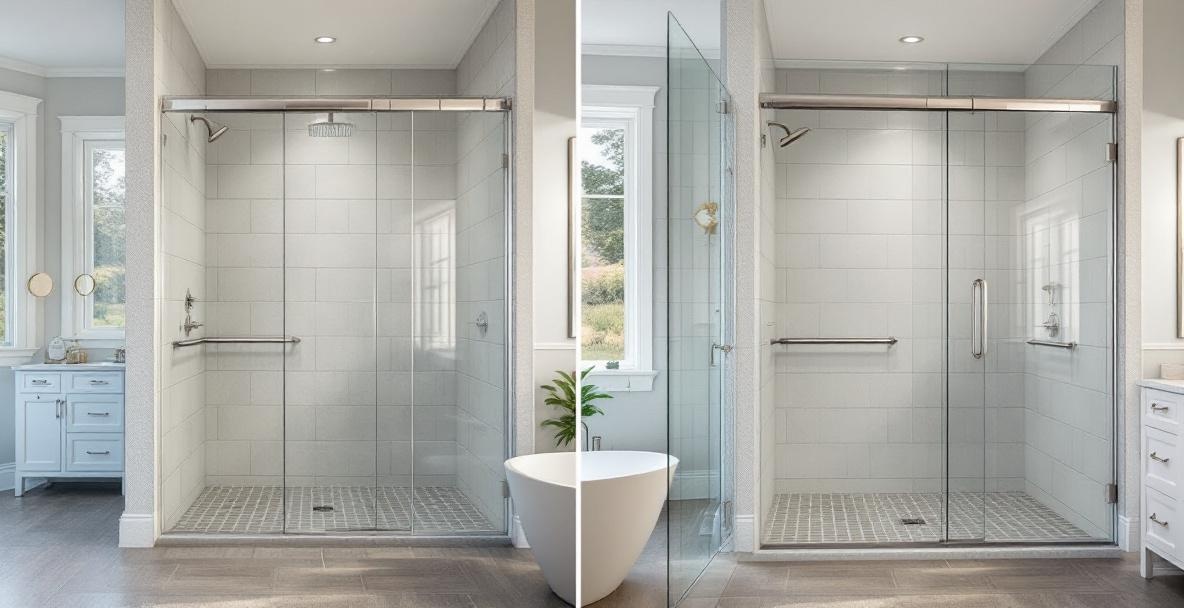
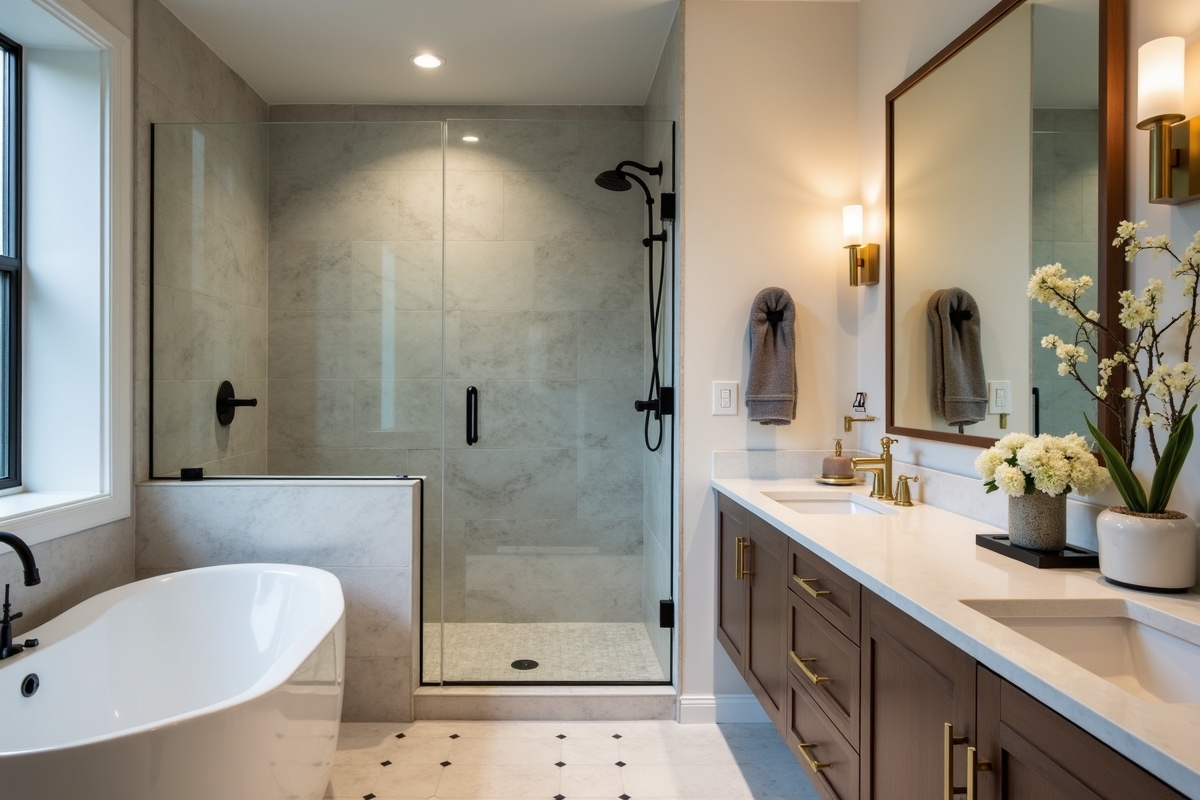
The starting rule for hardware coordination: match your shower door hardware to your shower faucet. The shower wall is a single visual field — hardware and faucet in different finishes within the same tile zone reads as inconsistent. Once the shower wall is coordinated, vanity fixtures and accessories can vary within a 70/30 principle: one dominant finish (70%), one accent finish (30%).
Practical coordination steps:
- Select your shower faucet finish first — this is the anchor point for the entire bathroom
- Match shower door hardware to the faucet finish — same manufacturer and product line if possible for consistent undertone
- Coordinate vanity faucet — can match shower faucet exactly, or can be a complementary finish using the 70/30 principle
- Allow towel bars and accessories to complement — the 30% accent finish can appear in towel bars, toilet paper holders, and light fixtures without reading as inconsistent
Complementary finish pairs that work in DFW bathrooms:
- Brushed nickel (dominant) + chrome accents (same cool family)
- Brushed gold (dominant) + matte black accents (warm-cool contrast)
- Matte black (dominant) + brushed gold accents (bold contrast)
- Chrome (dominant) + brushed nickel accents (classic neutral pair)
Is Mixing Metal Finishes a Good Idea?
Mixing two metal finishes in a bathroom is not only acceptable — it's increasingly the design standard in DFW master baths. The key is intentionality: one finish dominates (70-80% of hardware), a second accents (20-30%), and mixing stops at two. Three or more finishes in one bathroom consistently reads as unplanned.
Mixing finishes fails when it happens by accident — different hardware purchased at different times without a coordination plan. It succeeds when it follows a clear structure: the shower hardware and faucet are one finish; the vanity and accessories introduce a second finish deliberately.
When coordinating shower door hardware with the rest of the bathroom in DFW, bring a photo of your tile and vanity to your glass consultation. The finish you choose in isolation looks different on hardware than it does against your specific tile color, grout joint, and vanity finish. A side-by-side comparison under your bathroom's lighting conditions is worth the extra step before ordering.
Also see our complete shower door hardware finishes guide and our chrome vs. brushed nickel comparison.
Infinity Glass & Glazing stocks frameless shower door hardware in matte black, brushed nickel, chrome, and brushed gold — all solid brass with PVD coatings rated for 20+ years in bathroom conditions. Serving Corinth, Dallas, Fort Worth, Denton, Frisco, McKinney, Lewisville, and surrounding DFW areas. Get a free hardware consultation or call (940) 279-1197.
Does matte black hardware show water spots?
Yes — calcium deposits from hard water show as white buildup on matte black surfaces, which is more visible than deposits on brushed metallic finishes. Matte black hides fingerprints well but requires more frequent cleaning in DFW's moderately hard water environment. Regular rinsing and drying after use significantly reduces deposit buildup. Brushed nickel and brushed gold are lower maintenance in hard water conditions because the directional surface texture scatters light and makes deposits less apparent.
Which bathroom hardware finish is the most durable?
PVD (Physical Vapor Deposition) coatings on solid brass hardware last 20–30+ years regardless of the finish color — brushed nickel, brushed gold, matte black, and chrome in PVD on solid brass all offer exceptional durability. The finish that degrades fastest is electroplated coating on zinc alloy, regardless of color. When evaluating durability, ask about the base metal (solid brass vs. zinc alloy) and coating process (PVD vs. electroplate) — not just the finish name.
Which finish — brushed nickel or chrome — is better for resale?
Both are strong resale choices, but brushed nickel has a slight advantage for broad buyer appeal in the current DFW market. Chrome reads as more traditional; brushed nickel is accepted across traditional, transitional, and contemporary buyer preferences. Neither finish generates buyer resistance the way a heavily trended finish (matte black, brushed gold) might for buyers who don't share that aesthetic preference. For pre-sale renovations, brushed nickel is the lower-risk specification.
Can you mix matte black and gold hardware in a bathroom?
Yes — matte black (dominant) with brushed gold accents, or brushed gold (dominant) with matte black accents, is a recognized and effective design pairing in contemporary bathrooms. The warm-cool contrast between gold and black creates intentional tension. Apply the 70/30 rule: one finish should represent 70-80% of the hardware presence, the second 20-30%. Match your shower hardware and faucet in the same finish, then let vanity accessories introduce the contrasting finish.
What hardware finish works best with white subway tile?
White subway tile works with all four major finishes, but the best choice depends on the overall palette direction. Chrome and brushed nickel coordinate with the clean, classic character of white subway tile and a cool grout (white or gray). Matte black creates high contrast against white tile — a contemporary, graphic look. Brushed gold adds warmth to what might otherwise read as a cold palette. In DFW master bathrooms with white subway tile, brushed nickel is the most common specification; matte black is the most visually impactful alternative.