Yes — frameless shower doors are safe for everyday residential use when manufactured from certified tempered safety glass and installed by a licensed professional. Tempered glass is 4–5x stronger than standard glass and is required by Texas building code for all shower enclosures. The key is ensuring your glass carries SGCC certification and your installation meets IRC Section R308 requirements.
When homeowners consider frameless shower doors, safety is often the first concern — particularly for households with children or elderly family members. The transparency of thick frameless glass can make it look fragile, but the structural reality is the opposite: frameless shower glass is engineered specifically to be safe, strong, and code-compliant.
This guide explains the safety standards that apply to all shower glass in Texas, how tempered glass protects you in the rare event of breakage, and what to look for when choosing a frameless enclosure for your family.
Are Frameless Shower Doors Safe for Everyday Use?
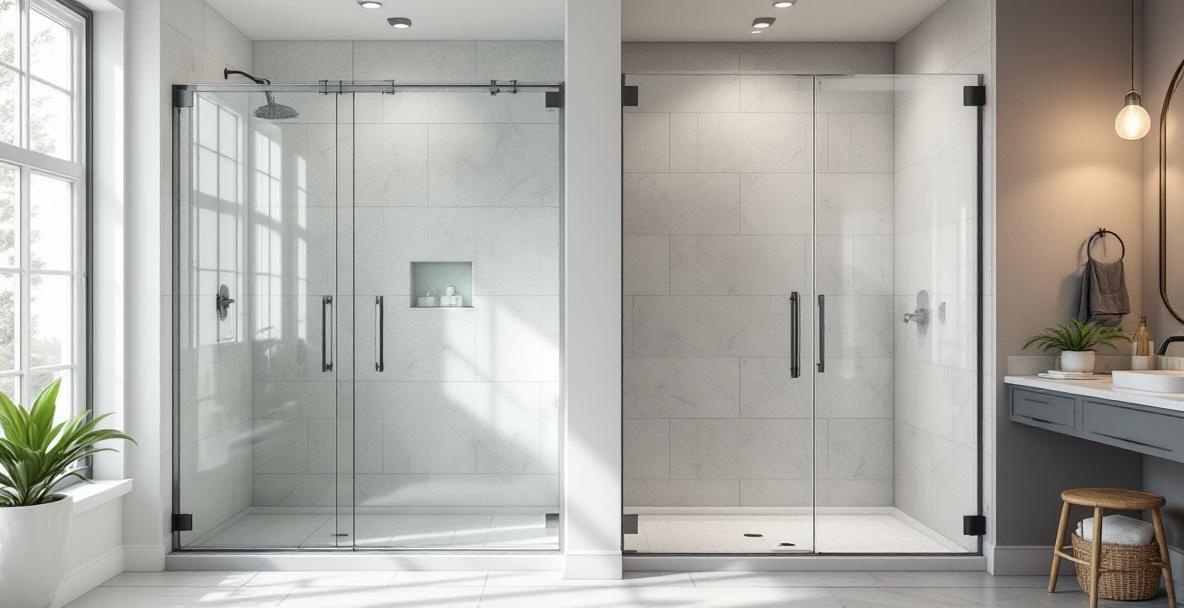
Frameless shower doors are among the safest shower enclosure options available when built to code. They use 3/8" to 1/2" thick tempered safety glass — significantly thicker and stronger than the 3/16" glass in framed systems — with hardware engineered to hold the glass securely without a perimeter frame. Professional installation eliminates the stress points that cause hardware failures.
The safety of a frameless shower door depends on three factors:
- Glass type: Must be SGCC-certified tempered safety glass meeting ANSI Z97.1 and CPSC 16 CFR 1201
- Hardware quality: Hinges, clamps, and handles must be rated for the glass weight and size
- Installation quality: Proper anchoring, shimming, and sealing prevent stress concentrations that cause failures
All three are standard practice at a reputable glass company. The risk from frameless shower doors comes almost entirely from non-certified glass or DIY/unlicensed installation — not from the frameless design itself.
2,300
emergency room visits per year in the US involve shattering glass shower doors — the overwhelming majority involving non-tempered or improperly installed glass ([CPSC](https://www.cpsc.gov/))
Safety Standards All Shower Glass Must Meet
Texas building code requires all shower enclosure glass to be safety glazing meeting ANSI Z97.1 or CPSC 16 CFR 1201 standards. The International Residential Code (IRC R308) classifies shower enclosures as "hazardous locations" requiring certified safety glazing. Any shower door — frameless, semi-frameless, or framed — installed in a Texas home must comply.
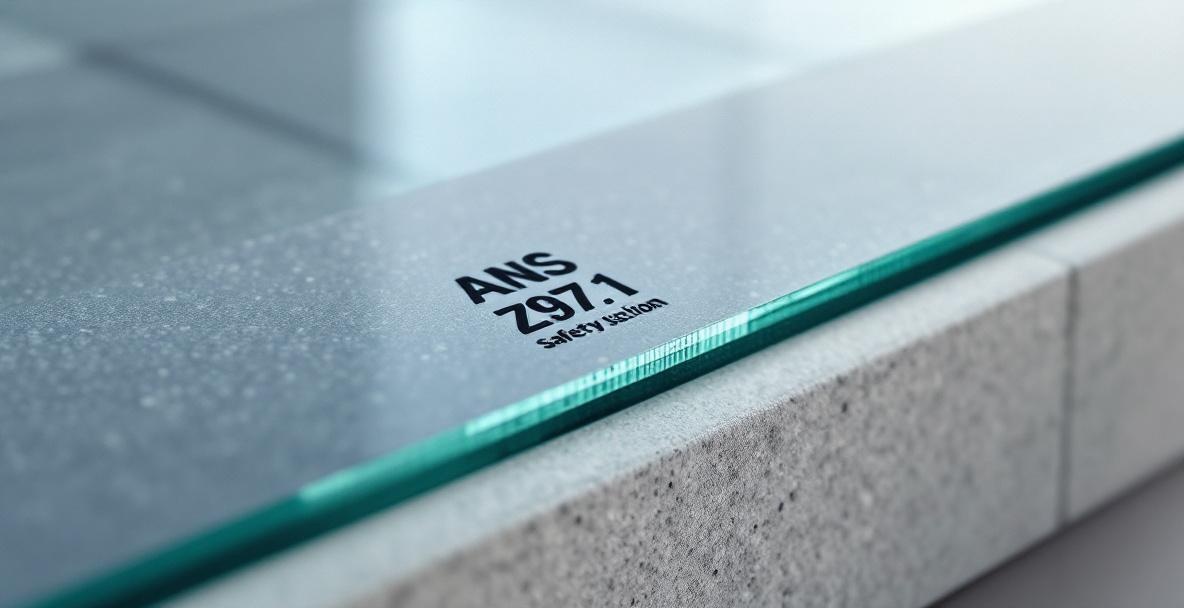
ANSI Z97.1: The American National Standard for safety glazing materials used in buildings. Sets impact resistance, fragmentation, and marking requirements. Tempered glass meeting this standard must break into small, blunt fragments (rather than large shards) when it fails.
CPSC 16 CFR 1201: The federal Consumer Product Safety Commission regulation for architectural glazing materials. Compliance with this standard is required by federal law for glass used in hazardous locations. Category II (the higher classification) is required for shower doors and panels.
IRC Section R308: The International Residential Code provision requiring safety glazing in hazardous locations, specifically listing "shower enclosures and bathtub enclosures" as requiring certified safety glass (NAHB 2026). Texas adopts the IRC with state amendments.
SGCC Certification: The Safety Glazing Certification Council independently certifies glass products that have been tested and verified against ANSI Z97.1 and CPSC 16 CFR 1201. SGCC-marked glass provides third-party verification that the product meets code requirements — not just the manufacturer's claim.
In Corinth, Lewisville, Denton, Frisco, McKinney, and across DFW municipalities, a permitted shower enclosure installation requires SGCC-certified safety glazing. Ask your glass contractor to confirm the glass carries a permanent SGCC tempering mark before installation. A reputable contractor will do this as standard practice — no need to ask twice.
How Tempered Glass Protects You When It Breaks
Tempered glass breaks into thousands of small, blunt-edged fragments roughly the size of a thumbnail — not the large, knife-edged shards of standard glass. This break pattern is the core safety advantage: a person falling into broken tempered glass is far less likely to suffer serious lacerations than someone falling into broken annealed (standard) glass.
The difference in break pattern comes from how tempered glass is made. The thermal treatment process — heating to approximately 1,200°F, then rapid air quenching — creates a surface compression layer and a core tension layer (Cardinal Glass 2026). When this stress balance is disrupted by impact, the energy releases simultaneously across the panel, fracturing it into many small pieces rather than splitting along a single fracture plane.
What tempered glass breakage looks like in a shower: A tempered shower panel that breaks fully — from a hard impact, a slammed door, or rare spontaneous failure — produces a pile of small, roughly uniform fragments at the floor. There are no large slabs of glass. The fragments have rounded edges (compared to annealed glass shards) and are significantly less likely to cause serious cuts.
What tempered glass does NOT do:
- It does not shatter from normal daily use — showering, door opening and closing, cleaning
- It does not crack progressively — tempered glass is either intact or fully shattered; there is no slow cracking
- It does not weaken over time under normal shower conditions
| Glass Type | Break Pattern | Code Status | Shower Use | |
| Tempered (3/8 in.) | Small blunt fragments | Code required | Standard for frameless | |
| Tempered (1/2 in.) | Small blunt fragments | Code required | Large panels/premium | |
| Laminated | Holds together (interlayer) | Code OK for overhead | Not standard for vertical | |
| Annealed (standard) | Large sharp shards | NOT code compliant | Prohibited in showers | |
| Framed (3/16 in. tempered) | Small blunt fragments | Code required | Framed systems only |
Certifications to Look For When Buying
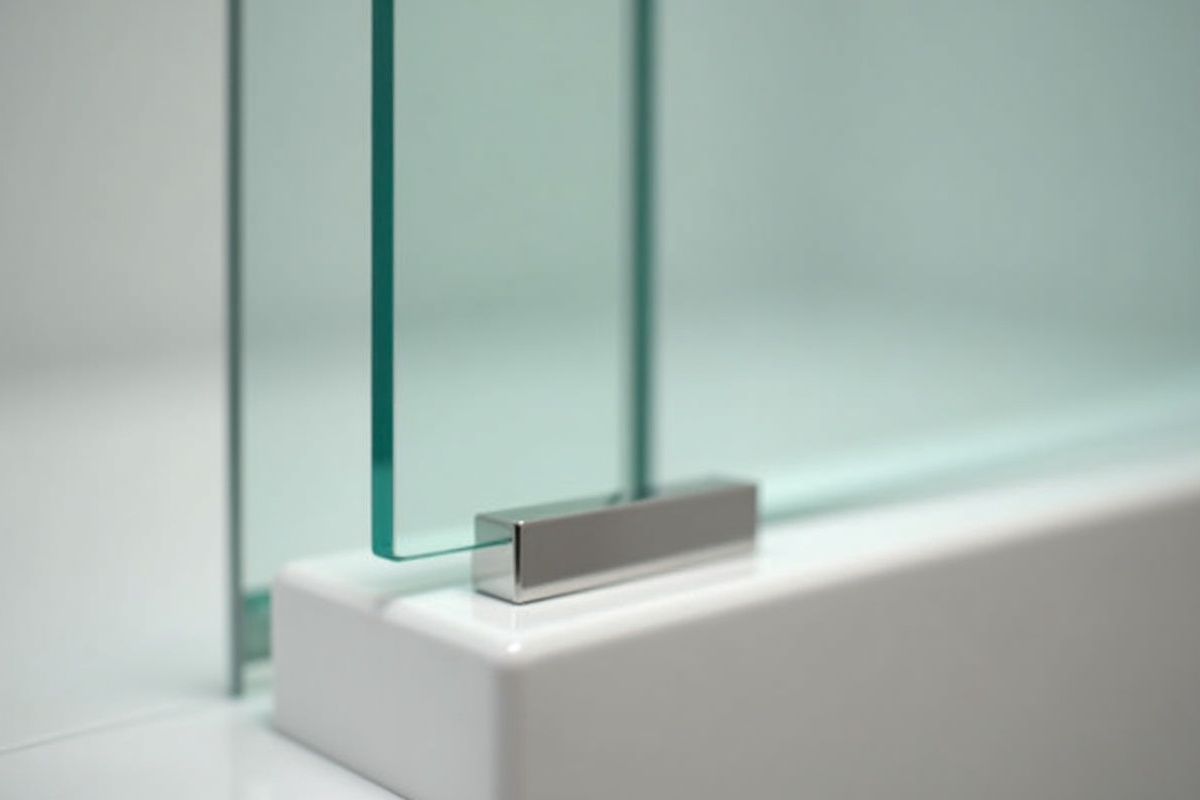
When purchasing any frameless shower door, confirm the glass carries a permanent SGCC tempering mark and that the hardware is rated for the glass panel weight and dimensions. For frameless systems, also verify the hinge and clamp hardware is engineered specifically for frameless glass loads — not repurposed from framed systems.
Glass certifications to verify:
- SGCC Mark: Permanent etched or sandblasted mark on the glass edge or corner
- ANSI Z97.1 Compliance: Listed in the certification mark
- CPSC 16 CFR 1201 Category II: Listed in the certification mark
Hardware specifications to verify:
- Hinge weight rating must match or exceed the glass panel weight (3/8" glass weighs approximately 4.9 lbs/sq ft; 1/2" glass weighs approximately 6.5 lbs/sq ft)
- Pivot and hinge hardware should be solid brass with PVD finish — not zinc alloy
- For panels wider than 24", verify hinge placement is adequate for the panel size and weight
Contractor verification: Ask your glass installer whether the glass is SGCC-certified. A licensed, reputable contractor — any member of the National Glass Association or similar trade body — will use certified glass as a matter of course and will not hesitate to confirm it.
Are Frameless Doors Safe for Families With Children?
Frameless shower doors are appropriate for families with children when installed with proper safety features: door hinges with a self-closing mechanism to prevent door swings, a polished or safety edge profile on all exposed glass edges, and a door sweep that prevents tripping at the threshold. The thick tempered glass in frameless systems is actually more resistant to impact than the thinner glass in framed shower doors.
Child-specific safety considerations:
Impact resistance: 3/8" and 1/2" tempered glass requires substantial force to break — far more than a child's typical fall or strike against the door. The glass is not fragile. Parents are sometimes concerned about the "look" of thick unframed glass, but the structural reality is that it is considerably stronger than framed alternatives.
Door swing: A frameless swing door with a proper self-closing hinge returns to a closed position after use. This prevents the door from sitting at an angle where it could be struck or fallen into. Specify self-closing hinges or a door stop when ordering a frameless system for a family bathroom.
Edge exposure: Frameless glass has exposed edges at the door overlap and panel edges. These edges are polished smooth — no sharp corners — as a standard part of fabrication. Specify a flat polish or safety bevel on all exposed edges.
Glass height: A full-height frameless panel (72–80 inches) that children cannot reach over from outside eliminates the risk of a child pulling on the top edge.
For families with young children, consider adding a door sweep or bottom seal to the frameless enclosure. This creates a slight resistance at the door that prevents it from swinging freely while also containing water. It's a small addition that meaningfully changes how the door behaves during unpredictable moments.
Households planning around mobility or aging family members have their own set of glass decisions — curbless entries, grab-compatible hardware, and low-threshold configurations are covered in our aging-in-place bathroom glass guide.
Professional vs DIY Installation — The Safety Difference
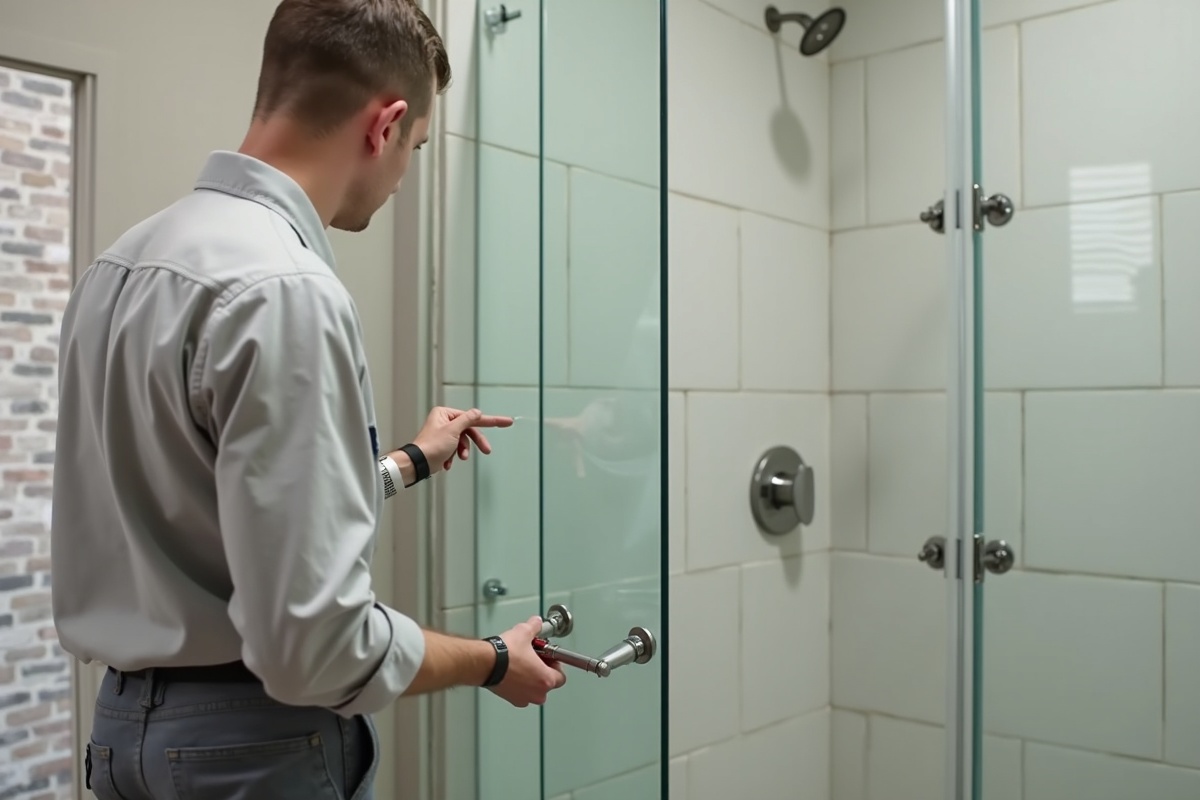
Professional installation is the single most important safety factor in frameless shower doors — more important than glass type or hardware brand. Improper anchoring, incorrect shim placement, or hardware torqued to wrong specifications create stress concentrations in the glass that can lead to spontaneous failure months after installation. A licensed glass contractor eliminates these risks.
What professional installation controls:
Anchor point integrity: Frameless hinges attach to the wall through the tile and into the stud or blocking behind. If the anchor isn't solid — if it's into hollow tile, unsupported drywall, or undersized blocking — the hinge can pull from the wall under the door's operating loads. Professional installers verify substrate quality and add blocking if necessary before anchoring hardware.
Hardware torque: Hinge mounting bolts and glass clamps must be torqued to specific values. Under-torquing allows movement and fretting; over-torquing cracks the glass or strips the anchor. Professional installers use calibrated torque tools and follow manufacturer specifications.
Plumb and alignment: A frameless door that isn't hung plumb puts the hinge pins in constant lateral load. Over time, this stresses the hinge mounting points and glass. Properly plumbed installation distributes load correctly through the hardware.
Seal placement: Water containment in a frameless shower depends on correctly positioned door sweeps, side seals, and corner seals. Improper seal placement allows water to track to the hinge and wall anchors — accelerating corrosion and eventually compromising anchor integrity. Our guide on sealing the gaps in a frameless enclosure covers which gaps are by design and which ones are letting water reach the hardware.
How to Maintain Safety Over the Long Term
Frameless shower doors require periodic hardware inspection and seal maintenance to remain safe over their 20–30-year lifespan. The glass itself requires no maintenance beyond cleaning. Hardware — hinges, clamps, door sweeps, and seals — should be inspected annually and replaced when wear is visible.
Annual inspection checklist:
Hinge and clamp hardware:
- Look for loose mounting screws at the wall and glass
- Check for corrosion (pitting, flaking, discoloration) on hinge surfaces
- Operate the door through its full swing — it should move smoothly with no binding or wobble
- A door that has developed a wobble or lateral movement needs hardware inspection immediately
Door seals and sweeps:
- Inspect the bottom door sweep for cuts, compression loss, or detachment
- Check side seals for tears or gaps
- A damaged seal allows water to reach the hardware and floor areas — replace as soon as deterioration is visible
Glass surface:
- Look for chips or cracks at hardware contact points (hinges, clamps, handles)
- Any chip in the glass — especially near a hardware hole or edge — requires professional evaluation. A chip that reaches the hardware hole can propagate to a full panel fracture under normal door operation loads.
- Visible cracks in tempered glass (rare but possible) require immediate panel replacement
Also see our frameless vs. framed shower door comparison and our complete tempered vs. laminated glass guide.
Infinity Glass & Glazing installs SGCC-certified frameless shower enclosures across Corinth, Denton, Lewisville, Frisco, McKinney, Southlake, and all DFW communities. Every installation uses code-compliant tempered safety glass with professionally anchored hardware. Contact us for a free estimate or call (940) 279-1197.
Can frameless shower glass shatter on its own?
Spontaneous breakage of tempered glass — without any external impact — is rare but possible. It occurs when microscopic nickel sulfide inclusions in the glass expand over time, eventually triggering fracture. Industry estimates put spontaneous failure rates below 1 in 1,000 panels for standard production glass. Heat-soaked tempered glass (subjected to additional thermal testing during manufacturing) reduces this risk further. When spontaneous breakage does occur, the glass shatters in the same small-fragment pattern as impact breakage — the safety advantage of tempered glass applies equally.
Are frameless shower doors safe for elderly users?
Yes, with appropriate considerations. The tempered glass itself is not a safety concern — it's stronger than framed alternatives. For elderly users, specify a D-pull or bar handle that is easy to grip without twisting; a door sweep that creates slight resistance to prevent uncontrolled door swings; a threshold or low curb that is clearly visible and easy to step over; and a towel bar or grab-bar handle that provides additional support if needed. Many frameless shower hardware systems include handle options designed for accessibility.
What is ANSI Z97.1 and why does it matter?
ANSI Z97.1 is the American National Standard for safety glazing materials used in buildings. It sets specific requirements for impact resistance, fragmentation behavior (glass must break into small, blunt pieces), and identification marking. For shower enclosures, compliance with ANSI Z97.1 is one of two standards (the other is CPSC 16 CFR 1201) required by Texas building code under IRC Section R308. Glass that meets ANSI Z97.1 has been independently tested to verify it performs safely in hazardous locations — which shower enclosures are classified as.
How often should you inspect shower door hardware for safety?
Inspect frameless shower door hardware at least annually. Check hinge and clamp mounting points for looseness, look for corrosion on metal surfaces, and operate the door through its full swing to detect any wobble or binding that wasn't present before. Inspect door sweeps and seals at the same time — deteriorated seals allow water to reach hardware anchors, accelerating corrosion. Any hardware that shows movement, significant corrosion, or mechanical binding should be evaluated by a professional glass installer before it causes a larger problem.
Is laminated glass safer than tempered for showers?
Not for standard vertical shower applications. Laminated glass holds together when broken (the interlayer bonds the fragments), which is valuable for overhead glazing where falling glass is a hazard. In a vertical shower panel, tempered glass is the code-appropriate and superior choice: it's stronger, more cost-effective, and performs better in wet environments (laminated glass can delaminate over time in sustained moisture). The IRC specifically allows tempered glass for shower enclosures; laminated glass is the alternative for overhead or sloped applications.
Related reading: