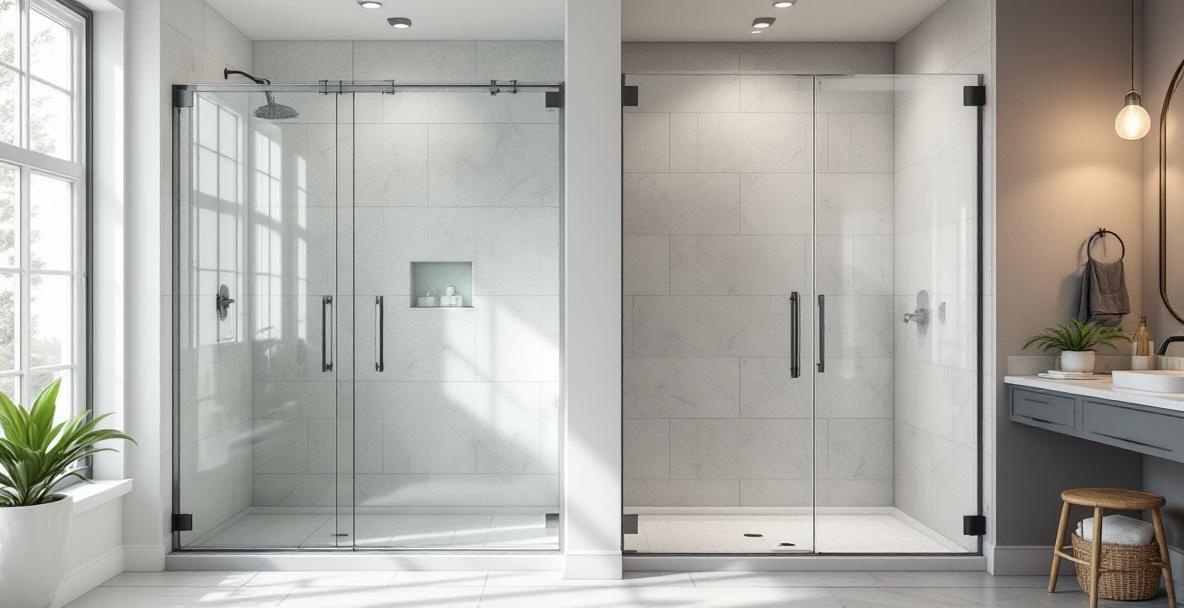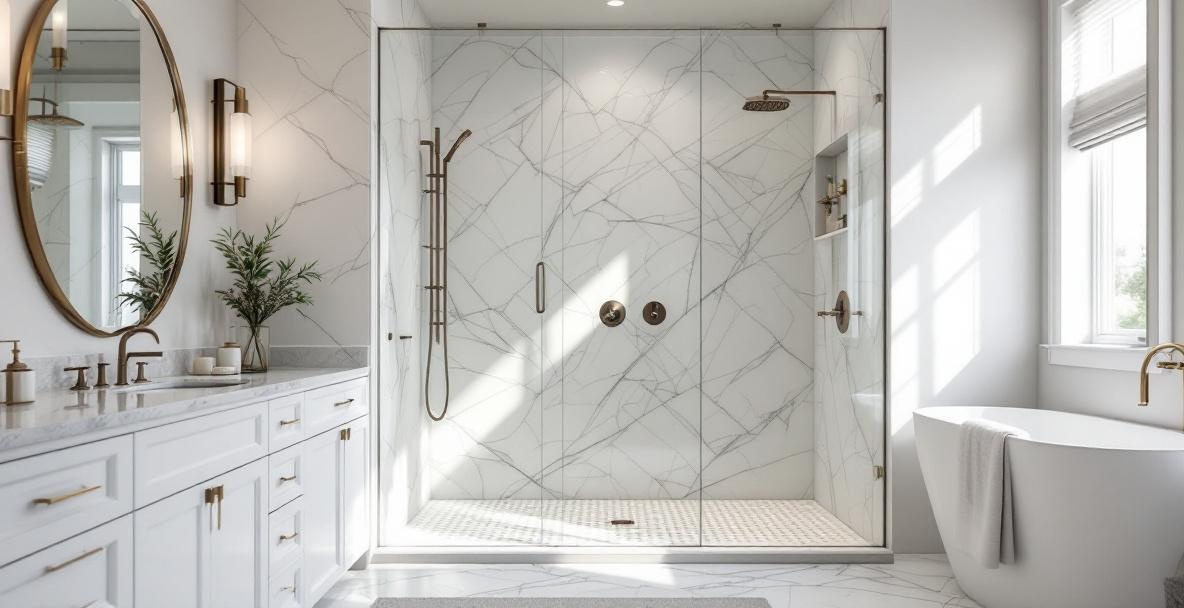
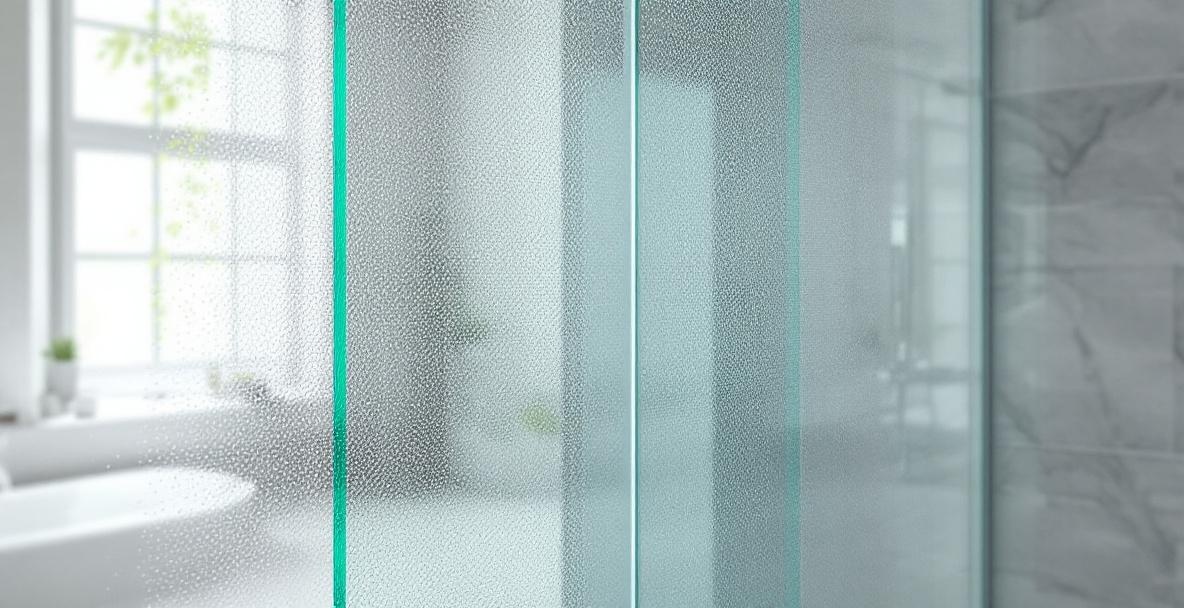
Tempered glass is the correct and code-required choice for shower enclosures in Texas. It's 4–5x stronger than standard glass and breaks into small, blunt-edged fragments that minimize injury risk. Laminated glass — two layers of glass bonded with a plastic interlayer — is used in overhead glazing and skylights, not showers. Using non-tempered glass in a shower is a code violation in Texas and most of North America.
The tempered vs. laminated question comes up when homeowners research shower glass safety and want to understand what they're actually getting. The answer is less a comparison between two equal options and more an explanation of why tempered glass became the universal standard for shower enclosures — and what laminated glass is actually used for.
How Tempered and Laminated Glass Break Differently
Tempered glass fractures into thousands of small, blunt-edged fragments roughly the size of a fingernail. Laminated glass, if broken, holds together — the plastic interlayer (PVB or SGP) bonds the fragments and prevents them from falling. These different failure modes serve different applications: tempered is safer for vertical shower glass, while laminated is required for overhead applications where falling fragments pose a hazard.
How tempered glass is made: Tempered glass starts as standard annealed (float) glass and goes through a controlled thermal process — heated to approximately 1,200°F, then rapidly cooled using jets of cold air. This creates a surface compression layer and a core tension layer. The result is glass that is 4–5 times stronger than annealed glass of the same thickness and breaks in a predictable, safety-optimized way.
Note the qualifier "of the same thickness." Tempering multiplies the strength of whatever gauge you start with; it does not make a thin panel behave like a thick one. That is why choosing between 3/8-inch and 1/2-inch is a separate decision from choosing tempered glass, and why wide or tall frameless panels still need the heavier gauge even though both are equally tempered.
When tempered glass breaks — from impact, stress, or the rare spontaneous failure — it doesn't create the large, knife-edged shards of broken annealed glass. It fractures uniformly into small, rounded fragments. A person falling into a broken tempered glass shower door is far less likely to suffer deep lacerations than someone falling into broken annealed glass.
How laminated glass is made: Laminated glass bonds two or more glass layers with a polyvinyl butyral (PVB) or structural glazing (SGP) interlayer. The interlayer is what holds the assembly together when broken. Laminated glass is standard in automotive windshields (which must hold together on impact), overhead skylights (where falling glass poses a hazard to people below), and security glazing.
Why laminated glass is not the standard for shower enclosures: In a vertical shower application, the laminated glass "stays together when broken" property doesn't provide meaningful safety advantages over tempered, and creates practical problems. If a laminated shower panel breaks, the interlayer holds a web of cracked glass in place — still a hazard, still requiring professional replacement, and potentially delaying awareness that the panel needs replacement. Moisture ingress between layers over time in a wet shower environment can also cause delamination and yellowing of the PVB interlayer.
4–5x
the strength of tempered glass versus standard annealed glass of the same thickness — the reason it's required for shower enclosures by building code ([Cardinal Glass](https://www.cardinalcorp.com/glossary/tempered-glass/))
Texas Building Code Requirements for Shower Glass
Texas building codes require safety glazing in all shower enclosures — specifically, glass that meets ANSI Z97.1 or CPSC 16 CFR 1201 standards. Tempered glass satisfies these requirements. The International Residential Code (IRC R308) and International Building Code (IBC Chapter 24) both mandate safety glazing in "hazardous locations" that include shower enclosures. Using non-safety-glazed glass in a Texas shower is a code violation.
Texas adopts the International Residential Code (IRC) with state-level amendments through the Texas Department of Insurance and local jurisdictions. For shower glass, the relevant provisions are:
IRC Section R308 — Hazardous Locations: Shower enclosures and bathtub enclosures are specifically listed as hazardous locations requiring safety glazing (ICC 2024). This means any glass used in a shower enclosure must be tempered, laminated, or otherwise meet safety glazing standards — standard float glass is prohibited.
ANSI Z97.1 and CPSC 16 CFR 1201: These are the two primary safety glazing standards. ANSI Z97.1 is the consensus standard; CPSC 16 CFR 1201 is the federal consumer product safety regulation (CPSC 2024). Tempered glass meeting these standards breaks in the small-fragment pattern required for "safety glazing" classification.
SGCC Certification: The Safety Glazing Certification Council (SGCC) certifies glass products that meet ANSI Z97.1 and CPSC 16 CFR 1201. SGCC certification verifies compliance through independent testing and factory audits. When purchasing a shower enclosure in Texas, ask whether the glass is SGCC-certified — this confirms it meets safety glazing requirements.
In DFW municipalities — Corinth, Lewisville, Denton, Frisco, Southlake, and surrounding cities — a permitted shower enclosure installation requires safety glazing that meets ANSI Z97.1 or CPSC 16 CFR 1201. A reputable glass contractor will use SGCC-certified tempered glass as a matter of standard practice. If a contractor offers "regular glass" for a lower price, that's a code violation and a safety hazard.
Why Tempered Glass Is the Standard for Showers
Tempered glass became the universal standard for shower enclosures through a combination of code requirements, practical performance, and installation characteristics:
Code compliance: As described above, tempered glass satisfies safety glazing requirements in Texas and under IRC/IBC. It's the most straightforward path to code compliance.
Break pattern safety: The small-fragment break pattern of tempered glass dramatically reduces laceration risk compared to annealed glass. This is the core safety advantage that drove code adoption.
Strength and rigidity: At 3/8" or 1/2" thickness, tempered glass is rigid enough for frameless shower enclosures — the glass itself serves as the structural element without requiring a perimeter frame.
Fabrication: Tempered glass can be cut, drilled, and polished to any custom dimension before tempering. Once tempered, it cannot be — every cut, hole, and polished edge has to be finished before the panel goes into the oven, because the tempering process leaves the surface under compression and any later cut releases it. This is why custom shower panels are fabricated to exact field dimensions rather than trimmed on site.
Longevity: Properly installed tempered shower glass typically lasts 20–30+ years under normal conditions. The glass doesn't corrode, degrade, or lose structural integrity over time in a shower environment.
Cost: Tempered glass is produced at industrial scale and is the standard specification — it's not a premium product for shower applications. The cost difference between tempered and non-tempered glass is small; the cost difference between tempered and laminated is larger (laminated is more expensive for the same size and thickness).
When Laminated Glass Is Used Instead
Laminated glass is specified for shower applications in specific limited circumstances:
Overhead shower glass: If a shower has a glass ceiling or overhead panel — for example, a glass-enclosed steam room with a glass roof panel — laminated glass is required. If the glass breaks, the interlayer prevents fragments from falling on the person below. Tempered glass is not appropriate for overhead applications where falling fragments pose a hazard.
Sloped shower panels: Glass panels installed at an angle (sloped toward the user rather than vertical) are treated similarly to overhead glazing from a code standpoint in some jurisdictions. Laminated glass may be required depending on the angle and local code interpretation.
ADA shower applications: In some accessible design contexts, laminated glass with a structural interlayer (SGP rather than PVB) is specified for frames that require specific load ratings.
High-security applications: Commercial shower enclosures in psychiatric facilities, correctional facilities, or applications where glass breakage is a security concern use laminated glass to prevent complete glass failure.
Custom wet rooms with glass floors: Structural glass floors or walk-on glass panels in luxury wet room applications require laminated glass. These are specialty commercial applications, not typical residential shower enclosures.
For the vast majority of residential shower enclosures in DFW — including master bath frameless enclosures, guest bath framed systems, and neo-angle configurations — tempered glass is the correct specification.
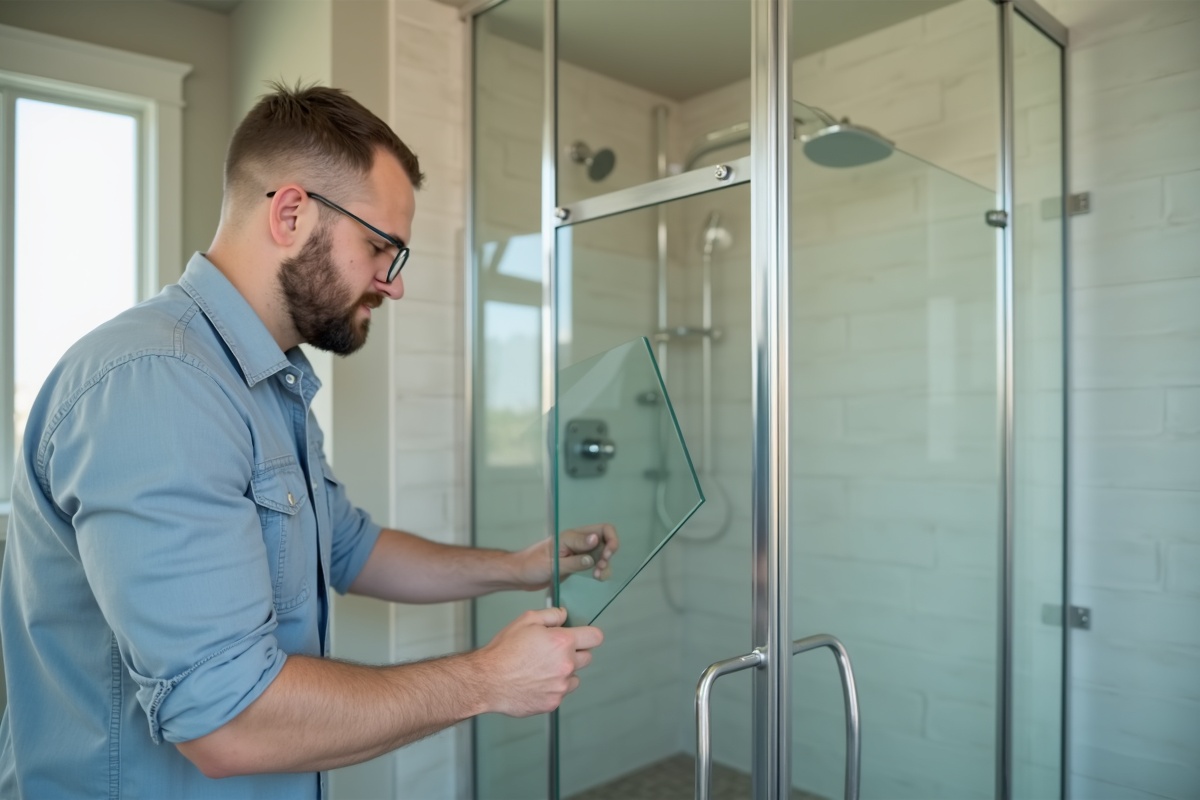
Cost Comparison
Tempered glass is not a premium add-on for shower enclosures — it's the standard specification. What you pay for is the glass thickness, the panel size, and the fabrication precision:
Tempered glass cost factors:
- 3/8" thickness: standard frameless specification, included in typical frameless quotes
- 1/2" thickness: used for large panels or maximum-rigidity applications; adds $100–$300 per panel
- Custom dimensions: glass cut to exact field measurements; included in professional installation quotes
- Low-iron (non-green-tinted) clear glass: 10–20% premium over standard clear
Laminated glass vs tempered glass cost: For the same size and thickness, laminated glass is typically 30–60% more expensive than tempered glass. An 18" × 72" panel in 3/8" tempered might cost $150–$250 at a glass supplier; the same panel in laminated glass runs $200–$400. For a full shower enclosure, the laminated premium might add $300–$800 to material cost — significant but not the primary cost driver in a full installation.
Since laminated glass is not the code-appropriate choice for standard vertical shower panels, this cost comparison is primarily relevant for overhead or sloped applications where it's actually specified.
| Factor | Tempered Glass | Laminated Glass | |
| Shower enclosure use | Standard — code required | Only for overhead/sloped panels | |
| Break pattern | Small blunt fragments | Holds together (interlayer) | |
| Strength vs annealed | 4–5x stronger | Varies — depends on interlayer | |
| Code compliance | Meets ANSI Z97.1, CPSC 16 CFR 1201 | Meets safety glazing if rated | |
| Cost relative | Standard baseline | 30–60% more than tempered | |
| Moisture performance | Excellent — single pane | Possible delamination in wet environments | |
| Fabrication | Custom cut before tempering | Can be cut after lamination |
Safety Certifications to Look For
These marks are the concrete answer to the question most people actually have, which is whether a frameless shower door is safe without a metal frame holding the glass. The certification is on the glass, not the frame — so a certified frameless panel and a certified framed panel have passed the identical impact and fragmentation tests.
- 1
SGCC Certification
Look for the SGCC (Safety Glazing Certification Council) mark on the glass. This independent certification confirms the glass has been tested and verified to meet ANSI Z97.1 and CPSC 16 CFR 1201 safety glazing standards — the requirements for hazardous locations including shower enclosures. - 2
ANSI Z97.1 Compliance
ANSI Z97.1 is the American National Standard for safety glazing materials. Glass marked as meeting this standard has passed impact resistance and fragmentation testing that qualifies it for safety glazing applications. - 3
CPSC 16 CFR 1201 Compliance
The Consumer Product Safety Commission federal safety standard for architectural glazing. Compliance with this standard is required for glass used in doors, shower enclosures, and other hazardous locations under federal consumer protection regulations. - 4
Tempering Mark
Tempered glass is required to carry a permanent mark — typically etched or sandblasted into a corner of the glass — identifying it as tempered and showing the manufacturer and applicable standards. This mark must be present on all safety-glazed shower glass. - 5
Thickness Verification
Ask for the specific glass thickness in writing: 3/8" (10mm) or 1/2" (12mm) for frameless applications. Thinner glass (1/4") is appropriate only for framed systems where the frame carries structural load. Verify thickness before installation begins.
Does Glass Thickness Change the Safety Equation?
Thicker tempered glass is not inherently "safer" in terms of break pattern — all tempered glass of any thickness breaks into small fragments when it fails. Thickness affects structural rigidity, deflection resistance, and the energy required to break the glass. For frameless shower enclosures, 3/8" is the minimum appropriate thickness; 1/2" is used for larger panels.
3/8" (10mm) tempered glass:
- Standard specification for frameless shower doors and fixed panels
- Appropriate for panels up to approximately 36" wide × 80" tall
- Provides adequate rigidity for standard hinged and pivot door applications
- Minimum thickness required by most frameless hardware systems
1/2" (12mm) tempered glass:
- Specified for larger panels (over 36" wide or over 80" tall)
- Provides additional rigidity for panels with large unsupported spans
- Required for some hardware systems (particularly heavy hinges and pivot systems)
- Often specified in premium applications for the tactile quality of heavier glass
Thickness and break resistance: 1/2" tempered glass requires more force to break than 3/8" — but both are dramatically stronger than standard annealed glass. The practical difference in everyday shower use (accidental impacts, door swings, pressure during cleaning) is minimal. Both will withstand normal shower conditions for decades.
Is tempered glass required by code for shower enclosures in Texas?
Yes. Texas building codes adopt the International Residential Code (IRC), which under Section R308 requires safety glazing in "hazardous locations" that specifically include shower and bathtub enclosures. Safety glazing must meet ANSI Z97.1 or CPSC 16 CFR 1201 standards — which tempered glass satisfies. Using standard annealed glass in a Texas shower enclosure is a code violation. Any licensed glass contractor operating in DFW will use SGCC-certified tempered glass as standard practice.
Can tempered shower glass shatter spontaneously?
Spontaneous breakage of tempered glass is rare but possible. It occurs when nickel sulfide inclusions — microscopic contaminants present in some glass batches — expand over time and cause the glass to fracture without external impact. Industry estimates put spontaneous breakage rates at less than 1 in 1,000 panels for standard production glass. Heat-soaked glass (subjected to an additional thermal test during manufacturing) reduces this risk further. Spontaneous breakage results in the same small-fragment break pattern as impact breakage — the safety advantage of tempered glass applies to all failure modes.
What happens if laminated shower glass breaks?
If laminated glass breaks, the interlayer (PVB or SGP) holds the cracked fragments together. The panel doesn't shatter into individual pieces — it holds a web of cracks in a matrix held by the plastic layer. In a horizontal overhead application, this prevents fragments from falling. In a vertical shower application, the broken panel is still a hazard (the cracked glass has sharp edges within the laminate) but may not immediately fall. The laminated panel would need immediate professional replacement regardless. In wet environments, the broken laminate can allow moisture to delaminate the interlayer over time.
How thick should frameless shower glass be for safety?
Frameless shower glass should be a minimum of 3/8" (10mm) for standard panel sizes (up to approximately 36" wide × 80" tall). Larger panels — wider than 36" or taller than 80" — should use 1/2" (12mm) glass for appropriate rigidity. Thinner glass (3/16" or 1/4") is appropriate only for framed systems where the aluminum channel provides structural support. For frameless applications, the glass itself is the structural element and must be thick enough to resist flex and racking without a perimeter frame.
What does SGCC certification mean?
SGCC stands for Safety Glazing Certification Council — an independent, non-profit organization that certifies glass products for safety glazing applications. SGCC certification means the product has been tested by an independent laboratory to verify it meets ANSI Z97.1 and CPSC 16 CFR 1201 standards, and the manufacturing facility is subject to ongoing audits to ensure consistent production quality. The SGCC mark on shower glass provides assurance that the product meets the safety glazing requirements for shower enclosures under IRC Section R308 and Texas building codes.
Also see our how to choose a shower door guide and our frameless vs framed shower door comparison.
Infinity Glass & Glazing uses SGCC-certified tempered safety glass on every shower installation throughout DFW — cut to exact field dimensions with professional installation. Contact us for a free estimate on your shower glass project.
Related reading: