Bypass sliding glass shower doors are the go-to solution for tub-shower combos and tight bathrooms. Framed bypass installations cost $400 to $1,100 in DFW (HomeGuide, 2026), and sliding doors generally cost less than pivoting alternatives (Dixie Shower Doors). They save floor space because no door swings into the room.
If your bathroom doesn't have room for a door to swing open, a bypass slider solves the problem elegantly. Two glass panels sit on parallel tracks and slide past each other, giving you access to the shower without needing any clearance space in front of the opening.
This guide covers how bypass doors work, what they cost, how they compare to hinged doors, and when they're the right choice for your DFW home.
TL;DR: Bypass sliding shower doors use two glass panels on parallel tracks that slide past each other. They're ideal for tub-shower combos and small bathrooms where a swinging door won't fit. Framed bypass installations cost $400 to $1,100 in DFW (HomeGuide, 2026).
What Are Bypass Sliding Shower Doors?
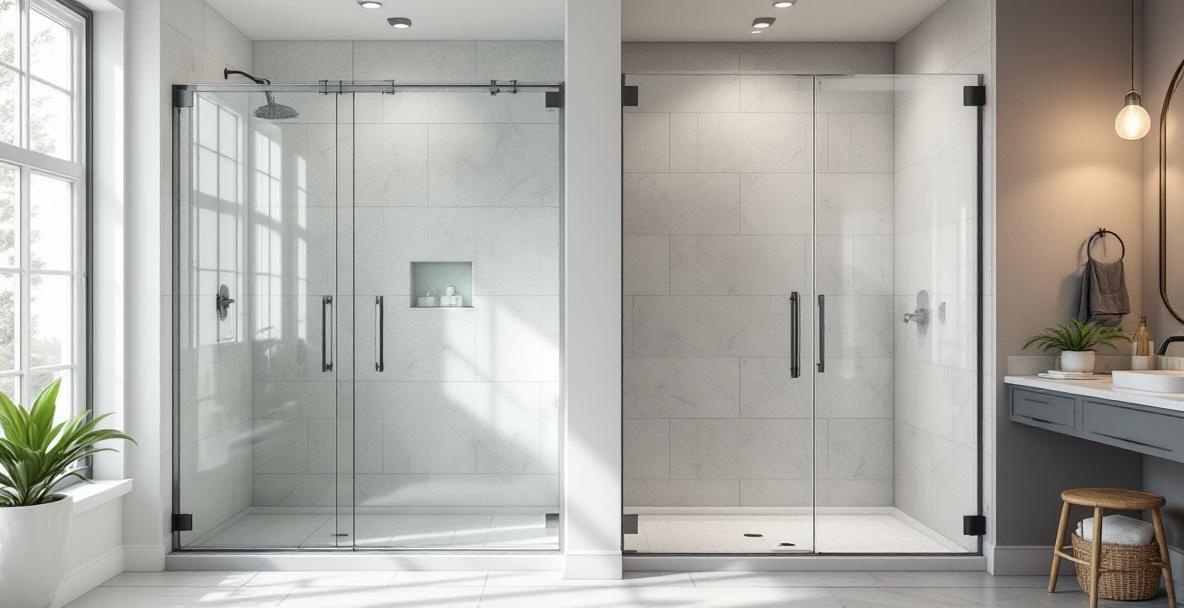
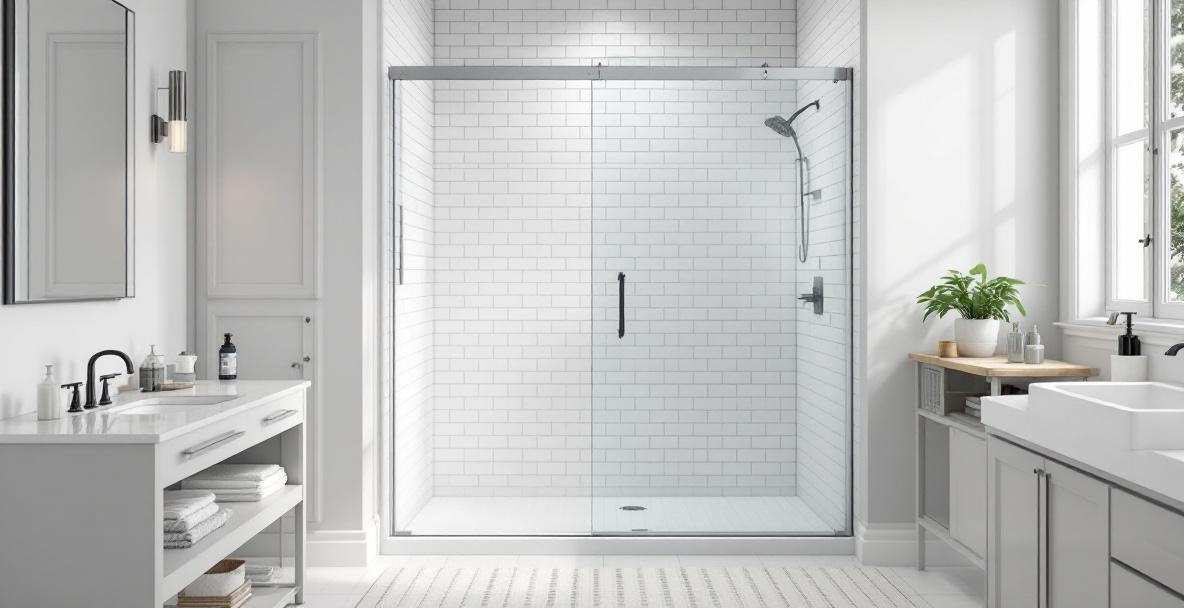
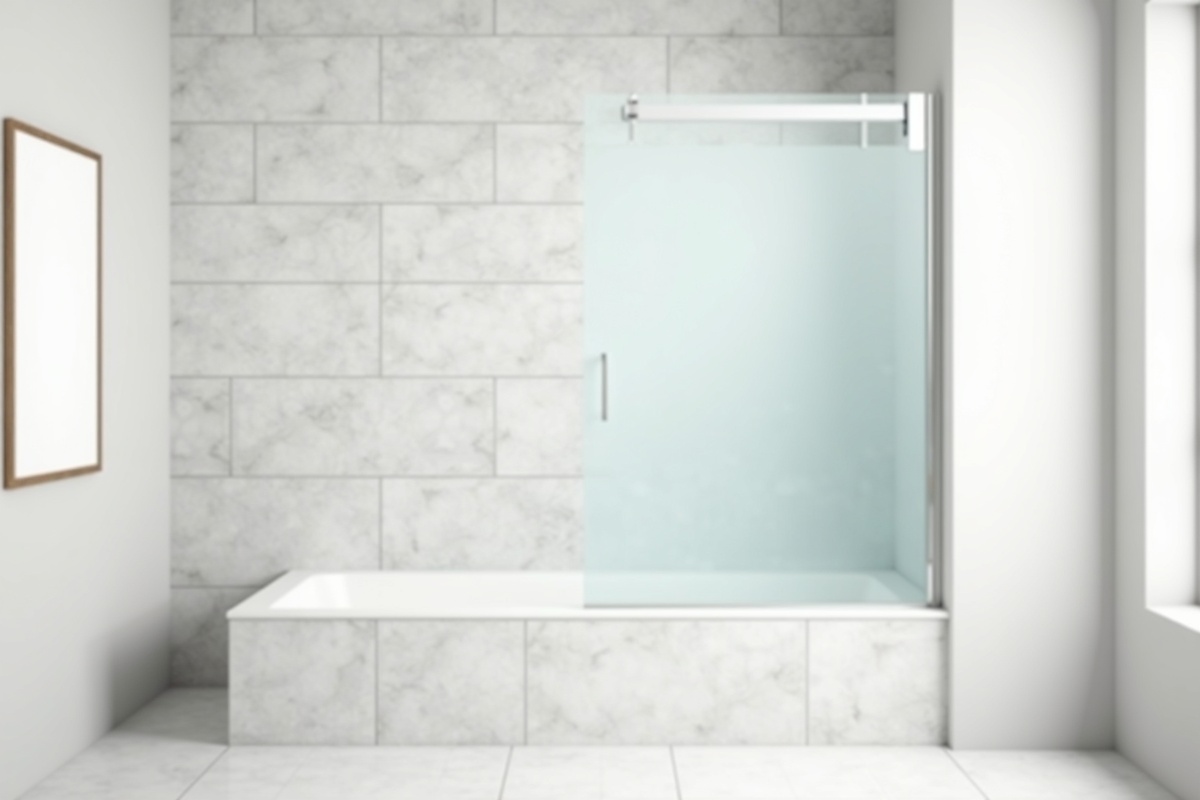
Bypass shower doors use two or more glass panels mounted on parallel tracks -- one slides in front of the other to open. Unlike hinged doors, they require zero clearance space because the panels move laterally along the track rather than swinging outward (Dixie Shower Doors).
The design is simple but effective. A top track (and sometimes a bottom track) guides the panels as they slide. When you open one side, the other panel remains stationary. This means you can access about half the shower opening at a time -- enough to step in and out comfortably.
Bypass doors have been a bathroom staple for decades, particularly on tub-shower combinations. They're the most common type of shower door in American homes, and for good reason: they work in spaces where nothing else will.
How They Differ from Other Sliding Doors
Don't confuse bypass doors with barn-door style sliders. A barn-door shower panel is a single panel that slides along the exterior of the opening on an exposed track. Bypass doors have two panels that overlap and slide within the opening itself. The distinction matters because bypass doors provide a more complete seal against water spray.
$400-$1,100
installed cost for framed bypass shower doors in DFW (HomeGuide, 2026)
What Are the Benefits of Bypass Sliding Doors?
Bypass doors save space, cost less than hinged alternatives, and work on virtually any tub-shower combo. Sliding doors generally cost less than pivoting doors because the track system is simpler to manufacture and install (Dixie Shower Doors).
Here are the practical advantages that make bypass doors so popular:
- No swing clearance needed -- the panels slide within the track, so you don't need 24-30 inches of open floor space in front of the shower
- Lower cost -- simpler hardware (tracks vs. hinges) means lower material and labor costs
- Universal fit -- available in standard widths from 44 to 60 inches, fitting most tub-shower combinations
- Easy operation -- light push to slide, no pulling against gravity like a hinged door
- Child and senior friendly -- no heavy door to push open, no risk of the door swinging into someone
When Bypass Is the Clear Winner
If you have a standard 60-inch tub-shower combo with a toilet or vanity directly in front of it, bypass is almost always the right call. A hinged door would swing into the toilet or vanity. A curtain works but doesn't contain water spray as well. Bypass gives you the containment of glass without the space requirements of a swinging door.
Citation capsule: Bypass sliding glass shower doors cost $400 to $1,100 for framed installations in DFW and require zero swing clearance, making them the most practical option for tub-shower combos and small bathrooms where hinged doors won't fit, according to HomeGuide's 2026 pricing data.
How Do Bypass Doors Compare to Hinged Doors?
Bypass doors excel in tight spaces and cost less, while hinged doors offer a wider opening and a more premium look. Frameless hinged doors require 3/8-inch to 1/2-inch tempered glass and need 22 inches of minimum clearance (IRC Section R308).
Choosing between bypass and hinged comes down to your bathroom layout and priorities. Here's a direct comparison:
| Bypass Sliding | Hinged (Swing) | |
| Floor Clearance | None needed | 22-30 inches minimum |
| Opening Width | ~50% of total opening | Full opening width |
| Best For | Tub combos, small bathrooms | Walk-in showers, large bathrooms |
| Framed Cost | $400-$1,100 | $500-$1,200 |
| Frameless Cost | $800-$1,800 | $900-$2,500 |
| Glass Options | 1/4-inch to 3/8-inch | 3/8-inch to 1/2-inch |
| Water Containment | Good (track seals top/bottom) | Good (seals + sweeps) |
| Maintenance | Track cleaning required | Hinge adjustment occasionally |
| Aesthetic | Practical, functional | Modern, premium |
The Space Question
This is really the deciding factor. Measure the space directly in front of your shower opening. If you have at least 24 inches of clear floor space, a hinged door is an option. If that space is blocked by a toilet, vanity, or wall -- bypass is your answer.
The Aesthetic Question
Hinged doors, especially frameless ones, look more premium. The glass swings freely without visible tracks, creating that clean, open look. Bypass doors always have a top track (and sometimes a bottom rail), which adds visual hardware to the enclosure. For homeowners prioritizing aesthetics in a larger bathroom, hinged is usually preferred.
[PERSONAL EXPERIENCE] We install both types regularly across DFW. About 60% of our tub-shower projects use bypass because the bathroom layout doesn't accommodate a swing door. In walk-in shower remodels with enough space, hinged outsells bypass by 3 to 1. The full rundown of the bypass, single-slider, and barn-style systems we install is on our sliding shower doors service page.
How Much Do Bypass Sliding Doors Cost?
Framed bypass sliding doors cost $400 to $1,100 installed in DFW, while semi-frameless options run $600 to $1,500 and frameless versions range from $800 to $1,800 (HomeGuide, 2026). The frame style drives most of the price difference.
Cost Breakdown by Frame Type
- Framed bypass ($400-$1,100) -- aluminum frame around all glass edges. Most affordable, most common on tub combos. Glass is typically 1/4-inch to 5/16-inch.
- Semi-frameless bypass ($600-$1,500) -- frame on the top track and bottom rail, but glass edges are exposed. A middle ground between cost and aesthetics.
- Frameless bypass ($800-$1,800) -- minimal hardware, thicker glass (3/8-inch), sleeker look. Top track is still present but more refined.
What Affects Price
- Glass thickness -- thicker glass costs more but feels more substantial
- Glass treatment -- clear, frosted, rain pattern, or low-iron each have different price points
- Hardware finish -- chrome is cheapest; matte black, brushed nickel, and brushed gold cost more
- Opening width -- wider openings need longer tracks and larger panels
- Installation complexity -- out-of-plumb walls or unusual tub configurations add labor time
What Glass and Hardware Options Are Available?
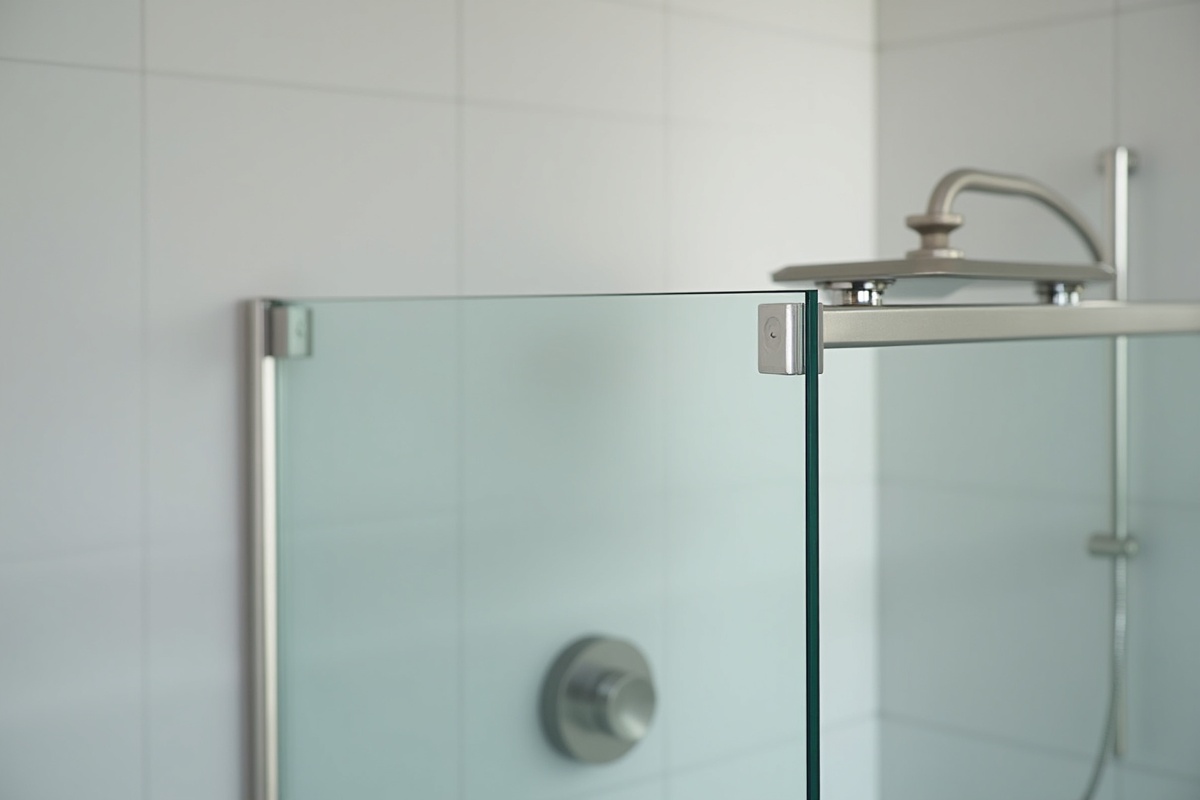
Bypass doors come in clear, frosted, rain-textured, and patterned glass with hardware finishes including chrome, brushed nickel, matte black, and brushed gold. Clear glass is standard, while low-iron glass eliminates the green tint found in standard clear glass.
Glass Options
- Clear -- the most popular choice, lets maximum light through
- Low-iron (Starphire) -- eliminates the slight green tint of standard clear glass for a true crystal-clear appearance
- Frosted -- acid-etched surface provides privacy while still transmitting light
- Rain pattern -- textured glass mimics raindrops for a decorative privacy option
- Patterned -- various embossed or textured options for different aesthetic preferences
Hardware Options
- Track finish -- should match your other bathroom fixtures (faucet, towel bars, showerhead)
- Towel bar -- most bypass doors include a towel bar on the outer panel
- Rollers -- quality rollers make the difference between smooth sliding and grinding. Look for sealed ball-bearing rollers, not plastic wheels. When an older bypass door starts to drag or jump the track, worn rollers are almost always the cause — see our roller and track repair guide.
How Are Bypass Sliding Doors Installed?
Professional bypass door installation takes 1 to 3 hours for framed units and 2 to 4 hours for frameless. The process involves mounting the tracks, hanging the glass panels, adjusting the rollers, and sealing the edges.
- 1
Measure the Opening
The installer measures the width and height of the opening at multiple points to account for walls that aren't perfectly plumb or level. Even pre-cut stock doors need precise measurement for proper fit. - 2
Install the Top Track
The track is mounted to the wall studs or tile above the opening. It must be level -- if the track isn't level, the doors won't slide smoothly and may roll to one side. - 3
Install the Bottom Rail (If Applicable)
Framed and some semi-frameless doors have a bottom rail mounted on the tub rim or shower curb. This guides the bottom of the panels and helps contain water. - 4
Hang the Glass Panels
Each panel is attached to rollers and hung from the top track. The panels are adjusted so they slide smoothly without binding or wobbling. - 5
Adjust and Seal
Rollers are fine-tuned for smooth operation, bumpers are installed to prevent the panels from slamming, and seals are placed along the edges and where the panels overlap to minimize water escape.
When Should You Choose Bypass Over Other Door Types?
Choose bypass sliding doors when your bathroom layout doesn't allow swing clearance, when you have a standard tub-shower combo, or when budget is a primary concern. They're the most practical door type for the majority of American bathrooms.
Bypass is the right choice if:
- Your tub or shower opening is directly across from a toilet, vanity, or wall with less than 24 inches of clearance
- You have a standard 60-inch tub-shower combo
- You want glass containment without the cost of a frameless hinged setup
- You're updating a builder-grade bathroom on a moderate budget
- Ease of use matters (young children, elderly family members)
Consider alternatives if:
- You have a dedicated walk-in shower with plenty of floor space (hinged or pivot door)
- You want an open, doorless wet-room look (fixed panels only)
- Aesthetics are your top priority and budget isn't a constraint (frameless hinged)
Bypass doors get a reputation as "basic" or "outdated," but that's mostly a perception problem driven by cheap, builder-grade examples. A well-made semi-frameless bypass with brushed gold hardware and low-iron glass looks genuinely premium -- it's the quality of the glass and hardware that determines the aesthetic, not the door mechanism.
Find the Right Bypass Door for Your DFW Bathroom
Bypass sliding shower doors remain the most practical option for millions of bathrooms -- especially tub-shower combos and compact layouts. Whether you choose framed, semi-frameless, or frameless, the key is quality glass, smooth hardware, and proper installation.
If you're in the Dallas-Fort Worth area and want to explore bypass or any other shower door style, contact us for a free consultation or call (940) 279-1197. We'll measure your space and recommend the option that fits your bathroom and your budget.
Do bypass sliding shower doors leak?
Properly installed bypass doors with good seals minimize water escape. Some water can escape where the two panels overlap, but this is managed with interlocking seals. Bottom rails on framed models also contain drips. The key is quality installation and intact seals -- replace worn seals promptly to maintain water containment.
Can bypass shower doors be frameless?
Yes. Frameless bypass doors use thicker glass (3/8-inch) and a streamlined top track with minimal visible hardware. They cost $800 to $1,800 installed -- more than framed ($400-$1,100) but significantly less than a frameless hinged enclosure. The top track is still present but is much slimmer and less visually prominent.
How wide does the shower opening need to be for bypass doors?
Standard bypass doors fit openings from 44 to 60 inches wide. Wider openings (up to 72 inches) are available with three-panel bypass systems. Measure the exact width of your opening at the top, middle, and bottom -- tub rims and walls are rarely perfectly even.
Are bypass sliding doors good for small bathrooms?
Bypass doors are the best option for small bathrooms because they require zero swing clearance. The panels slide within the opening rather than swinging into the room. This makes them ideal for bathrooms where a toilet, vanity, or wall sits directly in front of the shower.
Related reading: shower door types comparison and our shower door buyer guide.
Related reading: