Yes — you can install a frameless shower door on a standard bathtub. The bathtub must have a flat, level deck surface for wall-mount or tub-deck hardware, and the opening must be a standard alcove configuration. Frameless hinged tub doors and frameless sliding bypass systems are both available. Professional measurement is essential because tub surrounds are rarely perfectly plumb.
Bathtubs with shower curtains are one of the most common upgrade candidates in DFW bathrooms. The curtain collects mold, needs replacing every year, and looks dated in any bathroom above entry level. A frameless glass tub door solves all three problems at once — and it's completely feasible on most standard bathtub configurations.
This guide covers exactly what makes a bathtub a good candidate for frameless glass, which door types work, what the installation requires, and the full cost picture for DFW homeowners.
Can You Put Frameless Glass on a Standard Bathtub?
A standard 60-inch alcove bathtub — the most common configuration in DFW homes — is an ideal candidate for a glass tub door. The three-wall alcove provides the mounting surfaces needed for hinged or sliding frameless glass, and the tub deck provides a base for hardware. The critical requirements are: a flat, level tub deck at least 1 inch wide at the mounting point, walls that are reasonably plumb, and an opening width that accommodates the door system selected.
Most bathtubs installed in DFW homes since the 1990s are standard 60-inch alcove tubs — three walls, one open side. This is exactly the configuration frameless tub door systems are designed for. Here's what makes a bathtub compatible:
Compatible configurations:
- Standard 60-inch alcove tub (three-wall installation)
- Tub deck at least 1 inch wide at the glass mounting point
- Walls within ¼ inch of plumb (correctable with hardware adjustment)
- Opening height between 55 and 72 inches (door systems cover this range)
Configurations that require custom work:
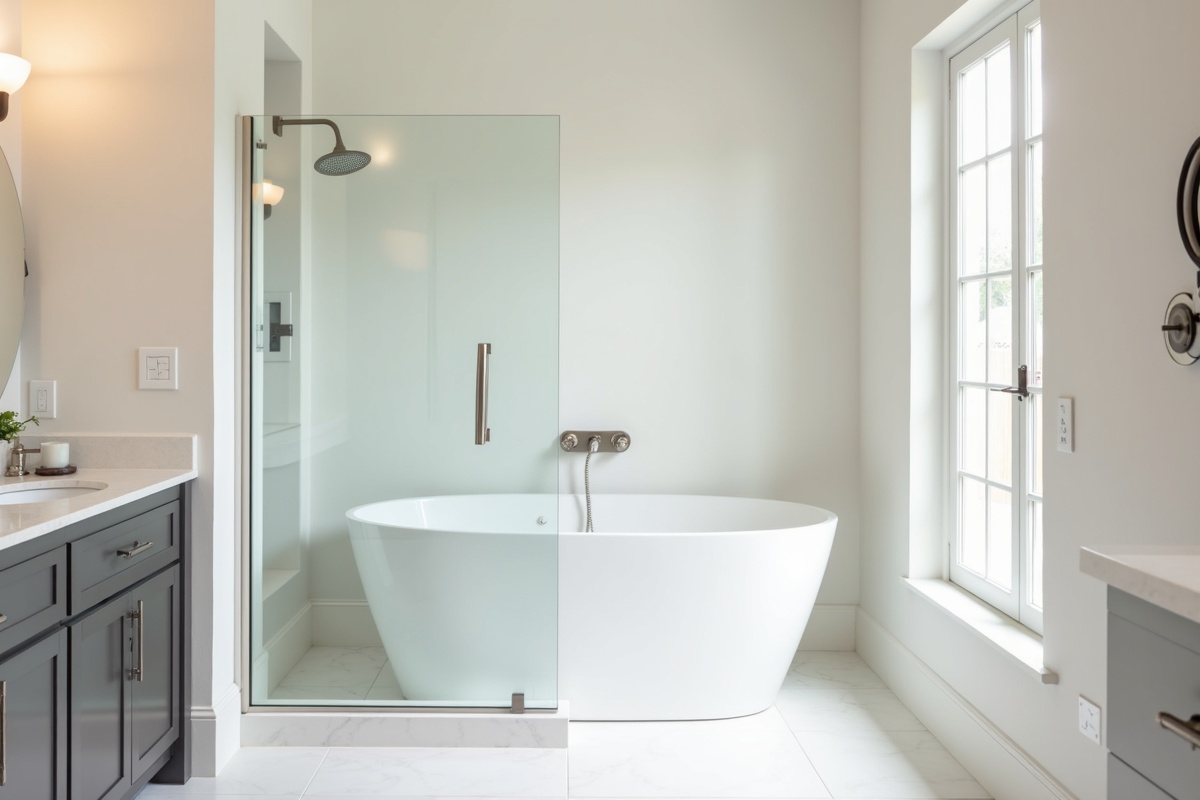
- Freestanding tubs (no walls to mount against — frameless glass isn't the right solution)
- Drop-in tubs in open bathroom configurations
- Curved or irregular tub decks that won't accept flat-base hardware
- Tub surrounds with significant out-of-plumb walls (more than ½ inch requires special hardware or shimming)
Configurations that aren't suitable:
- Jetted tubs with access panels at the deck — hardware placement may conflict with panel locations
- Tubs below 54-inch finished floor to ceiling height
The good news: the vast majority of DFW homes with standard builder-grade bathtubs qualify without modification.
60–70%
ROI on frameless shower door investment — one of the highest returns in bathroom upgrades ([Angi, 2026](https://www.angi.com/articles/how-much-does-it-cost-install-glass-shower-door.htm))
Which Door Types Work on Tubs?
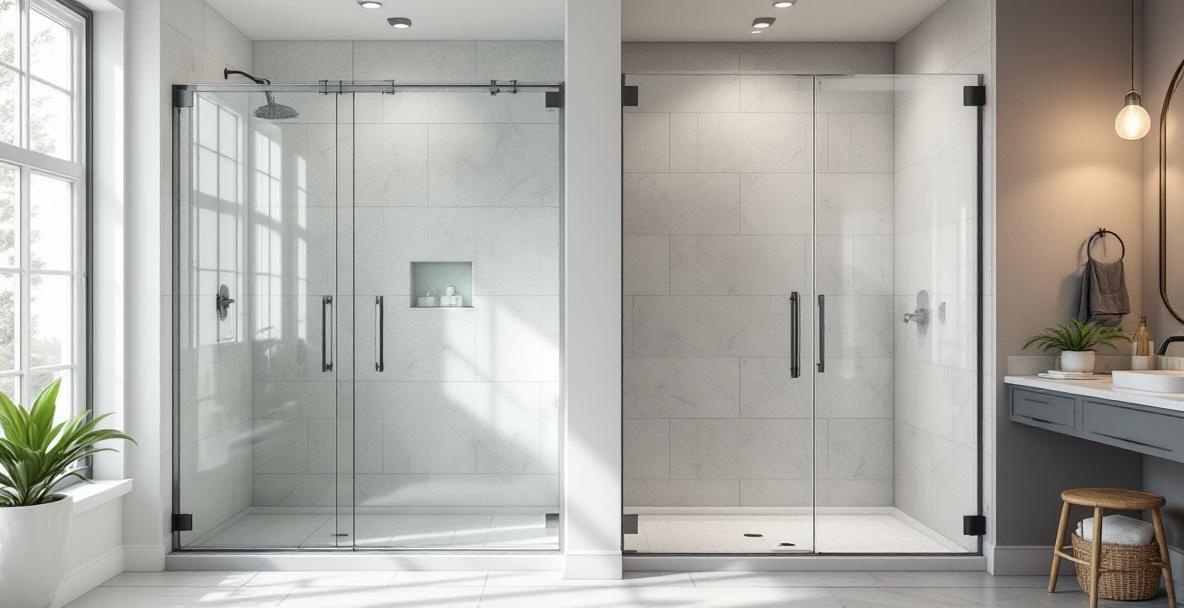
Two frameless door types work on bathtubs: frameless hinged doors (a single door panel on hinges attached to the wall or tub wall) and frameless sliding bypass doors (two panels that slide past each other on a minimal hardware system). Both eliminate the perimeter frame of traditional tub enclosures. Hinged doors give a cleaner look; sliding bypass doors require less clearance outside the tub.
Frameless hinged tub door:
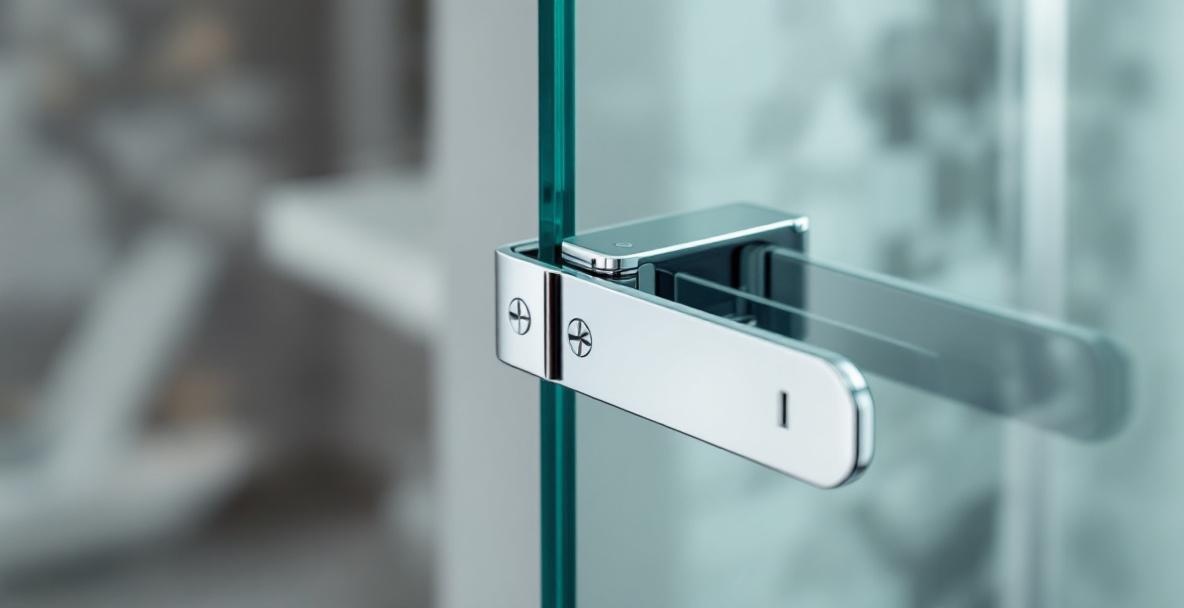
- Single glass panel on wall-mounted pivot or barrel hinges
- Requires swing clearance outside the tub (typically 24–30 inches of clear floor space)
- Cleanest visual result — no top track, minimal hardware
- Best for bathrooms with adequate clearance opposite the tub
- Glass: 3/8-inch tempered standard; 1/2-inch available for wider panels
- Common DFW configurations: 24-inch, 28-inch, 30-inch single door panels
Frameless sliding bypass door:
- Two glass panels that slide past each other on minimal hardware (top guide + bottom guide)
- No swing clearance required — panels slide parallel to the tub
- Slightly more hardware visible than a hinged door (guide channels at top and bottom of opening)
- Best for bathrooms where swing clearance is limited
- Glass: 3/8-inch standard for bypass systems
- Covers the full 60-inch tub opening in most configurations
Semi-frameless bypass (if full frameless isn't available):
- Top-hung system with a rail at the top, no bottom track on the tub deck
- A cleaner option than fully framed bypass systems
- Lower cost than fully frameless, but more hardware visible
| Door Type | Clearance Needed | Cost Range | Best For | |
| Frameless Hinged | 24–30" swing | $900–$1,800 | Clean look, adequate space | |
| Frameless Bypass Slider | None (slides parallel) | $1,200–$2,200 | Tight bathrooms, modern look | |
| Semi-Frameless Bypass | None | $700–$1,400 | Budget-conscious upgrade | |
| Framed Bypass | None | $400–$900 | Entry-level, rental property |
What the Installation Requires
Installing frameless glass on a bathtub requires: proper wall anchoring into studs or with appropriate anchors, hardware mounted to the tub deck or tub surround walls, a silicone seal at all glass-to-wall and glass-to-tub junctions, and a bottom sweep or seal to prevent water from migrating under the door panel. All of this requires precise measurement — tub surrounds are rarely perfectly square.
Here's what a professional frameless tub door installation involves:
- 1
Precision Measurement
The installer laser-measures the opening width, height from tub deck to ceiling (or planned door top), and checks wall plumb from top to bottom. Tub surrounds in DFW homes built before 2005 frequently have walls that are ¼–½ inch out of plumb — this must be measured and accounted for in the glass fabrication order. - 2
Glass Fabrication
Custom glass panels are fabricated to the exact measured dimensions. This is not a stock-size product — each piece is cut, edged, and tempered specifically for your tub opening. Fabrication typically takes 7–14 days after measurement. - 3
Hardware Layout
On installation day, the installer marks hardware positions on walls and tub deck, confirms anchor points hit studs or require appropriate wall anchors, and dry-fits all hardware before drilling. - 4
Drilling and Anchoring
Wall hardware (hinges for a hinged door; top guide and end clamps for a bypass system) is drilled and anchored. For tiled tub surrounds, this requires carbide-tip drill bits and careful technique to avoid cracking tile. - 5
Glass Setting and Alignment
The glass panel(s) are set into the hardware and adjusted for plumb and level. This is where the precision measurement pays off — glass that was fabricated to the exact opening dimensions fits cleanly without gaps or binding. - 6
Silicone Sealing
Every junction where glass meets wall and where the door frame meets the tub deck is sealed with 100% silicone caulk. This is the water containment layer — it must be applied cleanly and allowed to cure fully (24 hours minimum) before the shower is used. It is also the first thing to check years later if water starts escaping; see our guide to fixing a leaking shower door.
How Much Does a Frameless Tub Door Cost?
Professional shower door installation runs $500–$1,000 in labor, with glass specialists billing $50–$100 an hour, according to Angi. Total project cost including glass and hardware is typically $1,200–$2,500 for a hinged door and $1,500–$3,000 for a bypass system. The US glass shower door market is projected to reach $4.51 billion by 2026, reflecting sustained demand for frameless upgrades across the country (PR Newswire).
Cost breakdown for DFW frameless tub door installations:
- Glass fabrication (custom, 3/8-inch tempered): $400–$900 depending on panel count and size
- Hardware (hinges, handles, guides, clamps): $200–$600 depending on finish and system type
- Labor (measurement + installation): $300–$600 (separate visits for measure and install)
- Silicone and consumables: $50–$100
- Total installed, single hinged door: $950–$2,200
- Total installed, bypass slider system: $1,200–$2,800
What drives cost up:
- 1/2-inch glass instead of 3/8-inch (+15–20%)
- Brushed gold or matte black hardware vs. chrome (+20–30%)
- Low-iron (ultra-clear) glass vs. standard clear (+15–20%)
- Removal and disposal of existing framed tub door ($75–$150)
- Wall tile repair if old hardware left damage ($100–$300)
Hardware Finishes Available for Tub Enclosures
All the same hardware finishes available for shower enclosures translate to tub door systems. The four standard finishes available through Infinity Glass & Glazing:
- Chrome: Bright, classic, the most affordable — pairs well with traditional and transitional DFW bathroom designs
- Brushed nickel: Warmer than chrome, hides water spots better, pairs well with white and neutral tile
- Matte black: Bold, contemporary, pairs with dark tile and fixtures — a popular choice in new DFW construction
- Brushed gold / satin brass: Warm and elevated, pairs with white subway tile and unlacquered fixtures — the premium option for Frisco and McKinney master bathrooms
Why Professional Measurement Is Critical on Tubs
Tub surrounds are almost never perfectly square. Walls settle, tiles add uneven thickness, and tub decks slope slightly for drainage. A frameless glass panel fabricated ⅛ inch too wide won't fit. One fabricated ¼ inch too narrow leaves a gap that lets water through. Professional laser measurement eliminates these risks — and since glass is custom-fabricated, there's no returning a panel that doesn't fit.
This is the biggest differentiator between professional and DIY tub door installation. The measurement appointment typically takes 30–45 minutes. A laser level checks wall plumb from multiple points, the opening width is measured at top, middle, and bottom (the three often differ), and the height is measured at both sides. All of this goes into the fabrication order.
The alternative — measuring with a tape measure and ordering online — works sometimes and fails expensively when it doesn't. A 60-inch tub that measures 59¾ inches at the bottom and 60⅛ inches at the top requires glass fabricated to the smaller dimension with hardware adjustable to cover the ⅛-inch gap at the top. Getting this right requires experience, not just a tape measure.
Frameless Tub Door vs Shower Curtain — Which Adds More Value?
A frameless tub door adds measurable resale value and eliminates the recurring mold and replacement cost of curtains. Curtains cost $20–$100 and need replacement every 6–24 months; a frameless tub door costs $1,200–$2,500 installed and lasts 20+ years. The 10-year cost difference narrows considerably when you account for curtain replacement cycles, and the glass door adds value that a curtain never can.
The practical case for glass:
- Resale value: In DFW homes above entry level, buyers expect glass in the master bath. A curtain on a tub-shower combo in a master bathroom is a documented renovation item buyers use to negotiate price.
- Mold control: Curtains hold moisture and develop mold colonies within weeks; glass is non-porous and mold cannot colonize it.
- Maintenance: A glass tub door requires a 20-second squeegee wipe after each use. A curtain requires washing, liner replacement, and hardware maintenance throughout the year.
- Visual impact: Glass opens the bathroom visually; a curtain closes it off. In DFW bathrooms where the tub-shower area is a focal point, glass makes a disproportionate impact.
Infinity Glass & Glazing installs custom frameless tub doors throughout Corinth, Lewisville, Denton, Flower Mound, Southlake, Frisco, McKinney, and the greater DFW metro. We measure, spec the glass to your tub opening, and install — one company, one point of contact. Get a free estimate or call (940) 279-1197.
Can any bathtub support a frameless door?
Most standard 60-inch alcove bathtubs support frameless glass doors without modification. The key requirements are a flat tub deck at least 1 inch wide at the mounting point, walls within ¼ inch of plumb (adjustable with hardware), and a standard three-wall alcove configuration. Freestanding tubs and open drop-in configurations are not compatible with frameless tub doors. A professional measurement visit will confirm compatibility before any glass is ordered.
Should the door swing in or out on a bathtub?
Frameless tub doors on bathtubs typically swing outward — away from the tub interior. This is the standard because inward-swinging doors over a tub deck create a tripping hazard and restrict the usable tub space. For bathrooms where outward swing is restricted by a toilet or vanity, a frameless bypass (sliding) system is a better choice than a hinged door.
How do you seal frameless glass on a curved tub edge?
Most modern alcove tubs have a flat, straight tub deck edge at the open side — and frameless glass hardware mounts to this flat surface with a silicone seal. True curved or sculpted tub edges require custom rubber gaskets or a flexible silicone bead applied in multiple passes to conform to the curve. This is manageable but requires an experienced installer who has worked with curved tub configurations. Standard tub enclosures in DFW homes don't typically have this issue.
Is a sliding or hinged door better for a bathtub?
For most DFW bathrooms, a hinged door gives a cleaner frameless look, but a sliding bypass system is more practical where swing clearance is limited. Hinged doors require 24–30 inches of clear floor space to open fully; bypass doors slide parallel to the tub and require no clearance. If your bathroom layout allows it, a single hinged panel gives the cleanest visual result. If the toilet or vanity is directly opposite the tub, a bypass system is the better functional choice.
How long does tub door installation take?
The on-site installation takes 2–3 hours once the glass is fabricated. The full timeline from first contact to finished installation is typically 2–3 weeks: a 30–45 minute measurement visit, 7–14 days for glass fabrication, and a 2–3 hour installation appointment. The shower can be used 24 hours after installation once the silicone seals have fully cured.
Also see our frameless vs. framed shower door comparison and our guide on glass shower doors vs. shower curtains.
Related reading: