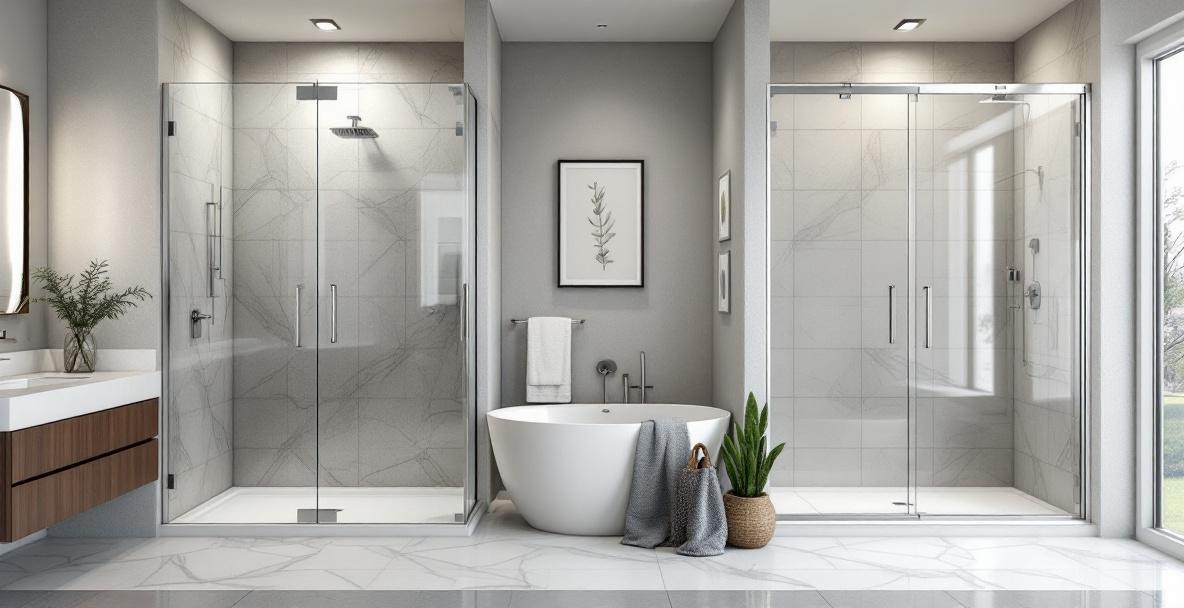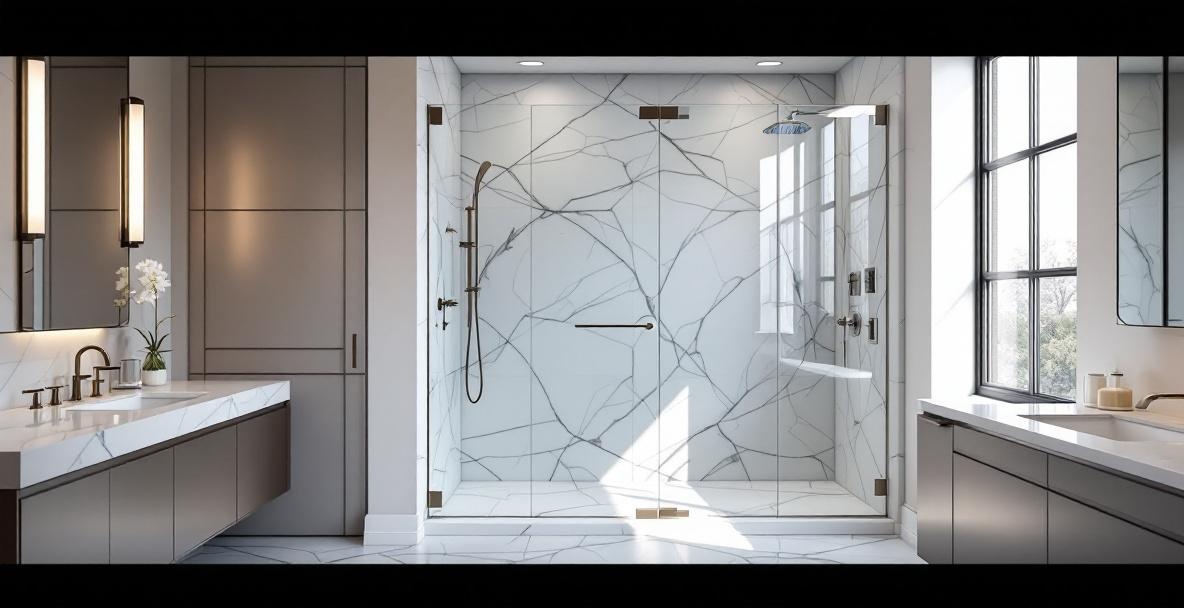
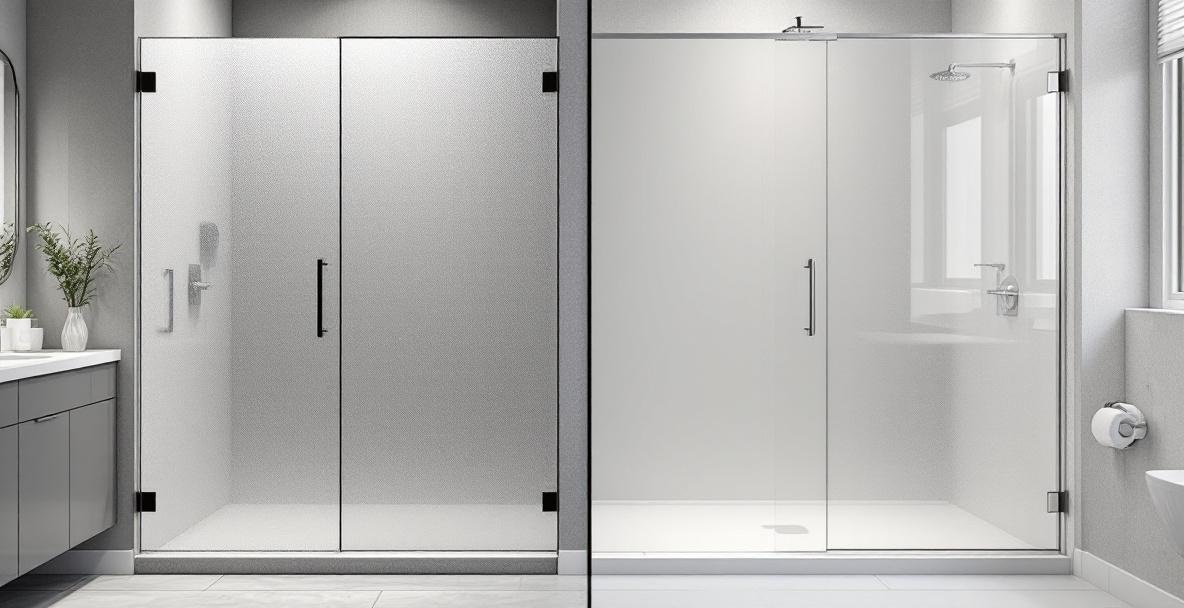
Clear glass transmits 90%+ of visible light and makes bathrooms feel larger — it's the standard choice for frameless enclosures in master bathrooms. Frosted glass offers genuine privacy and typically costs 10–20% more. In a master bath shared by a couple, frosted is rarely necessary. In a bathroom visible from a bedroom or open floor plan, frosted glass provides meaningful privacy without sacrificing the clean frameless aesthetic.
The clear-vs-frosted decision sounds simple — but it involves trade-offs in light, maintenance, cost, and bathroom feel that matter in the long run. This guide walks through every variable so you can make the right choice for your specific shower configuration, bathroom layout, and privacy needs.
Privacy: How Much Does Frosted Actually Provide?
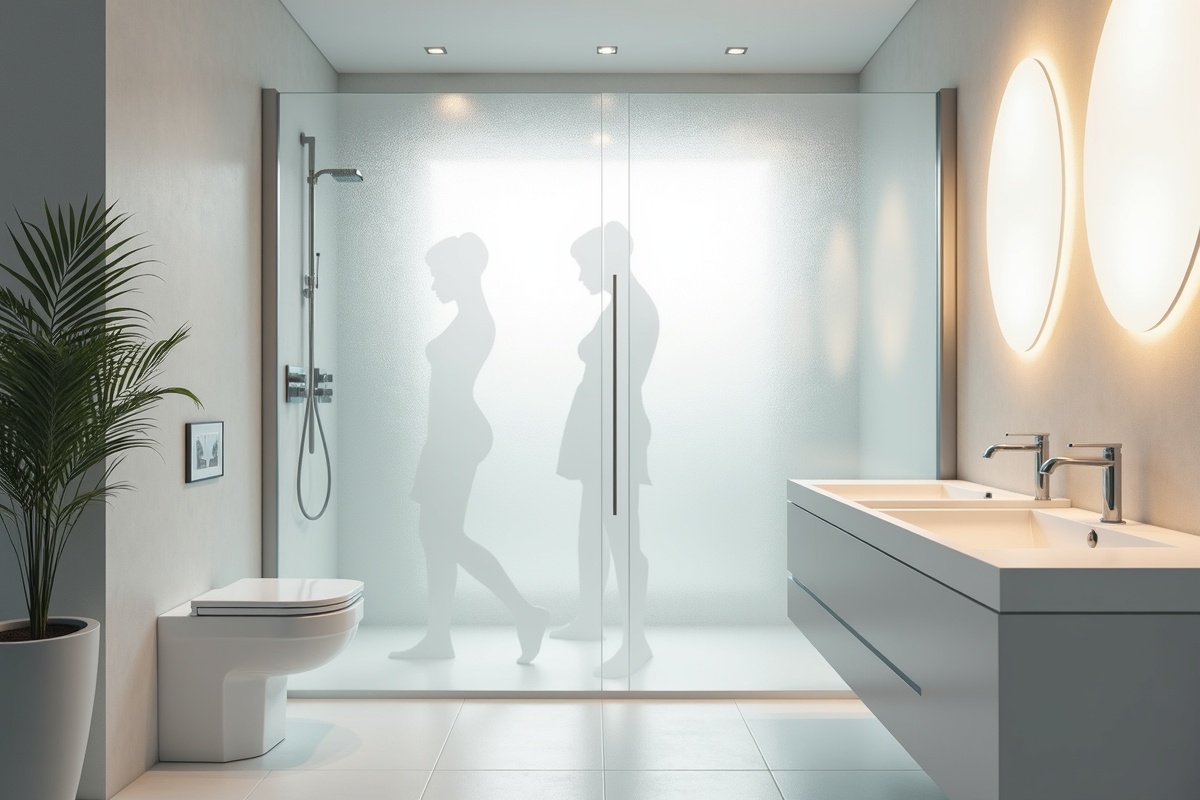
Frosted shower glass is not fully opaque — it obscures silhouettes and skin tone but allows light and general movement to show through. The degree of obscuration varies by glass type: standard acid-etched frosting provides moderate privacy, while heavy privacy patterns can obscure nearly all detail. Clear glass with a well-configured shower layout can also provide adequate privacy for most households.
"Frosted glass" covers a wide range of opacity levels. Understanding what you're actually getting helps set realistic expectations:
Light frost (10–30% opacity increase): Softens the image visible through the glass but does not obscure silhouettes clearly. More of a visual softening than true privacy. Common on decorative panels and partial-privacy applications.
Standard acid-etched or sandblasted frost: The most common frosted option for shower doors. Obscures skin tone and detail clearly while allowing light to pass. Someone in the shower appears as a blurred silhouette — present but not detailed. Provides meaningful privacy for bathrooms shared between household members who want separation.
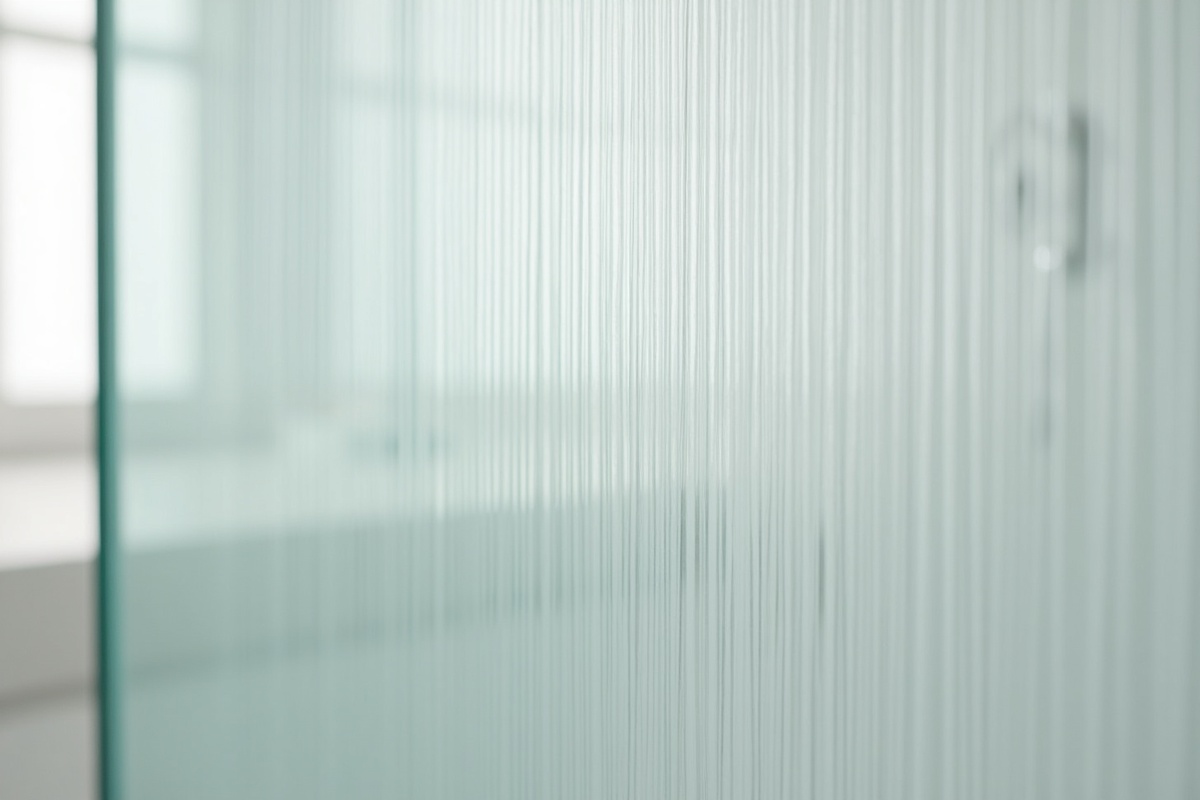
Heavy privacy patterns (reeded, bamboo, rain): Dense textured patterns obscure nearly all detail, approaching full opacity in certain angles. These are design choices as much as privacy choices — the texture becomes a visual element of the bathroom design.
Clear glass privacy in practice: Most master bathrooms don't require frosted glass because the shower is positioned such that it's not visible from outside the room. If the shower can't be seen from the bedroom, hallway, or adjoining space when the bathroom door is closed, clear glass provides all the privacy needed.
Cleaning and Maintenance Differences
This is where the comparison shifts decisively toward clear glass. Frosted shower glass hides water spots and soap scum less effectively than marketing suggests — the textured surface actually traps mineral deposits in its micro-pores, making deep cleaning more difficult. Clear glass shows spots immediately, which motivates the daily squeegee habit that prevents buildup entirely.
In DFW's hard water environment (15–25 grains per gallon in most service areas), water spots are an immediate and persistent concern on any shower glass. The cleaning dynamic differs significantly between clear and frosted:
Clear glass:
- Water spots are immediately visible — which is why squeegee discipline matters
- A 20-second daily squeegee after every shower prevents virtually all mineral buildup
- When buildup does occur, standard glass cleaner applied to the smooth surface removes it without difficulty
- Deep cleaning is straightforward: the surface is accessible and nonporous
Frosted glass:
- Water spots and mineral deposits are less immediately visible — the textured surface provides some camouflage
- The same texture that hides spots also traps mineral deposits in micro-pores over time
- Standard glass cleaners work for surface cleaning, but embedded deposits in texture pores require acid-based cleaners or repeated scrubbing
- DFW's hard water is particularly problematic — the mineral load is high enough that frosted glass requires more aggressive periodic cleaning than clear glass
If you choose frosted glass, apply a silicone-based glass treatment (Rain-X or equivalent) to the frosted surface quarterly. The treatment fills the micro-pores in the texture and prevents mineral deposits from bonding — making routine cleaning dramatically easier in DFW's hard water.
The cleaning difference is a genuine practical consideration, not a minor detail. Many DFW homeowners who choose frosted glass for aesthetic reasons end up doing more total maintenance than clear glass owners who squeegee daily.
Light and Space — Which Makes Your Bathroom Feel Bigger?
Clear glass transmits 90%+ of visible light compared to 70–80% for standard frosted glass (Shower Door Masters). In bathrooms with natural light, clear glass allows that light to illuminate the full bathroom interior. In bathrooms without windows, frosted glass can make the space feel darker and more enclosed.
Light is one of the most powerful tools in bathroom design. Clear frameless glass is so widely used in contemporary master bathrooms because it allows the shower interior to participate in the room's overall light distribution. The shower doesn't become a dark, enclosed corner — it reads as part of the bathroom.
How clear glass affects space:
- Light passes through unrestricted, illuminating both the shower interior and the bathroom beyond
- The eye travels through the glass to see the full depth of the shower — increasing perceived square footage
- Tile patterns, materials, and colors inside the shower remain visible and contribute to the overall bathroom design
- Low-iron clear glass (sometimes called "Starphire" or "Optiwhite") transmits even more light than standard clear — 91% vs 83% — with no green tint (PPG)
How frosted glass affects space:
- Light is diffused and scattered — still transmitted, but without directionality
- The shower interior becomes visually separated from the bathroom
- In small bathrooms, this separation reduces perceived size
- Dense patterns reduce light transmission further and can create a noticeably darker bathroom
For bathrooms under 60 square feet — common in DFW townhomes and older homes — clear glass is almost always the better choice for spatial perception.
91%
of visible light transmitted by low-iron clear glass vs 70–80% for standard frosted — a meaningful difference in bathrooms relying on natural light ([PPG](https://www.ppg.com/))
Cost Difference Between Clear and Frosted
Frosted glass typically costs 10–20% more than standard clear tempered glass of the same thickness and dimensions (Glass Genius). For a standard frameless shower door configuration in DFW, that premium is typically $100–$400 on top of a $1,000–$2,500 installation — a modest increase relative to total project cost.
The frosted premium is a function of the additional processing step: acid etching (where glass is treated with hydrofluoric acid to create the textured surface) or sandblasting (where abrasive is applied under pressure) adds time and specialized equipment to the fabrication process. Patterned privacy glass (rain, reeded, bamboo, etc.) is typically rolled glass with texture formed during manufacturing — pricing varies by pattern and manufacturer.
Cost comparison for a standard DFW frameless shower door:
- Clear 3/8" tempered glass installation: $1,000–$2,000 installed
- Frosted (acid-etched) same thickness: $1,100–$2,400 installed (roughly 10–20% more)
- Patterned privacy glass (rain, reeded): $1,200–$2,600 installed (varies by pattern)
- Low-iron clear glass (minimal green tint): $1,200–$2,500 installed (similar premium to frosted)
The frosted premium is modest enough that it shouldn't drive the decision on its own. Choose based on privacy need, maintenance preference, and aesthetic — not primarily on the cost differential.
Other Options Beyond Clear and Frosted
The clear/frosted binary doesn't capture the full range of glass types available for shower doors. Several alternatives offer specific advantages worth knowing:
Rain glass: A textured pattern that resembles water running down glass. Provides moderate privacy while adding a distinctive visual texture. The ridged surface is somewhat easier to clean than sandblasted frost. Popular in contemporary DFW bathroom designs.
Reeded (fluted) glass: Vertical channels create a strong graphic pattern with good privacy. Currently popular in transitional and contemporary bathrooms as an alternative to plain frosted. The pattern obscures detail at most angles while allowing light transmission.
Low-iron clear glass: Standard clear glass has a slight green tint from iron in the manufacturing process — most noticeable at glass edges. Low-iron glass removes this tint for a colorless, water-clear appearance. The difference is most visible in thick panels (1/2") and at edges. Premium of roughly 10–20% over standard clear.
Tinted glass (bronze, gray, blue): Light tint applied throughout the glass thickness provides subtle color while offering minor privacy improvement. Less common in shower applications but available as a custom option.
Which Works Better in a Master Bath vs Guest Bath?
Master bathroom (shared between a couple): Clear glass is almost always the right choice. A master bath with a dedicated shower is typically accessed from a bedroom with the door closed — the privacy case for frosted glass is minimal. Clear glass makes the master bathroom feel larger, shows off tile and material investments, and is the standard buyer expectation in DFW's primary bathroom market.
Guest bathroom: If the shower is positioned where it could be visible to guests using the toilet simultaneously (common in smaller bathrooms with open plans), frosted glass provides privacy without requiring users to leave the room. If the shower has its own zone within the bathroom, clear glass works fine.
En suite or combined bath/dressing space: If the bathroom connects directly to a dressing area, closet, or bedroom without a door, frosted glass provides meaningful privacy for someone in the shower while a partner dresses or uses the bathroom space. This is one of the strongest cases for frosted glass in a DFW home.
Pairing Frosted or Clear With a Frameless Frame
Both clear and frosted glass work with all frameless hardware configurations — hinged doors, fixed panels, sliding bypasses, neo-angle enclosures. The glass type doesn't constrain the enclosure design. A few pairing notes:
Frameless hinged door + clear glass: The classic master bath combination. The full glass-only aesthetic is most visible and impactful with clear glass — there's nothing to look at but the hardware and the tile behind.
Frameless fixed panels + frosted accent panel: A popular hybrid approach — clear glass on fixed side panels with a frosted or patterned center panel behind the shower head zone. Provides privacy where it matters while keeping the overall enclosure open and bright.
Semi-frameless sliding bypass + frosted glass: The classic solution for a tub surround where privacy is a concern. The slider hardware and frosted panels combine into a clean, functional system.
| Light transmission |
| Privacy level |
| Daily maintenance |
| Cost premium |
| Space perception |
| Best application |
Can you convert a clear shower door to frosted?
Yes — there are two options. The first is applying a frosted window film to existing clear glass: an adhesive film that mimics the appearance of frosted glass and can be removed if you change your mind. Films cost $50–$200 for a shower door and are a DIY-friendly option. The second is replacing the glass panels with fabricated frosted glass — more expensive but permanent. For a frameless enclosure, glass panel replacement costs $400–$1,000+ per panel depending on size and complexity.
Does frosted glass hide water spots better than clear?
In the short term, yes — the textured surface diffuses light in a way that makes water spots less immediately visible than on smooth clear glass. Over time, however, frosted glass is harder to clean because mineral deposits embed in the micro-pores of the etched texture. Clear glass with a consistent daily squeegee habit is cleaner overall than frosted glass with inconsistent maintenance. In DFW's hard water environment, the cleaning difference is meaningful.
Is frosted shower glass more expensive than clear?
Frosted glass typically costs 10–20% more than standard clear tempered glass of the same thickness and dimensions. For a standard DFW frameless shower door project, the frosted premium is typically $100–$400 on a $1,000–$2,500 installation. Patterned glass (rain, reeded) varies more widely by pattern and manufacturer. The premium is real but modest relative to total project cost.
What is the difference between frosted, rain, and textured glass?
Frosted glass is created by acid etching or sandblasting — chemical or abrasive treatment applied to smooth glass after it's cut to size. Rain glass is a rolled glass pattern where the texture (resembling water running down glass) is formed during the manufacturing process. Reeded or fluted glass has parallel vertical channels, also formed during manufacturing. All three obscure the view through the glass and allow light to pass, but they have different visual appearances and slightly different cleaning characteristics. Rain and reeded tend to be slightly easier to clean than acid-etched frosted.
Does clear glass make a small bathroom look bigger?
Yes — this is one of the most consistent effects in bathroom design. Clear glass allows the eye to travel through the enclosure and perceive the full depth of the shower. In a small bathroom (under 60 sq ft), eliminating visual barriers between the shower and the rest of the bathroom significantly increases perceived square footage. Interior designers consistently specify clear glass frameless enclosures in compact bathrooms specifically for this reason. Frosted glass creates a visual boundary that stops the eye — making small spaces feel smaller.
Also see our custom frameless shower design guide and our frameless vs framed shower doors comparison.
Infinity Glass & Glazing fabricates and installs clear, frosted, low-iron, and patterned glass shower enclosures throughout DFW — with in-house cutting and custom sizing. Contact us for a free estimate on your glass shower door project.
Related reading: