Do shower doors open in or out? Hinged shower doors must open outward, not inward — this is a building code requirement (IRC P2708.1, adopted in the Texas Residential Code), not just a design preference. Outward swing keeps the door openable in an emergency, even if someone falls against it from inside the shower.
Whether that outward swing comes from a wall-mount hinge or a pivot hinge changes how the door is built — see wall-mount vs. pivot hinges on our hinged shower doors page for how we spec each type.
The Code Requirement, in Plain Language
The requirement comes from the International Residential Code, section P2708.1, which states plainly that hinged shower doors shall open outward. Texas adopts the IRC's plumbing provisions verbatim in its own residential code, so the same line appears in the Texas Residential Code, Chapter 27, §P2708.1. It isn't a regional variation or a manufacturer recommendation — it's the code section a building inspector checks a hinged shower door installation against.
That single sentence covers hinged doors specifically. Sliding, bypass, and fixed-panel enclosures don't swing at all, so the requirement doesn't apply to them the same way — the question only comes up on hinged and pivot configurations.
Why Outward Swing Matters for Safety
The reasoning behind the rule is straightforward. If someone slips inside the shower and falls against the door, an inward-swinging door is blocked by their own body weight — it can't be pushed open from outside, and the person inside can't push it open while they're leaning against it. A door built to swing outward stays operable from either side in that situation. That's why building code treats swing direction as a safety requirement rather than a style preference left up to the homeowner or installer.
Outward vs. Inward Swing, Illustrated
"Hinged shower doors shall open outward" — IRC P2708.1, as adopted in the Texas Residential Code (Chapter 27, §P2708.1).
The diagram above shows the two swing paths from directly above the shower stall. The outward arc swings into the bathroom floor space beyond the opening. The inward arc — which building code does not permit for hinged doors — would swing into the shower stall itself, and it's the arc a code-compliant hinged door is never built to take.
Wall-Mount vs. Pivot Hinges
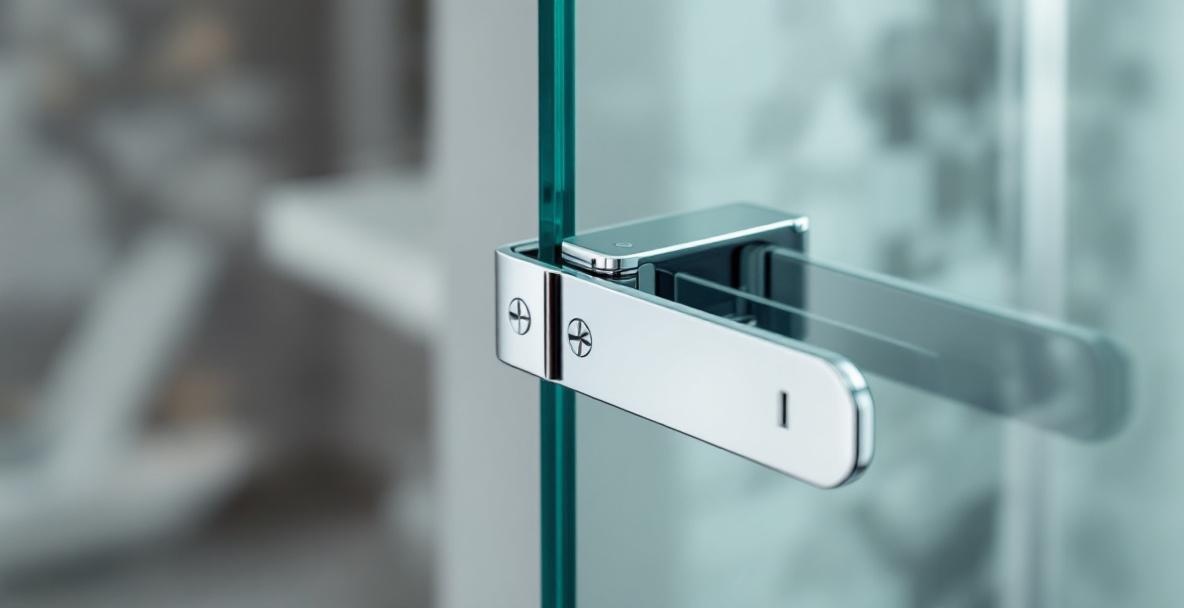
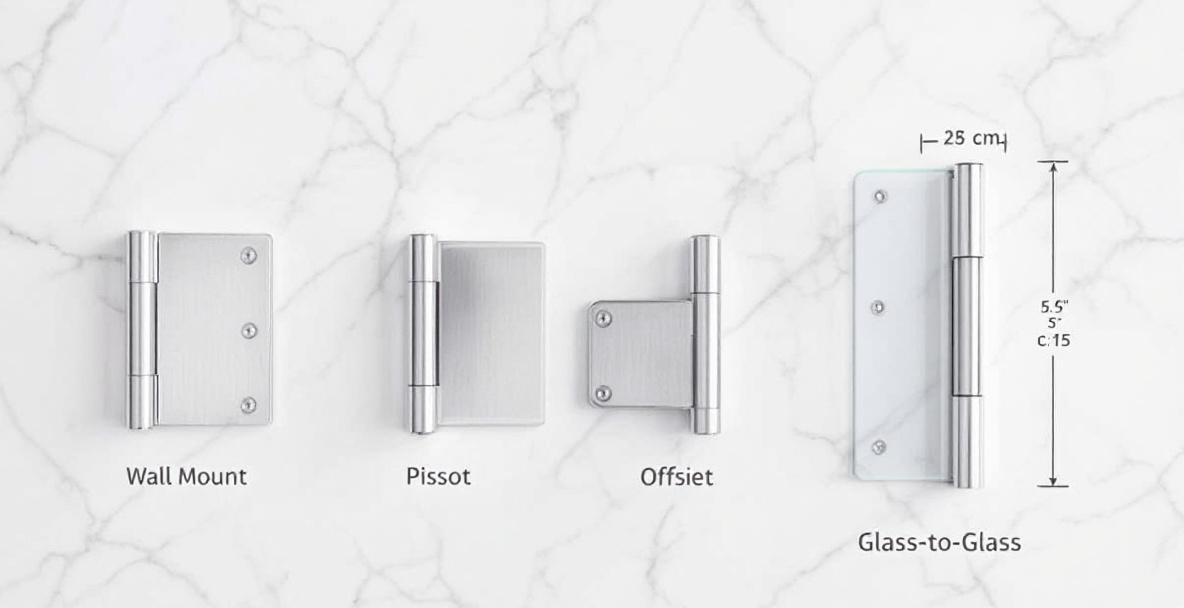
Wall-mount hinges are the standard hardware on most frameless hinged doors. The hinge bolts to the wall stud or to a fixed glass panel, and the door swings outward on that side, matching the code requirement above. Pivot hinges work on a different mechanism: instead of hanging off a wall bracket, the door rotates on a vertical axis set into the floor curb and the header. That mechanism is what allows some pivot doors to swing in both directions rather than outward only. We install pivot hinges that swing both ways, and a door that swings both ways still opens outward, so it keeps the outward swing the code asks for.
For a deeper look at how each hinge type is built and mounted, see our shower door hinge types guide. The right hardware for a given opening comes down to panel size and weight as much as swing direction, which is why hinge selection happens at measurement rather than off a catalog default.
Does This Apply to Frameless and Semi-Frameless Doors the Same Way?
Yes. The code requirement is about swing direction, not frame style. A frameless hinged door and a semi-frameless hinged door with an aluminum frame around the panel are both subject to the same outward-swing rule under IRC P2708.1 — the framing material doesn't change which way the code requires the door to open.
Is it better to have a shower door swing in or out?
Outward is the code-compliant answer for hinged doors, not just the better option. An inward-swinging hinged door can trap someone against it if they fall inside the shower, which is the safety reasoning behind IRC P2708.1. Sliding and bypass doors don't swing at all, so this question applies specifically to hinged and pivot configurations.
What is the code for shower door opening?
The applicable section is IRC P2708.1, which states that hinged shower doors shall open outward. Texas adopts this provision verbatim in its own Residential Code, Chapter 27, §P2708.1, so it applies to hinged shower door installations across DFW the same way it applies nationally under the IRC.
Can a shower door swing both ways?
Some pivot-hinge doors are built to swing in both directions because of how the pivot mechanism is mounted into the floor and header, rather than through a wall-bracket hinge. A standard wall-mount hinged door does not swing both ways — it's built to swing outward only, per the code requirement above.
Is it better to leave shower doors open or closed?
This is a separate question from swing direction — it's about ventilation and mildew, not code. Leaving a glass shower door open between uses lets the enclosure air out and dry faster, which reduces the moisture that leads to hard-water buildup and mildew on the glass and hardware.
If you're planning a new hinged shower door, or replacing one that swings the wrong direction, contact us and our team will confirm the code-correct swing and hinge type for your opening.