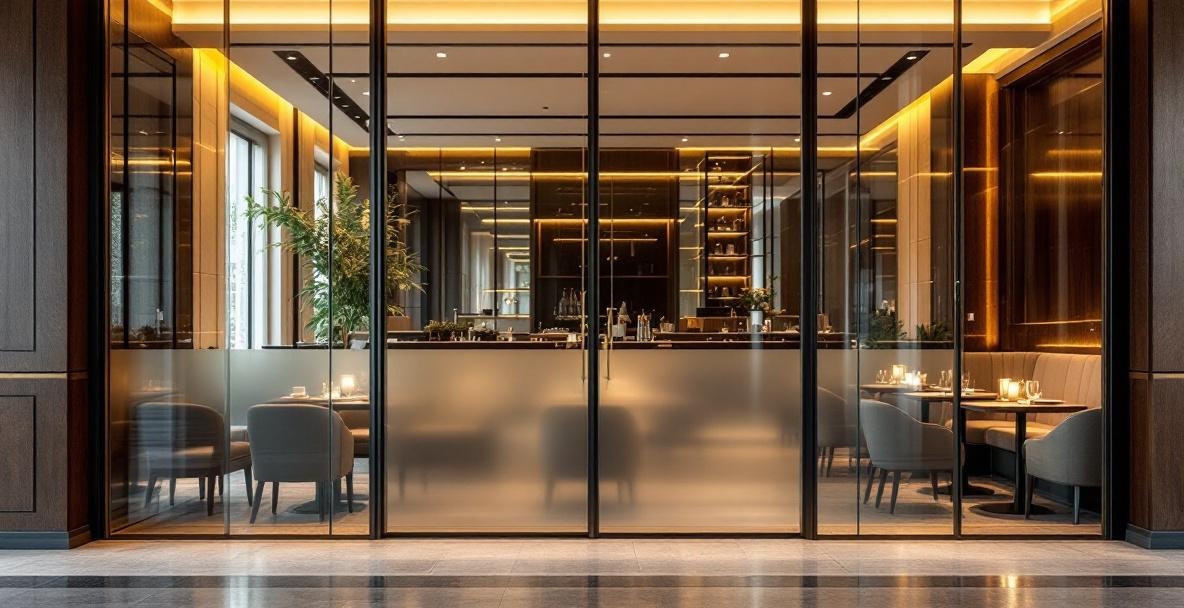
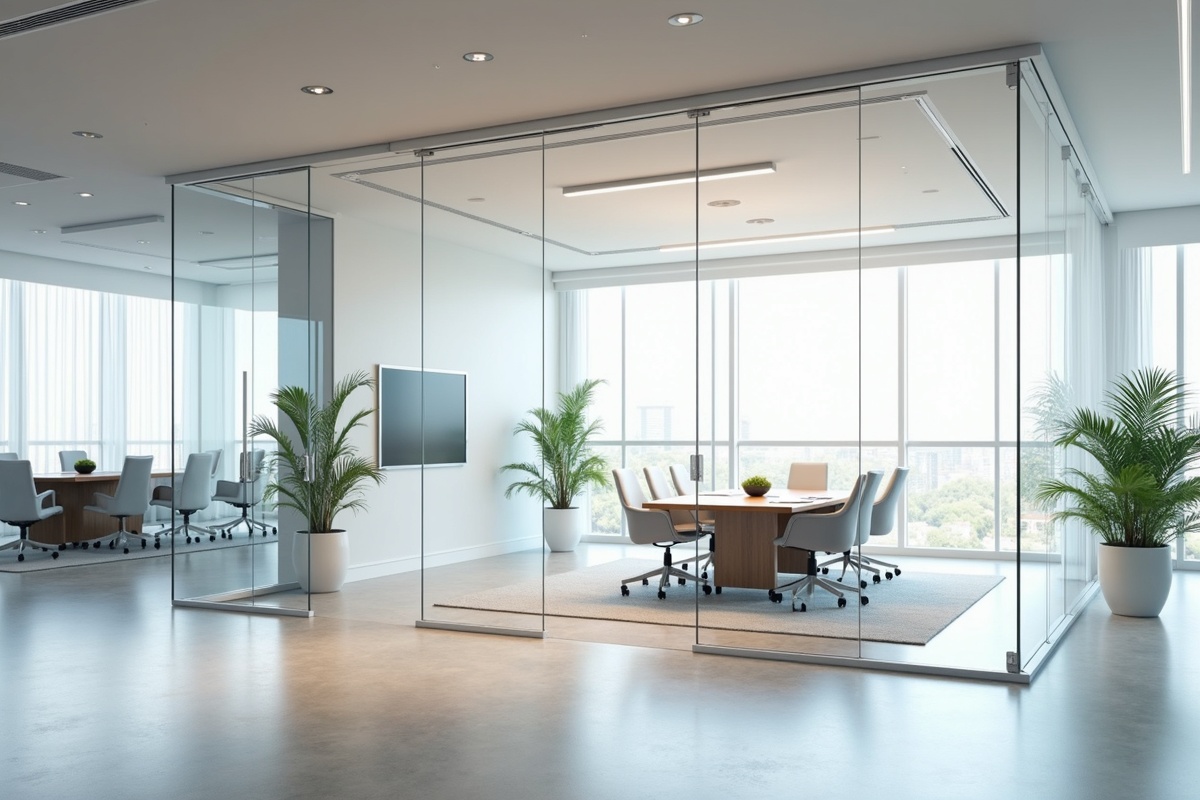
Glass conference room walls in Dallas cost $100-$300 per square foot installed, depending on whether the system is framed, frameless, or demountable. Modern corporate offices, law firms, and coworking operators across DFW are replacing solid drywall conference rooms with glass walls to boost natural light, signal transparency, and support hybrid-work flexibility. Frameless systems with acoustic laminated glass deliver the cleanest aesthetic and STC ratings up to 42 dB (ASTM 2024).
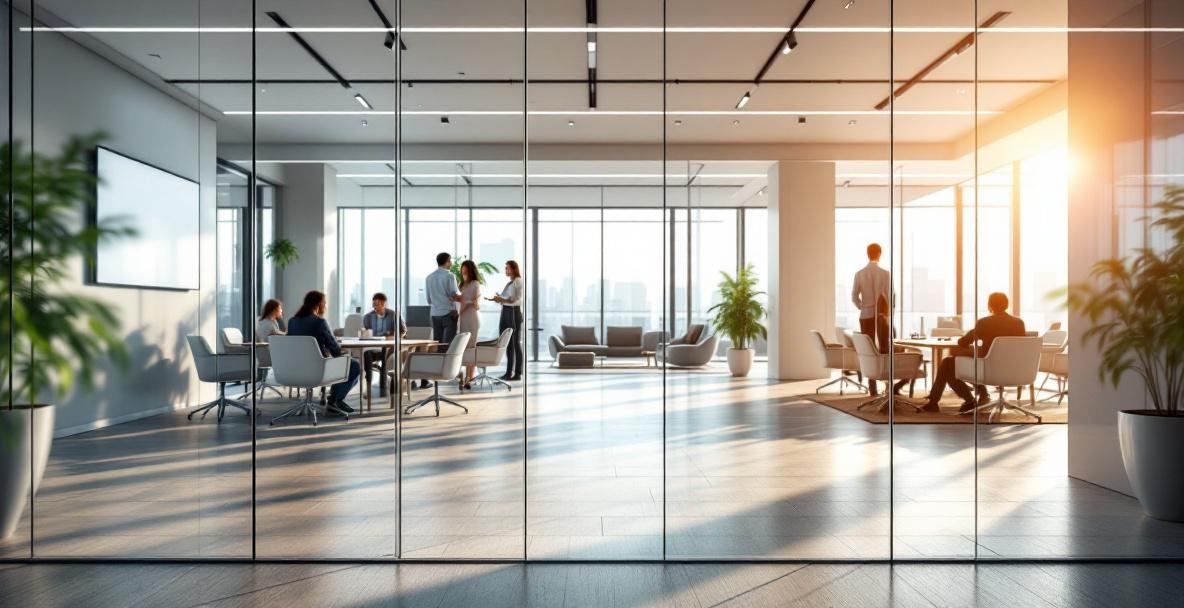
Walk through any new Class A office in Uptown Dallas, Legacy West in Plano, or Las Colinas and the same design signal repeats: glass conference room walls. The fully enclosed drywall meeting room of the 2010s has been replaced by floor-to-ceiling glass, because clients, employees, and recruiters all read glass as a visual cue for modern, transparent, well-designed work.
For Dallas facility managers, design-build firms, and general contractors, the decision is no longer whether to specify glass conference rooms but which system to use, how to hit an acoustic target, and how to keep the project on schedule. This guide covers it all — system types, cost ranges, privacy options, installation timelines, and what to expect working with a DFW commercial glazing contractor.
Why Are Glass Conference Room Walls Trending in Dallas Offices?
Glass conference room walls solve three problems at once in modern Dallas offices: they deliver the natural light penetration of open-plan layouts, the acoustic and visual privacy of enclosed rooms, and the visual language of a premium, design-forward workspace. The US open-plan office glass wall market reached $1.8B in 2024 and is projected to grow at a 9.2% CAGR through 2030 (IBISWorld 2025).
DFW's corporate migration has accelerated this trend. When a tenant moves 200+ employees from Chicago, New York, or California into a new Plano or Frisco office, the expectation is not cubicles and closed doors — it is a light-filled floor plan with glass-walled meeting rooms visible from the main workspace. Conference rooms are a core part of our glass office partition systems.
Three drivers explain the shift:
Daylighting and energy performance. Glass partitions let daylight penetrate 40-60% deeper into a floor plate than drywall, directly reducing electric lighting loads and tenant electricity costs (DOE 2025). For a typical 20,000 sq ft office floor, that translates to meaningful monthly savings across a lease term.
Hybrid-work flexibility. With hybrid schedules pushing peak-day occupancy unpredictability, teams need visual awareness of whether a conference room is in use. Glass walls answer that question in a glance.
Recruiting and culture signaling. Young professional and technical talent reads interior design as part of the employer brand. Glass-walled conference rooms photograph beautifully, appear consistently in employer-brand content, and match the aesthetic of the Texas tech and financial firms competing for hires.
$1.8B
US open-plan glass wall market in 2024, growing 9.2% annually through 2030 (IBISWorld 2025)
What Types of Glass Wall Systems Are Used in Conference Rooms?
Dallas conference rooms are built from three main glass wall categories: framed aluminum systems, frameless structural glass, and demountable modular systems. Each has different cost points, acoustic ceilings, and suitability depending on whether the space is a long-term build-out or a flexible tenant improvement.
Framed aluminum glass walls. Glass panels seated in aluminum profiles — the workhorse system for most standard conference rooms. Black, silver, or bronze frames are common. Cost-effective, durable, and easy to service. Single-glazed versions deliver STC 35-38; double-glazed versions reach STC 44-48.
Frameless structural glass walls. Large glass panels (typically 1/2 in. or thicker) joined with silicone only or with minimal patch fittings at top and bottom. The cleanest aesthetic — no visible frame except at floor and ceiling. Often specified in law firm conference rooms, executive suites, and showcase offices.
Demountable modular glass walls. Proprietary systems from manufacturers like Dirtt, Haworth Enclose, Teknion Altos, and Clestra. Pre-engineered panels that connect to track systems and can be relocated or reconfigured without new drywall work. Higher upfront cost, lower lifecycle cost in flexible tenant spaces.
| Framed aluminum, single-glazed |
| Framed aluminum, double-glazed |
| Frameless structural glass |
| Demountable modular |
Conference rooms are usually one line item inside a larger interior glass budget. For per-square-foot pricing across office partitions, demountable walls, and full-height glazing — and the variables that move those numbers — see our commercial glass partition cost breakdown.
Frameless vs Framed Glass Conference Room Walls: Which Is Better?
Frameless glass conference room walls deliver a more premium, minimal aesthetic while framed systems typically offer better acoustics and lower cost. The right choice for a Dallas office depends on whether the priority is visual design, acoustic performance, or installation budget.
Frameless wins on aesthetics — no visible metal between panels, just glass and silicone joints. It is the default for law firms, executive offices, and any space where the conference room is a design moment visible to clients.
Framed systems win on acoustics and cost. The aluminum profile houses gaskets and seals that materially improve sound isolation, and the manufacturing is more commoditized. For a cost-conscious build-out of 10+ conference rooms across a floor, framed systems are often the right answer.
Demountable modular systems split the difference. They deliver the modular flexibility of office furniture (reconfigurable with no drywall demo), have well-engineered acoustic sealing, and look minimal from the conference-room side.
How Much Do Glass Conference Room Walls Cost in Dallas TX?
A typical Dallas glass conference room wall installation runs $8,000-$30,000 for a single room, based on dimensions, glass specification, and door configuration. Commercial glass partition installation costs $100-$300 per square foot depending on system type (Angi 2025).
Cost drivers for Dallas conference room glass walls:
- Linear feet of wall. A standard 10 ft x 14 ft conference room may require 24-28 linear feet of glass wall if two sides are enclosed.
- Glass thickness and type. 3/8 in. tempered is standard for framed systems. Frameless walls typically use 1/2 in. or thicker. Acoustic laminated adds 15-25%.
- Door hardware. Frameless pivot doors with premium hardware (FSB, Dorma) add $3,500-$7,500 per opening. Framed swing doors add $1,500-$3,500.
- Finishes. Satin-etched privacy bands, custom frit patterns, or film applications add $8-$25 per sq ft.
- Building type. Class A high-rises in Downtown Dallas and Uptown have stricter after-hours freight and union labor conditions that add 10-20% to installation cost vs. suburban offices in Plano or Lewisville.
$100-$300
per square foot installed — typical DFW glass conference room wall range (Angi 2025)
What Is the Installation Process for Office Glass Wall Systems?
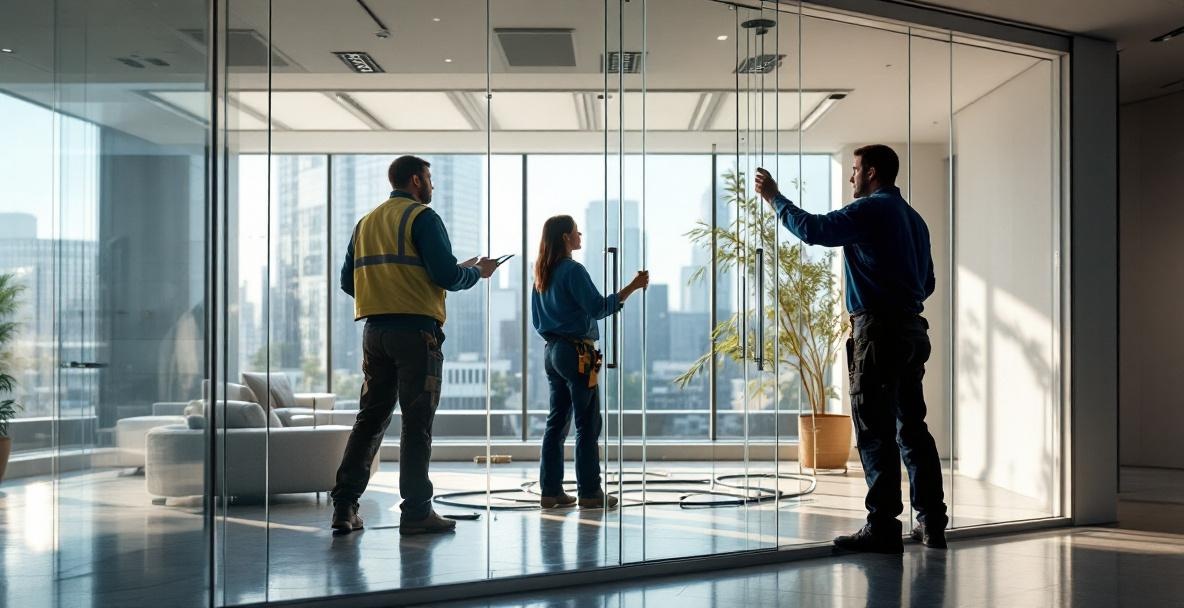
A typical Dallas glass conference room installation runs 4-8 weeks from signed contract to substantial completion, with most of that time spent in fabrication rather than on-site install. The on-site installation itself is usually 2-5 days per conference room once materials arrive.
- 1
Field Measure and Shop Drawings
After the general contractor confirms wall layouts, the glass contractor laser-measures the space and produces shop drawings for approval. - 2
Fabrication and Procurement
Aluminum frames are cut and finished, glass is fabricated (cut, tempered, laminated as specified), and hardware is procured. Lead time is typically 3-5 weeks. - 3
Substrate Prep and Track Installation
Floor and ceiling tracks are installed, leveled, and anchored. Any required electrical or low-voltage rough-ins for switchable glass are coordinated. - 4
Glass Panel Installation
Panels are set into tracks or patch fittings. Frameless systems require careful panel alignment and silicone joint work. - 5
Door and Hardware Installation
Pivot or swing doors are installed, hardware adjusted, and closers calibrated. Final acoustic gaskets are applied. - 6
Punch and Sign-Off
Final clean, silicone cure check, and walkthrough with the GC and tenant. Any touch-up work is completed before handover.
Worth knowing before handover: that 3-5 week fabrication window applies again if a panel is ever broken, because tempered glass is made to final size and cannot be cut down afterward. Interior panels can usually wait it out. A damaged exterior panel cannot, which is why storefront glass repair runs a temporary board-up first and treats the permanent panel as a separate, later step.
What Privacy Options Are Available for Glass Conference Rooms?
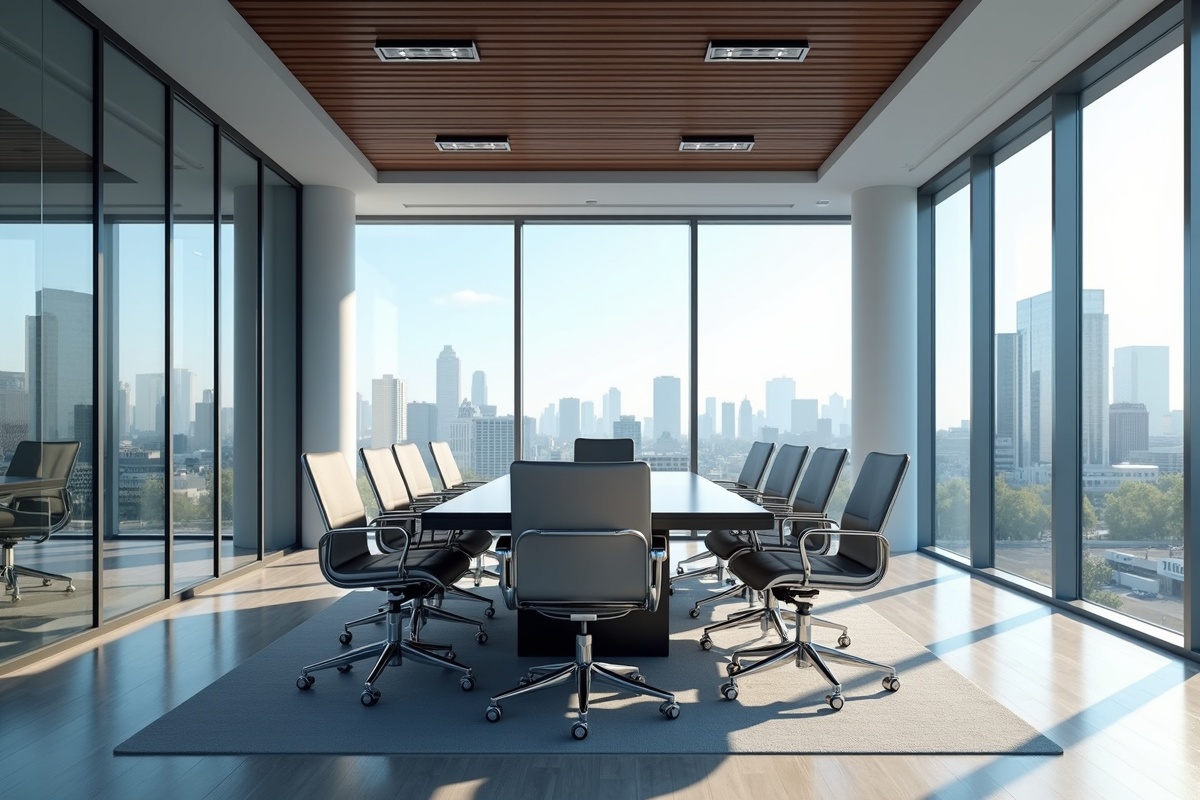
Glass conference rooms in Dallas offices use five main privacy treatments: frosted film, satin-etched glass, decorative frit patterns, switchable PDLC glass, and acoustic laminated interlayers. These can be combined — for example, satin-etched privacy bands with acoustic laminated glass in a law firm deposition room.
Frosted or satin-etched film. The most cost-effective approach. Adhesive film applied in full panels or partial bands (common: 36 in. seated-privacy band with clear glass above and below). Easily replaceable if a pattern changes.
Permanently etched glass. Acid-etched or sandblasted directly into the glass surface. More expensive but permanent — doesn't scratch or peel.
Decorative ceramic frit. Digital ceramic printing fuses pattern into the glass during tempering. Unlimited design options including logos, geometric patterns, and graduated density.
Switchable PDLC glass. Polymer-dispersed liquid crystal film that goes clear when energized and frosted when power is off. Controlled by a wall switch or building automation. Dallas conference rooms use this in executive and board rooms where on-demand full privacy justifies the cost ($150-$300 per sq ft).
Acoustic laminated glass. For acoustic privacy, not visual. A PVB interlayer damps sound transmission — panels achieve STC 38-42 in single-glazed builds, 48-52 in double-glazed.
Glass Conference Room Wall Design Ideas for DFW Corporate Spaces
The most effective Dallas conference room designs pair glass walls with one or two focused design moments — a feature wood wall, a branded frit pattern, integrated AV, or a dramatic light fixture. Glass walls are the canvas; the design layers sit behind them.
Popular DFW conference room directions in 2026:
- Law firm boardrooms — Frameless glass with satin-etched privacy bands at seated height, warm-wood accent wall behind the head of table, ceiling-recessed monitor lift.
- Tech company huddle rooms — Demountable glass systems in black aluminum with custom-printed ceramic frit featuring the company logo or geometric branding.
- Co-working conference rooms — Framed glass in black or bronze, solid-core wood entry doors, colored frit pattern unique to each room for wayfinding.
- Executive suites — Frameless glass with switchable PDLC, integrated projection screens, and acoustically rated drywall ceilings extending to deck for maximum sound isolation.
Also see our frameless glass wall office system guide and our commercial glass installation overview for DFW.
Infinity Glass & Glazing designs and installs glass conference room walls across DFW — Dallas, Fort Worth, Corinth, Plano, Frisco, Las Colinas, and Southlake. We work directly with corporate facility managers, design-build firms, and general contractors from shop drawings through final punch. Request a commercial project estimate or call (940) 279-1197.
Do glass conference room walls provide sound insulation?
Yes. Single-glazed framed glass walls achieve STC 35-38, which prevents conversational speech from being clearly intelligible. Double-glazed systems with acoustic laminated interlayers reach STC 44-52, equivalent to or better than a standard drywall partition. For true acoustic privacy, combine glass walls with deck-height construction and acoustic ceiling treatment above the room.
Can glass conference room walls be frosted for privacy?
Yes. Dallas conference rooms use frosted vinyl film, permanently etched glass, ceramic frit patterns, or switchable PDLC glass. The most common solution is a satin-etched privacy band at seated height (clear above and below) that balances privacy with daylighting. Switchable glass allows on-demand full privacy controlled by a wall switch.
What is the lead time for a glass office wall installation in Dallas?
Typical lead times are 4-8 weeks from signed contract to substantial completion. Fabrication of aluminum framing and glass takes 3-5 weeks. On-site installation of a single conference room runs 2-5 days. Multi-room floor build-outs are staged in phases, typically 1-2 weeks of on-site installation per floor.
Are glass walls permitted in Dallas commercial buildings?
Yes. Interior glass partitions are permitted as non-load-bearing walls in Dallas commercial buildings, subject to IBC requirements for safety glazing, fire-rated corridor walls where applicable, and building-specific tenant improvement rules. Frameless full-height glass walls must use tempered or laminated safety glass per IBC Section 2406 (IBC 2024).
Can existing conference rooms be retrofitted with glass walls?
Yes. Retrofit of a drywall conference room to glass walls is a common Dallas project. Scope includes demo of existing drywall, electrical and low-voltage relocation, minor floor and ceiling repair, and glass wall installation. Most retrofits complete in 1-2 weeks per room. Demountable modular systems are especially popular for retrofits because they can be installed with minimal building impact.
Related reading: