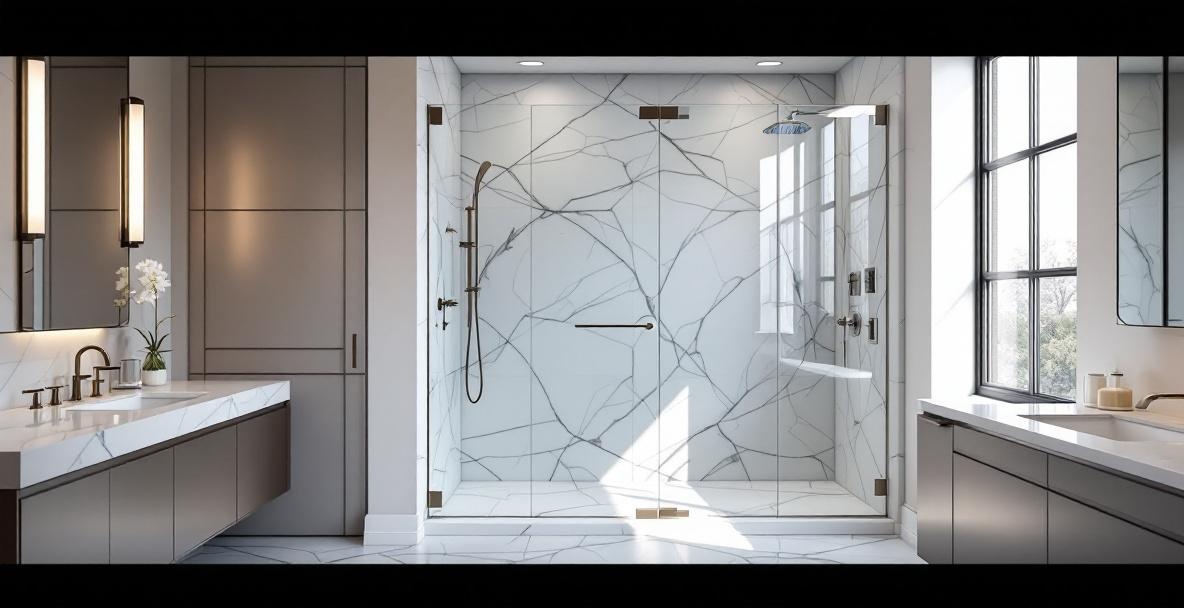
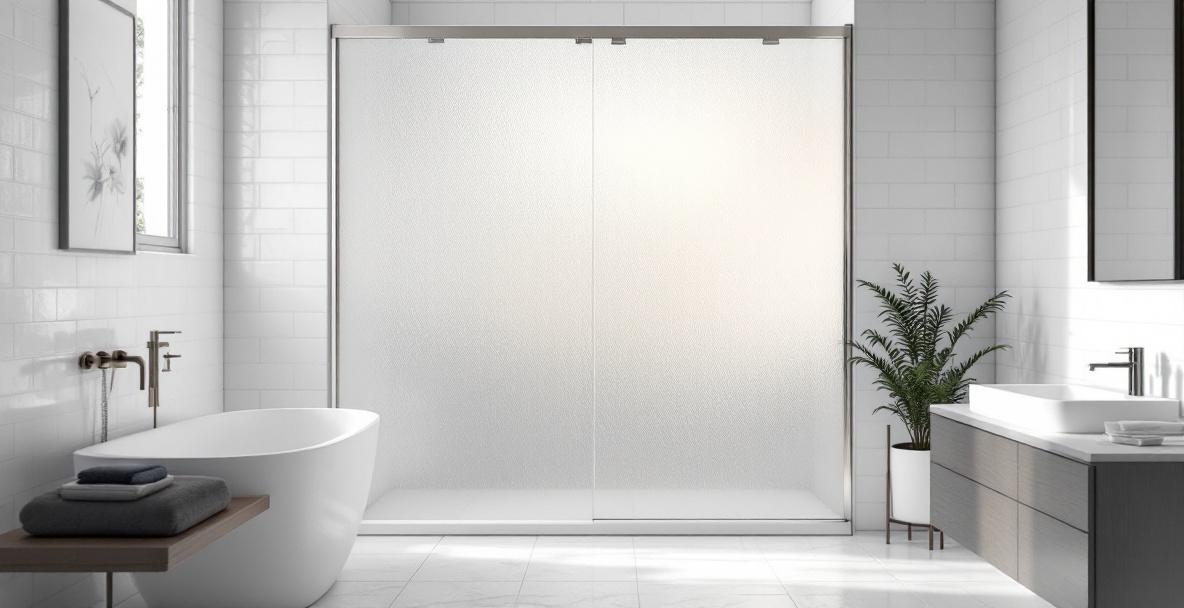
Frosted glass shower doors provide privacy by scattering light as it passes through the glass, obscuring silhouettes and details while still allowing natural light to flow into the shower. The degree of privacy depends on the frosting method and opacity level chosen — from light diffusion that softens shapes to near-opaque treatments that block almost all visual detail.
Privacy is one of the most common reasons DFW homeowners choose frosted glass over standard clear shower doors. Whether the shower is in a shared bathroom, positioned near a window, or simply in a location where clear glass feels exposed, frosted glass solves the problem without sacrificing natural light. But frosted glass is not a single product — it is a broad category that includes multiple manufacturing methods, opacity levels, and finish textures, each with different cost implications and maintenance requirements. If you already know you want obscure glass, our frosted shower doors service page covers what we build and what it costs installed.
What Is Frosted Glass and How Is It Made for Shower Doors?
Frosted glass is created by disrupting the smooth surface of standard float glass so that light scatters as it passes through rather than transmitting in a straight path. This scattering effect obscures sharp details and silhouettes. There are two primary methods used to create frosted glass for shower applications: acid etching and sandblasting.
Acid etching applies a hydrofluoric acid solution or an acid-based cream to the glass surface, chemically roughening the surface at a microscopic level. Acid etching produces a consistent, smooth-to-the-touch frosted finish with fine, even texture. It is the method used in most factory-produced frosted shower glass products.
Sandblasting propels fine abrasive particles at high pressure against the glass surface, creating a rougher, more tactile texture. Sandblasted glass tends to have a slightly more matte, less uniform appearance than acid-etched glass. It is more commonly used for decorative applications and custom work.
Both methods can also be masked to treat only part of a panel rather than the whole sheet — a band, a border, or a figurative pattern with clear glass around it. That is a different design decision from choosing an overall privacy level, and it is covered separately in our guide to custom etched shower door designs.
Both methods produce glass that is permanently frosted — the treatment cannot be reversed or removed. The frosted surface can be applied to the full panel, a portion of the panel, or in patterns.
What Are the Different Types of Privacy Glass for Showers?
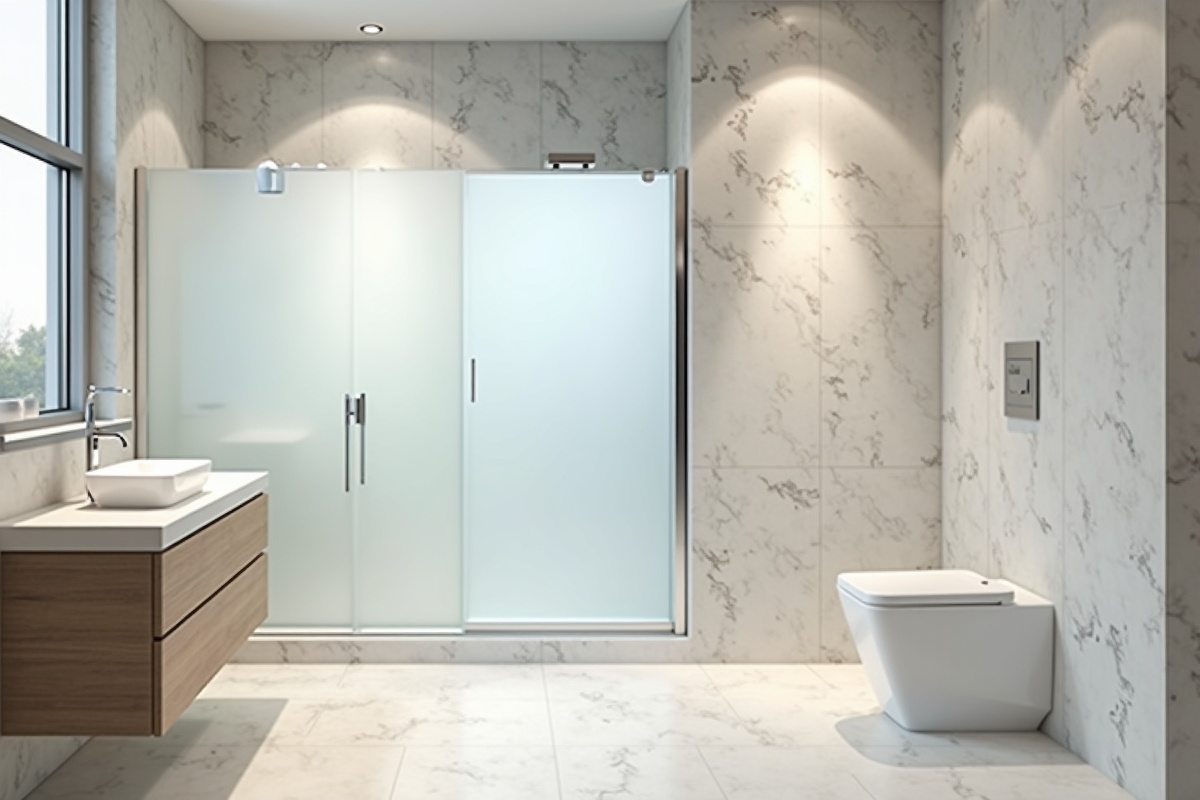
The frosted and privacy glass segment is growing at 8.2% annually in the residential bath market as homeowners prioritize both design and privacy (Allied Market Research 2025). The main types of privacy glass used in shower enclosures include:
Fully frosted glass: The entire surface of the panel is treated for a consistent, uniform privacy effect. This is the most common type for shower doors where the goal is maximum privacy with natural light preserved.
Partially frosted (band frosting): A horizontal band — typically 18 to 24 in. wide — is frosted across the middle of the door, corresponding to the eye-level zone. The upper and lower portions remain clear. This provides practical privacy while maintaining a more open visual connection with the rest of the bathroom.
Pattern-etched glass: Decorative patterns are chemically etched into the glass surface, combining privacy with visual interest. Common options include geometric patterns, organic forms, and custom designs.
Obscure glass: Factory-produced patterned glass with textured surfaces pressed into the glass during manufacturing. Rain glass and reed glass are subcategories of obscure glass. These are distinct from acid-etched frosting but serve similar privacy functions — obscure textures refract an outline into bands rather than softening it, which is why reeded glass shower doors hide less than a fully frosted panel while keeping noticeably more daylight.
Privacy film: A separate product — an adhesive film applied to existing clear glass. Not recommended for showers due to moisture degradation. True frosted shower glass is always a permanent surface treatment, not a film.
Frosted vs Clear: How to Decide Which Is Right for Your Bathroom
The decision between frosted and clear shower glass comes down to three factors: privacy need, design preference, and bathroom light levels.
Privacy need is the most objective factor. If the shower is in a master bath that is never shared with other occupants, or if the shower faces a wall with no sightlines from outside the bathroom, clear glass is perfectly functional. If the shower is visible from a bedroom or hallway, or if the bathroom is shared, frosted glass eliminates any concern about privacy without requiring behavioral adjustment.
Design preference matters equally. Clear glass creates a more open, expansive feel and allows tile and stone work to be fully visible — particularly relevant when a significant investment has been made in the shower interior. Frosted glass creates a softer, spa-like aesthetic and can help a simpler tile job look more intentional by drawing less visual attention to the shower interior.
Light levels are a practical consideration. Frosted glass reduces light transmission slightly — fully frosted panels transmit approximately 70 to 80% of the light that clear glass would pass. In a bathroom with limited natural light, this reduction can make the shower feel dim. In a well-lit bathroom, it is rarely noticeable.
If you want privacy but are concerned about losing light, consider partial frosting — a horizontal band at eye level gives full practical privacy while keeping the upper and lower sections clear. The shower still feels bright and open.
How Much Do Frosted Glass Shower Doors Cost?
Acid-etched frosted glass costs 20 to 40% more than standard clear tempered glass per square foot (Angi 2025). For a standard frameless shower door, this premium translates to an additional $150 to $400 on the glass material cost, depending on the door size and opacity level chosen.
80-95%
of visible detail obscured by privacy glass depending on opacity level selected (GlassBuild America 2025)
Industry data from GlassBuild America (2025) confirms that medium-to-heavy frosting obscures 80-95% of visible detail while preserving 70-80% of natural light transmission.
Full enclosure pricing in the DFW market typically runs:
- Standard clear frameless enclosure: $1,500 to $3,500 installed
- Frosted glass frameless enclosure: $1,800 to $4,200 installed
- Custom pattern-etched enclosure: $2,500 to $5,500 installed
Sandblasted glass tends to cost slightly more than acid-etched glass for custom work, as it requires more labor and specialized equipment. Factory-produced frosted glass (acid-etched) is the most affordable privacy glass option and is what most glass installers stock as a standard offering.
What Patterns and Opacity Levels Are Available?
Frosted glass for showers is available across a spectrum of opacity levels, typically described as:
- Light frost (25-40% obscurity): Softens images without fully blocking them. Shapes remain identifiable.
- Medium frost (50-70% obscurity): Standard privacy level. Outlines visible but details obscured.
- Heavy frost (80-90% obscurity): Near-opaque. Only light and shadow pass through.
- Opaque (95%+ obscurity): Essentially no visual transmission. Rarely specified for full shower doors due to dark interior effect.
For decorative patterns, acid etching can be applied in any design that can be masked onto the glass surface. Common options include:
- Horizontal or vertical stripe patterns
- Geometric shapes (diamonds, hexagons, chevrons)
- Organic patterns (leaves, branches, abstract forms)
- Company logos or custom artwork (for commercial applications)
Pattern etching allows a clear glass background with frosted pattern applied on top, creating a two-tone effect where the clear areas provide visual connection and the frosted pattern provides both privacy and visual interest.
Does Frosted Glass Require Different Maintenance Than Clear Glass?
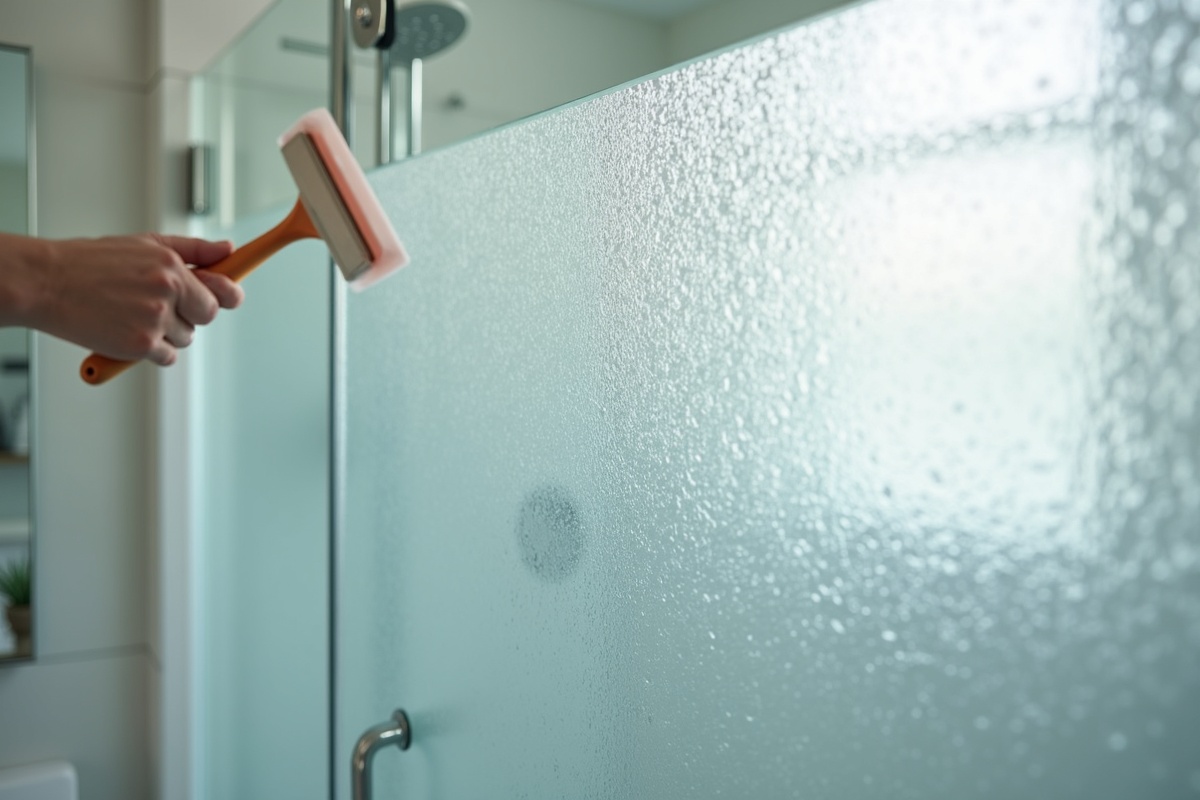
Frosted glass does require slightly more attention in terms of cleaning, particularly in the DFW area where hard water is a known challenge. The textured surface of acid-etched or sandblasted glass has more microscopic surface area than smooth clear glass, which means mineral deposits from hard water can bond to the surface more aggressively over time.
The practical cleaning routine for frosted shower glass:
- Squeegee after every shower to remove water droplets before they dry
- Apply a spray of daily shower cleaner to inhibit mineral buildup
- Deep clean monthly with a mild acid-based cleaner (white vinegar diluted with water, or a commercial calcium/lime remover)
- Avoid abrasive scrubbers or steel wool — they will damage the frosted texture
Avoid ammonia-based cleaners on frosted glass. Ammonia can gradually degrade the acid-etched surface texture over time, reducing the frosting effect. Use pH-neutral or mild acid-based cleaners instead.
Protective coatings designed for frosted glass (such as Rain-X or manufacturer-applied hydrophobic treatments) can significantly reduce mineral buildup by causing water to bead and roll off the textured surface rather than sitting and evaporating. These coatings are worth applying at installation and refreshing annually.
Frosted Shower Glass Design Ideas for DFW Bathrooms
The right frosted glass treatment depends on the overall bathroom design direction:
Contemporary minimalist: Full-panel medium-frost acid-etched glass in a frameless enclosure with brushed nickel or matte black hardware. Clean, simple, functional.
Transitional: Band frosting at eye level with clear glass above and below. Pairs well with subway tile surrounds and chrome or brushed nickel fixtures — the mixed clear and frosted treatment adds visual interest without complexity.
Spa-inspired: Heavy frost or sandblasted glass with warm-toned wood accents and natural stone tile. The matte, diffused light quality enhances the retreat atmosphere.
Traditional: Pattern-etched glass with a classic geometric or organic motif, paired with oil-rubbed bronze hardware and marble tile.
For DFW master bath remodels in 2026, the most popular combination is a medium-frost frameless enclosure with matte black hardware — a design direction that aligns with the current trend toward monochromatic, material-forward bathroom aesthetics.
The same privacy-with-light logic is moving beyond the enclosure: a frosted glass barn door at the primary bathroom entry is now a common DFW specification, carrying the frosted treatment from the shower to the room's entrance.
Is frosted glass harder to clean than clear glass?
Frosted glass requires the same basic cleaning routine as clear glass, but the textured surface can accumulate mineral deposits from hard water more readily than smooth glass. In DFW, where water hardness commonly reaches 200 to 300 ppm, daily squeegeeing and monthly deep cleaning are more important with frosted glass. Applying a protective hydrophobic coating at installation significantly reduces buildup.
Can you get partial frosting on a shower door?
Yes. Partial frosting — often called band frosting or zone frosting — is a common option where only a horizontal section of the door is treated. This is typically done at eye level (roughly 54 to 66 in. from the floor) to provide practical privacy while keeping the upper and lower portions clear for light transmission. The frosted area is permanently etched and aligned precisely during fabrication.
Does frosted glass make a bathroom feel smaller?
In some configurations, yes. A fully frosted enclosure reduces visual depth through the glass, which can make a small bathroom feel more enclosed. Clear glass creates an uninterrupted sightline that visually expands the space. If your bathroom is small and you want privacy, consider band frosting rather than full-panel frosting, or position the frosted panels where privacy matters most (the door) while keeping fixed side panels clear.
Can frosted glass be cut to custom sizes?
Yes. Frosted glass panels are fabricated to custom dimensions just like standard clear tempered glass. The acid-etching treatment is applied before the glass is cut and tempered, so custom sizes, angles, notches, and cutouts are all possible. There is no standard limitation on shape or size beyond what the tempering process supports.
What is the difference between acid-etched and sandblasted frosted glass?
Acid-etched glass is chemically treated to create a smooth, uniform frosted surface. Sandblasted glass is abraded with fine particles to create a rougher, more tactile texture. Acid-etched glass is smoother to the touch, more consistent in appearance, and typically less expensive for production quantities. Sandblasted glass has a more artisanal, handcrafted look and is often used for custom decorative work. Both provide comparable privacy at similar opacity levels.
Also see our in-depth comparison of clear glass vs frosted shower doors and our gallery of custom frameless shower designs.
Infinity Glass & Glazing specifies and installs frosted glass shower doors throughout DFW, including Corinth, Lewisville, Flower Mound, Highland Village, and Frisco. We carry multiple frosting options and can show you samples in our showroom before you commit to a privacy level. Contact us for a free estimate.
Related reading:
- rain glass shower enclosure