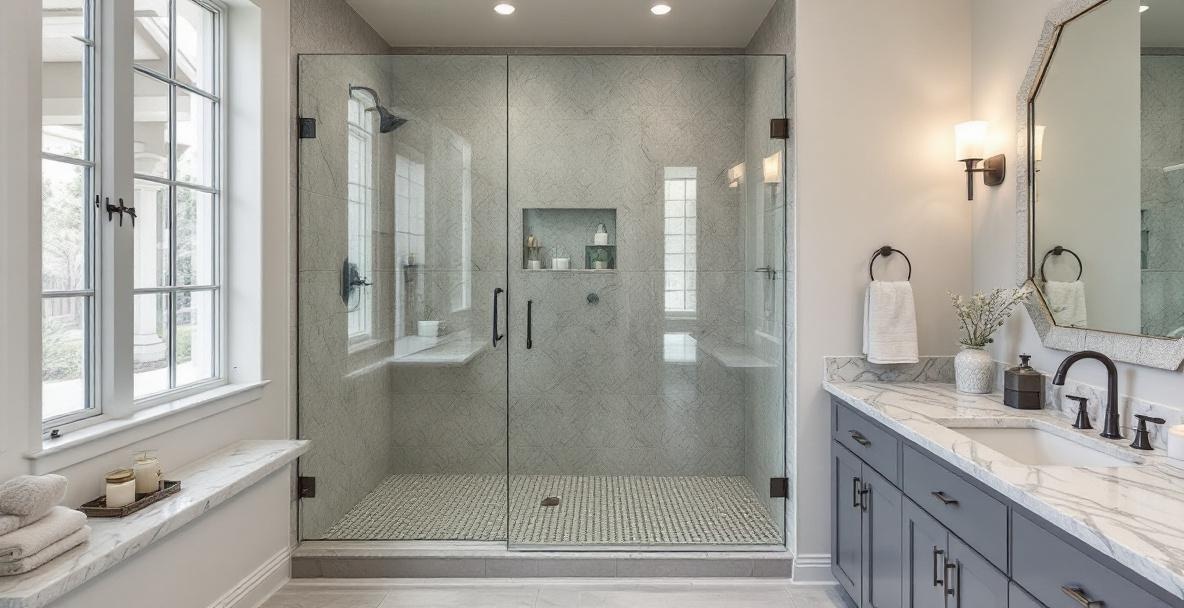
Custom glass cabinet door inserts in DFW cost $30–$120 per panel depending on glass type and size (HomeGuide 2025). A standard 12x24-inch clear glass insert for a kitchen cabinet runs $25–$50. Frosted, reeded, or specialty glass inserts run $40–$120+. Infinity Glass specs glass cabinet inserts to exact frame dimensions with polished edges.
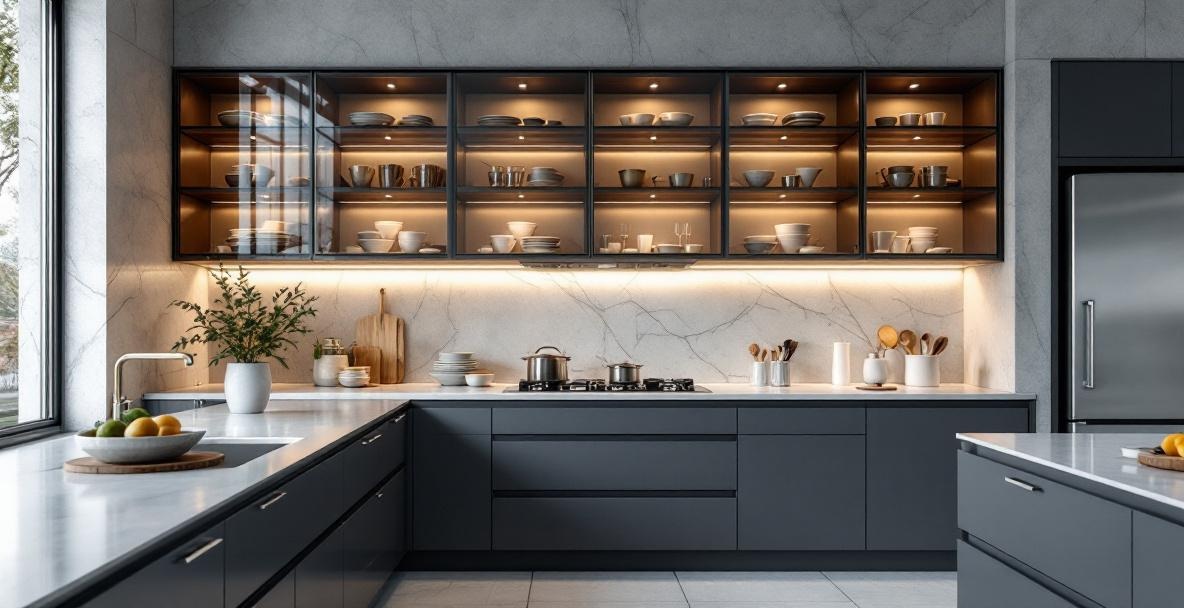
Glass cabinet doors transform a closed kitchen from utilitarian to designed. The upper cabinets on either side of a range hood that display white dishware and glassware — that's the glass cabinet door effect in its most familiar form. It opens visual depth into what would otherwise be a flat, opaque wall of cabinetry. In display cabinets, curio cabinets, and built-in shelving, glass doors serve the same purpose: making what's inside visible while keeping it organized and dust-free. The most ambitious version of that display-behind-glass idea is the wine room — custom glass wine cellar doors apply the same logic at room scale, with climate-control glass added.
This guide covers the glass types available for cabinet inserts, how to measure, and what to expect from ordering custom cabinet glass in DFW. The same glass options carry over to full-size doors — see custom glass door inserts in DFW for interior and entry door applications.
What Glass Types Are Available for Cabinet Door Inserts?
Six glass types are commonly used in cabinet door applications: clear glass (full transparency), frosted or satin (diffused privacy with light transmission), seeded or reeded/fluted (textured period or contemporary looks), wire glass (traditional look, less common today), mirror (for specific display applications), and back-painted (opaque color in a display cabinet).
Clear glass:
- Full transparency — everything inside the cabinet is fully visible
- Standard specification for kitchen upper cabinets, dining room china cabinets, and display cases
- Available in standard and low-iron (clearer, less green tint at edges)
- The most common cabinet glass type in DFW kitchens
- Cost: $20–$50 per standard panel
Frosted / satin glass:
- Diffuses vision — contents read as shapes rather than details
- Good for cabinets where the visual interest is the light, not the specific items displayed
- Available in factory-etched (permanent, consistent) or film-applied (changeable)
- Cost: $35–$75 per standard panel
Reeded / fluted glass:
- Parallel ridges creating a ribbed texture and soft visual diffusion
- The fastest-growing glass cabinet trend in 2025–2026 — seen extensively in DFW kitchen renovations (Houzz 2025)
- Creates a midcentury modern or transitional aesthetic
- Available in vertical or horizontal reed orientation
- Cost: $45–$100 per panel depending on size
Seeded glass:
- Clear glass with tiny air bubbles (seeds) throughout — creates an antique, hand-made appearance
- Traditional and farmhouse kitchen style
- Transmits light while softening the view of contents
- Cost: $40–$90 per panel
Leaded / diamond glass patterns:
- Clear or lightly frosted glass with applied leading (zinc or brass strips) forming diamond, square, or Arts & Crafts patterns
- Traditional, cottage, and Victorian-influenced kitchen styles
- More expensive due to the applied leading work
- Cost: $60–$150 per panel
Mirror:
- Used in specific display cabinet applications where a mirrored back is part of the display setup, not for the door itself (door mirrors are unusual)
- Can also be used in bar cabinets or display niches where the mirrored door creates depth
- Cost: $25–$60 per panel (similar to clear glass)
$30–$120
per panel for custom glass cabinet door inserts in DFW — glass type and panel size are the primary cost drivers
How Do You Measure for Glass Cabinet Door Inserts?
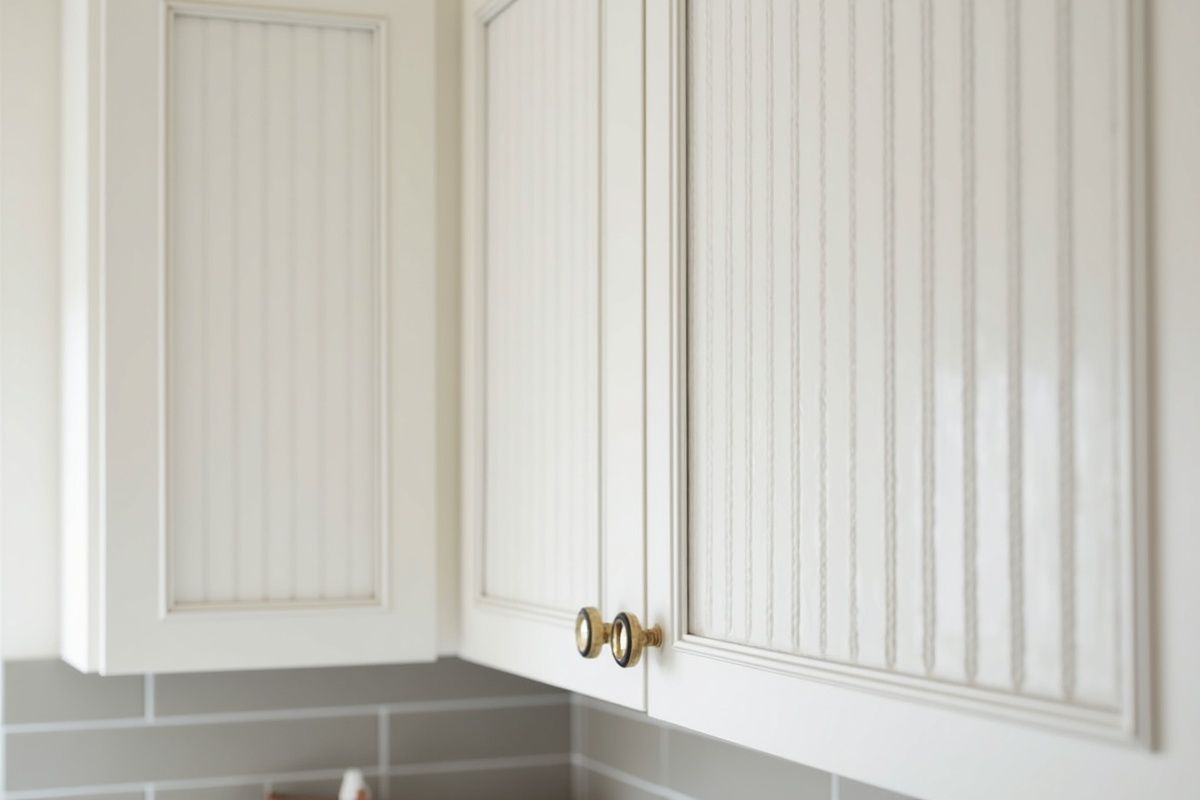
Measuring for glass cabinet door inserts requires measuring the frame opening in the existing cabinet door — the rabbet (groove) into which the glass sits. The glass panel is typically cut 1/16-inch smaller than the rabbet opening on all sides to allow for fit and expansion.
Measurement process:
Step 1 — Remove the existing door panel: Most cabinet doors have a wood, laminate, or existing glass panel that can be removed by unscrewing the door from the cabinet, then prying out or unrouting the existing panel.
Step 2 — Measure the rabbet opening: With the panel removed, measure the inside dimension of the groove (rabbet) into which the panel sits. Measure width and height to the nearest 1/16 inch.
Step 3 — Subtract for clearance: Glass panels are typically ordered 1/16-inch smaller than the rabbet opening in both width and height. This allows for fit without stress and small tolerance variations. Example: 11-7/8-inch rabbet → order 11-13/16-inch glass.
Step 4 — Note the rabbet depth: Cabinet door rabbets are typically 3/8-inch deep. Standard cabinet glass is 3/16-inch or 1/4-inch thick — both fit in a 3/8-inch rabbet with room for the retaining molding.
Step 5 — Provide dimensions to the glass shop: Width × Height × thickness. The glass shop will cut to your dimensions, polish the edges, and package for safe transport.
Bringing the door itself: The most accurate approach for complex shapes, angled cuts, or unusual profiles is to bring the door (or just the panel cutout) to the shop. The glass cutter can take direct measurements from the physical piece.
How Are Glass Cabinet Door Inserts Installed?
Glass cabinet door inserts are retained in the door frame by either a wood retaining molding (router-and-nail method) or glazing clips (a simpler retrofit method). Both methods are homeowner-installable for standard rectangular panels; professional installation is advisable for large or shaped panels.
Wood retaining molding (router method):
- Original installation method on most wood frame cabinet doors
- The door panel is routed out from the back of the door, glass is set into the rabbet, and a thin wood retaining strip is nailed or glued in place to hold the glass
- Creates a clean finished appearance on both sides of the door
- Requires careful routing — cutting into finished cabinet doors risks splitting or damage if attempted without experience
Glazing clips (retrofit method):
- Small metal clips that attach to the inside surface of the door frame to retain the glass panel
- No routing required — clips are screwed directly to the door frame
- The clip head is visible from inside the cabinet but not from the front
- Appropriate for DIY installation and retrofit projects where routing isn't practical
Glass putty (older method):
- A traditional glazing compound applied in the rabbet around the glass perimeter
- Still used on true antique cabinets or for period-appropriate restoration
- Less common in modern kitchen renovations
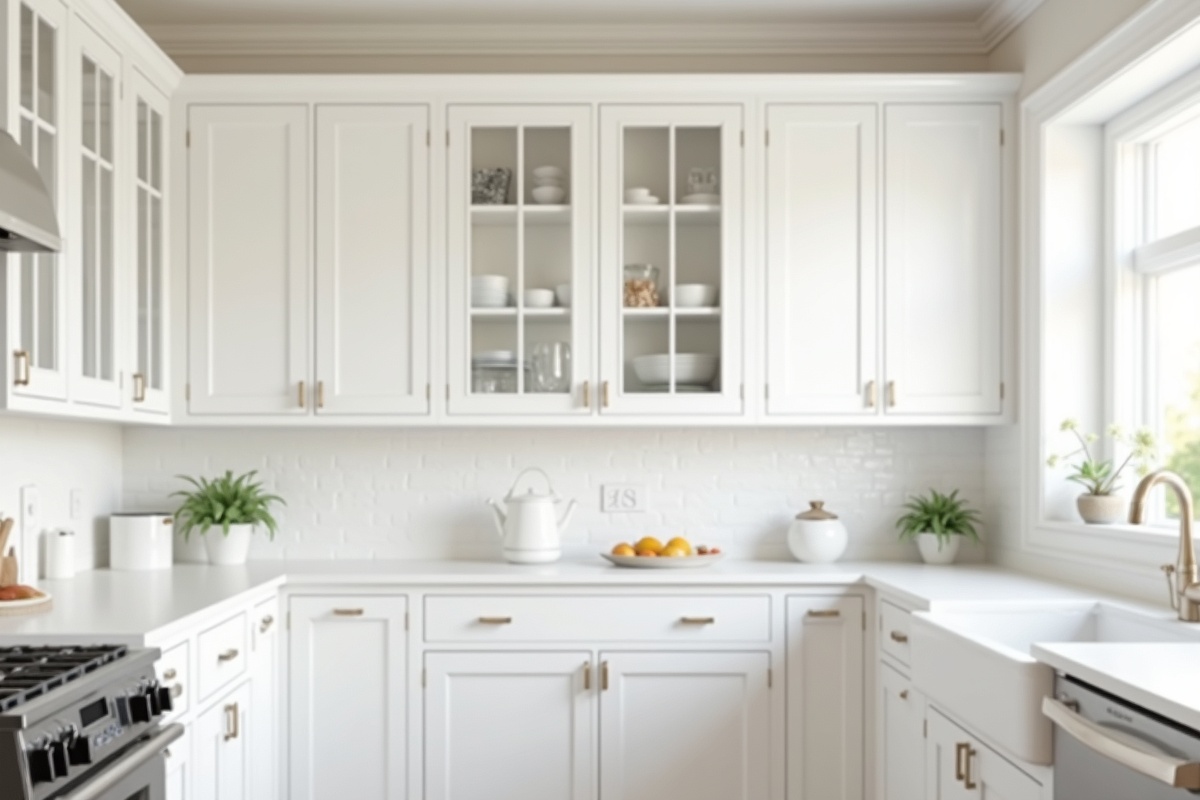
Infinity Glass & Glazing specs custom glass cabinet inserts to any dimension from our Corinth shop — clear, frosted, reeded, seeded, and specialty glass. Serving DFW: Dallas, Fort Worth, Frisco, McKinney, Lewisville, and surrounding areas. Get a cabinet glass quote or call (940) 279-1197.
How much do custom glass cabinet inserts cost?
Custom glass cabinet door inserts in DFW cost $30–$120 per panel depending on glass type and size. Standard clear glass inserts for kitchen upper cabinets run $25–$50 per panel. Reeded, frosted, and specialty glass inserts run $45–$120 per panel. Most homeowners completing a full kitchen cabinet conversion need 6–12 panels depending on cabinet count.
What glass type is most popular for kitchen cabinet doors?
Clear glass remains the standard for most DFW kitchen cabinets — it shows dishware and glassware cleanly and simply. Reeded (fluted) glass is the fastest-growing alternative, particularly in transitional and contemporary kitchens where the texture creates visual interest without full transparency (NKBA 2025). Seeded glass is popular in farmhouse and traditional-style kitchens.
Can I install glass cabinet inserts myself?
For standard rectangular panels with glazing clip retention, DIY installation is feasible for a careful homeowner. The glass must be cut precisely to the rabbet opening dimensions — ordering from a professional glass shop ensures correct dimensions. Routing out the existing door panel to create the rabbet for new glass requires woodworking skill and is better left to a professional.
How thick should glass be for cabinet doors?
Standard cabinet glass is 3/16-inch (the lightest option, for smaller panels under 12 inches wide) or 1/4-inch (for most standard cabinet sizes). 1/4-inch is the most commonly ordered thickness — it has adequate stiffness for cabinet-door dimensions and fits standard cabinet door rabbets without modification. Thicker glass is rarely needed for cabinet applications.
Going with open shelving instead of doors? We also handle custom glass shelf installation — measured on site, ordered to size and fitted on brackets suited to what the shelf will carry.
Related reading: custom mirrors fabricated in-house and our bathroom renovation glass options.