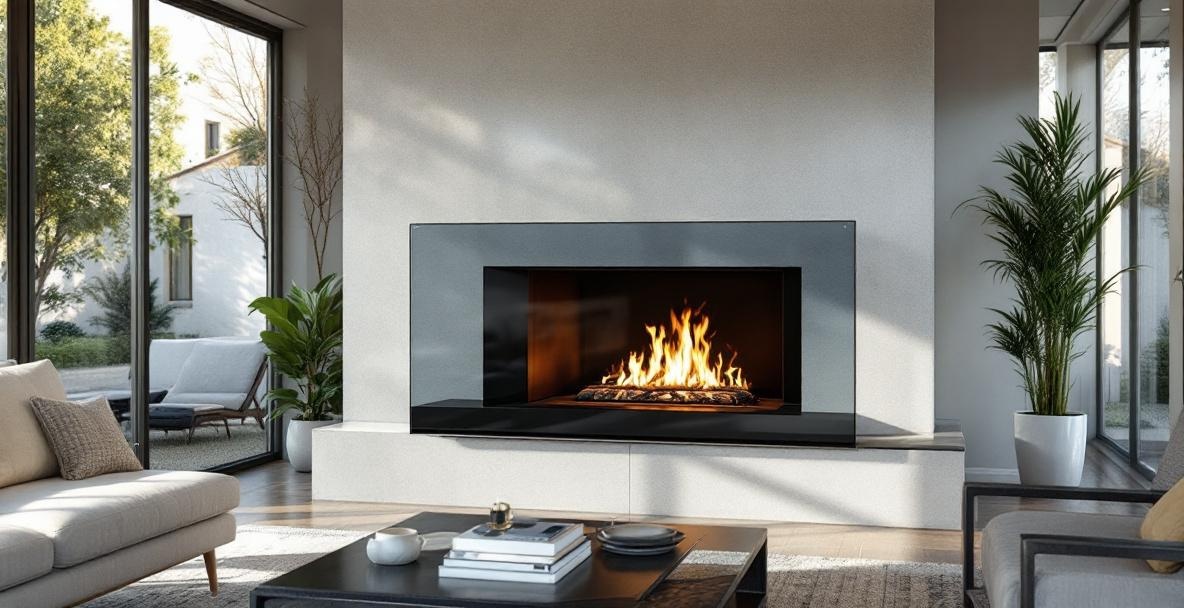
A custom glass fireplace screen is a heat-resistant glass panel (typically ceramic glass or tempered safety glass) fabricated to fit a specific fireplace opening, serving both as a safety barrier against flying embers and as an aesthetic upgrade over wire-mesh screens. Custom-cut panels range from $300-$1,200 installed in Dallas, handle temperatures that ceramic glass can exceed 1,400 degrees Fahrenheit, and reduce ember escape by up to 95% compared to an open fireplace.
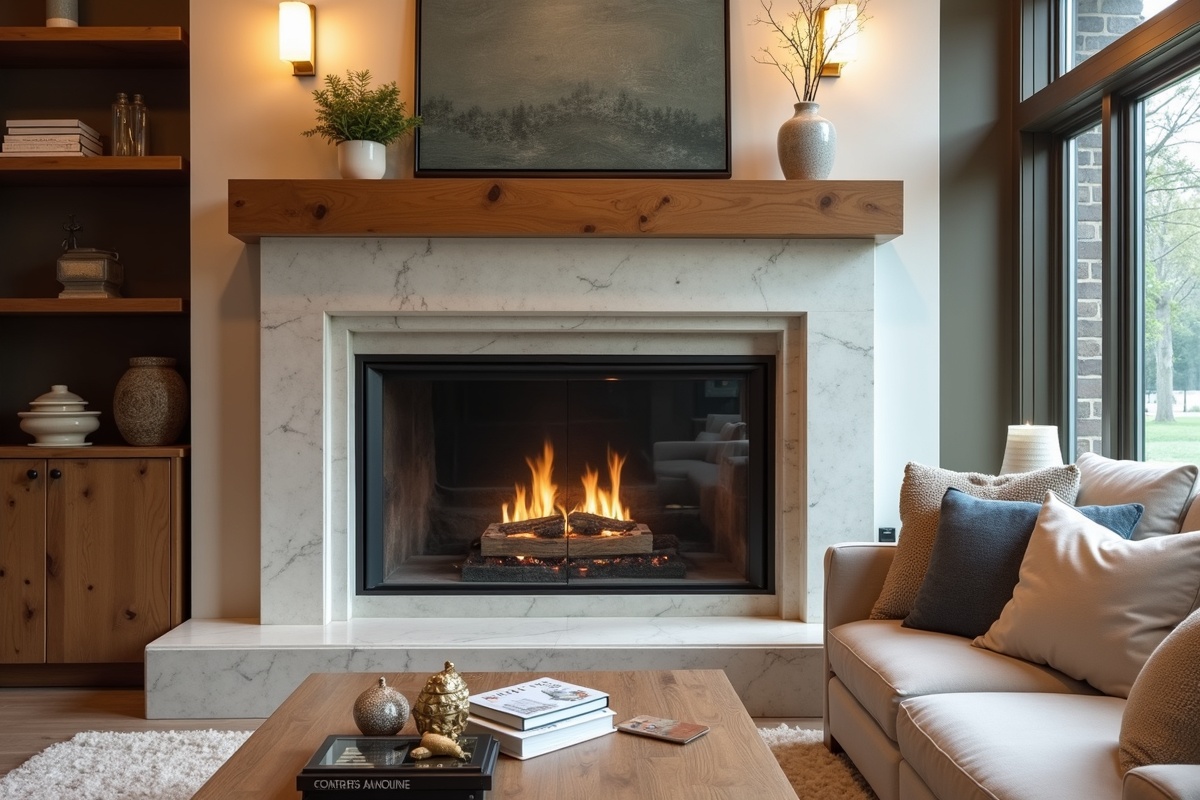
A wood-burning or gas fireplace is a focal feature of the room it sits in — but the standard factory wire screen rarely does it visual justice. A custom glass fireplace screen fabricated to the exact dimensions of your fireplace opening upgrades the hearth from "industrial safety equipment" to "architectural feature." Heat-resistant glass keeps embers inside the firebox where they belong, provides a crisp visual frame for the flames, and fits the opening precisely — no gaps, no awkward oversized wire panels.
Infinity Glass fabricates and installs custom glass fireplace screens and hearth enclosures across Dallas, Fort Worth, and surrounding DFW communities. Also see our custom glass tabletops guide and our decorative glass panels residential guide for other custom glass projects.
What Is a Glass Fireplace Screen and Why Is It Important?
A glass fireplace screen is a heat-resistant glass panel (or panels) installed at the front of a fireplace opening to contain sparks and embers while allowing the fire to be viewed. Glass screens provide 95% better ember containment than open fireplaces (NFPA 2024) and significantly reduce the risk of flooring burns, pet injuries, and accidental home fires from escaping embers.
Glass fireplace screens serve four functions:
Safety — ember containment: Wood fires throw sparks and burning debris unpredictably. A glass screen catches these before they reach carpets, furniture, curtains, pets, or people. For homes with young children or pets near the fireplace, a glass barrier is a meaningful safety upgrade.
Safety — surface contact barrier: A glass panel creates a physical barrier preventing accidental contact with the hot firebox interior. This matters most for gas fireplaces with continuously-hot surfaces during operation.
Efficiency — combustion management: For wood fireplaces with tight-fitting glass doors, the glass panel helps control air intake and slow combustion, increasing heat output to the room. Open fireplaces lose 80-90% of their heat up the flue; a glass-fronted fireplace can reclaim some of that loss.
Aesthetics — visual framing: A clean glass panel frames the fire as a visual centerpiece. Factory wire screens obscure the fire with mesh patterns; glass keeps the fire crisp and visible.
95%
reduction in spark and ember escape from glass-fronted fireplaces vs open fireplaces (NFPA 2024)
Types of Glass Used for Fireplace Screens and Hearth Enclosures
Fireplace glass is specified based on operating temperature and heat exposure — ceramic glass for high-heat direct-contact applications (inside doors of wood stoves and tight-fitting doors) and tempered safety glass for lower-heat spark-screen applications (fireplace screens standing in front of open hearths). Using the wrong glass type is a safety issue — standard tempered glass can shatter at fireplace temperatures if used inside a hot zone.
Glass types and their applications:
Ceramic glass (pyroceramic): Specialty high-temperature glass that withstands temperatures up to 1,400 degrees Fahrenheit (GlassBuild 2024) and handles rapid thermal shock without cracking. Used for wood stove doors, sealed-combustion gas fireplaces, and any glass in direct contact with sustained high heat. More expensive than tempered glass.
Tempered safety glass: Heat-treated standard glass, 4-5x stronger than annealed glass. Handles temperatures up to around 470 degrees Fahrenheit before thermal stress becomes a concern. Appropriate for fireplace screens that stand several inches in front of open fireplaces — the screen never reaches firebox temperatures. Less expensive and more commonly used for spark-screen applications.
Laminated tempered glass: Two layers of tempered glass bonded with an interlayer. Adds safety (holds together if shattered) and some acoustic benefit. Rarely specified for residential fireplace screens but occasionally used for large custom installations.
Annealed (standard) glass: Not used for fireplace applications. Breaks easily under thermal stress and fragments into dangerous shards.
Custom vs Off-the-Shelf Fireplace Glass Screens: Which Is Better?
Custom glass fireplace screens fit the fireplace opening exactly, look integrated into the architecture, and handle any unusual opening shape or dimension — while off-the-shelf screens come in standard sizes with generic trim that often doesn't match the opening. For Dallas homes with architecturally significant fireplaces, custom is almost always the better choice.
| Fit to opening |
| Shape flexibility |
| Visual integration |
| Frame/hardware options |
| Cost range (Dallas) |
| Lead time |
Custom screens work particularly well for:
- Fireplaces with non-standard opening dimensions (older masonry fireplaces often have unique sizes)
- Arched or curved-top fireplace openings (Mediterranean, Spanish Revival, transitional homes)
- Fireplaces with stone or brick surrounds where the screen should recess into or sit flush with the surround
- High-end homes where off-the-shelf appearance compromises the overall aesthetic
- Corner or three-sided fireplaces requiring multi-panel screens
Off-the-shelf screens work adequately for:
- Standard-size rectangular fireplace openings (roughly 30-36 inches wide)
- Rental properties or secondary homes where cost is the priority
- Temporary or interim solutions pending a future remodel
How Are Custom Glass Fireplace Screens Installed?
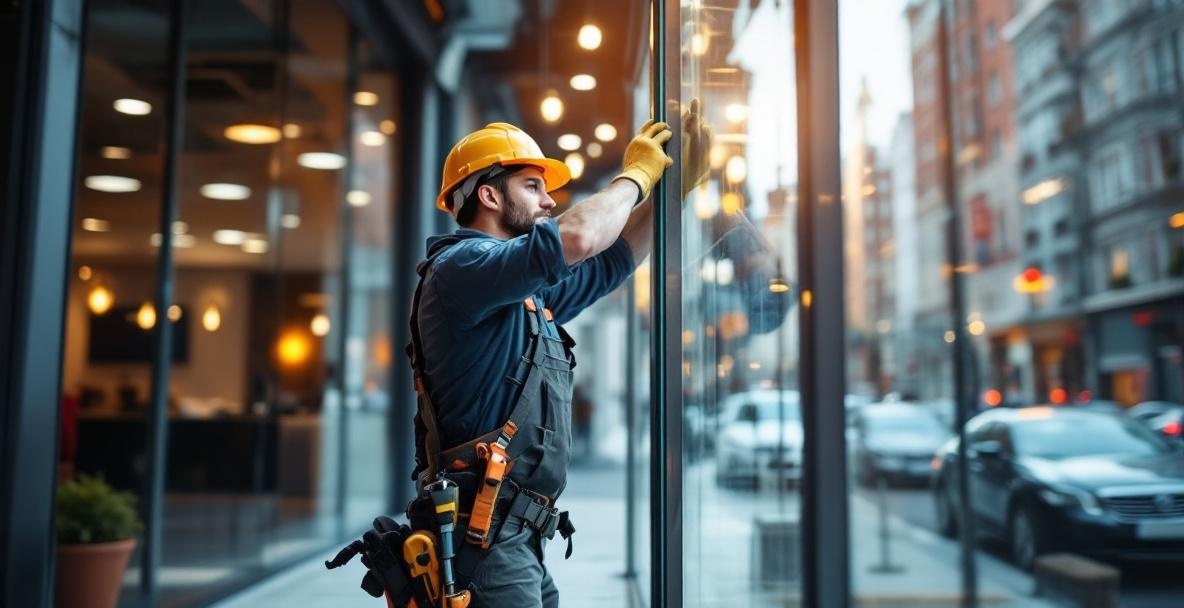
Custom glass fireplace screen installation is a 1-2 hour on-site process following 2-3 weeks of fabrication lead time. The installer mounts either a floor-standing screen (with base feet) or a wall-mounted hinged screen (attached to the fireplace surround) depending on the design specified.
- 1
On-Site Measurement and Design Consultation
Installer measures the fireplace opening precisely, discusses design preferences (floor-standing vs wall-mounted, single panel vs bifold, hardware finish), and confirms glass specification (tempered vs ceramic). - 2
Template and Fabrication (2-3 weeks)
Exact dimensions, corner details, and any special cuts are fabricated. Tempered glass must be cut to final size before tempering — changes cannot be made after fabrication. - 3
On-Site Installation
The glass panel and frame assembly arrive ready to install. For floor-standing screens, the unit is positioned and leveled. For wall-mounted units, mounting hardware is anchored into the fireplace surround (brick, stone, or framing) and the screen is hung and adjusted. - 4
Hardware Adjustment and Testing
Hinges, handles, and any opening mechanisms are adjusted for smooth operation. The homeowner is walked through opening and closing the screen, cleaning instructions, and safety operation guidelines.
Mounting approaches:
Floor-standing: The screen sits on the hearth surface, held upright by base feet or a stand. No wall attachment required. Best for masonry hearths and situations where permanent attachment isn't desired.
Hinged wall-mount: The screen is mounted to the fireplace surround with hinges, opening like a door for access to the firebox. Creates a cleaner, more integrated appearance.
Bifold: Two or more panels hinged together, folding open to access the firebox. Useful for wider fireplaces where a single-panel door would be unwieldy.
Fixed panel with removable access: Single sheet of glass held in place by mounts, removed entirely when firebox access is needed. Cleanest visual appearance; requires manual removal for cleaning.
What Glass Safety Standards Apply to Fireplace Screens in Texas?
Texas does not have a state-specific glass code for fireplace screens, but local Dallas-area building codes follow the International Residential Code (IRC) and NFPA 211 standards for chimneys, fireplaces, and solid fuel-burning appliances. The key safety requirements: tempered or ceramic glass only, proper clearance from combustibles, and no-obstruction of required combustion air for gas units.
Relevant standards:
IRC Chapter 10 — Chimneys and Fireplaces: Establishes hearth extension requirements, clearances from combustibles, and general fireplace safety. A glass screen is an accessory and must not interfere with required clearances.
NFPA 211 — Standard for Chimneys, Fireplaces, Vents and Solid Fuel-Burning Appliances: Detailed national standard for fireplace installation and safety. Referenced by IRC and used by code officials.
Manufacturer specifications for gas units: Factory-built gas fireplaces often have specific screen and door requirements — aftermarket glass screens must not void the manufacturer's certification or obstruct combustion air.
Tempered or ceramic glass requirement: While not always explicitly codified for spark screens, industry standard and insurance best practice is that any glass within 36 inches of a fireplace use safety-rated glass (tempered or ceramic).
How Much Does a Custom Glass Fireplace Screen Cost in Dallas?
Custom glass fireplace screens in Dallas typically cost $300-$1,200 installed, depending on size, glass type, frame style, and hardware (Angi 2025). Small floor-standing tempered glass screens start around $300; large custom wall-mounted ceramic glass enclosures for wood stoves reach $1,200-$2,500.
Pricing breakdown:
| Project Type | Typical Dallas Cost Range | |--------------|---------------------------| | Small floor-standing tempered screen (under 36" wide) | $300-$500 | | Medium floor-standing tempered screen (36"-48" wide) | $400-$700 | | Large floor-standing tempered screen (48"+ wide) | $600-$900 | | Wall-mounted hinged tempered screen | $500-$1,000 | | Bifold or multi-panel screen | $700-$1,400 | | Arched or shaped custom screen | $800-$1,500 | | Ceramic glass screen (high-heat applications) | $900-$2,000 | | Zero-clearance gas fireplace custom glass | $700-$1,500 |
Cost factors:
- Glass type: Ceramic glass is roughly 3-5x the cost of tempered glass per square foot
- Size: Larger panels cost more; large single panels may exceed tempered glass size limits (check with fabricator)
- Frame style: Frameless glass (with polished edges) is premium vs framed
- Hardware finish: Matte black and satin nickel are standard; antique brass, polished brass, and oil-rubbed bronze are premium
- Installation complexity: Floor-standing is simplest; wall-mounted on stone surrounds requires masonry anchors and adds labor
Design Ideas: Glass Fireplace Screens for DFW Homes
The right glass fireplace screen design depends on the fireplace's architectural style, surround material, and the home's overall design direction. Modern homes favor frameless or minimal-frame glass; traditional homes favor framed glass with decorative hardware; transitional homes favor clean-lined framed glass with restrained details.
Style-specific recommendations:
Modern and contemporary (Plano, Frisco, Southlake new construction):
- Frameless or thin aluminum-framed single panels
- Clean horizontal lines, no decorative scrollwork
- Matte black or brushed aluminum hardware
- Floor-standing minimalist base or recessed wall mount
Transitional (updated homes in North Dallas, Coppell):
- Thin-profile framed glass (1/4" to 1/2" frame width)
- Matte black, satin nickel, or oil-rubbed bronze hardware
- Straightforward hinged bifold or single-panel doors
- Traditional handles or pulls (no ornate scrollwork)
Traditional (Highland Park, University Park, older Preston Hollow):
- Framed glass with traditional proportions
- Oil-rubbed bronze, antique brass, or polished brass hardware
- Arched tops to match arched fireplace openings
- Decorative hardware (fleur-de-lis, scrollwork, period-appropriate pulls)
Craftsman/bungalow (M Streets, Oak Cliff):
- Framed glass with simple square/rectangular lines
- Oil-rubbed bronze or hammered black hardware
- Divided-light patterns occasionally used for visual complexity
- Integrated with stone or brick surrounds
Spanish/Mediterranean (older Preston Hollow, historic Fort Worth):
- Arched screens matching arched fireplace openings
- Wrought-iron or iron-look framing and hardware
- Decorative scrollwork appropriate to the architectural style
Frequently Asked Questions
What type of glass is used for fireplace screens?
Fireplace screens use either ceramic glass (for direct high-heat applications like wood stove doors and sealed-combustion fireplaces) or tempered safety glass (for standoff spark screens positioned 2-4 inches in front of open fireplaces). Never use standard annealed glass — it can shatter under thermal stress.
Is tempered glass safe for use in a fireplace screen?
Tempered glass is safe and appropriate for spark-screen applications where the screen is not in direct contact with firebox temperatures. For wood stove doors, insert doors, or any glass directly at the firebox opening, ceramic glass is required because tempered glass can fail at sustained high temperatures. A qualified fabricator can assess your application and specify the right glass type.
Can a glass fireplace screen be custom cut to any hearth size?
Yes — custom glass fireplace screens are fabricated to exact measurements of your specific fireplace opening. This includes arched openings, asymmetric shapes, corner fireplaces, and non-standard dimensions. Standard lead time is 2-3 weeks from measurement to installation for most Dallas residential projects.
How do you clean a glass fireplace screen?
For routine cleaning, use a soft cloth with glass cleaner when the glass is cool. For soot buildup from wood fires, a damp cloth with ash from the firebox acts as a mild abrasive and works better than most commercial cleaners. Specialty fireplace glass cleaners are available for heavy buildup. Never use abrasive scrubbers on ceramic glass — they can damage the surface. Always wait until the glass is completely cool before cleaning.
Do glass fireplace screens require special hardware?
Yes — fireplace screen hardware must be rated for elevated temperatures. Standard cabinet or door hinges are not appropriate because they can fail from heat exposure. Fireplace-rated hinges, handles, and mounting hardware are manufactured from materials that handle the warm environment. Your fabricator specifies appropriate hardware as part of the installation.
Schedule Your Custom Fireplace Screen Consultation
A custom glass fireplace screen transforms a fireplace from functional heating feature to architectural focal point — and delivers meaningful safety benefits for homes with children, pets, or active wood fires. Infinity Glass fabricates and installs custom fireplace screens and hearth enclosures for Dallas, Fort Worth, and surrounding DFW-area homes.
Also see our custom glass tabletops and decorative glass panels residential for other custom glass projects.
Contact Infinity Glass for a free measurement and custom fireplace screen quote for your Dallas home.
Related reading: