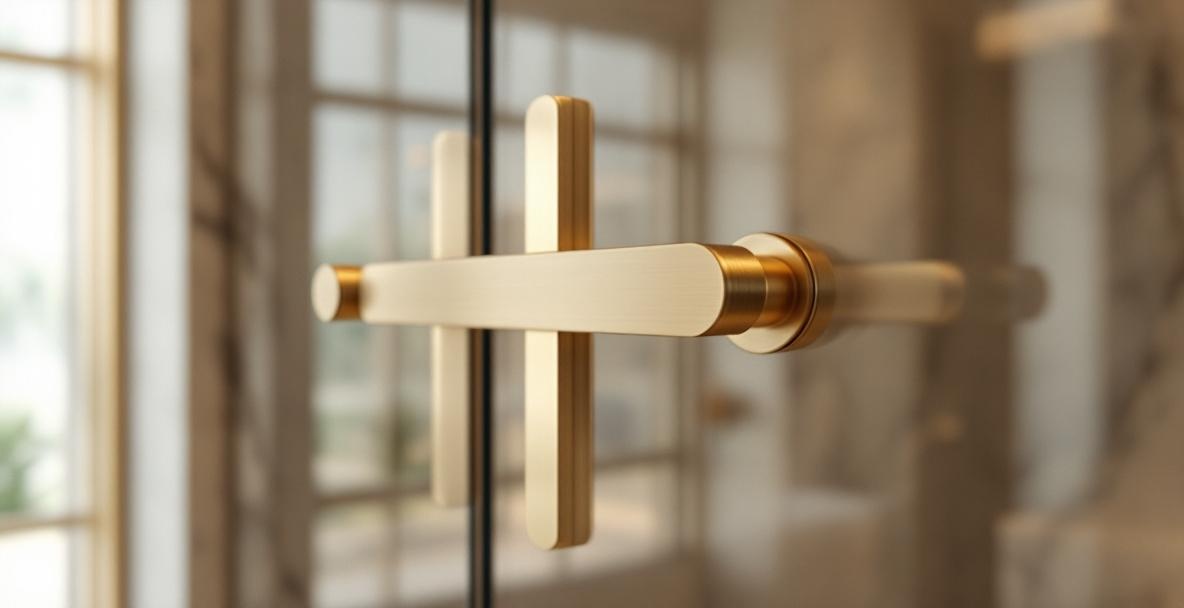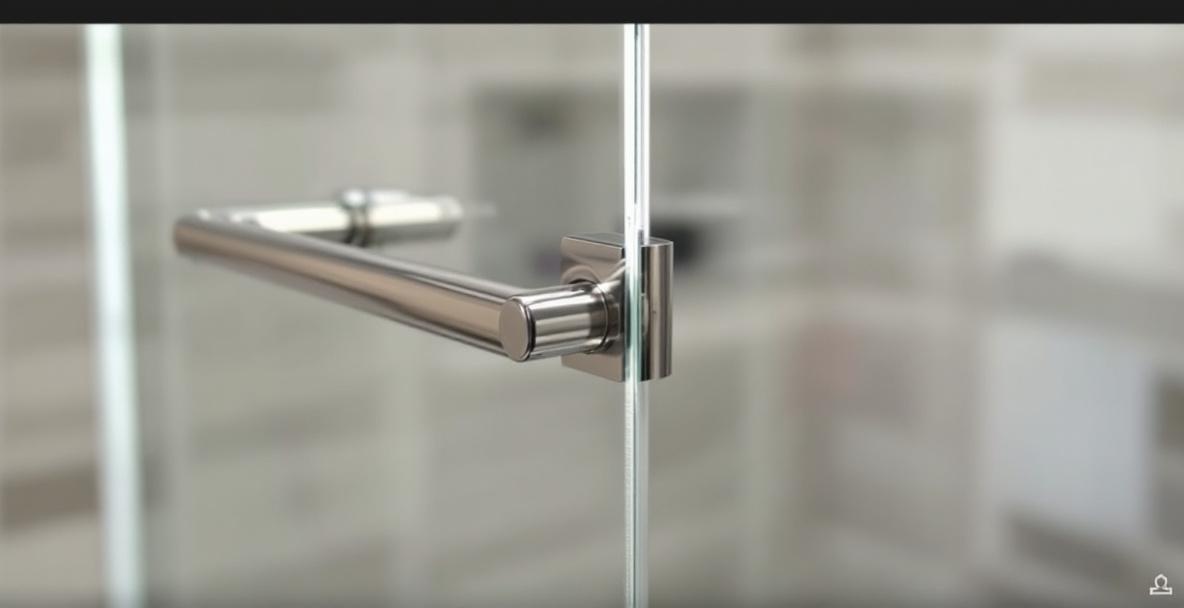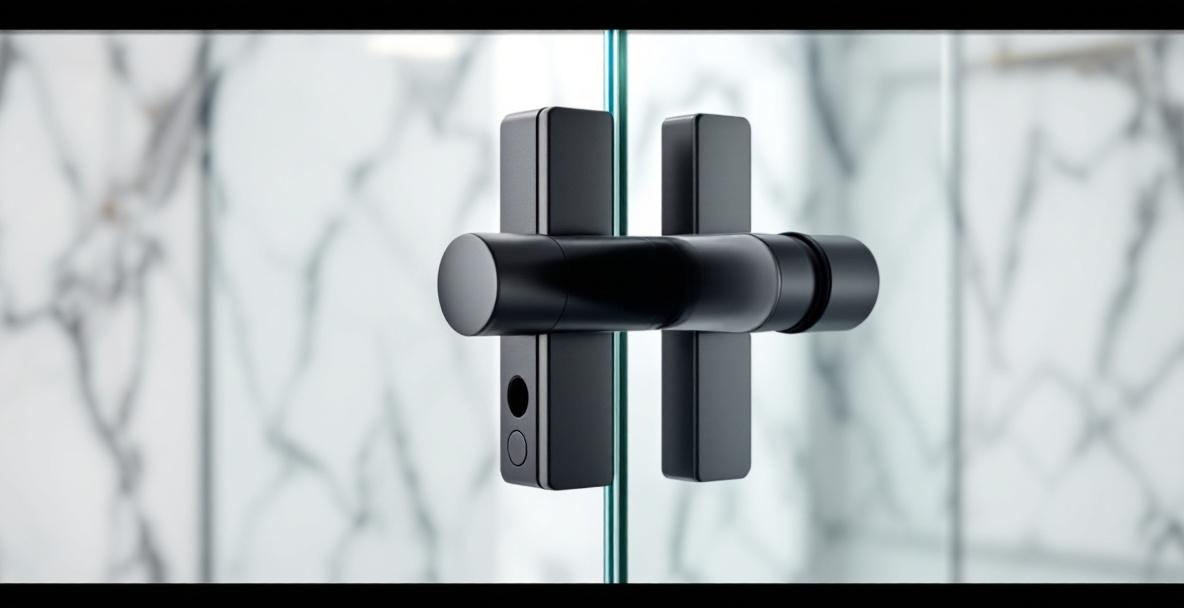
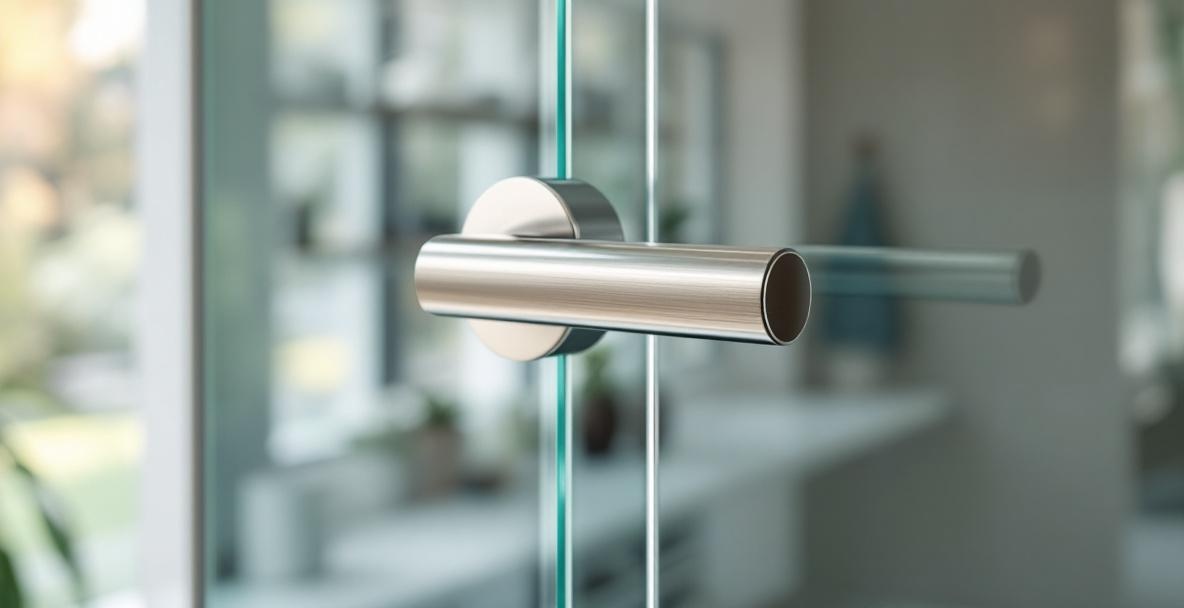
The most popular shower door handle styles in 2026 are the C/D-pull, the towel bar handle, and the round or square bar pull — in order of installation frequency across DFW. The best choice depends on your bathroom's design direction, door width, and whether you want the handle to double as a towel holder. Most handles mount through two drilled holes in the tempered glass.
The handle on your frameless shower door is used twice a day, every day. It's also the most tactile and visible piece of hardware in the entire enclosure. Getting the style right — both for aesthetics and for function — makes the shower experience better every single use.
This guide covers every major handle style, when each works best, and how to choose the right profile for your door width, design direction, and hardware finish.
What Is the Most Popular Shower Door Handle Style?
The C-pull or D-pull is the most widely installed shower door handle style, accounting for the majority of residential frameless shower installations (Houzz 2025). Its appeal: minimal hardware mass, clean lines, and universal visual compatibility with any design direction from traditional to contemporary. A single curved bar in your chosen finish reads as deliberately understated.
Why the C/D-pull dominates:
The C-pull (open at the top) and D-pull (closed loop) are functionally identical — both provide a natural grab point, mount through two holes in the glass, and project 3-4 inches from the door surface. The subtle visual difference is a matter of preference.
Benefits of C/D-pull handles:
- Low-profile hardware mass — doesn't visually compete with the glass
- Available in every finish (chrome, brushed nickel, matte black, brushed gold)
- Works on any door width from 18 to 60+ inches
- Easy to clean — minimal horizontal surfaces for water accumulation
- Available in 4-inch, 6-inch, 8-inch, and longer center-to-center mounting lengths
Best bathroom pairings:
- Contemporary and minimalist: Clean, no-frills design direction
- Transitional: Works with almost any tile or fixture selection
- Small bathrooms: Low hardware profile keeps the visual focus on the glass
2x/day
how often your shower door handle is used — making ergonomics and durability equally important as aesthetics
When Should You Choose a Towel Bar Handle?
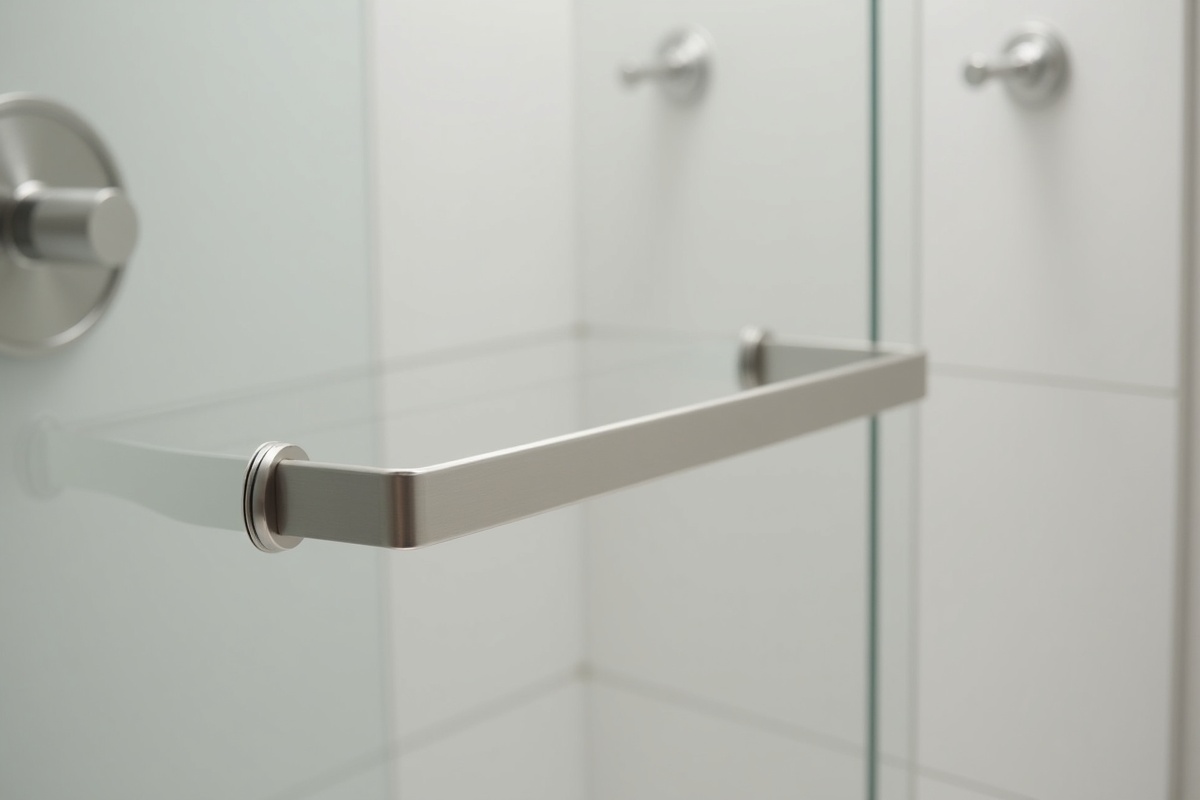
A towel bar handle is the right choice when you want a dual-purpose handle that also holds a bath towel — saving wall space and creating a coordinated look in smaller bathrooms. The towel bar handle runs 18-24 inches wide (or the full width of the door) and mounts through two glass holes at the appropriate height for towel hanging.
Towel bar handle advantages:
Space efficiency: In smaller bathrooms or when the adjacent walls are heavily loaded with other fixtures, a door-mounted towel bar eliminates one wall anchor point and the associated towel bar hardware.
Visual weight: A longer horizontal bar creates a more substantial visual presence than a C-pull. In larger bathrooms or on wider doors, this added visual weight "anchors" the hardware and prevents the handle from looking small relative to the door.
Coordination: When the same finish is used on the door towel bar handle and the wall towel bars, the entire bathroom reads as a coordinated hardware system.
Practical note: Because the towel bar handle is mounted on the door (not a wall), the towel moves with the door when it swings. Some users find this slightly inconvenient; others don't mind. It's worth considering for your usage patterns.
Towel bar handle sizing:
- 18-inch bar: Standard for medium doors (28-36 inch wide openings)
- 24-inch bar: Standard for larger doors (36-48 inch wide openings)
- Double towel bar / full-width bar: For very wide doors or wet room panels — runs nearly the full door width
How Do Round Bar and Square Bar Pulls Differ?
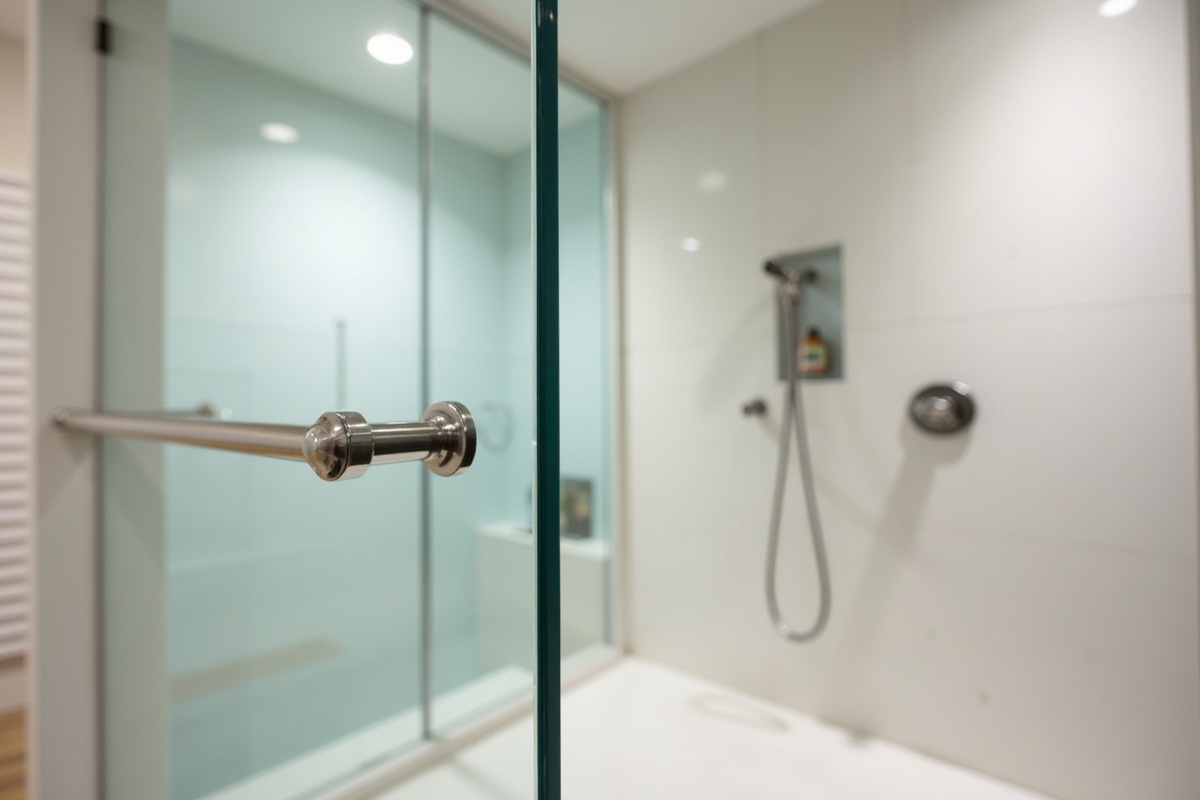
Round bar and square bar pulls create a more architectural, deliberate hardware profile than C/D-pulls — they're popular in contemporary and high-end residential projects where the hardware should read as a design choice (Houzz 2025). The functional difference is minimal; the visual difference is significant.
Round bar pull:
- A cylindrical bar in a straight or slightly angled profile
- Creates a clean, sculptural appearance — pure geometry
- Projects 2-4 inches from the door surface
- Available in all standard finishes
- Works on any door width; lengths typically 6-18 inches
Square bar pull:
- Same concept as round bar, with a squared cross-section
- More architectural, structured appearance
- Slightly harder to grip at the corner edges — though modern square bars are typically arris-polished to remove sharp angles
- Creates a stronger visual rhythm when multiple fixtures use square profiles throughout the bathroom
Choosing between round and square:
- Round bar: Natural, soft geometry. Works in contemporary and organic design directions.
- Square bar: Architectural, rigid geometry. Works in contemporary, industrial, and minimalist design directions.
What Are Clip-Style and Robe Hook Handles?
Clip-style handles attach to the glass edge without drilling — using a clamp mechanism rather than drilled holes — making them an option for retrofitting on existing tempered glass that can't be re-drilled. Robe hooks mount through the glass (drilled holes, set at fabrication) and provide both a pull point and a hook for robes or towels.
Clip handles: Not commonly used in quality new installations (they can loosen over time and don't offer the visual cleanliness of a through-glass mount), but useful when:
- Replacing a handle on existing tempered glass where the original hole positions don't match new hardware
- In rental applications where drilling through glass isn't permitted
Robe hooks through glass: A robe hook drilled through a fixed glass panel (typically at chest height near the door opening) provides a convenient grab point when entering or exiting the shower, plus a practical place to hang a robe or towel. Hardware must be specified and holes drilled before the glass is tempered.
How Do You Choose the Right Handle for Your Door Width?
Handle selection should be proportional to door width — a small C-pull on a 48-inch door looks undersized; a 24-inch towel bar on an 18-inch door looks overwhelming. Use the door width as a guide to appropriate handle length.
Door width guidelines:
18-24 inch doors: C/D-pull (4-6 inch mounting centers) or small round/square bar (6-8 inch length). Towel bar handles are typically too long for very narrow doors.
24-36 inch doors: C/D-pull (6-8 inch mounting centers), round/square bar (8-12 inch length), or 18-inch towel bar handle. The most common residential door width range — any of these handles is proportionally appropriate.
36-48 inch doors: 18-24 inch towel bar handle, or round/square bar (12-18 inch length). C-pulls work but may look slightly small on the widest doors.
48-inch+ doors and full-panel door: 24-inch towel bar or full-width bar is typically appropriate. These wide doors are less common in standard residential bathrooms and more common in wet rooms and steam rooms.
Infinity Glass & Glazing carries the full range of handle styles — C-pulls, towel bars, round bars, and square bars — in matte black, brushed nickel, chrome, and brushed gold. All hardware is solid brass with PVD coating from CRL and FHC. Serving Corinth, Dallas, Fort Worth, Denton, Frisco, McKinney, and the full DFW area. Get a free estimate or call (940) 279-1197.
What is the most popular shower door handle style?
The C-pull or D-pull is the most commonly installed shower door handle in residential frameless showers (NKBA 2026). It's universally compatible with any design direction, available in all finishes, and proportionally appropriate for most door widths. Towel bar handles are the second most popular choice, particularly in smaller bathrooms where the dual-purpose function saves wall space.
Can I use a towel bar as a shower door handle?
Yes — the towel bar handle is specifically designed to serve as both a door pull and a towel holder. Standard sizes are 18 inches and 24 inches. Keep in mind that because it mounts on the door (not a wall), the towel moves when the door opens. For bathrooms where the door swings against a wall, a wall-mounted towel bar near the shower entry may be a cleaner solution.
What size shower door handle should I choose?
A general guideline: the handle mounting center distance (or bar length) should be 25-40% of the door width. For a 32-inch door, handles with 8-12 inch mounting centers are proportionally correct. For a 24-inch door, 6-8 inch mounting centers work well. Towel bar handles come in fixed lengths (18 or 24 inches) and should only be used on doors at least 24-28 inches wide.
Are double-sided pulls better than single-sided for shower doors?
Double-sided pulls (a handle on both the inside and outside of the door) are useful when the shower is used by multiple people who might need to open the door from inside (e.g., helping a child), or in wider doorways where a visual anchor on both sides looks intentional. Single-sided pulls (exterior only) are standard for most residential showers and sufficient for most use cases. The interior side typically has a small pull tab or knob as part of the hinge hardware.
Related reading: hardware finishes guide and our shower door knobs and pulls.
Related reading: