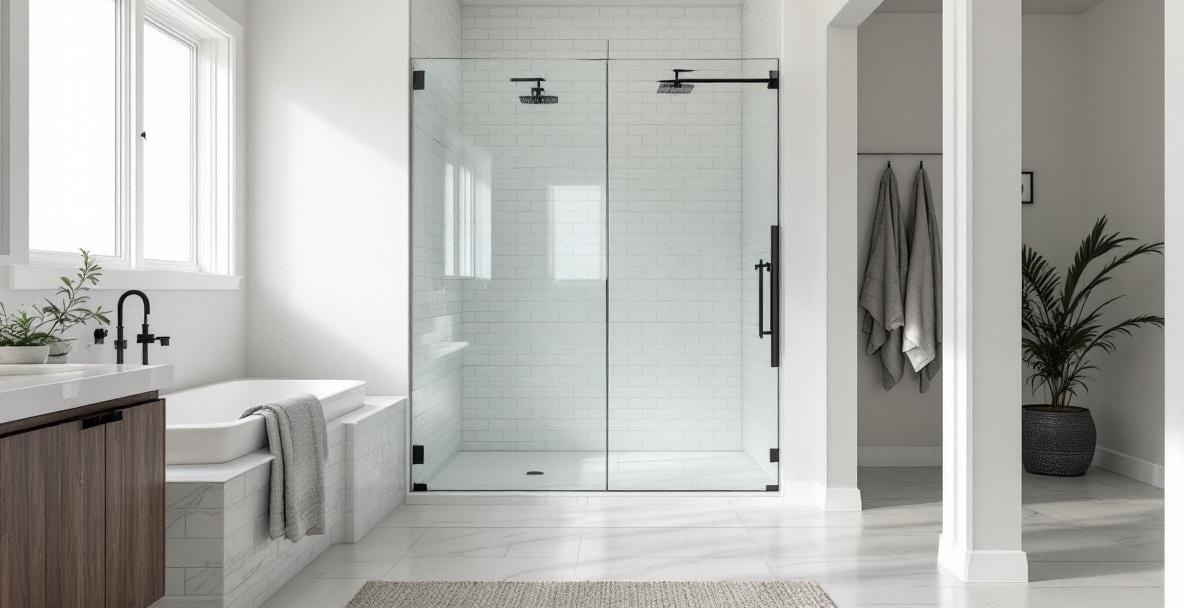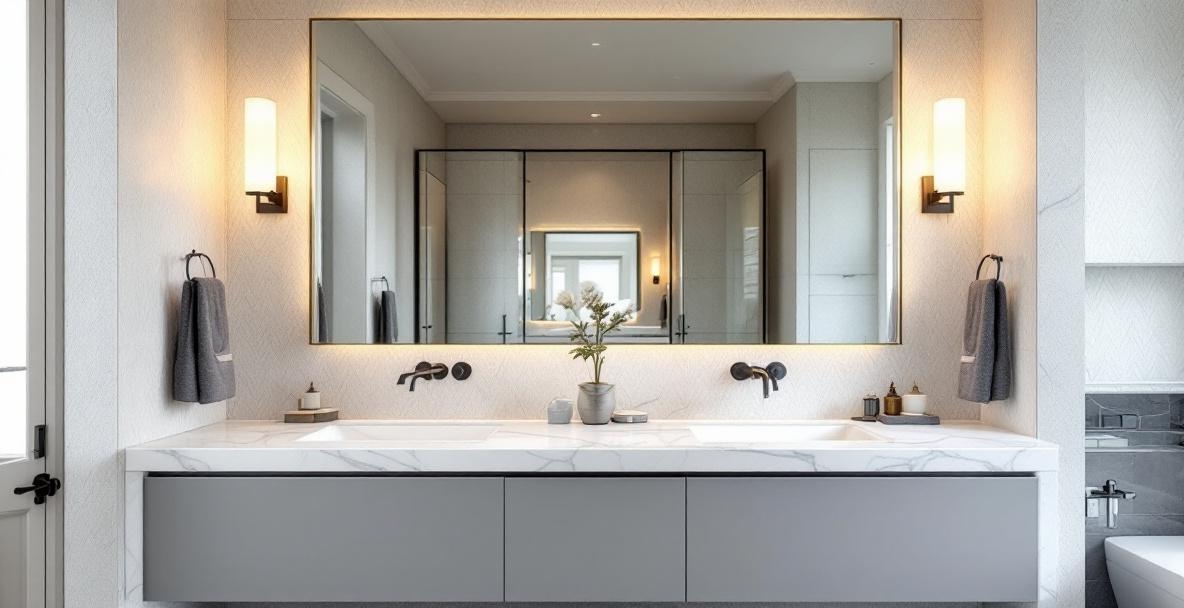
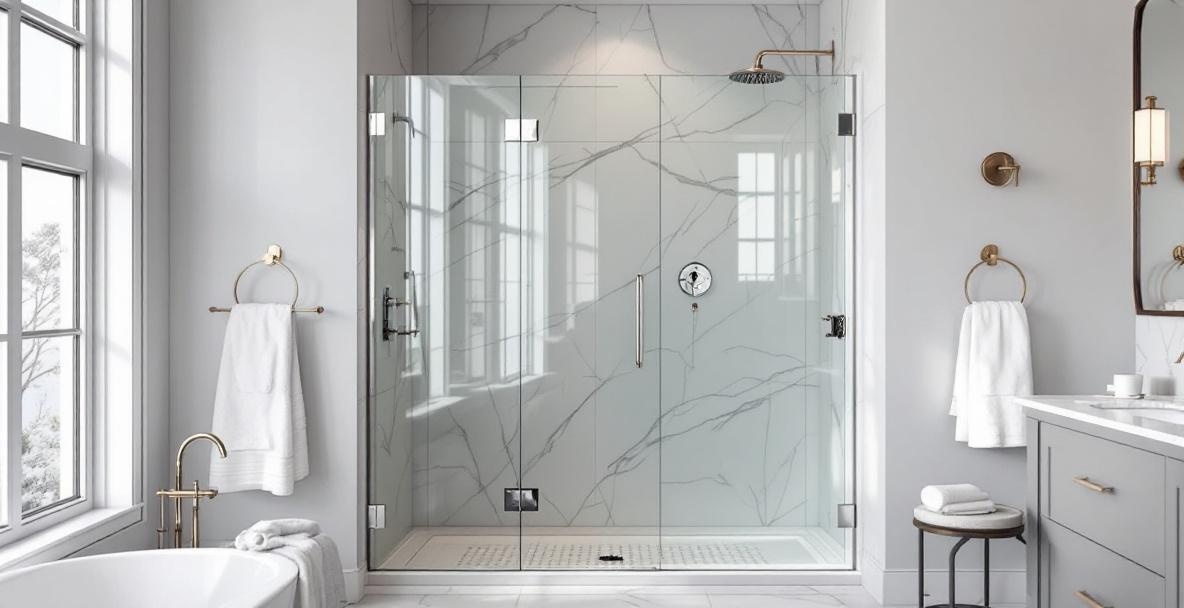
A premium frameless shower enclosure is defined by four things most homeowners never think to check: glass thickness, hardware quality, edge finishing technique, and installation precision. According to HomeGuide (2026), frameless enclosures range from $3,985 to $10,980 installed -- and the gap between the bottom and top of that range isn't just size. It's quality in every detail.
Every shower company in Dallas-Fort Worth calls their product "premium." The word has become meaningless in marketing. So how do you actually tell the difference between a $4,000 enclosure and a $10,000 one when they both use tempered glass and call themselves frameless?
This guide gives you the specific quality markers to check -- the ones that separate genuinely premium enclosures from dressed-up standard ones. Whether you're remodeling a primary bathroom in Southlake or building a new home in Frisco, these details determine whether your investment holds up for 5 years or 25.
[INTERNAL-LINK: frameless shower overview --> /blog/frameless-shower-doors-dallas-tx]
TL;DR: Premium frameless enclosures use 1/2-inch glass (not 3/8-inch), solid brass or stainless steel hardware (not zinc alloy), mitered corner joints (not butt joints), and are fabricated in-house by the installer. Frameless enclosures cost $3,985-$10,980 installed (HomeGuide, 2026). Nearly 60% of homeowners upgrade shower doors during bathroom remodels (ANZZI, 2025), making this one of the most common -- and most important -- purchasing decisions in any renovation.
What Actually Makes a Frameless Enclosure Premium?
A premium frameless enclosure differs from a standard one in materials, fabrication precision, hardware quality, and installation standards. Nearly 60% of homeowners upgrade their shower doors during a bathroom remodel (ANZZI, 2025), yet most don't know which details to evaluate. Premium is about the sum of specific, verifiable quality choices -- not a marketing label.
Here's the reality that most shower companies won't tell you: the word "frameless" only means the glass doesn't have a metal frame around its perimeter. It says nothing about the quality of the glass, the hardware, the edge finishing, or the installation.
Two enclosures can both be frameless and have wildly different quality levels:
Standard frameless:
- 3/8-inch tempered glass
- Zinc alloy or aluminum hardware
- Flat-polished edges with butt joints at corners
- U-channel mounting at base and walls
- Outsourced fabrication, subcontracted installation
Premium frameless:
- 1/2-inch tempered glass (or low-iron for maximum clarity)
- Solid brass or stainless steel hardware
- Mitered edges at corner joints
- Low-profile point-fix clamps and pivot hinges
- In-house fabrication and installation by the same team
60%
of homeowners upgrade shower doors during bathroom remodels, making enclosure quality one of the most common renovation decisions (ANZZI, 2025)
The visual difference between these two is immediately apparent in person. The tactile difference -- the weight of the door, the smoothness of the hardware, the precision of the corners -- is even more striking.
[ORIGINAL DATA] In our experience, homeowners who've lived with both a standard and premium frameless enclosure consistently say the difference is like comparing a builder-grade faucet to a Kohler or Hansgrohe. The basic function is the same, but everything about the daily experience is different.
How Does Glass Thickness and Type Affect Quality?
Glass thickness is the single most impactful quality variable in a frameless shower enclosure. The industry standard is 3/8-inch (10mm) tempered glass, but premium enclosures use 1/2-inch (12mm) glass that costs 20-30% more (Schicker, 2025). The thicker glass feels heavier, sounds more solid, flexes less, and provides a noticeably more substantial in-person presence.
Here's what changes when you move from 3/8-inch to 1/2-inch:
Weight and feel. A 1/2-inch glass door weighs approximately 33% more than the same door in 3/8-inch. You feel this every time you open and close the door. It swings with deliberate weight rather than feeling thin and light.
Rigidity. Thicker glass flexes less under its own weight and during use. On tall panels (over 72 inches), this makes a real difference in how stable the enclosure feels.
Sound. Thicker glass produces a deeper, more solid sound when the door closes. Thin glass sounds tinny. It's subtle but noticeable.
Visual presence. Edges of 1/2-inch glass have a more substantial appearance. When paired with mitered corners, the thicker edge creates a wider bonding surface and a more visible quality signal.
Low-Iron vs. Standard Clear
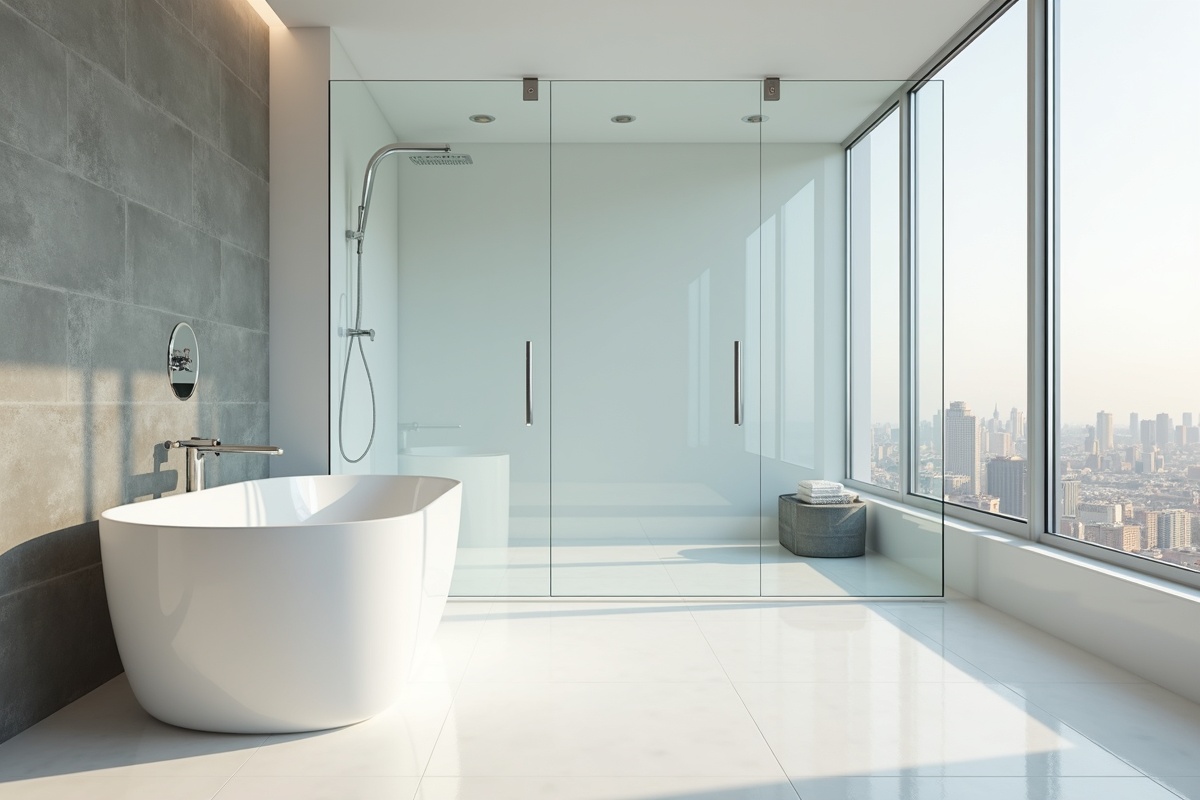
Beyond thickness, glass clarity matters. Standard tempered glass contains iron oxide, which causes a green tint visible at edges and thick sections. Low-iron glass (like PPG Starphire) removes this tint for a crystal-clear appearance.
The green tint is most noticeable at corner joints and along the top edge of panels. If you're investing in mitered corners and premium hardware, low-iron glass ensures the glass itself matches the quality of everything around it.
Why Does Hardware Selection Matter More Than Most People Think?
Hardware is the mechanical backbone of every frameless enclosure -- it holds the glass, allows doors to swing, and determines how the enclosure ages over daily use. Frameless enclosures cost $3,985 to $10,980 installed (HomeGuide, 2026), and hardware quality is one of the biggest cost drivers within that range. Cheap hardware fails first and takes the enclosure's appearance with it.
Most homeowners focus on glass and ignore hardware. That's a mistake. Here's why hardware quality matters:
Material Quality
Zinc alloy is the cheapest hardware material. It corrodes in humid environments, especially with hard water. After 2-3 years, zinc hardware often shows pitting, discoloration, or finish peeling. DFW has moderately hard water, which accelerates this degradation.
Aluminum is lighter and more corrosion-resistant than zinc but isn't as durable or rigid. It's a mid-tier choice.
Solid brass is the premium standard. Brass resists corrosion, holds finishes for decades, and has a weight and feel that immediately communicates quality. Most high-end hardware brands use brass as their base material.
Stainless steel matches brass in durability and is the best choice for coastal or high-humidity environments. In DFW, both brass and stainless are excellent choices.
Finish Durability
Hardware finishes aren't just aesthetic choices -- they're durability decisions.
Chrome is the most durable finish and the easiest to maintain. It shows water spots more readily but cleans easily.
Brushed nickel hides water spots better than chrome and has a warmer tone. Quality brushed nickel finishes last decades.
Matte black is the current trend favorite. It looks striking, but cheap matte black finishes can show wear at contact points within months. Premium matte black uses PVD (Physical Vapor Deposition) coating, which bonds at the molecular level and resists scratching far better than standard powder coating.
Brushed gold/champagne bronze is popular in higher-end bathrooms. As with matte black, the finish application method matters more than the color.
What Role Does Edge Finishing Play?
Edge finishing is the quality detail most homeowners never know to inspect, yet it has the biggest impact on how a frameless enclosure looks at close range. On every exposed glass edge and at every corner joint, the finish quality determines whether the enclosure looks precision-crafted or roughly assembled. Mitered corners -- 45-degree precision cuts at corner joints -- are the highest-tier edge finish and create a seamless appearance that butt joints cannot match.
There are several edge finishing levels:
Seamed (Basic)
The sharp edge from cutting is lightly sanded to remove cutting sharpness. It's functional but not visually refined. You can feel a slight roughness. This is the lowest acceptable edge for tempered glass.
Flat Polish (Standard)
The edge is ground flat and polished to a smooth, transparent finish. This is the standard for exposed edges on frameless enclosures. It looks clean and professional.
Pencil Polish (Enhanced)
The edge is ground to a slightly rounded profile -- a subtle C-shape. It's softer to the touch and eliminates the sharp corners of a flat polish. It's a step up in both safety and aesthetics.
Mitered (Premium)
The edge is cut at a precise 45-degree angle for corner joints, creating a seamless glass-to-glass connection with no visible gap. This is the highest-quality edge treatment available and requires CNC equipment and experienced fabricators.
20-30%
additional cost for 1/2-inch glass over 3/8-inch, making edge finishing on thicker glass a premium-on-premium investment (Schicker, 2025)
[INTERNAL-LINK: mitered corner details --> /blog/mitered-glass-corners-shower]
On a premium enclosure, you'll see flat or pencil polish on all exposed edges and mitered finishes at corner joints. On a budget enclosure, you might see seamed edges on non-visible sides and butt joints at every corner. The difference is visible from across the room.
How Can You Tell Premium from Budget Installation?
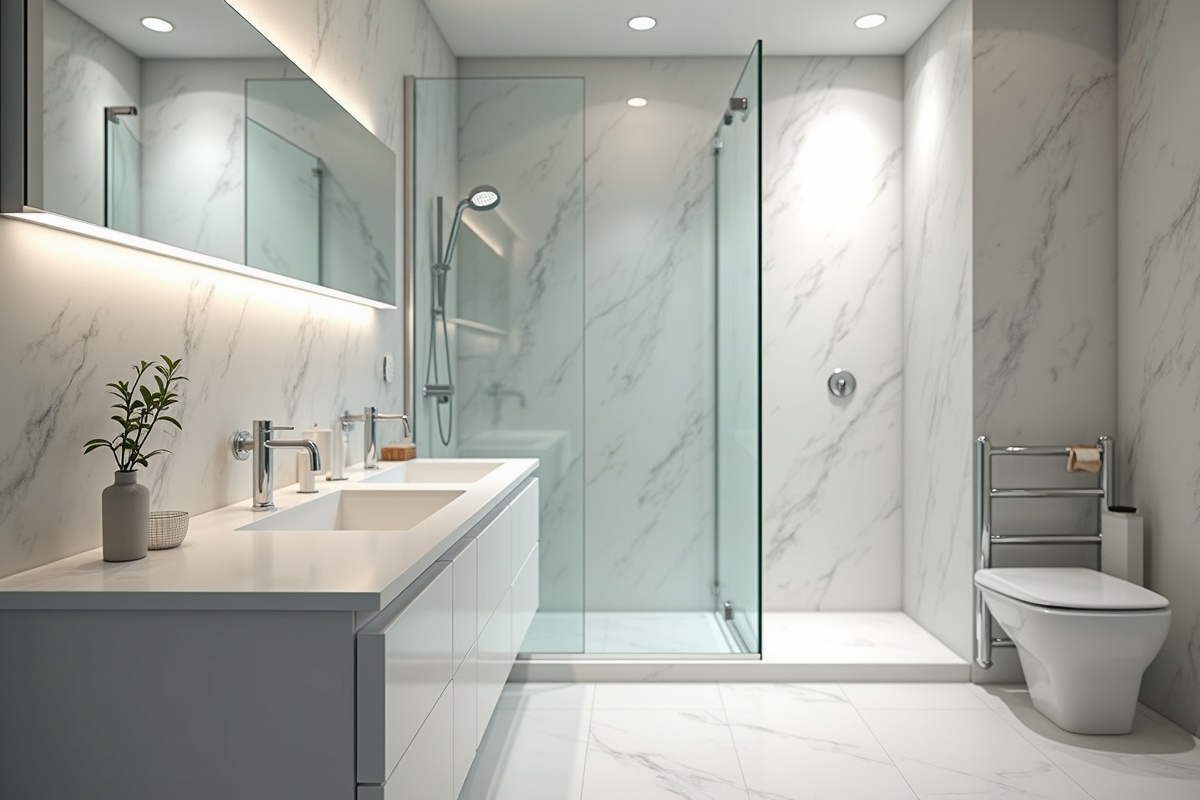
Premium installation is defined by precision, consistency, and attention to details that only become apparent over time. A well-installed frameless enclosure has perfectly plumb and level panels, uniform gaps at all hardware points, doors that swing smoothly and return to center position, and silicone work that's clean and consistent. The difference between premium and budget installation is often the difference between an enclosure that lasts 25 years and one that needs service calls within 2.
Here's what to inspect on any completed installation:
Door operation. Open and close the door several times. It should swing smoothly without resistance, close completely without sticking, and stay in position when partially open. If the door drifts open or closed on its own, the hinges aren't plumbed correctly.
Panel alignment. Look down the top edge of every glass panel. It should be perfectly level. Check the vertical edges -- they should be perfectly plumb. Use your phone's level app if needed. Any visible lean or tilt indicates measurement or installation error.
Silicone work. Examine every silicone bead. Premium installers use painter's tape to create clean, consistent silicone lines. Budget installers free-hand it, producing wavy, uneven beads that look sloppy.
Hardware mounting. All screws should be fully seated. All clamps should hold the glass firmly without over-tightening (which can create stress points). Hardware should be parallel and evenly spaced.
[PERSONAL EXPERIENCE] The most common complaint we hear from homeowners who call us after using another company is door alignment. The door worked fine initially but started sticking or leaving gaps within months. This almost always traces back to hinges that weren't properly adjusted for the weight of the glass or walls that weren't adequately reinforced before mounting.
How Much Should You Pay for Premium in DFW?
Premium frameless enclosures in Dallas-Fort Worth typically run $6,000 to $11,000+ installed for a standard corner or walk-in configuration with 1/2-inch glass, solid brass hardware, and mitered corners. According to HomeGuide (2026), the broader frameless range is $3,985 to $10,980, with premium configurations occupying the upper half of that range.
Here's how cost builds from standard to premium:
| Glass thickness |
| Glass type |
| Hardware material |
| Hardware finish |
| Corner joints |
| Edge finish |
| Mounting |
| Fabrication |
| Typical total (installed) |
The premium over standard is typically 40-60% of the base price. But the enclosure will last 20-30 years with proper care, and the daily experience of using a premium enclosure is noticeably different.
From a resale perspective, mid-range bathroom remodels in Texas return 65-80% at resale (Cost vs. Value, 2025). Premium bathroom details are especially valued in DFW's competitive real estate markets like Southlake, University Park, and Flower Mound, where buyers expect high-end finishes.
What Questions Separate a Premium Installer From Average?
The right questions expose whether an installer actually delivers premium work or just charges premium prices. Nearly 60% of homeowners upgrade shower doors during remodels (ANZZI, 2025), but most don't know which questions to ask -- resulting in a high rate of disappointment with what arrives.
Ask these questions. The answers will tell you everything:
"Do you fabricate glass in-house or outsource it?" Premium installers fabricate their own glass. This gives them control over quality, edge finishing, and lead times. If they outsource, they're assembling someone else's product.
"What hardware brand and material do you use?" A premium installer will name the brand and tell you it's solid brass or stainless steel. If they say "standard hardware" or can't name the manufacturer, it's likely zinc alloy.
"Do you offer mitered corners on corner enclosures?" If the answer is no, they can't deliver a truly premium corner joint. If the answer is "yes, for an additional cost," ask who does the mitering -- them or a third party.
"Can I visit your shop?" A company with in-house fabrication will welcome this. A company that outsources will deflect. This single question filters out resellers and brokers who don't touch the glass they sell.
"What is your warranty, and what does it cover?" Premium installers warranty both the glass (typically lifetime against defects) and the installation (typically 1-5 years for hardware and seals). Budget installers often warranty the glass only.
"Can I see examples of your work in person or in a detailed portfolio?" Photos are fine, but close-up photos of corner joints, hardware mounting, and silicone work are what reveal quality. Any company can photograph a nice-looking bathroom from 10 feet away.
[UNIQUE INSIGHT] Here's a litmus test we recommend: ask the installer what they'd do differently if you doubled the budget. A premium installer will have specific, technical answers -- thicker glass, better hardware brand, low-iron glass, mitered corners. A budget installer will suggest making the enclosure bigger or adding extras you don't need. The answer reveals whether they think in terms of quality or quantity.
[INTERNAL-LINK: DFW luxury installation guide --> /blog/luxury-shower-door-installation-dallas]
Find a Premium Frameless Installer in DFW
Premium isn't a price tag -- it's a set of specific, verifiable quality choices in glass, hardware, edge finishing, and installation. Now you know exactly what to look for and what to ask.
Infinity Glass & Glazing fabricates every enclosure in-house at our Corinth, TX facility -- including mitered corners, which are our standard on corner enclosures. Contact us for a free consultation and see what premium actually looks like.
Is 3/8-inch or 1/2-inch glass better for a premium frameless enclosure?
1/2-inch glass is the premium choice. It's 33% heavier, significantly more rigid, and produces a more substantial feel and sound when the door operates. It costs 20-30% more than 3/8-inch according to Schicker, but the difference in daily experience and longevity justifies the investment on primary bathrooms.
What hardware finishes are available for frameless shower enclosures?
Common finishes include chrome, brushed nickel, matte black, brushed gold, champagne bronze, and polished brass. For durability, look for PVD (Physical Vapor Deposition) coating rather than standard powder coating. Chrome and brushed nickel are the most durable; matte black requires PVD coating to resist wear.
How long does a premium frameless shower enclosure last?
A properly installed premium frameless enclosure with quality hardware and tempered glass lasts 20-30 years. The glass itself is virtually indestructible under normal use. Hardware may need minor adjustments every 5-10 years. Silicone seals should be inspected annually and replaced as needed, typically every 5-8 years.
Does a premium frameless shower enclosure increase home value?
Yes. Mid-range bathroom remodels in Texas return 65-80% at resale according to Cost vs. Value 2025. Premium bathroom details like thick glass, quality hardware, and mitered corners are especially valued in competitive DFW markets like Southlake, Highland Park, and Frisco, where buyers expect high-end finishes in primary bathrooms.
Related reading: frameless shower doors in DFW and our custom shower enclosures.
Related reading: