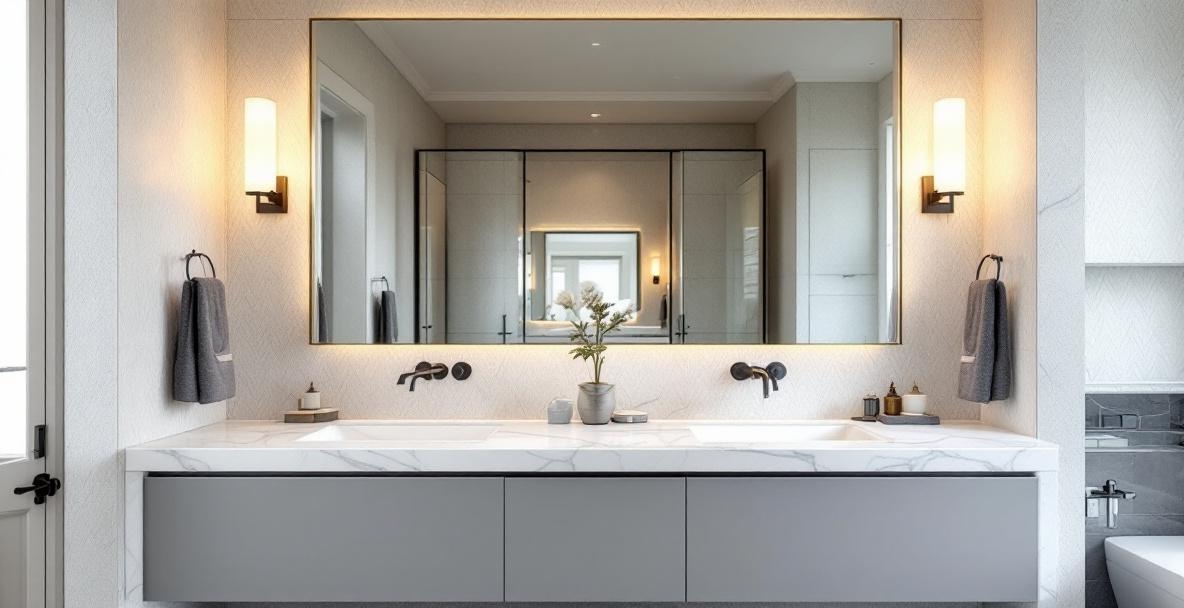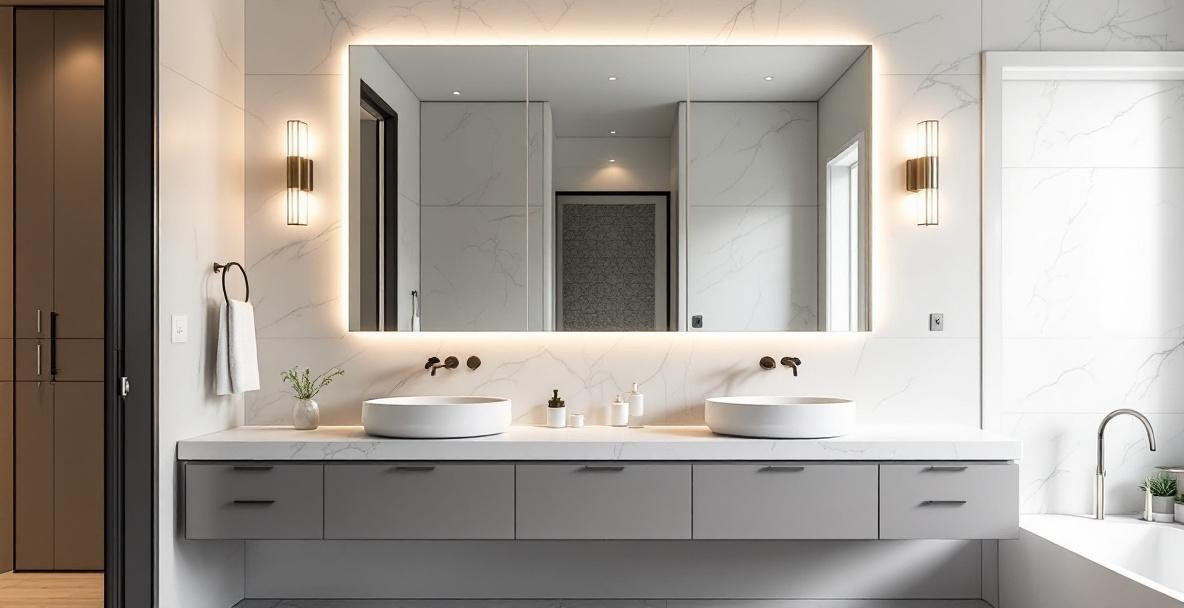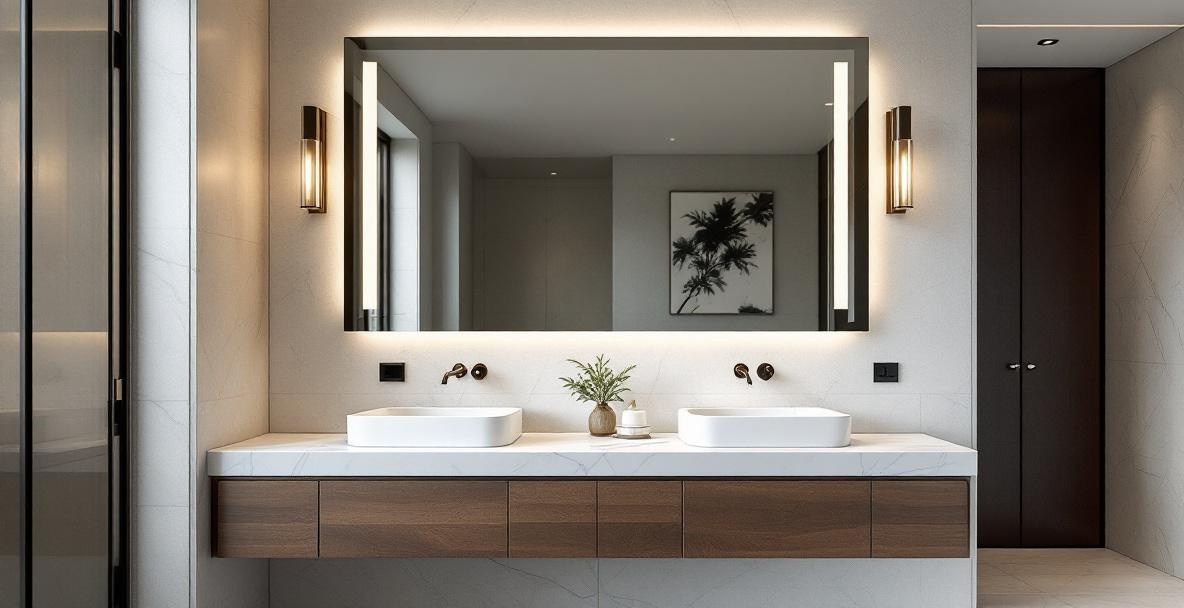
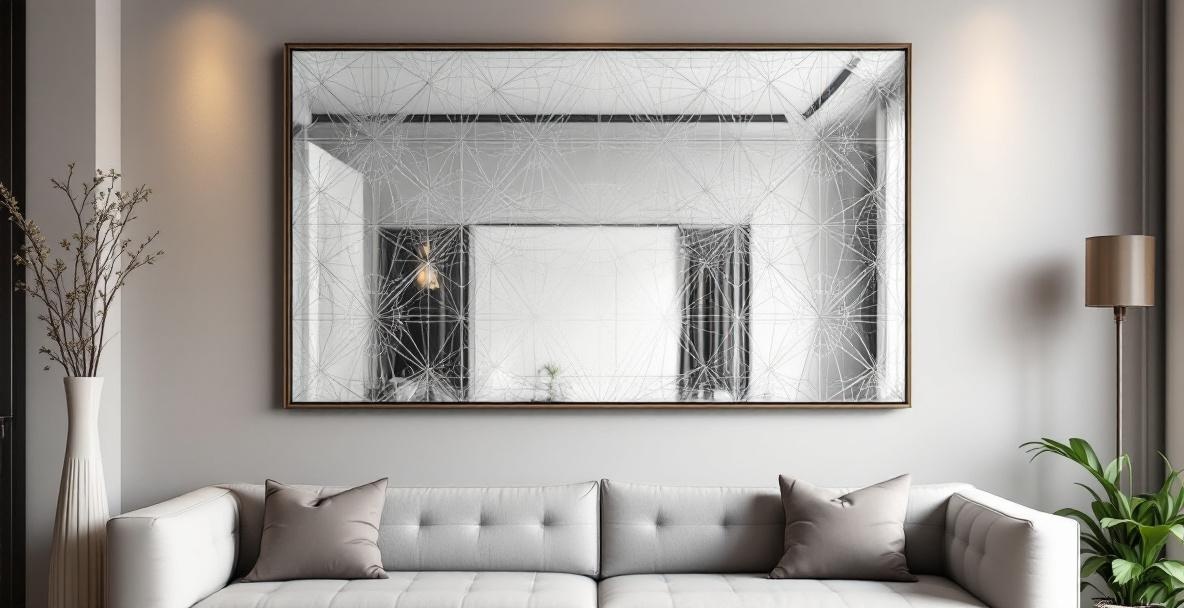
Decorative mirror installation in DFW covers custom-shaped mirrors, large statement mirrors for living rooms and entryways, beveled mirrors, tinted mirrors, and any mirror where the aesthetic impact is as important as the functional use. Infinity Glass fabricates and installs decorative mirrors across Dallas, Fort Worth, and surrounding DFW communities — from frameless beveled panels to ornate custom shapes.
A decorative mirror is any mirror where design intent goes beyond simple utility. In an entryway, a tall narrow mirror with beveled edges creates a refined first impression. In a dining room, a large frameless panel above the buffet adds depth and multiplies candlelight. In a living room, an oversized statement mirror functions as the room's visual anchor — the largest piece on the wall and the first thing the eye goes to.
Getting a decorative mirror installed correctly — level, secure, and positioned with proper clearance from adjacent fixtures — requires the same professional attention as any large glass installation.
[INTERNAL-LINK: Frameless mirror installation DFW -> /blog/frameless-mirror-installation-near-me]
What Is the Difference Between a Decorative Mirror and a Standard Mirror?
A decorative mirror is specified and installed primarily for aesthetic impact — it may or may not have a practical reflective function as its primary purpose. A standard mirror (bathroom vanity, gym wall) serves a clear functional need with aesthetics secondary. Decorative mirrors often have larger dimensions, custom shapes, specialty edge treatments, or tinting that prioritizes visual design.
Decorative mirror characteristics:
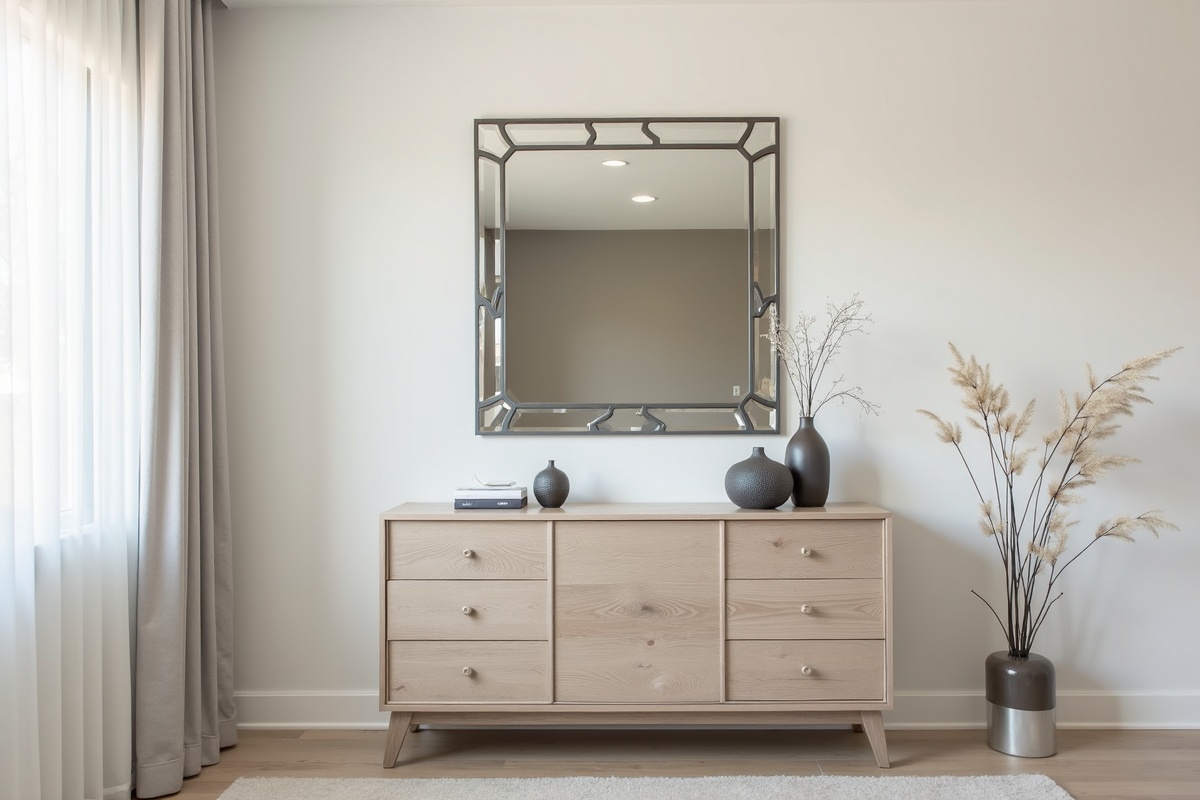
Scale: Decorative mirrors are often larger than functionally necessary — the oversized proportion is an intentional design choice. A 60x48-inch mirror above a 36-inch console isn't sized for practical reflection; it's sized for visual drama.
Edge treatment: Decorative mirrors more commonly use beveled edges, wide bevel profiles, or specialty edge profiles than functional bathroom mirrors. The edge is part of the design.
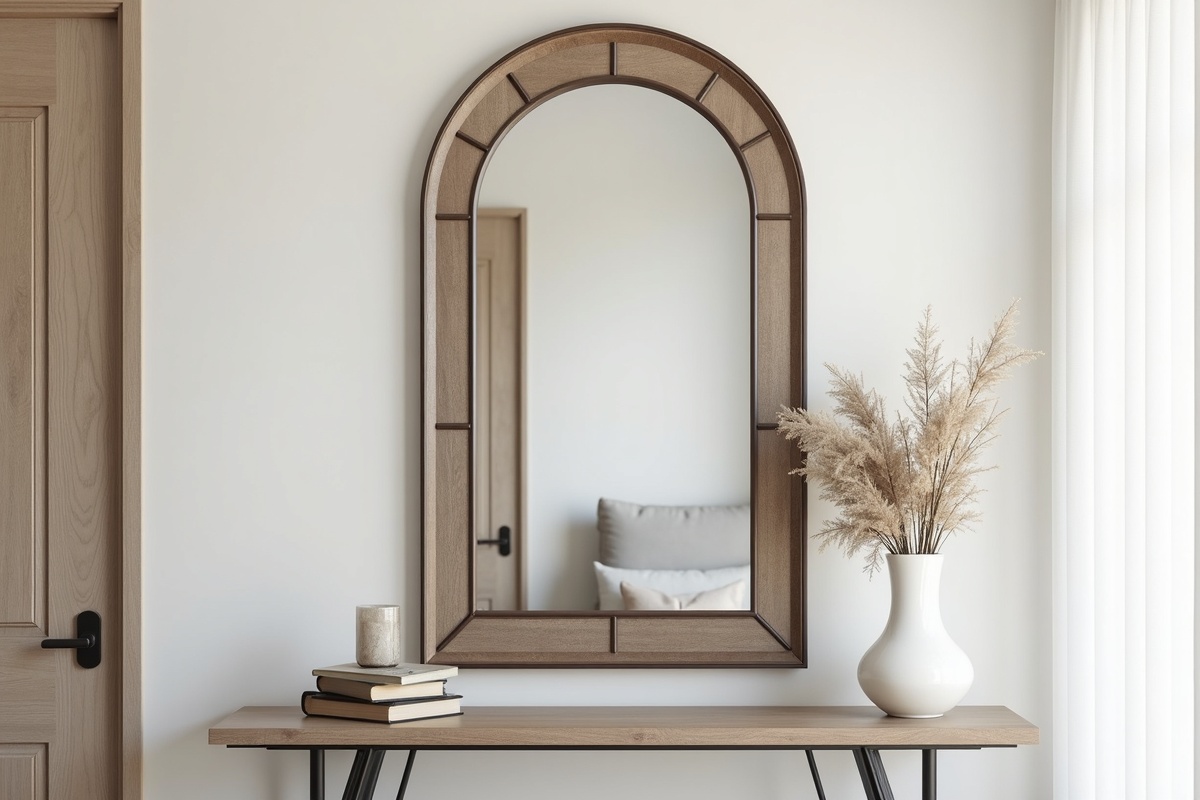
Shape: While most functional mirrors are rectangular, decorative mirrors may be arched (with a curved top), oval, round, or custom-shaped (though custom shapes require a cutting template and are more expensive to fabricate).
Tinting: Bronze, gray, and antique-tinted mirrors are more common in decorative applications — the tint creates a specific aesthetic quality (warmth, age, drama) beyond simple clear reflection.
Placement: Decorative mirrors are placed for visual effect — above console tables, fireplaces, buffets, headboards, and as focal points in hallways — rather than for the user to see themselves in.
What Decorative Mirror Styles Work in DFW Homes?
Four decorative mirror styles are consistently popular in DFW residential projects: the large frameless beveled panel, the oversized rectangular statement mirror, the arched or arch-top mirror, and the multi-panel arrangement. Each serves different room types and design directions.
Large frameless beveled panel:
- Classic decorative choice — beveled edges that catch morning and evening light
- Works in formal living rooms, dining rooms, and master bedrooms
- Most flattering with warm-toned rooms (wood furniture, warm stone, warm paint)
- Typical size: 36-60 inches wide, 30-48 inches tall
Oversized rectangular statement mirror:
- Contemporary approach — the large scale itself is the statement
- No frame, flat polished edge, leaned against a wall or mounted flush
- Works in entryways, living rooms, and master bedrooms
- Typical size: 30-36 inches wide, 60-84 inches tall (full-length proportion)
Arched or arch-top mirror:
- Arch top created by cutting the curved profile from mirror glass (requires a template)
- Creates a softer, more architectural quality than rectangular panels
- Works in transitional, traditional, and Mediterranean-influenced spaces
- Arch cutting adds cost due to template fabrication and curved cutting process
Multi-panel arrangement:
- Multiple smaller mirrors arranged in a pattern on a wall
- Creates visual interest while distributing the reflective effect across the wall
- Lower cost per panel than a single large piece
- Requires precise positioning and level installation of each piece
How Do You Choose the Right Size Decorative Mirror?
The right decorative mirror size is determined by the furniture or wall area it's anchoring — typically 50-75% of the furniture width and 24-48 inches tall for console/buffet applications, or 2/3 to full wall width for statement wall applications.
Sizing guidelines by placement:
Above a console table or buffet:
- Mirror width: 50-75% of furniture width
- For a 48-inch console: 24-36-inch wide mirror
- For a 60-inch console: 30-45-inch wide mirror
- Bottom clearance: 6-10 inches above the furniture surface
- Top of mirror: ideally below the ceiling line by 12+ inches for proportional framing
Above a fireplace:
- Mirror width: Generally 60-80% of fireplace opening width or mantel width
- Position: Centered on the fireplace opening
- Height: Proportional to the mantel scale — typically 24-48 inches tall
Statement wall focal point:
- No furniture anchor — the mirror IS the focal point
- Width: 36-60 inches is most common for statement mirrors
- Height: 48-84 inches depending on ceiling height and design intent
- Position: Centered on the wall or offset per a deliberate asymmetric design
Entryway:
- Narrow vertical proportion: 18-24 inches wide, 48-72 inches tall
- Tall mirrors emphasize ceiling height; horizontal mirrors emphasize room width
- Position: At face height for the user approaching the door
What Should You Ask a Decorative Mirror Installer?
Five questions separate quality decorative mirror installers from those likely to cause problems: whether they fabricate in-house, what adhesive they use, how they anchor heavy panels, whether they can produce custom shapes, and what their warranty covers.
Qualifying questions for any decorative mirror installer:
-
"Do you cut and fabricate mirrors in your own shop?" — In-house fabrication means tighter edge quality control and faster turnaround. Outsourced cutting adds time and potential for tolerance errors at the edge.
-
"What adhesive do you use for frameless mirrors?" — The answer must be mirror mastic or a solvent-free mirror adhesive. If they say "construction adhesive" or can't name a specific product, expect desilvering at the edges within a few years (Cardinal Glass Industries).
-
"How do you anchor large panels?" — Adhesive plus J-clips into studs for panels over 20 lbs. Adhesive-only on drywall is inadequate for large decorative mirrors (GlassBuild America 2025).
-
"Can you produce custom shapes like arched tops?" — Not all shops can cut curves. Arch-top mirrors require a cardboard or MDF template and a glass cutter experienced with curved scoring.
-
"What does your warranty cover?" — At minimum, workmanship warranty for 12 months. Adhesive failure within 12 months should be a covered callback.
Infinity Glass & Glazing fabricates and installs decorative mirrors throughout DFW — Corinth, Dallas, Fort Worth, Denton, Frisco, McKinney, Lewisville, Flower Mound, Southlake, and Keller. Custom shapes, beveled edges, frameless panels. Get a free quote or call (940) 279-1197.
What is the difference between a decorative mirror and a standard mirror?
A decorative mirror is specified and installed primarily for aesthetic impact — often featuring larger dimensions, beveled or specialty edges, custom shapes, or tinting. A standard mirror (bathroom vanity, gym wall) serves a functional reflective purpose with aesthetics secondary. The glass and installation methods are similar; the difference is in how the mirror is sized, positioned, and specified relative to its primary purpose.
Can you create a custom-shaped decorative mirror?
Yes — custom shapes (arched tops, oval, round, or fully custom outlines) are available from glass fabricators with curved-cutting capability. Custom shapes require a template (cardboard or MDF) provided or approved before cutting. The curved or irregular cut is more labor-intensive than straight rectangular cuts, adding cost proportional to the complexity of the shape.
Do you offer antique or vintage-style mirror finishes?
Yes — antique mirror and bronze-tinted mirror are available as custom fabrication options. Antique mirror has a deliberately aged appearance with spot tarnishing and foxing in the silver layer. Bronze-tinted mirror has a warm amber reflection that creates a vintage quality. Both are available in custom sizes with beveled or flat polished edges.
How do I choose the right frame style for my decor?
Match the frame material and profile to the dominant design direction of the room. Contemporary rooms: thin metal frames or no frame (frameless). Transitional: medium-profile frames in brushed nickel, gold, or neutral wood. Traditional: wider frames in carved wood, ornate profiles, or aged finishes. When in doubt, frameless with a beveled edge works across all styles and never looks out of place.
Related reading: custom mirrors in DFW and our bathroom renovation glass options.
Related reading: