Professional wall mirror installation in DFW includes measurement, custom fabrication, adhesive application, and secure mounting — typically completed in a single visit for standard residential mirrors. Large mirrors (over 20 square feet) or multi-panel gym mirror installations take 2-4 hours. Infinity Glass & Glazing serves the full DFW metroplex from our Corinth location.
Hanging a small decorative mirror is a DIY task. Installing a 60x48-inch frameless vanity mirror, a full-wall gym installation, or a large living room accent mirror is not — the weight alone (large mirrors can weigh 50-150+ lbs), the adhesive chemistry requirements, and the precision positioning make professional installation the practical choice for anything beyond a small framed piece.
This guide explains what types of wall mirrors benefit from professional installation, how the process works, what goes wrong with DIY on large mirrors, and how to schedule an installation in DFW.
[INTERNAL-LINK: Custom mirrors in Dallas -> /blog/custom-mirrors-dallas-tx]
What Types of Wall Mirrors Can Be Professionally Installed?
Professional installation is appropriate for any mirror that requires custom fabrication, weighs over 15 lbs, is frameless (requiring adhesive), or is part of a multi-panel installation. The broader categories: bathroom vanity mirrors, bedroom and closet mirrors, living and dining room accent mirrors, gym and studio full-wall mirrors, and commercial mirrors.
Mirror types by installation complexity:
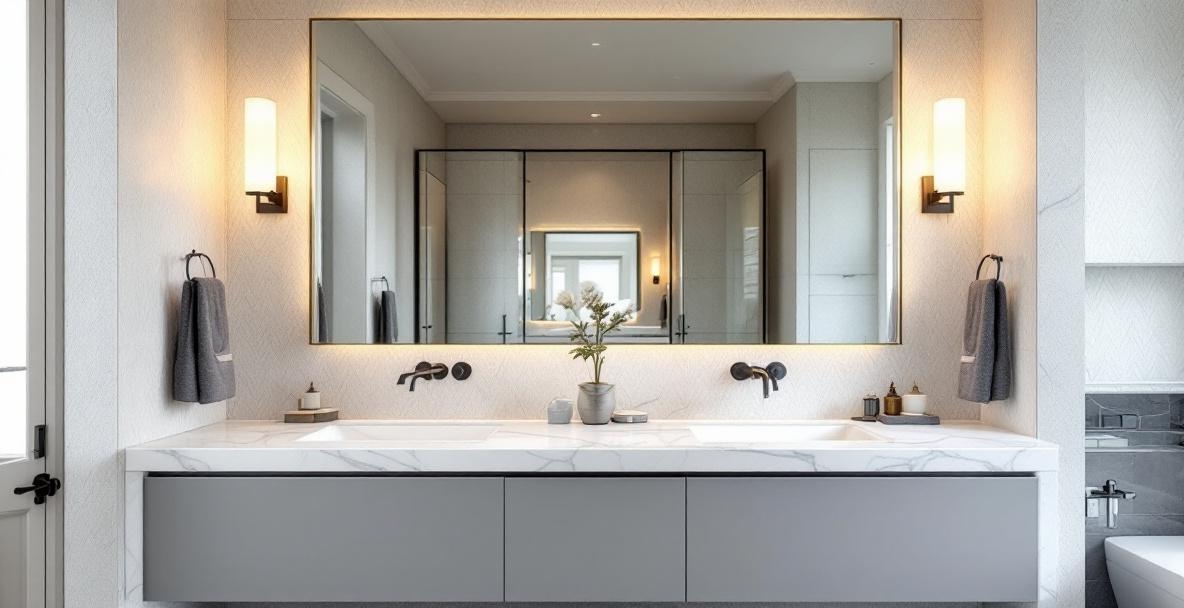
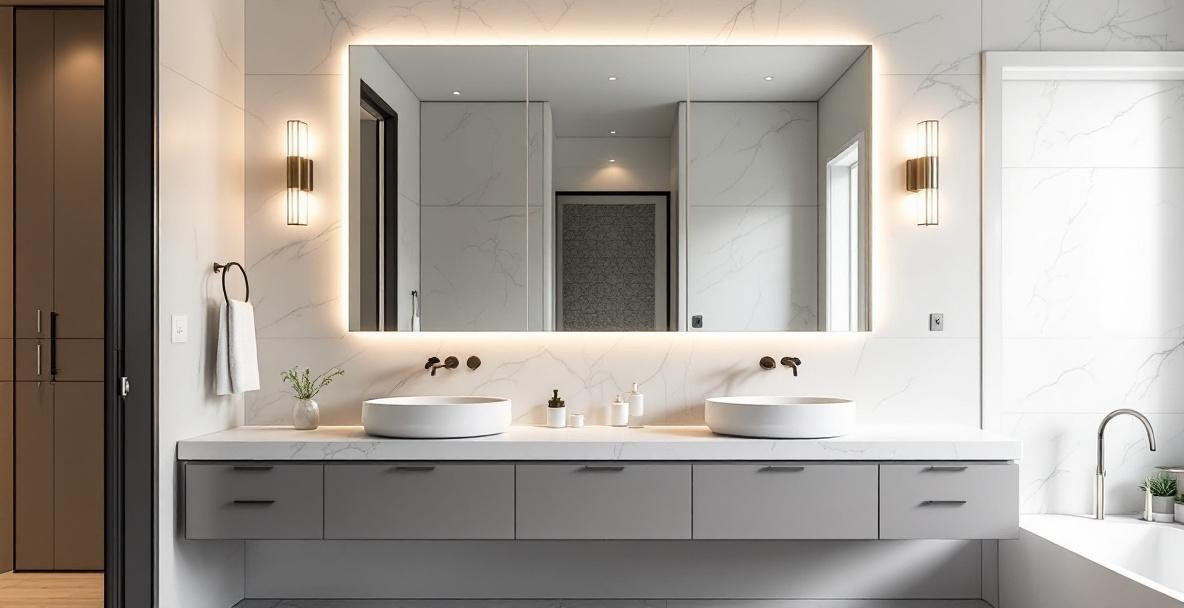
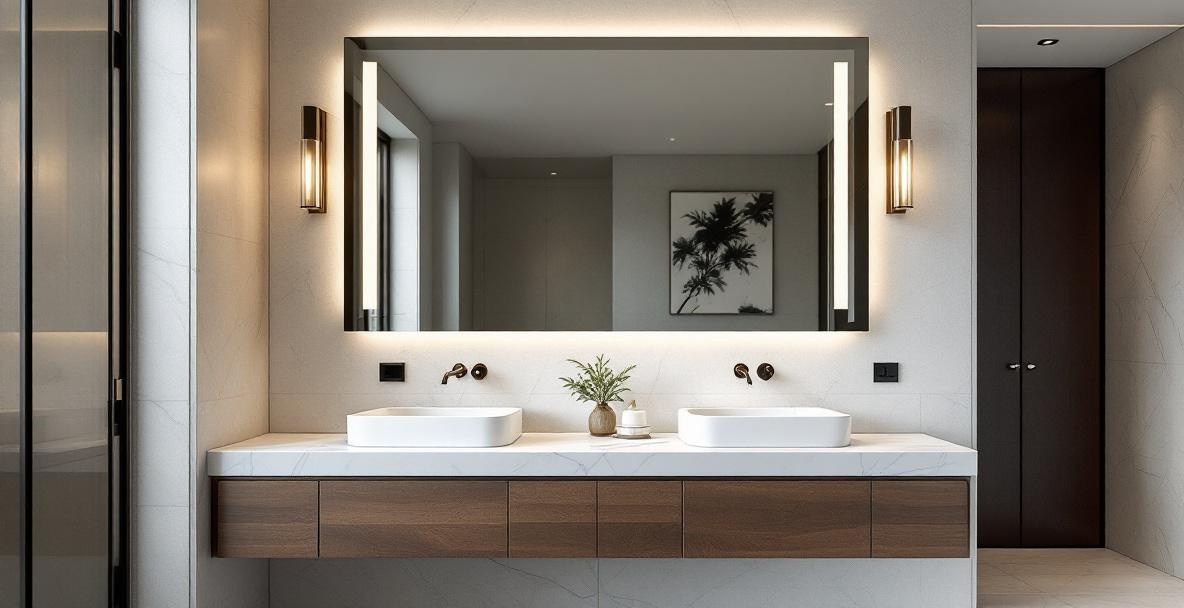
Bathroom vanity mirrors (medium complexity):
- Custom fabricated to vanity width
- Mounted 5-8 inches above countertop
- Adhesive mounting on tile or drywall
- Most jobs complete in 1-2 hours
Bedroom and closet mirrors (medium complexity):
- Often floor-to-ceiling or full-length
- May require J-clip mounting system or standoffs for heavier panels
- Closet door mirrors are a separate track-mount system
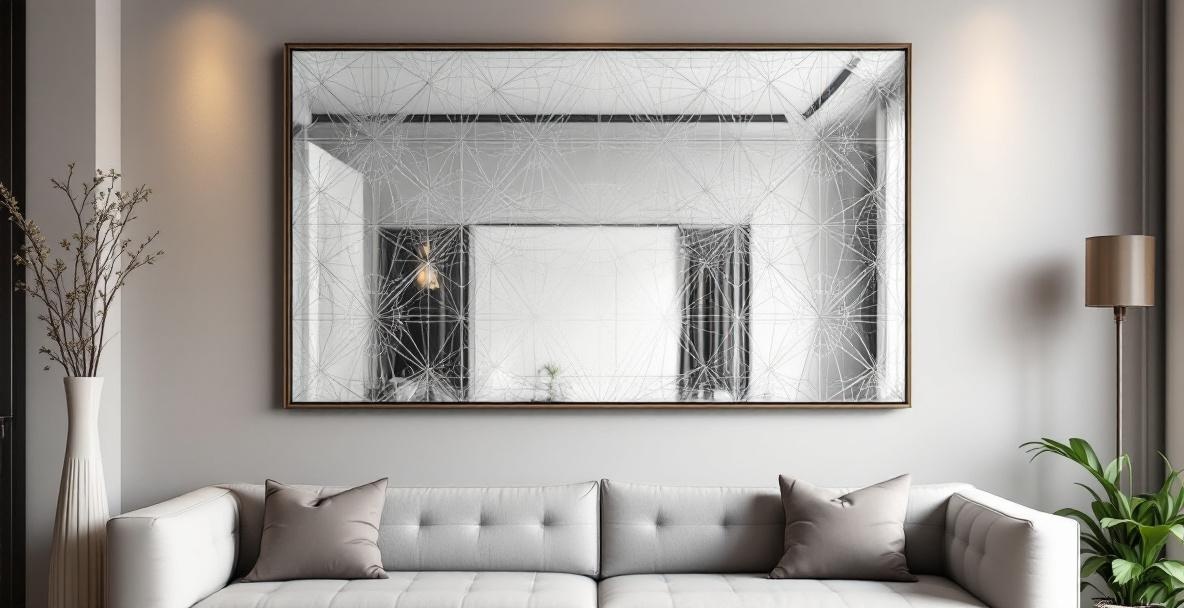
Living room and dining room accent mirrors (medium-high complexity):
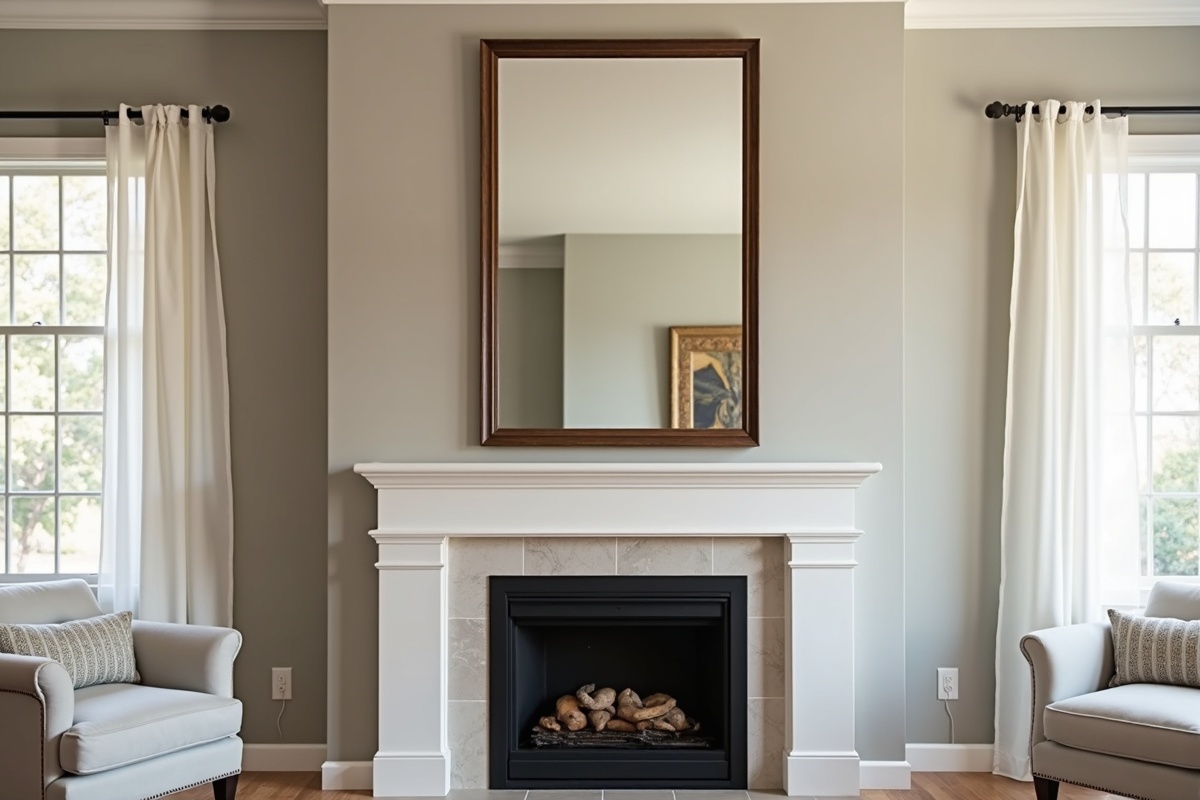
- Large decorative mirrors 48-96 inches wide
- Often heavy enough to require toggle anchors or stud-finding for mechanical mounting
- Frameless large mirrors need careful leveling and adhesive selection
Full-wall gym mirrors (high complexity):
- Multiple panels 3-6 feet wide, floor-to-ceiling height
- Require precise panel alignment at all seams
- Floor-to-ceiling mechanical mounting is standard for safety
- Typically installed as 4-6 or more panels in a single session
Commercial mirrors (high complexity):
- Hotel lobbies, retail fitting rooms, restaurant accent walls
- Large format, often tempered for safety
- Commercial-grade mounting for durability and compliance
How Does Professional Mirror Installation Work?
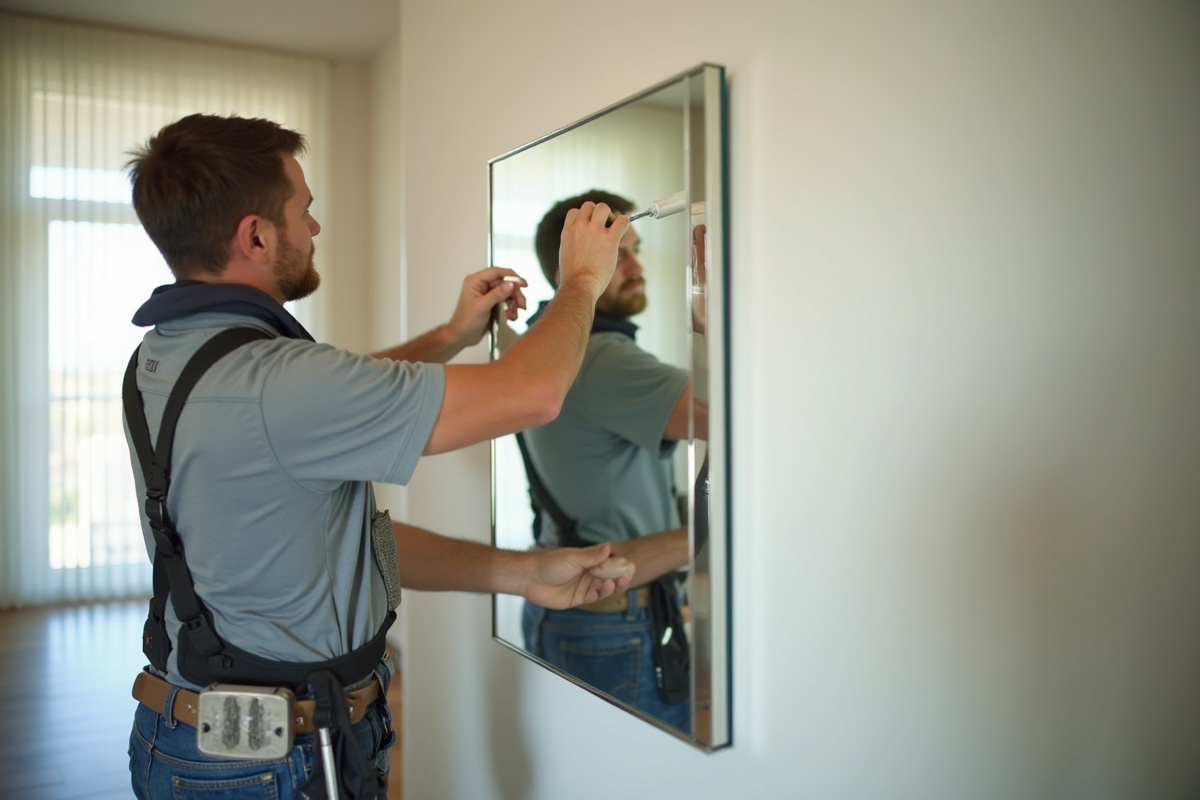
Professional mirror installation has four stages: site assessment, mirror positioning, adhesive application, and secure mounting. For most residential projects, the mirror arrives at the job site pre-cut to specifications, and installation begins immediately. The adhesive cures within 24-48 hours.
Installation process in detail:
Stage 1 — Site assessment: The installer checks the wall surface for plumb and level, identifies wall stud locations (for mechanical fasteners on heavy panels), checks for moisture issues (important for bathroom installations), and confirms the mirror dimensions against the actual space.
Stage 2 — Positioning: The mirror is test-fit dry to confirm placement. Height position, horizontal centering, and any obstacles (outlets, light switches, sconces) are addressed. The exact final position is marked.
Stage 3 — Adhesive application: Mirror-specific non-corrosive mastic is applied to the back of the mirror in a specific pattern. Adhesive coverage must be adequate for holding strength but allow some void space for thermal movement. Solvent-based adhesives are avoided — they degrade the mirror backing.
Stage 4 — Set and secure: The mirror is pressed against the wall at the marked position, leveled, and held in place while the adhesive begins to grip. For large panels, temporary bracing holds the mirror plumb while curing. For very heavy panels, J-clips or standoff hardware provide permanent mechanical support in addition to adhesive.
What Wall Surfaces Can Support a Large Mirror?
Drywall, tile, and concrete/masonry all support mirror installations with appropriate adhesive or mechanical mounting. The limitation is not typically the wall material itself but the structural capacity behind it. Large mirrors over 25-30 lbs should always be anchored into wall studs or use rated toggle anchors in addition to adhesive.
Wall-by-wall guidance:
Standard drywall: Adequate for most residential mirror applications when anchored into studs. For mirrors under 15 lbs, heavy-duty drywall anchors (rated 50+ lbs) supplement adhesive. For mirrors over 30 lbs, anchoring into studs is required.
Tile over concrete board: Excellent substrate for bathroom mirror installations. Concrete board provides a flat, stable surface; tile provides a clean bonding surface. Mirror mastic adheres well to glazed and unglazed tile.
Tile over drywall: Acceptable but requires care — bathroom drywall behind tile can degrade if moisture has penetrated. For bathrooms with suspected moisture issues, mechanical mounting is prioritized over adhesive.
Painted drywall: Compatible with mirror adhesive when the paint is in good condition. Paint that is flaking, peeling, or showing moisture damage must be addressed before mirror mounting.
Concrete and masonry: Very strong substrate for large mirrors. Requires masonry anchors for mechanical mounting. Mirror adhesive bonds well to concrete.
How Much Does Professional Wall Mirror Installation Cost in DFW?
Professional wall mirror installation in DFW costs $75-$300 for labor on most residential projects — separate from the mirror fabrication cost (HomeGuide 2026). Gym wall installations and multi-panel commercial projects range higher based on panel count and complexity.
Labor cost estimates by mirror type:
- Small vanity mirror (under 24x36 inches): $50-$100 labor
- Standard vanity mirror (36-48x30-36 inches): $75-$150 labor
- Large single mirror (48-72 inches wide): $100-$200 labor
- Full-wall gym installation (4-6 panels): $300-$600 labor
- Commercial installation: Quoted per project
Mirror material costs are separate:
- 1/4-inch clear mirror: approximately $6-$10/sq ft cut to size
- 1/4-inch low-iron mirror: $10-$15/sq ft
- Beveled edge: adds $1-$3/linear foot to the perimeter
Total project costs (material + labor):
- Standard 36x36 vanity mirror with flat polish: $150-$300
- Large 48x36 beveled mirror: $250-$450
- Full-wall gym mirror (8x8 feet, 4 panels): $800-$1,600
DIY Mirror Hanging vs. Professional Installation: What Could Go Wrong?
DIY mirror installation on small, framed mirrors under 10 lbs is reasonable. On frameless custom mirrors, large decorative mirrors, or any multi-panel installation, the risks of DIY are significant — damage to the mirror (replacing a custom 60x36-inch mirror costs $150-$400), damage to the wall, injury from dropped glass, and adhesive chemistry errors that cause the mirror backing to degrade.
Common DIY mirror installation failures:
Wrong adhesive: Standard construction adhesive (Liquid Nails, etc.) contains solvents that attack mirror backing — causing black edge/desilvering within 1-3 years (NAHB 2026). This damage is irreversible. Mirror-specific mastic is required.
Insufficient support during cure: A 50-lb mirror pressed against a wall needs support for 24-48 hours while adhesive cures. Without proper bracing, the mirror slides down the wall before adhesive grips — requiring cleanup and re-installation.
No stud anchoring: Relying only on adhesive for a 60+ lb mirror is a safety risk. Adhesive fails at extremes of temperature, humidity change, or vibration. Large mirrors need mechanical anchoring into studs regardless of adhesive strength.
Incorrect positioning: Once a large mirror is set in adhesive, repositioning is very difficult without damaging the mirror or the wall. Careful pre-marking and dry-fitting is essential.
Also see our custom mirrors in DFW and our full-wall mirror installation.
Infinity Glass & Glazing provides full-service wall mirror installation throughout DFW — measurement, fabrication, and professional installation with proper adhesive and anchoring. We serve Corinth, Dallas, Fort Worth, Denton, Frisco, McKinney, Lewisville, Flower Mound, Southlake, and Keller. Schedule a mirror installation or call (940) 279-1197.
What types of wall mirrors require professional installation?
Any frameless mirror over 15 lbs, custom-fabricated mirrors, large decorative mirrors (48 inches or wider), gym wall installations, and any multi-panel installation benefit from professional installation. Small framed mirrors under 10 lbs can be DIY-hung using standard picture hanging hardware. The key risk factors are weight, adhesive chemistry, and precision alignment.
How does professional mirror installation work in DFW?
The process has four stages: site assessment (checking wall surface, stud locations), positioning (dry-fit and marking), adhesive application (mirror-specific non-corrosive mastic), and secure mounting (pressing and bracing while adhesive cures, plus mechanical anchors for large panels). Most residential jobs complete in 1-3 hours; multi-panel gym installations take 3-6 hours.
What wall surfaces can support a large mirror?
Drywall, tile, and concrete all support mirror installations with appropriate adhesive or mechanical mounting. Large mirrors (over 30 lbs) should always be anchored into studs or use rated mechanical fasteners in addition to adhesive. Tile walls in bathrooms are an excellent substrate for vanity mirror installation — the adhesive bonds well to glazed and unglazed tile surfaces.
How do I schedule a mirror installation consultation in DFW?
Contact Infinity Glass & Glazing to schedule a free estimate. For straightforward vanity mirror replacements where you know the dimensions, we can provide a phone or email quote and schedule directly. For large installations, custom shapes, or gym mirror projects, an on-site visit produces a more accurate estimate. Same-week scheduling is typically available for residential projects.
Related reading: