
A shower glass protective coating is worth it in DFW — where water hardness runs 7–17 GPG — for nearly every homeowner with a frameless shower enclosure. Professional coatings (Diamon-Fusion, EnduroShield, ShowerGuard) reduce cleaning frequency by up to 90%, last 10–15+ years, and cost $150–$500 applied. Over a 10-year period, the time saved on cleaning maintenance and the extended glass life make the investment self-funding in most cases.
The question isn't really whether shower glass coatings work — they do, demonstrably. The question is whether they're worth the cost in your specific situation. In soft-water areas, the calculus might tip against it. In DFW, where you're dealing with 10–17 GPG water hardness that can visibly stain glass within days of cleaning, the math consistently favors coating — especially on frameless enclosures where the large glass panels make every spot visible.
This guide breaks down exactly what coatings do, what they cost, how the major brands compare, and when spending the extra money makes clear financial sense.
What Does a Glass Protective Coating Actually Do?
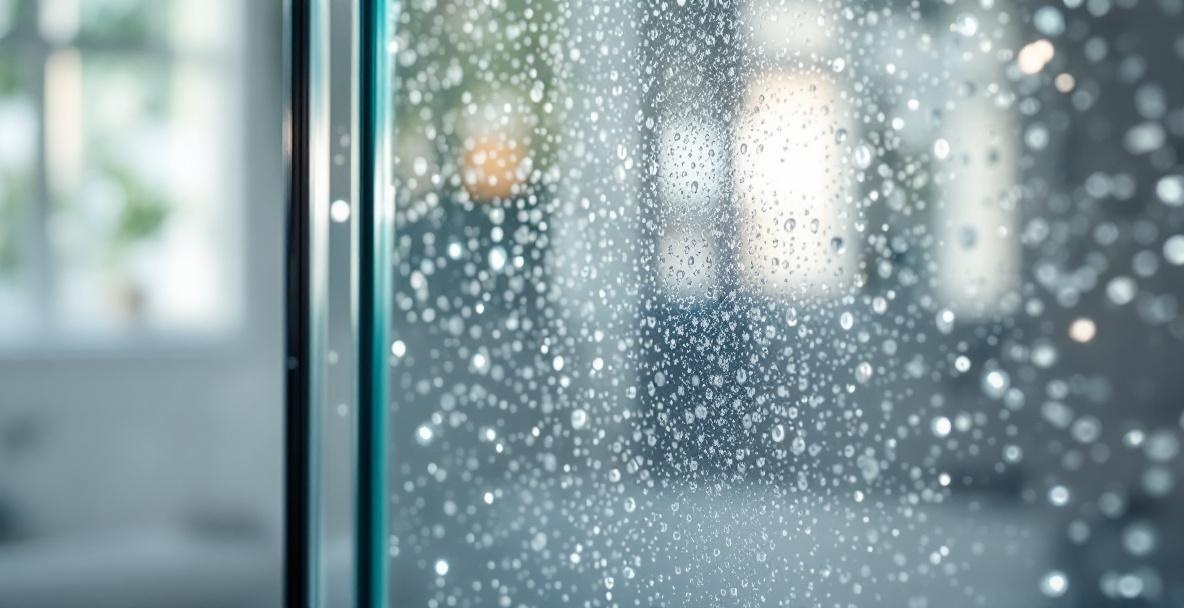
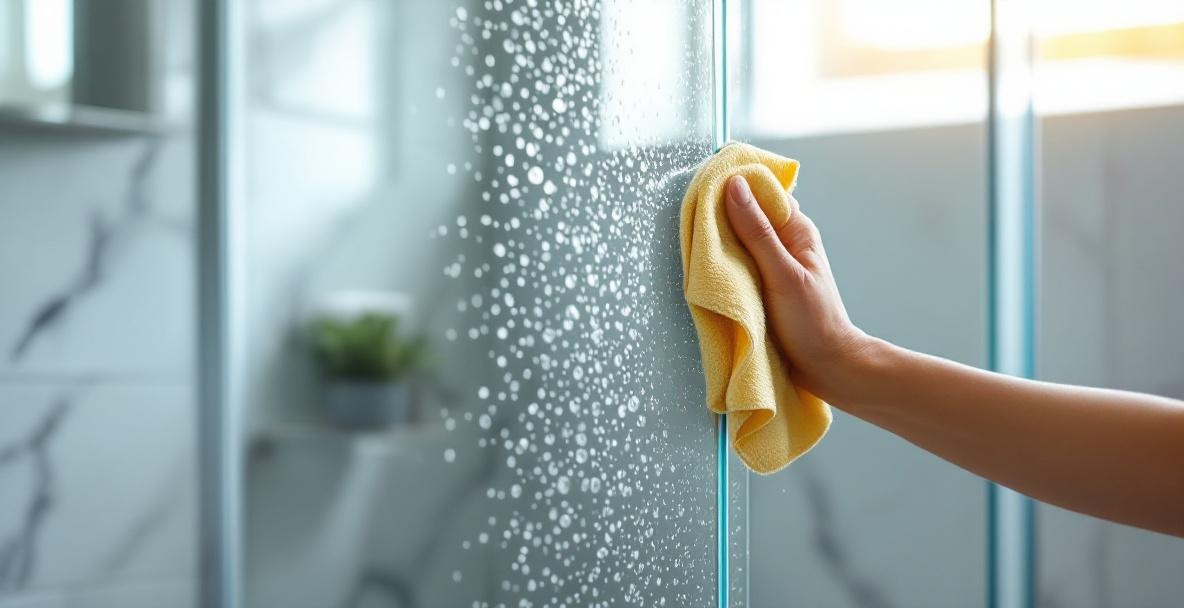
A hydrophobic glass coating works by bonding a chemically inert molecular layer to the glass surface that fundamentally changes how water behaves on contact. Instead of spreading into a thin film that evaporates slowly and leaves mineral deposits, water forms tight, high-contact-angle beads that roll off the glass carrying dissolved minerals with them. Less water contact area means fewer deposits per shower cycle.
The underlying technology is silane chemistry — organic silane compounds bond to the silica in glass at a molecular level, creating a surface that water cannot wet easily. The most advanced coatings (Diamon-Fusion) use patented silicon dioxide compounds that become part of the glass structure rather than simply coating the surface (Cardinal Glass 2025).
What coated glass does:
- Causes water to bead and roll off at contact angles above 100 degrees (versus 20–30 degrees on uncoated glass)
- Reduces surface mineral deposition by 80–90% per shower cycle
- Makes soap scum bond less strongly — easier to remove when it does occur
- Maintains glass clarity longer without cleaning
- Resists etching from hard water minerals
What coatings don't do:
- Eliminate the need for any cleaning — just dramatically reduce frequency
- Repair existing etching or mineral damage — coatings must be applied to clean, undamaged glass
- Provide scratch resistance — the coating affects hydrophobicity, not hardness
How Much Do Glass Coatings Cost?
Coating cost varies significantly based on whether it's factory-applied at glass manufacturing, professionally applied at installation, or a DIY retrofit product.
| ShowerGuard (Vitro Glass) |
| Diamon-Fusion DF Shield |
| EnduroShield |
| Rain-X for Glass (DIY) |
| Generic nano-coating kit (DIY) |
~30%
average cost premium for protective glass coating over standard shower glass — approximately $300–$500 for a standard frameless enclosure ([Angi 2025](https://www.angi.com/))
The most important cost comparison is not the upfront price but the lifetime cost. A $350 professional EnduroShield application lasts 10 years. An $8 Rain-X application needs to be reapplied every 4–8 weeks — that's 60–130 applications over 10 years, plus the time cost of application.
How Do ShowerGuard, Diamon-Fusion, and EnduroShield Compare?
These three coatings dominate the professional market. Understanding their differences helps you ask the right questions when getting a shower door quote.
| Application method |
| Warranty |
| Technology |
| Glass appearance |
| Can retrofit existing glass? |
| Cleaning product restrictions |
| Typical DFW availability |
ShowerGuard is a Vitro Glass product applied during the manufacturing process — the glass ion-exchange treatment becomes part of the glass itself rather than a coating on top. It carries a lifetime warranty and is the most durable factory option. It cannot be added to existing glass; it must be specified when ordering new shower glass. The tradeoff is that it's factory-only and the glass must be sourced through distributors that stock it.
Diamon-Fusion uses patented silicon dioxide chemistry that bonds at a molecular level to the glass surface. It's available as both a factory-applied product on new glass and a professional retrofit application on existing glass. The professional application carries a lifetime warranty. It's widely considered one of the most effective coatings available, with documented 90% cleaning reduction in manufacturer data.
EnduroShield is the most widely available professional coating and the most accessible retrofit option. The professional application carries a 10-year warranty. Consumer DIY kits are available but provide shorter durability. It's effective in DFW's hard water environment and widely applied by glass installation shops across North Texas.
Is a Coating Worth It in Hard Water Areas Like DFW?
In DFW's 10–17 GPG water environment, a professional glass coating on a frameless shower enclosure is worth the investment for nearly every homeowner who uses the shower daily. The break-even point on a $350 professional coating — versus the cost of weekly cleaning products, periodic professional cleaning, and eventual glass polishing from hard water etching — is typically 2–4 years. The coating lasts 10–15 years.
The specific math varies by household, but the framework is consistent:
Without coating: Weekly cleaning with commercial products (15 minutes + $5–$8/month in supplies), monthly deep-clean with calcium removers ($10–$15/application), professional glass polishing every 3–5 years if maintenance slips ($150–$350 per session), and potential glass replacement from irreversible etching damage ($800–$2,500+).
With professional coating: Light wipe-down every 1–2 weeks (5 minutes), minimal product use, and dramatically reduced etching risk over the coating's lifetime. No professional cleaning visits typically needed during the coating's warranty period.
The ROI is clearest for:
- Homeowners in Frisco, McKinney, Allen, Corinth, or other high-hardness DFW cities
- Master bathrooms used twice daily by two people
- Frameless enclosures with large glass panels where any haze is immediately visible
- Homeowners who travel frequently and can't maintain a daily squeegee habit
The ROI is weakest for:
- Guest bathrooms used infrequently
- Homes with a whole-house water softener already installed
- Rentals or properties being sold within 2 years

How Long Do Glass Coatings Last?
Longevity is the most important differentiator between professional and consumer coatings. The difference is chemistry depth — how deeply the coating bonds to the glass surface determines how resistant it is to cleaning, abrasion, and chemical exposure over time.
Professional coatings:
- Diamon-Fusion: Lifetime warranty (professional application)
- ShowerGuard: Lifetime warranty (factory glass warranty)
- EnduroShield: 10-year warranty (professional application)
- All require using ammonia-free, non-abrasive cleaners to maintain the warranty
Consumer/DIY coatings:
- Rain-X for Glass: 4–8 weeks on shower glass (much longer on exterior windows)
- Generic nano-coating kits: 3–6 months with normal cleaning
- Rain-X Total Glass Protector: 3–4 months
10–15 yrs
typical lifespan of professional glass coatings vs. weeks for DIY consumer products — the bonding chemistry determines durability ([Coastal Glass](https://www.coastalshowerdoors.com/))
One critical maintenance note: all coated glass must be cleaned with ammonia-free glass cleaners and non-abrasive tools. Standard Windex contains ammonia, which degrades hydrophobic coatings over time. This applies regardless of which professional coating was applied — ammonia is incompatible with all current hydrophobic glass treatments.
What Are the Pros and Cons of Coated vs. Uncoated Glass?
Coated glass (professional treatment):
Pros:
- Up to 90% reduction in cleaning frequency
- Water beads and rolls off rather than spreading
- Dramatically reduced hard water etching risk
- Maintains glass clarity longer between cleanings
- Long-term ROI in DFW's hard water environment
Cons:
- Upfront cost of $150–$500
- Must use ammonia-free cleaners (standard Windex won't work)
- Cannot repair existing etching — glass must be clean before coating
- DIY versions have minimal durability benefit
Uncoated standard glass:
Pros:
- Lower upfront cost
- No cleaning product restrictions
- Factory-coated glass can be ordered standard from any glass supplier
Cons:
- Weekly cleaning required in DFW
- Etching risk within months of installation without consistent maintenance
- Harder to keep streak-free
- Long-term cost from cleaning supplies and professional polishing
What Is the Difference Between Factory Coating and Aftermarket Coating?
Factory-applied coatings (ShowerGuard, factory Diamon-Fusion) are applied during or immediately after glass manufacturing, before the glass reaches the installer. The coating bonds to freshly polished glass with no contamination — maximum adhesion and durability. These typically carry lifetime warranties because the manufacturer controls the application quality.
Aftermarket (retrofit) coatings (EnduroShield, retrofit Diamon-Fusion) are applied to existing glass by a certified applicator. The glass must be thoroughly cleaned and prepared before application — any mineral deposits, soap scum, or contamination under the coating prevent proper bonding and void the warranty. When properly prepared and applied, retrofit coatings perform almost as well as factory applications with 10-year warranty coverage.
DIY aftermarket products are applied by the homeowner. The performance gap between DIY and professional applications is primarily quality control: professional applicators achieve more complete, more even coverage and use commercial-grade chemistry that bonds more durably than consumer-formulated alternatives.
When getting quotes for a new frameless shower enclosure in DFW, always ask: "Does the glass include a factory coating, or is coating available as an upgrade?" Some glass suppliers offer Diamon-Fusion or EnduroShield as an add-on. Others include ShowerGuard glass as a standard option. Getting coating at the time of glass installation is always easier and often less expensive than retrofit application later.
Can you apply a protective coating to existing shower glass?
Yes — retrofit coatings like EnduroShield and Diamon-Fusion can be applied to existing shower glass by a certified professional. The glass must be thoroughly cleaned and free of etching, mineral deposits, and soap scum before application. Existing etching cannot be coated over — it must be polished out first. If your current glass is in good condition but uncoated, a professional retrofit application is a worthwhile upgrade that adds 10 years of protection.
Does a coating eliminate the need to squeegee?
Not completely, but it significantly reduces how much and how often squeegeeing is necessary. On coated glass, water beads and runs off after showering — some homeowners find that occasional squeegeeing is sufficient rather than daily. In DFW's high-hardness water environment, periodic squeegeeing is still recommended even on coated glass, but the consequence of occasionally missing a day is dramatically less than on uncoated glass. The squeegee habit remains a good practice; it's just no longer a daily necessity.
What voids a glass coating warranty?
All professional coating warranties are voided by: using ammonia-based cleaners (standard Windex), using abrasive pads or steel wool on the glass, using harsh acidic cleaners beyond what the manufacturer recommends, or applying any additional wax or sealant product not approved by the coating manufacturer. Damage from physical impact or glass scratching also voids coating warranties. Maintain a list of manufacturer-approved cleaners and stick to them throughout the warranty period.
What is the difference between ShowerGuard and Diamon-Fusion?
ShowerGuard is a Vitro Glass product using ion-exchange technology applied during glass manufacturing — it's factory-only and cannot be retrofit. Diamon-Fusion uses silicon dioxide molecular bonding applied either at the factory or by a certified professional retrofit applicator. Both carry lifetime warranties and achieve similar performance in hard water environments. The main practical difference: ShowerGuard requires ordering the treated glass specifically (it must be sourced through suppliers that carry Vitro ShowerGuard product), while Diamon-Fusion can be retrofit onto existing glass or onto new glass from any manufacturer. Both are excellent options for DFW hard water.
How do you maintain coated glass differently from uncoated glass?
The primary difference is cleaner selection: coated glass requires ammonia-free cleaners only. Standard Windex, which contains ammonia, degrades all professional hydrophobic coatings. Use ammonia-free glass spray cleaners (Method Glass and Surface, Seventh Generation Glass Cleaner, or Invisible Glass) and soft microfiber cloths. Avoid abrasive scrubbing pads even for stubborn spots — use a soft microfiber with a gentle ammonia-free cleaner and let contact time do the work. The maintenance routine is simpler than uncoated glass because deposits don't bond as strongly.
Also see our guide to preventing hard water stains on glass in DFW and our complete cleaning guide for frameless glass shower doors.
Infinity Glass & Glazing installs custom frameless shower enclosures with factory and professional-applied hydrophobic coatings throughout the DFW metro. If you're comparing options for a new shower door installation or want to add a coating to your existing enclosure, contact us for a free estimate on your shower glass project.
Related reading: