Smart glass shower doors use PDLC (Polymer Dispersed Liquid Crystal) technology to switch between clear and frosted on demand — a wall switch, app command, or voice control triggers the transition in less than one second. Cost in DFW runs $150–$300 per square foot for the glass alone, putting a typical shower panel at $1,500–$6,000 for the smart glass component above the framing and installation costs. The global smart glass market is valued at $7.53 billion in 2026 and projected to reach $18.07 billion by 2035 (Grand View Research 2025).
Smart glass shower doors sound like science fiction until you see one operate. A clear panel — through which you can see everything in the bathroom — goes opaque in under a second at a tap on your phone. Then back to clear. The technology has existed commercially for over a decade in automotive and commercial architecture; it's now appearing in DFW residential bathrooms as the price of smart glass panels has declined and luxury homeowner familiarity with smart home technology has grown.
This guide explains how smart glass works, what it costs in DFW, whether it makes practical sense for your bathroom, and how it compares to frosted or textured glass alternatives. Infinity Glass & Glazing installs and sources smart glass systems for DFW residential and commercial projects.
What Are Smart Glass Shower Doors?
Smart glass shower doors are standard frameless or semi-frameless shower enclosures where one or more glass panels are replaced with PDLC switchable glass — glass that transitions between clear and frosted states on electrical demand. In the frosted (privacy) state, the glass diffuses vision completely while continuing to transmit approximately 70–80% of available light. In the clear state, the glass is optically transparent, equivalent to standard clear tempered glass.
The practical use case is specific: smart glass makes most sense in a shower enclosure where privacy is needed on demand but you want clear glass when privacy is not required. The classic DFW application is a glass-enclosed master bath shower with a panel facing the bedroom or a walk-in closet — smart glass allows the shower to remain visually open to the master suite when desired and completely private when needed, without the permanent frosted appearance of etched or sandblasted glass.
What smart glass is NOT:
- A substitute for a standard frameless enclosure in a shower where privacy is not a concern (standard clear glass is dramatically less expensive)
- A necessary upgrade for a shower enclosed on all sides by tile walls (only the glass panels need to be smart, and only if they face occupied spaces)
- A fit-and-forget installation (smart glass panels require an electrical power connection and a control system)
Key specifications:
- Transitions in under 1 second (PDLC type) or 1–3 minutes (electrochromic type)
- Operating voltage: 24V–120V AC depending on manufacturer
- Power consumption in clear state: approximately 3–5 watts per square foot
- Operating temperature range: -20°C to +70°C — suitable for DFW's climate range
- Standard glass dimensions: up to approximately 72" x 120" per panel (larger sizes require custom manufacturing)
The Two Main Technologies: PDLC vs Electrochromic
The two primary smart glass technologies used in shower enclosures are PDLC (Polymer Dispersed Liquid Crystal) and electrochromic glass: PDLC is faster-switching, more widely available, and the standard for residential bathroom applications; electrochromic is slower to switch but provides more precise tint control and is primarily used in commercial glazing. For DFW shower applications, PDLC is the practical choice in nearly all cases.
| Default state (power off) |
| Active state (power on) |
| Switching speed |
| Privacy level |
| Power requirement |
| Residential availability |
| Cost per sq ft (glass only) |
| Best for showers? |
PDLC in detail: PDLC glass sandwiches a polymer film containing liquid crystals between two layers of glass with conductive coatings. When unpowered, the liquid crystals are randomly oriented — light is scattered and the glass appears frosted. When an electrical current is applied, the crystals align uniformly, allowing light to pass through — the glass becomes transparent. This is "fail-safe frosted" behavior: a power outage automatically makes the glass private, which is relevant for shower applications.
Why PDLC for shower doors: The fail-safe frosted behavior is the key advantage for shower use. If power is interrupted — during a storm, a tripped circuit, or a power failure — the glass defaults to frosted/private, not clear. This is the intuitively correct behavior for a privacy application. Electrochromic glass defaults to clear when power is interrupted, which is the wrong behavior for a shower panel facing a bedroom.
$7.53B
global smart glass market value in 2026, projected to reach $18.07B by 2035, driven by residential adoption and declining PDLC panel costs (Precedence Research, 2026)
How Much Do Smart Glass Shower Doors Cost?
Smart glass shower doors in DFW cost $150–$300 per square foot for the PDLC glass panels alone, plus standard frameless enclosure framing and hardware costs ($800–$2,000), electrical wiring and control system ($300–$800), and installation ($400–$900). A single standard shower panel (approximately 24" x 72" = 12 sq ft) typically adds $1,800–$3,600 in smart glass cost above a comparable clear glass panel.
Full cost breakdown for a typical DFW smart glass shower installation:
Smart glass panels (PDLC): $150–$300/sq ft
- A 36" x 72" panel = 18 sq ft × $150–$300 = $2,700–$5,400 for the glass alone
- Most shower installations replace 1–2 panels with smart glass; remaining panels stay clear
Standard frameless hardware and framing: $800–$2,000
- Hinges, pulls, sweeps, fixed panel clamps — same hardware as a standard frameless enclosure
Electrical wiring and control system: $300–$800
- Power supply, wiring from panel to glass
- Basic: wall switch control only
- Smart home integration (Alexa, Google, app): adds $200–$500 for compatible controller
Installation labor: $400–$900
- Smart glass installation is more complex than standard glass due to the electrical connection at the glass edge — requires care with wiring routing
Total typical DFW smart glass shower panel project: $4,200–$9,100 for a single smart glass panel in a frameless enclosure, depending on panel size, control system, and labor (Fixr 2025).
For comparison: A standard clear frameless enclosure (comparable size, no smart glass) runs $1,200–$3,500 installed. Smart glass adds $3,000–$6,000 to a typical project.
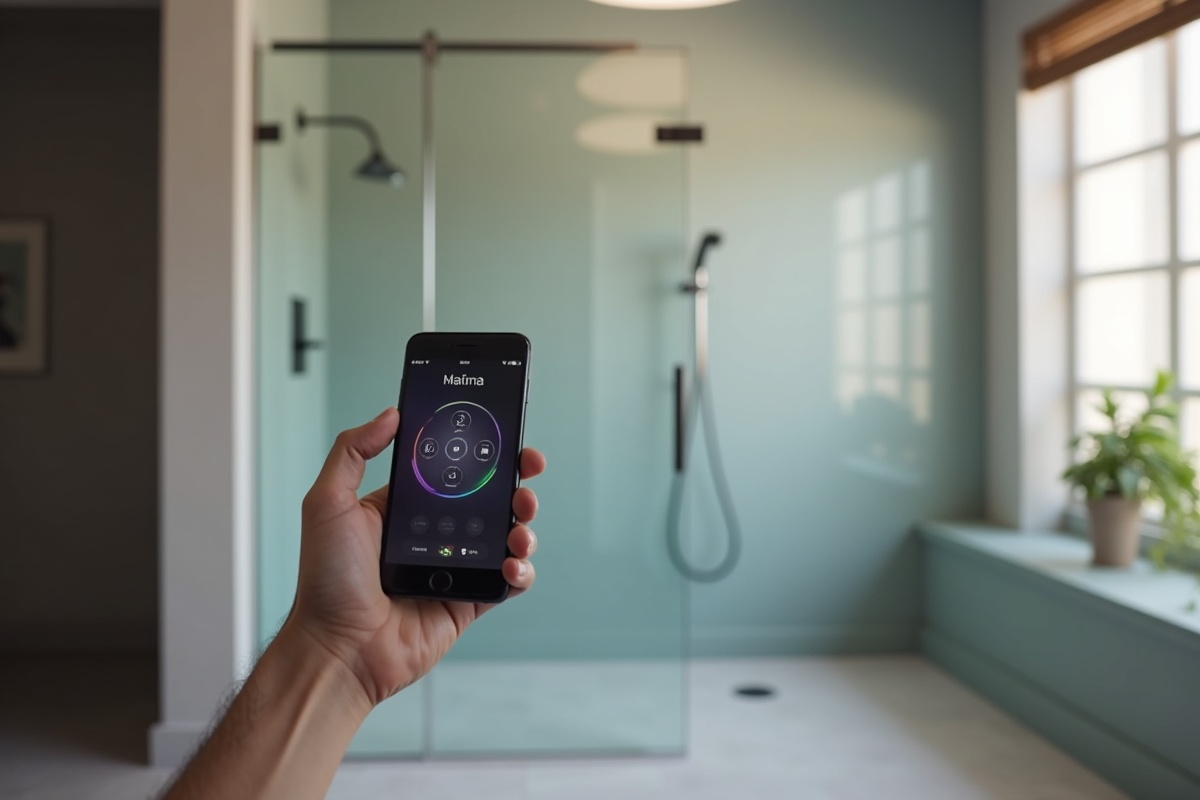
Smart Home Integration — Alexa, Google, and App Control
Smart glass shower panels can integrate with major home automation platforms — Amazon Alexa, Google Home, Apple HomeKit, and dedicated controller apps — when a compatible smart glass controller is installed. Basic smart glass installations use a simple wall toggle switch; smart home integration requires a compatible 24V controller with WiFi or Zigbee connectivity and adds $200–$500 to the system cost.
Control options for DFW smart glass shower installations:
Wall toggle switch (standard): The simplest control — a standard wall switch or rocker switch wired to the smart glass controller. Press once: glass goes clear. Press again: glass goes frosted. No smart home integration required. Works with all PDLC glass systems. Total control cost: $50–$150.
Remote/wireless control: A wireless remote that allows control from anywhere in the room without physically touching the wall switch. Useful for a shower panel that faces the bedroom — you can switch from the bed without going to the bathroom. Cost: $150–$300 for receiver and remote.
App control (smartphone): A WiFi-enabled smart glass controller that connects to your home network and a companion app. Control from anywhere — in the shower, in another room, or remotely. Compatible apps vary by manufacturer. Cost: $250–$500 for the controller.
Voice control (Alexa, Google Home, HomeKit): Requires an app-compatible controller plus integration with your smart home platform. Once configured, "Alexa, make the shower clear" operates the panel. Requires your smart home hub to be functional. Cost: same as app control ($250–$500) plus any platform setup.
Automation: With smart home integration, you can automate the glass — for example, clear at 7:00 AM daily, frosted when shower is in use (using a humidity or motion sensor trigger), or clear when the bathroom lights turn on. The automation possibilities are limited by your smart home platform capabilities.
Pros and Cons vs Frosted or Textured Glass
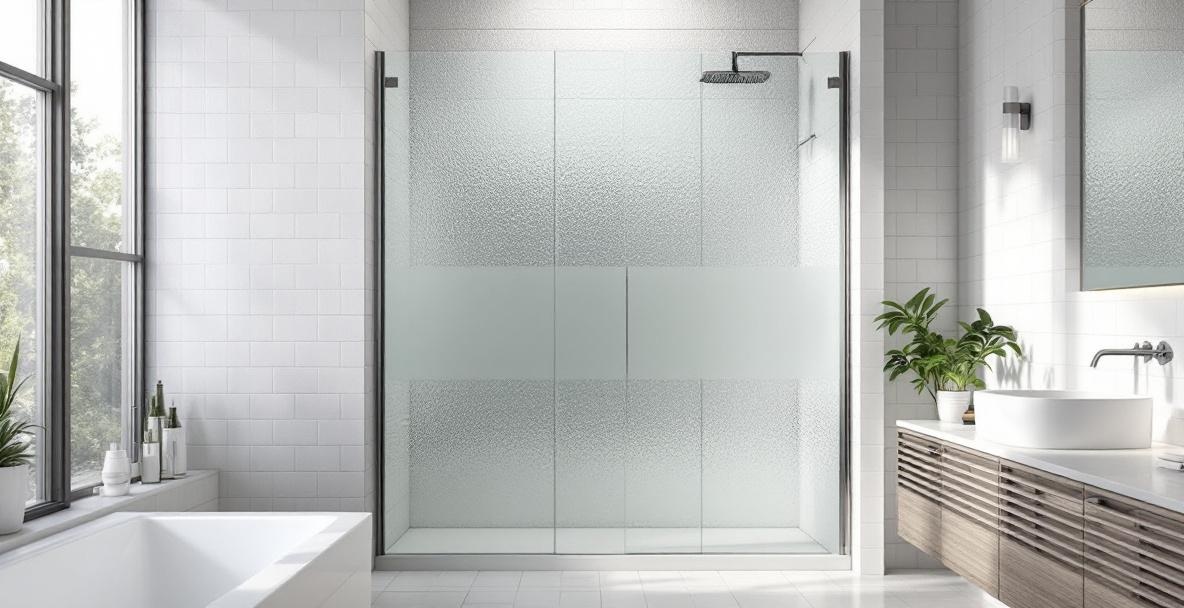
Smart glass shower doors offer privacy on demand that fixed frosted or textured glass cannot provide, but at a cost premium of $3,000–$6,000 over standard glass and with added complexity from the electrical system. For most DFW bathrooms, textured or reeded glass achieves adequate privacy at 5–10% of the smart glass cost — smart glass is justified only when the ability to switch between clear and private modes provides meaningful daily value.
| Privacy |
| Clear mode |
| Light transmission |
| DFW cost |
| Electrical requirement |
| Maintenance |
| Longevity |
| Smart home integration |
When smart glass is worth the cost:
- A master bath shower where the glass panel faces the bedroom and you want the option of a clear, open-to-the-suite shower experience as well as a private enclosure
- A bathroom window facing a neighbor or street where you want clear glass during the day and privacy at night
- A luxury DFW new construction build where the smart glass cost is a small percentage of total construction budget and the feature aligns with a smart home system already planned
When smart glass is not worth the cost:
- A shower enclosed on all sides by tile walls where privacy is not relevant
- A shower that faces only interior bathroom walls (toilet, vanity, door) rather than bedroom or exterior views
- Any project where budget is a primary constraint — textured or reeded glass achieves the same privacy result for $3,000–$7,000 less
Is Smart Glass Practical for DFW Bathrooms?
Smart glass is practical for DFW luxury new construction and high-end bathroom renovations where the feature integrates into an existing smart home system and the cost premium is within the project budget. For standard DFW bathroom remodels, textured glass alternatives provide equivalent privacy at dramatically lower cost. NKBA data shows 28% of design professionals expect smart glass shower installations to increase significantly — adoption is growing but not yet mainstream (NKBA 2026).
51%
of bathroom designers agree smart technology integration in bathrooms will increase significantly within three years (NKBA, 2026)
DFW-specific considerations:
Luxury new construction in Frisco, McKinney, Southlake, Prosper: Smart glass is appearing in new construction homes in DFW's premium northern suburbs at the $1.2M+ price point, typically as part of a comprehensive smart home system (Control4, Savant, or Lutron). In this context, smart glass adds a meaningful feature at a cost that's a small percentage of the total build budget.
High-end bathroom renovation in Preston Hollow, Southlake, Park Cities: For renovations at the $50,000+ range, smart glass can be justified if the shower faces a bedroom or living area and the homeowner specifically values the clear-or-frosted flexibility. At this budget level, the $4,000–$9,000 smart glass premium is proportionate to the overall investment.
Standard DFW bathroom renovation ($12,000–$30,000): Smart glass is typically not the best use of budget in a standard renovation. A textured or reeded glass panel achieves privacy at $1,100–$2,400 installed — redirecting the $3,000–$7,000 difference to tile, vanity, or plumbing upgrades delivers more visible improvement per dollar spent.
For more on current bathroom glass and enclosure trends, see our guide to bathroom design trends in 2026 and our overview of modern bathroom glass trends in DFW.
How to Retrofit Smart Glass Into an Existing Shower
Retrofitting smart glass into an existing frameless shower enclosure is possible but requires careful planning: the smart glass panel must be custom-cut to fit the existing opening, new wiring must be routed from a power source to the glass edge, and the existing glass panel must be removed and disposed of. Retrofitting is more complex than new installation but is achievable in most DFW frameless shower configurations.
- 1
Assess the Existing Enclosure
Determine which panel(s) you want to replace with smart glass. Measure the panel dimensions precisely — smart glass is custom-fabricated to exact dimensions. Identify whether the panel is fixed or a swinging door; both are compatible with smart glass, but the electrical connection point differs for swinging doors (requires a flex lead at the hinge).
- 2
Plan the Electrical Routing
Smart glass panels require a 24V–120V power lead connected at the glass edge — a thin flex connector that exits the glass at one edge and connects to a transformer and controller. Plan the routing from the nearest electrical source through the wall to the glass connection point. This typically requires an electrician in addition to the glass installer.
- 3
Order the Smart Glass Panel
Smart glass panels are custom-fabricated. Lead time is typically 3–6 weeks from a DFW smart glass supplier. Provide exact dimensions, confirm the PDLC film type and operating voltage, and specify the power connector edge.
- 4
Schedule Coordinated Installation
Smart glass retrofit requires coordination between the glass installer (removing old panel, installing new smart panel, connecting seals and hardware) and the electrician (wiring from breaker to controller to glass). Schedule both trades for the same day or consecutive days. Total installation time: 4–8 hours depending on complexity of wiring route.
- 5
Configure the Control System
After installation, configure your control method: wall switch wiring, app setup, or smart home integration. Test the clear-to-frosted transition from all control points. Verify that power-off (fail-safe) behavior results in frosted state.
Infinity Glass & Glazing sources, fabricates, and installs smart glass shower panels and specialty glass systems across DFW. We work with PDLC smart glass suppliers to provide custom panels for new construction and retrofit bathroom projects. Serving Corinth, Dallas, Fort Worth, Frisco, McKinney, Southlake, Lewisville, and surrounding areas. Get an estimate for your project or call (940) 279-1197.
How long do smart glass shower doors last?
PDLC smart glass panels have a rated lifespan of 10–20 years for the film layer under normal use conditions. The glass itself (tempered safety glass) lasts as long as standard shower glass — 20–30 years with normal use. The limiting factor is the PDLC film and the electrical connections, which can degrade over time. Higher-quality PDLC films from established manufacturers (Saint-Gobain, Gauzy, Chiefway) have longer rated lifespans than low-cost alternatives.
Is smart glass safe to use in a wet shower environment?
Yes — smart glass panels for shower use are fabricated with edge sealing specifically designed for wet environments. The electrical connections are sealed at the glass edge and protected from direct water contact. The operating voltage for most residential PDLC systems is 24V, which is safe in wet conditions. Verify with your installer that the panels are rated for shower applications — some commercial PDLC products are not wet-rated and are not appropriate for shower use.
Does smart glass require special maintenance?
Smart glass panels require the same cleaning as standard glass shower panels — regular squeegee use, glass cleaner, and mineral deposit removal as needed. There are no special chemical requirements. The electrical connections at the glass edge should not be directly sprayed with water from the shower head — they are sealed but not designed for direct high-pressure water contact. Annual inspection of the edge seals and connection points is recommended.
How much electricity does a smart glass shower door use?
PDLC smart glass uses approximately 3–5 watts per square foot when in the clear (powered) state. A typical 18 sq ft shower panel draws 54–90 watts continuously when clear — similar to one LED light bulb. In the frosted (off) state, power consumption is essentially zero. For a shower panel used 2 hours daily in clear mode, annual electricity cost is approximately $3–$6 at current Texas electricity rates. Energy consumption is not a meaningful cost consideration for residential smart glass.
Can smart glass be retrofitted onto an existing shower enclosure?
Yes — smart glass panels can replace existing clear or frosted glass panels in most frameless shower enclosures. The new smart glass panel is custom-fabricated to the exact dimensions of the existing panel. Retrofitting requires removing the existing glass, routing new electrical wiring to the glass location, installing the smart panel, and connecting the control system. Expect 4–8 hours of installation time plus electrical work. Contact Infinity Glass at (940) 279-1197 for a retrofit evaluation.
Also see our overview of modern bathroom glass trends in DFW and our guide to bathroom design trends for 2026.
Related reading: