
Shower door glass can break from four main causes: nickel sulfide inclusions that cause spontaneous shattering without impact, thermal stress from rapid temperature changes, improper installation that creates point-load stress on the edges, and direct impact damage. Spontaneous breakage is rare (about 1 in 800 panels) but real. Tempered shower glass is engineered to break into dull pellets rather than sharp shards, which is why it is used for every shower enclosure under US safety code.
One of the most unsettling home failures a homeowner can experience is a glass shower door shattering without warning. It happens. It does not happen often, but when it does, the internet is flooded with videos of glass exploding in the middle of the night, hours after a shower, or while someone is simply walking past it.
This guide gives you a straight answer about why shower glass breaks — including the phenomenon most glass companies avoid talking about — and what you can do to reduce your risk in DFW.
Can Shower Glass Break on Its Own Without Being Hit?
Yes. Tempered glass can spontaneously fracture without any impact, pressure, or obvious trigger. This is rare but well-documented. Spontaneous glass breakage affects approximately 1 in 800 tempered glass shower panels annually (CPSC 2024). The cause is almost always a microscopic impurity called a nickel sulfide inclusion that expands inside the glass over time until the internal stress exceeds the glass's tolerance.
Other non-impact causes include thermal shock, edge damage from installation, and stress from incorrect hardware tightening. When any of these reach the glass's failure threshold, the panel breaks apart all at once — as designed.
1 in 800
tempered shower glass panels experience spontaneous breakage annually
What Is Nickel Sulfide Inclusion and Why Does It Matter?
A nickel sulfide (NiS) inclusion is a microscopic stone formed from trace nickel contamination during glass manufacturing. When glass is tempered (heated to 1,150°F and rapid-cooled), NiS inclusions are frozen in their high-temperature crystal phase. Over months or years, these particles slowly transform to their low-temperature phase, which is about 4% larger. That expansion happens inside a pane locked in compression — and when the strain exceeds the glass's limit, the panel explodes.
Nickel sulfide inclusions cause 90% of spontaneous tempered glass failures (GlassBuild America 2024). They cannot be detected visually after manufacturing. The only proven screening method is heat-soak testing, which intentionally triggers NiS expansion in a controlled oven so that defective panels fail at the factory, not in your bathroom.

How Does Thermal Stress Cause Shower Glass to Break?
Thermal stress breakage happens when different parts of a glass panel expand or contract at different rates, creating internal tension that exceeds the glass's edge strength. Common shower-specific triggers include:
- Hot shower water hitting a cold glass panel in winter
- Steam contacting a glass edge that is shaded or cooler than the face
- Direct sunlight on one part of the glass while the rest is shaded
- A floor-heated bathroom warming the bottom edge while the top stays cool
Properly engineered tempered glass is designed to handle temperature differentials up to about 250°F. The failure point is almost always along an edge that has microscopic damage from fabrication — a chip, score, or nibble that concentrates stress. This is why edge quality matters as much as glass thickness.
What Role Does Improper Installation Play in Glass Breakage?
Installation errors are one of the most preventable causes of shower glass failure. The biggest risks:
- Over-tightened hardware — clamps and hinges torqued beyond spec create permanent compressive stress at the drill-holes
- Point-loading on the edge — shims, hardware, or hinges not seated flat can concentrate force on one small area
- Unsealed cut-outs — drill holes and notches that were not ground smooth become stress risers
- Wrong fabrication sequence — glass must be fully cut, drilled, notched, and polished before tempering; any post-temper work destroys the panel
- Inadequate support at the base — frameless glass must sit on leveled U-channel or plumb hinges, not shims alone
The most dangerous time for shower glass is the first 72 hours after installation. Any stress imbalance from incorrect torque or seating usually reveals itself early. If your new shower door makes a "pinging" or "cracking" sound in the first week — even if nothing looks wrong — call your installer immediately.
Is Tempered Shower Glass Safe After It Breaks?
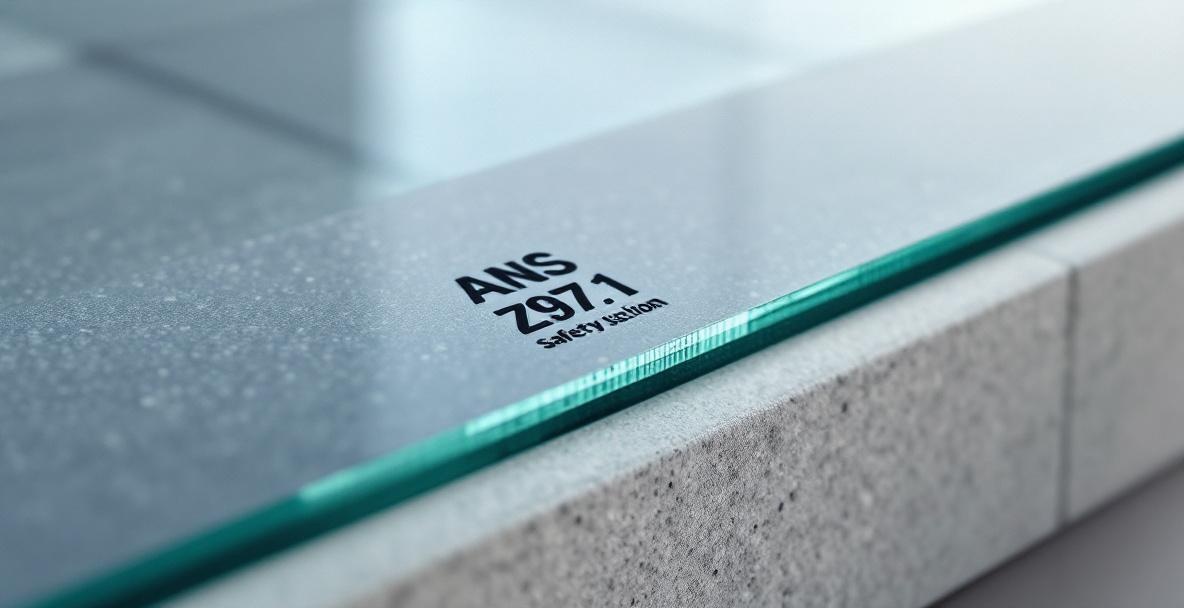
Tempered glass is designed to break safely. Instead of knife-like shards, tempered glass fragments into thousands of small, relatively dull pellets roughly the size of a pea. This is why it is classified as Category II safety glazing under ANSI Z97.1 and CPSC 16 CFR 1201 — the US federal standards that mandate tempered glass for every shower enclosure in the country.
That said, "safer" is not "harmless." A shattering panel still sends fragments in every direction at significant velocity. Pets, children, and bare feet are at real risk in the immediate aftermath. Our companion article are frameless shower doors safe covers the full safety picture.
| Glass Type | Breakage Pattern | Shower Use | |
| Annealed (plate) glass | Long sharp shards | NOT code-compliant | |
| Tempered glass | Small dull pellets | Standard for all showers | |
| Laminated glass | Cracks but holds together | Rare for showers — heavy and thick | |
| Heat-soaked tempered | Same as tempered | Premium — reduced spontaneous risk |
Our guide on tempered glass vs laminated glass shower options dives deeper into the trade-offs.
How to Reduce the Risk of Shower Glass Breakage
Spontaneous breakage cannot be eliminated, but the risk can be dramatically reduced with the right specification:
- Specify heat-soaked tempered glass — Heat-soaked tempered glass reduces spontaneous breakage risk by 95% over standard tempered glass (GlassBuild 2024)
- Use 3/8 in. or 1/2 in. thickness — thicker glass handles thermal and mechanical stress better
- Require CPSC-certified fabrication — look for a permanent etched logo with the fabricator's ANSI certification
- Never slam the door — frameless doors are precision-hung; impact stress accumulates
- Maintain hardware torque — check and re-seat hinges/clamps annually with a torque driver
- Protect the edges — chipped or damaged edges are the starting point for most failures

Should You Replace Your Shower Door Glass After a Breakage?
Yes — always. A shattered shower glass panel cannot be repaired. The entire panel needs replacement, and you should inspect surrounding panels and hardware for damage caused by the break. If the failure happened spontaneously, ask your fabricator whether the replacement can be heat-soaked glass, and keep any fragments for warranty documentation.
Our shower door glass replacement DFW page walks through the process, timeline, and what to expect on cost. Also see how long do frameless shower doors last for expected lifespan and how breakage affects warranty coverage.
Frequently Asked Questions
Is it normal for shower glass to break without being hit?
It is rare but documented. About 1 in 800 tempered glass shower panels experience spontaneous breakage each year, almost always due to a microscopic nickel sulfide inclusion in the glass that expands slowly and eventually exceeds the panel's tolerance. It is not caused by anything the homeowner did.
What should I do immediately after shower door glass breaks?
Keep people and pets out of the room. Wear closed-toe shoes and work gloves, carefully sweep up large fragments, then vacuum the area twice with a stiff-bristle vacuum. Photograph the damage before cleanup for warranty. Contact your glass company the same day — most reputable fabricators carry warranty coverage for spontaneous breakage.
Is broken tempered shower glass dangerous?
It is much safer than annealed glass, but not harmless. Tempered glass fractures into thousands of small dull pellets instead of sharp shards, which is why the CPSC requires it for all shower enclosures. You can still get minor cuts from fresh fragments, and airborne particles can travel several feet during the initial break.
How can I tell if my shower glass is at risk of breaking?
Visually, you cannot. Nickel sulfide inclusions are microscopic and invisible. The warning signs to watch for are faint "pinging" sounds from the glass, visible edge chips, hardware that has loosened over time, or hairline scratches near drill-outs. If any of those appear, have a glass professional inspect the panel.
Can laminated glass be used in a shower door to prevent shattering?
Yes, but it is rare in residential showers. Laminated glass holds together when broken because of the interlayer, but it is heavier, thicker, and less clear than tempered glass. It is mostly used in commercial showers, overhead glass, or situations where spontaneous breakage would create an unusual risk — such as around stairs or elevated shower pans.
Also see our can you cut tempered glass for a shower door post and how long do frameless shower doors last for related safety and longevity information.
If you are worried about glass safety, replacing a broken panel, or want heat-soaked glass specified on a new install, contact Infinity Glass & Glazing. We serve the entire DFW metro with code-compliant, CPSC-certified tempered glass and transparent warranty coverage.
Related reading: