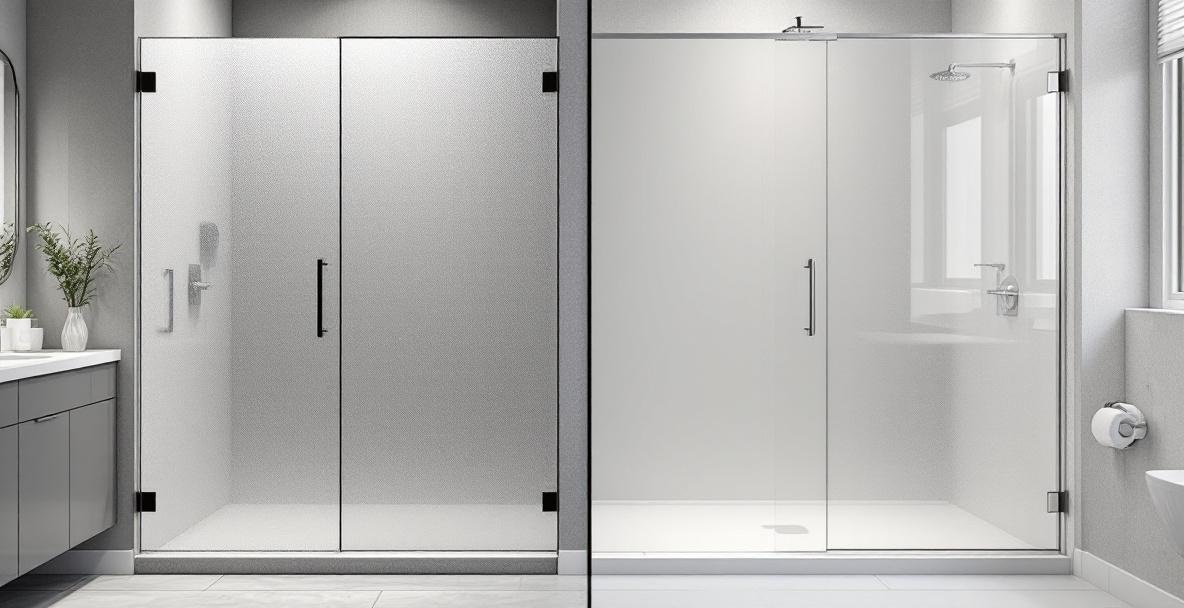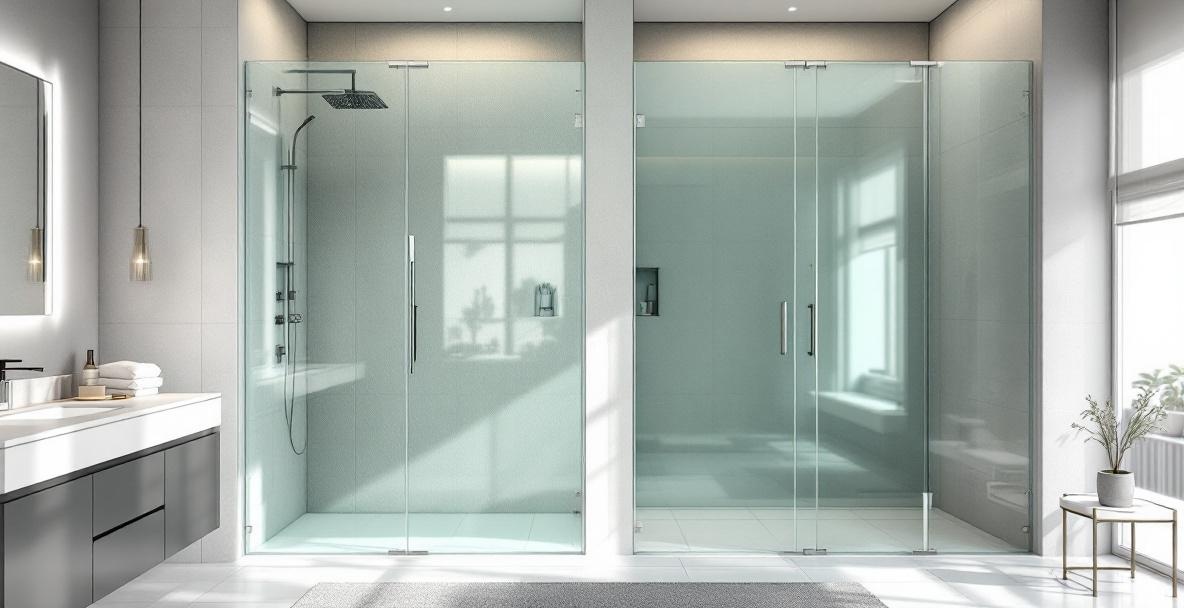
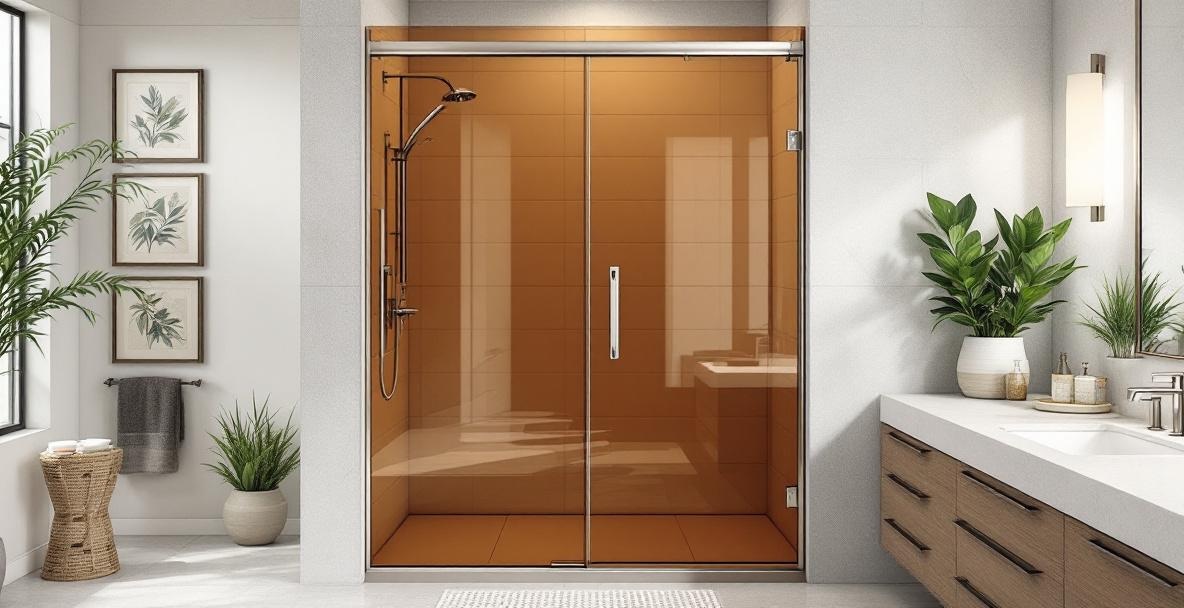
Tinted glass shower doors are tempered glass panels manufactured with metal-oxide additives that color the glass throughout its thickness in shades of bronze, gray, or other custom tones — delivering dramatic visual style, subtle privacy (level 2), and UV filtering without the opacity of frosted or back-painted glass. Tinted shower doors cost 15 to 25 percent more than clear glass, pair best with warm or dark bathroom palettes, and are one of the fastest-growing specialty glass categories in DFW high-end bathrooms.
Tinted shower glass moved from niche to mainstream in 2025. In Southlake custom builds, Highland Park renovations, and the booming Frisco and McKinney new-construction market, tinted glass shower enclosures — bronze especially — have become a signature high-end finish. This guide covers how tinted glass is made, what colors exist, what tinting costs, and where it works best in DFW bathrooms.
What Is Tinted Glass and How Is Tinting Applied to Shower Doors?
Tinted glass is float glass manufactured with small amounts of metal oxides — iron, cobalt, selenium, or copper — mixed into the molten glass batch, which color the glass throughout its thickness rather than as a surface coating. Because the tint is integral to the glass itself, it never fades, peels, or wears off; a bronze tinted shower door is the same bronze on day one and after 30 years of daily use.
The tinting process happens during glass manufacturing, not as a post-processing step:
- Iron oxide produces green or bronze tones depending on the reduction state
- Cobalt oxide produces blues
- Selenium and cadmium produce pinks and reds (rarely used in architectural glass)
- Copper and nickel produce grays and neutral dark tones
- Combinations of oxides produce the full range of architectural tints
The result is "body-tinted" glass, which is then tempered for shower door use by the fabricator. Body tinting is different from film tinting (adhesive film applied to clear glass, not used for shower doors) and from back-painted glass (opaque paint applied to the back, fully blocks light). Body tint preserves full light transmission — just filtered through color.
What Tint Colors Are Available for Shower Glass?
The most common tinted shower glass colors are bronze, gray (light and dark), green, and blue, with specialty fabricators offering limited production runs in champagne, smoke, and black tints. Bronze and gray dominate residential shower projects because they pair with the largest range of tile and hardware finishes; green and blue are specialty choices for themed or coastal designs.
| Bronze |
| Light gray |
| Dark gray |
| Green |
| Blue |
| Clear (reference) |
Bronze is the most-requested tinted shower glass color in DFW for 2024 to 2025. The warm undertone coordinates with the dominant current bathroom trends: brushed brass hardware, travertine and warm stone tile, and warm-white paint palettes. Gray (particularly medium gray) is the runner-up, favored in contemporary bathrooms with chrome or polished nickel fixtures.
How Does Tinting Affect Privacy in a Shower Enclosure?
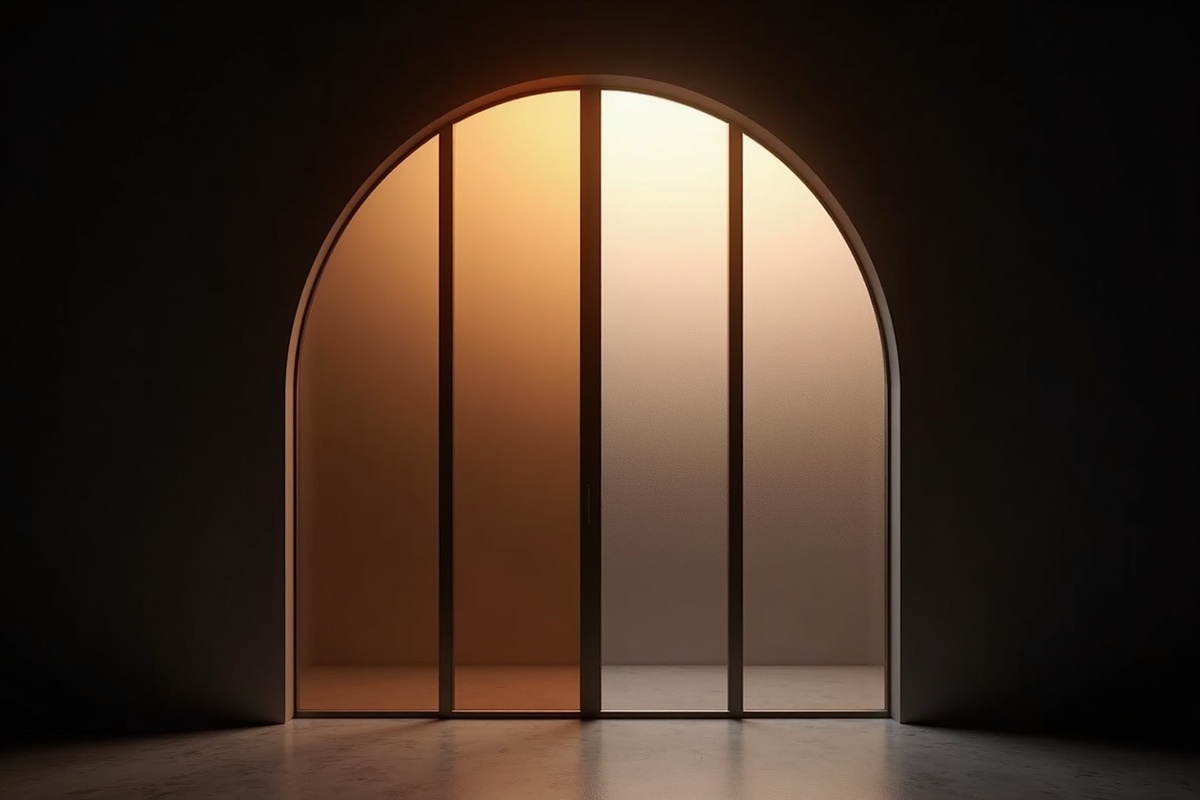
Tinting provides privacy level 2 — slightly reduced visibility compared to clear glass, with figures behind the glass visible but softened and de-saturated. Bronze tint adds warmth and the sense of filtered light; dark gray tint creates the strongest privacy effect among standard tints but still allows silhouettes to read clearly. Tinting is not a substitute for frosted or patterned glass when true privacy is required.
Tinted glass privacy breakdown:
- Clear (reference): Full visibility, crisp colors, every detail readable
- Bronze or light gray tint: Figures visible but color-shifted and softened; detail still readable at close range
- Dark gray tint (medium to heavy): Figures visible but strongly darkened; detail difficult to read beyond 3 to 4 ft.
- Combination (tint plus frost): Level 3 to 4 privacy — tint color preserved, detail fully obscured
Tinted glass is most often specified for aesthetic reasons (color, drama, coordination with design) with privacy as a secondary benefit. Homeowners who need true privacy typically layer tinting with a frosted or reeded treatment, or choose a reeded/frosted glass instead.
What Does Tinted Shower Glass Cost Compared to Clear?
Tinted shower glass costs 15 to 25 percent more than standard clear glass for the most common colors (bronze, gray, green) and up to 50 percent more for specialty tints (smoke, black, champagne). A typical frameless bronze-tinted shower door installation in DFW runs $1,800 to $3,200 compared to $1,400 to $2,500 for the same enclosure in clear glass.
15 to 25%
added cost for bronze or gray tinted shower glass over standard clear glass in DFW residential installations ([Angi 2025](https://www.angi.com/articles/shower-door-installation-cost.htm))
Typical cost comparisons for a 60 sq ft shower enclosure in the DFW market:
- Clear glass frameless enclosure: $1,400 to $2,500 installed
- Bronze or light gray tint: $1,700 to $3,000 installed
- Dark gray tint: $1,850 to $3,200 installed
- Green or blue tint: $1,900 to $3,300 installed
- Specialty tints (smoke, black, champagne): $2,200 to $4,500 installed
Cost drivers for tinted glass:
- Base material cost: Tinted glass is slightly more expensive than clear per sq ft at the wholesale level
- Low-iron upgrade: Many tinted panels are specified in low-iron glass for cleaner color; adds $150 to $400 per project
- Minimum order quantities: Specialty tints sometimes require ordering a full sheet ($400 to $1,200 minimum)
- Lead time premium: Specialty tints are not always stocked; 2 to 3 weeks additional lead time on uncommon colors
Does Tinted Glass Require Special Maintenance?
No — tinted shower glass cleans identically to clear glass. Because the tint is integral to the glass and not a surface coating, there is nothing to damage with standard glass cleaners, vinegar, or squeegeeing. Some homeowners find bronze and dark gray tints show water spotting slightly less than clear glass because mineral deposits are less visible against the darker background.
Cleaning and maintenance notes specific to tinted glass:
- Daily: Squeegee after showers as with any glass panel
- Weekly: Wipe with white vinegar diluted 50-50 with water or ammonia-free glass cleaner
- Never use: Acidic bathroom cleaners, abrasive pads, or steel wool — same rules as clear glass
- Spot-hiding bonus: Bronze and dark gray tints hide DFW hard-water mineral spotting better than clear glass. This is a practical benefit for households that cannot squeegee after every shower.
A hydrophobic protective coating is equally effective on tinted glass as on clear, reducing spotting by 60 to 70 percent. In DFW water conditions (hardness 180 to 320 ppm per TWDB 2024), the coating is a worthwhile $100 to $250 upcharge on any shower glass.
If you love the look of tinted glass but are unsure about commitment, order a sample panel (most DFW fabricators will provide 4 in. by 4 in. tint samples for $25 to $75) and tape it to your shower wall in the lighting conditions of your actual bathroom. Tint color reads very differently in morning versus evening light.
Tinted Shower Glass Design Ideas for DFW Bathrooms
Tinted shower glass works best when it intentionally contrasts or coordinates with the rest of the bathroom palette — bronze with warm neutrals and brass hardware, gray with cool whites and chrome, dark tints with moody jewel-tone tile, and specialty tints as a centerpiece feature. Matching tint intensity to the overall bathroom mood is the most important design decision.
Bronze tint with warm DFW transitional design: Bronze glass pairs with travertine, wood vanities, brushed brass hardware, and warm-white walls. This is the single most popular combination in DFW 2024 to 2026 bathroom specs. The warm tint reads as filtered sunlight and coordinates across every warm finish element.
Dark gray tint for moody contemporary bathrooms: Paired with matte black hardware, charcoal tile, dark wood, and dramatic lighting, dark gray tinted glass becomes a statement element. Works best in larger bathrooms where the light-reducing effect of dark tint does not make the space feel cramped.
Light gray tint for minimalist modern: Subtle — almost imperceptible at first glance — but adds a cool sophistication to white and gray palettes. Works with polished chrome, white marble, and high-gloss tile. A restrained choice for homeowners who want "something more than clear" without strong color.
Green tint for organic or botanical designs: Pairs with plants, wood, stone, and warm earthy palettes. Less common in DFW than bronze or gray but increasingly specified for biophilic bathroom designs emphasizing natural elements.
Tinted fixed panels with clear swinging door: A hybrid design: fixed glass walls in bronze or gray, clear swinging door. The tinted panels provide the color statement; the clear door stays visually light for everyday in-and-out use. Common in larger walk-in enclosures.
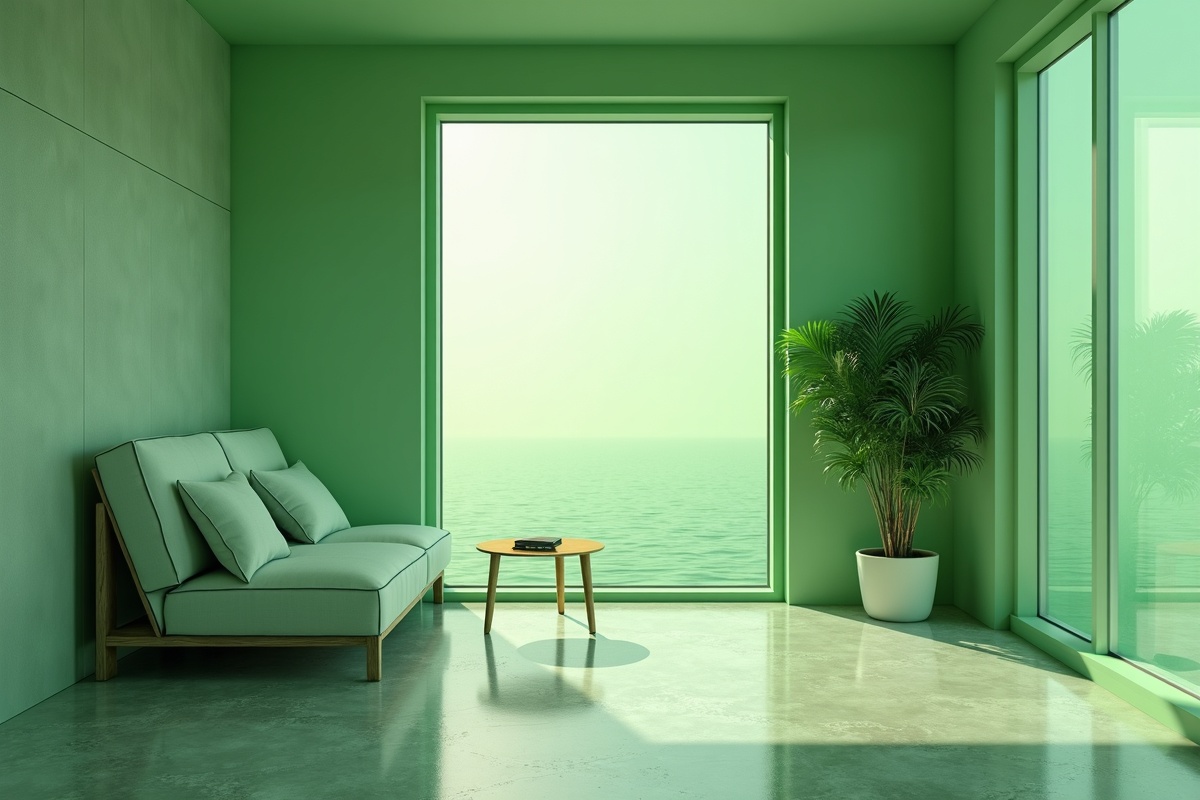
Tinted architectural glass continues to grow as a specialty category (Grand View Research 2025), with residential bathroom applications representing an increasing share of domestic demand. In NKBA designer surveys, bronze was the top non-standard shower glass color specified for 2024 projects.
How to Choose the Right Tint Level for Your Shower
Choose tint intensity based on how much natural light the bathroom receives — bathrooms with strong natural light tolerate darker tints, while dim or north-facing bathrooms should stay with light tints to preserve visual brightness. Bronze works universally; dark gray requires ample natural or artificial light to avoid making the shower feel cave-like; specialty tints should be matched to a clear design vision for the room.
Tint selection decision framework:
- How much natural light does the bathroom receive?
- Strong natural light: any tint works
- Moderate natural light: bronze, light gray, green work; dark gray acceptable
- Low natural light: stay with light tints only
- What is the dominant hardware finish?
- Brushed brass, bronze, copper: bronze-tinted glass
- Chrome, polished nickel: gray-tinted glass
- Matte black: dark gray or bronze
- Mixed metals: light gray or no tint
- What is the tile palette?
- Warm stones (travertine, limestone): bronze tint
- Cool marble, white subway tile: light gray tint
- Dark dramatic tile: dark gray tint
- Coastal palette: green or blue tint
- What is the shower size?
- Small (under 40 sq ft enclosure): stay light; dark tints feel cramped
- Medium (40 to 80 sq ft): any tint works
- Large (over 80 sq ft): darker tints have room to breathe
FAQs: Tinted Glass Shower Doors
Does tinted shower glass fade over time?
No. The tint is integral to the glass — metal oxides mixed into the molten glass batch during manufacture. There is no coating or film to wear off. Body-tinted glass holds its color for the entire service life of the panel, which for a properly installed tempered shower door is 25+ years. UV exposure, heat, chemical cleaners, and decades of daily use do not affect the tint.
Is tinted glass available with frameless hardware?
Yes. Tinted glass fabricates in 3/8 in. and 1/2 in. thicknesses — the standard thicknesses for frameless shower doors. All standard frameless hardware (hinges, clips, U-channels, handles) is compatible with tinted glass. The hardware finish should coordinate with the tint: bronze glass pairs with brass, bronze, or champagne hardware; gray glass pairs with chrome, polished nickel, or matte black.
Does bronze tinted glass make bathrooms feel darker?
Slightly, but less than most homeowners expect. Bronze tint in a typical shower door reduces light transmission from about 85 to about 75 percent. This 10-point difference is noticeable only in side-by-side comparison; standalone it reads as warmer and more intimate rather than darker. Dark gray tint reduces transmission to 55 to 65 percent and is genuinely dimmer — only specify dark gray in bathrooms with good natural or artificial light.
Can tinted glass be combined with low-iron or frosted sections?
Yes. Tinted glass is often specified with a low-iron substrate to produce truer, cleaner tint color without the greenish cast standard glass adds. Some high-end projects combine tinted fixed panels with frosted swinging doors, or tinted lower panels with clear upper panels. Combination designs require careful detailing at the hardware junctions, which competent DFW fabricators handle routinely.
What are the most popular tint shades for DFW bathrooms?
In 2024 and 2025 DFW residential projects, bronze was the top tinted glass color, accounting for roughly 60 percent of tinted shower door specifications. Light to medium gray was second at around 25 percent. Dark gray, green, and specialty tints made up the remaining 15 percent. The dominance of bronze tracks the warm-metal hardware trend and the broader shift away from cool gray-and-white bathroom palettes toward warmer, earthier tones.
Also see our clear glass vs frosted shower door comparison and our low-iron glass shower doors article for more on shower glass color and clarity options.
Infinity Glass & Glazing fabricates and installs tinted glass shower doors — bronze, gray, green, blue, and specialty custom tints — throughout the Dallas-Fort Worth metro. Based in Corinth, Texas, we serve Frisco, Southlake, Flower Mound, Highland Park, Plano, and every major DFW suburb with tempered tinted glass in any thickness and any standard architectural color. Contact us for a free estimate on your tinted shower glass project.
Related reading: