Frameless shower doors in Texas cost $600 to $1,900 installed for a single door, with custom full enclosures running $1,400 to $3,300+ according to HomeGuide (2026). Pricing varies significantly by city -- Houston costs can reach $4,800 for premium installations per CountBricks (2025), while smaller metro areas tend to run 10-20% lower. Understanding what drives these numbers helps you budget accurately and avoid overpaying.
Texas homeowners searching for frameless shower door pricing run into a frustrating problem: the ranges are so wide they're almost useless. Telling someone their door will cost "between $600 and $3,300" isn't helpful. The real answer depends on your city, your shower size, the glass thickness you choose, and the company you hire.
This guide narrows the range with 2026 data specific to Texas markets. We break down costs by city, compare frameless to semi-frameless and framed, explain every factor that affects your quote, and show you how to save money without compromising on quality.
How Much Does a Frameless Door Cost in Texas?
A frameless shower door in Texas costs $600 to $1,900 installed for a standard single door. Full custom frameless enclosures with multiple panels range from $1,400 to $3,300+ per HomeGuide (2026). The Texas average sits slightly below the national average due to lower labor costs in most markets, though DFW and Houston run higher.
$600-$1,900
installed cost range for a frameless shower door in Texas (HomeGuide, 2026)
Here's what each price tier gets you:
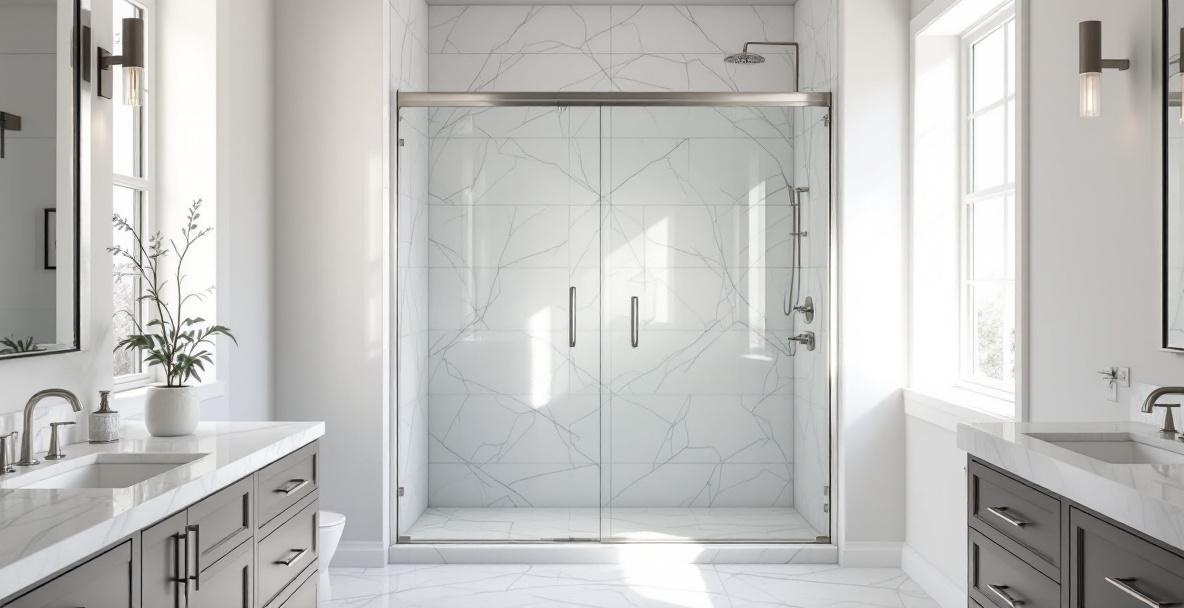
$600-$900 (entry frameless): A single hinged door in 3/8-inch clear glass with chrome hardware. Fits standard openings up to 30 inches wide. This is the most basic frameless option -- still a major upgrade from framed, but without premium finishes.
$900-$1,400 (mid-range frameless): 3/8-inch or 1/2-inch glass with better hardware finishes (brushed nickel or matte black). May include a fixed panel alongside the door. Custom-measured to fit your specific opening.
The jump from 3/8-inch to 1/2-inch is the single largest material variable in this range, and it is not automatically the better buy — how thick your frameless shower glass should actually be depends on panel width and height, not budget. Paying for 1/2-inch on a panel that does not need it adds cost without adding rigidity you will ever notice.
$1,400-$1,900 (premium single door): 1/2-inch glass, premium hardware (brushed gold, satin brass), low-iron ultra-clear glass, and protective glass coating. Measured, fabricated, and installed by a single company.
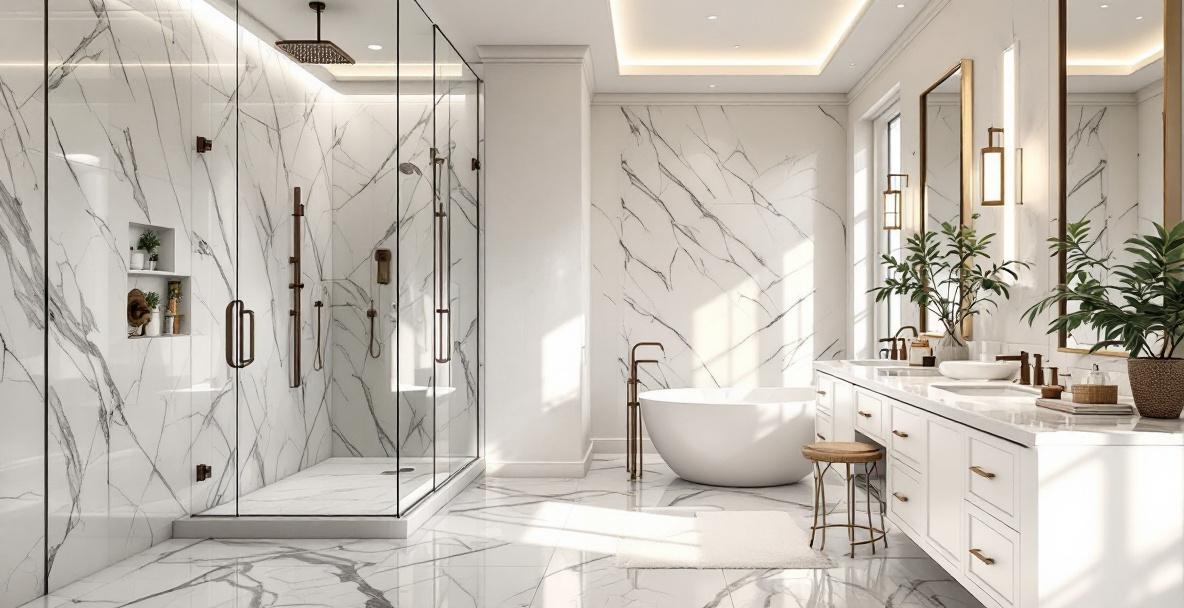
$1,400-$3,300+ (full custom enclosure): Multiple panels, corner configurations, walk-in designs, or neo-angle setups. Includes mitered corners at glass-to-glass joints, premium hardware throughout, and glass cut to your exact opening.
The price you pay within these ranges depends on where you live in Texas, which we'll break down next.
What Factors Drive Pricing?
Seven primary factors determine what you'll pay for a frameless shower door in Texas, and glass thickness and enclosure size are the two biggest. Moving from 3/8-inch to 1/2-inch glass alone adds 20-30% to material costs. Adding a second panel or going custom can double the total.
Glass thickness: This is the single largest cost variable. 3/8-inch (10mm) tempered glass is the frameless standard. 1/2-inch (12mm) costs more but provides better rigidity, less flex, and a noticeably more substantial feel. For panels wider than 30 inches, 1/2-inch is strongly recommended.
Enclosure size and configuration: A single door opening costs far less than a two-panel inline setup, an L-shaped corner, a neo-angle, or a walk-in panel arrangement. Each additional piece of glass adds material, hardware, fabrication time, and installation complexity.
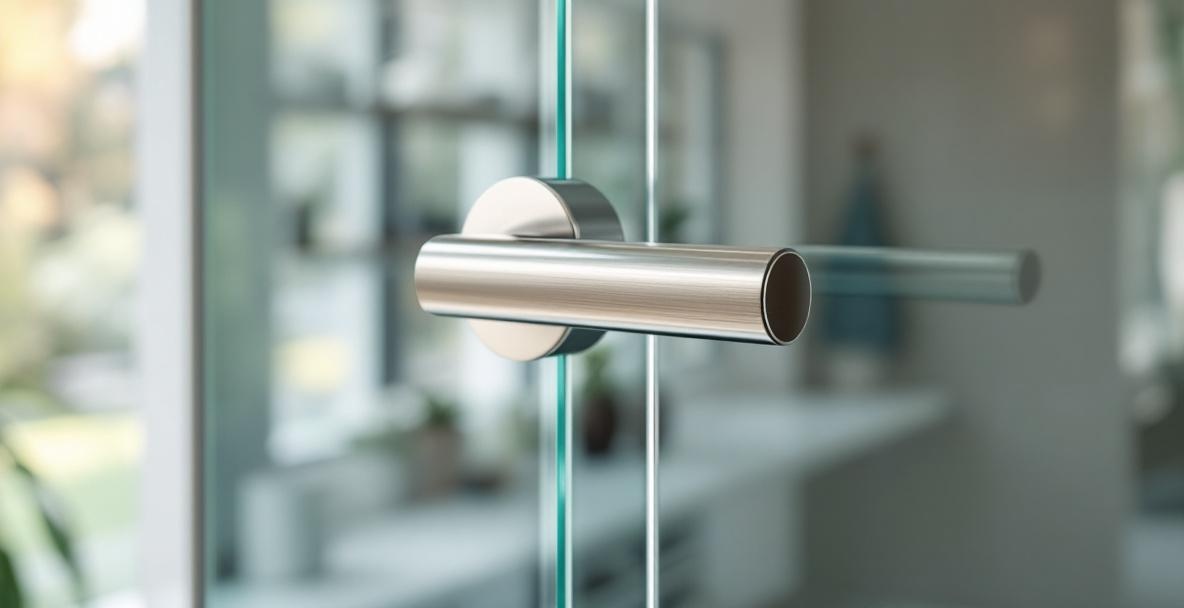
Hardware quality: The clamps, hinges, handles, and mounting hardware are what hold the glass in place for decades. Solid brass hardware with quality finishes costs more than zinc alloy with chrome plating -- but zinc corrodes in humid bathroom environments within a few years.
Glass type: Standard clear glass has a green tint at the edges. Low-iron (Starphire) removes that tint for true clarity and costs 15-20% more. Frosted, rain pattern, and other decorative options each have their own premium.
Edge finishing: Polished edges are standard. Mitered edges at corner joints add precision and visual quality but require specialized equipment.
Labor market: Texas labor rates vary by metro area. Houston and DFW run 10-15% higher than San Antonio, Austin, or smaller markets.
Custom vs. stock: Stock doors in predetermined sizes cost less but may not fit perfectly. Custom fabrication costs more but delivers an exact fit with no gaps or compromises.
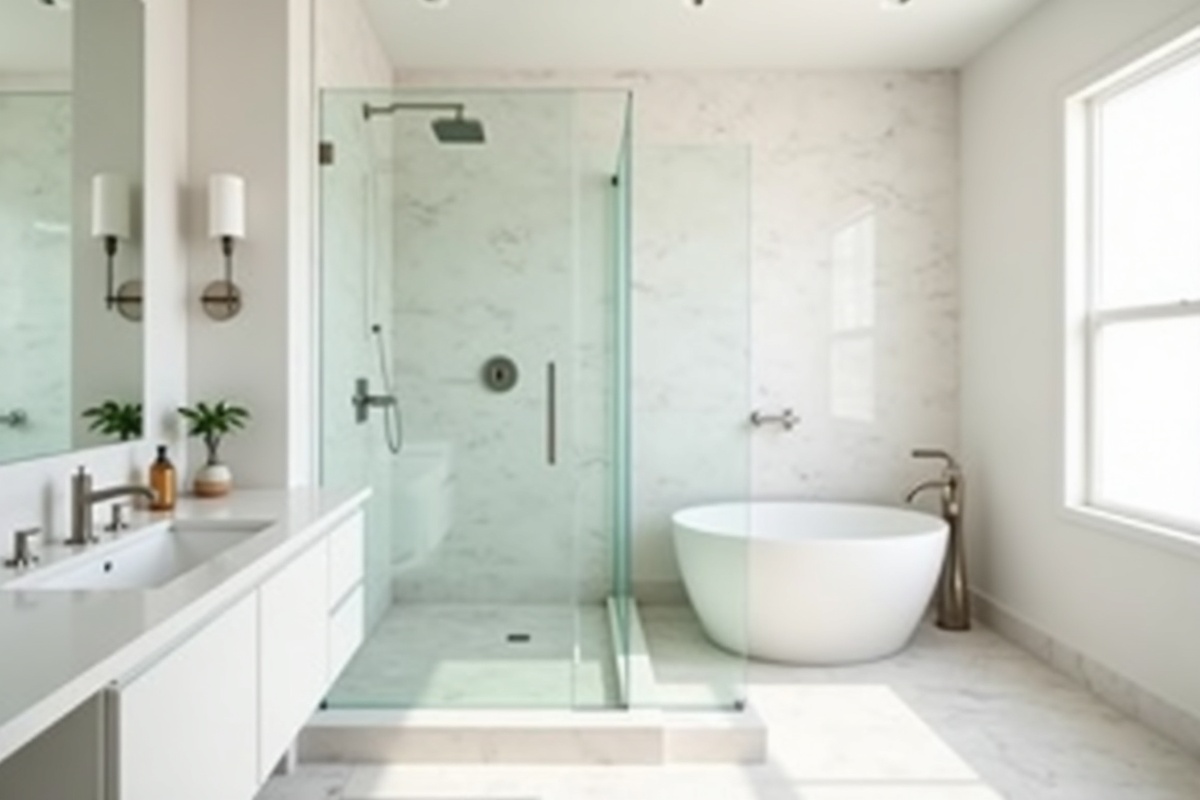
Cost by City: Dallas vs. Fort Worth vs. Houston
Frameless shower door costs vary across Texas metro areas, with Houston running the highest at $820 to $4,800 per CountBricks (2025) and Dallas averaging $637 to $805 per Homeyou (2025). Fort Worth and mid-size DFW cities generally fall 5-10% below Dallas proper.
| Dallas |
| Fort Worth |
| Houston |
| San Antonio |
| Austin |
Why does Houston run so much higher? Larger homes with bigger bathrooms, a more saturated luxury market, and higher operating costs for glass companies. The premium end includes imported hardware, specialty glass treatments, and complex multi-panel configurations.
Dallas-Fort Worth sits in the middle of the Texas range. DFW's construction boom has kept demand high for bathroom contractors, which pushes labor rates slightly above the state average. But material costs are competitive because several glass fabricators operate in the metro.
Fort Worth and surrounding cities like Corinth, Denton, and Lewisville typically run 5-10% below Dallas proper. Lower commercial rents and shorter drive times reduce overhead for glass companies operating in these areas. Upscale Denton County suburbs like Flower Mound — and the North-Dallas suburbs of Plano, Frisco, and McKinney — track closer to Dallas proper, with Flower Mound's luxury communities pricing toward the upper end of the range.
Frameless vs. Semi-Frameless vs. Framed Cost Comparison
The cost gap between door types is significant but the per-year cost tells a more useful story. A $1,500 frameless door lasting 25 years costs $60 per year. A $700 framed door lasting 17 years costs $41 per year. For a $19 annual difference, you get a dramatically better product.
| Single Door (Installed) |
| Full Enclosure |
| Glass Thickness |
| Average Lifespan |
| Maintenance Level |
| Resale Impact |
According to Accio (2025), 78% of homeowners now choose frameless over framed during bathroom renovations. What that converts to at resale is covered in do glass shower doors add home value. That preference is reflected in resale value -- homes with frameless glass bathrooms sell faster in the DFW market.
The maintenance difference matters for total cost of ownership too. Framed doors have aluminum channels that trap water, soap scum, and mold. Cleaning those tracks takes time and effort weekly. Frameless doors have no channels -- you wipe the glass and you're done.
Semi-frameless sits in the middle on every measure. It's a practical choice when frameless is slightly out of budget but you want a cleaner look than full-framed.
What Additional Costs to Expect
Beyond the door itself, expect $100 to $500 in additional costs for removal of the old door, glass coatings, upgraded hardware, and minor wall repairs. These extras aren't hidden -- they just aren't always included in the initial quote. Always ask for itemized pricing that covers the full scope.
Common add-ons and their typical Texas pricing:
- Old door removal and disposal: $50-$150. Some companies include this in labor; others charge separately.
- Protective glass coating: $75-$200. Coatings like EnduroShield or Diamon-Fusion repel water and reduce cleaning frequency. Worth it in Texas hard water areas.
- Towel bar or robe hook: $50-$150. Mounted through the glass, so the holes must be drilled before tempering.
- Wall repair: $50-$200. If the old door left damaged tile or drywall, patching may be needed before the new door goes up.
- Upgraded handles/pulls: $50-$200. Basic pulls are often included; premium designs cost extra.
One cost that never appears on a quote is time. A custom frameless door is a 2–4 week job from first measurement to a usable shower, and that window is largely fixed — the glass has to be ordered to your dimensions and tempered before anything can be installed. If your bathroom is mid-renovation, how long shower door installation actually takes is worth reading before you schedule the tile work, because the enclosure is usually the item that sets the finish date.
- Glass notches or cutouts: $25-$75 each. For bench seats, half-walls, or angled ceiling lines.
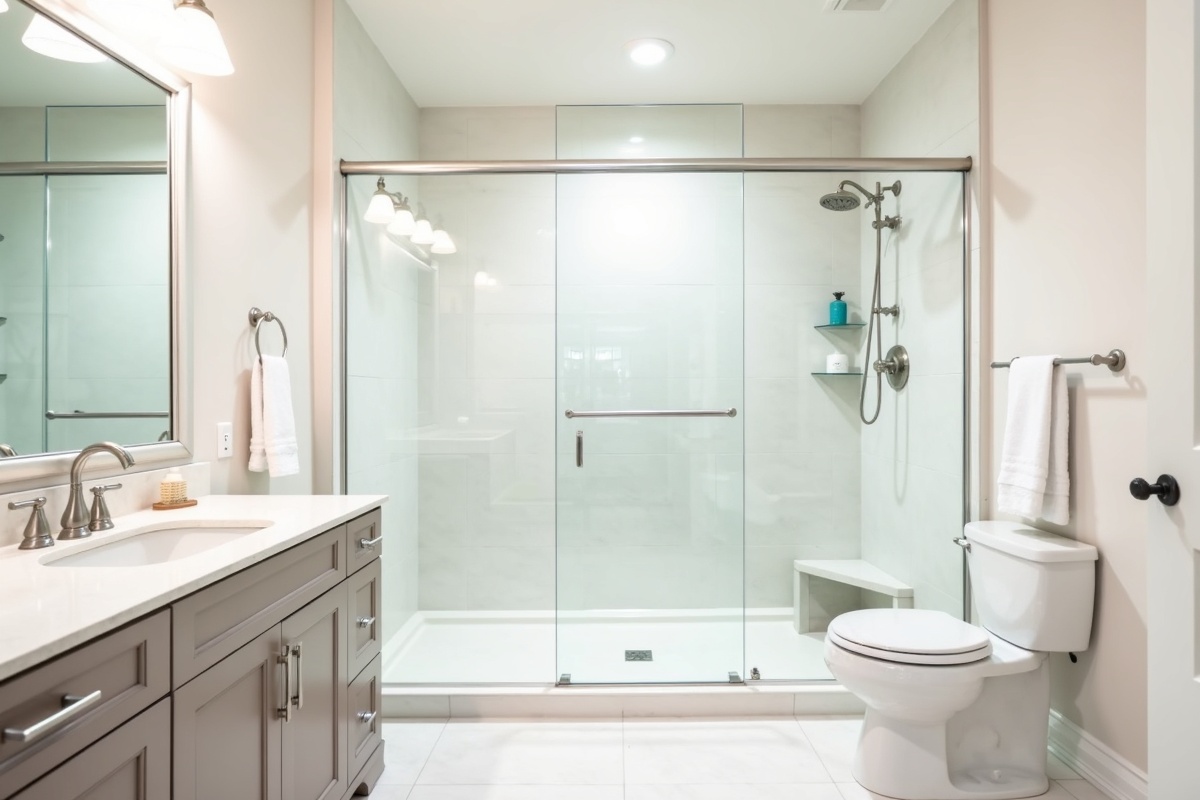
Is a Frameless Door Worth the Investment?
From a pure ROI perspective, yes. Mid-range bathroom remodels in Texas return an average of 73.7% of their cost at resale according to JLC's 2025 Cost vs. Value Report. A frameless shower door is one of the most visible upgrades in any bathroom and one of the most cost-effective on a per-year basis.
The value argument works on several levels:
Resale value: Buyers notice bathrooms immediately. A frameless enclosure signals "recently updated" -- even if nothing else in the bathroom changed. HomeLight's Q3 2025 survey found that 18% of agents identify modernized bathrooms as the second most sought-after feature among buyers.
Daily experience: You use your shower every day. The difference between wrestling with a corroded framed door and smoothly opening a frameless panel is real. The cleaning difference is even more significant -- no more scrubbing mold from aluminum tracks.
Longevity: Frameless doors last 20-30 years. Framed doors typically need replacement after 15-20 years. Over a 30-year period, you'd buy one frameless door or two framed doors -- making the total cost similar.
Maintenance costs: Frameless doors have fewer parts that wear out. No rollers, no tracks, no frame gaskets. The main maintenance items are door sweeps (replaceable) and silicone seals (re-applied every few years). Total maintenance cost over 20 years is minimal.
The only scenario where frameless doesn't make financial sense: if you're selling the house within a year and the existing door is functional. In that case, the cost won't fully recoup at resale.
How to Save Money Without Sacrificing Quality
Smart choices can reduce your frameless door cost by 15-25% without downgrading the product. The key is knowing which features affect quality and which are purely cosmetic preferences that you can adjust.
Choose 3/8-inch over 1/2-inch glass (when appropriate). If your door is under 30 inches wide and under 80 inches tall, 3/8-inch glass performs perfectly well. You'll save 20-30% on materials without any structural compromise.
Pick chrome or brushed nickel hardware. Matte black and brushed gold look great, but they cost 20-30% more than chrome. If budget is tight, chrome is a classic finish that never looks dated.
Skip low-iron glass unless your panels are thick. The green tint in standard glass is barely noticeable on 3/8-inch panels. On 1/2-inch panels with visible edges, it's more apparent -- that's when low-iron is worth the upgrade.
Choose a single door over a door-plus-panel configuration. If your opening can be covered by one door panel (up to about 36 inches wide), you don't need a fixed panel alongside it. Each additional piece of glass adds $300-$600.
Get multiple quotes but compare apples to apples. The cheapest quote isn't always the best value. Compare glass thickness, hardware brand, warranty terms, and whether the panels are cut to your measurements or pulled from stock sizes.
Don't skip the glass coating. This sounds counterintuitive for a savings section, but $100-$200 for a protective coating saves you hundreds of hours of cleaning over the door's 20+ year lifespan. It's one of the best ROI upgrades available.
Ready to get accurate pricing for your Texas bathroom? Infinity Glass & Glazing serves Corinth, Dallas, Fort Worth, Denton, Frisco, McKinney, Lewisville, Flower Mound, Southlake, Keller, and the entire DFW metroplex. Get a free in-home estimate or call (940) 279-1197.
Planning a bathroom remodel? We put together a free DFW Frameless Shower Door Guide — 2026 pricing benchmarks, glass types, hardware finishes, and the 5 questions to ask before you buy. Get it free →
Why are frameless shower doors more expensive than framed?
Frameless doors use thicker tempered glass (3/8 to 1/2 inch vs. 1/4 inch for framed), higher-quality hardware (solid brass vs. aluminum/zinc), and require more precise fabrication and installation. The glass must be custom-measured and tempered to exact specifications since there's no frame to hide imperfections.
Do frameless shower doors increase home value in Texas?
Yes. Mid-range bathroom remodels in Texas return 73.7% of their cost at resale according to JLC's 2025 Cost vs. Value Report. Frameless shower doors are one of the most visible bathroom upgrades and signal a modernized space to buyers. HomeLight reports that 18% of agents rank updated bathrooms as the second most sought-after feature.
What is the cheapest way to get a frameless shower door in Texas?
Choose 3/8-inch glass instead of 1/2-inch (saves 20-30%), select chrome hardware instead of matte black or gold (saves 20-30%), opt for a single door without an additional fixed panel, and get quotes from companies that measure in your home rather than quoting from photos. Entry-level frameless doors start around $600 installed in most Texas markets.
How much does glass thickness affect frameless shower door cost?
Glass thickness is the single biggest cost variable. Moving from 3/8-inch to 1/2-inch glass adds 20-30% to the material cost. On a $1,200 door, that's $240 to $360 more. The thicker glass is heavier, requires more robust hardware, and takes more skill to handle and install -- all of which contribute to the price increase.
Related reading: frameless shower door cost guide and our frameless shower doors in DFW.
Related reading:
- custom glass in Lewisville
- shower door installation cost
- shower door replacement cost in DFW