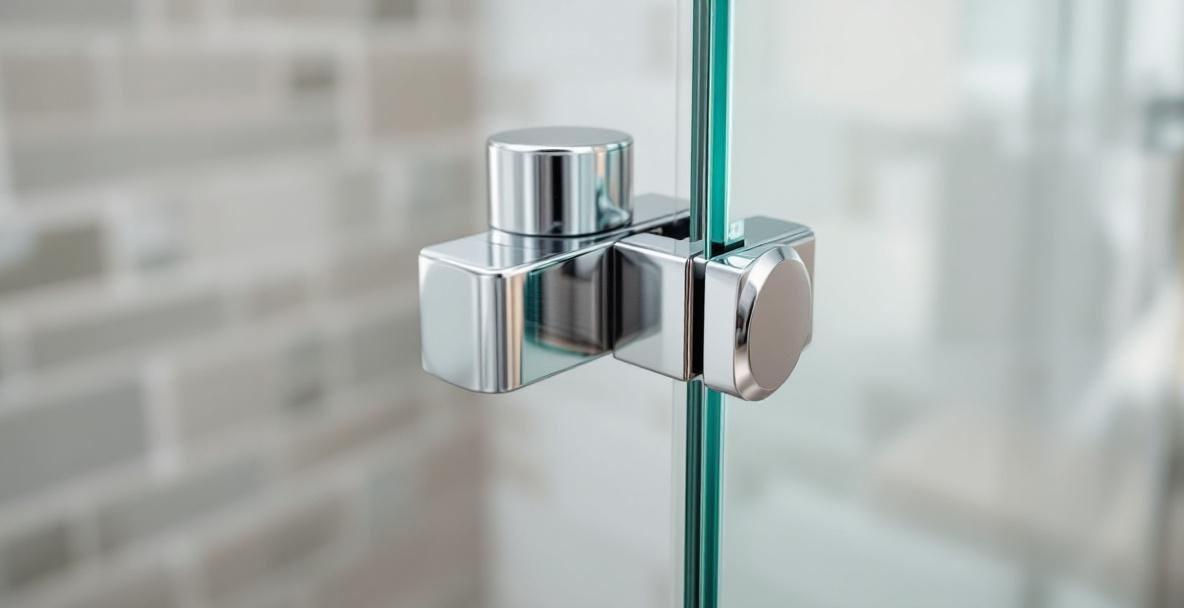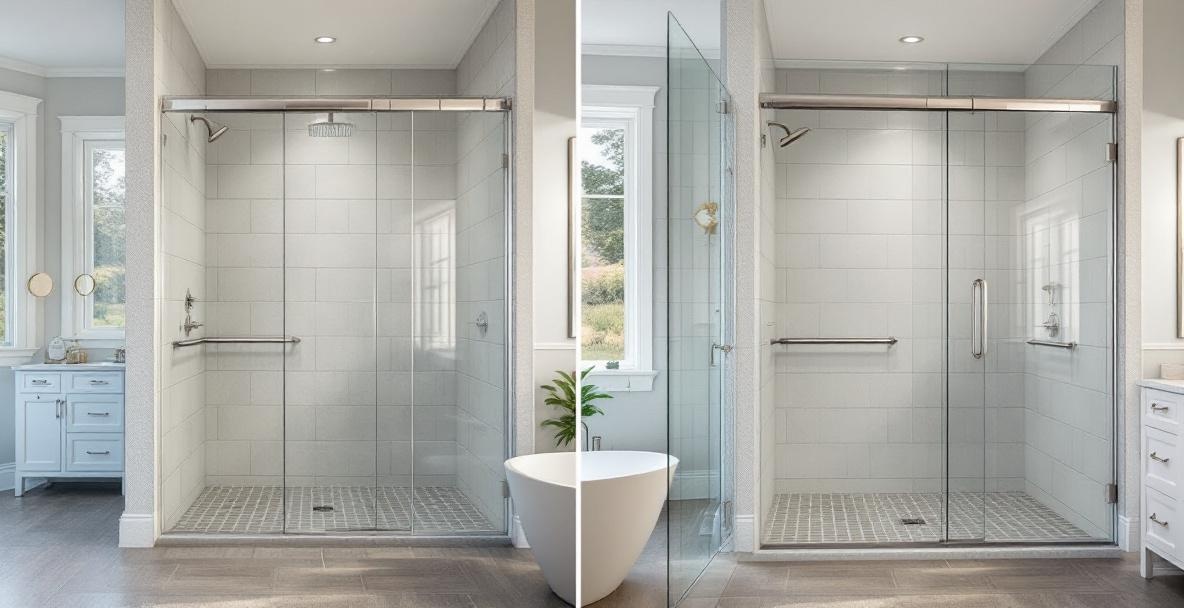
Shower door hardware should be inspected annually and replaced when corrosion, looseness, or misalignment appears — not after it fails. Hardware failure on a frameless shower door is a safety issue: the CPSC reports approximately 500 ER visits per year from shattering glass doors, and hardware failure is a leading contributing factor. Know the warning signs before a problem becomes dangerous.
Shower door hardware is not a set-and-forget component. Hinges, clips, handles, and pivot assemblies operate in a corrosive environment — constant humidity, hard water minerals, soap residue, and chemical cleaning products — that degrades every metal finish over time. In DFW, where water hardness ranges from 7 to 17 grains per gallon (Water Fixers of DFW), hardware degradation accelerates compared to softer-water regions.
Recognizing the warning signs early gives you time to replace hardware before it compromises glass alignment, causes leaks, or creates a safety hazard.
7 Warning Signs Your Hardware Needs Replacing
Hardware replacement is needed when you observe visible corrosion, door misalignment, persistent squeaking, loose fasteners, finish deterioration, water infiltration, or glass edge chipping at hardware contact points. Any single sign warrants inspection; multiple signs warrant immediate replacement.
Sign 1: Visible corrosion or pitting on the hardware surface
White mineral crust, orange rust spots, or dark pitting on hinges, handles, or clips is the clearest sign that hardware integrity has been compromised. Surface mineral deposits can be cleaned; actual pitting and corrosion of the metal beneath the finish cannot be reversed. Once you see metal corrosion (not just surface buildup), replacement is the only solution.
Sign 2: The door no longer hangs level
A properly installed frameless shower door hangs perfectly plumb with even gaps at the top and sides. If you notice the door sitting at an angle, one side lower than the other, or the gap varying along the frame edge, the hinge alignment has shifted. This is often caused by hardware loosening, hinge barrel wear, or corroded mounting points that no longer hold precise position.
Sign 3: Squeaking, grinding, or resistance when opening and closing
A properly functioning frameless door swings smoothly and silently. Squeaking indicates metal-on-metal contact at hinge pivot points — usually from mineral deposits interfering with hinge barrel movement. Grinding suggests the same issue at a more advanced stage. Lubrication may resolve minor squeaking; persistent noise after lubrication means the hardware needs replacement.
Sign 4: Loose fasteners that won't stay tight
If you find yourself re-tightening the same screws repeatedly, the hardware mounting point has been compromised. This happens when mineral deposits infiltrate the threads, when the wall anchor has degraded, or when repeated stress has stripped the attachment point. Hardware that won't stay tight is unsafe — it transfers stress directly to the glass.
Sign 5: Finish peeling, flaking, or discoloring beyond surface cleaning
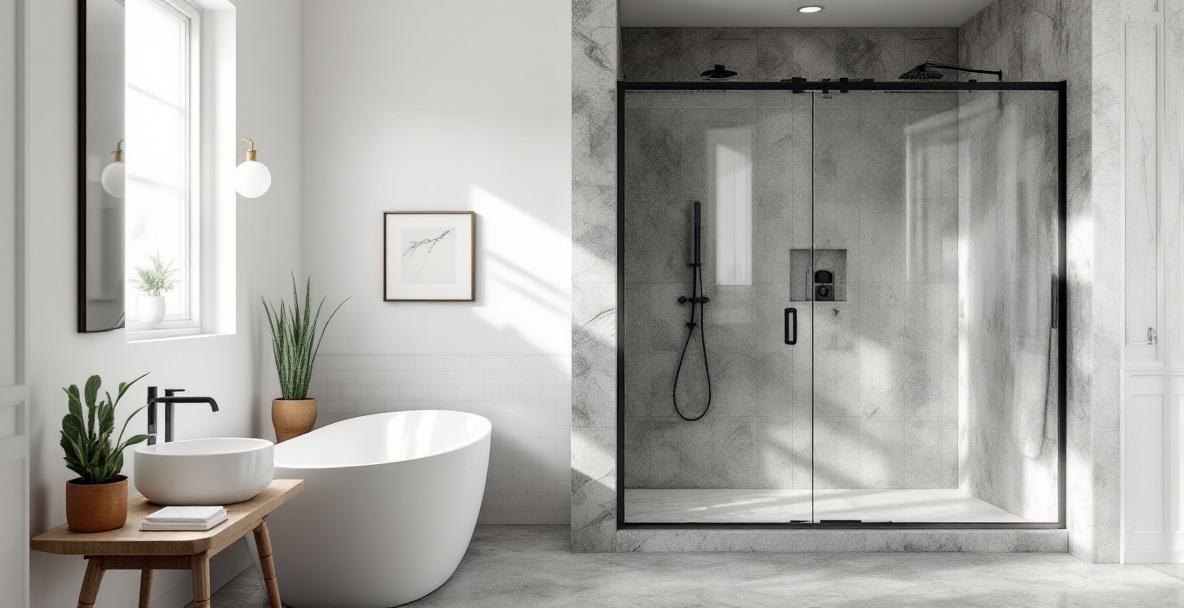
All hardware finishes — chrome, brushed nickel, matte black, oil-rubbed bronze — have a protective layer over the base metal. When that protective layer fails, you'll see peeling, bubbling, or color change that can't be cleaned away. Exposed base metal then corrodes rapidly in the shower environment.
Sign 6: Water leaking past seals at hardware mounting points
Frameless shower door hardware is mounted through holes drilled in the glass or through silicone-sealed wall mounts. When hardware shifts or corrodes, the seal at these mounting points can fail, allowing water to migrate behind walls. If you notice water at the base of walls near hardware mounting points, inspect the seals and hardware immediately.
Sign 7: Glass chipping or stress marks near hardware contact
Inspect the glass edge where hardware clips and hinges make contact. Small chips, cracks radiating from contact points, or visible stress in the glass indicate that misaligned or damaged hardware is applying uneven force to the glass. This is a serious safety warning — glass under uneven stress is at elevated risk of spontaneous fracture.
~500
ER visits per year in the U.S. from shattering glass shower doors — hardware failure is a leading contributing factor ([CPSC](https://www.cpsc.gov/))
How Long Does Shower Door Hardware Last?
Quality brass or stainless steel shower door hardware lasts 15–25 years in normal residential use with proper maintenance. Zinc alloy hardware in hard water environments like DFW can begin showing significant corrosion within 5–8 years. Annual inspection is the recommended standard for all frameless shower installations.
Hardware lifespan depends heavily on material quality, finish type, and water conditions:
| Solid brass |
| 316 stainless steel |
| 304 stainless steel |
| Zinc alloy (zamak) |
| Aluminum |
The annual inspection recommended by glass industry professionals (Delray Glass) applies regardless of hardware quality. Even high-quality hardware can fail prematurely from improper cleaning products, installation errors, or extreme hard water exposure without maintenance.
What Causes Hardware to Fail Early?
Several factors accelerate hardware degradation ahead of its expected lifespan:
Using incompatible cleaning products. Acidic cleaners (vinegar, lemon-based products) attack brass, gold, and bronze finishes. Ammonia-based glass cleaners degrade nickel and chrome protective coatings. Bleach causes rapid pitting on most hardware finishes.
Mineral deposit infiltration. Hard water minerals bridge the gap between moving hinge parts, increasing friction and accelerating wear. In DFW, unaddressed mineral buildup at pivot points is the primary cause of premature hinge failure.
Installation errors. Hardware installed without proper torque specifications places chronic stress on mounting points. Over-tightened glass clips can cause stress fractures; under-tightened hardware loosens prematurely.
Mismatched hardware and glass thickness. Frameless shower hardware is designed for specific glass thicknesses (3/8" or 1/2"). Installing hardware specified for one thickness on the other creates alignment problems and uneven stress distribution.
Can You Replace Hardware Without Replacing the Glass?
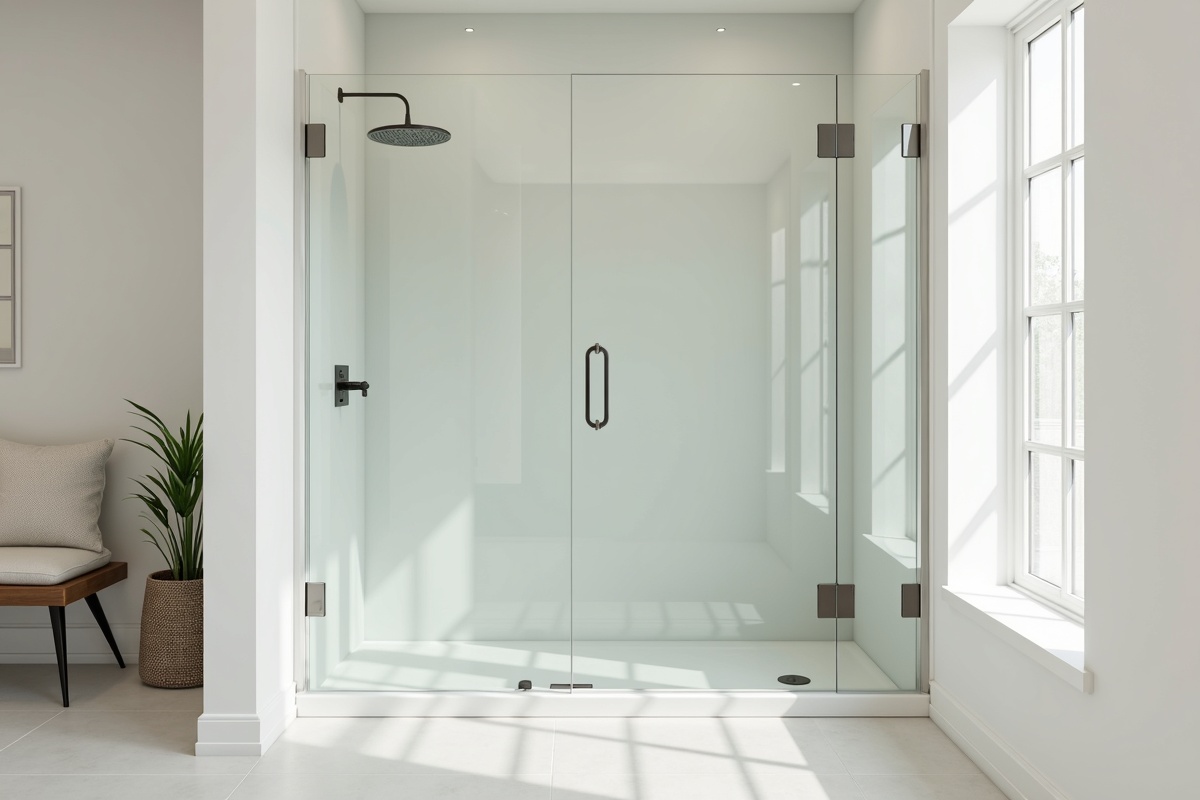
In most cases, yes — shower door hardware can be replaced independently without disturbing the glass panels. Hardware is mounted through pre-drilled holes in the glass using clamps, clips, and set screws. As long as the glass is undamaged and structurally sound, new hardware can be fitted to the existing panels.
This is good news for homeowners with aging hardware but intact glass. A full hardware replacement — hinges, handle, clips, wall mount — typically costs $400–$900 in parts and labor for a standard frameless swing door, compared to $1,500–$5,500+ for a full new enclosure.
Exceptions where glass must also be replaced:
- Glass has chips or cracks at hardware mounting points (compromised structural integrity)
- Previous hardware used a non-standard hole spacing that new hardware can't accommodate
- The glass thickness is incompatible with available modern hardware
- Glass has been significantly etched or damaged and is aesthetically beyond restoration
How to Choose Replacement Hardware
When selecting replacement hardware, match these specifications to your existing installation:
- Glass thickness compatibility: Confirm your glass is 3/8" or 1/2" and select hardware rated for that thickness
- Hinge type: Wall-to-glass or glass-to-glass (for frameless inline panels) — these are not interchangeable
- Finish: Match the existing finish or do a full hardware set replacement for visual consistency
- Brand/line: Some manufacturers use proprietary hole patterns — bring measurements or photos when sourcing replacement hardware
- Material grade: Upgrade to solid brass or 316 stainless if your original hardware was zinc alloy
When replacing hardware on a 10+ year old frameless door, it's worth having a glass professional inspect the glass panels for micro-stress before reinstalling hardware. Existing stress fractures that aren't yet visible to the naked eye can propagate when hardware is reinstalled with new clamping pressure.
How DFW Humidity and Hard Water Accelerate Corrosion
The DFW metro presents a uniquely challenging environment for shower door hardware. High summer humidity (average 60–75% in peak months), combined with water hardness of 7–17 GPG, creates conditions where mineral deposits form rapidly and metal degradation is accelerated compared to drier or softer-water climates.
Specific DFW factors that affect hardware longevity:
- Calcium and magnesium carbonate deposits form on all metal surfaces with each water exposure cycle. At DFW hardness levels, visible scale appears within 1–2 weeks on unprotected hardware.
- Thermal cycling — hot shower steam followed by air conditioning cooling — causes repeated expansion and contraction in hardware materials, stressing mounting points and seals over time.
- Summer humidity prevents complete drying between showers in many DFW bathrooms without adequate ventilation, extending the duration of water contact on hardware surfaces.
DFW homeowner recommendations: Inspect hardware every 6 months rather than annually. Apply a car wax or dedicated metal protectant to chrome and stainless hardware twice yearly to create a barrier against mineral bonding. Run the bathroom exhaust fan for 20+ minutes after every shower.
DIY vs. Professional Hardware Replacement
When DIY is appropriate:
- Replacing a handle or towel bar (surface-mounted, no glass drilling required)
- Tightening loose set screws or hex bolts
- Replacing a bottom sweep or side seal
- Lubricating hinge pivot points
When professional replacement is needed:
- Full hinge replacement (requires proper torque and alignment tools)
- Any work involving removing hardware from glass panels (risk of cracking if not done correctly)
- Wall anchor replacement where original anchors have failed
- Any situation where glass damage is suspected
Never attempt to remove or install hardware clamps on frameless shower glass without experience. Uneven clamping pressure or overtightening can cause the glass to crack or shatter immediately or create stress fractures that fail days later. The cost of professional hardware replacement is far less than replacing a broken glass panel.
How often should shower door hinges be replaced?
Quality brass or stainless steel shower door hinges typically last 15–25 years with proper maintenance. Annual inspection is recommended to catch early signs of wear or corrosion. In DFW's hard water environment, inspect every 6 months. Replace immediately if you observe visible pitting, persistent squeaking after lubrication, or door misalignment that adjustment can't correct.
Can corroded shower door hardware be repaired rather than replaced?
Surface mineral deposits can be cleaned. Actual corrosion — pitting, flaking finish, rusting base metal — cannot be repaired. Attempting to paint or refinish corroded hardware in a shower environment produces results that fail within months. When the hardware itself is compromised (not just surface buildup), replacement is the only reliable solution.
Which hardware finish lasts longest in a humid bathroom?
Chrome and 316 stainless steel finishes last longest in humid bathroom environments. Chrome's electroplated surface resists corrosion well when maintained with compatible cleaners. 316 stainless (marine grade) outperforms 304 stainless in moisture-heavy conditions. Matte black and oil-rubbed bronze finishes are beautiful but require more careful maintenance — they're most vulnerable to acidic cleaners and hard water mineral etching.
How much does shower door hardware replacement cost?
Hardware replacement for a standard frameless swing door (hinges, handle, clips) runs $400–$900 installed in DFW, depending on finish grade and configuration. Premium solid brass or designer hardware sets cost more. A full hardware replacement is significantly less expensive than a complete enclosure replacement ($1,500–$5,500+), making it a worthwhile investment when the glass panels are in good condition.
Is it worth upgrading hardware on an existing frameless door?
Yes, if the glass is in good condition. Upgrading from zinc alloy to solid brass or stainless hardware adds years of service life, improves function, and updates the enclosure's appearance without the cost of full replacement. Many DFW homeowners upgrade hardware finish when renovating the rest of the bathroom — it's far less expensive than a new enclosure and produces a dramatic visual change.
Also see our frameless shower door hardware options guide and our chrome vs. brushed nickel shower hardware comparison.
Infinity Glass & Glazing provides hardware inspection, replacement, and full frameless shower enclosure installation throughout DFW from our Corinth, TX location. Contact us for a free estimate on your shower hardware replacement or new enclosure project.
Related reading: