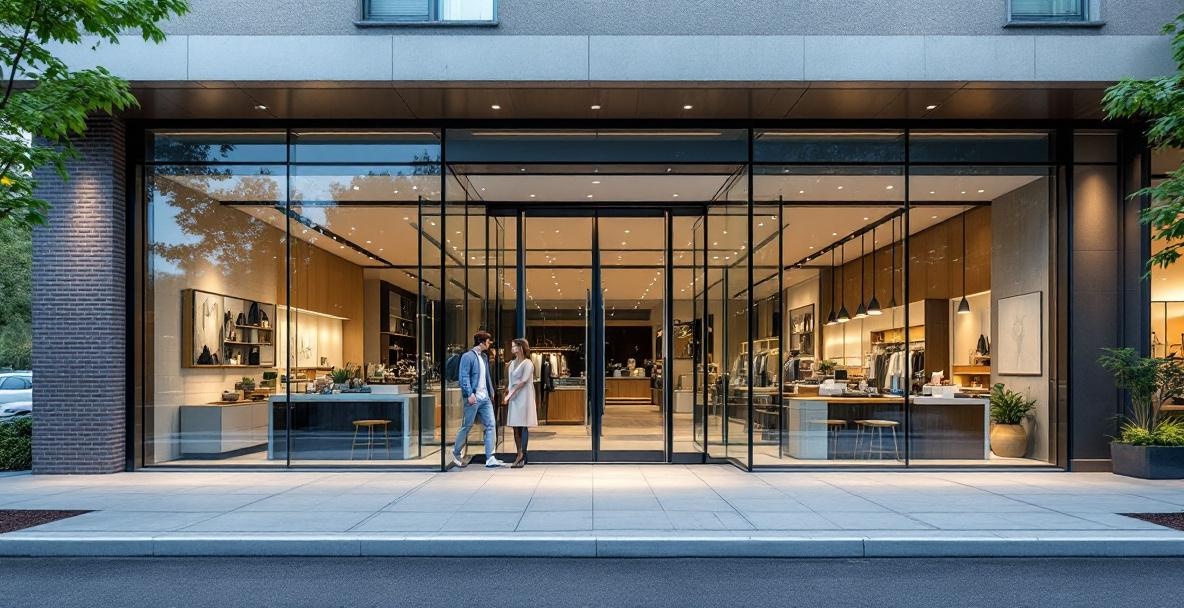
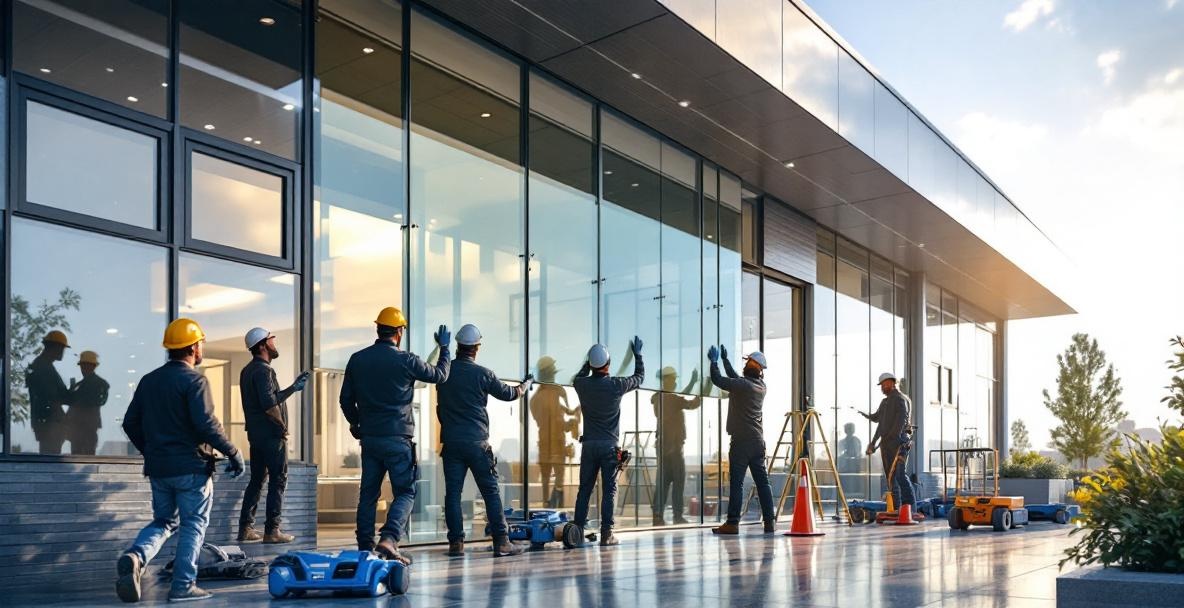
A qualified commercial glazing contractor in Texas should have state contractor licensing, general liability insurance of at least $1M per occurrence, workers' compensation coverage, Texas Energy Code knowledge, commercial permit experience, and a verifiable portfolio of completed commercial work comparable to your project type. These aren't optional preferences — they're the baseline qualifications that separate legitimate commercial glazing contractors from unqualified bidders.
Commercial glass projects fail in predictable ways: work that doesn't meet Texas Energy Code (requiring costly remediation), installations that can't pass inspections (causing schedule delays), or contractors who disappear mid-project (leaving partial work that costs more to fix than if someone qualified had done it from the start). Selecting the right glazing contractor upfront prevents all of these.
This guide covers exactly how to evaluate commercial glazing contractors for DFW projects — what qualifications to require, what questions to ask, and how to read a bid to separate qualified contractors from low-quality options. For a look at the scope a full-service team handles, see our commercial glazing services for DFW businesses. If the project is a tower, ask every bidder what height their insurance actually covers — ours is eight stories, and we state it on our high-rise glazing in Dallas page rather than at prequal.
One caveat on sequence: everything below assumes a planned project with time to solicit and compare bids. Emergency work inverts the order — a broken storefront is triaged on response time and same-day securing first, and the qualification checklist applies to the permanent replacement that follows a week or two later. If that is the situation, start with commercial storefront glass repair.
What Licensing Do Commercial Glazing Contractors Need in Texas?
Texas does not have a single statewide glazing contractor license — licensing requirements vary by municipality and project type. Most DFW cities require a commercial contractor's license or registration for work requiring a building permit (US Census Construction). General contractors on commercial projects are often required to hire subcontractors with valid city registrations.
Texas commercial glazing licensing landscape:
City/county contractor registration: Dallas, Fort Worth, Frisco, McKinney, Denton, and most other DFW municipalities require commercial contractors to register with the city's building department. Registration typically requires proof of insurance, a bond, and in some cities a qualifying exam. An unregistered contractor cannot pull building permits — meaning their work can't be inspected or legally completed.
General contractor vs. specialty contractor: On commercial construction projects with a general contractor (GC), the GC typically pulls the overall permit and subcontracts specialty work. The glazing contractor works as a sub to the GC. On tenant buildouts or direct commercial glass projects, the glazing contractor may pull their own permit as the prime contractor.
Texas contractor's license: Texas does not have a statewide general contractor's license — contractors are licensed at the city level. Verify the glazing contractor's registration is current with the specific municipality where your project is located.
How to verify: Ask the contractor for their city registration number and look it up on the municipality's contractor registration portal. This takes 5 minutes and immediately identifies unregistered or lapsed contractors.
$1M
minimum general liability insurance per occurrence for most commercial glazing projects in Texas — verify with a certificate of insurance, not just a claim
What Insurance Should a Commercial Glazing Contractor Carry?
A commercial glazing contractor working in Texas should carry general liability insurance of minimum $1M per occurrence and $2M aggregate, workers' compensation insurance covering all employees and installers, and auto liability on company vehicles. Request a certificate of insurance (COI) naming your project as an additional insured.
Insurance requirements explained:
General liability insurance: Covers property damage and bodily injury caused by the contractor's work. Minimum $1M per occurrence is standard for commercial projects. Higher-value projects or general contractors typically require $2M per occurrence. Request the certificate of insurance — don't accept verbal confirmation.
Workers' compensation: Covers injuries to the contractor's employees and installers. Without workers' comp, an injured installer could potentially sue the building owner for their injuries. Texas has a "non-subscriber" option that allows employers to opt out of workers' comp — verify that your glazing contractor has workers' comp, not just that they're in compliance with Texas law (which may allow no coverage) (NAHB 2025).
Additional insured endorsement: Request that your company or project be named as an "additional insured" on the contractor's general liability policy. This ensures you're covered if the contractor's work causes a claim and the contractor's policy is the primary coverage.
How to verify: Ask for a certificate of insurance from the contractor's insurance carrier (not just a document the contractor provides). Call the carrier to verify the policy is current and the coverage limits are accurate. The contractor's insurance broker can provide COI directly to your project.
How Do You Evaluate Commercial Glazing Bids in Texas?
A complete commercial glazing bid should include itemized glass quantities and specifications, aluminum system make and model, hardware specifications, permit and engineering costs, a project schedule, and payment terms. Low bids missing these items are usually missing the cost — not delivering the value.
Bid evaluation framework:
Glass specifications: The bid should name the specific glass product — manufacturer, unit type (single, insulated, laminated), thickness, coating. Not "1/4-inch low-E glass" but "Guardian ClimaGuard Premium2 1-inch IGU, 3/4-inch air space, soft-coat low-E on lite 2." Specifications that match your engineer's or architect's requirements ensure you're comparing equivalent products across multiple bids.
Aluminum system specification: Not "aluminum storefront frame" but "Kawneer 451T storefront, clear anodized finish, 2x4.5-inch frame members." Different aluminum systems have different structural ratings, weather performance, and energy code compliance characteristics. Generic specifications may not meet code.
Permit and engineering costs: These should be explicitly included or excluded. If a bid doesn't mention permits, it likely doesn't include them — ask directly. A $2,000 permit cost and $1,500 engineering cost that you discover mid-project significantly changes the project budget. Checking a bid against typical commercial glass partition costs makes an unusually low or high line item easy to spot before you sign.
Installation timeline and schedule: A professional bid includes a proposed schedule with milestones: shop drawing submittal, fabrication period, installation start, and completion date. No schedule = no commitment = higher risk of delays.
Warranty: What does the contractor warrant, and for how long? At minimum: 1-year workmanship warranty on installation. Manufacturer warranties on glass (typically 10-year seal warranty on insulated glass units) and aluminum (finish warranty) are separate (GlassBuild America 2025). Confirm the contractor will pass through manufacturer warranties.
What Questions Should You Ask a Commercial Glazing Contractor?
Five questions reliably separate qualified commercial glazing contractors from unqualified ones: whether they have commercial permit experience in the specific municipality, whether they carry workers' compensation, which glass manufacturers they specify and how they handle lead times, whether they can provide references from comparable completed projects, and how they handle shop drawings and submittal review.
The five qualification questions:
1. "Do you have current contractor registration with [city/municipality]?" Unregistered contractors can't pull permits. If the answer is no, move on.
2. "Can you provide a certificate of insurance showing $1M general liability and workers' comp?" Any qualified commercial contractor has this instantly available. Hesitation or stalling is a red flag.
3. "Which glass manufacturers do you specify, and what are your current lead times on a change order?" A contractor who can name their manufacturers and quote real lead times has established supply relationships and knows what a change order actually costs in schedule. Vague answers here usually mean whoever is cheapest that week, which is where delays and mismatched glass come from.
4. "Can you provide three references from commercial projects of similar scope completed in the last 18 months?" Recent references in similar project types (office, retail, medical, restaurant) verify the contractor is active and successful in your project category.
5. "How do you handle shop drawing production and architect/engineer submittal?" Commercial projects require shop drawings — detailed fabrication drawings submitted for design team review and approval before fabrication begins. A contractor who doesn't know what shop drawings are hasn't done commercial work.

Infinity Glass & Glazing is a licensed commercial glazing contractor serving DFW — storefront systems, office glass, railings, commercial mirrors, and specialty glazing. Based in Corinth, with established manufacturer relationships and commercial permit experience across DFW municipalities. Request a commercial estimate or call (940) 279-1197.
GC or facilities manager? We put together a free DFW Commercial Glazing Procurement Guide — 2026 pricing benchmarks, material lead times, prequal checklist, and the 7 questions to ask before awarding a glass scope. Get it free →
What licensing do commercial glazing contractors need in Texas?
Texas doesn't have a single statewide glazing contractor license. Commercial glazing contractors must be registered with the specific city or municipality where they work — registration requires proof of insurance, bonding, and in some cities a qualifying exam. Verify the contractor's registration number with the city's building department before awarding a commercial glazing project.
What insurance should a commercial glazing contractor carry?
Minimum insurance requirements: general liability at $1M per occurrence ($2M aggregate for larger projects), workers' compensation covering all employees and installers, and auto liability on company vehicles. Request a certificate of insurance naming your project as an additional insured. Verify directly with the insurance carrier that the policy is current.
How do I compare commercial glazing bids?
Compare bids on equal specifications — glass product type and coating, aluminum system make and model, included services (permit, shop drawings, engineering), and schedule commitments. Low bids are usually low because they specify lower-quality glass or aluminum, exclude permit costs, or don't include shop drawing production. Require itemized specifications in all bids to make an apples-to-apples comparison.
What are shop drawings in commercial glazing?
Shop drawings are detailed fabrication drawings produced by the glazing contractor showing exact panel dimensions, hardware positions, frame elevations, and installation details for each element of the project. They are submitted to the architect or engineer for review and approval before fabrication begins. Shop drawings ensure that what gets fabricated matches the design intent — skipping them increases the risk of costly errors.
Related reading: commercial glass installation in DFW and our office glass partitions in Dallas.
Related reading: