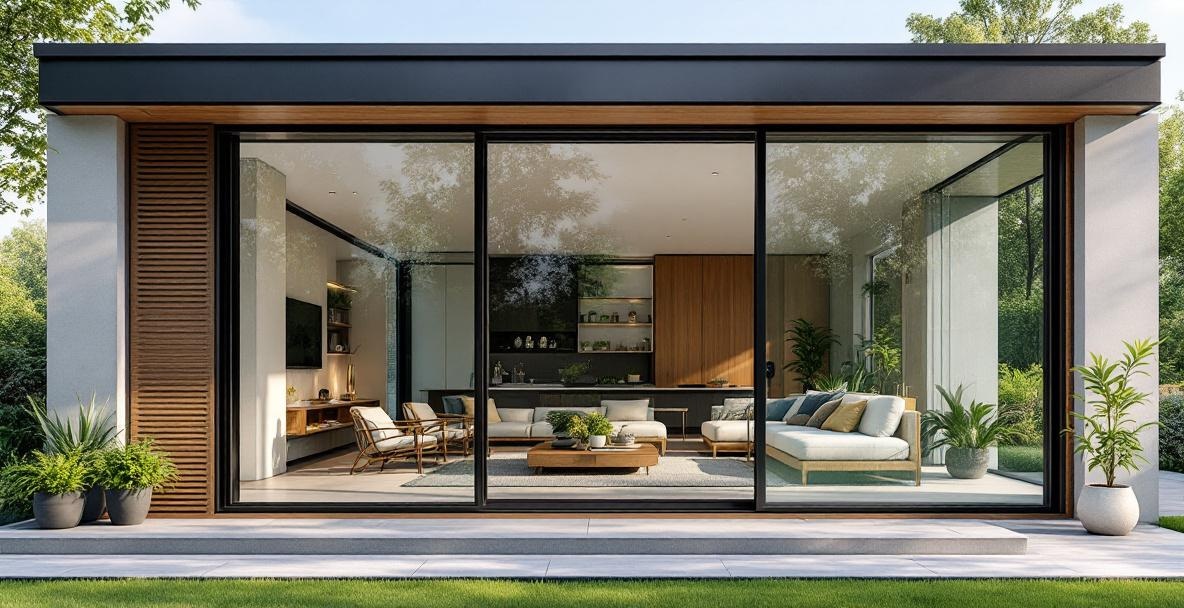
A frameless glass patio enclosure is an outdoor living space surrounded by floor-to-ceiling tempered glass panels with minimal or no visible frames between panels, creating an enclosed room with near-unobstructed views. These enclosures extend usable outdoor living to 12 months per year in DFW climate, add 50-70% ROI at home resale (JLC Cost vs Value 2025), and cost $8,000-$30,000 installed depending on size and specification.
A covered patio in Dallas works beautifully six months of the year. The other six months, extreme heat, wind-driven rain, pollen, mosquitoes, and occasional cold snaps drive everyone back indoors. A glass patio enclosure fixes this. By surrounding the covered patio with tempered glass panels — typically operable sliders, bi-folds, or fixed panels — the outdoor space becomes a protected room that stays usable year-round. Views, daylight, and the outdoor connection are preserved; insects, weather, and extremes are kept out.
Frameless and minimal-frame glass systems create the most seamless aesthetic — the glass appears to be the wall itself rather than windows in a wall. Infinity Glass specifies and installs glass patio enclosures across Dallas, Fort Worth, and surrounding DFW communities. Also see our glass wall panels residential and our glass balcony railing installation guides for related outdoor glass applications.
What Is a Frameless Glass Patio Enclosure and How Does It Work?
A frameless glass patio enclosure uses large tempered glass panels mounted in slim top-and-bottom tracks (or structural glass systems) to create an enclosed outdoor room with minimal visible framing. The panels may be fully fixed, sliding, bifolding, or stackable depending on design priorities, and can be opened during mild weather to restore open-patio functionality.
Components of a glass patio enclosure:
Structural foundation: An existing covered patio slab and roof typically serve as the structure; the glass enclosure system fills the perimeter between slab, roof, and existing walls.
Glass panels: Tempered safety glass panels, typically 3/8" to 1/2" thick, sized as large as the structural system allows. Low-E coatings and insulated glass units (IGUs) are options for enhanced thermal performance.
Track/channel system: Top and bottom tracks (often aluminum or stainless steel) hold the panels in place and allow operable panels to slide or pivot. Frameless systems minimize track visibility.
Operable panel system: Depending on design, panels may be:
- Fixed (non-opening)
- Sliding (single- or multi-panel stacking sliders)
- Bifold (panels fold accordion-style to one side)
- Pivoting (panels rotate on vertical axes)
- Retractable (panels stack into a pocket or side pocket for full opening)
Weather seals: Between panels and at top/bottom tracks, brush seals or elastomeric seals prevent air and water infiltration when closed.
Structural glass (high-end): Some premium systems use structural silicone butt-jointed glass with no framing between panels — only at top and bottom — creating nearly invisible seams.
Benefits of Glass Patio Enclosures for Dallas Outdoor Living
Glass patio enclosures convert seasonal outdoor spaces into year-round usable rooms in Dallas, adding approximately 12 months per year of comfortable outdoor living use compared to an open or screened patio (NAHB 2025). Benefits include weather protection, insect exclusion, pollen filtration, sound dampening, and significant home value increase.
Key benefits for DFW homeowners:
Year-round usability: Dallas summers (95-105°F) and unexpected winter cold snaps both drive homeowners back indoors from open patios. A glass enclosure with HVAC (or even without) extends seasonal usability dramatically. In summer, a covered enclosure with operable panels and ceiling fans stays 10-15 degrees cooler than exposed patios.
Insect exclusion: Mosquitoes, flies, bees, wasps, and other DFW insect pests are excluded entirely when panels are closed — no screens required, no insect damage to furniture or food.
Pollen and allergen filtration: North Texas pollen seasons (February-June particularly) make open outdoor living difficult for allergy sufferers. A glass enclosure with air circulation provides clean outdoor-view space year-round.
Weather protection: Wind-driven rain, hail, and dust storms are kept out. During sudden Texas storms, the patio furniture, rugs, and finishes stay dry.
Sound attenuation: Glass enclosures significantly reduce traffic noise, HVAC noise, and neighborhood sound intrusion — particularly valuable in urban Dallas neighborhoods.
Home value increase: Outdoor living space additions return 50-70% of cost in home value at resale in DFW (JLC 2025), and protected/enclosed outdoor rooms command premium resale values over open patios.
50-70%
ROI at resale for outdoor living space additions in DFW (JLC Cost vs Value 2025)
Frameless vs Framed Glass Patio Enclosure Systems
Frameless and minimal-frame patio enclosure systems prioritize unobstructed views and seamless aesthetics at higher cost, while traditionally-framed systems (with visible aluminum or vinyl mullions between panels) are more economical and structurally simpler to engineer. The right choice depends on budget, aesthetic priorities, and specific functional requirements.
| Factor | Frameless/Structural Glass | Minimal-Frame Sliding | Traditional Framed Sunroom | |
| View obstruction | Minimal — no mullions | Slim profile sliders | Visible frames between panels | |
| Operable options | Usually fixed or pivot | Sliding, bifold, stacking | Sliding, casement windows | |
| Typical cost | $150-$350/sq ft | $80-$180/sq ft | $50-$120/sq ft | |
| Thermal performance | Good with IGU upgrade | Good to excellent | Excellent (multi-pane windows) | |
| Weather tightness | Good — depends on seal design | Good to very good | Excellent — purpose-built for weather | |
| Best use case | Premium homes, prioritize views | High-end patio enclosure | Traditional sunroom, full conditioning |
Dallas homeowners increasingly choose minimal-frame sliding systems as the balance point: dramatically cleaner aesthetics than traditional framed sunrooms, lower cost than fully structural glass, and flexibility to open panels in mild weather.
What Glass Types Are Used for Outdoor Patio Enclosures?
Outdoor patio enclosure glass is typically 3/8" to 1/2" tempered safety glass, often specified as insulated glass units (IGUs) with Low-E coatings for thermal performance in DFW climate. Clear glass is most common; tinted, frosted, and specialty performance glass are options for specific applications.
Glass specifications for DFW enclosures:
Tempered glass (minimum): All vertical glass panels within 24 inches of doors or walking surfaces must be tempered per IRC Section R308. In practice, virtually all patio enclosure glass is tempered for safety.
Insulated glass units (IGUs): Two panes of glass separated by an insulating spacer with argon gas between. Significantly better thermal performance than single-pane glass. Recommended for any enclosure that will be heated or cooled.
Low-E coatings: Reduce solar heat gain by 30-50% vs uncoated glass (DOE 2025). Critical for DFW south- and west-facing enclosures where summer afternoon sun is extreme.
Laminated glass: Two layers of glass bonded with an interlayer. Holds together when broken; provides acoustic benefits; required in some codes for glass overhead or above walking surfaces. Often specified for premium installations.
Tinted glass: Bronze, gray, or blue-green tinting reduces glare and heat gain. Works well for west-facing DFW enclosures where afternoon sun is intense.
Spectrally-selective Low-E: High-performance Low-E that rejects solar heat while preserving visible light transmission. Best-in-class thermal performance for Texas climate.
Decorative or privacy glass: Frosted, reeded, or etched glass for privacy-sensitive locations (side panels facing neighbors, for example). See our decorative glass panels residential guide.
How Much Does a Glass Patio Enclosure Cost in Dallas TX?
Frameless and minimal-frame glass patio enclosures in Dallas typically cost $8,000-$30,000 installed, depending on size, glass specification, panel operability, and structural requirements (HomeGuide 2025). Large custom projects with premium structural glass systems can exceed $50,000. Traditional framed sunrooms start lower (~$5,000) but deliver different aesthetics.
Typical DFW pricing ranges:
| Project Size/Type | Typical Installed Cost | |-------------------|------------------------| | Small (100-150 sq ft) minimal-frame sliding | $8,000-$15,000 | | Medium (150-250 sq ft) minimal-frame sliding | $15,000-$25,000 | | Large (250-400 sq ft) minimal-frame sliding | $22,000-$40,000 | | Frameless structural glass enclosure (any size) | +30-50% over framed equivalent | | Traditional framed sunroom with HVAC | $15,000-$45,000 | | Bifold/folding glass wall system | $500-$1,200 per linear foot |
Cost factors:
- Existing slab and roof: Having a suitable covered patio already in place saves $8,000-$25,000 vs building new structural covering
- HVAC extension: Adding HVAC to condition the enclosure adds $2,500-$6,000 depending on system and run length
- Electrical and lighting: Adding outlets, lighting, and ceiling fans adds $800-$3,500
- Glass upgrades: Low-E IGU upgrade adds 15-25% over clear single-pane; laminated/premium glass adds 25-40%
- Operable panels: Fixed panels are lowest cost; sliding adds 15-25%; bifold/folding systems are premium
What Permits Are Required for a Patio Enclosure in DFW?
Enclosing an existing covered patio in Dallas typically requires a building permit because it changes the building envelope and affects egress, electrical, and energy code compliance. Specific requirements vary by jurisdiction (Dallas, Plano, Frisco, Fort Worth each have their own processes), but a permit review is standard for enclosure projects.
Typical permit process:
Dallas, Plano, Frisco, Fort Worth, Arlington, Richardson: All require permits for patio enclosures that change the building envelope. Submissions typically include architectural drawings, structural calculations for the enclosure, glazing specifications, and energy code compliance calculations.
Architectural review: HOA approval is required in most DFW neighborhoods with active HOAs, even when a city permit is approved. HOA review focuses on exterior appearance compatibility.
Structural review: Engineers or drafters typically provide signed drawings showing that the existing structure can support the enclosure system (including wind load considerations for Texas).
Energy code compliance: Enclosed conditioned space must meet IECC (International Energy Conservation Code) requirements for glazing U-factor and SHGC. Low-E IGUs generally comply; single-pane clear glass may not.
Electrical permits: Any new electrical work (outlets, lighting, ceiling fan) requires electrical permit in addition to the building permit.
Timeline: Permit review typically takes 2-6 weeks in DFW jurisdictions. Expedited review may be available for smaller projects.
Typical fees: $200-$800 for permits depending on project value and jurisdiction.
Design Ideas: Glass Patio Enclosures for Dallas Homes
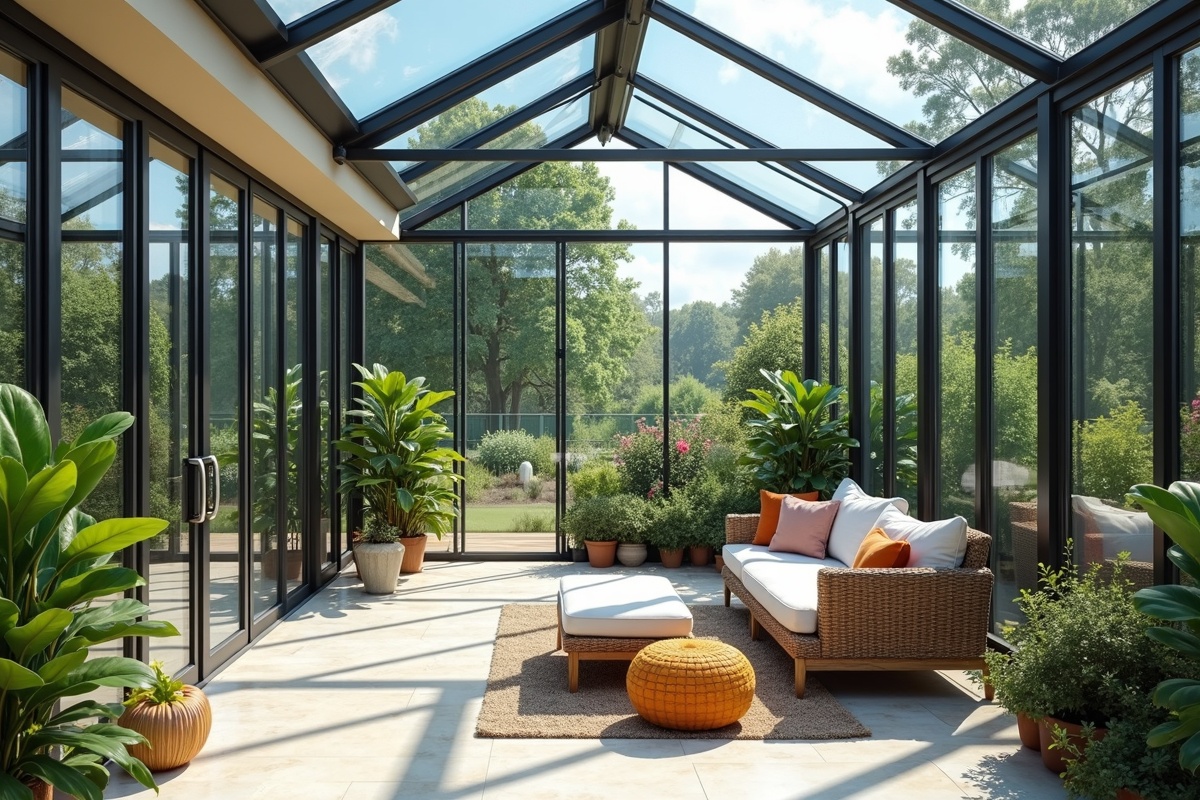
Popular Dallas glass patio enclosure designs include the transitional minimal-frame slider system for contemporary homes, the pavilion-style frameless enclosure for premium custom homes, and the bifold folding glass wall for indoor-outdoor living emphasis. The best design depends on the home's architectural style, site orientation, and how the homeowner intends to use the space.
Popular DFW design approaches:
Minimal-frame slider enclosure (most popular):
- 3-track or 4-track sliding glass panels around the patio perimeter
- Panels stack to one side when opened for fully-open patio feel
- Slim aluminum frames, satin black or clear anodized finish
- Works with all architectural styles
- Most cost-effective way to achieve seamless aesthetic
Bifold folding glass wall:
- Panels hinged together in groups of 3-6, folding accordion-style
- Full wall opens entirely to merge patio with adjacent interior rooms
- Premium aesthetic; higher cost than sliders
- Best for kitchen-to-patio or family-room-to-patio connections
Pavilion-style structural glass:
- Frameless or near-frameless glass panels with structural silicone seams
- Cleanest possible aesthetic — glass appears to be the wall itself
- Used on high-end custom homes, often paired with limestone or stone structure
- Premium cost — typically 30-50% above minimal-frame equivalent
Conservatory-style enclosure:
- Vertical glass walls plus sloped or peaked glass roof sections
- Creates a traditional "sunroom" feel with abundant overhead light
- Typically uses more visible framing (often aluminum)
- Works best with traditional and transitional home styles
Pool-adjacent enclosure:
- Glass enclosure around outdoor kitchen/entertaining area adjacent to pool
- Specify laminated glass or acrylic panels for pool-side locations where splash risk exists
- Often combined with outdoor cooking, living, and dining zones
Frequently Asked Questions
Do glass patio enclosures help with DFW heat and sun control?
Yes — particularly when specified with Low-E coated insulated glass units (IGUs). Low-E glass rejects 30-50% of solar heat while preserving visible light transmission, dramatically reducing cooling load in Dallas summer conditions. Combined with ceiling fans, proper shade from the existing roof structure, and operable panels that can be opened during mild weather, a well-specified glass enclosure stays comfortable year-round.
What permits are required for a glass patio enclosure in Dallas TX?
Building permits are required in all DFW jurisdictions (Dallas, Plano, Frisco, Fort Worth, etc.) for patio enclosure projects. Submissions typically include architectural drawings, structural calculations, glazing specifications, and energy code compliance documentation. HOA approval is also required in most HOA neighborhoods. Electrical additions require separate electrical permits. Typical permit review takes 2-6 weeks.
Can a frameless glass patio enclosure be opened in mild weather?
Yes — most residential glass patio enclosures use operable panels (sliding, bifolding, or stacking) that can be fully or partially opened during mild weather. This restores the open-patio feel when desired while allowing full enclosure when weather requires it. Fully frameless structural glass systems are sometimes fixed, but operable frameless and minimal-frame systems are widely available.
How does a glass patio enclosure compare to a screened-in porch?
Glass enclosures offer weather protection (rain, wind, cold, dust, pollen) that screens cannot provide, maintain clearer views without screen mesh obstruction, and can be conditioned (heated/cooled) to create true year-round living space. Screened porches are significantly less expensive ($3,000-$10,000 vs $8,000-$30,000+) and maintain maximum airflow in mild weather. The right choice depends on how you want to use the space and what weather conditions you want to exclude.
Does a glass patio enclosure increase home value in DFW?
Yes — outdoor living space additions in DFW return 50-70% of cost in home value at resale. Enclosed, weather-protected outdoor rooms command premium pricing over open patios because they are usable year-round. Buyers in Dallas, Plano, Frisco, Southlake, and other DFW markets actively search for homes with covered and enclosed outdoor living spaces, making the enclosure both a quality-of-life upgrade and a measurable resale value increase.
Schedule Your Dallas Glass Patio Enclosure Consultation
A frameless or minimal-frame glass patio enclosure transforms a seasonal covered patio into a year-round usable outdoor room — with views, daylight, and outdoor connection preserved while weather and insects are kept out. Infinity Glass designs and installs custom glass patio enclosures across Dallas, Fort Worth, and surrounding DFW communities using tempered safety glass, Low-E insulated glass units, and operable panel systems matched to your home and usage needs.
Also see our glass wall panels residential guide and our glass balcony railing installation for related outdoor glass installations.
Contact Infinity Glass for a free on-site consultation, measurement, and quote for your Dallas-area glass patio enclosure.