
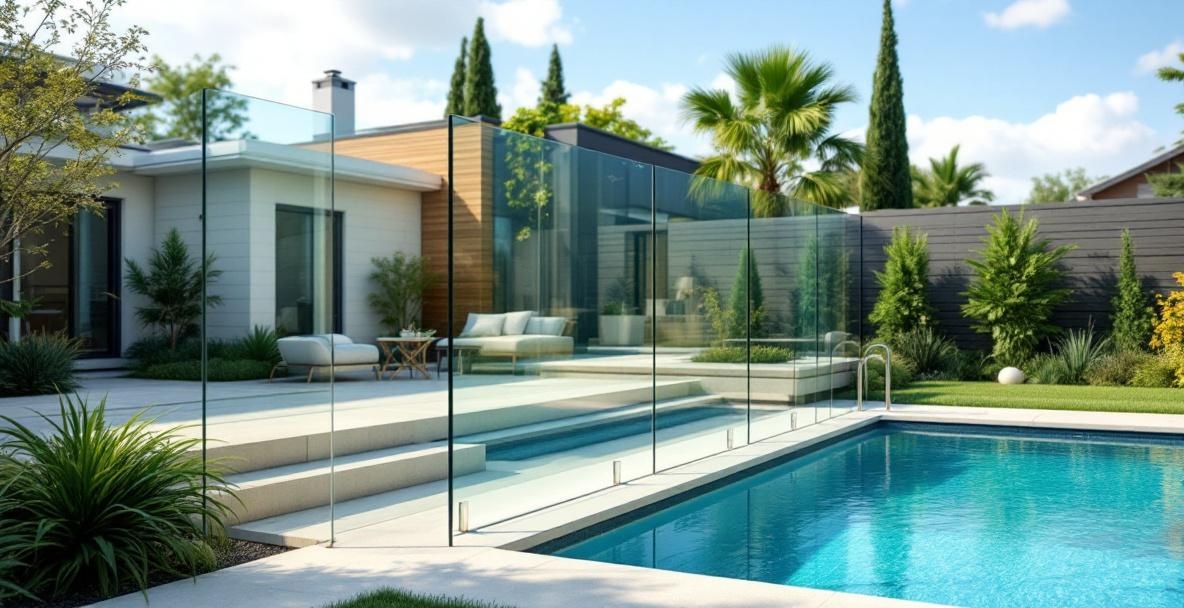
Glass balcony railing installation in Dallas uses tempered or laminated safety glass at a minimum 3/8 in. thickness, secured with stainless steel standoffs, base shoes, or structural posts. Texas building code requires 42-inch minimum height on balconies above 30 inches off grade. Installed costs run $150 to $400 per linear foot across DFW.
Dallas architects, property managers, and high-end custom builders increasingly specify glass balcony railings for rooftop decks, multi-family units, and downtown condos because they deliver unobstructed views and maximize perceived square footage. Whether you manage a Uptown high-rise, a Deep Ellum boutique hotel, or a Preston Hollow custom home, the material choice, hardware system, and code compliance determine whether your installation lasts 25 years or fails inspection. This guide breaks down every system Infinity Glass & Glazing installs across DFW and what you should expect from a commercial-grade glass railing job — all part of our glass railing installation services for interior and exterior applications.
What Types of Glass Balcony Railing Systems Are Available in Dallas?
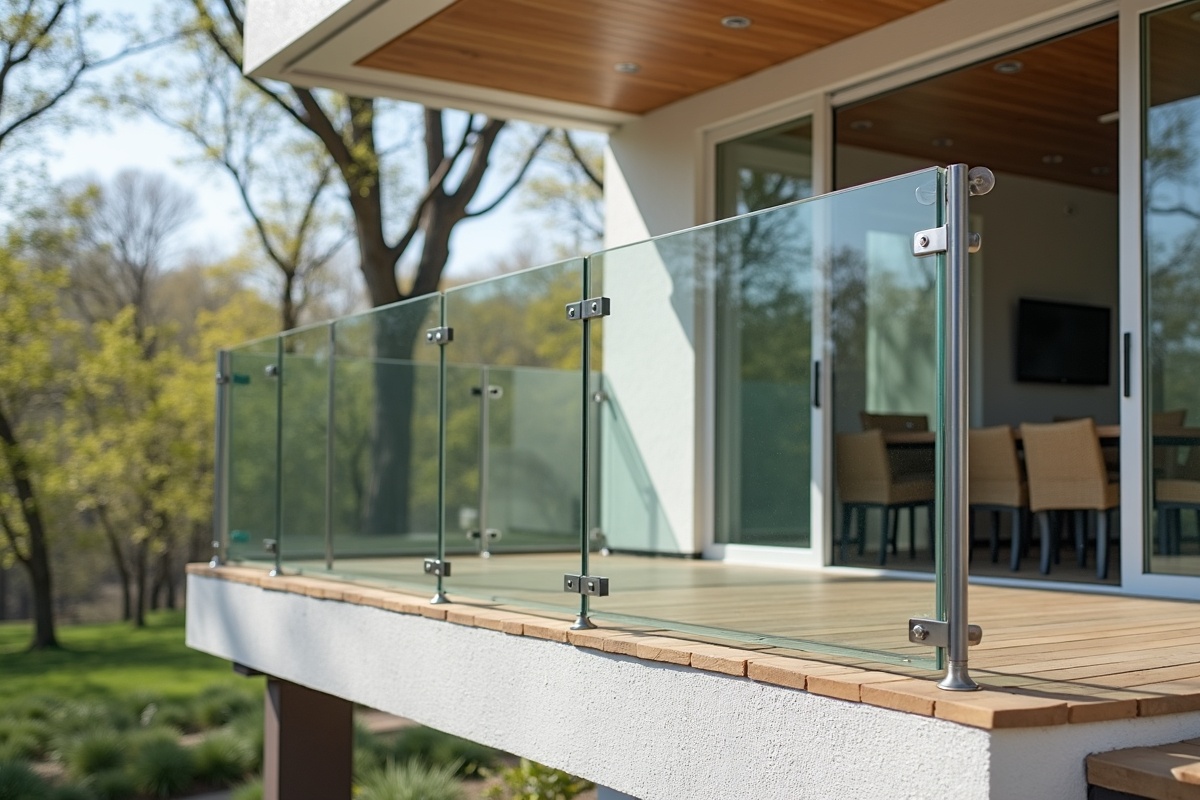
Dallas projects typically use four glass railing systems: frameless standoff (stainless pins through drilled glass), base shoe (aluminum channel mounted to structure), post-mounted (glass infill between metal posts), and top-cap frameless (handrail spans panel tops). Each system has different structural, aesthetic, and cost profiles suited to specific balcony conditions.
Base shoe systems dominate mid-rise multi-family because they install fast and hide fasteners in an aluminum or stainless channel. Standoff systems create the cleanest minimalist look used in luxury residential and hospitality. Post-mounted railings remain the value option for decks and commercial patios, and pair naturally with a frameless glass patio enclosure. Top-cap frameless adds a continuous handrail for code where required without compromising the frameless aesthetic.
Frameless vs Post-Mounted Glass Railings: Which Is Better?
Frameless glass railings deliver unobstructed views and premium aesthetics but cost 40 to 60% more and require thicker glass (typically 1/2 in. tempered-laminated) to carry the load. Post-mounted systems cost less, use thinner glass, and suit longer runs on commercial decks — but the posts interrupt sightlines every 4 to 6 feet.
| System | Glass Thickness | Cost per LF | Best Application | |
| Frameless Standoff | 1/2 in. tempered-laminated | $300-$400 | Luxury residential, hospitality | |
| Base Shoe | 1/2 in. tempered-laminated | $250-$350 | Mid-rise multi-family, retail | |
| Post-Mounted | 3/8 in. tempered | $150-$250 | Commercial decks, pool areas | |
| Top-Cap Frameless | 1/2 in. tempered-laminated | $280-$380 | Code-required handrail with modern look |
For Dallas high-rises where wind load is significant, frameless systems typically require thicker laminated SGP (SentryGlas) interlayer to meet structural engineering requirements (IBC 2024).
What Glass Thickness Is Required for Balcony Railings in Texas?
Texas adopts the International Building Code, which requires railing infill glass to be either fully tempered or laminated, with a minimum thickness of 3/8 in. for post-mounted systems. Frameless and cantilevered systems typically specify 1/2 in. or 3/4 in. laminated tempered glass to meet 200-pound concentrated load and 50-pound-per-foot uniform load requirements (IBC 2024 Section 2407).
3/8 in.
Minimum tempered or laminated glass thickness required for Texas railing infill panels (IBC 2024)
For balconies above 30 inches from grade, the railing must also reach a minimum 42-inch height, with no opening large enough to pass a 4-inch sphere. All of these requirements are enforced by Dallas permitting inspectors — a shortcut on glass spec will fail final inspection and cost you the job.
How Much Does Glass Balcony Railing Installation Cost in Dallas?
Glass balcony railing installation in Dallas costs $150 to $400 per linear foot depending on system type, glass thickness, hardware finish, and access conditions. A typical 30-foot rooftop balcony runs $7,500 to $12,000 installed (HomeGuide 2025).
$150-$400
Per linear foot installed cost range for glass balcony railings in DFW (HomeGuide 2025)
High-rise installations, custom colored or etched glass, and complex curved runs can push costs to $500+ per linear foot. Multi-family developers working at scale often negotiate volume pricing 15 to 25% below single-unit residential rates. For budget planning on larger commercial projects, see our commercial glass partition cost breakdown.
What Texas Building Code Requirements Apply to Glass Railings?
Dallas follows the 2024 IBC plus amendments. Glass railings must be designed by or sealed by a licensed Texas structural engineer when used on commercial buildings, must use safety glazing (tempered or laminated), must carry required live loads, and must include a secondary retention system (often a top cap or laminated interlayer) so the rail remains standing if one panel fails.
Texas requires all glass balcony railings on commercial buildings to include either a laminated glass construction or a continuous top cap that retains panels if glass breaks. This "failsafe" requirement is one of the most commonly missed items during permit review — verify your contractor's spec meets it before fabrication.
Multi-family and hospitality jobs also trigger ADA and Fair Housing requirements at accessible units. Infinity Glass & Glazing coordinates with the GC and structural engineer during submittals to ensure every system we install clears Dallas inspection on the first walk.
How Are Glass Balcony Railings Installed and Secured?
Installation sequences vary by system, but every job follows a similar commercial-grade process from site survey through final polish.
- 1
Site survey and measurement
Laser-measure every run, verify substrate (concrete, steel, or wood blocking), and document deviations that affect shim requirements. - 2
Engineering and submittals
Produce sealed shop drawings showing load paths, anchor embedment depths, and glass cut sheets for permit and GC review. - 3
Glass fabrication
Tempered-laminated glass panels are cut, drilled if needed, heat-soak tested, and laminated with SGP interlayer at the glass plant. - 4
Anchor installation
Base shoes, standoffs, or post bases are through-bolted or epoxy-anchored into the structure, torqued to engineering spec. - 5
Glass set and leveling
Two-person crews lift and set each panel, shim to plumb, and torque retention hardware to final spec. - 6
Top cap and final trim
Handrail or cap installs continuously across panel tops where specified; end caps, gaskets, and exposed fasteners get final polish.
Maintenance and Cleaning Tips for Dallas Glass Railings
Dallas UV, dust, and occasional ice storms put real stress on glass railings. Clean glass monthly with a pH-neutral cleaner and non-abrasive squeegee. Inspect standoffs, base shoes, and post bases annually for corrosion — especially on poolside or rooftop installations where chlorine and wind-driven rain accelerate wear. Replace cracked gaskets before water intrusion loosens anchors. Properly installed commercial-grade systems last 25+ years in DFW weather with this baseline maintenance.
What glass thickness is required for balcony railings in Dallas TX?
Texas building code requires minimum 3/8 in. tempered or laminated glass for post-mounted infill panels, but most Dallas installations use 1/2 in. tempered-laminated for frameless and cantilevered systems to meet load requirements. High-rise and commercial projects may specify 3/4 in. laminated depending on engineering analysis.
Are frameless glass railings safe for high-rise balconies?
Yes — frameless glass railings are safe for high-rise balconies when engineered to site-specific wind loads using laminated tempered glass with SGP (SentryGlas) interlayer. SGP retains panel integrity even if glass breaks, preventing fall-through. All high-rise installations in Dallas require sealed structural engineering per IBC 2024.
What permits are required for glass railing installation in Dallas?
Dallas requires a building permit for any railing installation or replacement on commercial properties and for any structural change on residential properties. Permit review verifies engineering, glass specification, and anchor embedment. Infinity Glass & Glazing handles permit submittals on all our commercial projects.
Can glass railings be installed on an existing wood deck?
Yes — glass railings can be installed on existing wood decks using post-mounted systems with surface-mount post bases through-bolted through the decking into structural framing. Frameless base shoe systems require a solid substrate (concrete or steel) and are rarely suitable for wood deck retrofits without structural reinforcement.
How do glass railings hold up in DFW weather and UV exposure?
Properly installed glass railings last 25+ years in DFW. Tempered-laminated glass resists thermal stress from Dallas heat cycles, and UV-stable interlayers (SGP) don't yellow over time. Stainless steel hardware handles humidity, and powder-coated aluminum base shoes resist corrosion. Annual cleaning and hardware inspection extend service life.
Also see our glass railings installation Texas overview and our commercial glazing contractor Texas guide.
Ready to spec glass balcony railings for your Dallas project? Contact Infinity Glass & Glazing for a site survey, sealed shop drawings, and a fixed installation quote across DFW.
Related reading: