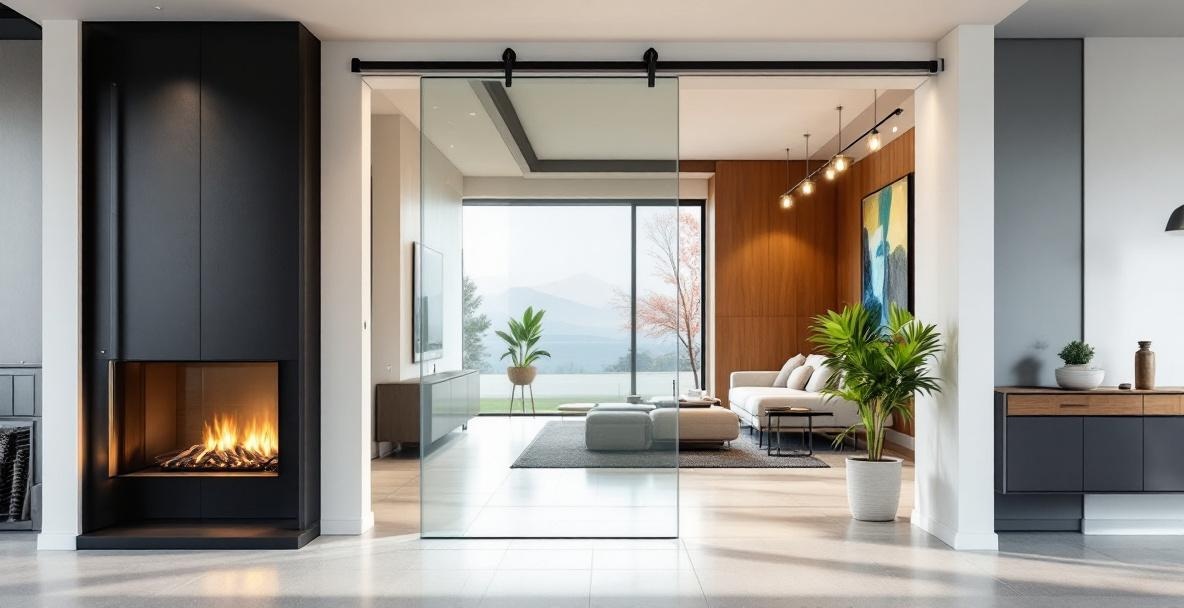
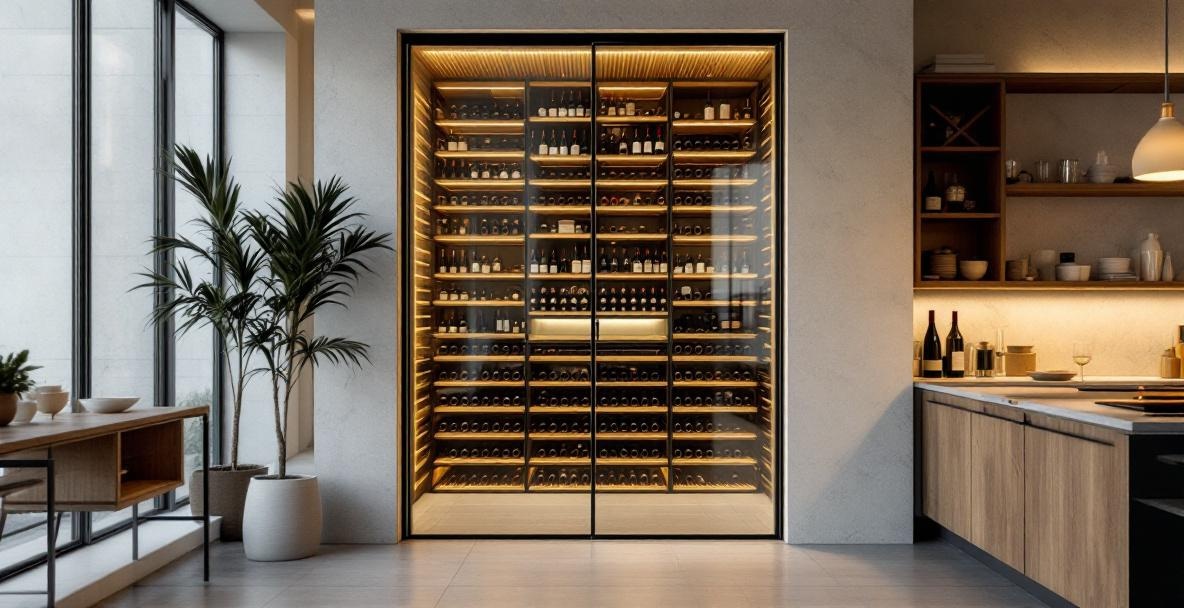
Custom glass wine cellar doors in DFW cost $1,500–$5,000 installed, depending on door size, glass specification, and frame type. Climate-controlled wine rooms require dual-pane insulated glass (IGU) with a low-E coating to maintain the 55–58°F and 55–70% relative humidity conditions required for proper wine aging. Frameless and full-view framed options are both available and get specified on roughly 18% of custom DFW homes valued over $750K (NAHB 2025).
A glass wine cellar door does two jobs at once. Visually, it turns a functional storage room into a display case — the bottles, racks, and lighting are visible from the adjacent living space, which is usually the reason the room was built in the first place. Structurally, it acts as a thermal and humidity barrier, preserving the 55–58°F environment that keeps wine aging properly. Getting both jobs right requires the correct glass specification, a tight-fitting frame or closure system, and a door that can carry the weight of insulated glass.
This guide covers the glass types used on DFW wine cellar projects, how climate-control sealing works on a glass door, cost ranges, installation, and design ideas. When you're ready to have one measured and specified for your own opening, our custom glass wine cellar door installation service handles it across the metroplex.
What Makes Glass the Ideal Choice for Wine Cellar Doors?
Glass is the ideal material for wine cellar doors because it allows the collection to be visible from adjacent rooms while still forming a tight thermal and humidity barrier when properly specified. A well-designed insulated glass wine cellar door combines the visual openness of a display case with the R-value and vapor sealing of a well-built wall. Solid wood doors close off the room entirely; glass doors make the cellar part of the living space.
The display function is the primary driver on most DFW projects. Wine rooms are typically built next to a dining room, great room, or home bar. When the wine room has a glass door and — often — a full glass wall, the bottles and racks become a feature of the adjacent living space. The room itself is climate-controlled behind the glass, but the visual experience is continuous.
Secondary advantages that show up on well-designed wine cellar doors:
- UV-blocking low-E coating protects bottles from light damage. UV-blocking wine cellar glass reduces light damage to wine by up to 95% compared with standard clear glass (Wine Spectator 2024).
- Insulated dual-pane construction with argon gas fill keeps the interior surface of the glass warm enough to prevent condensation on the living-room side.
- Frameless and minimal-frame designs let the collection read as the focal point — not the door hardware.
- Built-in sealing systems (magnetic sweeps, compression gaskets) close off air leaks that would otherwise overwhelm the cooling unit.
95%
reduction in UV light damage to wine with low-E coated insulated glass compared with standard clear glass (Wine Spectator 2024)
Types of Glass Doors Available for DFW Wine Cellars
Three glass door types are commonly installed on DFW wine cellars: insulated glass (IGU) framed doors, frameless tempered single-pane doors (uninsulated cellars only), and full-height glass walls with integrated pivot or sliding doors. Each suits different cellar types — active cooling, passive storage, and architectural display rooms.
Insulated glass framed doors — A thermally broken aluminum or wood frame with a dual-pane insulated glass unit (IGU). The IGU is typically tempered glass with a low-E coating on one surface and argon gas fill between panes. This is the correct specification for any climate-controlled wine room. The frame carries the weight of the glass and provides a mounting surface for the perimeter seals.
Frameless single-pane tempered doors — A single lite of tempered glass with minimal hardware, typically 3/8 in. or 1/2 in. thick. These doors are suitable only for passive wine storage (no active cooling) because a single pane does not have the R-value to maintain the humidity and temperature differential required for climate-controlled aging. Common in wine display rooms, tasting rooms, and commercial retail.
Full glass walls with integrated doors — A custom wall system where the door reads as part of a continuous glass wall. Can be specified with insulated glass for climate-controlled applications or single-pane for display-only rooms. Common in high-end DFW custom homes where the wine room shares a wall with the great room or dining room.
How Are Climate-Appropriate Wine Cellar Glass Doors Installed?
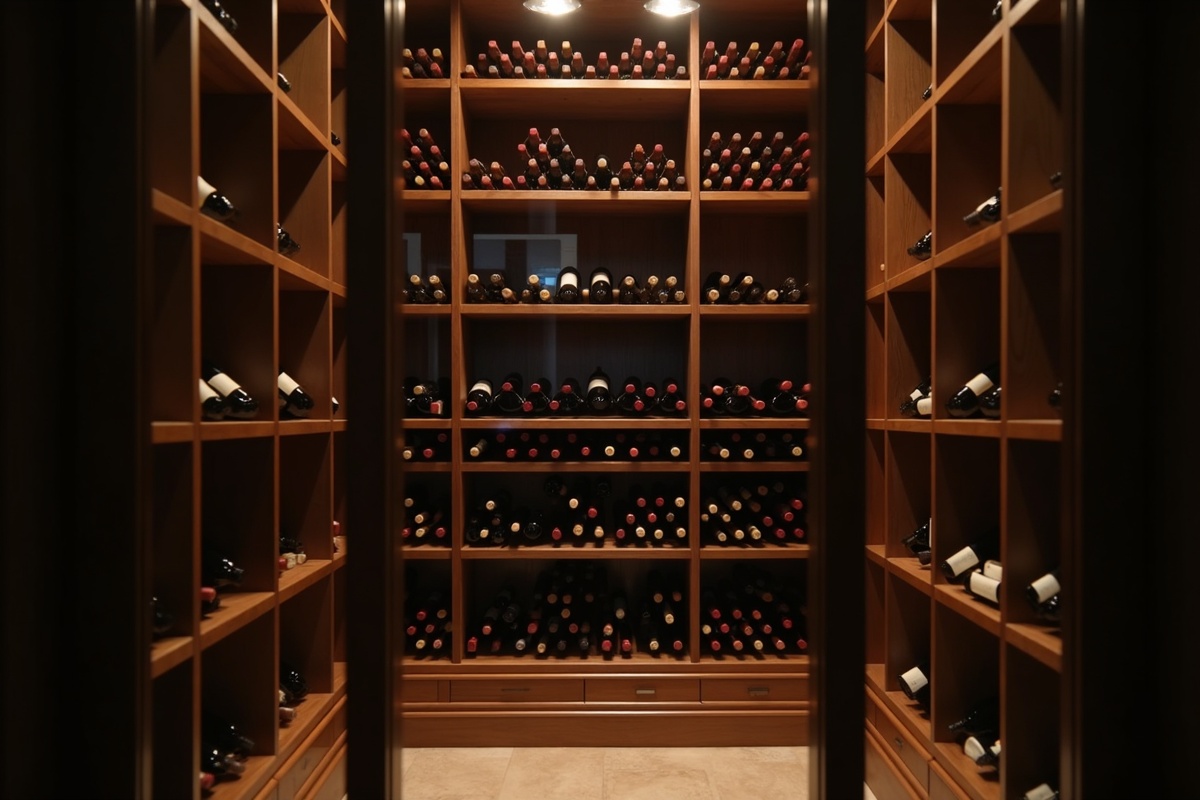
Climate-appropriate wine cellar glass doors are installed with continuous weatherseal around the full perimeter of the door frame, a door sweep at the threshold, and a magnetic or compression seal at the jamb. The frame is anchored to the rough opening with structural fasteners, and any gap between the frame and wall is foamed with closed-cell insulation to maintain the vapor barrier. The glass itself must be insulated (IGU) with a low-E coating on the interior surface to control heat transfer.
Installation sequence on a typical climate-controlled cellar door:
1. Rough opening prep. The door rough opening is framed with a continuous vapor barrier — typically a sealed plastic membrane that wraps onto the cellar side of the framing. This is critical: without the vapor barrier, humidity from the cellar will migrate into the wall cavity and cause long-term moisture damage.
2. Frame set and anchoring. The thermally broken door frame is shimmed plumb and level, then anchored to the rough framing. All anchor points are sealed to the vapor barrier.
3. IGU glass set and glazing. The insulated glass unit is set into the frame with continuous structural silicone and compression gaskets. Setting blocks support the IGU on two points along the bottom edge.
4. Perimeter seals. Compression gaskets are fitted to the jamb and header. A door sweep is installed at the threshold. Some high-end systems use a magnetic seal that compresses as the door closes — similar to a commercial walk-in cooler door.
5. Hardware and operation test. Hinges, latch, and any closer are adjusted. The door is cycled and checked for uniform compression around the full perimeter.
What Glass Thickness and Insulation Is Required for Wine Cellars?
Climate-controlled DFW wine cellar doors require dual-pane insulated glass (IGU) with a minimum 1/2 in. overall thickness — typically two lites of 1/4 in. tempered glass with a 1/2 in. argon-filled spacer and a low-E coating. Some premium installations use triple-pane glass for maximum thermal performance. The U-value for a standard IGU with low-E and argon runs around 0.25–0.30 BTU/hr·sq ft·°F, which matches or exceeds the insulation value of most exterior doors.
Specifications by application type:
- Passive cellar (no cooling): Single-pane 3/8 in. or 1/2 in. tempered glass. No IGU required because there's no temperature differential to manage.
- Active climate-controlled cellar: Dual-pane IGU with low-E coating and argon fill. Typical makeup: 1/4 in. tempered + 1/2 in. argon space + 1/4 in. tempered with low-E.
- Premium / high-performance cellar: Triple-pane IGU with low-E coatings on multiple surfaces, krypton or argon fill, and warm-edge spacers to prevent condensation at the perimeter.
The low-E coating is the piece that does the UV-blocking work. Hard-coat low-E is more durable and is the typical specification on the interior surface of the cellar-side pane. Soft-coat low-E has better solar and thermal performance but is more delicate and is typically used on the cavity-side surfaces.
How Much Do Custom Glass Wine Cellar Doors Cost in DFW?
Custom glass wine cellar doors in DFW cost $1,500–$5,000 installed, with the price range driven by door size, glass specification (single-pane vs IGU), frame material and finish, and hardware. A standard 30 in. x 80 in. frameless single-pane tempered door for a passive cellar runs $1,500–$2,500 installed. An insulated 36 in. x 84 in. door with a thermally broken aluminum frame and low-E IGU for a climate-controlled cellar runs $3,000–$5,000 installed (HomeGuide 2025).
Cost factors that drive the final quote:
| Single-Pane Frameless | Framed IGU (standard) | Framed IGU (premium) | |
| Typical cost installed | $1,500-$2,500 | $2,500-$3,800 | $3,800-$5,000+ |
| Glass type | 3/8 in. tempered | Dual-pane IGU + low-E | Triple-pane IGU + low-E |
| Frame | Minimal hardware only | Thermally broken aluminum | Thermally broken aluminum or wood |
| Suitable for active cooling | No | Yes | Yes |
| U-value (approx) | 1.0+ | 0.25-0.30 | 0.15-0.20 |
| Typical application | Display / retail | Residential cellars | High-end custom homes |
- Door size. Larger doors require thicker glass and heavier hardware. Pivot doors scale up in cost faster than hinged doors.
- Glass specification. IGU with low-E is ~40–60% more than single-pane tempered of equivalent size.
- Frame material. Thermally broken aluminum is standard; wood-clad and solid wood frames add 20–40%.
- Hardware finish. Brushed stainless and matte black are standard; polished chrome, brass, and bronze add 10–25%.
- Custom etching or graphics. Etched logos, varietal names, or artwork on the glass run $300–$1,500 depending on complexity.
Design Ideas: Glass Wine Cellar Doors in Dallas Luxury Homes
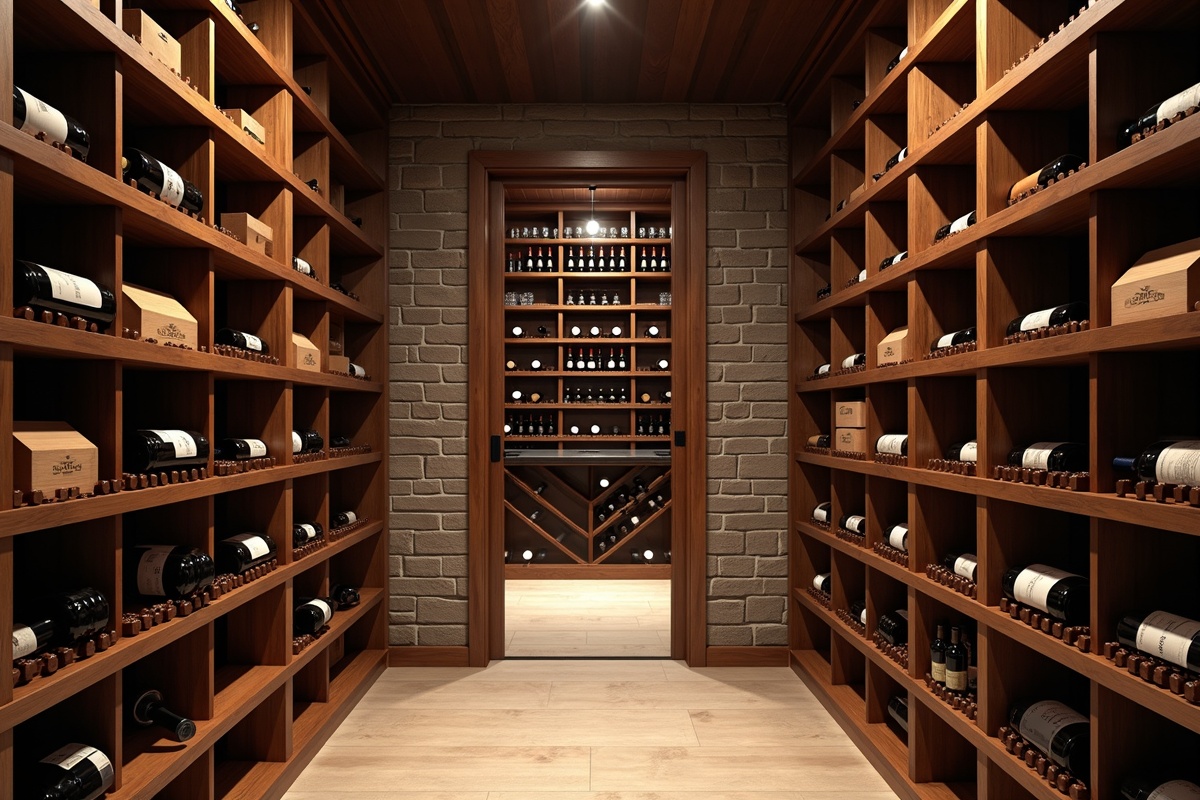
The most impactful glass wine cellar door designs in Dallas custom homes combine a full-height door with an adjacent full-height glass wall, making the cellar read as a continuous visual feature of the great room or dining room. Integrated lighting, stone or wood wall material behind the racks, and a pivot-style door hinge are the three design choices that repeat across high-end DFW wine room installations.
Design combinations commonly specified on DFW luxury projects:
- Full-height pivot door in a stone wall surround. The door is 8–10 ft tall and pivots on an offset hinge. The surrounding wall is typically stacked stone, brick, or reclaimed wood. Common in homes priced $1.5M+.
- Glass door in a full glass wall system. A 12–20 ft wide glass wall with the door integrated as one section. The wine room is visible as a single wall of the adjacent space. Common in modern and transitional homes.
- Double glass doors for walk-in cellars. Two tempered glass panels meeting at a center seal, both with framed IGUs. Allows for large-case or bulk access.
- Glass door with integrated cellar lighting. LED strip lighting along the racks is timed with a motion sensor — the cellar "turns on" as a viewer approaches the door.
- Etched glass signage. Discreet etching of a family name, vineyard region, or decorative mark on the interior surface of the glass.
The same full-height glass treatment is moving outdoors on DFW luxury projects too — a frameless glass patio enclosure applies the identical floor-to-ceiling panel logic to outdoor living space, often on the other side of the same great room.
Hardware and Hinge Options for Custom Wine Cellar Glass Doors
Wine cellar glass door hardware includes hinges (butt hinges, pivot hinges, or concealed European hinges), pulls and handles (ladder pulls, D-pulls, or recessed hardware), latches (magnetic latches for frameless doors, mortised latches for framed), and sealing systems (compression gaskets, magnetic sweeps, door sweeps). Hardware finish typically matches other hardware in the adjacent room — brushed stainless, matte black, oil-rubbed bronze, or unlacquered brass.
Primary hardware decisions that need to be made before fabrication:
Hinge type:
- Pivot hinge — the door pivots on an offset axis. Best for full-height doors and very tall or heavy doors. Top and bottom pivots carry the entire weight — no side-mounted hinges visible.
- Butt hinges / European hinges — the door is hung on side-mounted hinges. Lower cost, simpler to install, works best on standard 80–84 in. door heights.
- Concealed hinge — hinges are mortised into the frame and door edge and invisible when the door is closed. Used on high-end residential projects.
Pull/handle:
- Ladder pull — vertical bar pull, typically 12–36 in. long. Most common on tall cellar doors. Available in brushed stainless, matte black, and brass finishes.
- D-pull — compact U-shaped pull, typically 4–8 in. long. Used on standard-height doors.
- Recessed hardware — pull is mortised into the door edge. Minimal, modern look.
Seal system:
- Compression gasket at the jamb and header — standard on any IGU door.
- Magnetic sweep at the threshold — creates a tight closure that activates only when the door closes. Typical on premium doors.
- Door sweep — standard brush or rubber sweep at the threshold. Lower cost, used on most framed doors.
Frequently Asked Questions About Glass Wine Cellar Doors in DFW
Does glass in a wine cellar door affect temperature control?
Yes, significantly. A single-pane tempered glass door provides roughly the thermal performance of a cracked window — heat transfers through the glass, condensation forms on the cooler side, and the cooling unit runs continuously trying to maintain the cellar temperature. Climate-controlled cellars require dual-pane insulated glass (IGU) with a low-E coating. A properly specified IGU door with a perimeter seal performs comparably to a well-insulated exterior door, typically U-0.25 to U-0.30, which is adequate for most residential cellar cooling units.
What glass type provides the best UV protection for a wine cellar?
Dual-pane insulated glass (IGU) with a low-E coating on the interior surface of the cellar-side pane provides the best UV protection. Low-E coatings block 95% or more of UV radiation compared with uncoated glass, which protects wine labels from fading and reduces light-driven wine degradation over long-term storage. For maximum UV protection, some premium installations add a second low-E coating on the inside surface of the interior pane. Single-pane tempered glass blocks very little UV on its own and is not recommended for cellars holding age-worthy wine.
Can glass wine cellar doors be installed in both residential and commercial settings?
Yes. The same glass and frame systems used in residential DFW wine cellars are also used in commercial wine bars, tasting rooms, and restaurant cellars. Commercial projects typically carry additional requirements — accessibility clearances at the door, fire ratings if the cellar is located near exits, and energy code compliance on the glass — but the underlying fabrication is the same. Infinity Glass handles both residential and commercial wine cellar door projects across the DFW metroplex.
How long does custom glass wine cellar door fabrication take in DFW?
Standard lead time on a custom glass wine cellar door is 3–5 weeks from design approval to installation. Single-pane tempered glass doors are on the shorter end (2–3 weeks); dual-pane insulated glass units are on the longer end (4–5 weeks). Premium door frames in wood or wood-clad aluminum can extend lead time by another 2–3 weeks. Plan for 8–10 weeks of total lead time from first consultation to installation day if the project is on a construction schedule.
Can the glass be frosted or etched for a custom wine room look?
Yes. Custom etching — whether a family name, varietal list, vineyard map, or decorative graphic — is applied to the interior surface of the glass during fabrication. Acid-etched, sandblasted, and laser-etched finishes are all available. Etching on a single pane is straightforward; etching on the interior of an IGU requires that the work be done before the unit is sealed, so it must be specified at order time rather than added later.
Also see our guides on custom shower enclosures in DFW, glass wall panels for residential, and frameless glass wall office systems in DFW.
Planning a custom glass wine cellar door for a Dallas or DFW home? Contact Infinity Glass & Glazing to schedule a design consultation and on-site measurement. We measure, spec, and install framed and frameless wine cellar glass doors, full wine room glass walls, and custom etched glass across the DFW metroplex.
Related reading: